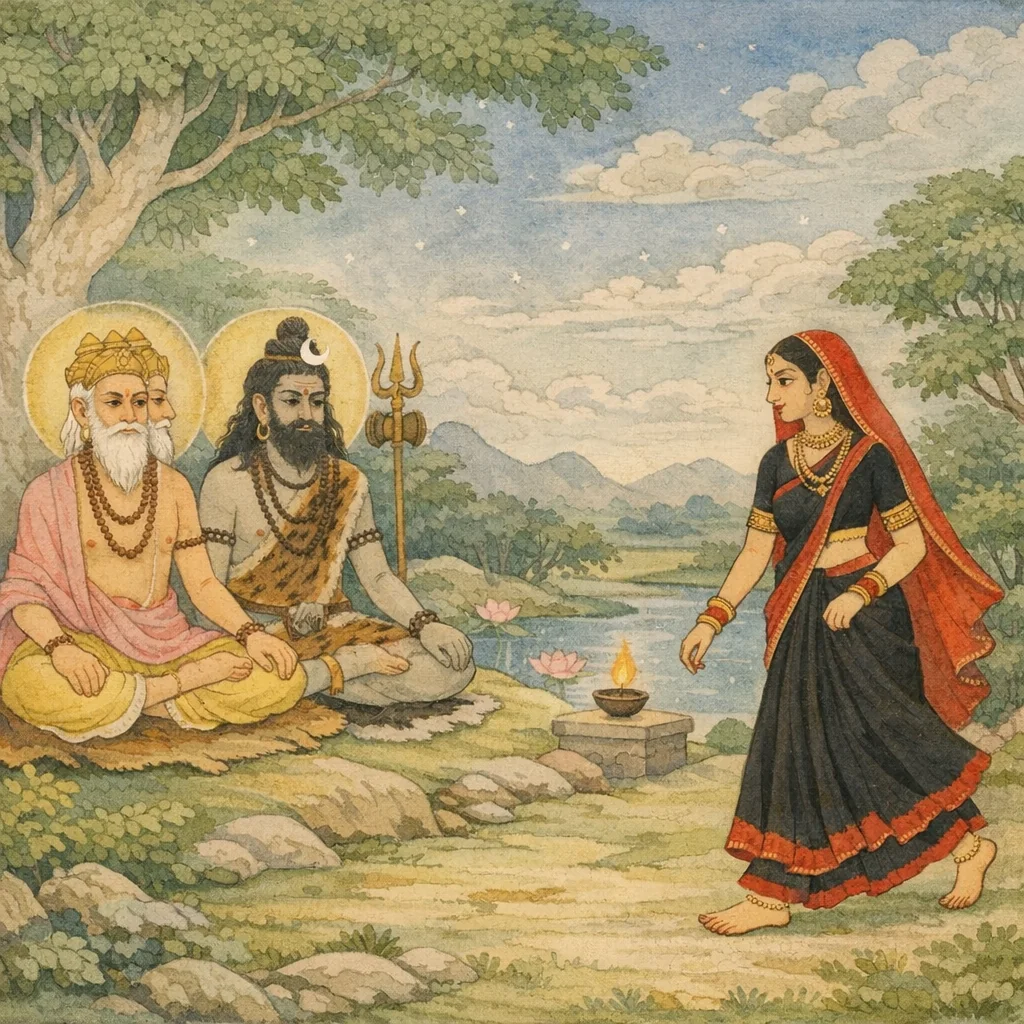
Adhyaya 256
अध्याय २५६ — श्रद्धा, अहिंसा, स्पर्धा-त्यागः (Tūlādhāra–Jājali: Faith, Non-harm, and Renunciation of Rivalry)
Upa-parva: Dāna-dharma / Śraddhā–Ahiṃsā Discourse (Tūlādhāra–Jājali Episode)
This chapter continues the Tūlādhāra–Jājali discourse. Tūlādhāra proposes an empirical demonstration: birds said to have arisen on/around Jājali’s head are invoked, revealing the bodily proximity that undercuts ascetic self-congratulation and redirects attention to inner states. Bhīṣma reports that, when called, the birds utter a ‘divine speech’ aligned with dharma, asserting that acts associated with non-harm bear fruit here and beyond, while spardhā (competitive religiosity) destroys the agent. The chapter then pivots to a doctrinal evaluation of sacrifice and giving: without śraddhā, even yajña cannot safeguard; deities assess the mind (citta) as decisive in ritual. A set of exempla contrasts the learned but miserly, the generous, and the wealthy; Prajāpati adjudicates that generosity purified by śraddhā is acceptable, whereas offerings lacking śraddhā are nullified. The text declares aśraddhā a supreme fault and śraddhā a purifier that sheds sin like a snake shedding skin. It concludes by defining the person as ‘made of faith’ (śraddhāmaya), urging abandonment of spardhā; Jājali attains calm, and both sages are later described as reaching heavenly states through the fruits of their respective actions. The closing verses personify Śraddhā as a sāttvikī devī and affirm that faith protects speech- and mind-based cultivation.
Chapter Arc: स्थायुरुवाच—प्रजाओं के दग्ध होने की करुण पुकार के बीच ब्रह्मा महादेव से विनय करते हैं: आपकी रोषाग्नि से समस्त सृष्टि जल रही है, जगत् की रक्षा कीजिए। → ब्रह्मा स्पष्ट करते हैं कि वे प्रजाओं पर कुपित नहीं, पर पृथ्वी का असह्य भार बार-बार संहार की ओर प्रेरित करता है; सृष्टि-रक्षा और सृष्टि-नियमन के बीच संतुलन टूटता दिखता है। → नारद के कथनानुसार महादेव नियत वाणी से अपने तेज को भीतर समेट लेते हैं—रोषाग्नि का उपसंहार होता है; उसी क्षण ब्रह्मा के इन्द्रिय-छिद्रों से कृष्ण-रक्त वस्त्रों और दिव्य आभूषणों से युक्त ‘मृत्यु’ कन्या का प्राकट्य होता है और वह दक्षिण दिशा की ओर अग्रसर होती है। → ब्रह्मा मानव-हित के लिए मृत्यु से याचना/विनियमन करते हैं—उसके आँसू अपने हाथों में लेकर उसे लोक-व्यवस्था का अंग बनाते हैं, ताकि संहार अराजक विनाश न होकर नियत-काल का धर्म बने। → मृत्यु का दक्षिणगमन और उसके आँसुओं का रहस्य—वे आगे चलकर किस रूप में लोक में फलित होंगे और प्राणियों के भाग्य-बंधन को कैसे रचेंगे—यह संकेत आगे के संवाद के लिए छोड़ दिया जाता है।
Shlokas
Verse 1
अत-#-#काञ सप्तपज्चाशर्दाधिकद्विशततमो< ध्याय: महादेवजीकी प्रार्थनासे ब्रह्माजीके द्वारा अपनी रोषाग्निका उपसंहार तथा मृत्युकी उत्पत्ति स्थायुरुवाच प्रजासर्गनिमित्तं मे कार्यवत्तामिमां प्रभो । विद्धि सृष्टास्त्वया हीमा मा कुप्पासां पितामह,महादेवजीने कहा--प्रभो! पितामह! मेरा मनोरथ या प्रयोजन आपसे प्रजासर्गकी रक्षाके लिये प्रार्थना करना है। आप इस बातको जान लें। आपहीने इन प्रजाओंकी सृष्टि की है; अतः आप इनपर क्रोध न कीजिये
Narada said. Sthāṇu (Mahādeva) said: “O Lord, O Grandfather (Brahmā)! Know that my present resolve and purpose is directed toward the safeguarding of creation and the ordering of progeny. These beings have been created by you; therefore, O Pitāmaha, do not be angered with them.”
Verse 2
तव तेजोडग्निना देव प्रजा दहान्ति सर्वश: । ता दृष्टवा मम कारुण्यं मा कुप्यासां जगत्प्रभो,देव! जगदीश्वर! आज आपकी क्रोधाग्निसे सारी प्रजाएँ दग्ध हो रही हैं। उन्हें उस अवस्थामें देखकर मुझे दया आती है, आप उनपर क्रोध न करें
Nārada said: “O God, by the fire of your blazing energy all creatures are being burned on every side. Seeing them in that condition, compassion arises in me. O Lord of the world, O Divine ruler of the universe—do not be wrathful toward them.”
Verse 3
प्रजापतिरुवाच न कुप्ये न च मे कामो न भवेयु: प्रजा इति । लाघवार्थ धरण्यास्तु तत: संहार इष्यते,प्रजापति ब्रह्माजी बोले--शिव! मैं प्रजापर कुपित नहीं हूँ और न मेरी यही इच्छा है कि प्रजाओंका विनाश हो जाय। पृथ्वीका भार हल्का करनेके लिये ही प्रजाके संहारकी आवश्यकता प्रतीत हुई है
Prajāpati said: “I am not angry, nor do I desire that the creatures should cease to exist. Yet, for the sake of lightening the burden of the Earth, a destruction (of beings) is deemed necessary.”
Verse 4
इयं हि मां सदा देवी भारारता समचोदयत् | संहारार्थ महादेव भारेणाप्सु निमज्जति
Nārada said: “Indeed, this Goddess—ever distressed by the burden—has continually urged me. For the sake of bringing about destruction (of that burden), O Mahādeva, she sinks into the waters under its weight.”
Verse 5
महादेव! यह पृथ्वीदेवी भारी भारसे पीड़ित हो सदा मुझे प्रजाके संहारके लिये प्रेरित करती रही है; क्योंकि यह जगत्के भारसे समुद्रमें डुबी जा रही है ।। यदाहं नाधिगच्छामि बुद्धया बहु विचारयन् । संहारमासां वृद्धानां ततो मां क्रोध आविशत्,जब बहुत विचार करनेपर भी मुझे इन बढ़ी हुई प्रजाओंके संहारका कोई उपाय न सूझा, तब मुझे क्रोध आ गया
Nārada said: “O Mahādeva, the goddess Earth—crushed by an excessive burden—has continually urged me to bring about the destruction of the teeming multitudes, for under the weight of the world she seems to be sinking into the ocean. When, even after much reflection, my mind could find no means to bring about the destruction of these overgrown populations, anger entered me.”
Verse 6
स्थाणुरुवाच संहारार्थ प्रसीदस्व मा क्रुधो विबुधेश्वर । मा प्रजा: स्थावरं चैव जड़म॑ च व्यनीनशत्,महादेवजीने कहा--देवेश्वर! संहारके लिये आप क्रोध न करें। प्रजापर प्रसन्न हों। कहीं ऐसा न हो कि समस्त चराचर प्राणियोंका विनाश हो जाय
Sthāṇu said: “O Lord of the gods, be gracious; do not give way to wrath even for the sake of dissolution. Be pleased toward living beings—lest all creatures, both moving and unmoving, even the insentient, be utterly destroyed.”
Verse 7
पल्वलानि च सर्वाणि सर्व चैव तृणोपलम् । स्थावरं जड़म॑ चैव भूतग्रामं चतुर्विधम्,ये सारे जलाशय, सब-के-सब घास और लता-बेलें तथा चार प्रकारके प्राणिसमुदाय (स्वेदज, अण्डज, उद्धिज्ज, जरायुज) भस्मीभूत हो रहे हैं। सारे जगत्का प्रलय उपस्थित हो गया है। भगवन्! प्रसन्न होइये। साधो! मैं आपसे यही वर माँगता हूँ
Nārada said: “All ponds and pools, and indeed all grasses, creepers, and the like; the immovable and insentient world as well as the fourfold community of living beings—everything is being reduced to ashes. The dissolution of the world has arrived. O Blessed One, be gracious. O holy one, this is the boon I ask of you.”
Verse 8
तदेतद् भस्मसाद्धभूतं जगत् सर्वमुपप्लुतम् । प्रसीद भगवन् साधो वर एष वृतो मया,ये सारे जलाशय, सब-के-सब घास और लता-बेलें तथा चार प्रकारके प्राणिसमुदाय (स्वेदज, अण्डज, उद्धिज्ज, जरायुज) भस्मीभूत हो रहे हैं। सारे जगत्का प्रलय उपस्थित हो गया है। भगवन्! प्रसन्न होइये। साधो! मैं आपसे यही वर माँगता हूँ
Nārada said: “Behold—this entire world has been overwhelmed and reduced to ashes. A dissolution of the cosmos has arrived. Be gracious, O Blessed Lord; be pleased, O holy one. This is the boon I choose from you.”
Verse 9
नष्टा न पुनरेष्यन्ति प्रजा होता: कथंचन । तस्मान्निवर्ततामेतत् तेन स्वेनेव तेजसा,यदि इन प्रजाओंका नाश हो गया तो ये किसी तरह फिर यहाँ उपस्थित न हो सकेंगी। इसलिये आप अपने ही प्रभावसे इस क्रोधाग्निको निवृत्त कीजिये
Narada said: “If these creatures are destroyed, they will not return here again by any means. Therefore, let this be restrained—quench this blaze of wrath by your own innate spiritual power.”
Verse 10
उपायमन्यं सम्पश्य भूतानां हितकाम्यया । यथामी जन्तव: सर्वे न दहेरन् पितामह,पितामह! आप सम्पूर्ण प्राणियोंके हितके लिये संहारका कोई दूसरा ही उपाय सोचिये, जिससे ये सारे जीव-जन्तु एक साथ ही दन्ध न हो जायँ
Nārada said: “For the welfare of all beings, devise some other means—so that these living creatures, all together, are not burned up, O Grandfather, O Grandfather.”
Verse 11
अभावं हि न गच्छेयुरुच्छिन्नप्रजना: प्रजा: । अधिदैवे नियुक्तोडस्मि त्वया लोकेश्चरेश्वर,लोकेश्चरेश्वरर आपने मुझे देवताओंके आधिपत्य-पदपर नियुक्त किया है, अतः मैं आपसे प्रार्थना करता हूँ, यदि प्रजाकी संततिका उच्छेद होगा तो समस्त प्रजाओंका सर्वथा अभाव ही हो जायगा; अत: आप इस विनाशको बंद कीजिये
Nārada said: “If the line of progeny is cut off, the people would pass into sheer non-existence. You have appointed me to the divine administration, O Lord of the rulers of the worlds; therefore I appeal to you—stop this destruction, for the extinction of offspring would mean the total disappearance of all beings.”
Verse 12
त्वद्भधवं हि जगन्नाथ एतत् स्थावरजड्रमम् । प्रसाद्य त्वां महादेव याचाम्यावृत्तिजा: प्रजा:,जगन्नाथ! महादेव! यह समस्त चराचर जगत् आपसे ही उत्पन्न हुआ है; अतः मैं आपको प्रसन्न करके यह याचना करता हूँ कि ये सारी प्रजा पुनरावर्तनशील हो--मरकर पुनः जन्म धारण करे
Nārada said: “O Lord of the universe, this entire world—both the immovable and the insentient—arises from You. Therefore, having sought to please You, O Mahādeva, I petition that these beings become subject to return: that they die and take birth again.”
Verse 13
नारद उवाच श्रुत्वा तु वचनं देव: स्थाणोर्नियतवाड्मना: । तेजस्तत् संनिजग्राह पुनरेवान्तरात्मनि,नारदजी कहते हैं--राजन्! महादेवजीकी वह बात सुनकर भगवान् ब्रह्माने मन और वाणीका संयम किया तथा उस अग्निको पुनः अपनी अन्तरात्मामें ही लीन कर लिया
Narada said: Having heard the words of Sthāṇu (Mahādeva), the god Brahmā restrained his speech and mind, and then drew that fiery energy back again into his own inner self.
Verse 14
ततोअग्निमुपसंगृहर भगवॉल्लोकपूजित: । प्रवृत्ति च निवृत्ति च कल्पयामास वै प्रभु:,तब लोकपूजित भगवान् ब्रह्माने उस अग्निका उपसंहार करके प्रजाके लिये जन्म और मृत्युकी व्यवस्था की
Then the Blessed Lord, revered by the worlds, withdrew that fire and, as the sovereign ordainer, established for living beings the twofold order of life: engagement in worldly action and the path of withdrawal—thereby setting the framework within which birth and death proceed.
Verse 15
उपसंहरतस्तस्य तमग्निं रोषजं तदा । प्रादुर्बभूव विश्वेभ्य: खेभ्यो नारी महात्मन:,उस क्रोधाग्निका उपसंहार करते समय महात्मा ब्रह्माजीकी सम्पूर्ण इन्द्रियोंसे एक मूर्तिमती नारी प्रकट हुई
Nārada said: As that great-souled one was withdrawing the fire born of wrath, a woman with embodied form suddenly manifested, as though arising from all his senses, as if from every quarter of the sky.
Verse 16
कृष्णरक्ताम्बरधरा कृष्णनेत्रतलान्तरा । दिव्यकुण्डलसम्पन्ना दिव्याभरणभूषिता,उसके वस्त्र काले और लाल थे। आँखोंके निम्न और आशभ्यन्तर प्रदेश भी काले रंगके ही थे। वह दिव्य कुण्डलोंसे कान्तिमती तथा अलौकिक आभूषणोंसे विभूषित थी
Nārada said: “She wore garments of black and red. The lower part and inner corners of her eyes were also dark in hue. She shone with celestial earrings and was adorned with divine ornaments.”
Verse 17
सा विनिःसृत्य वै खेभ्यो दक्षिणामाश्रिता दिशम् | ददृशाते च तां कन्यां देवौ विश्वेश्वरावुभी,वह ब्रह्माजीके इन्द्रियछिद्रोंस निकलकर दक्षिण दिशाकी ओर चल दी। उस समय उन दोनों जगदीश्वरों (ब्रह्मा और शिव) ने उस कनन््याको देखा
Having emerged from the bodily apertures, she turned and proceeded toward the southern quarter. At that moment, the two universal lords—Brahmā and Śiva—beheld that maiden.
Verse 18
तामाहूय तदा देवो लोकानामादिरीश्वर: । मृत्यो इति महीपाल जहि चेमा: प्रजा इति,भूपाल! तब लोकोंके आदिकारण भगवान् ब्रह्माने उसे 'मृत्यु/ कहकर पुकारा और निकट बुलाकर कहा--'तुम इन प्रजाओंका समय-समयपर विनाश करती रहो
Nārada said: Then the divine Lord—prime origin and ruler of the worlds—summoned her. Addressing her by the name “Death,” he said, “O king, strike down these creatures; bring about the periodic dissolution of these beings.”
Verse 19
त्वं हि संहारबुद्धया मे चिन्तिता रुषितेन च । तस्मात् संहर सर्वास्त्वं प्रजाःसजडपण्डिता:,“मैंने प्रजाके संहारकी भावनासे रोषमें भरकर तुम्हारा चिन्तन किया था; इसलिये तुम मूढ़ और विद्वानोंसहित सम्पूर्ण प्रजाओंका संहार करो
Nārada said: “In anger, I fixed my mind upon you with the intention of destruction. Therefore, bring about the annihilation of all creatures—both the foolish and the learned alike.”
Verse 20
अविशेषेण चैव त्वं प्रजा: संहर कामिनि । मम त्वं हि नियोगेन श्रेय: परमवाप्स्यसि,कामिनि! तुम मेरे आदेशसे सामान्यतः सारी प्रजाका संहार करो। इससे तुम्हें परम कल्याणकी प्राप्ति होगी"
Nārada said: “O beloved, destroy the creatures without discrimination—bring about the general dissolution of the populace. For by acting under my explicit commission, you will attain the highest good.”
Verse 21
एवमुक्ता तु सा देवी मृत्यु: कमलमालिनी । प्रदध्यौ दु:खिता बाला साश्रुपातमतीव च,ब्रह्माजीके ऐसा कहनेपर कमलोंकी मालासे अलंकृत नवयौवना मृत्यु देवी नेत्रोंसे आँसू बहाती हुई दुखी हो बड़ी चिन्तामें पड़ गयी
Thus addressed, the goddess Death—adorned with a garland of lotuses—fell into deep reflection. Though youthful, she became distressed, and with tears streaming from her eyes she was overwhelmed by sorrow and anxious thought.
Verse 22
पाणिभ्यां चैव जग्राह तान्यश्रूणि जनेश्वर: । मानवानां हितार्थाय ययाचे पुनरेव ह,तब जनेश्वर ब्रह्माजीने मानवोंके हितके लिये अपने दोनों हाथोंमें मृत्युके आँसू ले लिये। फिर मृत्युने उनसे इस प्रकार प्रार्थना की
Nārada said: The Lord of creatures (Prajāpati) took those tears in both his hands, intending the welfare of humankind. Then Mṛtyu (Death) once again made a supplication to him—seeking a way to bear the burden of killing without violating dharma or the cosmic order.
Verse 256
इस प्रकार श्रीमह्याभारत शान्तिपर्वके अन्तर्गत मोक्षधर्मपर्वमें मृत्यु और प्रजापतिके संवादका उपक्रमविषयक दो सौ छप्पनवाँ अध्याय पूरा हुआ
Thus ends the two hundred and fifty-sixth chapter in the Mokṣadharma section of the Śānti Parva of the revered Mahābhārata, introducing the dialogue between Mṛtyu (Death) and Prajāpati. The colophon signals a transition into a teaching framed as a conversation on mortality and cosmic order, preparing the reader for ethical reflection on liberation-oriented dharma.
Verse 257
इति श्रीमहा भारते शान्तिपर्वणि मोक्षधर्मपर्वणि मृत्युप्रजापतिसंवादे सप्तपञ्चाशदधिकद्विशततमो<ध्याय:
Thus ends, in the revered Mahābhārata, within the Śānti Parva—specifically the Mokṣa-dharma section—the dialogue between Mṛtyu (Death) and Prajāpati: the 257th chapter.
Frequently Asked Questions
The chapter tests whether religious merit is grounded in external ascetic markers and rivalry-based self-assessment, or in inner sincerity (śraddhā), non-harm, and restraint; spardhā is treated as a decisive ethical failure.
Dharma is validated by the mind and intention: śraddhā purifies action, while aśraddhā nullifies offerings; the agent is ‘śraddhāmaya’—shaped by what one sincerely holds—so cultivation of faith and abandonment of rivalry are central.
Yes. The narrative frames the teaching as ‘sanātana dharma’ properly apprehended, reports Jājali’s attainment of śānti, and concludes with outcome-oriented remarks that both sages reach higher states according to the fruits of their actions, reinforcing karmic intelligibility.