Adhyaya 113
Ālasyadoṣa-nirdeśa (On the Fault of Negligence) — The Camel’s Long-Neck Exemplum
Upa-parva: Rājadharmānuśāsana Upa-Parva (Instruction on Royal Duty)
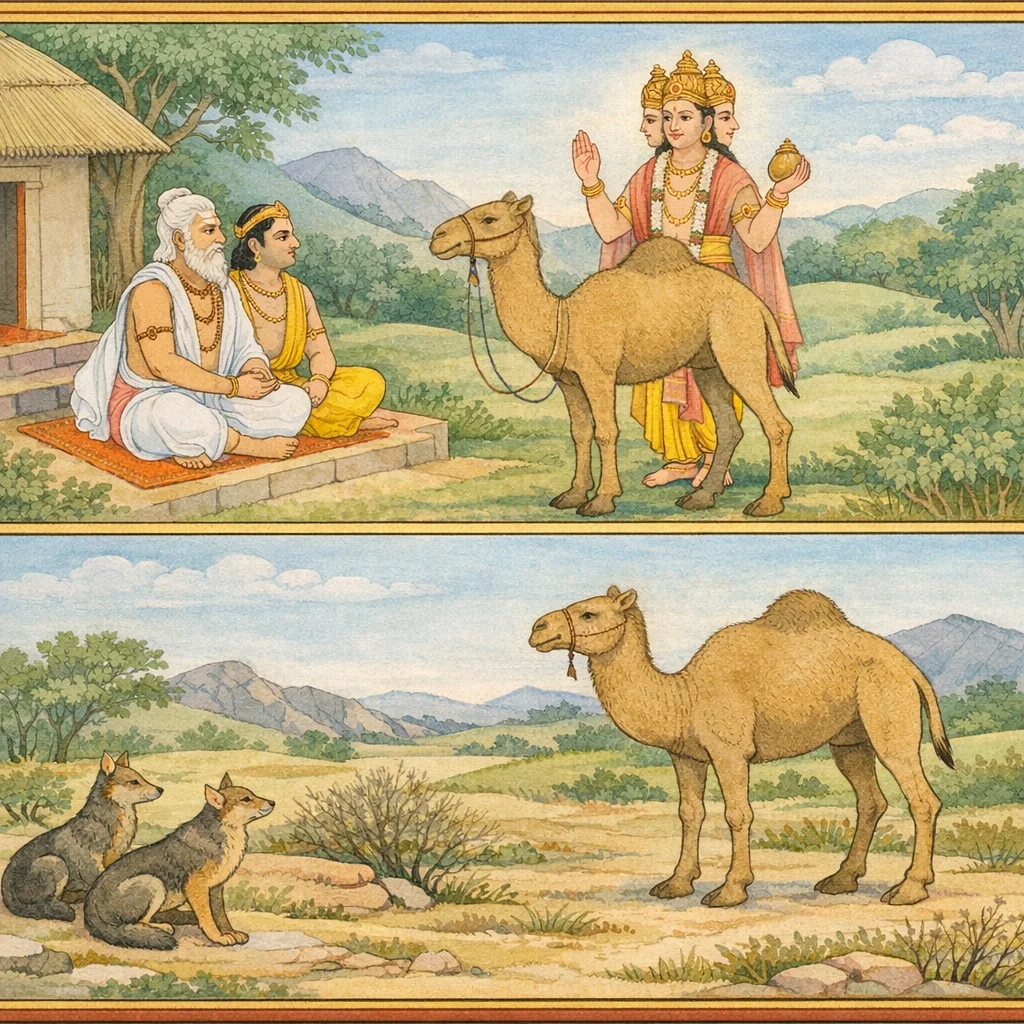
Yudhiṣṭhira asks what a ruler should do and by doing what he becomes ‘sukhī’ (secure, well-governed, at ease). Bhīṣma replies with a focused instruction on correct royal conduct and introduces a cautionary narrative: a camel, endowed through austerity with an extraordinarily long neck, becomes negligent and avoids purposeful movement. During severe weather it shelters, leaving its extended neck vulnerable; a jackal, driven by hunger, gradually consumes the exposed neck. When the camel finally attempts to retract it, the delay proves fatal—illustrating how negligence and poor judgment can convert even extraordinary advantages into liabilities. Bhīṣma then pivots to prescriptive rājadharma: abandon this pattern, cultivate yoga-like restraint (niyatendriyatā), and ground victory in बुद्धि (deliberative intelligence), echoing a Manu-style maxim that success is rooted in intellect. He classifies actions by the primacy of बुद्धि versus mere physical force, and concludes that a kingdom stands firm for the diligent ruler who controls senses, keeps counsel, understands protected policy, and maintains good allies; through examined decision-making and allied support, the whole earth is governable.
Chapter Arc: Bhīṣma turns to Yudhiṣṭhira with a promise: he will declare the king’s decisive duties—what must be done so that a ruler may become truly happy and stable in rule. → To warn against wrong conduct, Bhīṣma introduces an old tale—of a camel who receives a boon from a great giver (Brahmā), yet, intoxicated by fortune, falls into indolence and refuses timely movement and effort. → The camel, sluggish and deluded by time, tries too late to save itself—its neck jerking up and down—while a jackal (with its mate) devours it; the boon becomes meaningless before the consequence of laziness and delayed action. → Bhīṣma draws the royal lesson: works accomplished by बुद्धि (intelligence, foresight, policy) are the highest; those done by arms are middling; those relying on mere burden-bearing and brute endurance are lowest. Therefore, the king must act with discernment, timely resolve, and shāstra-guided prudence.
Shlokas
Verse 1
(दाक्षिणात्य अधिक पाठका १ श्लोक मिलाकर कुल ९१ “लोक हैं।) ऑपनआक्राा बछ। अकाल दादशाधिकशततमो< ध्याय: एक तपस्वी ऊँटके आलस्यका कुपरिणाम और राजाका कर्तव्य युधिष्ठिर उदाच किं पार्थिवेन कर्तव्यं कि च कृत्वा सुखी भवेत् । एतदाचक्ष्व तत्त्वेन सर्वधर्मभूतां वर,युधिष्ठिरने पूछा--समस्त धर्मात्माओंमें श्रेष्ठ पितामह! राजाको क्या करना चाहिये? क्या करनेसे वह सुखी हो सकता है? यह मुझे यथार्थरूपसे बताइये?
Yudhiṣṭhira said: “O best among all who uphold dharma, what should a king do? And by doing what can he become truly happy? Tell me this in accordance with the truth.”
Verse 2
भीष्म उवाच हन्त ते5हं प्रवक्ष्यामि शृणु कार्यकनिश्चयम् । यथा राज्ञेह कर्तव्यं यच्च कृत्वा सुखी भवेत्,भीष्मजीने कहा--नरेश्वर! राजाका जो कर्तव्य है और जो कुछ करके वह सुखी हो सकता है, उस कार्यका निश्चय करके अब मैं तुम्हें बतलाता हूँ, उसे सुनो
Bhishma said: “Come, I shall declare to you—listen with attention—the settled determination about what must be done: what a king ought to do here in this world, and what, when done, enables him to become truly content and well.”
Verse 3
न चैवं वर्तितव्यं सम यथेदमनुशुश्रुम । उष्टस्य तु महद् वृत्तं तन्निबोध युधिष्ठिर,युधिष्ठिर! हमने एक ऊँटका जो महान वृत्तान्त सुन रखा है, उसे तुम सुनो। राजाको वैसा बर्ताव नहीं करना चाहिये
Bhīṣma said: “One should not conduct oneself in this way, as we have heard in the tradition. But listen, O Yudhiṣṭhira, to the great tale concerning a camel—(it illustrates) how a king ought not to behave.”
Verse 4
जातिस्मरो महानुष्ट: प्राजापत्ये युगे5भवत् । तप: सुमहादातिष्ठदरण्ये संशितव्रत:,प्राजापत्ययुग (सत्ययुग) में एक महान् ऊँट था। उसको पूर्वजन्मकी बातोंका स्मरण था। उसने कठोर व्रतके पालनका नियम लेकर वनमें बड़ी भारी तपस्या आरम्भ की
Bhishma said: In the age of Prajāpati (the primordial Satya Yuga) there lived a great camel, endowed with memory of its former births. Having undertaken a strict vow, it began an exceedingly severe austerity in the forest—setting its life upon disciplined restraint.
Verse 5
तपसस्तस्य चान्ते5थ प्रीतिमानभवद् विभु: । वरेण च्छन्दयामास ततश्रनैनं पितामह:,उस तपस्याके अन्तमें पितामह भगवान् ब्रह्मा बड़े प्रसन्न हुए। उन्होंने उससे वर माँगनेके लिये कहा
Bhīṣma said: When his austerities came to an end, the mighty Lord (Brahmā) was pleased. Then the Grandfather (Brahmā) invited him to choose a boon, affirming that sincere, disciplined tapas culminates in divine approval and rightful reward.
Verse 6
उड्ड उवाच भगवंस्त्वत्प्रसादान्मे दीर्घा ग्रीवा भवेदियम् । योजनानां शतं साग्र॑ गच्छामि चरितुं विभो,ऊँट बोला--भगवन्! आपकी कृपासे मेरी यह गर्दन बहुत बड़ी हो जाय, जिससे जब मैं चरनेके लिये जाऊँ तो सौ योजनसे अधिक दूरतककी खाद्य वस्तुएँ ग्रहण कर सकूँ
Uḍḍa said: “O Blessed Lord, by your grace may this neck of mine become long, so that when I go out to graze, O mighty one, I may reach and take food from a distance of a hundred yojanas and more.” The request reflects a mind seeking advantage through extraordinary capacity rather than restraint, hinting at the ethical tension between contentment and unchecked appetite.
Verse 7
एवमस्त्विति चोक्त: स वरदेन महात्मना । प्रतिलभ्य वरं श्रेष्ठ ययावुष्ट: स्वकं वनम्,वरदायक महात्मा ब्रह्माजीने 'एवमस्तु” कहकर उसे मुँहमाँगा वर दे दिया। वह उत्तम वर पाकर ऊँट अपने वनमें चला गया
Thus addressed by the great boon-giver—who said, “So be it”—the camel received the excellent boon it had sought and then departed for its own forest. The episode underscores the moral weight of a granted boon: once bestowed by a powerful and righteous giver, it becomes a binding reality, shaping the recipient’s course and responsibility thereafter.
Verse 8
स चकार तदा55लस्यं वरदानात् सुदुर्मति: । न चैच्छच्चरितु गन्तुं दुरात्मा कालमोहितः,उस खोटी बुद्धिवाले ऊँटने वरदान पाकर कहीं आने-जानेमें आलस्य कर लिया। वह दुरात्मा कालसे मोहित होकर चरनेके लिये कहीं जाना ही नहीं चाहता था
Then that wicked-minded camel, having obtained a boon, fell into laziness. Deluded by Time, the evil-souled creature no longer wished to go out to graze or to move about at all—showing how unearned advantage can breed indolence and moral decline.
Verse 9
स कदाचित् प्रसार्यव तां ग्रीवां शतयोजनाम् । चचार श्रान्तहृदयो वातश्नचागात् ततो महान्,एक समयकी बात है, वह अपनी सौ योजन लंबी गर्दन फैलाकर चर रहा था, उसका मन चरनेसे कभी थकता ही नहीं था। इतनेमें ही बड़े जोरसे हवा चलने लगी
Once, stretching out his neck—said to be a hundred yojanas long—he moved about grazing. His heart did not grow weary of feeding; but just then a mighty wind arose and began to blow with great force.
Verse 10
स गुहायां शिरो ग्रीवां निधाय पशुरात्मन: । आस्ते तु वर्षमभ्यागात् सुमहत् प्लावयज्जगत्,वह पशु किसी गुफामें अपनी गर्दन डालकर चर रहा था, इसी समय सारे जगत्के जलसे आप्लावित करती हुई बड़ी भारी वर्षा होने लगी
The animal, having thrust its head and neck into a cave, remained there. Just then a very great downpour arrived—so heavy that it seemed to flood the whole world.
Verse 11
अथ शीतपरीताज्रो जम्बुक: क्षुच्छुमान्वित: । सदारस्तां गुहामाशु प्रविवेश जलार्दित:,वर्षा आरम्भ होनेपर भूख और थकावटसे कष्ट पाता हुआ एक गीदड़ अपनी स्त्रीके साथ शीघ्र ही उस गुहामें आ घुसा। वह जलसे पीड़ित था, सर्दीसे उसके सारे अंग अकड़ गये थे
Then, as the rains began, a jackal—his limbs stiffened by cold, tormented by hunger and hardship, and drenched by water—quickly entered that cave together with his mate.
Verse 12
स दृष्टवा मांसजीवी तु सुभृशं क्षुच्छुमान्वित: । अभक्षयत् ततो ग्रीवामुष्टस्य भरतर्षभ,भरतश्रेष्ठ। वह मांसजीवी गीदड़ अत्यन्त भूखके कारण कष्ट पा रहा था, अतः उसने ऊँटकी गर्दनका मांस काट-काटकर खाना आरम्भ कर दिया
Seeing the camel, the flesh-eating jackal—tormented by intense hunger—began to eat, and then gnawed and consumed the camel’s neck.
Verse 13
यदा त्वबुध्यतात्मानं भक्ष्यमाणं स वै पशु: । तदा संकोचने यत्नमकरोद् भृशदु:खित:,जब उस पशुको यह मालूम हुआ कि उसकी गर्दन खायी जा रही है, तब वह अत्यन्त दुखी हो उसे समेटनेका प्रयत्न करने लगा
But when that animal finally realized that its own neck was being eaten, it became intensely distressed and began striving to draw itself in and protect itself.
Verse 14
यावदूर्ध्वमधश्वैव ग्रीवां संक्षिपते पशु: । तावत् तेन सदारेण जम्बुकेन स भक्षित:,वह पशु जबतक अपनी गर्दनको ऊपर-नीचे समेटनेका यत्न करता रहा, तबतक ही सत्रीसहित सियारने उसे काटकर खा लिया
So long as the animal kept trying to draw its neck in—now upward, now downward—during that very time the jackal, together with its mate, tore into it and devoured it.
Verse 15
स हत्वा भक्षयित्वा च तमुष्टं जम्बुकस्तदा । विगते वातवर्षे तु निश्चक्राम गुहामुखात्,इस प्रकार ऊँटको मारकर खा जानेके पश्चात् जब आँधी और वर्षा बंद हो गयी, तब वह गीदड़ गुफाके मुहानेसे निकल गया
Having killed and then eaten that camel, the jackal, when the storm-wind and rain had subsided, came out from the mouth of the cave. The episode shows how opportunistic violence and deceit may win a momentary escape, yet it silently calls for ethical reflection on adharma-driven survival and its consequences.
Verse 16
एवं दुर्बुद्धिना प्राप्तमुष्टेण निधनं तदा । आलस्यस्य क्रमात् पश्य महान्तं दोषमागतम्
Thus, through foolishness, death was then brought about by a mere fist. See how, step by step, from laziness there arises a great fault—one that grows into ruin.
Verse 17
इस तरह उस मूर्ख ऊँटकी मृत्यु हो गयी। देखो, उसके आलस्यके क्रमसे कितना महान् दोष प्राप्त हो गया ।। त्वमप्येवंविधं हित्वा योगेन नियतेन्द्रिय: । वर्तस्व बुद्धिमूलं तु विजयं मनुरब्रवीत्,इसलिये तुम्हें भी ऐसे आलस्यको त्याग करके इन्द्रियोंको वशमें रखते हुए बुद्धिपूर्वक बर्ताव करना उचित है। मनुजीका कथन है कि “विजयका मूल बुद्धि ही है”
Thus the foolish camel met its death. See how, step by step, its laziness brought about a grave fault and ruin. You too should abandon such indolence; through disciplined practice keep your senses under control and act with clear intelligence. For Manu has declared that the root of victory is intelligence itself.
Verse 18
बुद्धिश्रेष्ठानि कर्माणि बाहुमध्यानि भारत । तानि जड्घाजघन्यानि भारप्रत्यवराणि च,भारत! बुद्धिबलसे किये गये कार्य श्रेष्ठ हैं। बाहुबलसे किये जानेवाले कार्य मध्यम हैं। जाँघ अर्थात् पैरके बलसे किये गये कार्य जघन्य (अधम कोटिके) हैं तथा मस्तकसे भार ढोनेका कार्य सबसे निम्न श्रेणीका है
Uḍḍa said: “O Bhārata, actions accomplished through intelligence are the highest. Those accomplished through the strength of the arms are of a middle grade. Those done by the power of the thighs (i.e., the legs) are base; and the carrying of burdens upon the head is the lowest of all.”
Verse 19
राज्यं तिष्ठति दक्षस्य संगृहीतेन्द्रियस्य च । आर्तस्य बुद्धिमूलं हि विजयं मनुरब्रवीत्,जो जितेन्द्रिय और कार्यदक्ष है, उसीका राज्य स्थिर रहता है। मनुजीका कथन है कि संकटमें पड़े हुए राजाकी विजयका मूल बुद्धि-बल ही है
A kingdom remains stable when its ruler is competent in action and has his senses under control. Manu has declared that, for a king pressed by adversity, the very root of victory is the strength and clarity of intellect.
Verse 20
गुह्ां मन्त्र श्र॒ुववतः सुसहायस्य चानघ । परीक्ष्यकारिणो हार्थास्तिष्ठन्तीह युधिष्ठिर । सहायसयुक्तेन मही कृत्स्ना शक््या प्रशासितुम्,निष्पाप युधिष्ठिर! जो गुप्त मन्त्रणा सुनता है, जिसके सहायक अच्छे हैं तथा जो भलीभाँति जान-बूझकर कोई कार्य करता है, उसके पास ही धन स्थिर रहता है। सहायकोंसे सम्पन्न नरेश ही समूची पृथ्वीका शासन कर सकता है
O blameless Yudhiṣṭhira, wealth and practical success remain steady in this world only with one who listens to confidential counsel, is supported by capable allies, and acts after due examination. A king furnished with such helpers can govern the entire earth; without them, sovereignty cannot be securely maintained.
Verse 21
इदं हि सद्धिः कथित विधिज्ञै: पुरा महेन्द्रप्रतिमप्र भाव । मयापि चोक्तं तव शास्त्रदृष्ट्या यथैव बुद्ध्वा प्रचरस्व राजन्,महेन्द्रके समान प्रभावशाली नरेश! पूर्वकालमें राज्य-संचालनकी विधिको जाननेवाले सत्पुरुषोंने यह बात कही थी। मैंने भी शास्त्रीय दृष्टिके अनुसार तुम्हें यह बात बतायी है। राजन! इसे अच्छी तरह समझकर इसीके अनुसार चलो
O king of power comparable to Indra, this principle was taught long ago by virtuous men who knew the proper rules of governance. I too have stated it to you in accordance with the vision of the śāstras. Therefore, O king, understand it well and conduct yourself in that very way.
Verse 111
इस प्रकार श्रीमह्याभारत शान्तिपर्वके अन्तर्गत राजधमनुशासनपर्वमें व्याप्र और गीदड़का संवादविषयक एक सौ ग्यारहवाँ अध्याय पूरा हुआ
Thus ends the one hundred and eleventh chapter of the Śānti Parva of the Śrī Mahābhārata, within the section on the instruction of royal duties (rājadharma), dealing with the dialogue between the tiger and the jackal. This closing colophon signals the completion of a didactic episode intended to illuminate principles of righteous governance and ethical conduct through animal exempla.
Verse 112
इति श्रीमहाभारते शान्तिपर्वणि राजधर्मानुशासनपर्वणि उष्टग्रीवोपाख्याने दादशाधिकशततमो<्ध्याय:
Thus, in the Śrī Mahābhārata, within the Śānti Parvan—specifically the section on the instruction concerning the duties of kings (rājadharma)—ends the one-hundred-and-twelfth chapter of the narrative known as the Upākhyāna of Uṣṭagrīva. This concluding colophon marks the close of the chapter and situates it within the larger ethical discourse on righteous governance.
Frequently Asked Questions
The chapter highlights the risk that advantages (status, power, gifts, capacity) become self-defeating when paired with negligence and delayed corrective action; governance fails not only from external threats but from internal lapses in judgment and discipline.
A ruler should avoid आलस्य (negligence), act with examined judgment, and maintain disciplined self-regulation; intelligence-led policy, supported by counsel and allies, is presented as more stabilizing than reliance on force or passive entitlement.
No explicit phalaśruti is stated in this chapter; its meta-function is normative and administrative—positioning rājadharma as inseparable from inner governance (sense-restraint and बुद्धि) and thus as a prerequisite for durable political order.