Adhyaya 18
Rudra’s Omitted Share in the Yajña (रुद्रभागानुपपत्तिः — यज्ञोपाख्यानम्)
Upa-parva: Sauptika-Parva (Vāsudeva’s discourse on Rudra and the Yajña episode)
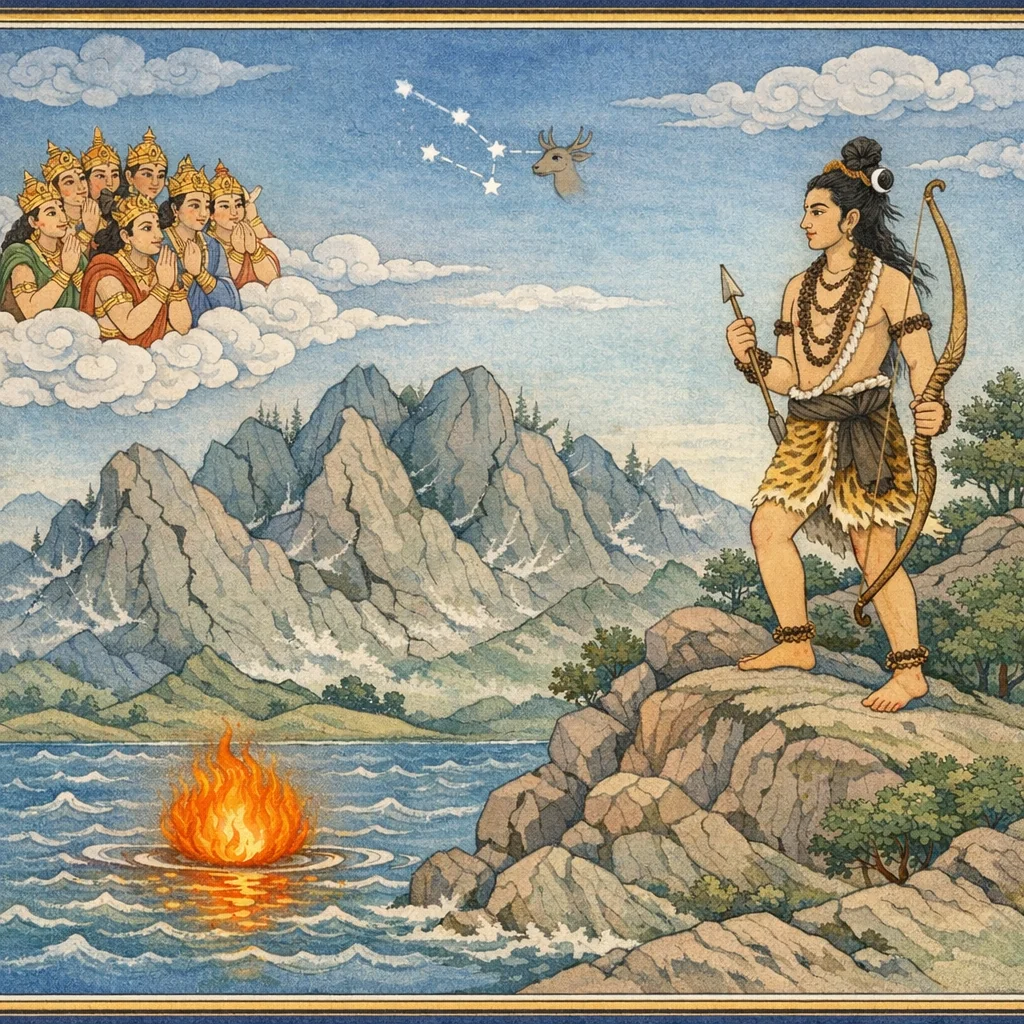
Vāsudeva describes a primordial sacrificial arrangement undertaken by the devas according to Vedic measure (vedapramāṇa) and proper procedure (vidhi). In their preparations—selecting the appropriate place, the deities entitled to shares, and the sacrificial substances—they fail to recognize Rudra (Sthāṇu) and do not assign his portion. Rudra, identified as Kṛttivāsas and Śitikaṇṭha, responds with force: he fashions/raises a bow whose components are symbolically mapped to sacrifice (e.g., vaṣaṭ as the bowstring; yajña-aṅgas as structural elements). His arrival induces cosmic disturbance: earth trembles, winds and fire falter, luminaries dim, and the devas lose composure; the sacrifice itself is wounded and flees in the form of a deer with fire. Rudra injures specific deities (e.g., Savitṛ’s arms, Bhaga’s eyes, Pūṣan’s teeth), and the assembly disperses. Through a corrective act—speech (Vāk) cutting the bowstring—the devas approach Rudra for refuge along with the yajña; Rudra’s wrath is deposited into a water-reservoir, transforming water into consuming heat, and he restores what was damaged while the devas finally allocate his due share. The chapter closes by applying the exemplum to human grief: Vāsudeva advises that the recent deaths should not be solely attributed to a single agent (Drauṇi/Aśvatthāman), but understood within a larger frame of Mahādeva’s favor/dispensation, urging immediate practical action rather than immobilizing lamentation.
Chapter Arc: श्रीभगवान् (व्यास) सत्ययुगोत्तर काल का वृत्तान्त उठाते हैं—देवता विधिपूर्वक यज्ञ की स्थापना करना चाहते हैं, पर एक अदृश्य त्रुटि से जगत् की धुरी डगमगाने लगती है। → देवता यज्ञ की समस्त कल्पना करते हैं—साधन, हविष्य, यज्ञभाग के अधिकारी, द्रव्य—पर रुद्र-तत्त्व को यथार्थ रूप से न जानने के कारण यज्ञ-व्यवस्था में असंतुलन जन्म लेता है। रुद्र ब्रह्मचारी, अव्यय, धनुषधारी रूप में प्रकट होते हैं; उनका धनुष स्वयं यज्ञ-रूपक बन जाता है (वषट्कार प्रत्यंचा, यज्ञ के अंग संनाह)। पृथ्वी, पर्वत, लोक-व्यवस्था काँप उठती है। → रुद्र के कोप से देवता, यज्ञ और समस्त जगत् ‘असुस्थ’ हो जाते हैं—सृष्टि का संतुलन टूटता है। उसी उग्र रूप में रुद्र दिव्य आकाश में प्रकाशित होते हैं (मृगशिरा नक्षत्र-रूप संकेत), और उनके तेज से भय-तरंग चरम पर पहुँचती है। → भगवान् शंकर प्रसन्न होकर अपना कोप ‘जलाशय’ (समुद्र) में स्थापित कर देते हैं; वह क्रोध जल-पावक बनकर निरन्तर शोषण-सा प्रभाव रखता है, पर जगत् पुनः ‘सुस्थ’ हो जाता है। कथा का प्रयोजन वर्तमान प्रसंग से जुड़ता है—द्रौणि (अश्वत्थामा) द्वारा रात्रि-वध महादेव-प्रसाद/आवेश से घटित हुआ; अतः धृतराष्ट्र को शोक में डूबकर मन में दोष-ग्रहण नहीं करना चाहिए, आगे का कर्तव्य करना चाहिए। → धृतराष्ट्र के शोक और दायित्व-बोध के बीच प्रश्न लटकता है—अब इस महादेव-प्रसाद से उपजे संहार के बाद कुरुवंश किस दिशा में कर्म करेगा?
Shlokas
Verse 1
अपना बछ। अर: अष्टादशो< ध्याय: महादेवजीके कोपसे देवता, यज्ञ और जगत्की दुरवस्था तथा उनके प्रसादसे सबका स्वस्थ होना श्रीभगवानुवाच ततो देवयुगेडतीते देवा वै समकल्पयन् । यज्ञ वेदप्रमाणेन विधिवद् यष्टमीप्सव:
Vaiśampāyana said: When the divine age had passed, the gods resolved among themselves, desiring to perform a sacrifice in strict accordance with Vedic authority and proper ritual procedure. The verse frames a return to order through Vedic rite: when cosmic conditions shift, the guardians of the world seek restoration not by force but by disciplined, lawful worship.
Verse 2
श्रीभगवान् बोले--तदनन्तर सत्ययुग बीत जाने-पर देवताओंने विधिपूर्वक भगवान्का यजन करनेकी इच्छासे वैदिक प्रमाणके अनुसार यज्ञकी कल्पना की ।। कल्पयामासुरथ ते साधनानि हवींषि च । भागा देवताश्रैव यज्ञियं द्रव्यमेव च
After the Satya Yuga had passed, the gods—desiring to worship the Lord in due ritual order—conceived the institution of sacrifice in accordance with Vedic authority. They then arranged the necessary means: the sacrificial offerings, the allotted shares for the deities, and the very materials fit for sacrifice. The passage frames yajña as a disciplined, scripture-grounded act that sustains cosmic order through rightful distribution and reverent intention.
Verse 3
तत्पश्चात् उन्होंने यज्ञके साधनों, हविष्यों, यज्ञभागके अधिकारी देवताओं और यज्ञोपयोगी द्रव्योंकी कल्पना की ।। ता वै रुद्रमजानन्त्यो याथातथ्येन देवता: । नाकल्पयन्त देवस्य स्थाणोर्भागं नराधिप,नरेश्वर! उस समय देवता भगवान् रुद्रको यथार्थ-रूपसे नहीं जानते थे; इसलिये उन्होंने 'स्थाणु' नामधारी भगवान् शिवके भागकी कल्पना नहीं की
Vaiśampāyana said: Thereafter they duly arranged the means of sacrifice—its offerings, the gods entitled to receive their respective shares, and the materials required for the rite. But since the gods did not yet know Rudra in his true nature, they did not assign any portion of the sacrifice to the Lord known as Sthāṇu (Śiva), O king. The passage underscores how incomplete understanding and neglect of a rightful claimant can disturb the moral and ritual order.
Verse 4
सो5कल्प्यमाने भागे तु कृत्तिवासा मखेडमरै: । ततः साधनमन्विच्छन् धनुरादौ ससर्ज ह
Vaiśampāyana said: When the allotted share was being arranged, Kṛttivāsā—amid the tumult and clamor of the assembly—then, seeking an effective means to accomplish his purpose, first brought forth a bow. The episode underscores how, when rightful portions and order are contested, the impulse to secure one’s aim can quickly turn toward instruments of force, foreshadowing the ethical tension between just claim and violent method.
Verse 5
जब देवताओंने यज्ञमें उनका कोई भाग नियत नहीं किया, तब व्याप्रचर्मधारी भगवान् शिवने उनके दमनके लिये साधन जुटानेकी इच्छा रखकर सबसे पहले धनुषकी सृष्टि की ।। लोकयज्ञः क्रियायज्ञो गृहयज्ञ: सनातन: । पजञ्चभूतनृयज्ञश्न जज्ञे सर्वमिदं जगत्,लोकयज्ञ, क्रियायज्ञ, सनातन गृहयज्ञ, पंचभूतयज्ञ और मनुष्ययज्ञ--ये पाँच प्रकारके यज्ञ हैं। इन्हींसे यह सम्पूर्ण जगत् उत्पन्न होता है
Vaiśampāyana said: When the gods allotted them no share in the sacrifice, the Blessed Lord Śiva—clad in a tiger-skin—wishing to gather the means to subdue them, first brought the bow into existence. There are five kinds of sacrifice: the sacrifice for the welfare of the world, the sacrifice of prescribed ritual action, the perennial household sacrifice, the sacrifice directed to the five great elements, and the sacrifice offered to human beings. From these sacrificial duties, it is said, this entire world arises.
Verse 6
लोकयज्जैर्नयजैश्व कपर्दी विदधे धनु: । धनु: सृष्टमभूत् तस्य पठ्चकिष्कुप्रमाणत:,मस्तकपर जटाजूट धारण करनेवाले भगवान् शिवने लोकयज्ञ और मनुष्ययज्ञोंसे एक धनुषका निर्माण किया। उनका वह धनुष पाँच हाथ लंबा बनाया गया था
Vaiśampāyana said: The matted-haired Lord Śiva fashioned a bow by means of the rites known as the “world-sacrifice” and the “human-sacrifice”. The bow he produced was made to the measure of five kiṣkus, a traditional unit of length.
Verse 7
वषट्कारो5भवज्ज्या तु धनुषस्तस्य भारत । यज्ञाज़नि च चत्वारि तस्य संनहने5भवन्,भरतनन्दन! वषट्कार उस धनुषकी प्रत्यंचा था। यज्ञके चारों अंग स्नान, दान, होम और जप उन भगवान् शिवके लिये कवच हो गये
Vaiśampāyana said: “O Bhārata, the sacred exclamation ‘vaṣaṭ’ became the bowstring of his bow. And the four constituents of sacrifice became his protective armour, O delight of the Bharatas.”
Verse 8
ततः क्रुद्धो महादेवस्तदुपादाय कार्मुकम् । आजगामाथ तन्नैव यत्र देवा: समीजिरे,तदनन्तर कुपित हुए महादेवजी उस धनुषको लेकर उसी स्थानपर आये, जहाँ देवतालोग यज्ञ कर रहे थे
Then Mahādeva, angered, took up that bow and came to the very place where the gods had assembled for their sacrificial rite.
Verse 9
तमात्तकार्मुकं दृष्ट्वा ब्रह्मचारिणमव्ययम् । विव्यथे पृथिवी देवी पर्वताश्न चकम्पिरे
Seeing him with his bow already taken up—an imperishable brahmacārin—Goddess Earth herself was shaken with dread, and the mountains too trembled.
Verse 10
उन ब्रह्मचारी एवं अविनाशी रुद्रको हाथमें धनुष उठाये देख पृथ्वीदेवीको बड़ी व्यथा हुई और पर्वत भी काँपने लगे ।। न ववौ पवनश्ैव नाग्निर्जज्वाल वैधित: । व्यभ्रमच्चापि संविग्नं दिवि नक्षत्रमण्डलम्
Vaiśaṃpāyana said: In that dreadful moment, when Rudra—celibate in vow and imperishable—was seen lifting the bow in his hand, the Earth-goddess was seized by great anguish, and even the mountains began to tremble. The wind did not blow, the fire did not blaze as it should, and the very circle of stars in the sky seemed to reel in agitation.
Verse 11
हवाकी गति रुक गयी, आग समिधा और घी आदिसे जलानेकी चेष्टा की जानेपर भी प्रज्वलित नहीं होती थी और आकाशमें नक्षत्रोंका समूह उद्विग्न होकर घूमने लगा ।। न बभौ भास्करश्नलापि सोम: श्रीमुक्तमण्डल: । तिमिरेणाकुलं सर्वमाकाशं चाभवद् वृतम्,सूर्य भी पूर्णतः प्रकाशित नहीं हो रहे थे, चन्द्रमण्डल भी श्रीहीन हो गया था तथा सारा आकाश अन्धकारसे व्याप्त हो रहा था
Vaiśaṃpāyana said: The wind’s course was checked; though men strove to kindle the fire with sacrificial fuel and ghee, it would not flare. In the sky the host of stars, disturbed, began to wheel about. The sun did not shine forth fully, the moon’s orb was stripped of its splendor, and darkness spread everywhere, veiling the whole firmament.
Verse 12
अभिभूतास्ततो देवा विषयाज्न प्रजज्ञिरे । न प्रत्यभाच्च यज्ञ: स देवतास्त्रेसिरे तथा,उससे अभिभूत होकर देवता किसी विषयको पहचान नहीं पाते थे, वह यज्ञ भी अच्छी तरह प्रतीत नहीं होता था। इससे सारे देवता भयसे थर्रा उठे
Then the gods, overwhelmed by that influence, could no longer clearly recognize the objects of their perception. Even that sacrifice did not appear in its proper, auspicious form. Seeing this disruption, all the deities trembled with fear.
Verse 13
ततः स यज्ञ विव्याध रौद्रेण हृदि पत्रिणा | अपक्रान्तस्ततो यज्ञो मृगो भूत्वा सपावक:,तदनन्तर रुद्रदेवने भयंकर बाणके द्वारा उस यज्ञके हृदयमें आघात किया। तब अग्निसहित यज्ञ मृगका रूप धारण करके वहाँसे भाग निकला
Then he pierced the sacrifice in the heart with a fierce, Rudra-like arrow. Thereupon the sacrifice, accompanied by the sacred fire, fled away, assuming the form of a deer.
Verse 14
स तु तेनैव रूपेण दिवं प्राप्पय व्यराजत । अन्वीयमानो रुद्रेण युधिष्ठिर नभस्तले,वह उसी रूपसे आकाशमें पहुँचकर (मृगशिरा नक्षत्रके रूपमें) प्रकाशित होने लगा। युधिष्ठिरर[ आकाश-मण्डलमें रुद्रदेव उस दशामें भी (आर्द्रा नक्षत्रके रूपमें) उसके पीछे लगे रहते हैं
In that very form it reached the heavens and shone there. Yet Rudra still pursued it; and Yudhiṣṭhira beheld it upon the vault of the sky.
Verse 15
अफक्रान्ते ततो यज्ञे संज्ञा न प्रत्यभात् सुरान् । नष्टसंज्ञेषु देवेषु न प्राज़्ायत किंचन,यज्ञके वहाँसे हट जानेपर देवताओंकी चेतना लुप्त-सी हो गयी। चेतना लुप्त होनेसे देवताओंको कुछ भी प्रतीत नहीं होता था
Vaiśaṃpāyana said: When the sacrifice then withdrew and came to a halt, awareness no longer shone forth in the gods. And when the deities had lost consciousness, nothing at all could arise or be perceived by them—showing how the disruption of sacred order renders even divine powers inert.
Verse 16
त्यम्बक: सवितुर्बाहू भगस्य नयने तथा । पूृष्णश्न दशनान् क्रुद्धों धनुष्कोट्या व्यशातयत्
Vaiśampāyana said: Enraged, Tryambaka (Śiva) struck down Savitṛ’s arms, and likewise Bhaga’s eyes; and he also shattered Pūṣan’s teeth with the tip of his bow. The verse underscores how uncontrolled wrath in a sacrificial conflict leads to grievous, disproportionate harm even to revered divine participants, turning a rite meant for order into a scene of violent retribution.
Verse 17
इस प्रकार श्रीमह्याभारत सौप्तिकपर्वके अन्तर्गत ऐषीकपर्वमें युधिष्ठिर और श्रीकृष्णका संवादविषयक सत्रहवाँ अध्याय पूरा हुआ,उस समय कुपित हुए त्रिनेत्रधारी भगवान् शिवने अपने धनुषकी कोटिसे सविताकी दोनों बाँहें काट डालीं, भगकी आँखें फोड़ दीं और पूषाके सारे दाँत तोड़ डाले ।। प्राद्रवन्त ततो देवा यज्ञाज्ानि च सर्वशः । केचित् तत्रैव घूर्णन्तो गतासव इवाभवन् तदनन्तर सम्पूर्ण देवता और यज्ञके सारे अंग वहाँसे पलायन कर गये। कुछ वहीं चक्कर काटते हुए प्राणहीन-से हो गये
Thus, in the Mahābhārata, within the Sauptika Parva and the Aiṣīka Parva, the seventeenth chapter—concerning the dialogue between Yudhiṣṭhira and Śrī Kṛṣṇa—was completed. At that time the three-eyed Lord Śiva, enraged, with the tip of his bow cut off both arms of Savitṛ, burst Bhaga’s eyes, and broke all of Pūṣan’s teeth. Thereafter all the gods, and every limb of the sacrifice, fled from that place. Some, reeling in circles there itself, became as if lifeless.
Verse 18
स तु विद्रवाव्य तत् सर्व शितिकण्ठो5वहस्य च । अवष्ट भ्य धनुष्कोटिं रुरोध विबुधांस्ततः,वह सब कुछ दूर हटाकर भगवान् नीलकण्ठने देवताओंका उपहास करते हुए धनुषकी कोटिका सहारा ले उन सबको रोक दिया अतः इस बातको आप मनमें न लावें। अश्वत्थामाने यह कार्य अपने बलसे नहीं, महादेवजीकी कृपासे सम्पन्न किया है। अब आप आगे जो कुछ करना हो, वही कीजिये ।। इति श्रीमहाभारते सौप्तिकपर्वणि ऐषीकपर्वणि अष्टादशो5ध्याय:
Vaiśampāyana said: Having driven them all back, Śitikaṇṭha (Śiva), mocking the gods, braced himself upon the tip of his bow and thereupon checked the celestial beings. The sense is that this feat should not be credited to Aśvatthāman’s own strength alone; it was accomplished through Mahādeva’s grace—therefore, let no one harbor a contrary thought. Now, do whatever must be done next.
Verse 19
ततो वागमरैरुक्ता ज्यां तस्य धनुषो5च्छिनत् । अथ तत् सहसा राज॑श्कछिन्नज्यं व्यस्फुरद् धनु:,तत्पश्चात् देवताओंद्वारा प्रेरित हुई वाणीने महादेवजीके धनुषकी प्रत्यंचा काट डाली। राजन! सहसा प्रत्यंचा कट जानेपर वह धनुष उछलकर गिर पड़ा
Then a disembodied voice, prompted by the immortals, cut the bowstring of his bow. O King, as soon as the string was severed, the bow—now unstrung—jerked violently and sprang away. The episode underscores that even the mightiest weapon is rendered powerless when higher, unseen forces intervene to restrain destructive power.
Verse 20
ततो विधनुषं देवा देवश्रेष्ठमुपागमन् । शरणं सह यज्ञेन प्रसादं चाकरोत् प्रभु:,तब देवता यज्ञको साथ लेकर धनुषरहित देवश्रेष्ठ महादेवजीकी शरणमें गये। उस समय भगवान् शिवने उन सबपर कृपा की
Then the gods approached the foremost of gods, now without his bow, and—bringing the sacrifice with them—took refuge in him. The Lord (Śiva), moved by their surrender, granted them his gracious favor.
Verse 21
ततः प्रसन्नो भगवान् स्थाप्य कोपं जलाशये । स जल पावको भूत्वा शोषयत्यनिशं प्रभो,इसके बाद प्रसन्न हुए भगवानने अपने क्रोधको समुद्रमें स्थापित कर दिया। प्रभो! वह क्रोध वडवानल बनकर निरन्तर उसके जलको सोखता रहता है
Then the Blessed Lord, becoming serene, set aside his wrath and placed it within the ocean. O lord, that very wrath, taking the form of the submarine fire (Vaḍavānala), ceaselessly drinks up the waters there.
Verse 22
भगस्य नयने चैव बाहू च सवितुस्तथा | प्रादात् पूृष्णश्व॒ दशनान् पुनर्यज्ञांश्व पाण्डव,पाण्डुनन्दन! फिर भगवान् शिवने भगको आँखें, सविताको दोनों बाँहें, पूषाको दाँत और देवताओंको यज्ञ प्रदान किये
Vaiśaṃpāyana said: Śiva restored what had been lost in the earlier conflict among the gods—he gave Bhaga back his eyes, returned Savitṛ’s two arms, and restored Pūṣan’s teeth; and he also re-established the sacrificial rites for the gods.
Verse 23
ततः सुस्थमिदं सर्व बभूव पुनरेव हि । सर्वाणि च हवींष्यस्य देवा भागमकल्पयन्,तदनन्तर यह सारा जगत् पुनः सुस्थिर हो गया। देवताओंने सारे हविष्योंमेंसे महादेवजीके लिये भाग नियत किया
Vaiśampāyana said: Thereafter, the whole world became steady and well-ordered once again. And the gods duly assigned a share of all the sacrificial offerings (havis) to him (Mahādeva).
Verse 24
तस्मिन् क्रुद्धे3भवत् सर्वमसुस्थं भुवनं प्रभो । प्रसन्ने च पुनः सुस्थं प्रसन्नो5स्य च वीर्यवान्,राजन्! भगवान् शंकरके कुपित होनेपर सारा जगत् डाँवाडोल हो गया था और उनके प्रसन्न होनेपर वह पुनः सुस्थिर हो गया। वे ही शक्तिशाली भगवान् शिव अश्वत्थामापर प्रसन्न हो गये थे
Vaiśampāyana said: When that Lord grew wrathful, the whole world became unsettled and thrown into disorder. When he became gracious again, it returned to stability. And that mighty Blessed One—Śaṅkara (Śiva)—had become pleased with him, O King.
Verse 25
ततस्ते निहता: सर्वे तव पुत्रा महारथा: । अन्ये च बहव: शूरा: पाउ्चालस्य पदानुगा:,इसीलिये उसने आपके सभी महारथी पुत्रों तथा पांचालराजका अनुसरण करनेवाले अन्य बहुत-से शूरवीरोंका वध किया है
Then all those mighty chariot-warriors—your sons—were slain; and many other heroes too, who had followed in the wake of the king of the Pāñcālas.
Verse 26
न तन्मनसि कर्तव्यं न च तद् द्रौणिना कृतम् । महादेवप्रसादेन कुरु कार्यमनन्तरम्
“Do not entertain that thought in your mind; nor was that deed done by Drauṇi through his own power. By the grace of Mahādeva, carry out what must be done next without delay.”
Frequently Asked Questions
The tension lies between procedural correctness and stakeholder recognition: even a Veda-grounded ritual becomes destabilizing when a rightful share-holder is omitted, raising questions about legitimacy, inclusion, and the consequences of institutional neglect.
Calamity should be interpreted through layered causality: individual agency matters, but larger structures of order, omission, and divine dispensation also shape outcomes; therefore grief must be paired with timely, disciplined action.
Rather than a formal phalaśruti, it offers an interpretive closure: once Rudra is appeased and properly allotted a share, systemic stability returns—implying that understanding the episode supports a broader ethic of restoration, restraint, and orderly response after disruption.