Adhyaya 59
Adhyāya 59: Vidura’s Admonition to Duryodhana after the Summons of Draupadī (सभा पर्व)
Upa-parva: Dyūta-anunaya / Vidura-nīti in the Dice-Game Aftermath (Sabhā-parva context)
The chapter opens with Duryodhana instructing the chamberlain (kṣattar) to bring Draupadī promptly to the assembly and to have her undertake menial cleaning, framing the command as a celebration of the Pandavas’ defeat. Vidura replies with a sequence of tightly linked warnings: Duryodhana is depicted as bound by the ‘noose’ of delusion, provoking forces beyond his control; anger is likened to handling deadly serpents; and Draupadī is argued not to be legitimately reduced to servitude because she was staked by one lacking rightful agency (anīśa) at the time of the wager. Vidura further characterizes gambling as a generator of enmity and great danger, and he develops an ethics of speech: avoid cruel, inflammatory, and destabilizing words whose effects return upon the speaker. Through analogies (self-harmful fruit, perilous door to naraka, inversions where stones float and boats sink), the counsel culminates in a prognosis that the Kuru line is approaching a comprehensive collapse because salutary advice is not heard and greed alone increases.
Chapter Arc: राजसूय-यश से दीप्त पाण्डव सभा में समस्त नरेश यथार्ह आसनों पर विराजते हैं; उसी भव्य शान्ति के बीच शकुनि का द्यूत-प्रस्ताव एक अशुभ छाया की तरह उतरता है। → शकुनि युधिष्ठिर को खेल के लिए उकसाता है। युधिष्ठिर द्यूत को ‘निकृति’ (छल), ‘पाप’ और क्षात्र-धर्म से परे बताकर आपत्ति करता है—जहाँ न पराक्रम है, न स्थिर नीति। फिर भी सभा-धर्म, क्षत्रिय-प्रतिस्पर्धा और चुनौती-स्वीकार की मर्यादा उसे खींचती है। दुर्योधन बीच में आकर कहता है कि दाँव पर धन-रत्न वह देगा, पर खेलेगा उसका मामा शकुनि—यानी खेल असमान और पूर्व-नियोजित होने का संकेत स्पष्ट होता जाता है। → युधिष्ठिर का निर्णायक प्रतिवाद—‘दूसरे के लिए दूसरे का जुआ मुझे विषम प्रतीत होता है’—और उसी क्षण दुर्योधन का कठोर उत्तर कि दाँव वह लगाएगा और शकुनि उसकी ओर से खेलेगा; यह घोषणा द्यूत को ‘प्रतिस्पर्धा’ से ‘षड्यंत्र’ में बदल देती है। → सभा में नियम-रूपरेखा बनती है: दुर्योधन दाँव देगा, शकुनि खेलेगा, और युधिष्ठिर को चुनौती स्वीकार करने के लिए नैतिक दबाव में रखा जाएगा। अध्याय का अंत निर्णय की दहलीज़ पर है—विवेक ने चेताया, पर प्रतिष्ठा और सभा-रीति ने जकड़ लिया। → युधिष्ठिर क्या द्यूत से विनिवृत्त होंगे, या ‘क्षत्रिय-लज्जा’ के नाम पर उसी खेल में उतरेंगे जो छल की गंध दे रहा है?
Shlokas
Verse 1
(दाक्षिणात्य अधिक पाठके २३६ श्लोक मिलाकर कुल ६१३ “लोक हैं) भस्न्यैमा+ज () अिमान- एकोनषशष्टितमो< ध्याय: जूएके अनौचित्यके सम्बन्धमें युधिष्ठदिर और शकुनिका संवाद वैशम्पायन उवाच प्रविश्य तां सभां पार्था युधिष्ठिरपुरोगमा: । समेत्य पार्थिवान् सर्वान् पूजा्हनिभिपूज्य च,वैशम्पायनजी कहते हैं--जनमेजय! युधिष्ठिर आदि कुन्तीकुमार उस सभामें पहुँचकर सब राजाओंसे मिले। अवस्थाक्रमके अनुसार समस्त पूजनीय राजाओंका बारी- बारीसे सम्मान करके सबसे मिलने-जुलनेके पश्चात् वे यथायोग्य सुन्दर रमणीय गलीचोंसे युक्त विचित्र आसनोंपर बैठे
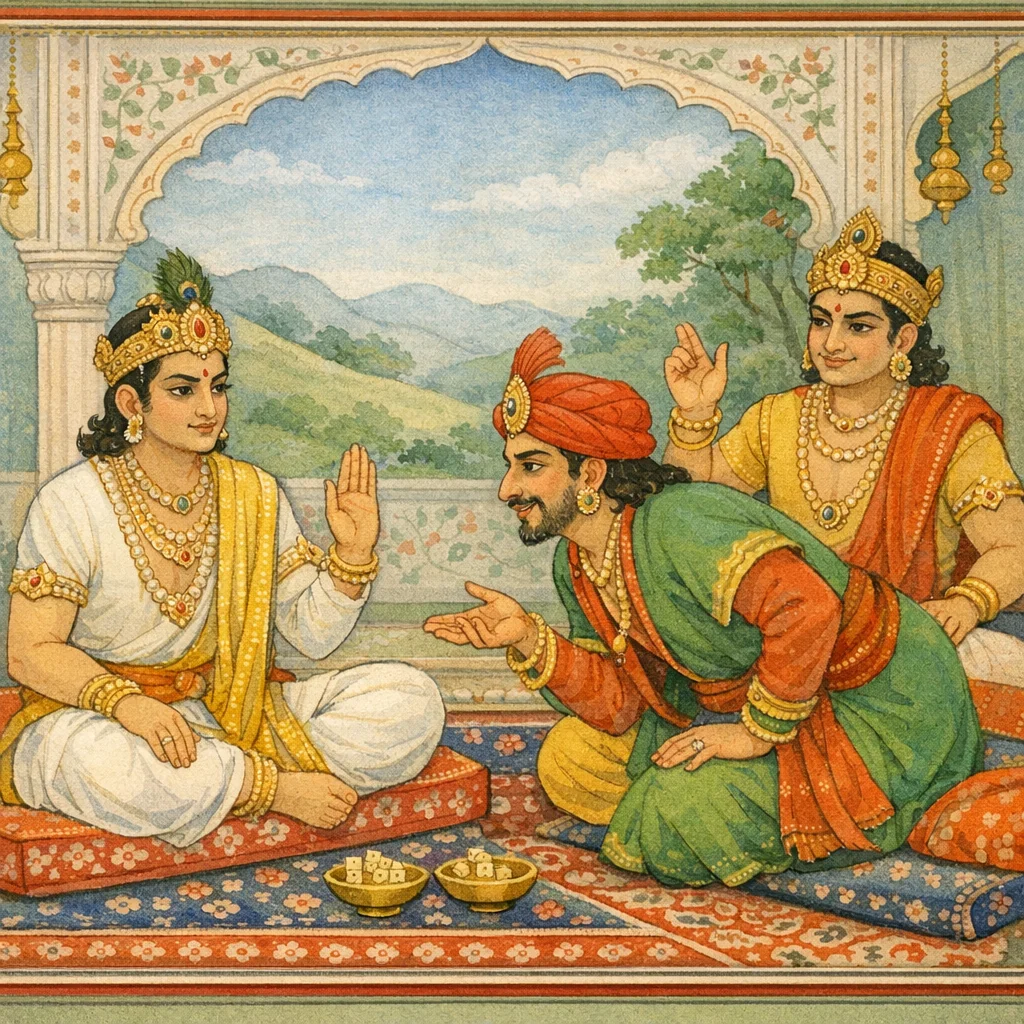
Vaiśampāyana said: Entering that royal assembly with Yudhiṣṭhira at their head, the Pāṇḍava princes met all the kings present and, having duly honored those worthy of reverence according to rank, took their proper seats on varied and splendid thrones, adorned with beautiful carpets and coverings.
Verse 2
यथावय: समेयाना उपविष्टा यथार्हतः । आसजनेषु विचित्रेषु स्पर्थ्यास्तरणवत्सु च,वैशम्पायनजी कहते हैं--जनमेजय! युधिष्ठिर आदि कुन्तीकुमार उस सभामें पहुँचकर सब राजाओंसे मिले। अवस्थाक्रमके अनुसार समस्त पूजनीय राजाओंका बारी- बारीसे सम्मान करके सबसे मिलने-जुलनेके पश्चात् वे यथायोग्य सुन्दर रमणीय गलीचोंसे युक्त विचित्र आसनोंपर बैठे
Vaiśampāyana said: When they had assembled, they sat as befitted their age and rank—upon varied and splendid seats, adorned with carpets and coverings worthy of admiration—thus displaying the courtly dharma of order, decorum, and honor to elders and dignitaries.
Verse 3
तेषु तत्रोपविष्टेषु सर्वेष्वथ नृपेषु च शकुनि: सौबलस्तत्र युधिष्ठिरमभाषत,उनके एवं सब नरेशोंके बैठ जानेपर वहाँ सुबलकुमार शकुनिने युधिष्ठिरसे कहा
Vaiśampāyana said: When all the kings had taken their seats, Śakuni, the son of Subala, addressed Yudhiṣṭhira.
Verse 4
शकुनिरुवाच उपस्तीर्णा सभा राजन सर्वे त्वयि कृतक्षणा: । अक्षानुप्त्वा देवनस्य समयो<स्तु युधिष्ठिर,शकुनि बोला--महाराज युधिष्ठिर! सभामें पासे फेंकनेवाला वस्त्र बिछा दिया गया है, सब आपकी ही प्रतीक्षा कर रहे हैं। अब पासे फेंककर जूआ खेलनेका अवसर मिलना चाहिये
Śakuni said: “O King, the hall has been prepared—the cloth for casting the dice is spread, and all are waiting upon you. Now let the time be for throwing the dice and playing the game.”
Verse 5
युधिछिर उवाच निकृतिर्देवनं पापं न क्षात्रो5त्र पराक्रम: । न च नीतिर्धुवा राजन कि त्वं द्यूत॑ प्रशंभसि,युधिष्ठिरने कहा--राजन्! जूआ तो एक प्रकारका छल है तथा पापका कारण है! इसमें न तो क्षत्रियोचित पराक्रम दिखाया जा सकता है और न इसकी कोई निश्चित नीति ही है। फिर तुम द्यूतकी प्रशंसा क्यों करते हो?
Yudhiṣṭhira said: “O King, gambling is a kind of deceit and a source of sin. In it there is no scope for true Kṣatriya valor, nor is there any firm and reliable code of conduct. Why, then, do you praise this game of dice?”
Verse 6
न हि मान प्रशंसन्ति निकृती कितवस्य हि । शकुने मैव नो जैषीरमार्गेण नृशंसवत्,शकुने! जुआरियोंका छल-कपटमें ही सम्मान होता है; सज्जन पुरुष वैसे सम्मानकी प्रशंसा नहीं करते। अतः तुम क्रूर मनुष्यकी भाँति अनुचित मार्गसे हमें जीतनेकी चेष्टा न करो
Yudhiṣṭhira said: “Honor is not truly praised when it rests on deceit and a gambler’s trickery. O Śakuni, do not seek to defeat us by an unrighteous path, like a cruel man. Let victory not be yours through fraud.”
Verse 7
शकुनिरुवाच यो वेत्ति संख्यां निकृती विधिज्ञ- श्रेष्टास्वखिन्न: कितवो$क्षजासु । महामतिर्यश्न जानाति द्यूतं स वै सर्व सहते प्रक्रियासु,शकुनि बोला--जिस अंकपर पासा पड़ता है, उसे जो पहले ही समझ लेता है, जो शठताका प्रतीकार करना जानता है एवं पासे फेंकने आदि समस्त व्यापारोंमें उत्साहपूर्वक लगा रहता है तथा जो परम बुद्धिमान् पुरुष द्यूतक्रीड़ाविषयक सब बातोंकी जानकारी रखता है, वही जूएका असली खिलाड़ी है; वह द्यूतक्रीड़ामें दूसरोंकी सारी शठतापूर्ण चेष्टाओंको सह लेता है
Śakuni said: “He is the true master-gambler who can foresee the fall of the dice, who understands the rules and the arts of deception, who does not lose heart even against the best opponents in games of dice, and who—being keen-minded—knows every procedure of gambling. Such a player can endure and outmaneuver all the crafty maneuvers that arise in the course of play.”
Verse 8
अक्षग्लह: सो5भिभवेत् परं न- स्तेनैव दोषो भवतीह पार्थ । दीव्यामहे पार्थिव मा विशड्कां कुरुष्य पाणं च चिरं च मा कृथा:
Yudhiṣṭhira said: “That master of the dice will surely overpower us; yet, O Pārtha, the fault in this matter will rest with him alone. Let us play, O king—do not harbor suspicion. Make your stake, and do not delay.”
Verse 9
कुन्तीनन्दन! यदि पासा विपरीत पड़ जाय तो हम खिलाड़ियोंमेंसे एक पक्षको पराजित कर सकता है; अतः जय-पराजय दैवाधीन पासोंके ही आश्रित है। उसीसे पराजयरूप दोषकी प्राप्ति होती है। हारनेकी शंका तो हमें भी है, फिर भी हम खेलते हैं। अतः भूमिपाल! आप शंका न कीजिये, दाँव लगाइये, अब विलम्ब न कीजिये ।। युधिषछिर उवाच एवमाहायमसितो देवलो मुनिसत्तम: । इमानि लोकद्दाराणि यो वै भ्राम्यति सर्वदा,युधिष्ठिरने कहा--मुनिश्रेष्ठ असित-देवलने, जो सदा इन लोदद्दारोंमें भ्रमण करते रहते हैं, ऐसा कहा है कि जुआरियोंके साथ शठतापूर्वक जो जूआ खेला जाता है, पाप है। धर्मानुकूल विजय तो युद्धमें ही प्राप्त होती है; अतः क्षत्रियोंके लिये युद्ध ही उत्तम है, जूआ खेलना नहीं
Yudhiṣṭhira said: “O son of Kuntī, if the dice fall contrary, they can defeat one side among the players; therefore victory and defeat depend on fate and rest upon the dice themselves. From that arises the fault that takes the form of defeat. We too have apprehension of losing, yet we still play. Therefore, O protector of the earth, do not doubt—stake the wager; do not delay now.” He further recalled the saying of the sage Asita Devala, a foremost seer who ever wanders through the ‘gateways of the worlds’: that gambling played with deceit among gamblers is sinful, and that a victory consistent with dharma is won in battle; for kṣatriyas, therefore, war is the higher course, not gambling.
Verse 10
इदं वै देवनं पापं निकृत्या कितवै: सह । धर्मेण तु जयो युद्धे तत्परं न तु देवनम्,युधिष्ठिरने कहा--मुनिश्रेष्ठ असित-देवलने, जो सदा इन लोदद्दारोंमें भ्रमण करते रहते हैं, ऐसा कहा है कि जुआरियोंके साथ शठतापूर्वक जो जूआ खेला जाता है, पाप है। धर्मानुकूल विजय तो युद्धमें ही प्राप्त होती है; अतः क्षत्रियोंके लिये युद्ध ही उत्तम है, जूआ खेलना नहीं
Yudhiṣṭhira said: “This gambling is indeed sinful when it is carried on with deceit in the company of gamblers. Victory that accords with dharma is won in battle; therefore, for kṣatriyas the proper course is devotion to warfare, not to gambling.”
Verse 11
नार्या म्लेच्छन्ति भाषाभिम्मायया न चरन्त्युत । अजिद्दमशठं युद्धमेतत् सत्पुरुषव्रतम्,श्रेष्ठ पुरुष वाणीद्वारा किसीके प्रति अनुचित शब्द नहीं निकालते तथा कपटपूर्ण बर्ताव नहीं करते। कुटिलता और शठतासे रहित युद्ध ही सत्पुरुषोंका व्रत है
Yudhiṣṭhira said: “Noble men do not defile their speech with improper words, nor do they conduct themselves with deceit. This is a battle free from crookedness and fraud; such straightforwardness in conflict is the vow and discipline of the righteous.”
Verse 12
शत्तितो ब्राह्मणान् नून॑ रक्षितुं प्रयतामहे । तद् वै वित्त मातिदेवीर्मा जैषी: शकुने परान्
Yudhiṣṭhira said: “To the best of our ability, we are indeed striving to protect the Brāhmaṇas. Therefore, O wealthy one—O Śakuni—do not defeat the others (my brothers).”
Verse 13
शकुने! हमलोग जिस धनसे अपनी शक्तिके अनुसार ब्राह्मणोंकी रक्षा करनेका ही प्रयत्न करते हैं, उसको तुम जूआ खेलकर हमलोगोंसे हड़पनेकी चेष्टा न करो ।। निकृत्या कामये नाहं सुखान्युत धनानि वा । कितवस्येह कृतिनो वृत्तमेतन्न पूज्यते,मैं धूर्ततापूर्ण बर्तावके द्वारा सुख अथवा धन पानेकी इच्छा नहीं करता; क्योंकि जुआरीके कार्यको विद्वान् पुरुष अच्छा नहीं समझते
Yudhiṣṭhira said: “O Śakuni, do not try to seize from us by gambling that wealth with which, according to our capacity, we strive to protect and support the Brāhmaṇas. I do not desire pleasures or riches by means of deceitful conduct, for the ways of a gambler are not regarded as worthy of honor by the wise in this world.”
Verse 14
शकुनिरुवाच श्रोत्रिय: श्रोत्रियानेति निकृत्यैव युधिष्ठिर । विद्वानविदुषो5भ्येति नाहुस्तां निकृतिं जना:,शकुनि बोला--युधिष्ठिर! श्रोत्रिय दिद्वान् दूसरे श्रोत्रिय विद्वानोंके पास जब उन्हें जीतनेके लिये जाता है, तब शठतासे ही काम लेता है। विद्वान् अविद्वानोंको शठतासे ही पराजित करता है; परंतु इसे जनसाधारण शठता नहीं कहते
Śakuni said: “O Yudhiṣṭhira, a learned Vedic scholar, when he approaches other learned scholars with the aim of defeating them, does so by employing stratagem alone. Likewise, a learned man overcomes the unlearned by such crafty means; yet ordinary people do not call that ‘deceit.’”
Verse 15
अक्षेहि शिक्षितो5भ्येति निकृत्यैव युधिष्ठिर । विद्वानविदुषो5भ्येति नाहुस्तां निकृतिं जना:,धर्मराज! जो द्यूतविद्यामें पूर्ण शिक्षित है, वह अशिक्षितोंपर शठतासे ही विजय पाता है। विद्वान् पुरुष अविद्वानोंको जो परास्त करता है, वह भी शठता ही है; किंतु लोग उसे शठता नहीं कहते
Yudhiṣṭhira said: “In play with dice, one who is fully trained overcomes the untrained only by deceit. Likewise, when a learned man defeats the unlearned, that too is a kind of deceit—yet people do not call it deceit.”
Verse 16
अकृतान्त्र कृतास्त्रश्न दुर्बलं बलवत्तर: । एवं कर्मसु सर्वेषु निकृत्यैव युधिष्ठिर । विद्वानविदुषो5भ्येति नाहुस्तां निकृतिं जना:,धर्मराज युधिष्ठिर! अस्त्रविद्यामें निपुण योद्धा अनाड़ीको एवं बलिष्ठ पुरुष दुर्बलको शठतासे ही जीतना चाहता है। इस प्रकार सब कार्योंमें विद्वान् पुरुष अविद्वानोंको शठतासे ही जीतते हैं; किंतु लोग उसे शठता नहीं कहते
A stronger man overcomes a weaker one by sheer trickery—just as an untrained fighter may seek to defeat a master of weapons through deceit. In the same way, in every kind of undertaking, the learned often prevail over the unlearned by stratagem; yet people do not call that ‘deceit,’ O Yudhiṣṭhira.
Verse 17
एवं त्वं मामिहाभ्येत्य निकृतिं यदि मन्यसे । देवनाद् विनिवर्तस्व यदि ते विद्यते भयम्
If, after coming up to me here, you think you can practice deceit against me, then turn back at once—at the very sound of the divine summons—if any fear still exists in you.
Verse 18
इसी प्रकार आप यदि मेरे पास आकर यह मानते हैं कि आपके साथ शठता की जायगी एवं यदि आपको भय मालूम होता है तो इस जूएके खेलसे निवृत्त हो जाइये ।। युधिछिर उवाच आहूतो न निवर्तेयमिति मे व्रतमाहितम् । विधिश्व॒ बलवान् राजन् दिष्टस्यास्मि वशे स्थित:,युधिष्ठिरने कहा--राजन्! मैं बुलानेपर पीछे नहीं हटता, यह मेरा निश्चित व्रत है। दैव बलवान है। मैं दैवके वशमें हूँ
Yudhiṣṭhira said: “O King, it is my settled vow that, once invited, I do not withdraw. Fate is powerful; I stand under the sway of what has been ordained.”
Verse 19
अस्मिन् समागमे केन देवनं मे भविष्यति । प्रतिपाणश्च॒ को<न्यो<$स्ति ततो द्यूतं प्रवर्तताम्,अच्छा तो यहाँ जिन लोगोंका जमाव हुआ है, उनमें किसके साथ मुझे जूआ खेलना होगा? मेरे मुकाबलेमें बैठकर दूसरा कौन पुरुष दाँव लगायेगा? इसका निश्चय हो जाय, तो जूएका खेल प्रारम्भ हो
In this gathering, among all who are assembled, with whom am I to play at dice? Who else will sit facing me and stake wagers as my opponent? Once that is settled, let the game of dice begin.
Verse 20
दुर्योधन उवाच अहं दातास्मि रत्नानां धनानां च विशाम्पते
Duryodhana said: “O lord of the people, I am a giver of jewels and of wealth.”
Verse 21
युधिछिर उवाच अन्येनान्यस्यथ वै द्यूतं विषमं प्रतिभाति मे । एतद् विद्वन्नुपादत्स्व काममेवं प्रवर्तताम्,युधिष्ठिरने कहा--दूसरेके लिये दूसरेका जूआ खेलना मुझे तो अनुचित ही प्रतीत होता है। विद्वन्! इस बातको समझ लो, फिर इच्छानुसार जूएका खेल प्रारम्भ हो
Yudhiṣṭhira said: “To me, this gambling—one person playing on behalf of another—appears unfair and improper. Understand this clearly, O learned one; then, if you still wish, let the game proceed in that manner.”
Verse 59
इति श्रीमहा भारते सभापर्वणि द्यूतपर्वणि युधिष्ठिरशकुनिसंवादे एकोनषष्टितमो5 ध्याय:,इस प्रकार श्रीमह्ाभारत सभापवके अन्तर्गत झ्यूतपर्वमें युधिष्ठिस्शकुनिसंवादविषयक उनसठवाँ अध्याय पूरा हुआ
Thus, in the Śrī Mahābhārata, within the Sabhā Parva—specifically the Dyūta (Gambling) section—ends the fifty-ninth chapter, concerning the dialogue between Yudhiṣṭhira and Śakuni. (This is a colophon marking the close of the chapter.)
Verse 203
मदर्थ देविता चायं शकुनिर्मातुलो मम । दुर्योधन बोला--महाराज! दाँवपर लगानेके लिये धन और रत्न तो मैं दूँगा; परंतु मेरी ओरसे खेलेंगे ये मेरे मामा शकुनि
Duryodhana said: “For my sake, this Shakuni—my maternal uncle—will also play. I will provide the wealth and jewels to be staked, but it is my uncle Shakuni who will cast the dice on my behalf.”
Frequently Asked Questions
Whether coercive treatment of Draupadī can be justified through a wager when the one staking her is argued to be without rightful autonomy (anīśa); the dilemma tests the boundary between procedural claims and substantive dharma.
That a ruler must restrain anger and humiliating speech, avoid policy driven by greed, and recognize that dyūta and cruelty generate durable enmity and institutional ruin; ethical counsel is framed as a governance necessity.
No formal phalaśruti appears; instead, the chapter provides prognostic meta-commentary through Vidura’s warnings that ignoring pathya-vākya (beneficial counsel) accelerates collective downfall, positioning the episode as a cautionary ethical exemplar.