Adhyaya 34
Śiśupāla’s Protest Against the Arghya to Kṛṣṇa (शिशुपाल-आक्षेपः)
Upa-parva: Rājasūya-ārgha-vivāda (Dispute over the Arghya Honor at the Rājasūya)
In the rājasabhā, Śiśupāla delivers a sustained objection to the conferral of arghya upon Kṛṣṇa. He argues that Kṛṣṇa lacks conventional qualifying offices—neither king (rājā), nor officiating priest (ṛtvij), nor teacher (ācārya)—and therefore should not receive royal-grade worship amid assembled monarchs. He frames the act as a procedural and political affront to other rulers and implies it reflects partiality (priyakāmyā) rather than principled judgment. He further questions seniority and precedence by referencing elders and established authorities (e.g., Vasudeva, Droṇa, Dvaipāyana) and suggests that the honor diminishes Yudhiṣṭhira’s reputation for dharma by associating it with misapplied ritual recognition. The chapter ends with Śiśupāla leaving the hall with allied kings, marking dissent as a collective political gesture rather than a private critique.
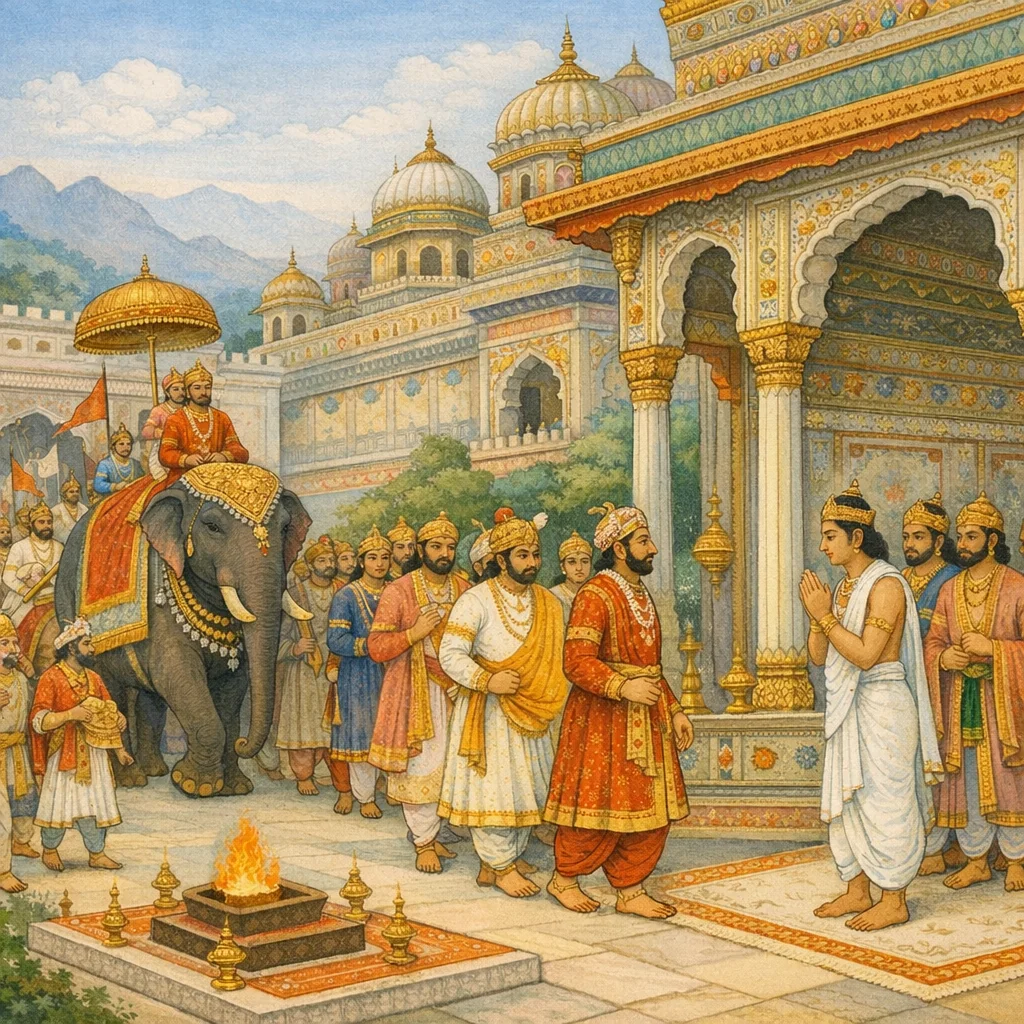
Chapter Arc: धर्मराज युधिष्ठिर के राजसूय महाक्रतु का समाचार चारों दिशाओं में फैलता है—और जैसे ही यज्ञ का आह्वान होता है, राजाओं की धाराएँ इन्द्रप्रस्थ की ओर बहने लगती हैं। → आचार्यों और यज्ञवेत्ताओं का सत्कारपूर्वक आमन्त्रण होता है; फिर मध्यदेश, प्राग्ज्योतिष, शाल्व, वृष्णि-यादव आदि अनेक जनपदों के नरेश, महारथी और बलवान अतिथि एक-एक कर पहुँचते हैं। इतनी विराट सभा में प्रतिष्ठा, क्रम-मान, और ‘किसे कितना सम्मान’—ये सब अदृश्य तनाव बनकर फैलते हैं। → राजसूय के लिए समस्त राजाओं का एकत्र होना और इन्द्रप्रस्थ की अद्भुत, धातु-चित्रित प्रासाद-दीवारों का हिमालय-शिखरों-सा वैभव—यही अध्याय का शिखर है: युधिष्ठिर का यज्ञ अब निजी अनुष्ठान नहीं, सम्राट-स्वीकृति का सार्वजनिक मंच बन जाता है। → आचार्य, ब्राह्मण, यज्ञविद् और विविध देशों के नरेश प्रसन्न-चित्त होकर यज्ञ-सभा में सम्मिलित होते हैं; इन्द्रप्रस्थ अतिथियों से परिपूर्ण होकर राजसूय के विधिवत आरम्भ हेतु तैयार हो जाता है। → सभा में इतने पराक्रमी और अभिमानी राजाओं का जमाव भविष्य के ‘अर्घ्य-क्रम’ और सर्वोच्च सम्मान के प्रश्न को अनकहा छोड़ देता है—किसे अग्रपूजा मिलेगी, और कौन उसे सह पाएगा?
Shlokas
Verse 1
(दाक्षिणात्य अधिक पाठके ४ ई श्लोक मिलाकर कुल ५९३ श्लोक हैं) ८5 >> | ० #* /< चतुस्त्रिंशो 5 ध्याय: युधिष्ठिरके यज्ञमें सब देशके राजाओं, कौरवों तथा यादवोंका आगमन और उन सबके भोजन-विश्राम आदिकी सुव्यवस्था वैशम्पायन उवाच स गत्वा हास्तिनपुरं नकुल: समितिंजय: । भीष्ममामन्त्रयाज्चक्रे धृतराष्ट्र च पाण्डव:,वैशम्पायनजी कहते हैं--जनमेजय! युद्धविजयी पाण्डुकुमार नकुलने हस्तिनापुरमें जाकर भीष्म और धृतराष्ट्रको निमन्त्रित किया
Vaiśampāyana said: Then Nakula, the battle-conquering Pāṇḍava, went to Hāstinapura and formally invited Bhīṣma and also Dhṛtarāṣṭra, in due respect and proper protocol, as preparations for Yudhiṣṭhira’s great rite were set in motion.
Verse 2
सत्कृत्यामन्त्रितास्तेन आचार्यप्रमुखास्तत: । प्रययु: प्रीतमनसो यज्ञ ब्रह्मपुर:सरा:,तत्पश्चात् उन्होंने बड़े सत्कारके साथ आचार्य आदिको भी न्यौता दिया। वे सब लोग बड़े प्रसन्न मनसे ब्राह्मणोंको आगे करके उस यज्ञमें गये
Vaiśampāyana said: Then, having been duly honored, the teachers and other leading elders whom he had invited went to the sacrifice with joyful hearts, proceeding with the Brāhmaṇas in the forefront—signaling that the rite would be conducted under proper religious authority and respectful social order.
Verse 3
संश्रुत्य धर्मराजस्य यज्ञ यज्ञविदस्तदा | अन्ये च शतशस्तुष्टर्मनोभिर्भरतर्षभ,भरतकुलभूषण! यज्ञवेत्ता धर्मराजका यज्ञ सुनकर अन्य सैकड़ों मनुष्य भी संतुष्ट हृदयसे वहाँ गये
Vaiśaṃpāyana said: Having heard of Dharmarāja’s sacrifice, the experts in sacrificial rites—and many others as well, in their hundreds—set out at that time with hearts made glad, O bull among the Bharatas. The report of a righteous king’s yajña drew people not by force but by trust in dharma and the promise of orderly, generous conduct.
Verse 4
द्रष्टकामा: सभां चैव धर्मराजं च पाण्डवम् | दिग्भ्य: सर्वे समापेतु: क्षत्रियास्तत्र भारत
Desiring to behold both the royal assembly hall and Dharmarāja Yudhiṣṭhira, the Pāṇḍava, the kṣatriyas came together there from all directions, O Bhārata. The scene underscores how fame and righteous kingship draw rulers and warriors alike into the orbit of a celebrated court.
Verse 5
धृतराष्ट्रश्न भीष्मश्न विदुरश्चन महामति:,राजानो राजपुत्राश्न नानाजनपदेश्वरा: । धृतराष्ट्र, भीष्म, महाबुद्धिमान् विदुर, दुर्योधन आदि सभी भाई, गान्धारराज सुबल, महाबली शकुनि, अचल, वृषक, रथियोंमें श्रेष्ठ कर्ण, बलवान् राजा शल्य, महाबली बाह्लिक, सोमदत्त, कुरुनन्दन भूरि, भूरिश्रवा, शाल, अभश्वत्थामा, कृपाचार्य, द्रोणाचार्य, सिन्धुराज जयद्रथ, पुत्रोंसहित ट्रपद, राजा शाल्व, प्राग्ज्योतिषपुरके नरेश महारथी भगदत्त, जिनके साथ समुद्रके टापुओंमें रहनेवाले सब जातियोंके म्लेच्छ भी थे, पर्वतीय नृपतिगण, राजा बृहद्वधल, पौण्ड्रक वासुदेव, वंगदेशके राजा, कलिंगनरेश, आकर्ष, कुन्तल, मालव आन्दध्र, द्राविड और सिंहलदेशके नरेशगण, काश्मीरनरेश, महातेजस्वी कुन्तिभोज, राजा गौरवाहन, बाह्लिक, दूसरे शूर नृपतिगण, अपने दोनों पुत्रोंके साथ विराट, महाबली मावेल्ल तथा नाना जनपदोंके शासक राजा एवं राजकुमार उस यज्ञमें पधारे थे
Vaiśampāyana said: Dhṛtarāṣṭra and Bhīṣma, and Vidura of great intelligence—along with many kings, princes, and rulers from diverse realms—assembled there. The verse underscores the vast political convergence around the Kuru court, where power, counsel, and competing notions of dharma were all present in one place, setting the stage for decisions whose ethical weight would shape the coming conflict.
Verse 6
दुर्योधनपुरोगाश्व भ्रातर: सर्व एव ते । गान्धारराज: सुबल: शकुनिश्च महाबल:
Vaiśampāyana said: All those brothers were there, with Duryodhana at their head; and the king of Gandhāra, Subala, along with Śakuni—mighty in strength and influence.
Verse 7
अचलो वृषकश्चैव कर्णश्न राथिनां वर: । तथा शल्यश्न बलवान् बाह्विकश्चन महाबल:
Vaiśampāyana said: “Among the foremost chariot-warriors were Acala and Vṛṣaka, and Karṇa, the best of the rathins. Likewise there were Śalya, mighty in strength, and Bāhlīka, of great power.”
Verse 8
सोमदत्तो5थ कौरव्यो भूरिभूरिश्रवा: शल: । अभश्र॒त्थामा कृपो द्रोण: सैन्धवश्च जयद्रथ:
Vaiśampāyana said: Then Somadatta of the Kuru line, Bhūribhūriśravā, Śala, Aśvatthāmā, Kṛpa, Droṇa, and Jayadratha of Sindhu were present—named among the foremost Kaurava-aligned warriors.
Verse 9
यज्ञसेन: सपुत्रश्न शाल्वश्व॒ वसुधाधिप: । प्राग्ज्योतिषश्न नृपतिर्भगदत्तो महारथ:
Vaiśampāyana said: King Yajñasena, together with his sons, and Śālva, the lord of the earth; and Bhagadatta, the king of Prāgjyotiṣa, a great chariot-warrior—these rulers were also present.
Verse 10
स तु सर्वे: सह म्लेच्छै: सागरानूपवासिभि: | पर्वतीयाश्व॒ राजानो राजा चैव बृहद्धल:
Vaiśampāyana said: He, along with all the Mleccha chiefs and the peoples dwelling by the sea and in marshy tracts, and also the kings of the hill-regions—together with King Bṛhaddhala—came as part of that gathering.
Verse 11
पौण्ड्को वासुदेवश्व वड्भः कालिड्रकस्तथा । आकर्षा: कुन्तलाश्वैव मालवाश्चान्ध्रकास्तथा
Vaiśampāyana said: “Among those assembled and named were Pauṇḍraka Vāsudeva; also the Vaḍbhas, and likewise the Kālindrakas; the Ākarṣas, the Kuntalas; and also the Mālavas, and likewise the Āndhrakas.”
Verse 12
द्राविडा: सिंहलाश्षैव राजा काश्मीरकस्तथा । कुन्तिभोजो महातेजा: पार्थिवो गौरवाहन:
Vaiśampāyana said: “There were the Drāviḍas and the Siṃhalas, and also the king of Kāśmīra; Kuntibhoja of great splendor—together with the ruler named Gauravāhana—was present among the assembled kings.”
Verse 13
बाह्नलिकाश्नापरे शूरा राजान: सर्व एव ते । विराट: सह पुत्राभ्यां मावेल्लश्वन महाबल:
Vaiśaṃpāyana said: “There were also other heroic kings—indeed all of them—among them Virāṭa as well, accompanied by his two sons; and Māvellāśvana, a king of great might.”
Verse 14
शिशुपालो महावीर्य: सह पुत्रेण भारत,वृष्णयो निखिलाश्चान्ये समाजम्मुर्महारथा: । भारत! पाण्डुनन्दन युधिष्ठिरके उस यज्ञमें रणदुर्मद महापराक्रमी राजा शिशुपाल भी अपने पुत्रके साथ आया था। इसके सिवा बलराम, अनिरुद्ध, कंक, सारण, गद, प्रद्युम्न, साम्ब, पराक्रमी चारुदेष्ण, उल्मुक, निशठ, वीर अंगावह तथा अन्य सभी वृष्णिवंशी महारथी उस यज्ञमें आये थे
Vaiśampāyana said: “O Bhārata, the mighty hero Śiśupāla came to that royal assembly together with his son. Along with him, all the Vṛṣṇis and other great chariot-warriors also gathered there.”
Verse 15
आगच्छत् पाण्डवेयस्य यज्ञं समरदुर्मद: । रामश्नैवानिरुद्धश्ष कड़कश्न सहसारण:
Vaiśampāyana said: “To the sacrifice being performed by the son of Pāṇḍu came those proud of their prowess in battle—Balarāma, Aniruddha, and Gada, along with Sahasrāraṇa.”
Verse 16
गदप्रद्युम्नसाम्बाश्व चारुदेष्णश्न वीर्यवान् उल्मुको निशठसश्चैव वीरश्नाज्ञावहस्तथा
Vaiśampāyana said: “(There were) the valiant Gada, Pradyumna, Sāmba, Aśva, and Cārudeṣṇa; also Ulmuka, Niśaṭha, the hero Ājñāvaha, and others.”
Verse 17
एते चान्ये च बहवो राजानो मध्यदेशजा:
Vaiśampāyana said: “These, and many other kings as well, born in the Middle Country, were assembled (there).”
Verse 18
ददुस्तेषामावसथान् धर्मराजस्य शासनात्,धर्मराजकी आज्ञासे प्रबन्धकोंने उनके ठहरनेके लिये उत्तम भवन दिये, जो बहुत अधिक भोजनसामग्रीसे सम्पन्न थे। राजन! उन घरोंके भीतर स्नानके लिये बावलियाँ बनी थीं और वे भाँति-भाँतिके वृक्षोंसे भी सुशोभित थे। धर्मपुत्र युधिष्ठिर उन सभी महात्मा नरेशोंका स्वागत-सत्कार करते थे
Vaiśampāyana said: By the command of Dharmarāja, lodgings were provided for them—excellent residences well supplied with abundant provisions. O King, within those houses there were stepwells for bathing, and they were further adorned with many kinds of trees. Dharmaputra Yudhiṣṭhira continued to welcome and honor all those great-souled kings.
Verse 19
बहुभक्ष्यान्वितान् राजन् दीर्घिकावृक्षशोभितान् । तथा धर्मात्मज: पूजां चक्रे तेषां महात्मनाम्,धर्मराजकी आज्ञासे प्रबन्धकोंने उनके ठहरनेके लिये उत्तम भवन दिये, जो बहुत अधिक भोजनसामग्रीसे सम्पन्न थे। राजन! उन घरोंके भीतर स्नानके लिये बावलियाँ बनी थीं और वे भाँति-भाँतिके वृक्षोंसे भी सुशोभित थे। धर्मपुत्र युधिष्ठिर उन सभी महात्मा नरेशोंका स्वागत-सत्कार करते थे
Vaiśampāyana said: “O King, he assigned them excellent residences well supplied with abundant provisions, adorned with bathing-tanks and beautified by trees. In this manner, Dharmātmāja Yudhiṣṭhira duly performed hospitality and honor toward those great-souled kings.”
Verse 20
सत्कृताश्व यथोद्दिष्टाज्जग्मुरावसथान् नृपा: । कैलासशिखरप्रख्यान् मनोज्ञान् द्रव्यभूषितान्,उनसे सम्मानित हो उन्हींके बताये हुए विभिन्न भवनोंमें जाकर राजालोग ठहरते थे। वे सभी भवन कैलासशिखरके समान ऊँचे और भव्य थे। नाना प्रकारके द्रव्योंसे विभूषित एवं मनोहर थे
Having been duly honored, the kings went to the lodgings assigned to them. Those residences were lofty and splendid like the peaks of Mount Kailāsa—delightful to behold and adorned with many kinds of riches.
Verse 21
सर्वतः संवृतानुच्चै: प्राकारैः सुकृतैः सितै: । सुवर्णजालसंवीतान् मणिकुट्टिम भूषितान्,वे भव्य भवन सब ओरसे सुन्दर, सफेद और ऊँचे परकोटोंद्वारा घिरे हुए थे। उनमें सोनेकी झालरें लगी थीं। उनके आँगनके फर्शमें मणि एवं रत्न जड़े हुए थे
Vaiśampāyana said: On every side they were enclosed by lofty, well-built, white ramparts. They were adorned with latticed gold-work, and their courtyards were embellished with pavements inlaid with gems—an image of royal prosperity and carefully ordered splendor.
Verse 22
सुखारोहणसोपानान् महासनपरिच्छदान् । स्रग्दामसमवच्छन्नानुत्तमागुरुगन्धिन:,उनमें सुखपूर्वक ऊपर चढ़नेके लिये सीढ़ियाँ बनी हुई थीं। उन महलोंके भीतर बहुमूल्य एवं बड़े-बड़े आसन तथा अन्य आवश्यक सामान थे। उन घरोंको मालाओंसे सजाया गया था। उनमें उत्तम अगुरुकी सुगन्ध व्याप्त हो रही थी
Vaiśampāyana said: “They had stairways designed for comfortable ascent. Within those mansions were splendid, costly great seats and the requisite furnishings. The houses were adorned with garlands and festoons, and the finest fragrance of agaru pervaded them.”
Verse 23
हंसेन्दुवर्णसदूशानायोजनसुदर्शनान् । असम्बाधान् समद्वारान् युतानुच्चावचैर्गुणै:,वे सभी अतिथिभवन हंस और चन्द्रमाके समान सफेद थे। एक योजन दूरसे ही वे अच्छी तरह दिखायी देने लगते थे। उनमें स्थानकी संकीर्णता या तंगी नहीं थी। सबके दरवाजे बराबर थे। वे सभी गृह विभिन्न गुणों (सुख-सुविधाओं)-से युक्त थे
Vaiśaṃpāyana said: The guest-houses were white like swans and the moon, and so conspicuous that they could be seen from as far as a yojana away. They were spacious, free from crowding or constriction; their doorways were uniform and well-arranged; and each dwelling was furnished with varied excellences—comforts and amenities suited to receiving guests with dignity.
Verse 24
विश्रान्तास्ते ततो5पश्यन् भूमिपा भूरिदक्षिणम्,वहाँ विश्राम करनेके अनन्तर वे भूमिमपाल बहुत दक्षिणा देनेवाले एवं बहुतेरे सदस्योंसे घिरे हुए धर्मराज युधिष्ठिससे मिले। जनमेजय! उस समय राजाओं, ब्राह्मणों तथा महर्षियोंसे भरा हुआ वह यज्ञमण्डप देवताओंसे भरे-पूरे स्वर्गलोकके समान शोभा पा रहा था
After taking rest, those kings then beheld the great giver of gifts (dakṣiṇā)—Dharmarāja Yudhiṣṭhira—surrounded by many assembled members. O Janamejaya, at that time the sacrificial pavilion, filled with kings, brāhmaṇas, and great ṛṣis, shone like heaven crowded with the gods—highlighting the ethical ideal of royal generosity and the sanctity of a properly attended rite.
Verse 25
वृतं सदस्यैर्बहुभिर्धर्मराजं युधिष्ठिरम् । तत् सद:ः पार्थिव कीर्ण ब्राह्मणैश्व महर्षिभि | भ्राजते सम तदा राजन् नाकपृष्ठं यथामरै:,वहाँ विश्राम करनेके अनन्तर वे भूमिमपाल बहुत दक्षिणा देनेवाले एवं बहुतेरे सदस्योंसे घिरे हुए धर्मराज युधिष्ठिससे मिले। जनमेजय! उस समय राजाओं, ब्राह्मणों तथा महर्षियोंसे भरा हुआ वह यज्ञमण्डप देवताओंसे भरे-पूरे स्वर्गलोकके समान शोभा पा रहा था
Vaiśampāyana said: Surrounded by many members of the assembly, the righteous king Yudhiṣṭhira was attended upon. That hall, crowded with kings and filled with brāhmaṇas and great seers, shone at that time, O King, like the very summit of heaven thronged with the gods—an image of royal order upheld by dharma and sanctified by spiritual authority.
Verse 34
इति श्रीमहाभारते सभापर्वणि राजसूयपर्वणि निमन्त्रितराजागमने चतुस्सत्रिंशो 5ध्याय:
Thus ends the thirty-fourth chapter in the Sabha Parva of the Śrī Mahābhārata, within the section concerning the Rājasūya sacrifice—specifically, the arrival of the invited kings. The colophon marks the close of this narrative unit, emphasizing the formal gathering of rulers as part of Yudhiṣṭhira’s consecration and the political-ethical order implied by such an assembly.
Verse 46
समुपादाय रत्नानि विविधानि महान्ति च । भारत! धर्मराज युधिष्ठिर और उनकी सभाको देखनेके लिये सम्पूर्ण दिशाओंसे सभी क्षत्रिय वहाँ नाना प्रकारके बहुमूल्य रत्नोंकी भेंट लेकर आये
Vaiśampāyana said: O Bhārata, to behold Dharmarāja Yudhiṣṭhira and his royal assembly, kṣatriyas from every direction arrived there, bringing as offerings many kinds of precious and great jewels—an act that signals public recognition of his righteous sovereignty and the prestige of his court.
Verse 136
राजानो राजपुत्राश्न नानाजनपदेश्वरा: । धृतराष्ट्र, भीष्म, महाबुद्धिमान् विदुर, दुर्योधन आदि सभी भाई, गान्धारराज सुबल, महाबली शकुनि, अचल, वृषक, रथियोंमें श्रेष्ठ कर्ण, बलवान् राजा शल्य, महाबली बाह्लिक, सोमदत्त, कुरुनन्दन भूरि, भूरिश्रवा, शाल, अभश्वत्थामा, कृपाचार्य, द्रोणाचार्य, सिन्धुराज जयद्रथ, पुत्रोंसहित ट्रपद, राजा शाल्व, प्राग्ज्योतिषपुरके नरेश महारथी भगदत्त, जिनके साथ समुद्रके टापुओंमें रहनेवाले सब जातियोंके म्लेच्छ भी थे, पर्वतीय नृपतिगण, राजा बृहद्वधल, पौण्ड्रक वासुदेव, वंगदेशके राजा, कलिंगनरेश, आकर्ष, कुन्तल, मालव आन्दध्र, द्राविड और सिंहलदेशके नरेशगण, काश्मीरनरेश, महातेजस्वी कुन्तिभोज, राजा गौरवाहन, बाह्लिक, दूसरे शूर नृपतिगण, अपने दोनों पुत्रोंके साथ विराट, महाबली मावेल्ल तथा नाना जनपदोंके शासक राजा एवं राजकुमार उस यज्ञमें पधारे थे
Vaiśampāyana said: Kings and princes—lords of many realms—came together for that sacrifice. There were Dhṛtarāṣṭra and Bhīṣma, the wise Vidura, Duryodhana and his brothers; the king of Gandhāra, Subala, and the mighty Śakuni; Acala and Vṛṣaka; Karṇa, foremost among chariot-warriors; the powerful king Śalya; the mighty Bāhlika; Somadatta; Bhūri and Bhūriśravas, sons of the Kurus; Śāla; Aśvatthāmā; Kṛpa and Droṇa; Jayadratha, king of Sindhu; Drupada with his sons; king Śālva; and Bhagadatta, the great chariot-warrior, ruler of Prāgjyotiṣa, accompanied even by Mleccha peoples dwelling on oceanic islands. Mountain kings also arrived—Bṛhadvadha, Pauṇḍraka Vāsudeva, the kings of Vaṅga and Kaliṅga, and rulers of Ākarṣa, Kuntala, Mālava, Āndhra, Drāviḍa, and Siṃhala; the king of Kāśmīra; the radiant Kuntibhoja; Gauravāhana; and other heroic Bāhlikas. Virāṭa came with his two sons, as did the mighty Māvella, along with many other rulers and princes from diverse countries. The scene displays royal power gathered around a ritual act—an outward show of dharma and legitimacy—while also foreshadowing how such assemblies of prestige can conceal rivalry and the seeds of future conflict.
Verse 163
वृष्णयो निखिलाश्चान्ये समाजम्मुर्महारथा: । भारत! पाण्डुनन्दन युधिष्ठिरके उस यज्ञमें रणदुर्मद महापराक्रमी राजा शिशुपाल भी अपने पुत्रके साथ आया था। इसके सिवा बलराम, अनिरुद्ध, कंक, सारण, गद, प्रद्युम्न, साम्ब, पराक्रमी चारुदेष्ण, उल्मुक, निशठ, वीर अंगावह तथा अन्य सभी वृष्णिवंशी महारथी उस यज्ञमें आये थे
Vaiśampāyana said: All the Vṛṣṇis as well as other mighty chariot-warriors assembled there. O descendant of Bharata, to Yudhiṣṭhira’s sacrifice came the fiercely proud and highly valorous king Śiśupāla along with his son; besides him, Balarāma, Aniruddha, Kaṅka, Sāraṇa, Gada, Pradyumna, Sāmba, the powerful Cārudeṣṇa, Ulmuka, Niśaṭha, the heroic Aṅgāvaha, and many other Vṛṣṇi-line mahārathas also arrived. The gathering underscores the public, political, and moral weight of the royal rite: a sacrifice is not merely ritual, but a stage where alliances, rivalries, and questions of rightful honor (dharma) become visible before the whole world.
Verse 236
बहुधातुनिबद्धाड्ञान् हिमवच्छिखरानिव । उनकी दीवारें अनेक प्रकारकी धातुओंसे चित्रित थीं तथा वे हिमालयके शिखरोंकी भाँति सुशोभित हो रहे थे
Vaiśampāyana said: “They were fashioned and inlaid with many kinds of metals, and they shone forth like the peaks of the Himālaya.” The description underscores the dazzling, almost natural grandeur of royal architecture—splendour that can inspire awe, yet also frames the courtly world where pride, display, and rivalry may quietly gather strength.
Verse 1736
आज म्मु: पाण्डुपुत्रस्य राजसूयं महाक्रतुम् । ये तथा दूसरे भी बहुत-से-मध्यदेशीय नरेश पाण्डुनन्दन युधिष्ठिरके राजसूय महायज्ञमें सम्मिलित हुए थे
Vaiśampāyana said: Many kings of the Madhyadeśa, and others besides, assembled to take part in the great Rājasūya sacrifice of Yudhiṣṭhira, the son of Pāṇḍu. Thus the tale shows how a ruler’s legitimacy and moral standing are proclaimed before the world through a solemn rite, upheld by the consent and presence of fellow sovereigns.
Frequently Asked Questions
The dilemma concerns criteria for public honor: whether arghya should follow formal status (office/seniority) or perceived intrinsic merit and political consensus, and how misapplied honor can be construed as collective insult (avamāna).
The chapter illustrates that dharma in public institutions is “subtle” (सूक्ष्म): decisions about recognition and precedence are ethically consequential because they shape legitimacy, cohesion, and the credibility of moral reputation.
No explicit phalaśruti appears here; the meta-significance is narrative: the speech functions as an institutional stress-test of sabhā norms, showing how procedural arguments can be weaponized in political contestation.