Adhyaya 27
Bhīmasena’s Digvijaya and Tribute Return (भीमस्य दिग्विजयः धननिवेदनं च)
Upa-parva: Digvijaya (Bhīma-Digvijaya / Northern-Eastern Campaign Episode)
Vaiśaṃpāyana reports Bhīma’s swift sequence of regional submissions: he overcomes rulers associated with Kośala/Ayodhyā, Malla territories, Himalayan-adjacent polities, Kāśī, and additional kings across varied geographies (including Matsya and other named regions). The narrative repeatedly notes restraint—victory achieved without excessive severity—sometimes explicitly through conciliation (sāntva). Bhīma defeats multiple chiefs, including a notable engagement with Karṇa, after which further mountain-dwelling rulers are subdued. The campaign expands toward coastal and island-associated groups described as sāgara-vāsins and mleccha-gaṇas, from whom taxes and diverse valuables are collected. Enumerated tribute includes sandalwood, aguru, fine cloth, gems and pearls, gold, silver, diamond, and coral, presented as a quantified “rain” of wealth. The chapter closes with Bhīma’s return to Indraprastha and formal presentation of the accumulated wealth to Dharmarāja Yudhiṣṭhira, integrating military-polity outcomes into the ritual economy supporting imperial aspiration.
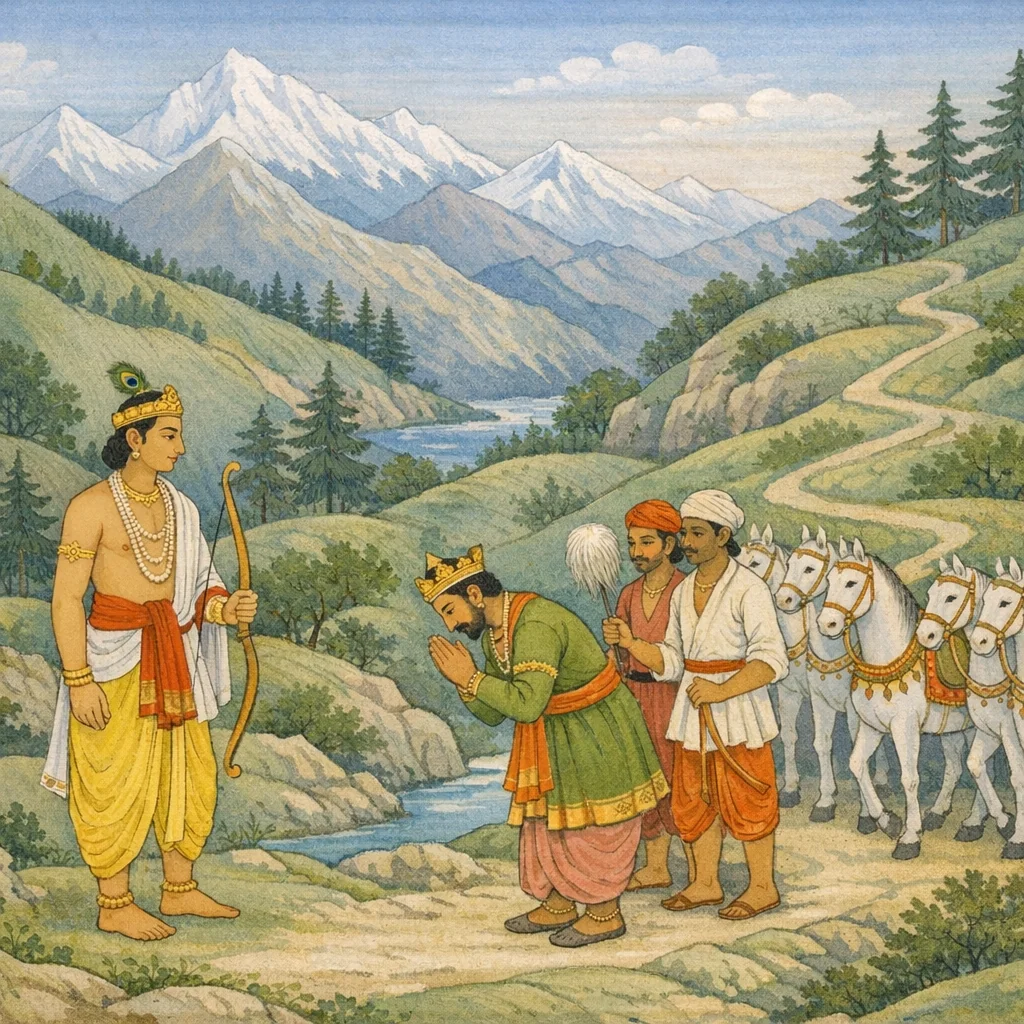
Chapter Arc: वैशम्पायन जनमेजय से कहते हैं—दिग्विजय की धारा में धनंजय अर्जुन भगदत्त को परास्त कर उत्तर दिशा, कुबेर-पालित प्रदेशों की ओर बढ़ते हैं, जहाँ पर्वत-राज्य और दुर्गम जनपद उनकी परीक्षा लेने को खड़े हैं। → अर्जुन क्रमशः अन्तर्गिरि, बहिर्गिरि और उपगिरि जैसे पर्वतीय प्रदेशों को जीतते हुए स्थानीय नरेशों को अपने पक्ष में करते हैं। उलूकवासी राजा बृहन्त तक पहुँचकर संघर्ष तीव्र होता है—यह केवल युद्ध नहीं, पर्वतीय स्वाभिमान और साम्राज्य-कर की स्वीकृति का टकराव है। → पर्वतेश्वर बृहन्त अर्जुन को ‘असह्य’ मानकर भी रण में टिक नहीं पाते; रत्न समेटकर पीछे हटते हैं। इसके बाद अर्जुन अभिसारी, उरगावासी रोचमान, और युद्धमुख पर ऋषिकों को परास्त कर दुर्लभ अश्वों को कर-रूप में प्राप्त करते हैं—तोते के उदर-से हरे, मयूर-सदृश वर्ण वाले, अत्यन्त शीघ्रगामी जवन अश्व—दिग्विजय का ठोस फल। → अर्जुन विजित प्रदेशों में व्यवस्था स्थापित करते हैं; बृहन्त का राज्य पुनः उसी के हाथ में सौंपकर (अधीनता स्वीकार कराकर) आगे बढ़ते हैं। विजय का उद्देश्य लूट नहीं, युधिष्ठिर के राजसूय हेतु कर-संग्रह और राजनीतिक अधीनता का विस्तार बनता है। → हिमवान् और निष्कुट को पार कर पुरुषर्षभ अर्जुन श्वेतपर्वत की ओर बढ़ते हैं—आगे और भी कठोर भूभाग तथा अनजाने प्रतिद्वन्द्वी प्रतीक्षा में हैं।
Shlokas
Verse 1
ऑपन--माज बक। अकाल सप्तविशो<डध्याय: अर्जुनका अनेक पर्वतीय देशोंपर विजय पाना वैशम्पायन उवाच एवमुक्त: प्रत्युवाच भगदत्तं धनंजय: । अनेनैव कृतं सर्वमनुजानीहि याम्यहम्,वैशम्पायनजी कहते हैं--जनमेजय! उनके ऐसा कहनेपर धनंजयने भगदत्तसे कहा --'राजन्! आपने जो कर देना स्वीकार कर लिया, इतनेसे ही मेरा सब सत्कार हो जायगा, अब अज्ञा दीजिये, मैं जाता हूँ"
Vaiśampāyana said: When this had been spoken, Dhanañjaya (Arjuna) replied to Bhagadatta, “By this alone everything is accomplished for me; grant me leave—now I shall depart.”
Verse 2
तं विजित्य महाबाहु: कुन्तीपुत्रो धनंजय: । प्रययावुत्तरां तस्माद् दिशं धनदपालिताम्,भगदत्तको जीतकर महाबाह कुन्तीपुत्र अर्जुन वहाँसे कुबेरद्वारा सुरक्षित उत्तर दिशामें गये
Having conquered him, the mighty-armed Dhanañjaya (Arjuna), son of Kuntī, departed from there toward the northern quarter—the direction guarded by Dhanada (Kubera).
Verse 3
अन्तर्गिरिं च कौन्तेयस्तथैव च बहिर्गिरिम् तथैवोपगिरिं चैव विजिग्ये पुरुषर्षभ:,कुरुश्रेष्ठ धनंजयने क्रमश: अन्तर्गिरि, बहिर्गिरि और उपगिरि नामक प्रदेशोंपर विजय प्राप्त की
Kuntī’s son Arjuna, the bull among men, conquered in due order the regions called Antargiri, Bahirgiri, and Upagiri.
Verse 4
विजित्य पर्वतान् सर्वान् ये च तत्र नराधिपा: । तान् वशे स्थापयित्वा स धनान्यादाय सर्वश:,फिर समस्त पर्वतों और वहाँ निवास करनेवाले राजाओंको अपने अधीन करके उन्होंने सबसे धन वसूल किये
Vaiśaṃpāyana said: Having conquered all the mountain regions and the kings who dwelt there, he brought them under his control and then collected wealth from them on every side—an act that signals the expansion of political dominion through subjugation and tribute.
Verse 5
तैरेव सहित: सर्वैरनुरज्य च तान् नृपान् उलूकवासिनं राजन् बृहन्तमुपजग्मिवान्,तत्पश्चात् उन नरेशोंको प्रसन्न करके उन सबके साथ उलूकवासी राजा बृहन्तपर आक्रमण किया
Vaiśampāyana said: Having joined with all of them, and after winning over those kings and securing their goodwill, he then advanced against Bṛhanta, the king dwelling in Ulūka-land. The episode underscores a political ethic of first consolidating alliances and consent before undertaking hostile action.
Verse 6
मृदज्भवरनादेन रथनेमिस्वनेन च । हस्तिनां च निनादेन कम्पयन् वसुधामिमाम्,जुझाऊ बाजे, श्रेष्ठ मृदृंग आदिकी ध्वनि, रथके पहियोंकी घर्घराहट और हाथियोंकी गर्जनासे वे इस पृथ्वीको कँपाते हुए आगे बढ़ रहे थे
Vaiśampāyana said: With the booming sound of drums, the rumbling of chariot-wheels, and the trumpeting of elephants, they advanced—making this very earth tremble. The verse heightens the moral atmosphere of royal power on display: martial pageantry and organized force are shown as awe-inspiring, reminding the listener that political ambition and public spectacle can shake the world, for good or ill, depending on whether they are governed by dharma.
Verse 7
ततो बृहन्तस्त्वरितो बलेन चतुरक्लिणा | निष्क्रम्य नगरात् तस्माद् योधयामास फाल्गुनम्,तब राजा बृहन्त तुरंत ही चतुरंगिणी सेनाके साथ नगरसे बाहर निकले और अर्जुनसे युद्ध करने लगे
Then Bṛhanta, swiftly mustering his strength and accompanied by a complete fourfold army, marched out of that city and engaged Phālguna (Arjuna) in battle—thus advancing the episode of trial and concealment through open combat, where prowess and resolve are tested amid the demands of duty.
Verse 8
सुमहान् संनिपातो5भूद् धनंजयबृहन्तयो: । न शशाक बृहन्तस्तु सोढुं पाण्डवविक्रमम्,उस समय अर्जुन और बृहन्तमें बड़े जोरकी मार-काट शुरू हुई, परंतु बृहन्त पाण्डुपुत्र अर्जुनके पराक्रमको न सह सके
Vaiśaṃpāyana said: A very great clash arose between Dhanañjaya (Arjuna) and Bṛhanta. But Bṛhanta could not endure the might and valor of the Pāṇḍava, Arjuna—showing how true prowess, grounded in disciplined skill and righteous purpose, overwhelms mere opposition.
Verse 9
सो<विषद्वतमं मत्वा कौन्तेयं पर्वतेश्वर: । उपावर्तत दुर्थर्षो रत्नान्यादाय सर्वश:,कुन्तीकुमारको असहा मानकर दुर्धर्ष वीर पर्वतराज बृहन्त युद्धसे हट गये और सब प्रकारके रत्नोंकी भेंट लेकर उनकी सेवामें उपस्थित हुए
Vaiśampāyana said: Judging the son of Kuntī to be utterly unyielding, the lord of the mountain—invincible in might—turned back from the fight and, gathering gems of every kind, came forward to present them in service.
Verse 10
स तद्राज्यमवस्थाप्य उलूकसहितो ययौ । सेनाबिन्दुमथो राजन् राज्यादाशु समाक्षिपत्,जनमेजय! अर्जुनने बृहन्तका राज्य पुनः उन्हींके हाथमें सौंपकर उलूकराजके साथ सेनाबिन्दुपर आक्रमण किया और उन्हें शीघ्र ही राज्यच्युत कर दिया
Vaiśampāyana said: Having duly re-established that kingdom, he set out accompanied by Ulūka. Then, O king Janamejaya, he swiftly struck down Senābindu from his sovereignty—deposing him from rule.
Verse 11
मोदापुरं वामदेवं सुदामानं सुसंकुलम् । उलूकानुत्तरांश्वैव तांश्व॒ राज्ञ: समानयत्,तदनन्तर मोदापुर, वामदेव, सुदामा, सुसंकुल तथा उत्तर उलूक देशों और वहाँके राजाओंको अपने अधीन किया
Vaiśaṃpāyana said: He brought under his control Modāpura, Vāmadeva, Sudāmā, and the densely populated Susankula; likewise he subdued the northern Ulūkas and the kings of those regions.
Verse 12
तत्रस्थ: पुरुषैरेव धर्मराजस्य शासनात् । किरीटी जितवान् राजन् देशान् पञ्चगणांस्तत:ः,राजन! धर्मराजकी आज्ञासे किरीटधारी अर्जुनने वहीं रहकर अपने सेवकोंद्वारा पंचगण नामक देशोंको जीत लिया
Vaiśampāyana said: Remaining there, and acting under the command of Dharmarāja (Yudhiṣṭhira), the diadem-wearing Arjuna—through his own men—conquered the regions known as the Pañcagaṇa countries, O King.
Verse 13
स देवप्रस्थमासाद्य सेनाबिन्दो: पुरं प्रति । बलेन चतुरज्जेण निवेशमकरोत् प्रभु:,वहाँसे सेनाबिन्दुकी राजधानी देवप्रस्थमें आकर चतुरंगिणी सेनाके साथ शक्तिशाली अर्जुनने वहीं पड़ाव डाला
Vaiśampāyana said: Having reached Devaprastha, the city of Senābindu, the mighty one established his camp there with a complete fourfold army.
Verse 14
स तै: परिवृतः सर्वर्विष्वगश्नचं नराधिपम् । अभ्यगच्छन्महातेजा: पौरवं पुरुषर्षभ,नरश्रेष्ठल उन सभी पराजित राजाओंसे घिरे हुए महातेजस्वी अर्जुनने पौरव राजा विष्वगश्वपर आक्रमण किया
Vaiśampāyana said: Surrounded on every side by the kings he had already defeated, Arjuna—mighty and radiant, best of men—advanced to confront Viṣvag-aśva, the Paurava ruler, pressing the campaign onward in the wake of victory and bending royal pride by the force of arms.
Verse 15
विजित्य चाहवे शूरान् पर्वतीयान् महारथान् | जिगाय सेनया राजन् पुरं पौरवरक्षितम्,वहाँ संग्राममें शूरवीर पर्वतीय महारथियोंको परास्त करके पौरदद्वारा सुरक्षित उनकी राजधानीको भी सेनाद्वारा जीत लिया
Vaiśampāyana said: Having defeated in battle the valiant mountain-dwelling great chariot-warriors, he then, O King, captured with his army their city, which was guarded by its own citizens.
Verse 16
पौरवं युधि निर्जित्य दस्यून् पर्वतवासिन: । गणानुत्सवसंकेतानजयत् सप्त पाण्डव:,पौरवको युद्धमें जीतकर पर्वतनिवासी लुटेरोंके सात दलोंपर, जो “उत्सवसंकेत' कहलाते थे, पाण्डुकुमार अर्जुनने विजय प्राप्त की
Vaiśampāyana said: Having defeated the Paurava in battle, the seventh Pāṇḍava, Arjuna, went on to subdue the mountain-dwelling bandits—organized in companies known as “Utsavasaṅketa.”
Verse 17
ततः काश्मीरकान् वीरान् क्षत्रियान् क्षत्रियर्षभ: । व्यजयल्लोदहितं चैव मण्डलैर्दशभि: सह,इसके बाद क्षत्रियशिरोमणि धनंजयने काश्मीरके क्षत्रियवीरोंको तथा दस मण्डलोंके साथ राजा लोहितको भी जीत लिया
Then that bull among kṣatriyas (Arjuna), continuing his campaign of conquest, subdued the valiant Kṣatriya warriors of Kāśmīra; and he also defeated King Lohita together with his ten territorial circles (maṇḍalas).
Verse 18
तत्त्रिगर्ता: कौन्तेयं दार्वा: कोकनदास्तथा । क्षत्रिया बहवो राजन्नुपावर्तन्त सर्वश:,तदनन्तर त्रिगर्त, दार्व और कोकनद आदि बहुत-से क्षत्रियनरेशशण सब ओरसे कुन्तीनन्दन अर्जुनकी शरणमें आये
Vaiśampāyana said: Then the Trigartas, the Dārvās, and the Kokanadas as well—many Kṣatriya warriors, O King, from every side—turned back and came to seek refuge with Arjuna, the son of Kuntī.
Verse 19
अभिसारीं ततो रम्यां विजिग्ये कुरुनन्दन: । उरगावासिनं चैव रोचमानं रणेडजयत्,इसके बाद कुरुनन्दन धनंजयने रमणीय अभिसारी नगरीपर विजय पायी और उरगावासी राजा रोचमानको भी युद्धमें परास्त किया
Vaiśampāyana said: Thereafter, Dhanañjaya (Arjuna), the delight of the Kurus, conquered the beautiful city of Abhisārī; and in battle he also defeated Rocamāna, the king dwelling among the Uragas (Nāgas).
Verse 20
ततः सिंहपुरं रम्यं चित्रायुधसुरक्षितम् | प्राधमद् बलमास्थाय पाकशासनिराहवे,तदनन्तर इन्द्रकुमार अर्जुनने राजा चित्रायुथके द्वारा सुरक्षित सुरम्य नगर सिंहपुरपर सेना लेकर आक्रमण किया और उसे युद्धमें जीत लिया
Vaiśampāyana said: Then, taking up his army, he advanced in battle against the lovely city of Siṃhapura, well-guarded by Citrāyudha. In that conflict, Arjuna—the son of Indra (Pākaśāsani)—pressed the attack, bringing the fortified city under his power.
Verse 21
ततः सुद्यांश्व चोलांश्व किरीटी पाण्डवर्षभ: । सहित: सर्वसैन्येन प्रामथत् कुरुनन्दन:,इसके बाद पाण्डवप्रवर कुरुकुलनन्दन किरीटीने अपनी सारी सेनाके साथ धावा करके सुह्य तथा चोल-देशकी सेनाओंको मथ डाला
Then the diadem-wearing hero—best of the Pāṇḍavas, the delight of the Kuru line—advanced together with his entire army and crushed the forces of the Sudyās and the Cholas.
Verse 22
ततः परमविक्रान्तो बाह्लीकान् पाकशासनि: । महता परिमर्देन वशे चक्रे दुरासदान्,तत्पश्चात् परम पराक्रमी इन्द्रकुमारने बड़ी भारी मार-काट मचाकर दुर्धर्ष वीर बाह्लीकोंको वशमें किया
Vaiśampāyana said: Thereafter, the supremely valiant son of Indra—Pākaśāsani—by a great crushing assault subdued the Bāhlīkas, warriors difficult to overcome.
Verse 23
गृहीत्वा तु बल॑ सारं फाल्गुन: पाण्डुनन्दन: । दरदान् सह काम्बोजैरजयत् पाकशासनि:,पाण्डुनन्दन अर्जुनने अपने साथ शक्तिशालिनी सेना लेकर काम्बोजोंके साथ दरदोंको भी जीत लिया
Vaiśampāyana said: Then Phālguna (Arjuna), the son of Pāṇḍu, taking with him the very essence of military strength, conquered the Daradas together with the Kāmbojas—thus acting as the chastiser of foes, like Indra (Pākaśāsani).
Verse 24
प्रागुत्तरां दिशं ये च वसन्त्याश्रित्य दस्यव: । निवसन्ति वने ये च तान् सर्वानजयत् प्रभु:,ईशान कोणका आश्रय ले जो लुटेरे या डाकू वनमें निवास करते थे, उन सबको शक्तिशाली धनंजयने जीतकर वशमें कर लिया
Vaiśampāyana said: Those marauders who had taken refuge in the north‑eastern quarter, and those who dwelt in the forests—over all of them the mighty lord (Dhanañjaya, Arjuna) prevailed, conquering and bringing them under control. Thus is Arjuna’s campaign cast as the restoration of order, by subduing predatory bands that disturb lawful life and security.
Verse 25
लोहान् परमकाम्बोजानृषिकानुनत्तरानपि । सहितांस््तान् महाराज व्यजयत् पाकशासनि:,महाराज! लोह, परमकाम्बोज, ऋषिक तथा उत्तर देशोंको भी अर्जुनने एक साथ जीत लिया
Vaiśampāyana said: “O King, Pākaśāsani (Arjuna) also subdued the Lohas, the Paramakāmbojas, the Ṛṣikas, and the northern peoples—all together.” The verse marks the widening reach of the Pāṇḍavas’ campaign, presenting conquest as the establishment of imperial order for the Rājasūya, not as mere personal gain.
Verse 26
इस प्रकार श्रीमहाभारत सभापर्वके अन्तर्गत दिग्विजयपर्वमें अर्जुनविग्विजयप्रसंगमें भगदत्तपराजयसम्बन्धी छब्बीसवाँ अध्याय पूरा हुआ,ऋषिकेष्वपि संग्रामो बभूवातिभयंकर: । तारकामयसंकाश: परस्त्वृषिकपार्थयो: ऋषिकदेशमें भी ऋषिकराज और अर्जुनमें तारकामय संग्रामके समान बड़ा भयंकर युद्ध हुआ
Even in the land of the Ṛṣikas, a battle erupted—exceedingly dreadful. Between the Ṛṣika king and Pārtha (Arjuna) it blazed like the legendary Tārakāmaya war, showing how the pursuit of conquest can draw even distant realms into fearsome conflict and test the bounds of righteous conduct in war.
Verse 27
स विजित्य ततो राजन्नृषिकान् रणमूर्थनि । शुकोदरसमांस्तत्र हयानष्टी समानयत्,राजन! युद्धके मुहानेपर ऋषिकोंको हराकर अर्जुनने तोतेके उदरके समान हरे रंगवाले आठ घोड़े उनसे भेंट लिये इति श्रीमहा भारते सभापर्वणि दिग्विजयपर्वणि फाल्गुनदिग्विजये नानादेशजये सप्तविंशोडध्याय:
Vaiśaṃpāyana said: Then, O King, having defeated the Ṛṣikas at the very forefront of battle, Arjuna obtained there eight horses of a parrot’s-belly hue—a bright greenish color—and brought them as tribute. The episode underscores the Digvijaya ideal: conquest is measured not by slaughter, but by the orderly taking of tribute and the acknowledged establishment of sovereignty.
Verse 28
मयूरसदृशानन्यानुत्तरानपरानपि । जवनानाशुगांश्वैव करार्थ समुपानयत्,इनके सिवा मोरके समान रंगवाले उत्तम, गतिशील और शीघ्रगामी दूसरे भी बहुत-से घोड़े वे करके रूपमें वसूल कर लाये
Vaiśampāyana said: Besides those, he also brought many other excellent horses—peacock‑hued in appearance, swift and fast‑moving—collected as tribute (tax, payment in kind). The passage underscores the political economy of kingship, in which wealth and resources, even living assets like horses, are gathered as lawful dues to sustain power and statecraft.
Verse 29
स विनिर्जित्य संग्रामे हिमवन्तं सनिष्कुटम् । श्वेतपर्वतमासाद्य न्यविशत् पुरुषर्षभ:,इसके बाद पुरुषोत्तम अर्जुन संग्राममें हिमवान् और निष्कुट प्रदेशके अधिपतियोंको जीतकर धवलगिरिपर आये और वहीं सेनाका पड़ाव डाला
Vaiśampāyana said: Having conquered in battle the regions of Himavān together with Niṣkuṭa, Arjuna—the bull among men—reached the White Mountain and encamped his army there.
Frequently Asked Questions
The tension between Kṣātra obligation to secure political order and the ethical demand for restraint, repeatedly marked by victories achieved without excessive severity and, at points, through conciliation.
Effective sovereignty is portrayed as compatible with measured action—success in state expansion is ideally achieved through proportional force, negotiation, and controlled escalation.
No explicit phalaśruti is presented here; the chapter’s meta-function is archival and political, demonstrating how tribute and submission support ritual legitimacy and court-centered authority.