Adhyaya 19
मागधगिरिव्रजप्रवेशः — Entry into Girivraja and Jarāsandha’s Protocol Inquiry
Upa-parva: Giri-vraja (Māgadha) Praveśa — Jarāsandha-sanniveśa Episode
The chapter opens with Vāsudeva describing to Pārtha (Arjuna) the auspicious Māgadha settlement and the natural fortification of Girivraja by five prominent peaks, portraying the city as protected by mountain ridges and fragrant forests. The narration (Vaiśaṃpāyana) then follows Kṛṣṇa, Bhīma, and Arjuna as they proceed to the Māgadha capital, observing its populous, prosperous streets, markets, and festival-like abundance. They forcefully acquire garlands and adopt an outward appearance consistent with a chosen disguise, moving toward Jarāsandha’s residence with deliberate intent. Jarāsandha, engaged in ritual proceedings, receives them with the customary honors due to visiting brāhmaṇas, yet becomes suspicious because their bodily marks and ornamentation conflict with snātaka norms. He questions their identity, their breach of a mountain-shrine structure for entry, and the purpose of their arrival, emphasizing that truth is fitting for kings. Kṛṣṇa replies with a calibrated ethical rationale: social rules differ by class and context, kṣatriya prosperity is associated with visible signs, and entry conventions vary between hostile and friendly houses. He concludes that those who arrive with an objective do not accept honors from an adversary, presenting a principled justification for refusing ritual hospitality while maintaining truthful discourse.
Chapter Arc: तपोवन-चर महर्षि चण्डकौशिक का आगमन होता है; मथुरा के नरेश बृहद्रथ (भविष्य के जरासंध के पिता) उन्हें नगर-समेत, अमात्यों और परिवार सहित आदरपूर्वक लेने निकलते हैं। → राजा पाद्य-अर्घ्य-आचमनीय से पूजन कर महर्षि को संतुष्ट करता है और राज्य-समृद्धि सहित अपने पुत्र के विषय में जिज्ञासा/निवेदन करता है—यह पुत्र कैसा होगा, उसका भाग्य क्या लिखेगा? → चण्डकौशिक दिव्यदृष्टि से भविष्यवाणी करते हैं: यह पुत्र (जरासंध) असाधारण सामर्थ्यवान होगा; अन्य नरेश उसके आज्ञाधीन होंगे—जैसे देहधारी प्राणियों पर वायु का स्वाभाविक अधिकार होता है, वैसे ही उसका प्रभुत्व फैलेगा। → वैशम्पायन आगे बताते हैं कि दीर्घकाल तपोवन में रहकर बृहद्रथ पत्नी सहित स्वर्गगमन करते हैं; समय के साथ मथुरा-प्रदेश में गदा-परंपरा/गदावसान की ख्याति और जरासंध के राज्य-तंत्र का उभार संकेतित होता है। → मथुरा के निकट ‘गदावसान’ की सूचना नगरवासियों द्वारा श्रीकृष्ण तक पहुँचती है और जरासंध के मंत्रि-परिषद (हंस-डिम्भक आदि) का उल्लेख आगे के राजनीतिक संघर्ष की भूमिका बाँध देता है।
Shlokas
Verse 1
(दाक्षिणात्य अधिक पाठका १ श्लोक मिलाकर कुल १३ श्लोक हैं) ऑपनआक्राा बा 5 एकोनविशो< ध्याय: चण्डकौशिक मुनिके द्वारा जरासंधका भविष्यकथन तथा पिताके द्वारा उसका राज्याभिषेक करके वनमें जाना श्रीकृष्ण उवाच कस्यचित् त्वथ कालस्य पुनरेव महातपा: । मगधेषूपचक्राम भगवांश्षण्डकौशिक:,श्रीकृष्ण कहते हैं--राजन्! कुछ कालके पश्चात् महातपस्वी भगवान् चण्डकौशिक मुनि पुनः मगधदेशमें घूमते हुए आये
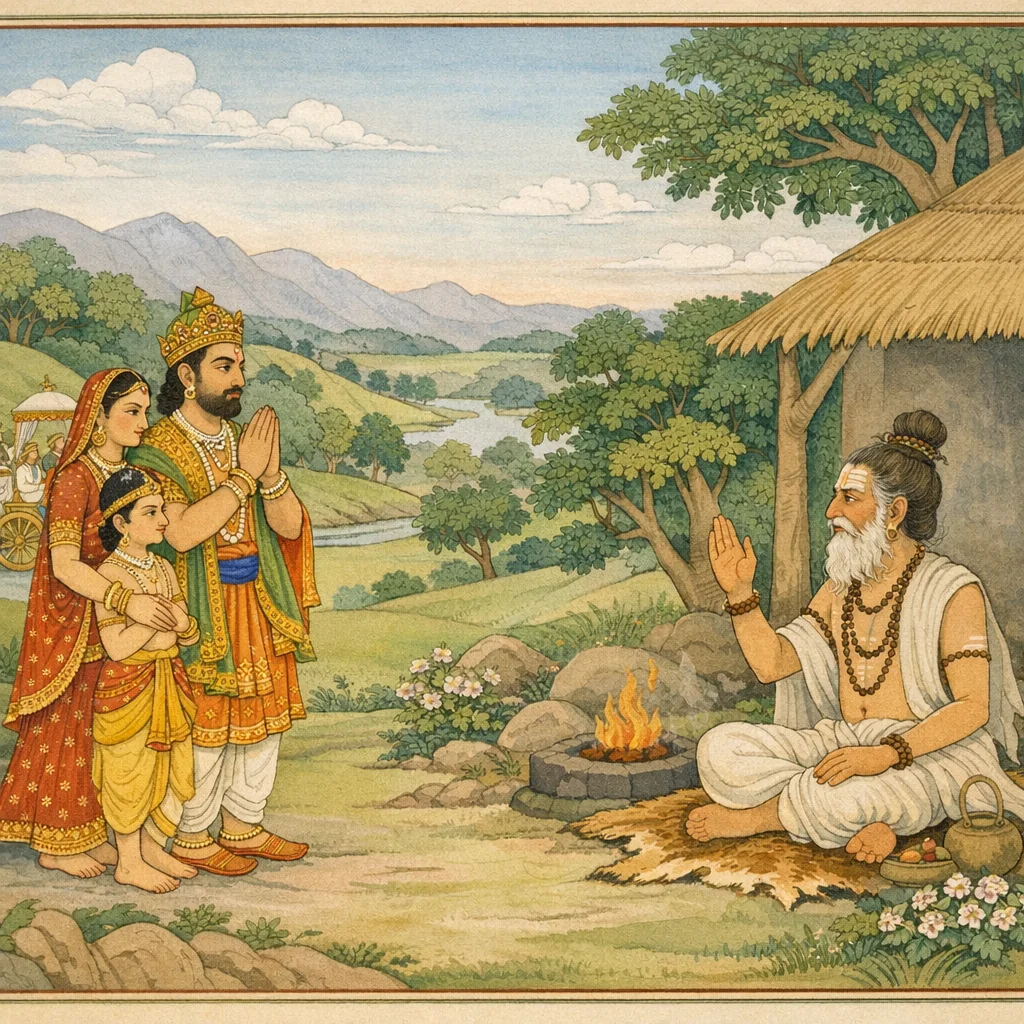
Śrī Kṛṣṇa said: “O King, after some time had passed, the greatly austere and venerable sage Chaṇḍakauśika once again came, moving about in the land of Magadha.”
Verse 2
तस्यागमनसंदृष्ट: सामात्य: सपुर:सर: । सभार्य: सह पुत्रेण निर्जगाम बृहद्रथ:,उनके आगमनसे राजा बृहद्रथको बड़ी प्रसन्नता हुई। वे मन्त्री, अग्रगामी सेवक, रानी तथा पुत्रके साथ मुनिके पास गये
Seeing the sage’s arrival, King Bṛhadratha—delighted—went forth to meet him, accompanied by his ministers and attendants who went before him, and also by his queen and his son.
Verse 3
पाद्यार्ष्याचमनीयैस्तमर्चयामास भारत | स नृपो राज्यसहितं पुत्र॑ तस्मै न््यवेदयत्,भारत! पाद्य, अर््ध और आचमनीय आदिके द्वारा राजाने महर्षिका पूजन किया और अपने सारे राज्यके सहित पुत्रको उन्हें सौंप दिया
O Bhārata, the king honored that great sage with the customary offerings—water for washing the feet, the arghya oblation, and water for sipping. Then he formally entrusted to him his son, together with the whole of his kingdom.
Verse 4
प्रतिगृह् च तां पूजां पार्थिवाद् भगवानृषि: । उवाच मागध॑ राजन प्रह्ृष्टेनान्तरात्मना,महाराज! राजाकी ओरसे प्राप्त हुई उस पूजाको स्वीकार करके ऐश्वर्यशाली महर्षिने मगधनरेशको सम्बोधित करके प्रसन्न चित्तसे कहा--“राजन्! जरासंधके जन्मसे लेकर अबतककी सारी बातें मुझे दिव्य दृष्टिसे ज्ञात हो चुकी हैं। राजेन्द्र! अब यह सुनो कि तुम्हारा पुत्र भविष्यमें कैसा होगा?
Having accepted that honor offered by the king, the venerable sage—his heart inwardly delighted—addressed the ruler of Magadha: “O King, from Jarāsandha’s birth up to this moment, all events are known to me through divine sight. Now hear, O lord of kings, what your son will be like in the future.”
Verse 5
सर्वमेतन्मया ज्ञातं राजन् दिव्येन चक्षुषा । पुत्रस्तु शृणु राजेन्द्र यादृशो5यं भविष्यति,महाराज! राजाकी ओरसे प्राप्त हुई उस पूजाको स्वीकार करके ऐश्वर्यशाली महर्षिने मगधनरेशको सम्बोधित करके प्रसन्न चित्तसे कहा--“राजन्! जरासंधके जन्मसे लेकर अबतककी सारी बातें मुझे दिव्य दृष्टिसे ज्ञात हो चुकी हैं। राजेन्द्र! अब यह सुनो कि तुम्हारा पुत्र भविष्यमें कैसा होगा?
O King, all this has been known to me through divine sight. Now listen, O best of kings: I shall tell you what manner of son this one will become in the future.
Verse 6
अस्य रूपं च सत्त्वं च बलमूर्जितमेव च । एष श्रिया समुदित: पुत्रस्तव न संशय:,“इसमें रूप, सत्त्व, बल और ओजका विशेष आविर्भाव होगा। इसमें संदेह नहीं कि तुम्हारा यह पुत्र साम्राज्यलक्ष्मीसे सम्पन्न होगा
In this child there will be a marked manifestation of beauty of form, inner excellence, strength, and vigorous energy. Without doubt, this son of yours will be endowed with royal fortune and prosperity.
Verse 7
प्रापयिष्यति तत् सर्व विक्रमेण समन्वित: । अस्य वीर्यवतो वीर्य नानुयास्यन्ति पार्थिवा:,“यह पराक्रमयुक्त होकर सम्पूर्ण अभीष्ट वस्तुओंको प्राप्त कर लेगा। जैसे उड़ते हुए गरुडके वेगको दूसरे पक्षी नहीं पा सकते, उसी प्रकार इस बलवान् राजकुमारके शौर्यका अनुसरण दूसरे राजा नहीं कर सकेंगे। जो लोग इससे शत्रुता करेंगे, वे नष्ट हो जायूँगे
Kṛṣṇa declares that this prince, endowed with valor, will win all that is sought by his own prowess. As other birds cannot match the speed of Garuḍa in flight, so will the kings of the earth be unable to keep pace with the heroism of this mighty one. Whoever chooses enmity against such strength summons ruin upon himself.
Verse 8
पततो वैनतेयस्य गतिमन्ये यथा खगा: । विनाशमुपयास्यन्ति ये चास्य परिपन्थिन:,“यह पराक्रमयुक्त होकर सम्पूर्ण अभीष्ट वस्तुओंको प्राप्त कर लेगा। जैसे उड़ते हुए गरुडके वेगको दूसरे पक्षी नहीं पा सकते, उसी प्रकार इस बलवान् राजकुमारके शौर्यका अनुसरण दूसरे राजा नहीं कर सकेंगे। जो लोग इससे शत्रुता करेंगे, वे नष्ट हो जायूँगे
As other birds cannot match the flight of Vainateya, Garuḍa, so will those who oppose him and stand in his way inevitably go to ruin.
Verse 9
देवैरपि विसृष्टानि शस्त्राण्यस्य महीपते । न रुजं जनयिष्यन्ति गिरेरिव नदीरया:,“महीपते! जैसे नदीका वेग किसी पर्वतको पीड़ा नहीं पहुँचा सकता, उसी प्रकार देवताओंके छोड़े हुए अस्त्र-शस्त्र भी इसे चोट नहीं पहुँचा सकेंगे
O king, even weapons hurled by the gods will not be able to cause him pain—just as the rushing force of a river cannot wound a mountain.
Verse 10
सर्वमूर्धाभिषिक्तानामेष मुर्धश्नि ज्वलिष्यति । प्रभाहरो<यं सर्वेषां ज्योतिषामिव भास्कर:,“जिनके मस्तकपर राज्याभिषेक हुआ है, उन सभी राजाओंके ऊपर रहकर यह अपने तेजसे प्रकाशित होता रहेगा। जैसे सूर्य समस्त ग्रह-नक्षत्रोंकी कान्ति हर लेते हैं, उसी प्रकार यह राजकुमार समस्त राजाओंके तेजको तिरस्कृत कर देगा
Over all kings who have been consecrated by royal anointing, this prince will blaze forth as the foremost. Like the sun that outshines and seems to draw away the radiance of all other lights, he will eclipse the splendor of all rulers.
Verse 11
एनमासाद्य राजान: समृद्धबलवाहना: । विनाशमुपयास्यन्ति शलभा इव पावकम्,“जैसे फतिंगे आगमें जलकर भस्म हो जाते हैं, उसी प्रकार सेना और सवारियोंसे भरे- पूरे समृद्धिशाली नरेश भी इससे टक्कर लेते ही नष्ट हो जायँगे
Even kings abounding in prosperity—well supplied with troops and mounts—will, on confronting him, rush headlong to destruction, like moths that fly into a flame.
Verse 12
एष श्रिय: समुदिता: सर्वराज्ञां ग्रहीष्यति । वर्षास्विवोदीर्णजला नदीर्नदनदीपति:,“यह समस्त राजाओंकी संगृहीत सम्पदाओंको उसी प्रकार अपने अधिकारमें कर लेगा, जैसे नदों और नदियोंका अधिपति समुद्र वर्षा-ऋतुमें बढ़े हुए जलवाली नदियोंको अपनेमें मिला लेता है
He will draw into his own dominion the amassed fortunes of all kings, as the ocean—lord of rivers and streams—during the rainy season gathers the swollen waters of the rivers into itself.
Verse 13
एष धारयिता सम्यक् चातुर्वर्ण्य महाबल: । शुभाशुभमिव स्फीता सर्वसस्यधरा धरा,“यह महाबली राजकुमार चारों वर्णोको भलीभाँति धारण करेगा (उन्हें आश्रय देगा;) ठीक वैसे ही, जैसे सभी प्रकारके धान्योंको धारण करनेवाली समृद्धिशालिनी पृथ्वी शुभ और अशुभ सबको आश्रय देती है
This mighty prince will rightly uphold the order of the four varnas, as the prosperous earth—bearing every kind of grain—gives shelter alike to the auspicious and the inauspicious.
Verse 14
अस्याज्ञावशगा: सर्वे भविष्यन्ति नराधिपा: । सर्वभूतात्मभूतस्य वायोरिव शरीरिण:,“जैसे सब देहधारी समस्त प्राणियोंके आत्मारूप वायुदेवके अधीन होते हैं, उसी प्रकार सभी नरेश इसकी आज्ञाके अधीन होंगे
All kings will come under his command, just as every embodied being is governed by Vāyu—the very soul of all creatures—moving within the body and sustaining life.
Verse 15
एष रुद्रं महादेवं त्रिपुरान्तकरं हरम् | सर्वलोकेष्वतिबल: साक्षाद् द्रक्ष्यति मागध:,“यह मगधराज सम्पूर्ण लोकोंमें अत्यन्त बलवान् होगा और त्रिपुरासुरका नाश करनेवाले सर्वदुःखहारी महादेव रुद्रकी आराधना करके उनका प्रत्यक्ष दर्शन प्राप्त करेगा”
This king of Magadha will be exceedingly mighty in all the worlds, and by worshiping Rudra, the Great God—Hara, the destroyer of Tripura—he will behold him directly.
Verse 16
एवं ब्रुवन्नेव मुनि: स्वकार्यमिव चिन्तयन् । विसर्जयामास नृपं बृहद्रथमथारिहन्,शत्रुसूदन नरेश! ऐसा कहकर अपने कार्यके चिन्तनमें लगे हुए मुनिने राजा बृहद्रथको विदा कर दिया
Having spoken thus, the sage—seeming absorbed in thought about his own task—then dismissed King Bṛhadratha.
Verse 17
प्रविश्य नगरीं चापि ज्ञातिसम्बन्धिभिववृत: । अभिषिच्य जरासंधं मगधाधिपतिस्तदा,राजधानीमें प्रवेश करके अपने जाति-भाइयों और सगे-सम्बन्धियोंसे घिरे हुए मगधनरेश बृहद्रथने उसी समय जरासंधका राज्याभिषेक कर दिया। ऐसा करके उन्हें बड़ा संतोष हुआ। जरासंधका अभिषेक हो जानेपर महाराज बृहद्रथ अपनी दोनों पत्नियोंके साथ तपोवनमें चले गये
Entering the capital, surrounded by his kinsmen and relatives, the ruler of Magadha, Bṛhadratha, then performed the royal consecration of Jarāsandha. Having thus installed him upon the throne, King Bṛhadratha felt deep satisfaction; and after Jarāsandha’s anointing, Bṛhadratha departed with his two queens to a forest hermitage to live a life of austerity—showing kingship as a trust to be duly handed on, and renunciation as a dharmic culmination once orderly succession is secured.
Verse 18
बृहद्रथो नरपति: परां निर्वतिमाययौ । अभिषिक्ते जरासंधे तदा राजा बूृहद्रथ: । पत्नीद्रयेनानुगतस्तपोवनचरो5भवत्,राजधानीमें प्रवेश करके अपने जाति-भाइयों और सगे-सम्बन्धियोंसे घिरे हुए मगधनरेश बृहद्रथने उसी समय जरासंधका राज्याभिषेक कर दिया। ऐसा करके उन्हें बड़ा संतोष हुआ। जरासंधका अभिषेक हो जानेपर महाराज बृहद्रथ अपनी दोनों पत्नियोंके साथ तपोवनमें चले गये
King Bṛhadratha, lord of men, attained great contentment. When Jarāsandha had been duly consecrated as king, Bṛhadratha—accompanied by his two queens—renounced royal life and went to dwell in a forest hermitage. The narrative underscores a ruler’s duty to secure orderly succession and then, having fulfilled worldly obligations, to turn toward austerity and spiritual discipline.
Verse 19
ततो वनस्थे पितरि मात्रोश्वैव विशाम्पते । जरासंध: स्ववीर्येण पार्थिवानकरोद् वशे,महाराज! दोनों माताओं और पिताके वनवासी हो जानेपर जरासंधने अपने पराक्रमसे समस्त राजाओंको वशमें कर लिया इति श्रीमहा भारते सभापर्वणि राजसूयारम्भपर्वणि जरासंधप्रशंसायामेकोनविंशतितमो<5 ध्याय: इस प्रकार श्रीमह्याभारत सभापर्वके अन्तर्गत राजयूयारग्भपर्वमें जरासंधप्रशंसाविषयक उन्नीसवाँ अध्याय पूरा हुआ
Then, O lord of the people, when his father had gone to live in the forest and his mothers likewise, Jarāsandha, by the force of his own prowess, brought the kings of the earth under his control.
Verse 20
वैशम्पायन उवाच अथ दीर्घस्य कालस्य तपोवनचरो नृपः । सभार्य: स्वर्गमगमत् तपस्तप्त्वा बृहद्रथ:,वैशम्पायनजी कहते हैं--जनमेजय! तदनन्तर दीर्घकालतक तपोवनमें रहकर तपस्या करते हुए महाराज बृहद्रथ अपनी पत्नियोंके साथ स्वर्गवासी हो गये
Vaiśampāyana said: After a long time, King Bṛhadratha—dwelling in a forest hermitage and practicing austerities—departed for heaven together with his wives.
Verse 21
जरासंधो<पि नृपतिर्यथोक्तं कौशिकेन तत् | वरप्रदानमखिलं प्राप्पय राज्यमपालयत्,इधर जरासंध भी चण्डकौशिक मुनिके कथनानुसार भगवान् शंकरसे सारा वरदान पाकर राज्यकी रक्षा करने लगा
Vaiśampāyana said: Even King Jarāsandha, acting exactly as Kauśika had instructed, obtained in full the boon that was to be granted and thereafter protected and governed his kingdom.
Verse 22
निहते वासुदेवेन तदा कंसे महीपतौ । जातो वै वैरनिर्बन्ध: कृष्णेन सह तस्य वै,वसुदेवनन्दन श्रीकृष्णके द्वारा अपने जामाता राजा कंसके मारे जानेपर श्रीकृष्णके साथ उसका वैर बहुत बढ़ गया
Vaiśampāyana said: When King Kaṃsa, ruler of the land, had been slain by Kṛṣṇa, the son of Vāsudeva, a firm and binding enmity arose in him against Kṛṣṇa. The episode shows how the death of a close relation can harden hostility into a settled vow of revenge, setting the moral stage for further conflict driven by resentment rather than discernment.
Verse 23
भ्रामयित्वा शतगुणमेकोनं येन भारत । गदा क्षिप्ता बलवता मागधेन गिरिव्रजात्,भारत! उसी वैरके कारण बलवान् मगधराजने अपनी गदा निन्यानबे बार घुमाकर गिरिव्रजसे मथुराकी ओर फेंकी। उन दिनों अद्भुत कर्म करनेवाले श्रीकृष्ण मथुरामें ही रहते थे। वह उत्तम गदा निन्यानबे योजन दूर मथुरामें जाकर गिरी
Vaiśampāyana said: “O Bhārata, after whirling his mace ninety-nine times, the mighty king of Magadha hurled it with great force from Girivraja toward Mathurā. That excellent mace flew and fell in Mathurā, having traversed ninety-nine yojanas. In those days Śrī Kṛṣṇa, famed for wondrous deeds, was residing in Mathurā.”
Verse 24
तिष्ठतो मथुरायां वै कृष्णस्याद्भुतकर्मण: । एकोनयोजनशते सा पपात गदा शुभा,भारत! उसी वैरके कारण बलवान् मगधराजने अपनी गदा निन्यानबे बार घुमाकर गिरिव्रजसे मथुराकी ओर फेंकी। उन दिनों अद्भुत कर्म करनेवाले श्रीकृष्ण मथुरामें ही रहते थे। वह उत्तम गदा निन्यानबे योजन दूर मथुरामें जाकर गिरी
Vaiśampāyana said: While Kṛṣṇa of wondrous deeds was residing in Mathurā, that auspicious mace fell there—having been hurled from afar, short of a hundred yojanas. The episode underscores the reach of royal wrath and the escalation of hostility, even as Kṛṣṇa’s presence in Mathurā frames the moment as one watched over by extraordinary power and providence.
Verse 25
दृष्टवा पौरैस्तदा सम्यग् गदा चैव निवेदिता । गदावसानं तत् ख्यातं मथुराया: समीपत:,पुरवासियोंने उसे देखकर उसकी सूचना भगवान् श्रीकृष्णको दी। मथुराके समीपका वह स्थान, जहाँ गदा गिरी थी, गदावसानके नामसे विख्यात हुआ
Vaiśampāyana said: When the townspeople had clearly seen it, they reported that very mace to Lord Śrī Kṛṣṇa. The spot near Mathurā where the mace came to rest became renowned by the name Gadāvasāna—“the end (or resting-place) of the mace.”
Verse 26
तस्यास्तां हंसडिम्भकावशस्त्रनिधनावुभौ । मन्त्रे मतिमतां श्रेष्ठो नीतिशास्त्रे विशारदौ,जरासंधको सलाह देनेके लिये बुद्धिमानोंमें श्रेष्ठ तथा नीतिशास्त्रमें निपुण दो मन्त्री थे, जो हंस और डिम्भकके नामसे विख्यात थे। वे दोनों किसी भी शस्त्रसे मरनेवाले नहीं थे
Vaiśampāyana said: Jarāsandha had two ministers, famed as Haṃsa and Ḍimbhaka—foremost among the wise in counsel and highly skilled in the science of polity. It was also said of them that they could not be slain by weapons, underscoring both their formidable standing and the daunting strength of Jarāsandha’s court.
Verse 27
यौ तौ मया ते कथितौ पूर्वमेव महाबलौ । त्रयस्त्रयाणां लोकानां पर्याप्ता इति मे मति:,जनमेजय! उन दोनों महाबली वीरोंका परिचय मैंने तुम्हें पहले ही दे दिया है। मेरा ऐसा विश्वास है, जरासंध और वे तीनों मिलकर तीनों लोकोंका सामना करनेके लिये पर्याप्त थे
Vaiśampāyana said: “Those two mighty heroes of whom I spoke to you earlier—I am of the view, O Janamejaya, that they were sufficient to confront the three worlds, even threefold.”
Verse 28
एवमेव तदा वीर बलिभि: कुकुरान्धकै: । वृष्णिभ्रिश्न महाराज नीतिहेतोरुपेक्षित:,वीरवर महाराज! इस प्रकार नीतिका पालन करनेके लिये ही उस समय बलवान कुकुर, अन्धक और वृष्णिवंशके योद्धाओंने जरासंधकी उपेक्षा कर दी
Thus, O hero—O great king—at that time Jarāsandha was deliberately disregarded by the mighty warriors of the Kukuras, the Andhakas, and the Vṛṣṇis, solely for the sake of upholding political prudence and righteous policy (nīti).
Frequently Asked Questions
The tension lies between strategic concealment and public truth: the visitors employ disguise and unconventional entry, while Jarāsandha insists that identity and intent be stated truthfully within the norms of royal hospitality and accountability.
Kṛṣṇa frames dharma as context-sensitive: social markers and rules vary by role, yet truthful speech remains a stabilizing virtue; additionally, accepting honors from an adversary is not obligatory when one arrives with a defined political objective.
No explicit phalaśruti is stated; the chapter’s meta-function is structural—establishing the ethical vocabulary (satya, ātithya, nīti) and procedural setting necessary for the ensuing confrontation with Jarāsandha.