Adhyaya 38
Kṛpa’s Archery Display; Śikhaṇḍin Checked; Suketu Slain; Dhṛṣṭadyumna–Kṛtavarmā Clash (कृपशौर्य–पार्षतहार्दिक्ययुद्धम्)
Upa-parva: Karṇa-parva — Śāradvata-Kṛpa and Pārṣata Engagement Cycle (Chapter 38)
Sañjaya reports that, seeing the Kaurava host distressed by fear of the Pāṇḍavas, leading Kaurava fighters move to recover the situation. A sharp engagement follows: Kṛpa (Śāradvata/Gautama) overwhelms Śikhaṇḍin with dense arrow volleys, disables his chariot team, and forces him to dismount with sword and shield. Śikhaṇḍin’s advance is repeatedly screened by Kṛpa’s fire, prompting Dhṛṣṭadyumna to ride out to counter Kṛpa; Kṛtavarmā immediately intercepts Dhṛṣṭadyumna, producing a separate, intense duel marked by alternating weapon-showers and defensive dispersals. Meanwhile, Suketu (son of Citraketu) attempts to assist by attacking Kṛpa; Kṛpa answers with precise strikes, culminates in a beheading with a razor-headed arrow, and Suketu’s followers scatter. The chapter closes with Dhṛṣṭadyumna, after gaining advantage over his immediate opponent, turning his missiles to restrain advancing Kaurava forces as the melee continues.
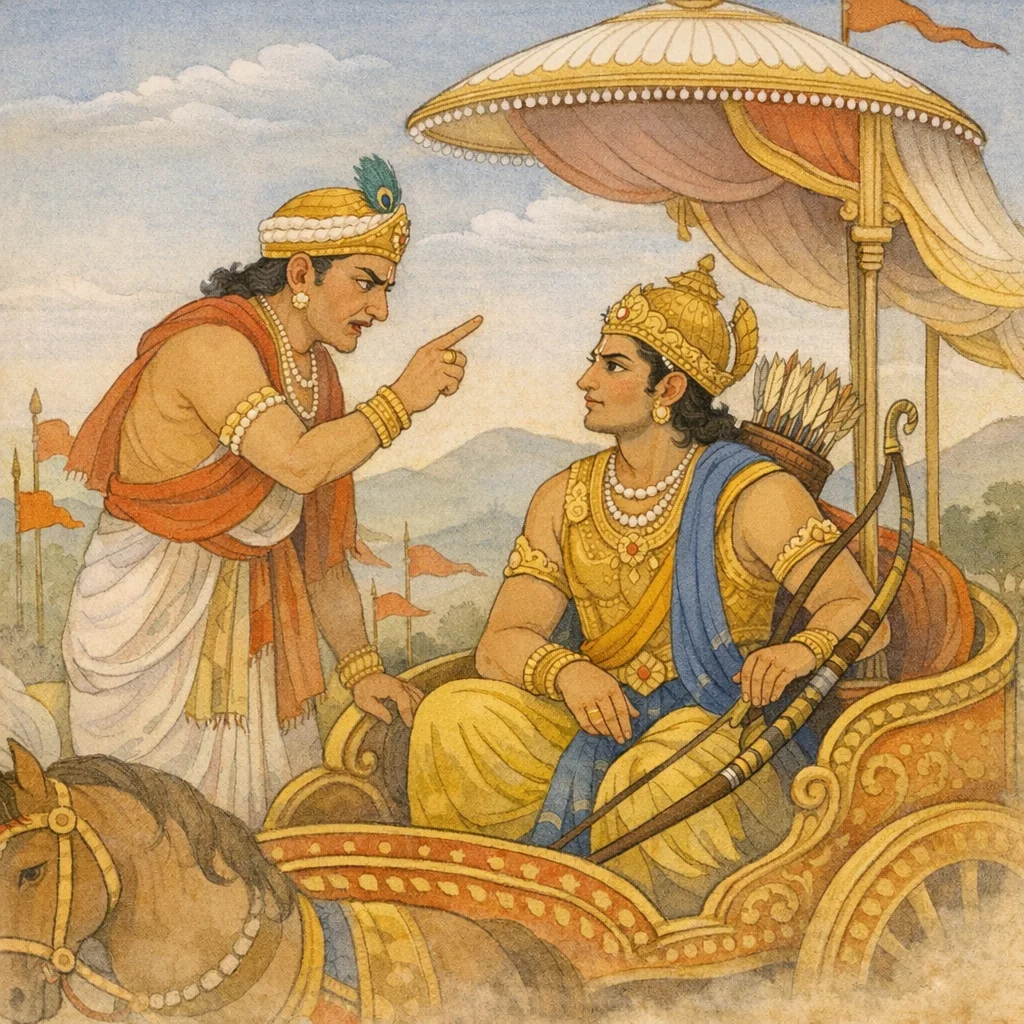
Chapter Arc: कौरव-सेना के रथ पर, सारथि-राज शल्य कर्ण को ‘दानवीर’ कहकर नहीं, ‘मूढ़’ कहकर छेड़ते हैं—और उसी क्षण दान का गौरव अपमान का कारण बन जाता है। → शल्य कर्ण के दान को विवेकहीन बताकर कहते हैं कि वह कुबेर की तरह धन लुटाता है, अपात्र-दान के दोष नहीं समझता, और आज अर्जुन के सामने उसका भ्रम टूटेगा। वे उपमानों की शृंखला से कर्ण को ‘शृगाल’ और अर्जुन को ‘सिंह/व्याघ्र’ ठहराते हैं, यह जताते हुए कि वे दुर्योधन के हित के लिए बोल रहे हैं। → शल्य का तीखा निर्णायक प्रहार—‘तुम नित्य शृगाल हो, धनंजय नित्य सिंह’—और बल-भेद के उदाहरण (चूहा-बिलाव, कुत्ता-व्याघ्र, शृगाल-सिंह, खरगोश-हाथी; असत्य-सत्य, विष-अमृत) कर्ण की प्रतिष्ठा पर सीधा आघात करते हैं। → कर्ण प्रत्युत्तर देता है कि वह अपने बाहुबल के भरोसे रण में अर्जुन को ललकारता है; शल्य को ‘मित्रमुख शत्रु’ कहकर उसकी वाणी को भय-उत्पादक और विश्वासघाती ठहराता है। → अर्जुन से होने वाले निर्णायक संग्राम से ठीक पहले, सारथि की वाणी और योद्धा का अहं आमने-सामने खड़े हैं—क्या कर्ण शल्य की कटु भविष्यवाणी को झुठला पाएगा?
Shlokas
Verse 1
अपन का बा | अत-#-#कत एकोनचत्वारिशोड ध्याय: शल्यका कर्णके प्रति अतन्त आक्षेपपूर्ण वचन कहना शल्य उवाच मा सूतपुत्र दानेन सौवर्ण हस्तिषड्गवम् । प्रयच्छ पुरुषायाद्य द्रक्ष्यसि त्वं धनंजयम्,शल्य बोले--सूतपुत्र! तुम किसी पुरुषको हाथीके समान हृष्ट-पुष्ट छः: बैलोंसे जुता हुआ सोनेका रथ न दो। आज अवश्य ही अर्जुनको देखोगे
Shalya said: “O son of a charioteer, do not, by way of a gift, hand over today to any man that golden chariot drawn by six well-fed bulls, mighty as an elephant. For today you will surely behold Dhanañjaya (Arjuna).”
Verse 2
बाल्यादिह त्वं त्यजसि वसु वैश्रवणो यथा । अयल्नेनैव राधेय द्रष्टास्यद्य धनंजयम्,राधापुत्र! तुम मूर्खतासे ही यहाँ कुबेरके समान धन लुटा रहे हो, आज अर्जुनको तो तुम बिना यत्न किये ही देख लोगे
Śalya said: “From sheer childish folly you are squandering your wealth here, as though you were Vaiśravaṇa (Kubera) himself. O son of Rādhā, today you will behold Dhanañjaya (Arjuna) without any effort at all.”
Verse 3
परान् सृजसि यद् वित्तं किंचित्त्वं बहु मूढवत् । अपात्रदाने ये दोषास्तान् मोहान्नावबुध्यसे,मूढ़ पुरुषोंके समान तुम अपना बहुत कुछ धन जो दूसरोंको दे रहे हो, इससे जान पड़ता है कि अपात्रको धनका दान देनेसे जो दोष पैदा होते हैं, उन्हें मोहवश तुम नहीं समझ रहे हो
Śalya said: “Since you are giving away a great deal of your wealth to others, like a deluded man, it appears you do not, out of infatuation, understand the faults that arise from giving gifts to the unworthy.”
Verse 4
यत् त्वं प्रेरयसे वित्तं बहु तेन खलु त्वया । शक्यं बहुविधैर्यज्ञिर्यट्टं सूत यजस्व तै:,सूत! तुम जो बहुत धन देनेकी यहाँ घोषणा कर रहे हो, निश्चय ही उसके द्वारा नाना प्रकारके यज्ञोंका अनुष्ठान कर सकते हो; अतः तुम उन धन-वैभवोंद्वारा यज्ञोंका ही अनुष्ठान करो
“O Sūta! You proclaim that you will bestow great wealth; with that treasure, indeed, sacrifices (yajñas) of many kinds can be performed. Therefore, O Sūta, perform the yajñas with those riches and splendors.”
Verse 5
यच्च प्रार्थयसे हन्तुं कृष्णौ मोहाद् वृथैव तत् । न हि शुश्रुम सम्मर्दे क्रोष्टा सिंहौ निपातितो,और जो तुम मोहवश श्रीकृष्ण तथा अर्जुनको मारना चाहते हो, वह मनसूबा तो व्यर्थ ही है; क्योंकि हमने यह बात कभी नहीं सुनी है कि किसी गीदड़ने युद्धमें दो सिंहोंको मार गिराया हो
“And the wish you voice, in delusion, to slay Śrī Kṛṣṇa and Arjuna is utterly vain; for we have never heard of a jackal felling two lions in battle.”
Verse 6
अप्रार्थितं प्रार्थयसे सुह्ददो न हि सन्ति ते । ये त्वां न वारयन्त्याशु प्रपतन्तं हुताशने,तुम ऐसी चीज चाहते हो, जिसकी अबतक किसीने इच्छा नहीं की थी। जान पड़ता है तुम्हारे कोई सुहृद् नहीं हैं, जो शीघ्र ही आकर तुम्हें चलती आगमें गिरनेसे रोक नहीं रहे हैं
Śalya said: “You are asking for what no one has sought before. It seems you have no true well-wishers—those who would quickly restrain you as you rush headlong into the fire.”
Verse 7
कार्याकार्य न जानीषे कालपक्वो<5स्यसंशयम् | बह्नबद्धमकर्णीयं को हि ब्रूयाज्जिजीविषु:,तुम्हें कर्तव्य और अकर्तव्यका कुछ भी ज्ञान नहीं है। निःसंदेह तुम्हें कालने पका दिया है। (अतः तुम पके हुए फलके समान गिरनेवाले ही हो); अन्यथा जो जीवित रहना चाहता है, ऐसा कौन पुरुष ऐसी बहुत-सी न सुननेयोग्य ऊटपटांग बातें कह सकता है?
Śalya said: “You do not understand at all what ought to be done and what ought not to be done. Without doubt, Time has ripened you for death—like a fruit ready to fall. Otherwise, what man who still wishes to live would utter so many harsh, unfit-to-be-heard, senseless words?”
Verse 8
समुद्रतरणं दोर्भ्या कण्ठे बद्ध्वा यथा शिलाम् | गिर्यग्राद् वा निपतनं तादूक् तव चिकीर्षितम्,जैसे कोई गलेमें पत्थर बाँधकर दोनों हाथोंसे समुद्र पार करना चाहे अथवा पहाड़की चोटीसे पृथ्वीपर कूदनेकी इच्छा करे, ऐसी ही तुम्हारी सारी चेष्टा और अभिलाषा है
Śalya said: “Your intended effort is like trying to cross the ocean by the strength of one’s arms while a stone is tied to the neck, or like wishing to leap down from a mountain peak to the earth. In the same way, your whole striving and desire are self-destructive and bound to fail.”
Verse 9
सहित: सर्वयोधैस्त्वं व्यूढानीकै: सुरक्षित: । धनंजयेन युध्यस्व श्रेयश्वेत् प्राप्तुमिच्छसि,यदि तुम कल्याण प्राप्त करना चाहते हो तो व्यूहरचनापूर्वक खड़े हुए समस्त सैनिकोंके साथ सुरक्षित रहकर अर्जुनसे युद्ध करो
Śalya said: “Stand together with all your warriors, protected by a properly arrayed battle-formation, and fight Dhanañjaya (Arjuna). If you wish to attain what is truly beneficial (śreyas), then engage him in battle under such disciplined protection.”
Verse 10
हितार्थ धार्तराष्ट्रस्य ब्रवीमि त्वां न हिंसया । श्रद्धस्वैवं मया प्रोक्तं यदि तेडस्ति जिजीविषा,दुर्योधनके हितके लिये ही मैं ऐसा कह रहा हूँ, हिंसाभावसे नहीं। यदि तुम्हें जीनेकी इच्छा है तो मेरे इस कथनपर विश्वास करो
Śalya said: “I speak to you for the welfare of Dhṛtarāṣṭra’s son, not out of any wish to harm. Trust what I have told you in this manner—if you still have the desire to live.”
Verse 11
कर्ण उवाच स्वबाहुवीर्यमाश्रित्य प्रार्थयाम्यर्जुनं रणे । त्वं तु मित्रमुख: शत्रुर्मा भीषयितुमिच्छसि,कर्ण बोला--शल्य! मैं अपने बाहुबलका भरोसा करके रणक्षेत्रमें अर्जुनको पाना चाहता हूँ; परंतु तुम तो मुँहसे मित्र बने हुए वास्तवमें शत्रु हो, जो मुझे यहाँ डराना चाहते हो
Karna said: “O Śalya! Relying on the valor of my own arms, I seek Arjuna on the battlefield. But you—friendly in speech, an enemy in truth—wish to frighten me here.”
Verse 12
न मामस्मादभिप्रायात् कश्चिदद्य निवर्तयेत् । अपीन्द्रो वज्मुद्यम्य किमु मर्त्य: कथंचन,परंतु मुझे इस अभिप्रायसे आज कोई भी पीछे नहीं लौटा सकता। वज्र उठाये हुए इन्द्र भी मुझे किसी तरह इस निश्चयसे डिगा नहीं सकते, फिर मनुष्यकी तो बात ही क्या है?
“No one today can turn me back from this resolve. Even Indra, raising his thunderbolt, could not shake me from this determination—how much less could any mortal do so?”
Verse 13
संजय उवाच इति कर्णस्य वाक्यान्ते शल्य: प्राहोत्तरं वच: । चुकोपयिषुरत्यर्थ कर्ण मद्रेश्वर: पुन:,संजय कहते हैं--राजन्! कर्णकी यह बात समाप्त होते ही मद्रराज शल्य उसे अत्यन्त कुपित करनेकी इच्छासे पुनः इस प्रकार उत्तर देने लगे--
Sanjaya said: “When Karna had finished speaking, Shalya, the lord of Madra, replied. Intending to provoke Karna into intense anger once again, he began to answer in these words—”
Verse 14
यदा वै त्वां फाल्गुनवेगयुक्ता ज्याचोदिता हस्तवता विसृष्टा: । अन्वेतार: कड्कपत्रा: सिताग्रा- स्तदा तप्स्यस्यर्जुनस्थानुयोगात्,“कर्ण! अर्जुनके वेगसे युक्त हो उनकी प्रत्यंचासे प्रेरित और सुशिक्षित हाथोंसे छोड़े हुए तीखी धारवाले कंकपत्रविभूषित बाण जब तुम्हारे शरीरमें घुसने लगेंगे, तब जो तुम अर्जुनको पूछते फिरते हो, इसके लिये पश्चात्ताप करोगे
Sanjaya said: When those arrows—borne on the speed of Phalguna (Arjuna), driven by the bowstring and loosed by his well-trained hand—adorned with vulture-feathers and tipped with bright, keen points, begin to pierce your body, then you will repent, for your stubborn insistence on challenging Arjuna.
Verse 15
यदा दिव्यं धनुरादाय पार्थ: प्रतापयन् पृतनां सव्यसाची । त्वां मर्दयिष्यन्निशितै: पृषत्कै- सस््तदा पश्चात् तप्स्यसे सूतपुत्र
Sanjaya said: When Arjuna—the ambidextrous Savyasachi—takes up his divine bow and, displaying his prowess, bears down upon the host, then, meaning to crush you with his sharp arrows, he will make you, O son of a charioteer, burn afterward with remorse.
Verse 16
'सूतपुत्र! जब सव्यसाची कुन्तीकुमार अर्जुन अपने हाथमें दिव्य धनुष लेकर शत्रुसेनाको तपाते हुए पैने बाणोंद्वारा तुम्हें रौंदने लगेंगे, तब तुम्हें अपने कियेपर पछतावा होगा ।। बालश्चन्द्र मातुरडके शयानो यथा वजच्रित् प्रार्थयते5पहर्तुम् । तद्वन्मोहाद् द्योतमानं रथस्थं सम्प्रार्थयस्यर्जुनं जेतुमद्य,“जैसे अपनी माँकी गोदमें सोया हुआ कोई बालक चन्द्रमाको पकड़ लाना चाहता हो, उसी प्रकार तुम भी रथपर बैठे हुए तेजस्वी अर्जुनको आज मोहवश परास्त करना चाहते हो
Sanjaya said: O son of a charioteer! When Arjuna, Kunti’s son—the ambidextrous Savyasachi—takes up his divine bow, scorches the enemy host, and tramples you down with his sharp arrows, then you will regret what you have done. Just as a child lying in his mother’s lap foolishly longs to seize the moon, so too, deluded, you now aspire to conquer the radiant Arjuna seated upon his chariot.
Verse 17
त्रिशूलमाश्रित्य सुतीक्षणधारं सर्वाणि गात्राणि विघर्षसि त्वम् । सुतीक्षणधारोपमकर्म णा त्वं युयुत्ससे यो<र्जुनेनाद्य कर्ण,“कर्ण! अर्जुनका पराक्रम अत्यन्त तीखी धारवाले त्रिशूलके समान है। उन्हीं अर्जुनके साथ आज जो तुम युद्ध करना चाहते हो, वह दूसरे शब्दोंमें यों है कि तुम पैनी धारवाले त्रिशूलको लेकर उसीसे अपने सारे अंगोंको रगड़ना या खुजलाना चाहते हो
Sanjaya said: O Karna, to wish today to fight Arjuna is like taking up a razor-edged trident and scraping all your limbs with it—so perilous is the deed you undertake, like the keen edge of that trident.
Verse 18
क्रुद्धं सिंह केसरिणं बृहन्तं बालो मूढ: क्षुद्रमृगस्तरस्वी । समाह्दयेत् तद्धदेतत् तवाद्य समाद्टदानं सूतपुत्रार्जुनस्य,'सूतपुत्र! जैसे बालक, मूढ़ और वेगसे चौकड़ी भरनेवाला क्षुद्र मृग क्रोधमें भरे हुए विशालकाय, केसरयुक्त सिंहको ललकारे, तुम्हारा आज यह अर्जुनका युद्धके लिये आह्वान करना भी वैसा ही है
Sanjaya said: O Sūtaputra, just as a foolish, childlike creature—a small, swift deer—might rashly challenge a huge, maned lion blazing with anger, so too is your challenge to Arjuna for battle today: a reckless provocation, blind to the true measure of strength and consequence.
Verse 19
मा सूतपुत्राह्दय राजपुत्र महावीर्य॑ केसरिणं यथैव । वने शृगाल: पिशितेन तृप्तो मा पार्थमासाद्य विनड्क्ष्यसि त्वम्
Sañjaya said: “O mighty prince, do not become lion-hearted merely because you are the son of a charioteer. Like a jackal in the forest that, having eaten flesh, imagines itself a lion, do not rush upon Pārtha (Arjuna) and meet your ruin.”
Verse 20
'सूतपुत्र! तुम महापराक्रमी राजकुमार अर्जुनका आह्वान न करो। जैसे वनमें मांस- भक्षणसे तृप्त हुआ गीदड़ महाबली सिंहके पास जाकर नष्ट हो जाता है, उसी प्रकार तुम भी अर्जुनसे भिड़कर विनाशके गर्तमें न गिरो ।। ईषादन्तं महानागं प्रभिन्नकरटामुखम् | शशको ह्वयसे युद्धे कर्ण पार्थ धनंजयम्,“कर्ण! जैसे कोई खरगोश ईषादण्डके समान दाँतोंवाले महान् मदस्रावी गजराजको अपने साथ युद्धके लिये बुलाता हो, उसी प्रकार तुम भी कुन्तीपुत्र धनंजयका रफक्षेत्रमें आह्वान करते हो
Sañjaya said: “O son of a charioteer, do not challenge the mighty prince Arjuna. Just as a jackal, satiated by eating flesh in the forest, approaches a powerful lion and is destroyed, so too do not, by clashing with Arjuna, fall into the pit of ruin. O Karna, you are calling to battle Kunti’s son Dhananjaya—like a hare summoning a great elephant with tusks like a pole and a face streaming with musth.”
Verse 21
बिलस्थं कृष्णसर्प त्वं बाल्यात् काछेन विध्यसि । महाविषं॑ पूर्णकोप॑ं यत् पार्थ योद्धुमिच्छसि,“तुम यदि पूर्णतः क्रोधमें भरे हुए अर्जुनके साथ जूझना चाहते हो तो मूर्खतावश बिलमें बैठे हुए महाविषैले काले सर्पको किसी काठकी छड़ीसे बींध रहे हो
Sañjaya said: “In childish folly you are prodding a black serpent that sits in its burrow with a stick. So too, if you truly wish to fight Pārtha (Arjuna) when he is filled with wrath—like a great venomous snake at the height of its fury—you are courting a peril that will recoil upon you.”
Verse 22
सिंहं केसरिणं क्रुद्धमतिक्रम्याभिनर्दसे । शृगाल इव मूढस्त्वं नूसिंहं कर्ण पाण्डवम्,“कर्ण! तुम मूर्ख हो; जैसे गीदड़ क्रोधमें भरे हुए केसरी सिंहका अनादर करके गर्जना करे, उसी प्रकार तुम भी मनुष्योंमें सिंहके समान पराक्रमी और क्रोधमें भरे हुए पाण्डुकुमार अर्जुनका लंघन करके गरज रहे हो
Sañjaya said: “O Karṇa, you roar after overstepping a wrathful lion with a mane. Like a deluded jackal that insults a furious lion and then howls, so you too are boasting after disregarding the Pāṇḍava who is a ‘lion among men’—Arjuna—mighty in valor and blazing with anger.”
Verse 23
सुपर्ण पतगश्रेष्ठ वैनतेयं तरस्विनम् । भोगीवाह्नयसे पाते कर्ण पार्थ धनंजयम्,कर्ण! जैसे कोई सर्प अपने पतनके लिये ही पक्षियोंमें श्रेष्ठ वेगशशाली विनतानन्दन गरुडका आह्वान करता है, उसी प्रकार तुम भी अपने विनाशके लिये ही कुन्तीकुमार अर्जुनको ललकार रहे हो
Sañjaya said: “O Karṇa, just as a serpent, seeking its own downfall, calls upon the swift Vainateya—Garuḍa, the foremost of birds—so too are you challenging Pārtha Dhanañjaya (Arjuna), as though inviting your own destruction.”
Verse 24
सर्वाम्भसां निर्धि भीम॑ मूर्तिमन्तं झषायुतम् । चन्द्रोदये विवर्धन्तमप्लव: संस्तितीर्षसि,“अरे! तुम चन्द्रोदयके समय बढ़ते हुए, जलजन्तुओंसे पूर्ण तथा उत्ताल तरंगोंसे व्याप्त अगाध जलराशिवाले भयंकर समुद्रको बिना किसी नावके ही केवल दोनों हाथोंके सहारे पार करना चाहते हो
Sanjaya said: “You are trying, without any boat, to cross with your bare hands that dreadful ocean—the very repository of all waters—teeming with fish and other aquatic creatures, and swelling at moonrise. This is a reckless resolve, driven by overconfidence, that ignores prudent means and the limits of human strength.”
Verse 25
ऋषभ दुन्दुभिग्रीवं तीक्षणश्द्ढं प्रहारिणम् । वत्स आह्वयसे युद्धे कर्ण पार्थ धनंजयम्,“बेटा कर्ण! दुन्दुभिकी ध्वनिके समान जिसका कंठस्वर गम्भीर है, जिसके सींग तीखे हैं तथा जो प्रहार करनेमें कुशल है, उस साँड़के समान पराक्रमी पृथापुत्र अर्जुनको तुम युद्धके लिये ललकार रहे हो
Sanjaya said: “O son Karna, you are challenging to battle Arjuna—Pārtha, Dhanañjaya—who is like a mighty bull: deep-throated like a kettledrum’s resonance, sharp-horned, and skilled in striking.” In ethical undertone, the verse underscores the peril of provoking a proven warrior whose strength and discipline in combat are already established, warning against prideful overreach amid the ruinous momentum of war.
Verse 26
महामेघं महाघोरें दर्दुरः प्रतिनर्दसि । बाणतोयप्रदं लोके नरपर्जन्यमर्जुनम्,“जैसे महाभयंकर महामेघके मुकाबलेमें कोई मेढक टर्र-टर्र कर रहा हो, उसी प्रकार तुम संसारमें बाणरूपी जलकी वर्षा करनेवाले मानवमेघ अर्जुनको लक्ष्य करके गर्जना करते हो
Sañjaya said: “Like a frog croaking back at a vast and terrifying thundercloud, so you roar in challenge at Arjuna—the ‘human rain-cloud’ of the world, who pours down a shower of arrows. The image exposes the moral imbalance of boastful speech before overwhelming prowess: empty bravado in war is shown as self-deception when set against a truly formidable warrior.”
Verse 27
यथा च स्वगृहस्थ:ः श्वा व्याप्रं वनगतं भषेत् । तथा त्वं भषसे कर्ण नरव्याप्रं धनंजयम्,“कर्ण! जैसे अपने घरमें बैठा हुआ कोई कुत्ता वनमें रहनेवाले बाघकी ओर भूँके, उसी प्रकार तुम भी नरव्याप्र अर्जुनको लक्ष्य करके भूक रहे हो
Sanjaya said: “Just as a dog, sitting secure in its own home, barks at a tiger that dwells in the forest, so too, O Karna, you are merely barking at Dhanañjaya (Arjuna), the tiger among men.” The remark frames Karna’s boastful speech as empty bravado, contrasting noisy aggression with the real, proven power of a true warrior.
Verse 28
शृगालो5पि वने कर्ण शशै: परिवृतो वसन् | मन्यते सिंहमात्मानं यावत् सिंहं न पश्यति,“कर्ण! वनमें खरगोशोंके साथ रहनेवाला गीदड़ भी जबतक सिंहको नहीं देखता, तबतक अपनेको सिंह ही मानता रहता है
Sañjaya said: “O Karṇa, even a jackal living in the forest, surrounded by hares, imagines himself to be a lion—so long as he has not yet seen a real lion.” The saying warns that false confidence thrives in the absence of a true standard of strength and virtue; when genuine power appears, pretension is exposed.
Verse 29
तथा त्वमपि राधेय सिंहमात्मानमिच्छसि । अपश्यन् शत्रुदमनं नरव्याप्रं धनंजयम्,“राधानन्दन! उसी प्रकार तुम भी शत्रुओंका दमन करनेवाले पुरुषसिंह अर्जुनको न देखनेके कारण ही अपनेको सिंह समझना चाहते हो
Sañjaya said: “So too, O son of Rādhā, you wish to think of yourself as a lion—only because you do not see Dhanañjaya Arjuna, that tamer of foes, that tiger among men. Your self-assurance is born of not confronting the true measure of your opponent.”
Verse 30
व्याप्र॑ त्वं मन्यसे55त्मानं यावत् कृष्णौ न पश्यसि । समास्थितावेकरयथे सूर्याचन्द्रमसाविव,“एक रथपर बैठे हुए सूर्य और चन्द्रमाके समान सुशोभित श्रीकृष्ण और अर्जुनको जबतक तुम नहीं देख रहे हो, तभीतक अपनेको बाघ माने बैठे हो
Sañjaya said: “So long as you do not behold Kṛṣṇa and (Arjuna) the son of Kṛṣṇā together, you imagine yourself to be a tiger. But when you see them—standing firm upon a single chariot, resplendent like the sun and the moon—you will understand the true measure of your strength.”
Verse 31
यावद् गाण्डीवघोषं त्वं न शुणोषि महाहवे । तावदेव त्वया कर्ण शक््यं वक्तुं यथेच्छसि,“कर्ण! महासमरमें जबतक गाण्डीवकी टंकार नहीं सुनते हो, तभीतक तुम जैसा चाहो, बक सकते हो
Sañjaya said: “So long as you do not hear the thunderous twang of Gāṇḍīva on the great battlefield, only so long, O Karṇa, may you speak as you please. Once that sound is heard, your boast will be tested by deed.”
Verse 32
रथशब्दधनु:शब्दैर्नादयन्तं दिशो दश । नर्दन्तमिव शार्टूल॑ दृष्टवा क्रोष्टा भविष्यसि,'रथकी घर्घराहट और धनुषकी टंकारसे दसों दिशाओंको निनादित करते हुए सिंहसदृश अर्जुनको जब दहाड़ते देखोगे, तब तुरंत गीदड़ बन जाओगे
Sañjaya said: “When you behold Arjuna—lion-like—roaring as he makes the ten directions resound with the thunder of his chariot and the twang of his bow, you will at once turn into a jackal.”
Verse 33
नित्यमेव शृगालस्त्व॑ नित्यं सिंहो धनंजय: । वीरप्रद्वेषणान्मूढ तस्मात् क्रोष्टेव लक्ष्यसे,'“ओ मूढ! तुम सदासे ही गीदड़ हो और अर्जुन सदासे ही सिंह हैं। वीरोंके प्रति द्वेष रखनेके कारण ही तुम गीदड़-जैसे दिखायी देते हो
Sañjaya said: “You are ever a jackal, while Dhanañjaya (Arjuna) is ever a lion. O deluded one, because of your hatred toward the heroic, you are therefore seen as a mere howler—like a jackal.”
Verse 34
यथाखुः स्याद् विडालबश्न श्वा व्याप्रश्न बलाबले । यथा शृगाल: सिंहश्व यथा च शशकुञ्जरौ,“जैसे चूहा और बिलाव, कुत्ता और बाघ, गीदड़ और सिंह तथा खरगोश और हाथी अपनी निर्बलता और प्रबलताके लिये प्रसिद्ध हैं, उसी प्रकार तुम निर्बल हो और अर्जुन सबल हैं
Sañjaya said: “Just as a mouse is prey to a cat, a dog to a tiger—just as a jackal is no match for a lion, and a hare for an elephant—so too is the disparity of strength here: you are the weaker, and Arjuna is the stronger.”
Verse 35
यथानृतं च सत्यं च यथा चापि विषामृते । तथा त्वमपि पार्थक्ष प्रर्यातावात्मकर्मभि:,'जैसे झूठ और सच तथा विष और अमृत अपना अलग-अलग प्रभाव रखते हैं, उसी प्रकार तुम और अर्जुन भी अपने-अपने कर्मोंके लिये सर्वत्र विख्यात हो”
Sañjaya said: “Just as falsehood and truth, and likewise poison and nectar, each produce their own distinct effects, so too you and Pārtha (Arjuna) are everywhere renowned—each according to the deeds that are truly your own.”
Verse 39
इति श्रीमहाभारते कर्णपर्वणि कर्णशल्याधिक्षेपे एकोनचत्वारिंशो5ध्याय:
Thus ends the thirty-ninth chapter in the Karṇa Parva of the Śrī Mahābhārata, in the section concerning Karṇa’s reproachful exchange with Śalya. The colophon marks the close of a narrative unit in which harsh speech and wounded pride unfold amid the moral strain of war.
Frequently Asked Questions
The episode frames a recurrent Mahābhārata dilemma: whether immediate relief of an ally (protective duty) justifies escalating engagements that widen casualties and destabilize command priorities.
Local superiority must be converted into controlled containment: the text repeatedly shows that timely interception, disciplined targeting, and protection of mobility assets (chariot, horses, charioteer) decide outcomes more than sheer aggression.
No explicit phalaśruti appears in this passage; its significance is contextual—demonstrating how tactical choices and rapid interventions function as causal links within the epic’s broader moral and historical accounting.