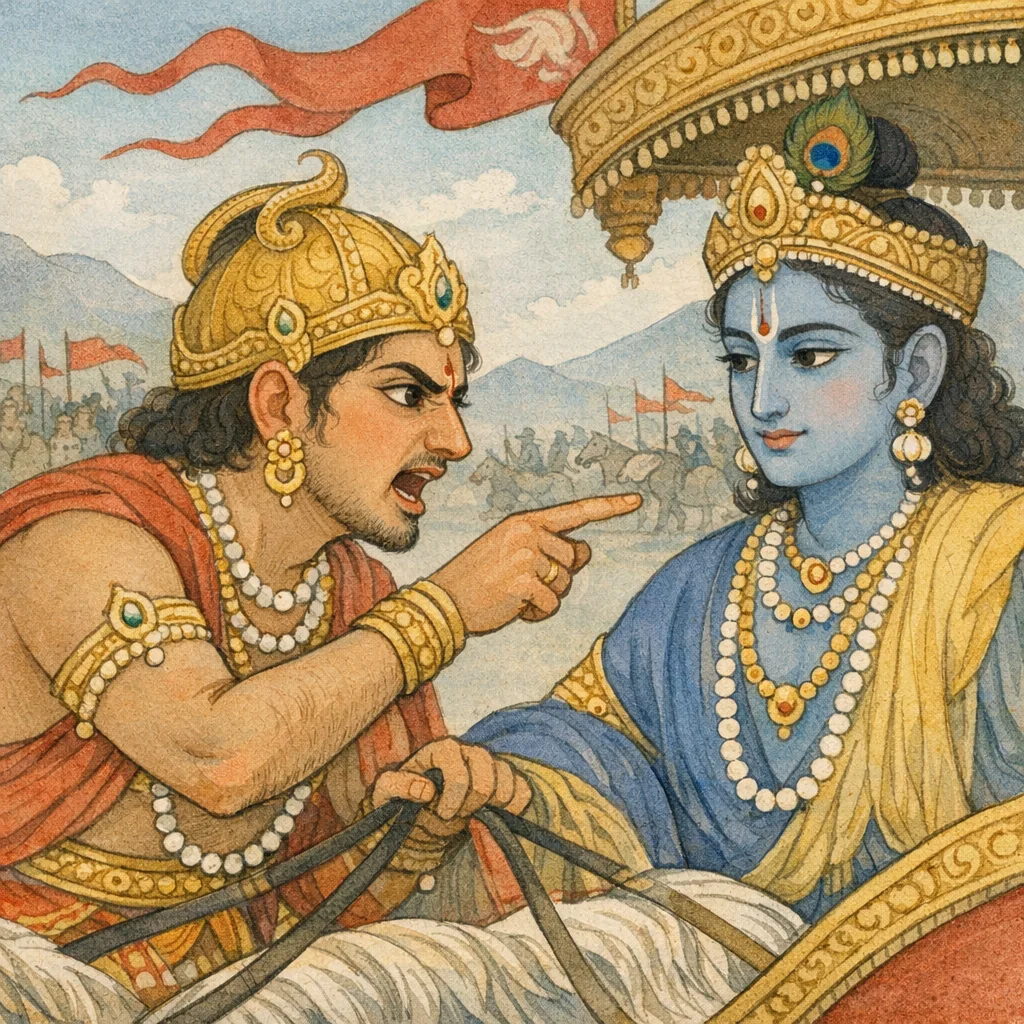
Adhyaya 77
Kṛṣṇopadeśa and Duryodhana’s Challenge (Droṇa-parva, Adhyāya 77)
Upa-parva: Duryodhana–Arjuna Saṃmukha (Rathāntika Saṃvāda) Episode
This chapter presents a tightly framed battlefield counsel followed by a public confrontation. Vāsudeva addresses Arjuna, identifying Duryodhana as having come within range and describing him as a formidable archer—well-trained, powerful, and emboldened by sovereignty—yet strategically vulnerable because he underestimates Arjuna’s capability. Kṛṣṇa frames the encounter as the ‘proper time’ for engagement, urging Arjuna to release long-contained anger in a controlled, goal-directed manner and to treat Duryodhana as the root-cause agent behind the Pāṇḍavas’ misfortunes (deceit in the dice-game, loss of kingdom, exile, and Draupadī’s distress). Arjuna assents, declaring intent to pursue and, if possible, neutralize Duryodhana in battle as recompense for those injuries. As they advance, Saṃjaya reports the Kaurava army’s agitation: some perceive the king’s peril, morale wavers, and the scene is marked by loud war-cries and conch-blasts. Duryodhana then addresses Arjuna directly, challenging him to display both divine and human weapons and to substantiate his reputed feats and honor-bound service, thereby formalizing the duel-like confrontation within the broader strategic engagement.
Chapter Arc: जयद्रथ-वध की प्रतिज्ञा की ज्वाला में धधकते अर्जुन का उद्घोष—वह कृष्ण से कहता है कि धृतराष्ट्र-पुत्रों के चुने हुए महारथी भी उसके मार्ग को रोक नहीं सकते। → अर्जुन अपने लक्ष्य के चारों ओर खड़ी ‘छः महारथियों’ की दीवार को तुच्छ बताता है और कृष्ण को आश्वस्त करता है कि वह उनके अस्त्रों को अस्त्र से काट देगा; वह प्रकृति-देवता-गणों तक का उल्लेख कर यह दिखाता है कि जयद्रथ की रक्षा के लिए समस्त शक्तियाँ भी जुटें तो भी वह विचलित नहीं होगा। → अर्जुन का गर्जनात्मक आत्म-घोष: ‘मेरे अस्त्रों का, मेरे दृढ़ धनुष का, मेरी भुजाओं के बल का, और धनंजय का अपमान मत समझो’—और साथ ही यह प्रतिज्ञा कि ब्रह्मास्त्र सहित वह जयद्रथ-रक्षकों के समस्त प्रक्षेपास्त्रों को युद्ध में निष्फल कर देगा। → अर्जुन कृष्ण को स्पष्ट युद्ध-योजना देता है—‘ऐसा प्रबन्ध करो कि कल प्रभात होते ही मेरा रथ वहाँ पहुँचे जहाँ महान कार्य सिद्ध करना है’; कृष्ण को सारथी और रणनीतिक सहायक के रूप में आदेशात्मक विनय के साथ नियुक्त कर वह अपने संकल्प को स्थिर करता है। → अगले दिन के प्रभात में अर्जुन का रथ किस प्रकार जयद्रथ तक पहुँचेगा, और कौन-सा रक्षक-व्यूह उसके मार्ग में अंतिम दीवार बनेगा—यह अनिश्चितता अध्याय को आगे धकेलती है।
Shlokas
Verse 1
अपना बछ। ] अतणऑशा: षट्सप्ततितमो<ध्याय: अर्जुनके वीरोचित वचन अजुन उवाच षड् रथान् धार्तराष्ट्रस्य मन्यसे यान् बलाधिकान् | तेषां वीर्य ममार्थेन न तुल्यमिति मे मति:
Arjuna said: “You regard six chariots of the sons of Dhṛtarāṣṭra as superior in strength. Yet, in my judgment, their prowess is not equal when weighed against my purpose and resolve.”
Verse 2
अस्त्रमस्त्रेण सर्वेषामेतेषां मधुसूदन । मया द्रक्ष्यसि निर्भिन्नं जयद्रथवधैषिणा
O Madhusūdana, you shall witness me shattering the weapons of all these warriors with counter-weapons, for I am resolved upon the slaying of Jayadratha. In this vow-driven fury, Arjuna frames his combat not as mere display of prowess but as a morally charged necessity tied to his pledged duty and the demands of justice in war.
Verse 3
अर्जुन बोले--मधुसूदन! दुर्योधनके जिन छः महारथियोंको आप बलमें अधिक मानते हैं, उनका पराक्रम मेरे आधेके बराबर भी नहीं है, ऐसा मेरा विश्वास है। जयद्रथके वधकी इच्छासे मेरे युद्ध करते समय आप देखेंगे कि मैंने इन सबके अस्त्रोंको अपने अस्त्रसे काट गिराया है ।। द्रोणस्य मिषतश्चाहं सगणस्य विलप्यत: । मूर्धानं सिन्धुराजस्य पातयिष्यामि भूतले,मैं द्रोणाचार्यके देखते-देखते अपने सैनिकोंसहित विलाप करते हुए सिन्धुराज जयद्रथका मस्तक पृथ्वीपर गिरा दूँगा
Arjuna said: “Madhusūdana! As for the six great chariot-warriors whom Duryodhana considers superior in strength, I am convinced their prowess does not even equal half of mine. When I fight with the resolve to slay Jayadratha, you will see me cut down and cast aside all their missiles with my own. Even while Droṇa looks on, and while Jayadratha’s followers wail around him, I shall strike down the head of the king of Sindhu to the ground.”
Verse 4
यदि साध्याश्र रुद्राक्ष वसवश्च सहाश्चिन: । मरुतश्न सहेन्द्रेण विश्वेदेवा: सहेश्वरा:,मधुसूदन श्रीकृष्ण! यदि साध्य, रुद्र, वसु, अश्विनीकुमार, इन्द्रसहित मरुद्गण, विश्वेदेव, देवेश्वरगण, पितर, गन्धर्व, गरुड़, समुद्र, पर्वत, स्वर्ग, आकाश, यह पृथ्वी, दिशाएँ, दिक्पाल, गाँवों तथा जंगलोंमें निवास करनेवाले प्राणी और सम्पूर्ण चराचर जीव भी सिन्धुराज जयद्रथकी रक्षाके लिये उद्यत हो जायेँ तो भी मैं सत्यकी शपथ खाकर और अपना धनुष छूकर कहता हूँ कि कल युद्धमें आप मेरे बाणोंद्वारा जयद्रथको मारा गया देखेंगे
Arjuna said: “Even if the Sādhyas, the Rudras, the Vasus, and the Aśvin twins; even if the Maruts together with Indra, and the Viśvedevas along with the divine lords themselves, were to rise up in full force to protect Jayadratha—even then, O Madhusūdana (Kṛṣṇa), I swear by truth and by touching my bow: tomorrow, in battle, you will see Jayadratha slain by my arrows.”
Verse 5
पितर: सहगन्धर्वा: सुपर्णा: सागराद्रय: । द्यौर्वियत् पृथिवी चेयं दिशश्व॒ सदिगीश्वरा:,मधुसूदन श्रीकृष्ण! यदि साध्य, रुद्र, वसु, अश्विनीकुमार, इन्द्रसहित मरुद्गण, विश्वेदेव, देवेश्वरगण, पितर, गन्धर्व, गरुड़, समुद्र, पर्वत, स्वर्ग, आकाश, यह पृथ्वी, दिशाएँ, दिक्पाल, गाँवों तथा जंगलोंमें निवास करनेवाले प्राणी और सम्पूर्ण चराचर जीव भी सिन्धुराज जयद्रथकी रक्षाके लिये उद्यत हो जायेँ तो भी मैं सत्यकी शपथ खाकर और अपना धनुष छूकर कहता हूँ कि कल युद्धमें आप मेरे बाणोंद्वारा जयद्रथको मारा गया देखेंगे
Arjuna said: “Even if the Pitṛs along with the Gandharvas, Garuḍa and the great oceans and mountains—indeed heaven, the sky, this earth, the directions together with their guardian lords—were all to rise up to protect Jayadratha, I swear by truth and, touching my bow, declare this: tomorrow in battle you will see Jayadratha slain by my arrows.”
Verse 6
ग्रामारण्यानि भूतानि स्थावराणि चराणि च । त्रातार: सिन्धुराजस्य भवन्ति मधुसूदन,मधुसूदन श्रीकृष्ण! यदि साध्य, रुद्र, वसु, अश्विनीकुमार, इन्द्रसहित मरुद्गण, विश्वेदेव, देवेश्वरगण, पितर, गन्धर्व, गरुड़, समुद्र, पर्वत, स्वर्ग, आकाश, यह पृथ्वी, दिशाएँ, दिक्पाल, गाँवों तथा जंगलोंमें निवास करनेवाले प्राणी और सम्पूर्ण चराचर जीव भी सिन्धुराज जयद्रथकी रक्षाके लिये उद्यत हो जायेँ तो भी मैं सत्यकी शपथ खाकर और अपना धनुष छूकर कहता हूँ कि कल युद्धमें आप मेरे बाणोंद्वारा जयद्रथको मारा गया देखेंगे
Arjuna declares to Kṛṣṇa (Madhusūdana) that even if every being—those dwelling in villages and forests, the immobile and the moving—were to rise as protectors of the Sindhu-king Jayadratha, it would not avert the consequence of his wrongdoing. Binding himself by truth and by the solemn touch of his bow, Arjuna vows that on the next day’s battle Kṛṣṇa will witness Jayadratha slain by Arjuna’s arrows. The passage frames a warrior’s oath as an ethical commitment: the protection of justice and the answering of grave harm with resolute, accountable action.
Verse 7
तथापि बाणैनिहितं श्वो द्रष्टासि रणे मया । सत्येन च शपे कृष्ण तथैवायुधमालभे,मधुसूदन श्रीकृष्ण! यदि साध्य, रुद्र, वसु, अश्विनीकुमार, इन्द्रसहित मरुद्गण, विश्वेदेव, देवेश्वरगण, पितर, गन्धर्व, गरुड़, समुद्र, पर्वत, स्वर्ग, आकाश, यह पृथ्वी, दिशाएँ, दिक्पाल, गाँवों तथा जंगलोंमें निवास करनेवाले प्राणी और सम्पूर्ण चराचर जीव भी सिन्धुराज जयद्रथकी रक्षाके लिये उद्यत हो जायेँ तो भी मैं सत्यकी शपथ खाकर और अपना धनुष छूकर कहता हूँ कि कल युद्धमें आप मेरे बाणोंद्वारा जयद्रथको मारा गया देखेंगे
Arjuna said: “Even so, you shall see tomorrow in battle that Jayadratha has been struck down by my arrows. By truth I swear, O Kṛṣṇa; and touching my weapon, I vow it so. Even if Rudras, Vasus, the Aśvin twins, Indra with the hosts of Maruts, the Viśvedevas, the companies of divine lords, the Pitṛs, Gandharvas, Garuḍa, the oceans, mountains, heaven, sky, this earth, the directions and their guardians, and all beings dwelling in villages and forests—indeed the entire moving and unmoving creation—rise up to protect the king of Sindhu, still, bound by my oath to truth and by this solemn vow, you will behold him slain by me tomorrow.”
Verse 8
यस्तु गोप्ता महेष्वासस्तस्य पापस्य दुर्मते: । तमेव प्रथमं द्रोणमभियास्यामि केशव,केशव! उस दुर्बुद्धि पापी जयद्रथकी रक्षाका बीड़ा उठाये हुए जो महाधनुर्धर आचार्य द्रोण हैं, पहले उन्हींपर आक्रमण करूँगा
Arjuna said: “But the great archer who has taken upon himself the task of protecting that sinful, ill-minded Jayadratha—him, Drona, I shall attack first, O Keshava.”
Verse 9
तस्मिन् द्यूतमिदं बद्धं मन्यते स सुयोधन: । तस्मात् तस्यैव सेनाग्रं भित्त्वा यास्यामि सैन्धवम्,दुर्योधन आचार्यपर ही इस युद्धरूपी द्यूतको आबद्ध (अवलम्बित) मानता है; अतः उसीकी सेनाके अग्रभागका भेदन करके मैं सिन्धुराजके पास जाऊँगा
Arjuna said: “Duryodhana thinks this war is a wager staked upon that very stratagem. Therefore, breaking through the very front of his army, I shall go to Saindhava (Jayadratha).”
Verse 10
द्रशसि श्वो महेष्वासान् नाराचैस्तिग्मतेजितै: । शृज्भराणीव गिरेव॑जैर्दार्यमाणान् मया युधि,जैसे इन्द्र अपने वद्धद्वारा पर्वतोंके शिखरोंको विदीर्ण कर देते हैं, उसी प्रकार कल युद्धमें मैं अच्छी तरह तेज किये हुए नाराचोंद्वारा बड़े-बड़े धनुर्धरोंको चीर डालूँगा; यह आप देखेंगे
Arjuna said: “Tomorrow you will see, in the midst of battle, great bowmen being cleft by me with razor-sharp nārāca arrows—just as Indra, with his thunderbolt, splits the mountain-peaks. This will be a visible proof of my resolve and martial duty in war.”
Verse 11
नरनागाश्चदेहेभ्यो विस्नरविष्पति शोणितम् । पतदृभ्य: पतितेभ्यश्व विभिन्नेभ्य: शितै: शरै:,मेरे तीखे बाणोंद्वारा विदीर्ण होकर गिरते और गिरे हुए मनुष्य, हाथी और घोड़ोंके शरीरोंसे खूनकी धारा बह चलेगी
Arjuna said: “From the bodies of men and elephants, blood will gush forth—when, torn apart by my sharp arrows, they fall, and even after they have fallen, their severed limbs continue to bleed. Such is the dreadful course of battle that my shafts will set in motion.”
Verse 12
गाण्डीवप्रेषिता बाणा मनोडनिलसमा जवे । ननागाश्चवान् विदेहासून् कर्तरिश्न सहस्रश:,गाण्डीव धनुषसे छूटे हुए बाण मन और वायुके समान वेगशाली होते हैं। वे शत्रुओंके सहस्रों हाथी-घोड़े और मनुष्योंको शरीर और प्राणोंसे शून्य कर देंगे
Arjuna said: “The arrows released from the bow Gāṇḍīva, swift as the mind and the wind, will in countless thousands strip the enemy of body and breath—bringing down elephants, horses, and men alike.”
Verse 13
यमात् कुबेरादू वरुणादिन्द्राद् रुद्राच्व यन्मया | उपात्तमस्त्रं घोरं तद् द्रष्टारोडत्र नरा युधि,यम, कुबेर, वरुण, इन्द्र तथा रुद्रसे मैंने जो भयंकर अस्त्र प्राप्त किये हैं, उन्हें कलके युद्धमें सब लोग देखेंगे
Arjuna said: “The dreadful weapons that I have obtained from Yama, Kubera, Varuṇa, Indra, and Rudra—men here on this battlefield will behold them in combat.”
Verse 14
ब्राह्मेणास्त्रेण चास्त्राणि हन्यमानानि संयुगे | मया द्रष्टासि सर्वेषां सैन्धवस्याभिरक्षिणाम्,जयद्रथके समस्त रक्षकोंद्वारा छोड़े हुए अस्त्रोंको मैं युद्धमें ब्रह्मास्त्रद्वारा काट डालूँगा, यह आप देखेंगे
Arjuna said: “In the thick of battle, I will cut down with the Brahmā-weapon all the missiles that are hurled. You shall witness me neutralize every weapon released by those who stand as Jayadratha’s protectors.”
Verse 15
शरवेगसमुत्कृत्तै राज्ञां केशव मूर्थभि: । आस्तीर्यमाणां पृथिवीं द्रष्टासि श्वो मया युधि,केशव! कलके युद्धमें आप देखेंगे कि इस पृथ्वीपर मेरे बाणोंके वेगसे कटे हुए राजाओंके मस्तक बिछ गये हैं
Arjuna said: “O Keśava, tomorrow on the battlefield you will see the earth strewn with the severed heads of kings, cut down by the speed and force of my arrows.”
Verse 16
क्रव्यादांस्तर्पयिष्यामि द्रावयिष्यामि शात्रवान् । सुहृदो नन्दयिष्यामि प्रमथिष्यामि सैन्धवम्,कल मैं मांसभोजी प्राणियोंको तृप्त कर दूँगा, शत्रु-सैनिकोंको मार भगाऊँगा, सुहृदोंको आनन्द प्रदान करूँगा और सिन्धुराज जयद्रथको मथ डालूँगा
Arjuna said: “Tomorrow I shall glut the flesh-eating creatures with their fill, rout the enemy host, bring joy to my well-wishers, and crush Jayadratha, the king of Sindhu.”
Verse 17
बह्दागस्कृत् कुसम्बन्धी पापदेशसमुद्धव: । मया सैन्धवको राजा हतः स्वान् शोचयिष्यति,सिन्धुराज जयद्रथ पापपूर्ण प्रदेशमें उत्पन्न हुआ है। उसने बहुत-से अपराध किये हैं। वह एक दुष्ट सम्बन्धी है। अतः कल मेरे द्वारा मारा जाकर अपने सुजनोंको शोकमें निमग्न कर देगा
Arjuna said: “That king of Sindhu, Jayadratha—born in a sinful land, a wicked relation, and a doer of many offences—when slain by me, will plunge his own people into grief.”
Verse 18
सर्वक्षीरान्नभोक्तारं पापाचारं रणाजिरे | मया सराजकं बाणैभिन्न द्रक्ष्यसि सैन्धवम्,सदा सब प्रकारसे दूध-भात खानेवाले पापाचारी जयद्रथको रणांगणमें आप राजाओंसहित मेरे बाणोंद्वारा विदीर्ण हुआ देखेंगे
Arjuna said: “On the battlefield you shall see Jayadratha—the sinful man, ever indulging in milk and rice—torn apart by my arrows, together with his supporting kings.”
Verse 19
तथा प्रभाते कर्तास्मि यथा कृष्ण सुयोधन: । नान्यं धनुर्थरं लोके मंस्यते मत्समं युधि,श्रीकृष्ण! मैं कल सबेरे ऐसा युद्ध करूँगा, जिससे दुर्योधन रणक्षेत्रके भीतर संसारके दूसरे किसी धनुर्धरको मेरे समान नहीं मानेगा
Arjuna said: “At daybreak, O Kṛṣṇa, I shall fight in such a way that Suyodhana (Duryodhana) will no longer regard any other bowman in the world as equal to me in battle.”
Verse 20
गाण्डीवं च धर्नुर्दिव्यं योद्धा चाहं नरर्षभ । त्वंच यन्ता हृषीकेश कि नु स्यथादजितं मया,नरश्रेष्ठ हृषीकेश! जहाँ गाण्डीव-जैसा दिव्य धनुष है, मैं योद्धा हूँ और आप सारथि हैं, वहाँ मैं किसको नहीं जीत सकता?
Arjuna said: “I possess the divine bow Gāṇḍīva, and I myself am a warrior, O best of men. And you, Hṛṣīkeśa, are my charioteer. With these on my side, what could possibly remain unconquered by me?”
Verse 21
तव प्रसादाद् भगवन् किमिवास्ति रणे मम । अविषहां हृषीकेश कि जानन् मां विगर्हसे,भगवन्! आपकी कृपासे इस युद्धस्थलमें कौन-सी ऐसी शक्ति है, जो मेरे लिये असहा हो। हृषीकेश! आप यह जानते हुए भी क्यों मेरी निन््दा करते हैं?
Arjuna said: “O Blessed Lord, by Your grace what power could possibly exist on this battlefield that would be unbearable for me? O Hṛṣīkeśa, knowing my true intent and capacity, why do You still reproach me, O Lord?”
Verse 22
यथा लक्ष्म स्थिरं चन्द्रे समुद्रे च यथा जलम् । एवमेतां प्रतिज्ञां मे सत्यां विद्धि जनार्दन,जनार्दन! जैसे चन्द्रमामें काला चिह्न स्थिर है, जैसे समुद्रमें जलकी सत्ता सुनिश्चित है, उसी प्रकार आप मेरी इस प्रतिज्ञाको भी सत्य समझें
Arjuna said: “Just as the dark mark on the moon remains fixed, and just as water is inseparably established in the ocean, so too know my vow to be true and unwavering, O Janārdana.”
Verse 23
मावमंस्था ममास्त्राणि मावमंस्था भनुर्दढम् | मावमंस्था बल बाद्वोर्मावमंस्था धनंजयम्,प्रभो! आप मेरे अस्त्रोंका अनादर न करें। मेरे इस सुदृढ़ धनुषकी अवहेलना न करें। इन दोनों भुजाओंके बलका तिरस्कार न करें और अपने इस सखा धनंजयका अपमान न करें
Arjuna said: “Do not slight my weapons; do not dismiss this firm bow of mine. Do not scorn the strength of these two arms, and do not insult your companion Dhanañjaya, O lord.”
Verse 24
तथाभियामि संग्रामं न जीयेयं जयामि च । तेन सत्येन संग्रामे हतं विद्धि जयद्रथम्
Arjuna said: “Thus do I enter this battle: I shall not be defeated, nor do I seek victory for its own sake. By the power of this truth, know that Jayadratha in this fight is as good as slain.”
Verse 25
मैं संग्राममें इस प्रकार चलूँगा, जिससे कोई मुझे जीत न सके, वरं मैं ही विजयी होऊँ। इस सत्यके प्रभावसे आप रणक्षेत्रमें जयद्रथको मारा गया ही समझें ।। ध्रुवं वै ब्राह्मणे सत्यं ध्रुवा साधुषु संनति: । श्रीर्धुवापि च यज्ञेषु ध्रुवो नारायणे जय:,जैसे ब्रह्मनिष्ठ ब्राह्मणमें सत्य, साधुपुरुषोंमें नम्रता और यज्ञोंमें लक्ष्मीका होना ध्रुव सत्य है, उसी प्रकार जहाँ आप नारायण विद्यमान हैं, वहाँ विजय भी अटल है
Arjuna said: “In this battle I shall advance so that none can defeat me; rather, I alone shall be victorious. By the power of this truth, deem Jayadratha already slain upon the battlefield. For it is an unshakable certainty that truth abides in a Brahmin devoted to Brahman, humility abides in the righteous, and prosperity attends the sacrifices; in the same way, where Nārāyaṇa is present, victory is steadfast.”
Verse 26
संजय उवाच एवमुक्क्त्वा हृषीकेशं स्वयमात्मानमात्मना | संदिदेशार्जुनो नर्दन् वासवि: केशवं प्रभुम्,संजय कहते हैं--राजन्! इन्द्रकुमार अर्जुनने गर्जना करते हुए इस प्रकार उपर्युक्त बातें कहकर सम्पूर्ण इन्द्रियोंक नियनन््ता तथा सब कुछ करनेमें समर्थ अपने आत्मस्वरूप भगवान् श्रीकृष्णको स्वयं ही मनसे सोचकर इस प्रकार आदेश दिया--
Sanjaya said: Having spoken thus, Arjuna—the son of Indra—roaring aloud, fixed his mind upon Hrishikesha, the Lord Keśava, who is the inner Self and master of the senses; and then he issued his command to that sovereign Lord, capable of accomplishing all deeds.
Verse 27
यथा प्रभातां रजनीं कल्पित: स्याद् रथो मम | तथा कार्य त्वया कृष्ण कार्य हि महदुद्यतम्,“श्रीकृष्ण! आप ऐसा प्रबन्ध कर लें कि कल सबेरा होते ही मेरा रथ तैयार हो जाय; क्योंकि हमलोगोंपर महान् कार्यभार आ पड़ा है”
Sanjaya said: “O Kṛṣṇa, make such arrangements that, as soon as the night has passed and dawn arrives, my chariot will be ready. A great and urgent task has fallen upon us.”
Verse 76
इति श्रीमहा भारते द्रोणपर्वणि प्रतिज्ञापर्वण्यर्जुनवाक्ये घट्सप्ततितमो5ध्याय: ।। ७६ || इस प्रकार श्रीमहाभारत द्रोणपर्वके अन्तर्गत प्रतिज्ञापर्वमें अरजुनवाक्यविषयक छिद्वत्तरवाँ अध्याय पूरा हुआ
Sanjaya said: “Thus, in the revered Mahābhārata, within the Droṇa Parva, in the section known as the Pratijñā Parva, the seventy-sixth chapter—centered on Arjuna’s words—comes to an end.”
Frequently Asked Questions
Whether decisive targeting of the principal antagonist—motivated by remembrance of past injustices—can be executed within kṣātra-dharma without collapsing into uncontrolled vengeance; the chapter stresses disciplined intent rather than impulsive retaliation.
Agency should be aligned with clear purpose: strong emotion (anger) is acknowledged but must be harnessed by judgment, strategic focus, and responsibility for consequences, especially when one’s action affects many.
No explicit phalaśruti is stated here; the meta-function is narrative and ethical—positioning the confrontation as a consequential juncture that links prior political wrongdoing to present battlefield accountability.