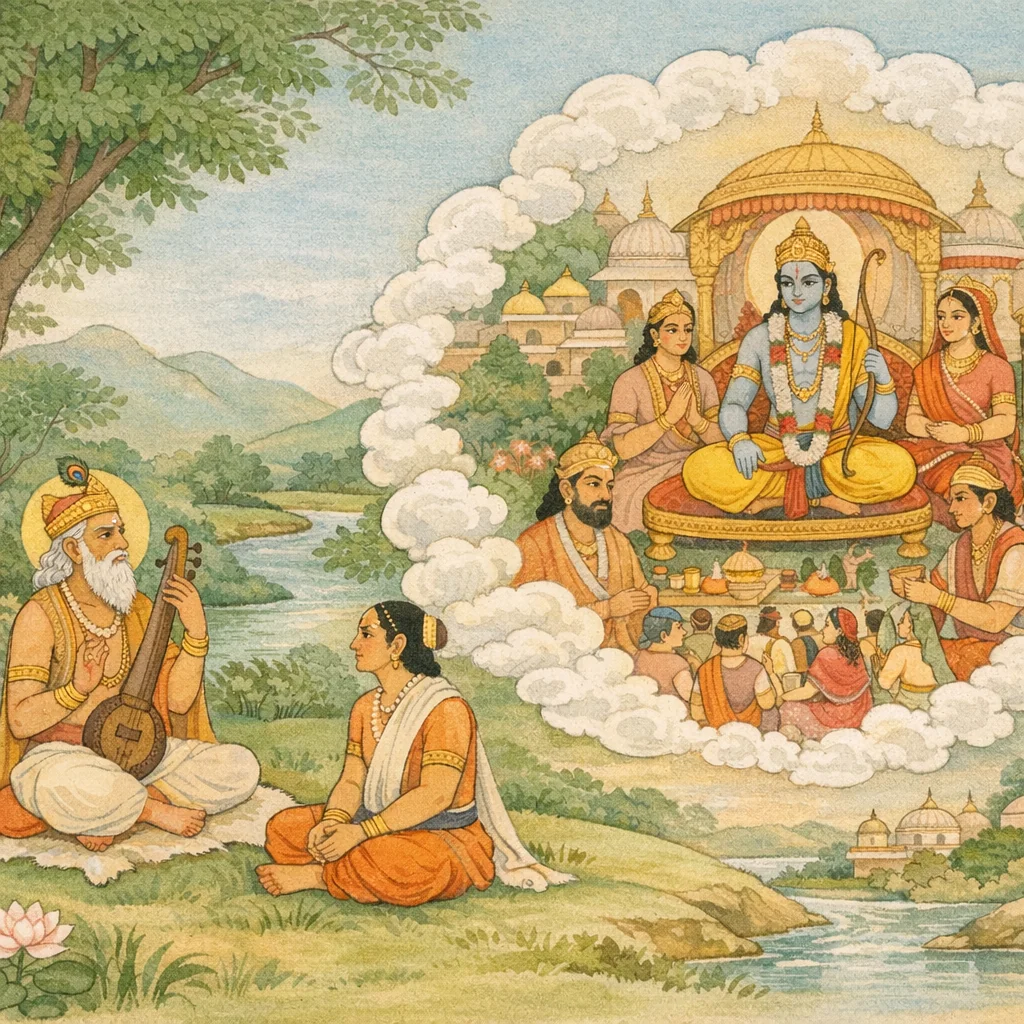
Adhyaya 59
युधिष्ठिरकृष्णसंवादः — Yudhiṣṭhira’s Appeal and Kṛṣṇa’s Assurance (Droṇa-parva, Adhyāya 59)
Upa-parva: Saindhava-vadha (Jayadratha-focused episode) — contextual unit within Droṇa-parva
The chapter opens with Yudhiṣṭhira addressing Madhusūdana (Kṛṣṇa) with formal solicitude, asking after his well-being and clarity of counsel. Saṃjaya notes reciprocal inquiry and the orderly admission of allied leaders into the assembly, indicating a structured war-council setting. A roster of prominent kṣatriya allies is presented as they enter and take seats; Kṛṣṇa and Sātyaki are described seated together, emphasizing strategic solidarity. Yudhiṣṭhira then articulates dependence on Kṛṣṇa as a stabilizing axis for victory and enduring welfare, framing Kṛṣṇa as the guarantor of safe passage through crisis and as the supporter of Arjuna’s truth-bound vow. Kṛṣṇa replies by affirming Arjuna’s unparalleled martial competence and disposition for disciplined engagement, and he states his own commitment to enable Arjuna’s decisive action. The discourse culminates in a clear assurance: Saindhava (Jayadratha), identified as responsible for Abhimanyu’s death, will be brought to an irreversible end that day, after which Arjuna will return, restoring Yudhiṣṭhira’s composure and the coalition’s confidence.
Chapter Arc: नारद का वचन संजय के कानों में अमृत-सा उतरता है—कुरुक्षेत्र की धूल और रक्त के बीच वे अयोध्या के उस राजा का स्मरण कराते हैं, जो स्वयं परमधाम को गया: दशरथनन्दन श्रीराम। → नारद राम के गुणों और जीवन-प्रसंगों को क्रमशः उभारते हैं—पितृआज्ञा से चौदह वर्ष का वनवास, जनस्थान में राक्षसों का संहार, कीर्ति का जगत् में व्याप्त होना, और फिर विधिपूर्वक राज्य-प्राप्ति। युद्ध-भूमि के शोक के बरक्स ‘राम-राज्य’ का उज्ज्वल प्रतिमान धीरे-धीरे संजय के मन में तीव्र विरोधाभास रचता है। → राम-राज्य का चरम चित्र उभरता है—प्रजा के मुख पर ‘राम, राम’ ही कथा; पृथ्वी पर सहवास और समरसता; राजा का सर्वभूत-मनःकान्त होना; ऐसी व्यवस्था कि ज्येष्ठ कनिष्ठ के लिए श्राद्ध न कराते (अकाल-मृत्यु का अभाव), दीर्घायु और संतति-समृद्धि का अतिशयोक्तिपूर्ण किन्तु आदर्श-निर्देशक वर्णन। → नारद राम को करुणा-प्रधान, विधि-पालक, लोक-सेवित राजा के रूप में प्रतिष्ठित करते हैं—जिसकी कीर्ति से जगत् व्याप्य है और जिसके शासन में प्रजा निरन्तर आनन्दमग्न रहती है। यह आख्यान संजय के लिए ‘राजधर्म’ का मानदण्ड बनकर ठहरता है। → कुरुक्षेत्र के वर्तमान पर यह आदर्श-छाया पड़ते ही प्रश्न अनुत्तरित रह जाता है—जहाँ राम-राज्य संभव था, वहाँ कुरु-राज्य क्यों पतन की ओर गया?
Shlokas
Verse 1
नारदजी कहते हैं--सूंजय! दशरथनन्दन भगवान् श्रीराम भी यहाँसे परमधामको चले गये थे, यह मेरे सुननेमें आया है। उनके राज्यमें सारी प्रजा निरन्तर आनन्दमग्न रहती थी। जैसे पिता अपने औरस पुत्रोंका पालन करता है, उसी प्रकार वे समस्त प्रजाका स्नेहपूर्वक संरक्षण करते थे
Narada said: “Sanjaya, I have heard that even Lord Sri Rama, the beloved son of Dasharatha, departed from this world to the supreme abode. In his kingdom, all the people lived continually immersed in joy. Just as a father nurtures his own true-born sons, so did he protect and sustain the entire populace with affectionate care.”
Verse 2
असंख्येया गुणा यस्मिन्नासन्नमिततेजसि । यश्षतुर्दश वर्षाणि निदेशात् पितुरच्युत:
Nārada said: “In him of immeasurable splendor dwelt countless virtues. Obedient to his father’s command, that infallible one lived for fourteen years (in exile), exemplifying steadfast self-restraint and filial duty.”
Verse 3
जघान च जनस्थाने राक्षसान् मनुजर्षभ:
And in Janasthāna, the bull among men slew the rākṣasas—an act presented as the removal of violent, predatory forces that threatened the safety of the innocent and the order of the land.
Verse 4
तत्रैव वसतस्तस्य रावणो नाम राक्षस:
There, even as he dwelt in that very place, a rākṣasa named Rāvaṇa appeared.
Verse 5
जहार भार्या वैदेहीं सम्मोहौनं सहानुजम् । वहीं रहते समय लक्ष्मणसहित श्रीरामको मोहमें डालकर रावण नामक राक्षसने उनकी पत्नी विदेहनन्दिनी सीताको हर लिया ।। ४ $ ।। (रामां ह॒तां राक्षसेन भार्या श्रुत्वा जटायुष: । आतुर: शोकसंतप्तो5गच्छद् रामो हरी श्वरम् ।। अपनी मनोरमा पत्नीके राक्षसद्वारा हर लिये जानेका समाचार जटायुके मुखसे सुनकर श्रीरामचन्द्रजी आतुर एवं शोकसंतप्त हो वानरराज सुग्रीवके पास गये। तेन राम: सुसड्भम्य वानरैश्व महाबलै: । आजगामोददथे: पारं सेतुं कृत्वा महार्णवे ।। सुग्रीवसे मिलकर श्रीरामने (उनके साथ मित्रता की और) महाबली वानरोंको साथ ले महासागरमें पुल बाँधकर समुद्रको पार किया। तत्र हत्वा तु पौलस्त्यान् ससुहृदूगणबान्धवान् | मायाविनं महाघोरं रावणं लोककण्टकम् ।।) तमागस्कारिणं राम: पौलस्त्यमजितं परै:
Nārada said: Rāma cast down that disgraceful Paulastya—Rāvaṇa—whom other foes could not conquer.
Verse 6
सुरासुरैरवध्यं तं देवब्राह्मणकण्टकम्
Nārada said: “He was invulnerable even to gods and demons—yet he had become a thorn to the devas and the brāhmaṇas.”
Verse 7
(हत्वा तत्र रिपुं संख्ये भार्यया सह सज्भतः । लड्केश्वरं च चक्रे स धर्मात्मानं विभीषणम् ।। इस प्रकार वहाँ युद्धस्थलमें अपने वैरी रावणका वध करके वे धर्मपत्नी सीतासे मिले। तत्पश्चात् धर्मात्मा विभीषणको उन्होंने लंकाका राजा बना दिया। भार्यया सह संयुक्तस्ततो वानरसेनया । अयोध्यामागतो वीर: पुष्पकेण विराजता ।। तदनन्तर वीर श्रीरामचन्द्रजी अपनी पत्नी तथा वानर-सेनाके साथ शोभाशाली पुष्पकविमानके द्वारा अयोध्यामें आये। तत्र राजन प्रविष्ट: स अयोध्यायां महायशा: । मातृूर्वयस्यान् सचिवानृत्विज: सपुरोहितान् ।। शुश्रूषमाण: सतत मन्सत्रिभिश्चाभिषेचित: । राजन! अयोध्यामें प्रवेश करके महायशस्वी श्रीराम वहाँ माताओं, मित्रों, मन्त्रियों, ऋत्विजों तथा पुरोहितोंकी सेवामें सदैव संलग्न रहने लगे। फिर मन्त्रियोंने उनका राज्याभिषेक कर दिया ।। विसृज्य हरिराजानं हनुमन्तं सहाड्भदम् ।। भ्रातरं भरतं वीर शत्रुघ्नं चैव लक्ष्मणम् । पूजयन् परया प्रीत्या वैदेहा चाभिपूजित: ।। चतुःसागरपर्यन्तां पृथिवीमन्वशासत ।।) स प्रजानुग्रहं कृत्वा त्रिदशैरभिपूजित:,इसके बाद वानरराज सुग्रीव, हनुमान् और अंगदको विदा करके अपने वीर भ्राता भरत, शत्रुघ्न और लक्ष्मणका आदर करते हुए विदेहनन्दिनी सीताद्वारा परम प्रेमपूर्वक सम्मानित हो श्रीरामचन्द्रजीने चारों समुद्रोंतककी सारी पृथ्वीका शासन किया और समस्त प्रजाओंपर अनुग्रह करके वे देवताओंद्वारा सम्मानित हुए
Nārada said: Having slain his enemy in battle there, he was reunited with his lawful wife, and he installed the righteous Vibhīṣaṇa as lord of Laṅkā. Then the heroic Rāma, accompanied by Sītā and the army of vānaras, came to Ayodhyā in the splendid Puṣpaka aerial car. Entering Ayodhyā, the greatly renowned Rāma remained continually devoted to serving and honoring his mothers, friends, ministers, officiating priests, and household preceptors; and with the counsel of his ministers he was consecrated to kingship. After taking leave of Sugrīva, Hanumān, and Aṅgada, he honored his valiant brothers Bharata, Śatrughna, and Lakṣmaṇa; and he himself was honored with supreme affection by Vaidehī (Sītā). He ruled the earth bounded by the four oceans, showing favor and protection to his subjects; and, having bestowed welfare upon the people, he was revered even by the gods.
Verse 8
व्याप्य कृत्स्नं जगत् कीर्त्या सुरर्षिगणसेवित: । स प्राप्य विधिवद् राज्यं सर्वभूतानुकम्पक:,देवर्षिगणोंसे सेवित श्रीरामने विधिपूर्वक राज्य पाकर अपनी कीर्तिसे सम्पूर्ण जगत्को व्याप्त कर दिया और समस्त प्राणियोंपर अनुग्रह करते हुए वे धर्मपूर्वक प्रजाका पालन करने लगे। भगवान् श्रीरामने निर्बाधरूपसे राजसूय और अश्वमेध-यज्ञका अनुष्ठान किया और देवराज इन्द्रको हविष्यसे तृप्त करके उन्हें अत्यन्त आनन्द प्रदान किया। राजा रामने नाना प्रकारके दूसरे-दूसरे यज्ञ भी किये थे, जो अनेक गुणोंसे सम्पन्न थे
Nārada said: Served and honored by hosts of gods and seers, he pervaded the entire world with his fame. Having duly obtained the kingship according to proper rites, compassionate toward all beings, he began to protect and govern his subjects in accordance with dharma.
Verse 9
आजहार महायज्ञं प्रजा धर्मेण पालयन् | निरर्गलं राजसूयमश्चमेधं च तं विभुः,देवर्षिगणोंसे सेवित श्रीरामने विधिपूर्वक राज्य पाकर अपनी कीर्तिसे सम्पूर्ण जगत्को व्याप्त कर दिया और समस्त प्राणियोंपर अनुग्रह करते हुए वे धर्मपूर्वक प्रजाका पालन करने लगे। भगवान् श्रीरामने निर्बाधरूपसे राजसूय और अश्वमेध-यज्ञका अनुष्ठान किया और देवराज इन्द्रको हविष्यसे तृप्त करके उन्हें अत्यन्त आनन्द प्रदान किया। राजा रामने नाना प्रकारके दूसरे-दूसरे यज्ञ भी किये थे, जो अनेक गुणोंसे सम्पन्न थे
Nārada said: While protecting his subjects in accordance with dharma, that mighty lord performed a great sacrifice. Unhindered, he duly carried out the Rājasūya and the Aśvamedha, thereby upholding righteous kingship through disciplined rule and sacred rites meant to secure the welfare of all beings.
Verse 10
आजहार सुरेशस्य हविषा मुदमाहरत् । अन्यैश्न विविधैर्यज्ञैरीजे बहुगुणैर्नूप:,देवर्षिगणोंसे सेवित श्रीरामने विधिपूर्वक राज्य पाकर अपनी कीर्तिसे सम्पूर्ण जगत्को व्याप्त कर दिया और समस्त प्राणियोंपर अनुग्रह करते हुए वे धर्मपूर्वक प्रजाका पालन करने लगे। भगवान् श्रीरामने निर्बाधरूपसे राजसूय और अश्वमेध-यज्ञका अनुष्ठान किया और देवराज इन्द्रको हविष्यसे तृप्त करके उन्हें अत्यन्त आनन्द प्रदान किया। राजा रामने नाना प्रकारके दूसरे-दूसरे यज्ञ भी किये थे, जो अनेक गुणोंसे सम्पन्न थे
Nārada said: “That king gratified the Lord of the gods with sacrificial oblations and thereby brought him great delight. He also performed many other kinds of sacrifices, richly endowed with auspicious qualities.”
Verse 11
क्षुत्पिपासेडजयदू राम: सर्वरोगांश्व देहिनाम् । सततं गुणसम्पन्नो दीप्पमान: स्वतेजसा
Nārada said: “Rāma overcame hunger and thirst, and he also conquered all the ailments that afflict embodied beings. Ever endowed with virtues, he shone continually by the radiance of his own inner power.”
Verse 12
श्रीरामचन्द्रजीने भूख और प्यासको जीत लिया था। सम्पूर्ण देहधारियोंके रोगोंको नष्ट कर दिया था। वे उत्तम गुणोंसे सम्पन्न हो सदैव अपने तेजसे प्रकाशित होते थे ।। अति सर्वाणि भूतानि रामो दाशरथिर्बभौ | ऋषीणां देवतानां च मानुषाणां च सर्वश:
Nārada said: Rāma, the son of Daśaratha, outshone all beings everywhere—among sages, among the gods, and among humans. The verse presents him as a moral and spiritual exemplar whose inner discipline and excellence make him radiant in every sphere of life.
Verse 13
नाहीयत तदा प्राण: प्राणिनां न तदन््यथा
Then the life-breath of living beings did not depart; it could not be otherwise. Nārada underscores an inescapable principle: when a higher ordinance or destined protection prevails, death does not occur, and events unfold according to that overriding order rather than ordinary expectation.
Verse 14
पर्यदीप्यन्त तेजांसि तदानर्थाश्व नाभवन्
Nārada said: “Then the radiant powers blazed forth on every side; and at that time no misfortunes arose.”
Verse 15
वेदैश्वतुर्भि: सुप्रीता: प्राप्तुवन्ति दिवौकस:
Nārada said: “Delighted and fully satisfied through the four Vedas, the dwellers of heaven attain their celestial state.”
Verse 16
हव्यं कव्यं च विविध॑ निष्पूर्त हुतमेव च । चारों वेदोंके स्वाध्यायसे प्रसन्न हुए देवता तथा पितृगण नाना प्रकारके हव्य और कव्य प्राप्त करते थे। सब ओर इष्ट (यज्ञ-यागादि) और पूर्त (वापी, कूप, तडाग और वृक्षारोपण आदि) का अनुष्ठान होता रहता था ।। अदंशमशका देशा नष्टव्यालसरीसूपा:
Nārada said: “There were offerings of many kinds—havya for the gods and kavya for the Pitṛs—along with duly completed oblations. Pleased by the recitation and study of the four Vedas, the gods and the Pitṛs continually received their respective shares. Everywhere, rites of iṣṭa (sacrificial worship such as yajñas) and pūrta (public benefactions like wells, tanks, ponds, and planting trees) were being carried on. The lands were free from biting insects and mosquitoes, and dangerous beasts and creeping creatures had disappeared.”
Verse 17
अधर्मरुचयो लुब्धा मूर्खा वा नाभवंस्तदा
Nārada said: “At that time, there were none who delighted in unrighteousness—neither the greedy nor the foolish.”
Verse 18
स्वथां पूजां च रक्षोभिर्जनस्थाने प्रणाशिताम्
Nārada said: “And there, at Janasthāna, the rites of worship that had been duly arranged were destroyed by the rākṣasas.”
Verse 19
सहस़पुत्रा: पुरुषा दशवर्षशतायुष:
Nārada said: “There are men who have a thousand sons, and whose lifespan extends to a hundred decades (that is, a thousand years).” The saying highlights the epic’s recurring contrast between extraordinary worldly prosperity (offspring and longevity) and the deeper question of how such gifts are to be used in accord with dharma.
Verse 20
(न तस्करा वा व्याधिर्वा विविधोपद्रवा: क्वचित् । अनावृष्टिभयं चात्र दुर्भिक्षो व्याधय: क्वचित् ।। सर्व प्रसन्नमेवासीदत्यन्तसुखसंयुतम् । एवं लोको<5भवत् सर्वो रामे राज्यं प्रशासति ।।) श्रीरामके राज्यमें कहीं भी चोर, नाना प्रकारके रोग और भाँति-भाँतिके उपद्रव नहीं थे। दुर्भिक्ष, व्याधि और अनावृष्टिका भय भी कहीं नहीं था। सारा जगत् अत्यन्त सुखसे सम्पन्न और प्रसन्न ही दिखायी देता था। इस प्रकार श्रीरामके राज्य करते समय सब लोग बहुत सुखी थे। श्यामो युवा लोहिताक्षो मत्तमातड़विक्रम:,सर्वभूतमन:कान्तो रामो राज्यमकारयत् । भगवान् श्रीरामकी श्यामसुन्दर छवि, तरुण अवस्था और कुछ-कुछ अरुणाई लिये बड़ी-बड़ी आँखें थीं। उनकी चाल मतवाले हाथी-जैसी थी, भुजाएँ सुन्दर और घुटनोंतक लंबी थीं। कंधे सिंहके समान थे। उनमें महान् बल था। उनकी कान्ति समस्त प्राणियोंके मनको मोह लेनेवाली थी। उन्होंने ग्यारह हजार वर्षोतक राज्य किया था
Nārada said: In Rāma’s reign there were nowhere any thieves, nor diseases, nor disturbances of various kinds. There was no fear of drought, no famine, and no outbreaks of illness. Everything appeared serene, and all were endowed with the highest happiness. Thus, while Rāma governed the kingdom, the whole world lived in well-being. Dark-hued and youthful, with reddish-tinged eyes, moving with the majestic gait of an intoxicated elephant, and captivating the hearts of all beings, Rāma caused the kingdom to be ruled in this manner.
Verse 22
रामो रामो राम इति प्रजानामभवत् कथा
Nārada said: Among the people, the talk became nothing but “Rāma, Rāma, Rāma”—his name alone filling public speech and memory, invoked as a moral ideal in a time of turmoil.
Verse 23
वने वनितया सार्धमवसल्लक्ष्मणाग्रज: । वे अत्यन्त तेजस्वी थे और उनमें असंख्य गुण विद्यमान थे। अपनी मर्यादासे कभी च्युत न होनेवाले लक्ष्मणके बड़े भाई श्रीरामने पिताकी आज्ञासे चौदह वर्षोतक अपनी पत्नी सीता (और भाई लक्ष्मण) के साथ वनमें निवास किया था,आजानुबाहु: सुभुज: सिंहस्कन्धो महाबल: । दशवर्षसहस्राणि दशवर्षशतानि च चतुर्विधा: प्रजा राम: स्वर्ग नीत्वा दिवं गत:
Nārada said: Lakṣmaṇa’s elder brother, Rāma, lived in the forest together with his wife. Long-armed, strong-armed, lion-shouldered, and mighty, he upheld the fourfold order of his subjects for ten thousand years and ten hundreds more; having led them to heaven, Rāma himself departed to the celestial realm. The passage evokes Rāma as the exemplar of steadfast dharma—accepting hardship without deviating from propriety and ruling in a way that elevates his people ethically and spiritually.
Verse 24
स चेन्ममार सृज्जय चतुर्भद्रतरस्त्वया,वैत्य सृंजय! वे श्रीरामचन्द्रजी धर्म, ज्ञान, वैराग्य और ऐश्वर्य चारों बातोंमें तुमसे बहुत बढ़े-चढ़े थे और तुम्हारे पुत्रसे भी अधिक पुण्यात्मा थे। जब वे भी यहाँ नहीं रह सके, तब दूसरोंकी तो बात ही क्या है? अतः तुम यज्ञ एवं दान-दक्षिणासे रहित अपने पुत्रके लिये शोक न करो। नारदजीने राजा सूंजयसे यही बात कही
Nārada said: “O Sṛñjaya, descendant of Vītahavya, your son has died. Yet do not grieve. Even Śrī Rāmacandra—far superior to you in the four excellences of dharma, knowledge, renunciation, and lordly power, and more virtuous than your son—could not remain here forever. If even such a one could not stay, what need be said of others? Therefore, do not sink into sorrow for your son, who departed without the sustaining fruits of sacrifice, charity, and priestly gifts.” Thus Nārada instructed King Sṛñjaya.
Verse 25
पुत्रात् पुण्यतरस्तुभ्यं मा पुत्रमनुतप्यथा: । अयज्वानमदाक्षिण्यमश्रि श्रैत्येत्युदाहरत्,वैत्य सृंजय! वे श्रीरामचन्द्रजी धर्म, ज्ञान, वैराग्य और ऐश्वर्य चारों बातोंमें तुमसे बहुत बढ़े-चढ़े थे और तुम्हारे पुत्रसे भी अधिक पुण्यात्मा थे। जब वे भी यहाँ नहीं रह सके, तब दूसरोंकी तो बात ही क्या है? अतः तुम यज्ञ एवं दान-दक्षिणासे रहित अपने पुत्रके लिये शोक न करो। नारदजीने राजा सूंजयसे यही बात कही
Nārada said: “Your son was more meritorious than you; therefore do not grieve for him. It is declared that one who does not perform sacrifices and gives no gifts or priestly fees is overtaken by misfortune. O Sṛñjaya, even the greatly virtuous—those excelling in dharma, knowledge, dispassion, and lordly power—could not remain here forever; what then of others? Therefore, do not sink into sorrow for your son, who was without sacrifice and without generosity.” Thus Nārada instructed King Sṛñjaya.
Verse 36
तपस्विनां रक्षणार्थ सहस््राणि चतुर्दश । नरश्रेष्ठ श्रीरामचन्द्रजीने जनस्थानमें तपस्वी मुनियोंकी रक्षाके लिये चौदह हजार राक्षसोंका वध किया था
Narada said: For the protection of ascetics, the best of men, Sri Ramachandra, in Janasthana, slew fourteen thousand rakshasas in order to safeguard the austere sages. The statement upholds the ethical ideal that power and valor are to be exercised in defense of the innocent and in support of righteous spiritual life.
Verse 53
जघान समरे क्रुद्धः पुरेव तयम्बको5न्धकम् | वहाँ पुलस्त्यवंशी राक्षसोंको उके सुहृदों और बन्धु-बान्धवोंसहित मारकर श्रीरामने अपने प्रधान अपराधी अत्यन्त घोर मायावी लोककंटक पुलस्त्यनन्दन रावणको, जो दूसरोंके द्वारा कभी जीता नहीं गया था, कुपित होकर समरभूमिमें मार डाला। ठीक उसी तरह, जैसे पूर्वकालमें भगवान् शंकरने अन्धकासुरको मारा था
Nārada said: Enraged in battle, he slew him—just as, in ancient times, Tryambaka (Śiva) slew Andhaka. In the same way, after slaying the Rākṣasas of Pulastya’s line together with their friends and kinsmen, Śrī Rāma, wrathful on the battlefield, struck down Rāvaṇa—Pulastya’s descendant—an exceedingly dreadful master of illusion, a scourge of the world, the chief offender, and one who had never before been conquered by others. The verse frames the act as the removal of a world-threatening wrongdoer, likening righteous wrath in war to Śiva’s destruction of the demon Andhaka.
Verse 59
रा ' (80 05! | 99 “कक 3३ एए 277४ 8.4 जप तप इति श्रीमहा भारते द्रोणपर्वणि अभिमन्युवधपर्वणि षोडशराजकीये एकोनषष्टितमो5 ध्याय:,इस प्रकार श्रीमहाभारत द्रोणपर्वके अन्तर्गत अभिमन्युवधपर्वमें षोडशराजकीयोपाख्यानविषयक उनसठवाँ अध्याय पूरा हुआ
Thus ends the fifty-ninth chapter of the Droṇa Parva in the Mahābhārata, within the sub-section on the slaying of Abhimanyu, specifically the episode concerning the ‘Sixteen Kings’. In this manner, the chapter devoted to the narrative of the Sixteen Kings is concluded.
Verse 66
जघान स महाबाहु: पौलस्त्यं सगणं रणे । जो देवताओं और असुरोंके लिये भी अवध्य था, देवताओं और ब्राह्मणोंके लिये कण्टकरूप उस पुलस्त्यवंशी रावणका रणक्षेत्रमें महाबाहु श्रीरामचन्द्रजीने उसके दलबलसहित संहार कर डाला
Nārada said: The mighty-armed one slew the Paulastya (Rāvaṇa) together with his followers in battle. Though he was deemed invulnerable even to gods and asuras, he had become a thorn to the gods and the brāhmaṇas; therefore, on the battlefield, the mighty-armed Śrī Rāmacandra destroyed Rāvaṇa along with his forces—removing a grave menace to dharma and the moral order.
Verse 126
पृथिव्यां सहवासो भूद् रामे राज्यं प्रशासति । दशरथनन्दन श्रीराम (अपने महान् तेजके कारण) सम्पूर्ण प्राणियोंसे बढ़कर शोभा पाते थे। श्रीरामके राज्यशासन करते समय ऋषि, देवता और मनुष्य सभी एक साथ इस पृथ्वीपर निवास करते थे
Nārada said: When Rāma was ruling the kingdom, there arose a shared dwelling upon the earth. Śrī Rāma, the beloved son of Daśaratha, shone above all living beings by the greatness of his own splendor. During his just governance, sages, gods, and human beings all lived together on this very earth.
Verse 136
प्राणो5पान: समानक्ष रामे राज्यं प्रशासति । उस समय उनके राज्य शासनकालनमें प्राणियोंके प्राय, अपान और समान आदि प्राणवायुका क्षय नहीं होता था; इस नियममें कोई हेर-फेर नहीं था
Nārada said: When Rāma was governing the kingdom, the vital breaths of living beings—prāṇa, apāna, and samāna—did not suffer decline. Such steadiness in life and health was maintained without deviation.
Verse 143
दीर्घायुष: प्रजा: सर्वा युवा न म्रियते तदा । (यज्ञों अथवा अग्निहोत्र-गृहोंमें) सब ओर अग्निदेव प्रज्वलित होते रहते थे। उन दिनों किसी प्रकारका अनर्थ नहीं होता था। सारी प्रजा दीर्घायु होती थी। किसी युवककी मृत्यु नहीं हुआ करती थी
Nārada said: “In those days all the people were long-lived; no young person died. Sacred fires—whether in great sacrifices or in household agnihotra rites—blazed everywhere. No calamity or disorder arose; the realm was marked by prosperity, ritual order, and the protection of life.”
Verse 163
नाप्सु प्राणभृतां मृत्युनाकाले ज्वलनो5दहत् । श्रीरामचन्द्रजीके राज्यमें किसी भी देशमें डाँस और मच्छरोंका भय नहीं था। साँप और बिच्छू नष्ट हो गये थे। जलमें पड़नेपर भी किसी प्राणीकी मृत्यु नहीं होती थी। चिताकी अग्निने किसी भी मनुष्यको असमयमें नहीं जलाया था (केसीकी अकालमृत्यु नहीं हुई थी)
Nārada said: In that righteous reign, living beings did not meet death by falling into water, and the funeral fire did not burn anyone before their destined time. In Śrī Rāmacandra’s realm there was no fear of gnats and mosquitoes; snakes and scorpions had perished. Even upon falling into water no creature died, and the pyre’s fire consumed no one out of season.
Verse 176
शिष्टेष्टयज्ञकर्माण: सर्वे वर्णास्तदाभवन् | उन दिनों लोग अधर्ममें रुचि रखनेवाले, लोभी और मूर्ख नहीं होते थे। उस समय सभी वर्णके लोग अपने लिये शास्त्रविहित यज्ञ-यागादि कर्मोंका अनुष्ठान करते थे
Nārada said: In those days, all the social orders lived by the rites approved by the learned and performed the sacrificial duties enjoined by the scriptures. People were not inclined toward adharma; they were neither greedy nor deluded, and each community upheld its own prescribed religious observances.
Verse 186
प्रादान्निहत्य रक्षांसि पितृदेवेभ्य ईश्वर: । जनस्थानमें राक्षसोंने जो पितरों और देवताओंकी पूजा-अर्चा नष्ट कर दी थी, उसे भगवान् श्रीरामने राक्षसोंको मारकर पुनः प्रचलित किया और पितरोंको श्राद्धका तथा देवताओंको यज्ञका भाग दिया
Nārada said: The Lord, having slain the rākṣasas, restored what had been disrupted—he re-established the rightful offerings to the Pitṛs and the Devas, ensuring that ancestral śrāddha rites and the gods’ share in yajña were again properly given in accordance with dharma.
Verse 196
न च ज्येष्ठा: कनिष्ठे भ्यस्तदा श्राद्धान्यकारयन् | श्रीरामके राज्यकालमें एक-एक मनुष्यके हजार-हजार पुत्र होते थे और उनकी आयु भी एक-एक सहस्र वर्षोकी होती थी। बड़ोंको अपने छोटोंका श्राद्ध नहीं करना पड़ता था
Nārada said: In that ancient time, elders did not have to perform śrāddha rites for their juniors. In the reign of Śrī Rāma, each person was said to have thousands of sons and to live for a thousand years; thus the natural order of succession held firm—the younger did not die before the older, and the aged were spared the sorrow of offering funerary rites for those younger than themselves.
Verse 213
सर्वभूतमन:कान्तो रामो राज्यमकारयत् । भगवान् श्रीरामकी श्यामसुन्दर छवि, तरुण अवस्था और कुछ-कुछ अरुणाई लिये बड़ी-बड़ी आँखें थीं। उनकी चाल मतवाले हाथी-जैसी थी, भुजाएँ सुन्दर और घुटनोंतक लंबी थीं। कंधे सिंहके समान थे। उनमें महान् बल था। उनकी कान्ति समस्त प्राणियोंके मनको मोह लेनेवाली थी। उन्होंने ग्यारह हजार वर्षोतक राज्य किया था
Nārada said: Rāma—whose radiance captivates the minds of all beings—caused the kingdom to be governed. Dark-hued and beautiful, in the bloom of youth, with large eyes tinged faintly red, he moved like an intoxicated elephant; his arms were fair and long to the knees, his shoulders lion-like, and his strength immense. His splendor bewitched all creatures, and he ruled for eleven thousand years.
Verse 226
रामाद् रामं जगदभूदू रामे राज्यं प्रशासति । श्रीरामचन्द्रजीके राज्य-शासन-कालमें समस्त प्रजाओंमें “राम, राम, राम” यही चर्चा होती थी। श्रीरामके कारण सारा जगत् ही राममय हो रहा था
Nārada said: “From Rāma, the whole world became ‘Rāma.’” While Rāma governed the kingdom, among all the subjects there was constant talk only of “Rāma, Rāma, Rāma.” By the power of Śrī Rāmacandra’s righteous rule, the world itself seemed to be pervaded by Rāma.
Verse 233
आत्मानं सम्प्रतिष्ठाप्य राजवंशमिहाष्टधा । फिर समयानुसार अपने और भाइयोंके अंशभूत दो-दो पुत्रोंद्वारा आठ प्रकारके राजवंशकी स्थापना करके उन्होंने चारों वर्णोकी प्रजाको अपने धाममें भेजकर स्वयं भी सदेह परमधामको गमन किया
Nārada said: In due time, having firmly established himself, he founded the royal line here in eightfold form—through two sons each, who were portions of himself and of his brothers. He sent the people of all four varṇas to his own dhāma, and then he too departed, in his very body, to the supreme realm.
Frequently Asked Questions
The dilemma is how a righteous ruler sustains ethical governance and collective morale amid catastrophic loss: Yudhiṣṭhira must rely on counsel and vow-based justice without collapsing into despair or endorsing undisciplined retaliation.
Effective action under crisis requires aligned roles: principled leadership (Yudhiṣṭhira), expert execution (Arjuna), and stabilizing guidance (Kṛṣṇa). The chapter frames counsel, truth-bound commitment, and coordinated effort as instruments for restoring order.
No explicit phalaśruti is stated here; the chapter functions as narrative-ethical scaffolding within the war account, emphasizing the interpretive value of counsel, vow, and leadership protocol rather than offering a standalone merit statement.