Adhyaya 178
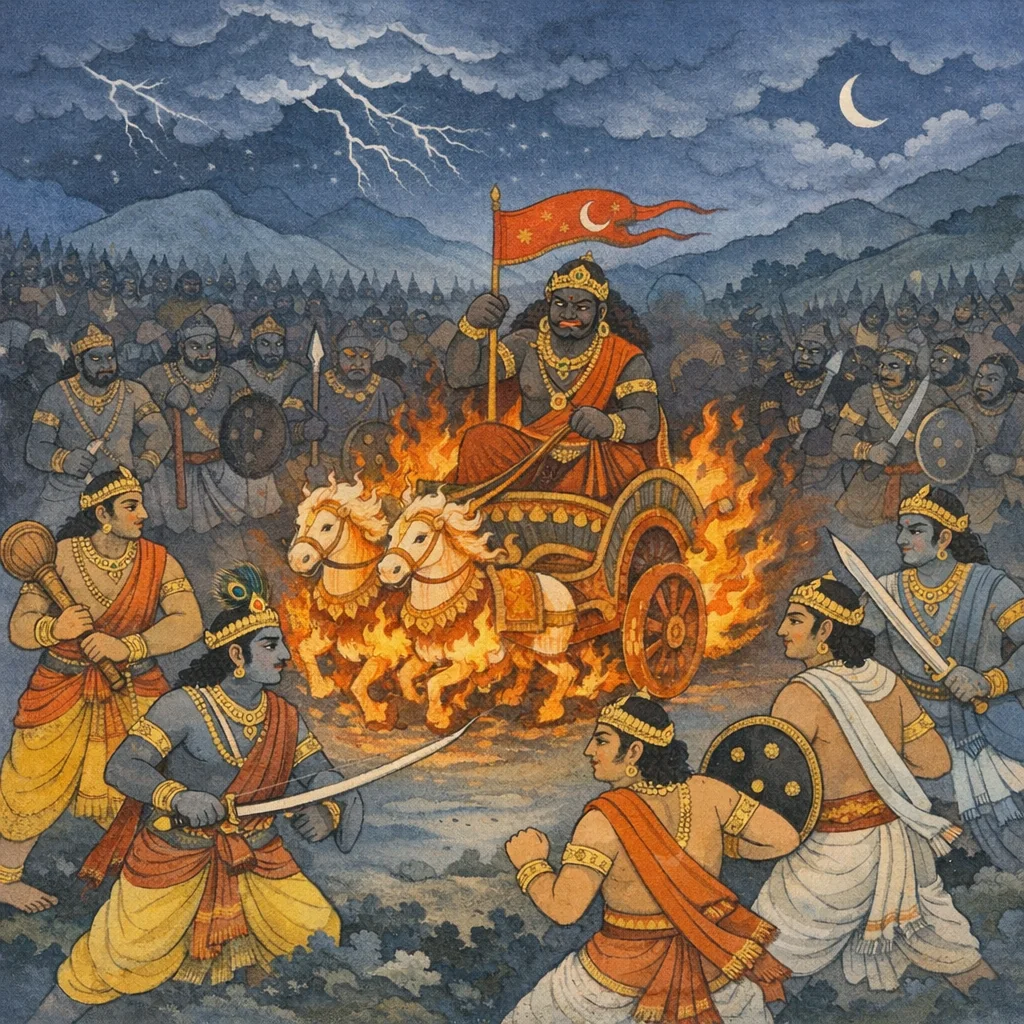
Chapter Arc: संजय धृतराष्ट्र से कहता है—रात्रि-युद्ध की भयावह घड़ी में राक्षसराज अलायुध रणभूमि में प्रवेश करता है; उसके स्वरूप, रथ और अग्नि-सदृश तेज का वर्णन होते ही पाण्डव-सेना में सिहरन दौड़ जाती है। → हजारों विकराल राक्षसों से घिरा अलायुध विशाल सेना सहित दुर्योधन के पास आता है। वह पुराने वैर को स्मरण करता है और दुर्योधन से कहता है कि तुम अपनी सेना रोक लो—पाण्डवों से युद्ध हम करेंगे। दुर्योधन की स्वीकृति पाकर वह पुरुषादकों (मानवभक्षी राक्षसों) के साथ भीम की ओर तीव्र गति से बढ़ता है और पाण्डववाहिनी को रथ से रौंदते-भगाते हुए बिजली-युक्त मेघ की भाँति रण में घूमता है। → अलायुध का उन्मत्त संकल्प प्रकट होता है—वह भीमसेन को तथा हिडिम्बापुत्र घटोत्कच को (मन्त्रियों सहित) मारने, और कृष्ण-नेतृत्व वाले कुन्तीपुत्रों को संहार कर अपने अनुचरों सहित ‘भक्षण’ करने की प्रतिज्ञा करता है; पाण्डवों के श्रेष्ठ योद्धा चारों ओर से हर्ष और क्रोध में उसे घेरकर भिड़ जाते हैं। → अध्याय का अंत निर्णायक वध पर नहीं, बल्कि अलायुध के रण-प्रवेश, उसकी प्रतिज्ञा, और पाण्डव-वीरों द्वारा उसे चारों ओर से घेर लेने पर टिकता है—रात्रि-युद्ध की दिशा एक नए राक्षसी तूफान की ओर मुड़ जाती है। → घेराव के बाद अगला प्रश्न खुला रह जाता है—क्या भीम/घटोत्कच अलायुध की इस राक्षसी धारा को रोक पाएँगे, या पाण्डव-सेना और अधिक विचलित होगी?
Shlokas
Verse 1
औपनआक्ाा बछ। अर: षट्सप्तत्याधेकशततमो< ध्याय: अलायुथका युद्धस्थलमें प्रवेश तथा उसके स्वरूप और रथ आदिका वर्णन संजय उवाच तस्मिंस्तथा वर्तमाने कर्णराक्षसयोर्मथे अलायुधो राक्षसेन्द्रो वीर्यवानभ्यवर्तत,संजय कहते हैं--राजन्! इस प्रकार कर्ण और घटोत्कचका वह युद्ध चल ही रहा था कि पराक्रमी राक्षसराज अलायुध वहाँ उपस्थित हुआ
Sañjaya said: O King, while that combat between Karṇa and the rākṣasa (Ghaṭotkaca) was thus in progress, the mighty rākṣasa-lord Alāyudha arrived there, entering the battlefield. The scene shows how war continually draws in new forces, escalating violence and testing the warriors’ resolve and discernment amid chaos.
Verse 2
महत्या सेनया युक्तो दुर्योधनमुपागमत् | राक्षसानां विरूपाणां सहस्रै: परिवारित:,वह सहस्रों विकराल रूपवाले राक्षसोंसे घिरकर अपनी विशाल सेनाके साथ दुर्योधनके पास आया
Sañjaya said: Accompanied by a vast army, and surrounded by thousands of grotesque, misshapen rākṣasas, he approached Duryodhana. The scene shows how the war draws in ever more fearsome and unruly forces, intensifying the peril and moral darkness of the conflict.
Verse 3
नानारूपधरैवीैरिे: पूर्ववैरमनुस्मरन् तस्य ज्ञातिर्हि विक्रान्तो ब्राह्मणादो बको हत:,उसके साथ अनेक रूप धारण करनेवाले वीर राक्षस मौजूद थे। वह पहलेके वैरका स्मरण करके वहाँ आया था। उसका कुटु॒म्बी बन्धु ब्राह्मणभक्षी पराक्रमी बकासुर भीमसेनके द्वारा मारा गया था
With him were many heroic rākṣasas, able to assume diverse forms. He came there remembering an old enmity. For his close kinsman, the mighty Bakāsura—devourer of brāhmaṇas—had been slain by Bhīmasena.
Verse 4
किर्मीरश्व॒ महातेजा हैडिम्बश्न सखा तदा । स दीर्घकालाध्युषितं पूर्ववैरमनुस्मरन्,उसके सखा हिडिम्ब और महातेजस्वी किर्मीर भी उन्हींके हाथसे मारे गये थे। इस प्रकार दीर्घकालसे मनमें रखे हुए पहलेके वैरको उस समय वह बारंबार स्मरण कर रहा था
Sañjaya said: At that time, Kirmīra of great splendor and Haiḍimba—his companion—had also been slain by those very hands. Remembering again and again the old enmity that had long dwelt within him, he kept recalling it in that moment, as the war rekindled past injuries into present resolve.
Verse 5
विज्ञायैतन्निशायुद्ध जिघांसुर्भीममाहवे । स मत्त इव मातड्: संक़्रुद्ध इव चोरग:
Sañjaya said: Having understood that this was a night-battle, he entered the fight intent on killing Bhīma. In the fray he raged like an intoxicated elephant, and like a serpent provoked to fury—an image of unrestrained martial wrath unleashed in the darkness of war.
Verse 6
विदितं ते महाराज यथा भीमेन राक्षसा:
Sañjaya said: “O great king, it is already known to you how the Rākṣasas were dealt with by Bhīma.”
Verse 7
परामर्शश्व॒ कन्याया हिडिम्बाया: कृत: पुरा
Sañjaya said: “Formerly, counsel and deliberation were undertaken regarding the maiden Hiḍimbā.”
Verse 8
तमहं सगणं राजन् सवाजिरथकुज्जरम्
Sañjaya said: “O King, I beheld him together with his followers—along with his horses, chariots, and elephants.”
Verse 9
अद्य कुन्तीसुतान् सर्वान् वासुदेवपुरोगमान्
Sañjaya said: “Today, all the sons of Kuntī—marching with Vāsudeva (Kṛṣṇa) at their head—are to be confronted/marked as the target.”
Verse 10
निवारय बल सर्व वयं योत्स्याम पाण्डवान्,“अत: आप अपनी सारी सेनाको रोक दीजिये। पाण्डवोंके साथ हमलोग युद्ध करेंगे।” उसकी यह बात सुनकर भाइयोंसे घिरे हुए राजा दुर्योधनको बड़ी प्रसन्नता हुई। उसने अलायुधका प्रस्ताव स्वीकार करते हुए कहा--
Sañjaya said: “Hold back the entire army. We ourselves will fight the Pāṇḍavas. Therefore, restrain all your forces.” Hearing this, King Duryodhana—surrounded by his brothers—was greatly delighted. Accepting Alāyudha’s proposal, he replied accordingly.
Verse 11
तस्यैतद् वचन श्रुत्वा हृष्टो दुर्योधनस्तदा । प्रतिगृह्माब्रवीद् वाक््यं भ्रातृभि: परिवारित:,“अत: आप अपनी सारी सेनाको रोक दीजिये। पाण्डवोंके साथ हमलोग युद्ध करेंगे।” उसकी यह बात सुनकर भाइयोंसे घिरे हुए राजा दुर्योधनको बड़ी प्रसन्नता हुई। उसने अलायुधका प्रस्ताव स्वीकार करते हुए कहा--
Hearing those words, Duryodhana was delighted. Surrounded by his brothers, he accepted the proposal and replied: “Therefore, restrain your entire army. We ourselves will fight with the Pāṇḍavas.”
Verse 12
त्वां पुरस्कृत्य सगणं वयं योत्स्यामहे परान् । न हि वैरान्तमनस: स्थास्यन्ति मम सैनिका:,'राक्षसराज! सैनिकोंसहित तुम्हें आगे रखकर हमलोग भी शत्रुओंके साथ युद्ध करेंगे; क्योंकि जिनका मन वैरका अन्त करनेमें लगा हुआ है, वे मेरे सैनिक चुपचाप खड़े नहीं रहेंगे!
Sañjaya said: “Placing you at our head, together with your retinue, we too shall fight the enemy. For my soldiers—whose minds are set on bringing this enmity to its end—will not stand by in silence.”
Verse 13
एवमस्त्विति राजानमुक्त्वा राक्षसपुज्भरव: । अभ्ययात् त्वरितो भैमिं सहित: पुरुषादकैः,“अच्छा, ऐसा ही हो।' राजा दुर्योधनसे इस प्रकार कहकर राक्षसराज अलायुध तुरंत ही राक्षसोंके साथ भीमसेनपुत्र घटोत्कचके सामने गया
Sañjaya said: Having told the king, “So be it,” the leader of the rākṣasas—Alāyudha—hurried forth, accompanied by man-eating rākṣasas, and advanced to confront Bhīma’s son, Ghaṭotkaca.
Verse 14
दीप्यमानेन वपुषा रथेनादित्यवर्चसा । तादृशेनैव राजेन्द्र यादुशेन घटोत्कच:,राजेन्द्र! उसका शरीर देदीप्यमान हो रहा था। वह भी सूर्यके समान तेजस्वी वैसे ही रथपर आरूढ़ होकर गया, जैसे रथसे घटोत्कच आया था
Sañjaya said: “O king, his body was blazing with radiance; mounted upon a chariot shining like the sun, he advanced in the very same manner and with the same splendor as Ghaṭotkaca had come in his chariot.”
Verse 15
तस्याप्यतुलनिर्घोषो बहुतोरणचित्रितः । ऋक्षचर्मावनद्धाड़रो नल्वमात्रो महारथ:,उसका विशाल रथ भी अनेक तोरणोंसे विचित्र शोभा पा रहा था। उसकी घर्घराहट भी अनुपम थी। उसके ऊपर भी रीछका चाम मढ़ा हुआ था और उसकी लंबाई-चौड़ाई भी चार सौ हाथ थी
Sañjaya said: “His mighty chariot too was splendidly adorned with many battle-arches and decorations. Its rumbling roar was incomparable. It was also covered with bearskin, and that great warrior’s car was of vast measure—extending to four hundred cubits.”
Verse 16
तस्यापि तुरगा: शीघ्रा हस्तिकाया: खरस्वना: । शतं युक्ता महाकाया मांसशोणितभोजना:,उसके रथमें जुते हुए घोड़े भी हाथीके समान मोटे शरीरवाले, शीघ्रगामी और गदहोंके समान उच्चस्वरसे हिनहिनानेवाले थे। उनकी संख्या सौ थी। वे विशालकाय अश्व मांस और रक्त भोजन करते थे
Sañjaya said: Even his chariot-horses were swift, huge-bodied like elephants, and loud-voiced like donkeys. A hundred of these great steeds were yoked, and they fed on flesh and blood.
Verse 17
तस्यापि रथनिर्घोषो महामेघरवोपम: । तस्यापि सुमहच्चापं दृढज्यं कनकोज्ज्वलम्,उसके रथका गम्भीर घोष भी महामेघकी गर्जनाके समान जान पड़ता था। उसका धनुष भी विशाल, सुदृढ़ प्रत्यंचासे युक्त तथा सुवर्णजटित होनेके कारण प्रकाशमान था
Sañjaya said: “Even the thunderous rumble of his chariot seemed like the roar of great storm-clouds. His bow too was exceedingly large, strung with a taut and firm bowstring, and it shone brilliantly with gold.”
Verse 18
तस्याप्यक्षसमा बाणा रुक्मपुड्खा: शिलाशिता: । सो<पि वीरो महाबाहुर्यथैव स घटोत्कच:,उसके बाण भी शिलापर तेज किये हुए थे। वे भी धुरेके समान मोटे और सुवर्णमय पंखोंसे सुशोभित थे। अलायुध भी वैसा ही महाबाहु वीर था, जैसा कि घटोत्कच था
Sañjaya said: His arrows too were whetted upon stone, thick as an axle and adorned with golden fletching. That warrior Alāyudha, mighty-armed and valiant, was in prowess just like Ghaṭotkaca.
Verse 19
तस्यापि गोमायुबलाभिगुप्तो बभूव केतुर्ज्वलनार्कतुल्य: । स चापि रूपेण घटोत्कचस्य श्रीमत्तमो व्याकुलदीपितास्य:,अलायुधका ध्वज भी अग्नि और सूर्यके समान तेजस्वी था। वह गीदड़-समूहसे चिह्नित दिखायी देता था। उसका स्वरूप भी घटोत्कचके ही समान अत्यन्त कान्तिमान् था। उसका मुख भी विकराल एवं प्रज्वलित जान पड़ता था
Sañjaya said: His banner too was guarded and marked by a host of jackals, blazing like fire and the sun. In form he appeared most splendid, resembling Ghaṭotkaca himself; and his face looked fierce—restless and aflame—signaling a terrifying, ominous presence on the battlefield.
Verse 20
दीप्ताड़दो दीप्तकिरीटमाली बद्धस्रगुष्णीषनिबद्धखड्ग: । गदी भुशुण्डी मुसली हली च शरासनी वारणतुल्यवर्ष्मा,उसकी भुजाओंमें बाजूबंद चमक रहे थे। मस्तकपर दीप्तिमान् मुकुट प्रकाशित हो रहा था। उसने हार पहन रखे थे। उसकी पगड़ीमें तलवार बँधी हुई थी। उसका शरीर हाथीके समान था तथा वह गदा, भुशुण्डी, मुसल, हल और धनुष आदि अस्त्र-शस्त्रोंसे सम्पन्न था
Sañjaya said: “He was radiant with gleaming armlets and a shining crown, adorned with garlands; a sword was fastened into his turban. His frame was like that of an elephant, and he was fully equipped with weapons—mace, bhuśuṇḍī, club, plough, and bow. Thus he appeared as a formidable embodiment of martial power on the battlefield.”
Verse 21
रथेन तेनानलवर्चसा तदा विद्रावयन् पाण्डववाहिनीं ताम् । रराज संख्ये परिवर्तमानो विद्युन्माली मेघ इवान्तरिक्षे,अग्निके समान तेजस्वी पूर्वोक्त रथके द्वारा उस समय पाण्डव-सेनाको खदेड़ता हुआ अलायुध युद्धस्थलमें सब ओर घूमकर आकाशमें विद्युन्मालासे प्रकाशित मेघके समान सुशोभित हो रहा था
Sañjaya said: Then, with that chariot blazing like fire, he drove the Pāṇḍava host into flight. Wheeling about on the battlefield, he shone resplendent—like a cloud in the sky wreathed with garlands of lightning.
Verse 22
ते चापि सर्वप्रवरा नरेन्द्रा महाबला वर्मिणश्रूर्मिणक्ष । हर्षान्विता युयुधुस्तस्य राजन् समनन््ततः: पाण्डवयोधवीरा:,राजन! तब पाण्डवपक्षके सर्वश्रेष्ठ महाबली वीर योद्धा नरेश भी कवच और ढालसे सुसज्जित हो हर्ष और उत्साहमें भरकर सब ओरसे उस राक्षसके साथ युद्ध करने लगे
Sañjaya said: O king, then the foremost mighty warrior-kings on the Pāṇḍava side, clad in armor and bearing shields, filled with joy and ardor, began to fight that rākṣasa from every direction.
Verse 56
दुर्योधनमिदं वाक्यमब्रवीद् युद्धुलालस: । रात्रिमें होनेवाले इस संग्रामका समाचार पाकर रणभूमिमें भीमसेनको मार डालनेकी इच्छासे वह मतवाले हाथी और क्रोधमें भरे हुए सर्पकी भाँति युद्धकी लालसा मनमें रखकर दुर्योधनसे इस प्रकार बोला--
Sañjaya said: Burning with eagerness for battle, he spoke these words to Duryodhana. Having learned that a night-fight was about to occur, and driven by the desire to slay Bhīmasena even on the battlefield, he addressed Duryodhana with a mind inflamed by wrath—like a maddened elephant or an enraged serpent—revealing the escalating moral darkness of war where vengeance overrides restraint.
Verse 66
हिडिम्बबककिर्मीरा निहता मम बान्धवा: । “महाराज! आपको तो मालूम ही होगा कि भीमसेनने हमारे राक्षस भाई-बन्धु हिडिम्ब, बक और किर्मीरका किस प्रकार वध कर डाला है
Sañjaya said: “Hiḍimba, Baka, and Kirmīra—my own kinsmen—have been slain. O King, you surely know how Bhīmasena killed those rākṣasa brothers and relatives of ours.”
Verse 76
किमन्यद् राक्षसानन्यानस्मांश्व॒ परिभूय ह । “इतना ही नहीं, उन्होंने मेरा तथा दूसरे राक्षसोंका अपमान करके पूर्वकालमें राक्षसकन्या हिडिम्बाके साथ भी बलात्कार किया था। इससे बढ़कर दूसरा अपराध क्या हो सकता है?
Sañjaya said: “What greater wrongdoing could there be than this? Not only did he insult me and the other Rākṣasas, but in former times he also violated the Rākṣasa maiden Hiḍimbā.”
Verse 86
हैडिम्बिं च सहामात्यं हन्तुमभ्यागत: स्वयम् । “अतः राजन! मैं सैन्यसमूह, घोड़े, हाथी और रथोंसहित भीमसेनको तथा मन्त्रियोंसहित हिडिम्बापुत्र घटोत्कचको मार डालनेके लिये स्वयं यहाँ आया हूँ
Sañjaya said: “O King, I have come here in person to slay Bhīmasena along with his entire force—horses, elephants, and chariots—and also to kill Ghaṭotkaca, the son of Hiḍimbā, together with his ministers.”
Verse 96
हत्वा सम्भक्षयिष्यामि सर्वैरनुचरै: सह । “श्रीकृष्ण जिनके अगुआ हैं, उन सभी कुन्तीपुत्रोंकोी मारकर आज मैं समस्त अनुचरोंके साथ उन्हें खा जाऊँगा
Sañjaya said: “Having slain them, I shall devour them together with all my attendants.”
Verse 176
इति श्रीमहाभारते द्रोणपर्वणि घटोत्कचवधपर्वणि रात्रियुद्धेडलायु धयुद्धे षट्सप्तत्यधिकशततमो<ध्याय:
Thus, in the Śrī Mahābhārata, within the Droṇa Parva—specifically in the section on the slaying of Ghaṭotkaca—this concludes the one-hundred-and-seventy-sixth chapter, concerning the night-battle and the combat involving Ḍalāyudha.