Adhyaya 146
अध्याय १४६ — निशायां सात्यकिदुर्योधनयुद्धम् / Chapter 146 — Night Battle: Sātyaki and Duryodhana; Śakuni’s Encirclement of Arjuna
Upa-parva: Niśā-yuddha (Night Engagement) Episode — Sātyaki, Duryodhana, and Śakuni–Arjuna Clash
Saṃjaya reports a night-phase surge in violence and sound. Multiple Kaurava warriors rapidly converge upon Yuyudhāna (Sātyaki), surrounding him with ornamented chariots and supporting elephants and cavalry. They issue intimidating roars and shower him with sharp arrows, seeking a decisive elimination. Sātyaki counters with high-volume, precise archery—severing heads and limbs, dropping elephant hands and horse heads, and creating a field strewn with fallen insignia (parasols, fly-whisks), likened to a sky of stars. The tumult fills the earth; the night becomes fear-inducing. Hearing the uproar, Duryodhana directs his charioteer toward the sound and attacks Sātyaki; both exchange volleys. Sātyaki heavily wounds Duryodhana, kills his horses, and drops his charioteer; Duryodhana continues on a disabled chariot, but his missiles are intercepted and his bow is cut, forcing him to mount Kṛtavarman’s chariot. Sātyaki then drives back Kaurava troops in the night. In a parallel theatre, Śakuni surrounds Arjuna with large forces and divine weapons; Arjuna contains them, inflicts extensive losses, wounds Śakuni and Ulūka, cuts Śakuni’s bow, and causes panic-driven dispersal. Vāsudeva and Arjuna sound conches in triumph. Elsewhere, Dhṛṣṭadyumna strikes Droṇa, briefly cuts his bowstring, and resumes pressure; imagery of a blood-flowing river between armies underscores the scale of casualties. The chapter closes with the Pāṇḍavas’ lion-roars as Kaurava leaders witness the momentum shift.
Chapter Arc: धृतराष्ट्र का संशय—जो सात्यकि द्रोण, कर्ण, विकर्ण, कृतवर्मा जैसे महारथियों से भी न रोका जा सका, वह भूरिश्रवा द्वारा कैसे बलपूर्वक गिराया गया? → संजय सात्यकि (शैनेय) की उत्पत्ति, वंश-परंपरा और शौर्य का विस्तार से वर्णन करता है—शिनि-कुल की धनुर्विद्या, युद्ध-प्रताप और वृष्णि-वीरों की अजेयता का प्रतिपादन; साथ ही भूरिश्रवा-सोमदत्त पक्ष की कठोरता और अहं-उद्रेक का संकेत। → सर्वसैन्यों के देखते-देखते भूरिश्रवा का सात्यकि को बलात् भूमिपात करना और अपमानित करते हुए लात मारना—यही वह क्षण है जो धृतराष्ट्र के प्रश्न का तीखा उत्तर बनकर उभरता है। → संजय निष्कर्ष देता है कि सात्यकि की पराजय ‘अयोग्यता’ से नहीं, युद्ध की जटिल परिस्थिति, प्रतिद्वन्द्वी की क्रूर दृढ़ता और क्षणिक अवसर-प्राप्ति से हुई; साथ ही वृष्णि-प्रवीरों की सामान्यतः अप्रतिहत गति का पुनः प्रतिपादन कर धृतराष्ट्र के संशय का निवारण करता है। → यह प्रशंसा-प्रसंग आगे के निर्णायक संघर्षों—विशेषतः जयद्रथ-वध के उग्र प्रवाह और सात्यकि के अगले कर्म—की पृष्ठभूमि बनाकर कथा को युद्ध-उन्माद की ओर धकेल देता है।
Shlokas
Verse 1
इस प्रकार श्रीमह्ाभारत द्रोणपर्वके अन्तर्गत जयद्रथवधपर्वमें सात्यकिका प्रशंसाविषयक एक सौ चौवालीसवाँ अध्याय पूरा हुआ ॥/ १४४ ॥/ (दाक्षिणात्य अधिक पाठके ३ ३ “लोक मिलाकर कुल ३२३ श्लोक हैं।) निज जा | मु । #* पञ्चचत्वारिशदाधिकशततमो< ध्याय: अर्जुनका जयद्रथपर आक्रमण, कर्ण और दुर्योधनकी बातचीत, कर्णके साथ अर्जुनका युद्ध और कर्णकी पराजय तथा सब योद्धाओंके साथ अर्जुनका घोर युद्ध धृतराष्ट्र रवाच तदवस्थे हते तस्मिन् भूरिश्रवसि कौरवे । यथा भूयो5भवद् युद्ध तन्ममाचक्ष्व संजय,धृतराष्ट्रने पूछा--संजय! जो वीर सात्यकि द्रोण, कर्ण, विकर्ण और कृतवर्मासे भी परास्त न हुए और युधिष्छिरसे की हुई प्रतिज्ञाके अनुसार कौरव-सेनारूपी समुद्रसे पार हो गये, जिन्हें समरांगणमें कोई भी रोक न सका, उन्हींको कुरुवंशी भूरिश्रवाने बलपूर्वक पकड़कर कैसे पृथ्वीपर गिरा दिया?
Dhṛtarāṣṭra said: “Sañjaya, when that Kaurava Bhūriśravas had been slain in such a condition, tell me how the battle unfolded again thereafter.”
Verse 2
स कथं कौरवेयेण समरेष्वनिवारिता: । निगृहा भूरिश्रवसा बलाद् भुवि निपातित:,धृतराष्ट्रने पूछा--संजय! जो वीर सात्यकि द्रोण, कर्ण, विकर्ण और कृतवर्मासे भी परास्त न हुए और युधिष्छिरसे की हुई प्रतिज्ञाके अनुसार कौरव-सेनारूपी समुद्रसे पार हो गये, जिन्हें समरांगणमें कोई भी रोक न सका, उन्हींको कुरुवंशी भूरिश्रवाने बलपूर्वक पकड़कर कैसे पृथ्वीपर गिरा दिया?
Dhṛtarāṣṭra said: “How was that warrior—who could not be checked in battle and who had passed through the Kaurava host like a sea—seized by the Kuru prince Bhūriśravas and forcibly thrown down upon the earth?”
Verse 3
संजय उवाच शृणु राजन्निहोत्पत्तिं शैनेयस्य यथा पुरा । यथा च भूरिश्रवसो यत्र ते संशयो नूप,संजयने कहा--राजन्! जिस विषयमें आपको संशय है, उसे स्पष्ट समझनेके लिये यहाँ पूर्वकालमें सात्यकि और भूरिश्रवाकी उत्पत्ति जिस प्रकार हुई थी, वह प्रसंग सुनिये
Sañjaya said: O King, listen here to the account of the birth and origin of Śaineya (Sātyaki) as it was in former times, and likewise of Bhūriśravas—so that, O ruler, the doubt that troubles you on this matter may be resolved.
Verse 4
अत्रे: पुत्रो&भवत् सोम: सोमस्य तु बुध: स्मृतः । बुधस्यैको महेन्द्रा भ: पुत्र आसीत् पुरूरवा:,महर्षि अत्रिके पुत्र सोम हुए। सोमके पुत्र बुध माने गये हैं। बुधके एक ही पुत्र हुआ पुरूरवा, जो देवराज इन्द्रके समान तेजस्वी था
Sañjaya said: Atri’s son was Soma (the Moon). Soma’s son is remembered as Budha. Budha had a single son, Purūravas, radiant like Mahendra (Indra).
Verse 5
पुरूरवस आयुस्तु आयुषो नहुष: सुतः । नहुषस्य ययातिस्तु राजा देवर्षिसम्मत:,पुरूरवाके पुत्र आयु और आयुके पुत्र नहुष हुए। नहुषके राजा ययाति हुए, जिनका देवताओं तथा ऋषियोंमें भी बड़ा आदर था
Sañjaya said: From Purūravas was born Āyu; and from Āyu was born Nahuṣa. From Nahuṣa came King Yayāti, a ruler held in high esteem by the gods and the seers.
Verse 6
ययातेदेंवयान्यां तु यदुर्ज्येष्ठो5भवत् सुतः । यदोरभूदन्ववाये देवमीढ इति स्मृत:,ययातिसे देवयानीके गर्भसे जो ज्येष्ठ पुत्र हुआ, उसका नाम यदु था। इन्हीं यदुके वंशमें देवमीढ़ नामसे विख्यात एक यादव हो गये हैं। उनके पुत्रका नाम था शूर, जो तीनों लोकोंमें सम्मानित थे। शूरके पुत्र नरश्रेष्ठ शौरि हुए, जो महायशस्वी वसुदेवके नामसे प्रसिद्ध हैं
Sañjaya said: From Yayāti and Devayānī, the eldest son was Yadu. In Yadu’s line there arose a Yādava renowned by the name Devamīḍha.
Verse 7
यादवस्तस्य तु सुतः शूरस्त्रैलोक्यसम्मत: । शूरस्य शौरिनवरो वसुदेवो महायशा:,ययातिसे देवयानीके गर्भसे जो ज्येष्ठ पुत्र हुआ, उसका नाम यदु था। इन्हीं यदुके वंशमें देवमीढ़ नामसे विख्यात एक यादव हो गये हैं। उनके पुत्रका नाम था शूर, जो तीनों लोकोंमें सम्मानित थे। शूरके पुत्र नरश्रेष्ठ शौरि हुए, जो महायशस्वी वसुदेवके नामसे प्रसिद्ध हैं
Sañjaya said: From him was born a son named Śūra, honored throughout the three worlds. From Śūra came the foremost of the Śauris—Vasudeva—renowned for great glory.
Verse 8
धनुष्यनवर: शूर: कार्तवीर्यसमो युधि । तद्वीर्यश्वापि तत्रेव कुले शिनिरभून्नप,शूर धर्नुर्विद्यामें सबसे श्रेष्ठ थे। वे युद्धमें कार्तवीर्य अर्जुनके समान पराक्रमी थे। नरेश्वर! जिस कुलमें शूरका जन्म हुआ था, उसीमें उन्हींके समान बलशाली शिनि हुए
Sañjaya said: Śūra was foremost among those skilled with the bow, and in battle he was equal in prowess to Kārtavīrya. And in that very lineage, O king, there also arose Śini, a hero of the same strength and valor—thus the tradition of martial excellence continued within that house.
Verse 9
एतस्मिन्नेव काले तु देवकस्य महात्मन: । दुहितुः स्वयंवरे राजन् सर्वक्षत्रसमागमे,राजन्! इसी समय महात्मा देवककी पुत्री देवकीके स्वयंवरमें सम्पूर्ण क्षत्रिय एकत्र हुए थे
Sañjaya said: “At that very time, O King, when all the Kṣatriya princes had assembled together, the svayaṃvara of Devakī—the daughter of the great-souled Devaka—was being held.”
Verse 10
तत्र वै देवकीं देवीं वसुदेवार्थमाशु वै । निर्जित्य पार्थिवान् सर्वान् रथमारोपयच्छिनि:,उस स्वयंवरमें शिनिने शीघ्र ही समस्त राजाओंको जीतकर वसुदेवके लिये देवकी देवीको रथपर बैठा लिया
Sañjaya said: There, Shini swiftly overcame all the assembled kings and, for Vasudeva’s sake, placed the noble lady Devakī upon the chariot—securing her as the chosen bride after defeating rival claimants in the contest.
Verse 11
तां दृष्टवा देवकीं शूरो रथस्थां पुरुषर्षभ । नामृष्यत महातेजा: सोमदत्त: शिनेर्नूप,नरश्रेष्ठ! नरेश्वर! उस समय महातेजस्वी शूरवीर सोमदत्तने देवकी देवीको रथपर बैठे हुए देख शिनिके पराक्रमको सहन नहीं किया
Sañjaya said: O bull among men, O king—when the mighty warrior Somadatta saw Devakī seated upon a chariot, he could not endure it. His great splendor flared up in intolerance at Śini’s prowess and the advantage it had gained in the battle’s unfolding.
Verse 12
तयोर्युद्धमभूद् राजन् दिनार्ध चित्रमद्भुतम् । बाहुयुद्धे सुबलिनो: प्रसक्तं पुरुषर्षभ
Sañjaya said: O King, the combat between those two continued for half a day—strange and wondrous to behold. Those two mighty warriors became fully engaged in close hand-to-hand fighting, O bull among men.
Verse 13
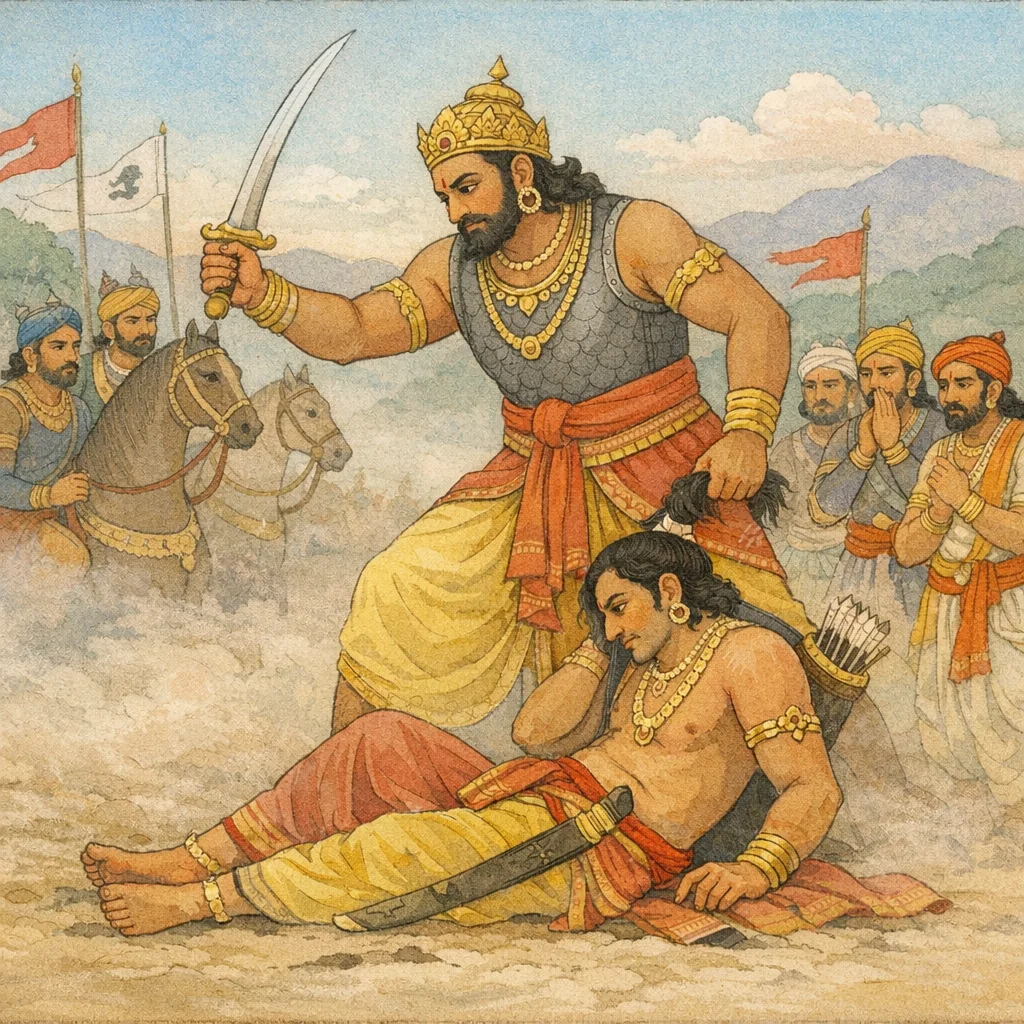
पुरुषप्रवर महाराज! उन दोनों महाबली शिनि और सोमदत्तमें आधे दिनतक विचित्र एवं अद्भुत बाहुयुद्ध हुआ ।। शिनिना सोमदत्तस्तु प्रसहा भुवि पातित: । असिमुद्यम्य केशेषु प्रगृह्दा च पदा हतः:,उसमें शिनिने सोमदत्तको बलपूर्वक पृथ्वीपर पटक दिया और तलवार उठाकर उनकी चुटिया पकड़ ली एवं उन्हें लात मारी
Sanjaya said: O best of men, O great king! For half a day those two mighty warriors, Śini and Somadatta, fought a strange and astonishing hand-to-hand battle. Then Śini, overpowering Somadatta, hurled him down to the ground; raising his sword, he seized him by the hair and struck him with his foot—an act that reveals the ferocity and loss of restraint that war can provoke even among renowned fighters.
Verse 14
मध्ये राजसहस्राणां प्रेक्षकाणां समन्तत: । कृपया च पुनस्तेन स जीवेति विसर्जित:
Sanjaya said: In the very midst of thousands of kings, with spectators gathered all around, he was released once again by that man out of compassion, with the thought, “Let him live.” The moment underscores how, even amid the harsh logic of war and public scrutiny, a deliberate act of mercy can assert a moral choice over total annihilation.
Verse 15
चारों ओरसे सहस्रों नरेश दर्शक बनकर यह युद्ध देख रहे थे। उनके बीचमें पुनः कृपा करके “जाओ, जीवित रहो” ऐसा कहकर शिनिने सोमदत्तको छोड़ दिया ।। तदवस्थ: कृतस्तेन सोमदत्तो5थ मारिष । प्रासादयन्महादेवममर्षवशमास्थित:,माननीय नरेश! जब शिनिने सोमदत्तकी ऐसी दुरवस्था कर दी, तब उन्होंने अमर्षके वशीभूत हो आराधनाद्वारा महादेवजीको प्रसन्न किया
Sanjaya said: All around, thousands of kings stood as spectators, watching the battle. In their midst, Śini’s son again showed compassion and, saying, “Go—live,” released Somadatta. But when Somadatta had been reduced to that condition by him, O venerable king, he became overpowered by indignation and sought to appease Mahādeva through worship—turning from the ethics of mercy shown to him toward a retaliatory resolve grounded in devotion.
Verse 16
तस्य तुष्टो महादेवो वराणां वरद: प्रभु: । वरेण च्छन्दयामास स तु वच्रे वरं॑ नृप:,श्रेष्ठ देवताओंमें भी सर्वश्रेष्ठ वरदायक तथा सामर्थ्यशाली महादेवजीने संतुष्ट होकर उन्हें इच्छानुसार वर माँगनेके लिये कहा। तब राजा सोमदत्तने इस प्रकार वर माँगा --
Sanjaya said: Pleased with him, Mahādeva—sovereign Lord and the supreme giver among boon-bestowers—invited him to choose a boon according to his desire. Then the king (Somadatta) asked for a boon in these words.
Verse 17
पुत्रमिच्छामि भगवन् यो निपात्य शिने: सुतम् | मध्ये राजसहस््राणां पदा हन्याच्च संयुगे,“'भगवन्! मैं ऐसा पुत्र पाना चाहता हूँ, जो शिनिके पुत्रको सहस्रों राजाओंके बीच युद्धमें पृथ्वीपर गिराकर उसे पैरसे मारे”
Sanjaya said: “O revered one, I desire a son who, having struck down the son of Śini amid thousands of kings, would in the thick of battle trample and beat him with his foot.” The utterance reflects a brutal, pride-driven wish for humiliating victory rather than a dharmic ideal of restrained warfare.
Verse 18
तस्य तद् वचन श्रुत्वा सोमदत्तस्य पार्थिव । (सशिर:कम्पमाहेदं नैतदेवं भवेन्नूप । स पूर्वमेव तपसा मामाराध्य जगत्त्रये ।। कस्याप्यवध्यता मत्तः प्राप्तवान् वरमुत्तमम् । तवाप्ययं प्रयासस्तु निष्फलो न भविष्यति ।। तस्य पौत्रं तु समरे त्वत्पुत्रो मोहयिष्यति । न तु मारयितुं शक््य: कृष्णसंरक्षितो हासौ ।। अहमेव तु कृष्णो5स्मि नावयोरन्तरं क्वचित् ।) एवमस्त्विति तत्रोक्त्वा स देवो5न्तरधीयत,राजन! सोमदत्तका यह कथन सुनकर महादेवजीने सिर हिलाकर कहा--'नहीं, ऐसा नहीं हो सकता। नरेश्वर! शिनिके पुत्रने तो पहले ही तपस्याद्वारा मेरी आराधना करके तीनों लोकोंमें किसीसे भी न मारे जानेका उत्तम वर मुझसे प्राप्त कर लिया है; परंतु तुम्हारा भी यह प्रयास निष्फल नहीं होगा। तुम्हारा पुत्र समरभूमिमें शिनिके पौत्रको तुम्हारी इच्छाके अनुसार मूर्च्छित कर देगा, परंतु उसके हाथसे वह मारा नहीं जा सकेगा; क्योंकि श्रीकृष्णसे वह सुरक्षित होगा। मैं ही श्रीकृष्ण हूँ। हम दोनोंमें कहीं कोई अन्तर नहीं है। जाओ, ऐसा ही होगा।' ऐसा कहकर महादेवजी वहीं अन्तर्धान हो गये
Sañjaya said: Hearing Somadatta’s words, the lord (Mahādeva) shook his head and replied, “No, O king, it cannot be so. The son of Śini had earlier worshiped me through austerity and obtained from me the supreme boon of inviolability in the three worlds—he cannot be slain by anyone. Yet your effort will not be fruitless: in battle your son will, as you desire, cause Śini’s grandson to fall into a swoon; but he will not be able to kill him, for he is protected by Kṛṣṇa. Indeed, I myself am Kṛṣṇa; there is no difference between us at any time.” Having said, “So be it,” that god vanished there, O king.
Verse 19
स तेन वरदानेन लब्धवान् भूरिदक्षिणम् । अपातयच्च समरे सौमदत्ति: शिने: सुनम्,उसी वरदानके प्रभावसे सोमदत्तने प्रचुर दक्षिणा देनेवाले भूरिश्रवाको पुत्ररूपमें प्राप्त किया और उसने समरांगणमें शिनिवंशज सात्यकिको गिरा दिया
Sañjaya said: By the power of that boon, Somadatta obtained Bhūriśravas—renowned for lavish gifts—as his son; and in the thick of battle he struck down the son of Śini, Sātyaki.
Verse 20
पश्यतां सर्वसैन्यानां पदा चैनमताडयत् | एतत् ते कथितं राजन् यन्मां त्वं परिपृच्छसि,इतना ही नहीं, उसने सारी सेनाओंके देखते-देखते सात्यकिको लात भी मारी। राजन! आप मुझसे जो पूछ रहे थे, उसके उत्तरमें यह प्रसंग सुनाया है
Sañjaya said: “While all the armies looked on, he even struck him with his foot. O King, I have thus related to you the very incident about which you questioned me.”
Verse 21
न हि शक््यो रणे जेतुं सात्वतो मनुजर्षभै: । लब्धलक्ष्याश्न संग्रामे बहुशश्चित्रयोधिन:,सात्यकिको रणभाूमिमें श्रेष्ठ-से-श्रेष्ठ मनुष्य भी नहीं जीत सकते। वृष्णिवंशी योद्धा अपने निशानेको सफलतापूर्वक वेध लेते हैं। वे संग्रामभुमिमें अनेक प्रकारसे विचित्र युद्ध करनेवाले होते हैं
Sañjaya said: Indeed, even the finest of men cannot overcome the Sātvata warrior in battle. For in the clash of arms they strike their marks unfailingly, and they fight in many wondrous and varied ways.
Verse 22
देवदानवगन्धर्वान् विजेतारो हाविस्मिता: । स्ववीर्यविजये युक्ता नैते परपरिग्रहा:,देवताओं, दानवों तथा गन्धर्वोपर भी वे विजयी होते हैं। फिर भी इसके लिये उनके मनमें गर्व या विस्मय नहीं होता। वे अपने ही बलसे विजय पानेका उद्योग करते हैं। ये वृष्णिवंशी कभी पराधीन नहीं होते हैं
Sañjaya said: They are conquerors even of the gods, the Dānavas, and the Gandharvas; yet they do not become proud or astonished on that account. Intent on victory through their own prowess, these Vṛṣṇi heroes are never dependent on others, nor do they submit to another’s control.
Verse 23
न तुल्यं वृष्णिभिरिह दृश्यते किंचन प्रभो । भूतं भव्यं भविष्यच्च बलेन भरतर्षभ,शक्तिशाली भरतश्रेष्ठ! भूत, वर्तमान और भविष्य कोई भी जगत् बलमें वृष्णिवंशियोंके समान नहीं दिखायी देता
Sañjaya said: “O lord, here nothing at all is seen to be equal to the Vṛṣṇis. O bull among the Bharatas, in strength—whether in the past, the present, or the future—none in the world appears comparable to the Vṛṣṇi lineage.”
Verse 24
न ज्ञातिमवमन्यन्ते वृद्धानां शासने रता: । न देवासुरगन्धर्वा न यक्षोरगराक्षसा:
Sañjaya said: Those who delight in abiding by the discipline laid down by the elders do not slight their own kinsmen. Not even the gods, the asuras, the gandharvas, the yakṣas, the nāgas, or the rākṣasas act otherwise.
Verse 25
जेतारो वृष्णिवीराणां कि पुनर्मानवा रणे | ये अपने कुट॒म्बीजनोंकी अवहेलना नहीं करते हैं। सदा बड़े-बूढ़ोंकी आज्ञामें तत्पर रहते हैं। देवता, असुर, गन्धर्व, यक्ष, नाग और राक्षस भी युद्धमें वृष्णिवीरोंपर विजय नहीं पा सकते; फिर मनुष्य किस गिनतीमें हैं? ।। ब्र्माद्रव्ये गुरुद्रव्ये ज्ञातिस्वे चाप्पहिंसका:
Sañjaya said: “The heroes of the Vṛṣṇis are conquerors—what then of ordinary men in battle? They do not slight their own kinsmen, and they are ever intent on obeying the commands of elders. Even gods, asuras, gandharvas, yakṣas, nāgas, and rākṣasas cannot overcome the Vṛṣṇi warriors in war; how much less can human beings be counted as their match? Moreover, they do not injure what belongs to Brahmins, to teachers, or to their relatives.”
Verse 26
एतेषां रक्षितारश्न ये स्यु: कस्याज्चिदापदि । अर्थवन्तो न चोत्सिक्ता ब्रह्मुण्या: सत्यवादिन:
Sañjaya said: “Those who would stand as protectors for these men in any crisis are persons of substance—yet not arrogant—steadfast in brahminical virtue and devoted to truthfulness.”
Verse 27
ये ब्राह्मण, गुरु तथा कुटुम्बीजनोंके धन लेनेके लिये कभी हिंसा नहीं करते हैं। इन ब्राह्मण-गुरु आदिमें जो कोई भी किसी आपत्तिमें पड़े हों, उनकी ये वृष्णिवंशी रक्षा करते हैं। ये सब-के-सब धनवान, अभिमानशाून्य, ब्राह्मण-भक्त और सत्यवादी होते हैं ।। समर्थान् नावमन्यन्ते दीनानभ्युद्धरन्ति च । नित्यं देवपरा दान्तास्त्रातारश्चाविकत्थना:,ये सामर्थ्यशाली पुरुषोंकी अवहेलना नहीं करते और दीन-दु:खियोंका उद्धार करते हैं। सदा देवभक्त, जितेन्द्रिय, दूसरोंके संरक्षक तथा आत्मप्रशंसासे दूर रहनेवाले हैं
Sañjaya said: They do not slight those who are capable and strong, and they raise up the poor and distressed. Ever devoted to the gods, self-controlled, they act as protectors of others and remain free from boastful self-praise—thus are those Vṛṣṇi heroes described in their conduct.
Verse 28
तेन वृष्णिप्रवीराणां चक्र न प्रतिहन्यते । अपि मेरुं वहेत् कश्चित् तरेद् वा मकरालयम् । नतु वृष्णिप्रवीराणां समेत्यान्तं व्रजेन्नप,इसीसे वृष्णिवीरोंका यह समूह किसीके द्वारा प्रतिहत नहीं होता है। नरेश्वर! कोई मेरुपर्वतको सिरपर उठा ले अथवा समुद्रको हाथोंसे तैर जाय; परंतु वृष्णिवीरोंके समूहका अन्त नहीं पा सकता
Sañjaya said: “Therefore the battle-array formed by the foremost heroes of the Vṛṣṇis cannot be checked by anyone. A man might lift Mount Meru, or even swim across the ocean—the abode of makaras; but, O king, having confronted that host of Vṛṣṇi champions, no one can reach its end.”
Verse 29
एतत् ते सर्वमाख्यातं यत्र ते संशय: प्रभो । कुरुराज नरश्रेष्ठ तव व्यपनयो महान्,प्रभो! जहाँ आपको संदेह था, वह सब मैंने अच्छी तरह बता दिया है। कुरुराज नरश्रेष्ठस इस युद्धको चालू करनेमें आपका महान् अन्याय ही कारण है
Sañjaya said: “O lord, I have fully explained to you everything precisely at the point where your doubt lay. O king of the Kurus, best of men—your great wrongdoing has been the decisive cause for setting this war in motion.”
Verse 144
इति श्रीमहाभारते द्रोणपर्वणि जयद्रथवधपर्वणि सात्यकिप्रशंसायां चतुश्चत्वारिंशदधिकशततमो< ध्याय:
Thus ends the one-hundred-and-forty-sixth chapter of the Droṇa Parva of the Śrī Mahābhārata, within the section on the slaying of Jayadratha, in the episode praising Sātyaki.
Frequently Asked Questions
The chapter frames a dharma-sankat around escalation in darkness: warriors pursue decisive outcomes amid reduced visibility and heightened fear, raising implicit questions about proportionality, restraint, and the ethical cost of victory-driven tactics.
Performance of duty is shown as context-sensitive: discipline, situational awareness, and measured decision-making can preserve agency even when conditions (night, noise, encirclement) amplify confusion and emotional reactivity.
No explicit phalaśruti appears here; the chapter’s meta-significance lies in illustrating how narrative causality in the Mahābhārata links tactical choices to cascading consequences, reinforcing the epic’s broader inquiry into dharma as tested in extreme circumstances.