Adhyaya 140
Adhyāya 140: Rātriyuddhe Droṇa-prāpti-prayatnaḥ (Night engagement and the attempt to reach Droṇa)
Upa-parva: Rātriyuddha (Night-Engagement) Episode within Droṇa Parva
Saṃjaya reports that, amid a fierce night engagement described as broadly destructive, Yudhiṣṭhira issues an operational order to the Pāṇḍavas and allied Pāñcālas/Somakas to advance with the intent of striking Droṇa. The Kaurava response is distributed: prominent defenders each intercept an approaching adversary (e.g., Karṇa checks Sahadeva; Duryodhana faces Bhīma; Śakuni blocks Nakula; Kṛpa restrains Śikhaṇḍin; others similarly engage allied leaders), preventing a direct convergence on Droṇa. The chapter then concentrates on Kṛtavarmā Hārdikya confronting Yudhiṣṭhira. A sequence of exchanges follows: Yudhiṣṭhira wounds Kṛtavarmā; Kṛtavarmā cuts Yudhiṣṭhira’s bow and counters with multiple arrows; Yudhiṣṭhira re-arms, strikes again, and throws a śakti that pierces Kṛtavarmā’s right arm; yet Kṛtavarmā rapidly recovers, disarms and overwhelms Yudhiṣṭhira, damages his armor, and forces his withdrawal from the field. The closing movement emphasizes outcome over rhetoric: Kṛtavarmā, having neutralized the advance, resumes the protective screen around Droṇa.
Chapter Arc: धृतराष्ट्र, जो अब तक मन में ‘यद् गतं तद् गतम्’ कहकर बीते को ढँक देना चाहता था, संजय से आग्रह करता है—मेरे अन्याय से जो वीर-क्षय हुआ, उसे विस्तार से कहो; मैं अब स्थिर होकर सुनूँगा। → संजय रणभूमि का दृश्य खोलता है: भीमसेन के धनुष से छूटे बाणों से कौरव-योद्धा कटते-बिखरते हैं, भयभीत होकर ‘किमेतत्?’ कहते हुए पीछे हटते हैं। ध्वज, रथ, चक्र, धुरी, हाथी-घोड़े, शस्त्र—सब टूट-टूटकर भारत-भूमि को शतध्नी-सम विभीषिका से भर देते हैं; सेना मेघ-जाल-सी घनी होकर भी छिन्न-भिन्न होने लगती है। → भीम और कर्ण का पराक्रमी विमर्द चरम पर पहुँचता है—दो उन्मत्त गजों की तरह वे सेना-वन को रौंदते हैं। भीम की सहायता से ‘रौद्र’ होकर कर्ण की गति ऐसी बढ़ती है जैसे वायु पाकर अग्नि सूखे वन में दौड़ उठे; दोनों के अद्भुत कर्म देखकर चारण-सिद्ध तक विस्मित हो जाते हैं। → अध्याय का अंत निर्णायक वध पर नहीं, बल्कि युद्ध-प्रवाह की तीव्रता और दोनों महावीरों की समता-सी टक्कर पर टिकता है—रणभूमि क्षत-विक्षत, कौरव-सेना हतप्रभ, और भीम–कर्ण का संघर्ष अभी थमा नहीं। → भीम–कर्ण का यह ‘परमो विमर्द’ अगले क्षण किस ओर झुकेगा—किसका रौद्र पहले टूटेगा, किसकी सेना पहले ढहेगी—यह प्रश्न खुला रह जाता है।
Shlokas
Verse 1
इस प्रकार श्रीमह्माभारत द्रोणपर्वके अन्तर्गत जयद्रथवधपर्वमें भीमसेनयुद्धाविषयक एक सौ सैंतीसवाँ अध्याय पूरा हुआ ॥/ १३७ ॥। ऑपन- मा छा ्ः॑डि् - किसी-किसी प्रतिमें शत्रुंजय और शत्रुसह--इन दो नामोंके स्थानमें क्रमश: 'दृढसन्ध और “जरासन्ध” नाम मिलते हैं। अष्टात्रिशदधिकशततमो< ध्याय: भीमसेन और कर्णका भयंकर युद्ध धृतराष्ट्र रवाच महानपनय: सूत ममैवात्र विशेषत:ः । स इदानीमनुप्राप्तो मन्ये संजय शोचतः,धृतराष्ट्र बोले--सूत संजय! इसमें विशेषतः मेरा ही अन्याय है--यह मैं स्वीकार करता हूँ। इस समय शोकमें डूबे हुए मुझको मेरे उसी अन्यायका फल प्राप्त हुआ है
Sanjaya said: Thus, in the Mahabharata, within the Drona Parva, in the sub-section concerning the slaying of Jayadratha, the 137th chapter—dealing with the battle of Bhimasena—has concluded. (In some manuscripts, the names Shatruñjaya and Shatrusaha are found instead as Dṛḍhasandha and Jarāsandha.) Dhritarashtra said: “O Suta Sanjaya, in this matter the greater wrongdoing is especially mine—I acknowledge it. Now, as I sit submerged in grief, I believe the consequence of that very injustice has reached me.”
Verse 2
यद् गतं तद् गतमिति ममासीन्मनसि स्थितम् । इदानीमत्र कि कार्य प्रकरिष्यामि संजय,संजय! अबतक मेरे मनमें यह बात थी कि जो बीत गया, सो बीत गया। उसके लिये चिन्ता करना व्यर्थ है। परंतु अब यहाँ इस समय मेरा क्या कर्तव्य है, उसे बताओ। मैं उसका पालन अवश्य करूँगा
“In my mind it had been settled, ‘What has happened has happened; it is past.’ To worry over it is futile. But now, at this very moment, what is my duty here? Tell me, Sañjaya—Sañjaya! Whatever you indicate, I will certainly carry it out.”
Verse 3
यथा होष क्षयो वृत्तो ममापनयसम्भव: । वीराणां तन्ममाचक्ष्व स्थिरीभूतो5स्मि संजय,सूत! मेरे अन्यायसे वीरोंका जो यह विनाश हुआ है, वह सब कह सुनाओ। मैं धैर्य धारण करके बैठा हूँ
Sañjaya said: “O King, tell me in full how that destruction of the heroes came to pass—born of my own wrongdoing. Speak it all to me, O Sañjaya; I am steady now and ready to hear.”
Verse 4
संजय उवाच कर्णभीमौ महाराज पराक्रान्तो महाबलौ । बाणवर्षाण्यसृजतां वृष्टिमन्ताविवाम्बुदौ,संजयने कहा--महाराज! जलकी वर्षा करनेवाले दो बादलोंके समान महाबली, महापराक्रमी कर्ण और भीमसेन परस्पर बाणोंकी वर्षा करने लगे
Sañjaya said: “O King, mighty and fiercely valorous, Karna and Bhima began to shower volleys of arrows upon one another, like two rain-laden clouds pouring down their storms.”
Verse 5
भीमनामाड्किता बाणा: स्वर्णपुड्खा: शिलाशिता: । विविशु: कर्णमासाद्य च्छिन्दन्त इव जीवितम्,जिनपर भीमसेनके नाम खुदे हुए थे, वे शिलापर तेज किये हुए स्वर्णमय पंखयुक्त बाण कर्णके पास पहुँचकर उसके जीवनका उच्छेद करते हुए-से उसके शरीरमें घुस गये
Sañjaya said: “The arrows inscribed with Bhīma’s name—golden-feathered and sharpened on stone—reached Karṇa and pierced his body, as though cutting away his very life.”
Verse 6
तथैव कर्णनिर्मुक्ता: शरा बर्हिणवासस: । छादयाज्चक्रिरे वीर शतशो5थ सहस्रश:,इसी प्रकार कर्णके छोड़े हुए मयूरपंखवाले सैकड़ों और हजारों बाणोंने वीर भीमसेनको आच्छादित कर दिया
Sañjaya said: “Just so, the arrows released by Karṇa—feathered with peacock plumes—fell in hundreds and then in thousands, forming a dense cover over the hero Bhīmasena.”
Verse 7
तयो: शरैर्महाराज सम्पतद्धिः समन्ततः । बभूव तत्र सैन्यानां संक्षो भ: सागरोत्तर:,महाराज! चारों ओर गिरते हुए उन दोनोंके बाणोंसे वहाँकी सेनाओंमें समुद्रसे भी बढ़कर महान् क्षोभ होने लगा
Sañjaya said: “O King, as the arrows of those two warriors rained down on every side, a tremendous turmoil arose among the armies there—greater even than the churning of the ocean.”
Verse 8
भीमचापच्युतैर्बाणैस्तव सैन्यमरिंदम । अवध्यत चमूमध्ये घोरैराशीविषोपमै:,शत्रुदमन! भीमसेनके धनुषसे छूटे हुए विषधर सर्पोके समान भयंकर बाणोंद्वारा सेनाके मध्यभागमें आपके सैनिकोंका वध हो रहा था
Sañjaya said: O subduer of foes, in the very midst of the battle-array your troops were being cut down by the arrows released from Bhīma’s bow—terrible shafts, like venomous serpents—signaling the fierce, relentless momentum of slaughter that war unleashes once restraint has broken.
Verse 9
वारणै: पतितै राजन् वाजिभिश्न नरै: सह । अदृश्यत मही कीर्णा वातभग्नैरिव द्रुमै:,राजन! वहाँ गिरे हुए हाथियों, घोड़ों और पैदल मनुष्योंद्वारा ढकी हुई वह रणभूमि आँधीके उखाड़े हुए वृक्षोंसे आच्छादित-सी दिखायी देती थी
Sañjaya said: O King, the earth was seen strewn with fallen elephants, horses, and foot-soldiers. That battlefield looked as though it were covered with trees torn down by a violent wind—an image that underscores the ruin and moral weight of war’s destruction.
Verse 10
ते वध्यमाना: समरे भीमचापच्युतै: शरै: । प्राद्रवंस्तावका योधा: किमेतदिति चाब्रुवन्,भीमसेनके धनुषसे छूटे हुए बाणोंद्वारा समरांगणमें मारे जाते हुए आपके सैनिक भाग चले और आपसमें कहने लगे, अरे! यह क्या हुआ
Sañjaya said: Struck down on the battlefield by arrows released from Bhīma’s bow, your warriors broke and fled. In confusion they cried to one another, “What is this that has happened?”
Verse 11
ततो व्युदस्तं तत् सैन्यं सिन्धुसौवीरकौरवम् । प्रोत्सारितं महावेगै: कर्णपाण्डवयो: शरै:,इस प्रकार कर्ण और भीमसेनके महान् वेगशाली बाणोंद्वारा सिन्धु, सौवीर और कौरवदलकी वह सेना उखड़ गयी और वहाँसे भाग खड़ी हुई
Sañjaya said: Then that host of the Sindhus, the Sauvīras, and the Kauravas—shaken loose and thrown into disorder—was driven back and scattered by the mighty, swift-flying arrows of Karṇa and the Pāṇḍava (Bhīmasena). The scene underscores how, in the press of war, even large formations collapse when struck by superior force and resolve, and how martial prowess can abruptly overturn confidence and cohesion on the battlefield.
Verse 12
ते शूरा हतभूयिष्ठा हताश्चरथवारणा: । उत्सृज्य भीमकर्णो च सर्वतो व्यद्रवन् दिश:,वे शूरवीर सैनिक जिनमें बहुत-से लोग मारे गये थे तथा जिनके हाथी, घोड़े और रथ नष्ट हो चुके थे, भीमसेन और कर्णको छोड़कर सम्पूर्ण दिशाओंमें भाग गये
Sañjaya said: Those warriors—mostly slain, their chariots and elephants ruined, and their hopes broken—fled in all directions, abandoning even Bhīma and Karṇa amid the rout. The verse underscores how, when the supports of war (leaders, vehicles, and morale) collapse, fear overrides loyalty and discipline, and the battlefield turns into a test of steadiness rather than mere strength.
Verse 13
नूनं पार्थार्थमेवास्मान् मोहयन्ति दिवौकस: । यत् कर्णभीमप्रभवैर्वध्यते नो बल शरै:ः,“अवश्य ही कुन्तीकुमारोंके हितके लिये ही देवता हमें मोहमें डाल रहे हैं; क्योंकि कर्ण और भीमसेनके बाणोंसे वे हमारी सेनाका वध कर रहे हैं!
Sañjaya said: Surely the gods are deluding us only for the sake of Pārtha (Arjuna). For our army is being cut down by arrows loosed by Karṇa and Bhīmasena—so it seems that divine influence is turning the tide against us for the Pāṇḍavas’ welfare.
Verse 14
एवं ब्रुवाणा योधास्ते तावका भयपीडिता: । शरपातं समुत्सृज्य स्थिता युद्धदिदृक्षव:,ऐसा कहते हुए आपके योद्धा भयसे पीड़ित हो बाण मारनेका कार्य छोड़कर युद्धके दर्शक बनकर खड़े हो गये
Sañjaya said: As those words were being spoken, your warriors—oppressed by fear—abandoned the shower of arrows and stood still, no longer pressing the fight, but merely watching the battle.
Verse 15
ततः प्रावर्तत नदी घोररूपा रणाजिरे । शूराणां हर्षजननी भीरूणां भयवर्धिनी,तदनन्तर रणभूमिमें रक्तकी भयंकर नदी बह चली, जो शूरवीरोंको हर्ष देनेवाली और भीरु पुरुषोंका भय बढ़ानेवाली थी
Sañjaya said: Then, upon the battlefield, a dreadful river began to flow—made of blood—bringing exhilaration to the valiant while intensifying the terror of the fearful.
Verse 16
वारणाश्वमनुष्याणां रुधिरौघसमुद्धवा । संवृता गतसच्त्वैश्व मनुष्यगजवाजिभि:,हाथी, घोड़े और मनुष्योंके रुधिरसमूहसे उस नदीका प्राकट्य हुआ था। वह प्राणशून्य मनुष्यों, हाथियों और घोड़ोंसे घिरी हुई थी
Sañjaya said: From the torrents of blood of elephants, horses, and men, that river came into being. It was hemmed in on all sides by lifeless bodies—men, elephants, and horses—so that the battlefield itself appeared like a dreadful stream born of slaughter.
Verse 17
सानुकर्षपताकैश्र द्विपाश्वरथभूषणै: । स्यन्दनैरपविद्धैश्व भग्नचक्राक्षकूबरै:
Sañjaya said: “There were chariots lying cast aside—some still bearing their banners and the traces of their harnessing; some adorned with the side-guards and fittings of war-chariots—yet now abandoned, with their wheels, axles, and poles shattered. Thus the field displayed the ruin of martial pride and the swift undoing that violence brings.”
Verse 18
जातरूपपरिष्कारेर्थनुर्भि: सुमहास्वनै: । सुवर्णपुड्खैरिषुभिनाराचैश्व सहस्रश:
Sañjaya said: “There were bows richly adorned with gold, sounding with a mighty twang; and there were arrows by the thousand—shafts gold-fletched, and nārācas with iron heads.”
Verse 19
कर्णपाण्डवनिर्मुक्तिनिर्मुक्तिरिव पन्नगै: प्रासतोमरसंघातै: खड्गैश्न सपरश्वधै:
Sañjaya said: Released from Karṇa and the Pāṇḍavas, he slipped free again and again—like a serpent escaping—amid volleys of spears and tomara-javelins, and amid sword-strokes and axes.
Verse 20
सुवर्णविकृतैश्चापि गदामुसलपट्टिशै: । ध्वजैश्न विविधाकारै: शक्तिभि: परिघैरपि
Sañjaya said: “And there were weapons fashioned and adorned with gold as well—maces (gada), pestles (musala), paṭṭiśas and spears; banners of many different shapes; and also javelins (śakti) and iron bludgeons (parigha)—displaying the full, fearsome array of battle.”
Verse 21
शतध्नीभिश्च चित्राभिर्बभौ भारत मेदिनी । भारत! उस समय अनुकर्ष, पताका, हाथी, घोड़े, रथ, आभूषण, टूटकर बिखरे हुए स्यन्दन (रथ), टूक-टूक हुए पहिये, धुरी और कूबर, सुवर्णभूषित एवं महान् टंकार शब्द करनेवाले धनुष, सोनेके पंखवाले बाण, केंचुल छोड़कर निकले हुए सर्पोके समान कर्ण और भीमसेनके छोड़े हुए सहस्रों नाराच, प्रास, तोमर, खड्ग, फरसे, सोनेकी गदा, मुसल, पट्टिश, भाँति-भाँतिके ध्वज, शक्ति, परिघ और विचित्र शतघ्नी आदिसे उस रणभूमिकी अद्भुत शोभा हो रही थी || १७--२० ह || कनकाज्दहारैश्व कुण्डलैर्मुकुटैस्तथा
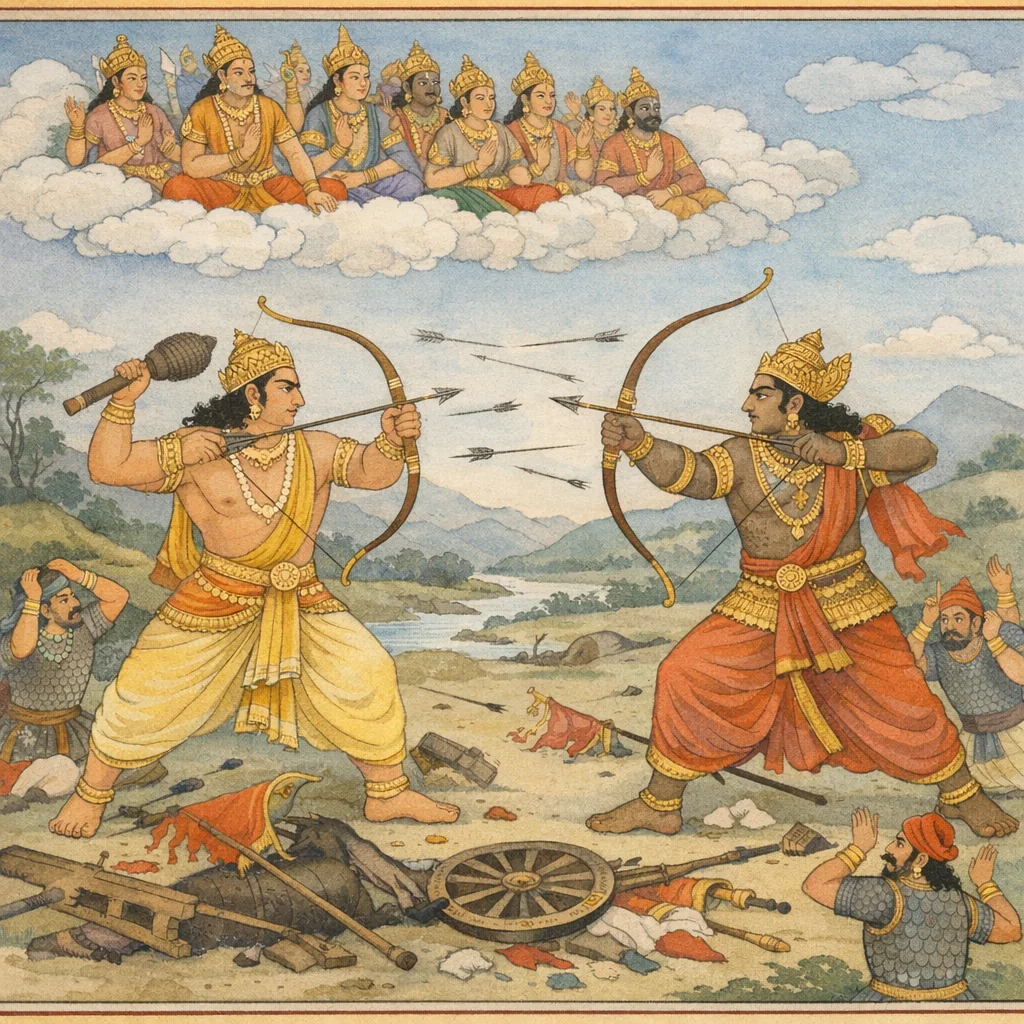
Sañjaya said: O Bhārata, the earth of the battlefield shone, strewn with variegated śatadhnī weapons. Banners, elephants, horses, chariots, and ornaments lay scattered; shattered cars, wheels broken to pieces, axles and yokes; gold-adorned bows that rang with a mighty twang; gold-fletched arrows; and thousands of nārācas loosed by Karṇa and Bhīmasena, like serpents slipping free of their cast skins—along with spears, tomaras, swords, axes, golden maces, musalas, paṭṭiśas, many-shaped standards, śaktis, parighas, and strange śataghni—gave that field a wondrous splendor, a beauty born of ruin.
Verse 22
वलयैरपदिद्धैश्न तत्रैवाड्गुलिवेष्टकै: । चूडामणिभिरुष्णीषै: स्वर्णसूत्रैश्ष मारिष
Sañjaya said: “O dear sir, the ground there itself was strewn with ornaments—bracelets and finger-rings cast off in the tumult, along with crest-jewels (cūḍāmaṇi), turbans (uṣṇīṣa), and golden threads.”
Verse 23
तनुत्रै: सतलन्ैश्न हारैरनिष्किैश्व भारत । व्स्त्रैश्छत्रैश्न विध्वस्तैशज्ञामरव्यजनैरपि
Sañjaya said: O Bhārata, the field was strewn with shattered armor and helmets, with broken necklaces and gold ornaments; with torn garments and ruined parasols, and even with fallen yak-tail fans. The scene shows how war turns royal splendor and the signs of honor into debris, laying bare the fragility of worldly rank amid slaughter.
Verse 24
गजाश्वमनुजैर्भिन्नि: शोणिताक्तैश्व पत्रिभि: | तैस्तैश्व विविधैभिन्निस्तत्र तत्र वसुंधरा
Sañjaya said: The earth lay torn apart in many places—split by fallen elephants, horses, and men, and pierced by blood-smeared arrows of every kind—so that everywhere the ground was scarred by the violence of battle. The scene underscores the moral cost of war: when wrath and rivalry rule, even the sustaining earth becomes a witness to suffering and ruin.
Verse 25
पतितैरपविद्धैश्न विबभौ द्यौरिव ग्रहै: । माननीय भरतनन्दन! इधर-उधर पड़े हुए सोनेके अंगद, हार, कुण्डल, मुकुट, वलय, अंगूठी, चूड़ामणि, उष्णीष, सुवर्णमय सूत्र, कवच, दस्ताने, हार, निष्क, वस्त्र, छत्र, टूटे हुए चँवर, व्यजन, विदीर्ण हुए हाथी, घोड़े, मनुष्य, खूनसे लथपथ हुए पंखयुक्त बाण आदि नाना प्रकारकी छिन्न-भिन्न, पतित और फेंकी हुई वस्तुओंसे वहाँकी भूमि ग्रहोंसे आकाशकी भाँति सुशोभित हो रही थी | २१--२४ $ ।। अचिन्त्यमद्भुतं चैव तयो: कर्मातिमानुषम्
Sañjaya said: O venerable descendant of Bharata, the ground there—strewn in every direction with fallen and flung-away objects—shone like the sky adorned with planets. Golden armlets, necklaces, earrings, diadems, bracelets, rings, crest-jewels, turbans, golden cords, cuirasses, gloves, ornaments, coins, garments, parasols, broken yak-tail fans and hand-fans; along with shattered elephants, horses, and men, and feathered arrows smeared with blood—by such diverse, torn, fallen, and discarded things the battlefield was made strangely resplendent. And truly, the deeds of those two were unthinkable, wondrous, and beyond human measure.
Verse 26
अग्नेर्वायुसहायस्य गति: कक्ष इवाहवे
Sañjaya said: In that battle, his movement was like a wildfire driven by the wind—swift, spreading, and irresistible, consuming whatever lay in its path. The image shows how, when power is joined with favorable force, it can become overwhelming and morally perilous amid the chaos of war.
Verse 27
निपातितध्वजरथं हतवाजिनरद्धिपम्,विमर्द: कर्णभीमाभ्यामासीच्च परमो रणे | नरेश्वर! जैसे दो हाथी किसीसे प्रेरित होकर नरकुलके वनको रौंद डालते हैं, उसी प्रकार मेघोंकी घटाके समान आपकी सेना बड़ी दुरवस्थामें पड़ गयी थी। उसके रथ और ध्वज गिराये जा चुके थे। हाथी, घोड़े और मनुष्य मारे गये थे। कर्ण और भीमसेनने उस युद्धस्थलमें महान् संहार मचा रखा था
Sañjaya said: “O king, in that battle your host was thrown into grievous distress—its chariots and standards had been brought down, its horses and warriors slain. A supreme and crushing melee arose there between Karṇa and Bhīmasena, and the field was filled with devastation. The image is of irresistible force trampling all before it, showing how unchecked martial fury can reduce an army to ruin.”
Verse 28
गजाभ्यां सम्प्रयुक्ता भ्यामासीन्नलवनं यथा । मेघजालनिभं सैन्यमासीत् तव नराधिप
Sañjaya said: O king, your army looked like a dense thicket of reeds, as if pressed down and trampled by two elephants; it appeared like a vast mass of cloud-banks—dark, compact, and overwhelming.
Verse 138
इति श्रीमहाभारते द्रोणपर्वणि जयद्रथवधपर्वणि भीमकर्णयुद्धे अष्टात्रिंशधिकशततमो< ध्याय:,इस प्रकार श्रीमह्माभारत द्रोणपर्वके अन्तर्गत जयद्रथवधपर्वमें भीम और कर्णका युद्धविषयक एक सौ अड़तीसवाँ अध्याय पूरा हुआ
Sañjaya said: Thus, in the Śrī Mahābhārata, within the Droṇa Parvan—under the sub-episode concerning the slaying of Jayadratha—this one-hundred-and-thirty-eighth chapter, describing the battle between Bhīma and Karṇa, is concluded.
Verse 253
दृष्टवा चारणसिद्धानां विस्मय: समजायत । उन दोनोंके उस अचिन्त्य, अलौकिक और अद्धुत कर्मको देखकर चारणों और सिद्धोंके मनमें भी महान् विस्मय हो गया
Sañjaya said: Seeing that deed—unthinkable, otherworldly, and wondrous—even the Cāraṇas and the Siddhas were seized with great astonishment.
Verse 266
आसीद् भीमसहायस्य रौद्रमाधिरथेर्गतम् । जैसे वायुकी सहायता पाकर सूखे वनमें तथा घास-फूँसमें अग्निकी गति बढ़ जाती है, उसी प्रकार उस महायुद्धमें भीमसेनके साथ सूतपुत्र कर्णकी भयंकर गति बढ़ गयी थी
Sañjaya said: With Bhīma as his support, the mighty chariot-warrior’s movement became fierce and unstoppable. Just as fire, aided by the wind, spreads rapidly through a dry forest and over grass and straw, so in that great battle Karṇa’s dreadful onrush increased.
Verse 283
विमर्द: कर्णभीमाभ्यामासीच्च परमो रणे | नरेश्वर! जैसे दो हाथी किसीसे प्रेरित होकर नरकुलके वनको रौंद डालते हैं, उसी प्रकार मेघोंकी घटाके समान आपकी सेना बड़ी दुरवस्थामें पड़ गयी थी। उसके रथ और ध्वज गिराये जा चुके थे। हाथी, घोड़े और मनुष्य मारे गये थे। कर्ण और भीमसेनने उस युद्धस्थलमें महान् संहार मचा रखा था
Sañjaya said: In that battle a most terrible clash arose between Karṇa and Bhīmasena. O king, as if two elephants, driven on by someone, were trampling a forest of men, so your army—like a mass of storm-clouds—fell into grievous disarray. Its chariots and standards had been brought down; elephants, horses, and warriors lay slain. On that field Karṇa and Bhīmasena were wreaking a vast destruction.
Frequently Asked Questions
The chapter juxtaposes the declared objective of reaching a single high-value commander (Droṇa) with the collateral spread of combat across many duels, raising the tension between focused strategic aims and the broader human cost intensified by night conditions.
Operational intent must be matched by secure lines of advance: concentrated objectives can be nullified when defenders implement layered interdiction and force key leaders into time-consuming engagements.
No explicit phalaśruti appears in the provided chapter material; its significance is contextual—illustrating how tactical containment preserves command continuity and reshapes the feasibility of stated objectives within the war’s ethical landscape.