Adhyaya 12
Droṇa’s Resolve to Restrain Yudhiṣṭhira and Arjuna’s Protective Vow (द्रोणस्य युधिष्ठिरनिग्रह-प्रयत्नः)
Upa-parva: Yudhiṣṭhira-nigraha-prayāsa (Episode: Droṇa’s attempt to seize Yudhiṣṭhira)
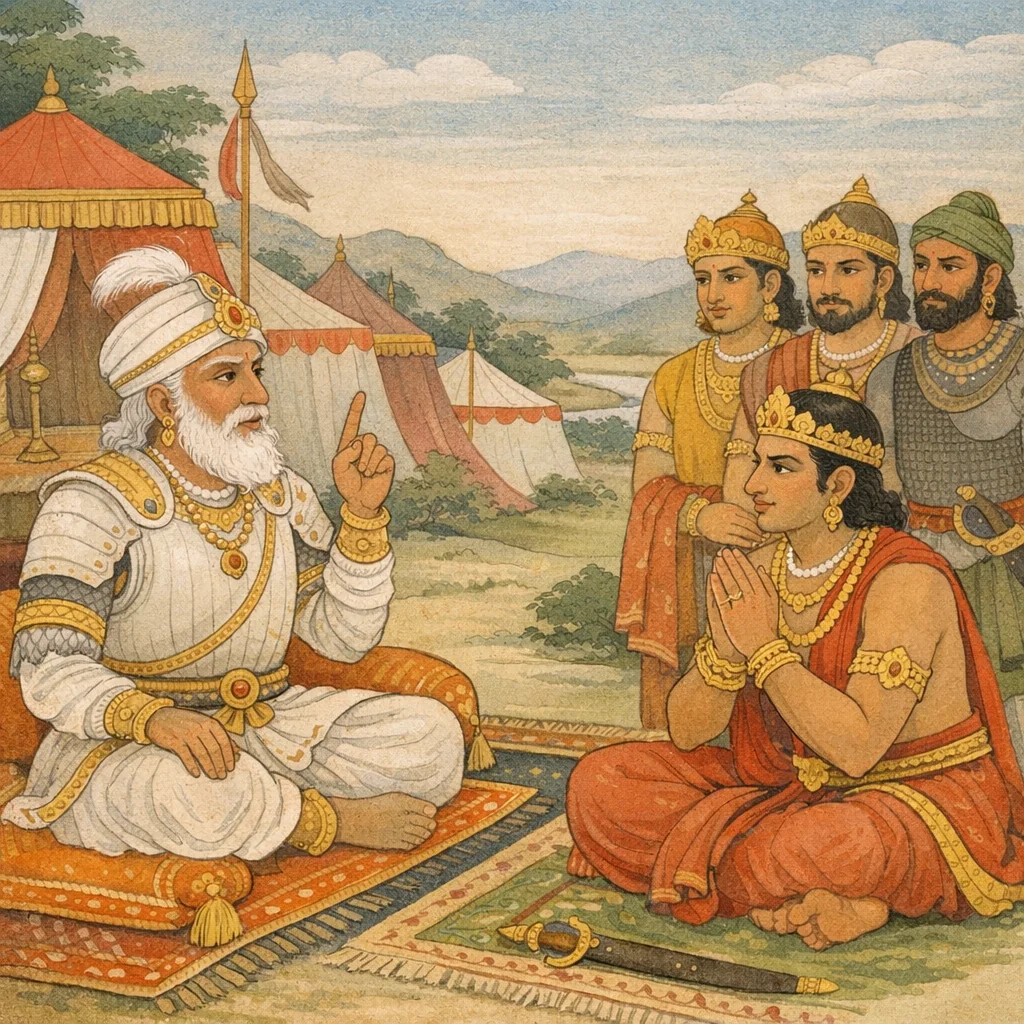
Saṃjaya reports that, upon learning of Droṇa’s intended move against Yudhiṣṭhira, the forces react with loud martial acclamations. The Pāṇḍava side quickly receives reliable intelligence about Bhāradvāja Droṇa’s objective. Yudhiṣṭhira assembles his brothers and the army and instructs Arjuna to act so that Droṇa’s plan does not succeed; he notes that Droṇa has declared a specific ‘opening’ (āntara) and that Arjuna is positioned to counter it. Arjuna replies with a twofold ethical stance: he will not undertake the killing of his teacher, yet he will not abandon the king; even at the cost of his life he will not forsake either obligation. He further asserts that as long as he lives, Droṇa cannot restrain Yudhiṣṭhira, even with extraordinary assistance. The chapter then shifts to operational description: instruments sound, both sides respond, formations advance, and a severe battle unfolds. Droṇa becomes visually and tactically dominant—likened to the midday sun—dispersing and confounding forces, pressing Dhṛṣṭadyumna’s contingent, and saturating directions with arrows, producing widespread disarray in the Pāṇḍava host.
Chapter Arc: भीष्म के पतन के बाद कौरव-शिविर में नया सेनापति चुना जाता है—भारद्वाजपुत्र द्रोण मध्य सेना में खड़े होकर धृतराष्ट्र-पुत्रों के सामने वचन और शर्तों की भूमि तैयार करते हैं। → दुर्योधन की अधीर आकांक्षा उभरती है: वह द्रोण से युधिष्ठिर को जीवित पकड़ लाने का वर माँगता है। द्रोण दुर्योधन की मनोदशा को टटोलते हुए पूछते हैं कि वह वध क्यों नहीं चाहता—क्या वह राज्य देकर सौहार्द/संधि चाहता है, या कोई और नीति छिपी है। → द्रोण अपनी प्रतिज्ञा को ‘अन्तर’ सहित बाँधते हैं—अर्जुन की अनुपस्थिति/असमर्थन की स्थिति में ही युधिष्ठिर को जीवित पकड़ लाने का संकल्प। इसी क्षण प्रतिज्ञा एक साथ आशा भी बनती है और छल-नीति का बीज भी। → दुर्योधन और कौरव-पक्ष द्रोण की प्रतिज्ञा को अपनी विजय-योजना मान लेते हैं; शिविरों और सैन्य-स्थानों में यह घोषणा गूँजती है, और अगले दिन की रणनीति इसी लक्ष्य के इर्द-गिर्द कस दी जाती है। → युधिष्ठिर-ग्रहण की घोषणा के साथ प्रश्न हवा में लटकता है—अर्जुन को कैसे दूर रखा जाएगा, और क्या द्रोण का ‘अन्तर’ कौरवों की अपेक्षा पर भारी पड़ेगा?
Shlokas
Verse 1
#स्न्पैमा+ () आजमाने द्ादशो<ड्ध्याय: दुर्योधनका वर मॉँगना और द्रोणाचार्यका युधिष्ठिरको अर्जुनकी अनुपस्थितिमें जीवित पकड़ लानेकी प्रतिज्ञा करना संजय उवाच हन्त ते कथयिष्यामि सर्व प्रत्यक्षदर्शिवान् । यथा स न्यपतद् द्रोण: सूदित: पाण्डुसृञ्जयै:,संजयने कहा--महाराज! मैं बड़े दुःखके साथ आपसे उन सब घटनाओंका वर्णन करूँगा। द्रोणाचार्य किस प्रकार गिरे हैं और पाण्डवों तथा सूंजयोंने कैसे उनका वध किया है? इन सब बातोंको मैंने प्रत्यक्ष देखा था
Sañjaya said: “Alas, I shall tell you everything, for I witnessed it directly—how Droṇa fell, struck down by the Pāṇḍavas and the Sṛñjayas.”
Verse 2
सेनापतित्व॑ सम्प्राप्प भारद्वाजो महारथ: । मध्ये सर्वस्य सैन्यस्य पुत्र ते वाक्यमब्रवीत्,सेनापतिका पद प्राप्त करके महारथी द्रोणाचार्यने सारी सेनाके बीचमें आपके पुत्र दुर्योधनसे इस प्रकार कहा--
Sañjaya said: Having attained the command of the army, the great chariot-warrior Droṇa, son of Bharadvāja, spoke these words to your son Duryodhana in the midst of the entire host.
Verse 3
यत् कौरवाणामृषभादापगेयादनन्तरम् । सैनापत्येन यद् राजन् मामद्य कृतवानसि,“राजन! तुमने कौरवश्रेष्ठ गंगापुत्र भीष्मके बाद जो आज मुझे सेनापति बनाया है, भरतनन्दन! इस कार्यके अनुरूप कोई फल मुझसे प्राप्त करो। आज तुम्हारा कौन-सा मनोरथ पूर्ण करूँ? तुम्हें जिस वस्तुकी इच्छा हो, उसे ही माँग लो”
Sañjaya said: “O King, since you have today appointed me commander of the army immediately after Bhīṣma—the foremost among the Kauravas, the son of the Gaṅgā—accept from me a return befitting this deed. What desire of yours shall I fulfill today? Ask for whatever you wish.”
Verse 4
सदृशं कर्मणस्तस्य फल प्राप्तुहि भारत । करोमि काम कं तेडद्य प्रवृणीष्व यमिच्छसि,“राजन! तुमने कौरवश्रेष्ठ गंगापुत्र भीष्मके बाद जो आज मुझे सेनापति बनाया है, भरतनन्दन! इस कार्यके अनुरूप कोई फल मुझसे प्राप्त करो। आज तुम्हारा कौन-सा मनोरथ पूर्ण करूँ? तुम्हें जिस वस्तुकी इच्छा हो, उसे ही माँग लो”
Sañjaya said: “O Bharata (Dhṛtarāṣṭra), in keeping with that deed, accept from me a fitting reward. Today, what desire of yours shall I fulfill? Choose whatever you wish.”
Verse 5
ततो दुर्योधनो राजा कर्णदुःशासनादिशभि: । सम्मन्त्रयोवाच दुर्धर्षमाचार्य जयतां बरम्,तब राजा दुर्योधनने कर्ण, दःशासन आदिके साथ सलाह करके विजयी वीरोंमें श्रेष्ठ एवं दुर्जय आचार्य द्रोणसे इस प्रकार कहा--
Sañjaya said: Then King Duryodhana, after consulting with Karṇa, Duḥśāsana, and the others, addressed the invincible preceptor Droṇa—foremost among victorious warriors—thus.
Verse 6
ददासि चेद्ू वरं महाूं जीवग्राहं युधिष्ठिरम् । गृहीत्वा रथिनां श्रेष्ठ मत्समीपमिहानय,“आचार्य! यदि आप मुझे वर दे रहे हैं तो रथियोंमें श्रेष्ठ युधिष्ठिकको जीवित पकड़कर यहाँ मेरे पास ले आइये”
Sañjaya said: “O foremost of chariot-warriors, if you are indeed granting me a great boon, then seize Yudhiṣṭhira alive and bring him here into my presence.”
Verse 7
ततः कुरूणामाचार्य: श्रुत्वा पुत्रस्य ते वच: । सेनां प्रहर्षषन् सर्वामिदं वचनमब्रवीत्,आपके पुत्रकी वह बात सुनकर कुरुकुलके आचार्य द्रोण सारी सेनाको प्रसन्न करते हुए इस प्रकार बोले--
Sañjaya said: Then Droṇa, the preceptor of the Kurus, having heard those words of your son, spoke these words—gladdening the entire army.
Verse 8
धन्य: कुन्तीसुतो राजन् यस्य ग्रहणमिच्छसि । न वधार्थ सुदुर्धर्ष वरमद्य प्रयाचसे,“राजन! कुन्तीकुमार युधिष्ठिर धन्य हैं, जिन्हें तुम जीवित पकड़ना चाहते हो। उन दुर्धर्ष वीरके वधके लिये आज तुम मुझसे याचना नहीं कर रहे हो
Sañjaya said: “O King, blessed indeed is Kuntī’s son—Yudhiṣṭhira—whom you desire to capture alive. For that unconquerable hero, you are not today asking me for a boon aimed at his killing.”
Verse 9
किमर्थ च नरव्यात्र न वध॑ तस्य काड्क्षसे | नाशंससि क्रियामेतां मत्तो दुर्योधन ध्रुवम्,'पुरुषसिंह! तुम्हें उनके वधकी इच्छा क्यों नहीं हो रही है? दुर्योधन! तुम मेरे द्वारा निश्चितरूपसे युधिष्ठिरका वध कराना क्यों नहीं चाहते हो?
Sañjaya said: “For what reason, O tiger among men, do you not desire his death? O Duryodhana, why do you not approve this deed—certainly to be carried out through me—namely, the assured slaying of Yudhiṣṭhira?”
Verse 10
आहोस्विद् धर्मराजस्य द्वेष्ठा तस्य न विद्यते । यदीच्छसि त्वं जीवन्तं कुलं रक्षसि चात्मन:,“अथवा इसका कारण यह तो नहीं है कि धर्मराज युधिष्छिरसे द्वेष रखनेवाला इस संसारमें कोई है ही नहीं। इसीलिये तुम उन्हें जीवित देखना और अपने कुलकी रक्षा करना चाहते हो
Sañjaya said: “Or is it rather that, for Dharmarāja, there exists no one in this world who truly bears him hatred? Therefore you wish to see him kept alive, and thereby safeguard your own lineage as well.”
Verse 11
अथवा भरतमश्रेष्ठ निर्जित्य युधि पाण्डवान् । राज्यं सम्प्रति दत्त्वा च सौक्रात्रं कर्तुमिच्छसि,“अथवा भरतश्रेष्ठ! तुम युद्धमें पाण्डवोंको जीतकर इस समय उनका राज्य वापस दे सुन्दर भ्रातृभावका आदर्श उपस्थित करना चाहते हो
Sañjaya said: “Or else, O best of the Bharatas, do you wish—having defeated the Pāṇḍavas in battle—to restore their kingdom to them now, and thereby set forth a noble ideal of brotherly conduct?”
Verse 12
धन्य: कुन्तीसुतो राजा सुजातं चास्य धीमतः । अजातशशभ्नुता सत्या तस्य यत् स्निहाते भवान्,“दुन्तीपुत्र राजा युधिष्ठिर धन्य हैं। उन बुद्धिमान् नरेशका जन्म बहुत ही उत्तम है और वे जो अजातशत्रु कहलाते हैं, वह भी ठीक है; क्योंकि तुम भी उनपर स्नेह रखते हो' इति श्रीमहाभारते द्रोणपर्वणि द्रोणाभिषेकपर्वणि द्रोणप्रतिज्ञायां द्वादशो5ध्याय: ।। १२२ || इस प्रकार श्रीमहाभारत द्रोणपर्वके अन्तर्गत द्रोणाभिषेकपर्वमें द्रोणप्रतिज्ञाविषयक बारहवाँ अध्याय पूरा हुआ
Sañjaya said: “Blessed indeed is the king, Kuntī’s son (Yudhiṣṭhira). Noble is the birth of that wise ruler; and his epithet ‘Ajātaśatru’—‘one who has no enemies’—is truly fitting, since even you bear affection for him.”
Verse 13
द्रोणेन चैवमुक्तस्य तव पुत्रस्य भारत | सहसा नि:सृतों भावो यो<स्य नित्यं हृदि स्थित:,भारत! द्रोणाचार्यके ऐसा कहनेपर तुम्हारे पुत्रके मनका भाव जो सदा उसके हृदयमें बना रहता था, सहसा प्रकट हो गया
Sañjaya said: “O Bhārata, when Droṇa spoke to your son in this manner, the feeling that had always been lodged in his heart suddenly burst forth and became manifest—revealing the inner intention that had long been concealed.”
Verse 14
नाकारो गूहितुं शक््यो बृहस्पतिसमैरपि । तस्मात्तव सुतो राजन प्रह्ृष्टो वाक्यमब्रवीत्,बृहस्पतिके समान बुद्धिमान् पुरुष भी अपने आकारको छिपा नहीं सकते। राजन! इसीलिये आपका पुत्र अत्यन्त प्रसन्न होकर इस प्रकार बोला--
Sañjaya said: “Even those equal to Bṛhaspati cannot conceal their true bearing and outward form. Therefore, O King, your son—delighted and exultant—spoke these words.”
Verse 15
वधे कुन्तिसुतस्थाजी नाचार्य विजयो मम । हते युधिष्ठिरे पार्था हन्यु: सर्वान् हि नो ध्रुवम्,“आचार्य! युद्धके मैदानमें कुन्तीपुत्र युधिष्ठिरके मारे जानेसे मेरी विजय नहीं हो सकती; क्योंकि युधिष्ठिका वध होनेपर कुन्तीके पुत्र हम सब लोगोंको अवश्य ही मार डालेंगे
“Ācārya! On the field of battle, the slaying of Yudhiṣṭhira, Kuntī’s son, cannot bring me victory; for if Yudhiṣṭhira is killed, Kuntī’s sons will surely kill all of us.”
Verse 16
न च शक्या रणे सर्वे निहन्तुममरैरपि । (यदि सर्वे हनिष्यन्ते पाण्डवा: ससुता मृधे । ततः कृत्स्नं वशे कृत्वा नि:शेषं नृपमण्डलम् ।। ससागरवनां स्फीतां विजित्य वसुधामिमाम् | विष्णुर्दास्यति कृष्णायै कुन्त्यै वा पुरुषोत्तम: ।।) य एव तेषां शेष: स्यात् स एवास्मान् न शेषयेत्,“सम्पूर्ण देवता भी समस्त पाण्डवोंको रणक्षेत्रमें नहीं मार सकते। यदि सारे पाण्डव अपने पुत्रोंसहित युद्धमें मार डाले जायँगे तो भी पुरुषोत्तम भगवान् श्रीकृष्ण सम्पूर्ण नरेशमण्डलको अपने वशमें करके समुद्र और वनोंसहित इस सारी समृद्धिशालिनी वसुधाको जीतकर द्रौपदी अथवा कुन्तीको दे डालेंगे। अथवा पाण्डवोंमेंसे जो भी शेष रह जायगा, वही हमलोगोंको शेष नहीं रहने देगा
Sañjaya said: “All of them cannot be slain in battle—even by the gods. Even if the Pāṇḍavas, together with their sons, were to be killed in the fight, then the Supreme Person—Viṣṇu Himself as Kṛṣṇa—would subdue the entire circle of kings without remainder, conquer this flourishing earth with its oceans and forests, and bestow it upon Draupadī or upon Kuntī. Or else, whichever of the Pāṇḍavas should remain alive—he alone would leave none of us remaining.”
Verse 17
सत्यप्रतिज्ञे त्वानीते पुनर्ययूतेन निर्जिते । पुनर्यास्यन्त्यरण्याय पाण्डवास्तमनुव्रता:,'सत्यप्रतिज्ञ राजा युधिष्ठिरको जीते-जी पकड़ ले आनेपर यदि उन्हें पुनः जूएमें जीत लिया जाय तो उनमें भक्ति रखनेवाले पाण्डव पुनः वनमें चले जायँगे
Sañjaya said: “If King Yudhiṣṭhira—true to his vow—has been brought back, and if he is again defeated in the game of dice, then the Pāṇḍavas, devoted to him and faithful to that pledge, will once more depart for the forest.”
Verse 18
सो<यं मम जयो व्यक्त दीर्घकालं भविष्यति । अतो न वधमिच्छामि धर्मराजस्य कहिचित्,“इस प्रकार निश्चय ही मेरी विजय दीर्घकालतक बनी रहेगी। इसीलिये मैं कभी धर्मराज युधिष्ठिरका वध करना नहीं चाहता”
Sañjaya said: “This victory of mine is plainly fated to endure for a long time. Therefore I do not wish, at any time, for the slaying of Dharmarāja (Yudhiṣṭhira).”
Verse 19
इस प्रकार श्रीमहाभारत द्रोणपर्वके अन्तर्गत द्रोणाभिषेकपर्वमें धृतराष््रविलापविषयक ग्यारहवाँ अध्याय पूरा हुआ,तस्य जिह्ममभिप्रायं ज्ञात्वा द्रोणो5थ तत्त्ववित् त॑ वरं सान्तरं तस्मै ददौ संचिन्त्य बुद्धिमान् राजन! द्रोणाचार्य प्रत्येक बातके वास्तविक तात्पर्यको तत्काल समझ लेनेवाले थे। दुर्योधनके उस कुटिल मनोभावको जानकर बुद्धिमान् द्रोणने मन-ही-मन कुछ विचार किया और अन्तर रखकर उसे वर दिया
Knowing the crooked intention behind his request, Droṇa—wise and discerning of the truth—reflected inwardly and then granted him the boon, but with a deliberate reservation.
Verse 20
द्रोण उवाच न चेद् युधिष्ठिरं वीर: पालयत्यर्जुनो युधि । मन्यस्व पाण्डवश्रेष्ठमानीतं वशमात्मन:,द्रोणाचार्य बोले--राजन्! यदि वीरवर अर्जुन युद्धमें युधिष्ठिरकी रक्षा न करते हों, तब तुम पाण्डवश्रेष्ठ युधिष्ठिरको अपने वशमें आया हुआ ही समझो
Droṇa said: “O king, if the heroic Arjuna does not protect Yudhiṣṭhira in battle, then you should regard Yudhiṣṭhira—the best of the Pāṇḍavas—as already brought under your control.”
Verse 21
न हि शक्यो रणे पार्थ: सेन्द्रैदेवासुरैरपि । प्रत्युद्यातुमतस्तात नैतदामर्षयाम्यहम्,तात! रणक्षेत्रमें इन्द्रसहित सम्पूर्ण देवता और असुर भी अर्जुनका सामना नहीं कर सकते हैं। अतः मुझमें भी उन्हें जीतनेका उत्साह नहीं है
Droṇa said: “In battle, Pārtha (Arjuna) cannot truly be withstood—even by the gods and the asuras together, with Indra at their head. Therefore, my son, I do not feel the resolve to challenge him face to face; I cannot bring myself to accept such a contest.”
Verse 22
असंशयं स मे शिष्यो मत्पूर्वश्चास्त्रकर्मणि | तरुण: सुकृतैर्युक्त एकायनगतश्च ह,इसमें संदेह नहीं कि अर्जुन मेरा शिष्य है और उसने पहले मुझसे ही अस्त्रविद्या सीखी है, तथापि वह तरुण है। अनेक प्रकारके पुण्य कर्मोंसे युक्त है। विजय अथवा मृत्यु--इन दोनोंमेंसे एकका वरण करनेका दृढ़ निश्चय कर चुका है। इन्द्र और रुद्र आदि देवताओंसे पुनः बहुत-से दिव्यास्त्रोंकी शिक्षा पा चुका है और तुम्हारे प्रति उसका अमर्ष बढ़ा हुआ है। इसलिये राजन! मैं अर्जुनसे लड़नेका उत्साह नहीं रखता हूँ
Droṇa said: “Without doubt, he is my disciple, and it was from me that he first learned the practice of weapons. Yet he is young, endowed with the fruits of many meritorious deeds, and has fixed his resolve upon a single course—either victory or death. Having again received instruction in many divine missiles from gods such as Indra and Rudra, and with his resentment toward you intensified, O king, I do not feel eagerness to fight Arjuna.”
Verse 23
अस्त्राणीन्द्राच्च रुद्राच्च भूय: स समवाप्तवान् | अमर्षितश्न ते राज॑स्ततो नामर्षयाम्यहम्,इसमें संदेह नहीं कि अर्जुन मेरा शिष्य है और उसने पहले मुझसे ही अस्त्रविद्या सीखी है, तथापि वह तरुण है। अनेक प्रकारके पुण्य कर्मोंसे युक्त है। विजय अथवा मृत्यु--इन दोनोंमेंसे एकका वरण करनेका दृढ़ निश्चय कर चुका है। इन्द्र और रुद्र आदि देवताओंसे पुनः बहुत-से दिव्यास्त्रोंकी शिक्षा पा चुका है और तुम्हारे प्रति उसका अमर्ष बढ़ा हुआ है। इसलिये राजन! मैं अर्जुनसे लड़नेका उत्साह नहीं रखता हूँ
Droṇa said: “He has again obtained many weapons from Indra and from Rudra. O King, he is inflamed with resentment toward you; therefore I cannot bear this situation with patience, nor do I feel eagerness to engage Arjuna in battle.”
Verse 24
स चाफक्रम्यतां युद्धाद् येनोपायेन शक््यते । अपनीते ततः पार्थे धर्मराजो जितस्त्वया,अतः जिस उपायसे भी सम्भव हो, तुम उन्हें युद्धसे दूर हटा दो। कुन्तीकुमार अर्जुनके रणक्षेत्रसे हट जानेपर समझ लो कि तुमने धर्मराजको जीत लिया
Droṇa said: “By whatever means it is possible, have him withdraw from the battle. Once Pārtha (Arjuna) has been led away from the field, know that you have thereby conquered Dharmarāja (Yudhiṣṭhira).”
Verse 25
ग्रहणे हि जयस्तस्य न वधे पुरुषर्षभ । एतेन चाप्युपायेन ग्रहणं समुपैष्यसि,नरश्रेष्ठ) उनको पकड़ लेनेमें ही तुम्हारी विजय है, उनके वधरमें नहीं; परंतु इसी उपायसे तुम उन्हें पकड़ पाओगे
Droṇa said: “Your victory lies in capturing him, not in killing him, O bull among men. By this very stratagem as well, you will succeed in taking him captive.”
Verse 26
अहं गृहीत्वा राजानं सत्यधर्मपरायणम् । आनयिष्यामि ते राजन् वशमद्य न संशय:
Droṇa said: “Having seized the king—one devoted to truth and righteousness—I shall bring him under your control today, O King; of this there is no doubt.”
Verse 27
यदि स्थास्यति संग्रामे मुहूर्तमपि मे5ग्रत: । अपनीते नरव्याप्रे कुन्तीपुत्रे धनंजये
Droṇa said: “If, in the midst of battle, the tiger among men—Dhanañjaya, Kuntī’s son—can stand even for a single moment before me after being disarmed, then…”
Verse 28
राजन! पुरुषसिंह कुन्तीपुत्र अर्जुनके युद्धसे हट जानेपर यदि वे दो घड़ी भी मेरे सामने संग्राममें खड़े रहेंगे तो मैं आज सत्यधर्मपरायण राजा युधिष्ठिरको पकड़कर तुम्हारे वशमें ला दूँगा, इसमें संशय नहीं है ।। फाल्गुनस्य समीपे तु न हि शक््यो युधिष्ठिर: । ग्रहीतुं समरे राजन सेन्द्रैरपि सुरासुरै:,राजन! अर्जुनके समीप तो समरभूमिमें इन्द्र आदि सम्पूर्ण देवता और असुर भी युधिष्ठिरको नहीं पकड़ सकते हैं
Droṇa said: “O King, if the lion among men—Kuntī’s son Arjuna—withdraws from the fight, and they stand before me in battle even for a short while, then today I shall seize the truth-and-dharma–devoted King Yudhiṣṭhira and bring him under your control; of this there is no doubt. But when Phālguna (Arjuna) is near, O King, Yudhiṣṭhira cannot be captured in battle—even by the gods and asuras together, even with Indra among them.”
Verse 29
संजय उवाच सान्तरं तु प्रतिज्ञाते राज्ञो द्रोणेन निग्रहे | गृहीतं तममन्यन्त तव पुत्रा: सुबालिशा:,संजय कहते हैं--राजन! द्रोणाचार्यने कुछ अन्तर रखकर जब राजा युधिष्ठिरको पकड़ लानेकी प्रतिज्ञा कर ली, तब आपके मूर्ख पुत्र उन्हें कैद हुआ ही मानने लगे
Sañjaya said: “O King, when Droṇa, keeping a certain reservation, vowed to seize the king (Yudhiṣṭhira), your sons—foolish in their judgment—already assumed him to be as good as captured.”
Verse 30
पाण्डवेयेषु सापेक्ष द्रोणं जानाति ते सुतः । ततः प्रतिज्ञास्थैर्यार्थ स मन्त्रो बहुलीकृतः,आपका पुत्र दुर्योधन यह जानता था कि द्रोणाचार्य पाण्डवोंके प्रति पक्षपात रखते हैं, अतः उसने उनकी प्रतिज्ञाको स्थिर रखनेके लिये उस गुप्त बातको भी बहुत लोगोंमें फैला दिया
Your son Duryodhana knew that Droṇa was not impartial toward the Pāṇḍavas. Therefore, to keep Droṇa’s vow firm, he spread that confidential matter among many people.
Verse 31
ततो दुर्योधनेनापि ग्रहणं पाण्डवस्य तत् | (स्कन्धावारेषु सर्वेषु यथास्थानेषु मारिष ।) सैन्यस्थानेषु सर्वेषु सुघोषितमरिंदम,शत्रुओंका दमन करनेवाले आर्य धृतराष्ट्र! तदनन्तर दुर्योधनने युद्धकी सारी छावनियोंमें तथा सेनाके विश्राम करनेके प्राय: सभी स्थानोंपर द्रोणाचार्यकी युधिष्ठिरको पकड़ लानेकी उस प्रतिज्ञाको घोषित करवा दिया
Sañjaya said: “Thereafter, Duryodhana too had that resolve—namely, the seizing of the Pāṇḍava (Yudhiṣṭhira)—publicly proclaimed. In all the army-camps and at their proper stations, throughout the various resting-places of the forces, the announcement was loudly made.”
Frequently Asked Questions
Arjuna must reconcile two obligations: reverence toward Droṇa as ācārya (refusing to kill him) and unwavering protection of Yudhiṣṭhira as sovereign leader; the chapter frames this as a constraint-based duty rather than a simple choice.
The text models role-ethics: duties are differentiated by relationship (teacher, king, kin), and effective action (nīti) is presented as compatible with restraint, truthfulness, and continuity of leadership under crisis.
No explicit phalaśruti appears in this unit; the chapter functions primarily as narrative-ethical documentation, emphasizing how vows, intelligence, and morale-signaling shape outcomes within the broader war framework.