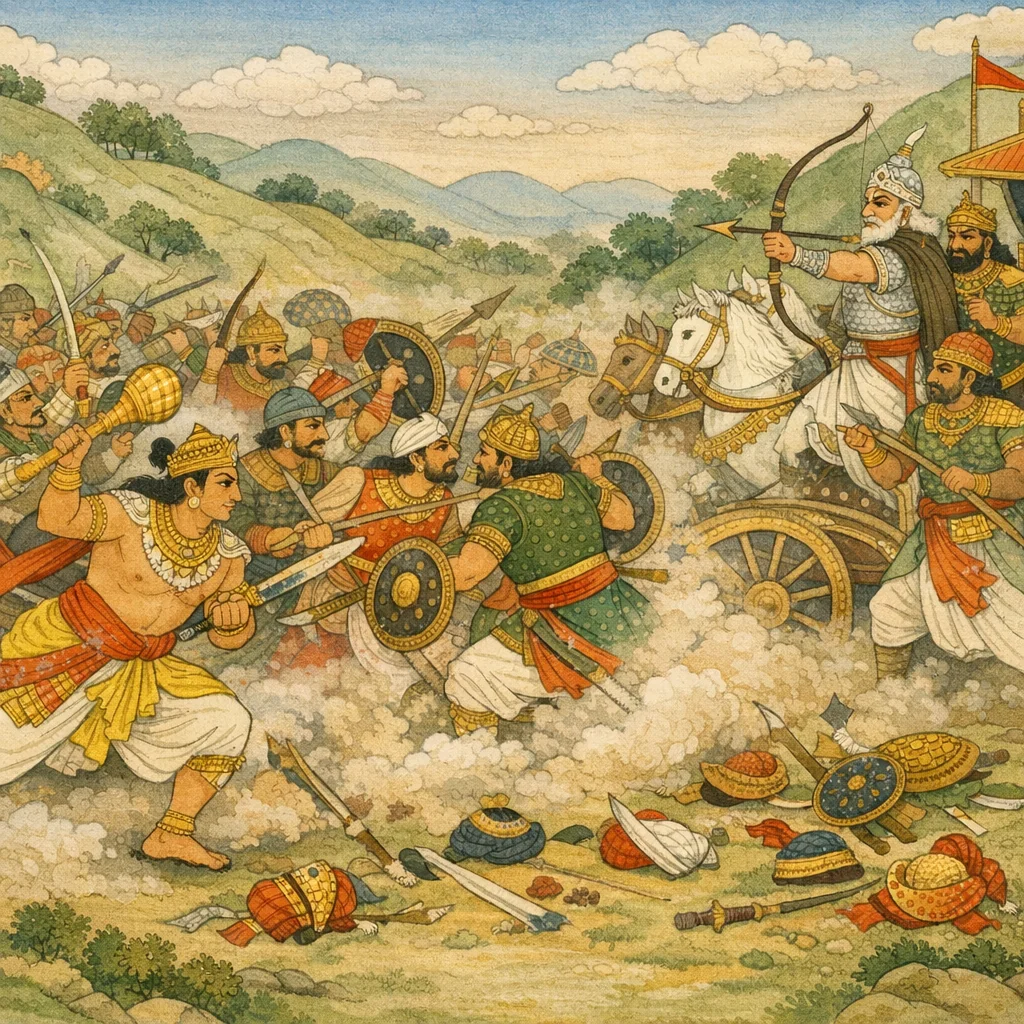
Adhyaya 73
आत्मदोष-उपदेशः तथा भीम-धृष्टद्युम्नयोः संयोगः (Self-Causation Counsel and the Bhīma–Dhṛṣṭadyumna Convergence)
Upa-parva: Bhīṣma-vadha-prasaṅga (War Chronicle under Bhīṣma’s Command)
Sañjaya opens with a diagnostic counsel to Dhṛtarāṣṭra: the present calamity is traced to self-caused error—first the gambling episode and then the war’s ignition—asserting a karma logic in which one experiences the fruit of one’s own acts (here or hereafter). He then transitions into close battle reportage. Bhīma breaks into the Kaurava mass, engages multiple Dhārtarāṣṭra princes and allied mahārathas, and shifts from chariot tactics to a gadā-driven assault that destabilizes the formation. Dhṛṣṭadyumna, seeing Bhīma’s chariot unattended and fearing for him, interrogates the charioteer Viśoka and declares withdrawal without Bhīma dishonorable. He advances, finds Bhīma wounded, removes missiles, embraces and reassures him, and remounts him for continued engagement. Kaurava princes surge to eliminate the pair; Dhṛṣṭadyumna employs a pramohana weapon, causing disorientation and flight. Droṇa, learning of the confusion, arrives, counters the mohana effect with a prajñā weapon, restores the Kaurava fighters, and renews pressure, producing renewed turbulence in the opposing force.
Chapter Arc: पूर्वाह्न में कुरु और पाण्डव राजाओं का महाभयंकर संग्राम आरम्भ होता है—ऐसा युद्ध जिसमें ‘मुख्य शूरों’ का विनाश ही मानो प्रथम फल बनकर उभरता है। → घमासान में गगन छूता कोलाहल उठता है; योद्धा गोशालाओं में भिड़ते महावृषभों की भाँति गर्जते हुए एक-दूसरे पर टूट पड़ते हैं। रणभूमि में घोड़े, हाथी और अनिवर्त रथों के संघात जगह-जगह बनते हैं; सिर, कुण्डल, उष्णीष और स्वर्ण-दीप्त मुकुट कटकर गिरते दिखते हैं। → दुर्योधन कलिंग-वीरों से घिरकर भीष्म को आगे कर पाण्डवों पर चढ़ाई करता है; उधर समस्त पाण्डव क्रोध में भीमसेन को केंद्र बनाकर भीष्म की ओर धावा बोलते हैं—दोनों सेनाओं की धुरी एक ही बिंदु पर आकर टकराती है। → अध्याय का अंत किसी एक निर्णायक वध या विजय पर नहीं, बल्कि ‘संकुल युद्ध’ की घनीभूत अवस्था पर होता है—गिरते, गिराए जाते, छटपटाते योद्धाओं के बीच युद्ध निरन्तर फैलता जाता है। → भीष्म को केंद्र बनाकर दोनों पक्षों की अग्र-व्यूह-टक्कर अब किस महावध की ओर मुड़ेगी—यह अगले प्रसंग के लिए खुला रह जाता है।
Shlokas
Verse 1
इस प्रकार श्रीमह्ो भारत भीष्मपर्वके अन्तर्गत भीष्मवधपर्वमें पाँचवें दिवसके युद्धका आरम्भविषयक उनहत्तरवाँ अध्याय पूरा हुआ ॥/ ६९ ॥ [दाक्षिणात्य अधिक पाठके ५ ई श्लोक मिलाकर कुल ३९ ६ श्लोक हैं।] नल + (0) आज अत+- सप्ततितमो<ध्याय: भीष्म और भीमसेनका घमासान युद्ध संजय उवाच अकरोत तुमुल॑ युद्ध भीष्म: शान्तनवस्तदा । भीमसेनभयादिच्छन पुत्रांस्तारयितुं तव,संजय कहते हैं--महाराज! आपके पुत्रोंको भीमसेनके भयसे छुड़ानेकी इच्छा रखकर उस दिन शान्तनुनन्दन भीष्मने बड़ा भयंकर युद्ध किया
Sanjaya said: O maharaja, that day Bhishma, son of Shantanu, waged a tumultuous and dreadful battle, seeking to deliver your sons from fear of Bhimasena.
Verse 2
पूर्वाह्नि तन्महारीद्रं राज्ञां युद्धमवर्तत । कुरूणां पाण्डवानां च मुख्यशूरविनाशनम्,पूर्वाह्नकालमें कौरव-पाण्डव नरेशोंका वह महा-भयंकर युद्ध आरम्भ हुआ, जो बड़े- बड़े शूरवीरोंका विनाश करनेवाला था
Sañjaya said: In the forenoon, that exceedingly dreadful battle of the kings began—between the Kurus and the Pāṇḍavas—a conflict destined to destroy many of the foremost heroes. The narration underscores how war, once unleashed, consumes even the best among men, turning royal duty into a field of irreversible loss.
Verse 3
तस्मिन्नाकुलसंग्रामे वर्तमाने महाभये । अभवत् तुमुल: शब्द: संस्पृशन् गगनं महत्,उस अत्यन्त भयानक घमासान युद्धमें बड़ा भयंकर कोलाहल होने लगा, जिससे अनन्त आकाश गूँज उठा
Sañjaya said: As that confused and chaotic battle raged on in the midst of great terror, a deafening uproar arose, so immense that it seemed to strike and fill the vast sky. The verse underscores the moral atmosphere of war: when dharma is contested on the battlefield, the outer noise mirrors the inner upheaval—fear, frenzy, and the collapse of ordinary human order.
Verse 4
नदद्धरिश्न महानागैह्नेषमाणैश्न वाजिभि: | भेरीशड्खनिनादैश्व तुमुलं समपद्यत,विग्घाड़ते हुए बड़े-बड़े गजराजों, हिनहिनाते हुए घोड़ों तथा भेरी और शंखकी ध्वनियोंसे भयंकर कोलाहल छा गया
Sañjaya said: As mighty elephants trumpeted, horses neighed, and the blare of kettledrums and conches rose together, the battlefield was engulfed in a terrifying uproar—an audible sign that the armies had fully committed themselves to the coming violence of war.
Verse 5
युयुत्सवस्ते विक्रान्ता विजयाय महाबला: । अन्योन्यमभिगर्जनन्तो गोष्ठेष्विव महर्षभा:,जैसे बड़े-बड़े साँड़ गोशालाओंमें गरजते हुए एक-दूसरेसे भिड़ जाते हैं, उसी प्रकार पराक्रमी और महाबली सैनिक विजयके लिये युद्धकी इच्छा रखकर गरजते हुए एक- दूसरेके सामने आये
Sañjaya said: Eager for battle, those mighty and valiant warriors advanced for victory, roaring at one another like great bulls bellowing in the cattle-sheds, as they closed in to clash. The scene underscores how the thirst for triumph inflames martial pride, driving men toward confrontation before the moral reckoning of the war’s consequences unfolds.
Verse 6
शिरसां पात्यमानानां समरे निशितै: शरै: । अभ्मवृष्टिरिवाकाशे बभूव भरतर्षभ,भरतश्रेष्ठ] उस समरभूमिमें तीखे बाणोंसे गिराये जानेवाले मस्तकोंकी वर्षा होने लगी, मानो आकाशशसे पत्थरोंकी वृष्टि हो रही है
Sañjaya said: In that battle, as keen arrows struck, severed heads were seen falling in a shower—like a rain of stones descending from the sky, O bull among the Bharatas. The image underscores the terrible cost of war: when dharma is contested by arms, the field becomes a place where human life is spent with frightening ease.
Verse 7
कुण्डलोष्णीषधारीणि जातरूपोज्ज्वलानि च । पतितानि सम दृश्यन्ते शिरांसि भरतर्षभ,भरतवंशी नरेश! कुण्डल और पगड़ी धारण करनेवाले तथा स्वर्णमय मुकुट आदिसे उद्धासित होनेवाले अगणित मस्तक कटकर धरतीपर पड़े दिखायी देते थे
Sañjaya said: “O bull among the Bharatas, severed heads are seen lying fallen everywhere—some still wearing earrings and turbans, others shining with the brilliance of gold.”
Verse 8
विशिखोन्मथितैगत्रिर्बाहुभिश्व सकार्मुकै: । सहस्ताभरणैश्चान्यैरभवच्छादिता मही,सारी पृथ्वी बाणोंसे छिन्न-भिन्न हुई लाशों, धनुष तथा हस्ताभरणोंसहित कटी हुई दोनों भुजाओंसे पट गयी थी
Sañjaya said: The earth was covered over—strewn with bodies torn and mangled by arrows, with severed arms still bearing bows, and with other limbs and ornaments still upon the hands.
Verse 9
कवचोपहितैगत्रिहस्तैश्व समलंकृतैः । मुखैश्न चन्द्रसंकाशै रक्तान्तनयनै: शुभै:,भूपाल! दो ही घड़ीमें वहाँकी सारी वसुधा कवचसे ढके हुए शरीरों, आभूषणोंसे विभूषित हाथों, चन्द्रमाके समान सुन्दर मुखों, जिनके अन्तभागमें कुछ-कुछ लाली थी, ऐसे सुन्दर नेत्रों तथा हाथी, घोड़े और मनुष्योंके सम्पूर्ण अंगोंसे बिछ गयी थी
Sañjaya said: “O king, in but a short while the whole earth there became strewn with bodies clad in armour, with hands adorned with ornaments, with faces lovely as the moon, and with beautiful eyes whose corners were tinged with red.”
Verse 10
गजवाजिमनुष्याणां सर्वगान्रैश्व भूपते । आसीत् सर्वा समास्तीर्णा मुहूर्तेन वसुंधरा,भूपाल! दो ही घड़ीमें वहाँकी सारी वसुधा कवचसे ढके हुए शरीरों, आभूषणोंसे विभूषित हाथों, चन्द्रमाके समान सुन्दर मुखों, जिनके अन्तभागमें कुछ-कुछ लाली थी, ऐसे सुन्दर नेत्रों तथा हाथी, घोड़े और मनुष्योंके सम्पूर्ण अंगोंसे बिछ गयी थी
Sañjaya said: “O king, within a mere moment the whole earth lay completely strewn with the limbs of elephants, horses, and men.”
Verse 11
रजोमेघैश्व तुमुलै: शस्त्रविद्युत्प्रकाशिभि: । आयुधानां च निर्घोष: स्तनयिन्तुसमो5भवत्,धूलके भयंकर बादल छा रहे थे। उनमें अस्त्र-शस्त्ररूपी विद्युतके प्रकाश देखे जाते थे। धनुष आदि आयुधोंका जो गम्भीर घोष होता था, वह मेघगर्जनाके समान प्रतीत होता था
Sañjaya said: Dense clouds of dust rose up, terrible to behold, flashing as though lit by lightning—like weapons gleaming in the storm. And the deep, rolling roar of bows and other arms sounded like the thunder of rain-clouds.
Verse 12
स सम्प्रहारस्तुमुल: कटुक: शोणितोदक: । प्रावर्तत कुरूणां च पाण्डवानां च भारत,भारत! कौरवों और पाण्डवोंका वह भयानक युद्ध बड़ा ही कटु और रक्तको पानीकी तरह बहानेवाला था
Sañjaya said: O Bharata, the clash between the Kurus and the Pāṇḍavas erupted in dreadful fury—harsh and relentless—so that blood flowed as though it were water.
Verse 13
तस्मिन् महाभये घोरे तुमुले लोमहर्षणे । ववृषु: शरवर्षाणि क्षत्रिया युद्धदुर्मदा:,उस महान् भयदायक, घोर, रोमांचकारी एवं तुमुल संग्राममें रणदुर्मद क्षत्रिय बाणोंकी वर्षा करने लगे
Sañjaya said: In that dreadful, overwhelming, hair-raising terror of battle, the kṣatriya warriors—intoxicated with the frenzy of war—poured down showers of arrows.
Verse 14
आक्रोशन् कुण्जरास्तत्र शरवर्षप्रतापिता: । तावकानां परेषां च संयुगे भरतर्षभ
Sañjaya said: There, in the thick of battle, the elephants—scorched and driven frantic by the storm of arrows—cried out loudly, on both sides, yours and the enemy’s, O bull among the Bharatas.
Verse 15
भरतश्रेष्ठ)! बाणोंकी वर्षासे पीड़ित हुए आपके और पाण्डवोंके हाथी उस युद्धमें चिग्घाड़ मचा रहे थे ।। संरब्धानां च वीराणां धीराणाममितौजसाम् | धनुर्ज्यातलशब्देन न प्राज्ञायत किंचन
Sañjaya said: O best of the Bharatas, struck and tormented by a rain of arrows, the elephants of both your side and the Pāṇḍavas raised a terrible clamour on that battlefield. And as the resolute heroes—steadfast and of immeasurable might—closed in, the thunder of bowstrings and the slap of bow against the arm-guard drowned everything else; nothing could be clearly made out amid that roar.
Verse 16
क्रोधावेशमें भरे हुए अमित तेजस्वी धीर-वीरोंके धनुषोंकी टंकारसे वहाँ कुछ भी सुनायी नहीं पड़ता था ।। उत्थितेषु कबन्धेषु सर्वतः शोणितोदके । समरे पर्यधावन्त नृपा रिपुवधोद्यता:,चारों ओर केवल कबन्ध (बिना सिरके शरीर) खड़े थे। रक्तका प्रवाह पानीके समान बह रहा था। शत्रुओंका वध करनेके लिये उद्यत हुए नरेशगण समरभूमिमें चारों ओर दौड़ लगा रहे थे
Sañjaya said: The mighty, steadfast heroes, filled with a surge of wrath, made such a thunderous twang of their bows that nothing else could be heard there. Headless trunks stood upright on every side, and blood flowed like water. Eager to slay their foes, the kings raced about the battlefield in all directions.
Verse 17
शरशक्तिगदाभिस्ते खड्गैश्वामिततेजस: । निजघ्नु: समरे<न्योन्यं शूरा: परिघबाहव:,परिघके समान मोटी भुजाओंवाले अमित तेजस्वी शूरवीर योद्धा बाण, शक्ति और गदाओंद्वारा रणक्षेत्रमें एक-दूसरेको मार रहे थे
Sañjaya said: Those heroes, whose arms were like iron clubs and whose splendor was boundless, struck one another down in the battle—using arrows, spears, maces, and swords. The scene reveals the grim reciprocity of war: valor and prowess, yoked to conflict, turn equally against one’s own kind, laying bare the heavy moral cost of kṣatriya combat.
Verse 18
बश्रमु: कुण्जराश्षात्र शरैविद्धा निरड्कुशा: । अश्वाश्न पर्यधावन्त हतारोहा दिशो दश,जिनके सवार मारे गये थे, वे अंकुशरहित गजराज बाणविद्ध होकर वहाँ इधर-उधर चक्कर काट रहे थे। सवारोंके मारे जानेसे घोड़े भी शराघातसे पीड़ित हो चारों ओर दौड़ लगा रहे थे
Sañjaya said: The great elephants, pierced by arrows and now beyond the control of the goad, with their riders slain, ran wildly in all ten directions. The horses too, their riders killed and themselves tormented by the blows of arrows, bolted about on every side. The scene shows that when human restraint and responsibility collapse in war, even noble animals are driven into blind panic and suffering.
Verse 19
उत्पत्य निपतन्त्यन्ये शरघातप्रपीडिता: । तावकानां परेषां च योधा भरतसत्तम,भरतश्रेष्ठी] आपके और शत्रुपक्षके कितने ही योद्धा बाणोंके गहरे आघातसे अत्यन्त पीड़ित हो उछलकर गिर पड़ते थे
Sañjaya said: “O best of the Bharatas, many warriors—both from your own side and from the enemy’s—were grievously tormented by the deep blows of arrows; springing up in agony, they fell back down.”
Verse 20
वाहानामुत्तमाड़ानां कार्मुकाणां च भारत । गदानां परिघाणां च हस्तानां चोरुभि: सह,भारत! भीष्म और भीमके उस संग्राममें मरे हुए वाहनों, कटे हुए मस्तकों, धनुषों, गदाओं, परिघों, हाथों, जाँघों, पैरों, आभूषणों तथा बाजूबन्द आदिके ढेर-के-ढेर दिखायी दे रहे थे
Sañjaya said: O Bhārata, in that fierce clash between Bhīṣma and Bhīma there were seen heaps upon heaps of the slain—fallen mounts, severed heads, bows, maces, iron clubs, and hands lying together with thighs—grim signs of the war’s relentless destruction and the heavy moral cost borne by all who fight.
Verse 21
पादानां भूषणानां च केयूराणां च संघश: । राशयस्तत्र दृश्यन्ते भीष्मभीमसमागमे,भारत! भीष्म और भीमके उस संग्राममें मरे हुए वाहनों, कटे हुए मस्तकों, धनुषों, गदाओं, परिघों, हाथों, जाँघों, पैरों, आभूषणों तथा बाजूबन्द आदिके ढेर-के-ढेर दिखायी दे रहे थे
Sañjaya said: “O Bhārata, in that fierce encounter between Bhīṣma and Bhīma, heaps upon heaps could be seen—severed feet and limbs, ornaments and armlets—mute witnesses to the terrible cost of wrath and prowess on the battlefield.”
Verse 22
अश्वानां कुज्जराणां च रथानां चानिवर्तिनाम् | संघाता: सम प्रदृश्यन्ते तत्र तत्र विशाम्पते,प्रजानाथ! उस युद्धस्थलमें जहाँ-तहाँ घोड़ों, हाथियों तथा युद्धसे पीछे न हटनेवाले रथोंके समूह दृष्टिगोचर हो रहे थे
Sañjaya said: O lord of the people, O ruler of men—there on the battlefield, in place after place, dense masses of horses, elephants, and chariots that would not turn back from combat were clearly seen, gathered in formidable formations.
Verse 23
गदाभिरसिभश्रि: प्रासैर्बाणैश्न नतपर्वभि: । जघ्नु: परस्परं तत्र क्षत्रिया: काल आगते,क्षत्रियगण गदा, खड्ग, प्रास तथा झुकी हुई गाँठवाले बाणोंद्वारा एक-दूसरेको मार रहे थे; क्योंकि उन सबका काल आ गया था
Sañjaya said: There, the kṣatriya warriors struck down one another—using maces, swords, horned weapons, spears, and arrows with bent joints—for the appointed Time (Death) had come upon them.
Verse 24
अपरे बाहुभिवरीरा नियुद्धकुशला युधि । बहुधा समसज्जन्त आयसै: परिघैरिव,कितने ही मल्लयुद्धमें कुशल वीर उस युद्धस्थलमें लोहेके परिघोंके समान मोटी भुजाओंसे परस्पर भिड़कर अनेक प्रकारके दाँव-पेंच दिखाते हुए लड़ रहे थे
Sañjaya said: Other heroes, skilled in close combat, grappled with one another on the battlefield. With thick, powerful arms—like iron clubs—they locked together and fought on, displaying many kinds of holds and maneuvers.
Verse 25
मुष्टिभिजनिुभिश्वैव तलैश्वैव विशाम्पते । अन्योन्यं जध्निरे वीरास्तावका: पाण्डवै: सह,प्रजानाथ! आपके वीर सैनिक पाण्डवोंके साथ युद्ध करते समय मुक््कों, घुटनों और तमाचोंसे एक-दूसरेपर चोट करते थे
Sañjaya said: O lord of the people, your warriors and the Pāṇḍavas’ men, locked in close combat, struck one another with fists, knees, and open palms.
Verse 26
पतितै: पात्यमानैश्व विचेष्टद्धिश्व भूतले । घोरमायोधन जज्ञे तत्र तत्र जनेश्वर
Sañjaya said: “O lord of men, as warriors fell, were struck down, and writhed upon the ground, a dreadful scene of battle arose everywhere—here and there across the field.”
Verse 27
जनेश्वर! कुछ लोग पृथ्वीपर गिरे हुए थे, कुछ गिराये जा रहे थे और कितने ही गिरकर छटपटा रहे थे। इस प्रकार यत्र-तत्र भयंकर युद्ध चल रहा था ।। विरथा रथिनश्षात्र निस्त्रिंशवरधारिण: । अन्योन्यमभिधावन्त: परस्परवधैषिण:,कितने ही रथी रथहीन होकर हाथमें सुदृढ़ तलवार लिये एक-दूसरेको मार डालनेकी इच्छासे परस्पर टूट पड़ते थे
Sañjaya said: There, many chariot-warriors, having lost their chariots, seized strong swords and rushed at one another, each intent on the other’s death. In that chaos, men fell, were struck down, and writhed after falling—so the dreadful battle raged in scattered pockets, driven by mutual fury and the will to kill.
Verse 28
ततो दुर्योधनो राजा कलिज्रैर्बहुभिवृत: । पुरस्कृत्य रणे भीष्म पाण्डवानभ्यवर्तत,उस समय बहुसंख्यक कलिंगोंसे घिरे हुए राजा दुर्योधनने युद्धमें भीष्मको आगे करके पाण्डवोंपर आक्रमण किया
Then King Duryodhana, surrounded by many warriors of Kaliṅga, advanced against the Pāṇḍavas, placing Bhīṣma at the forefront of the battle. The scene underscores a deliberate reliance on the most venerable and formidable elder as a shield and spearhead, intensifying the moral tension of a war where authority and kinship are pressed into service for ambition.
Verse 29
तथैव पाण्डवा: सर्वे परिवार्य वृकोदरम् । भीष्ममभ्यद्रवन् क्रुद्धास्ततो युद्धमवर्तत,इसी प्रकार क्रोधमें भरे हुए समस्त पाण्डवोंने भी भीमसेनको घेरकर भीष्मपर धावा किया। फिर दोनों पक्षोंमें भयंकर युद्ध होने लगा
Sañjaya said: In the same manner, all the Pāṇḍavas, inflamed with anger, closed ranks around Vṛkodara (Bhīma) and charged straight at Bhīṣma. Thereupon, a fierce battle erupted between the two sides—anger and resolve driving the warriors into a decisive clash against the elder who stood as the pillar of the Kaurava host.
Verse 70
इति श्रीमहा भारते भीष्मपर्वणि भीष्मवधपर्वणि संकुलयुद्धे सप्ततितमो5ध्याय: ।। ७० || इस प्रकार श्रीमह्याभारत भीष्मपर्वके अन्तर्गत भीष्मवधपर्वमें संकुल-युद्धविषयक सत्तरवाँ अध्याय पूरा हुआ
Sañjaya said: “Thus, in the sacred Mahābhārata, within the Bhīṣma Parva, in the section concerning the slaying (fall) of Bhīṣma, the seventieth chapter—dealing with the confused and densely entangled battle—comes to an end.”
Frequently Asked Questions
The dilemma concerns moral responsibility for collective catastrophe: Sañjaya frames Dhṛtarāṣṭra’s suffering as arising from prior choices (tolerating adharma, enabling the dice-game, permitting war), contrasting denial of culpability with an ethic of accountability.
That agency and consequence are linked: deeds performed by oneself mature into one’s own experience (in this life or another), and steadiness (sthairya) is advised when facing outcomes generated by prior actions.
No explicit phalaśruti appears in this chapter’s cited passage; the meta-commentary functions instead through Sañjaya’s karmic framing, which guides interpretation of the battle events as ethically intelligible rather than random.