Adhyaya 87
यज्ञवाटवैभववर्णनम् / Description of the Splendour of the Sacrificial Enclosure
Upa-parva: Aśvamedha-yajña-vaiśiṣṭya (Description of the Sacrificial Arena and Abundance)
Vaiśaṃpāyana describes how, as the Aśvamedha proceeds, skilled disputants engage in reasoned debate while assembled kings observe the exemplary ritual order. The yajñavāṭa is portrayed through material and procedural markers: golden gateways, jewel-adorned resting and seating arrangements, and an array of vessels—pots, bowls, cauldrons, jars, and auspicious containers—so abundant that nothing appears non-golden. The consecrated wooden yūpas are set up according to śāstric prescription and proper timing, emphasizing correctness (vidhi) and radiance. A comprehensive gathering of beings is noted—land and aquatic animals, cattle and buffaloes, birds, wild creatures, and an encyclopedic taxonomy of life-forms—conveying the rite’s cosmological scope. The arena overflows with food-grain and wealth: mountain-like heaps of provisions, streams of curd, and lake-like expanses of ghee. The scale is such that Jambūdvīpa appears symbolically assembled in one place; numerous groups arrive, receive wealth, and depart. Kings serve eminent Brahmins in vast numbers; attendants offer diverse foods and drinks, and drums resound daily like thunder as the sacrifice continues in ordered continuity under Dharmarāja Yudhiṣṭhira.
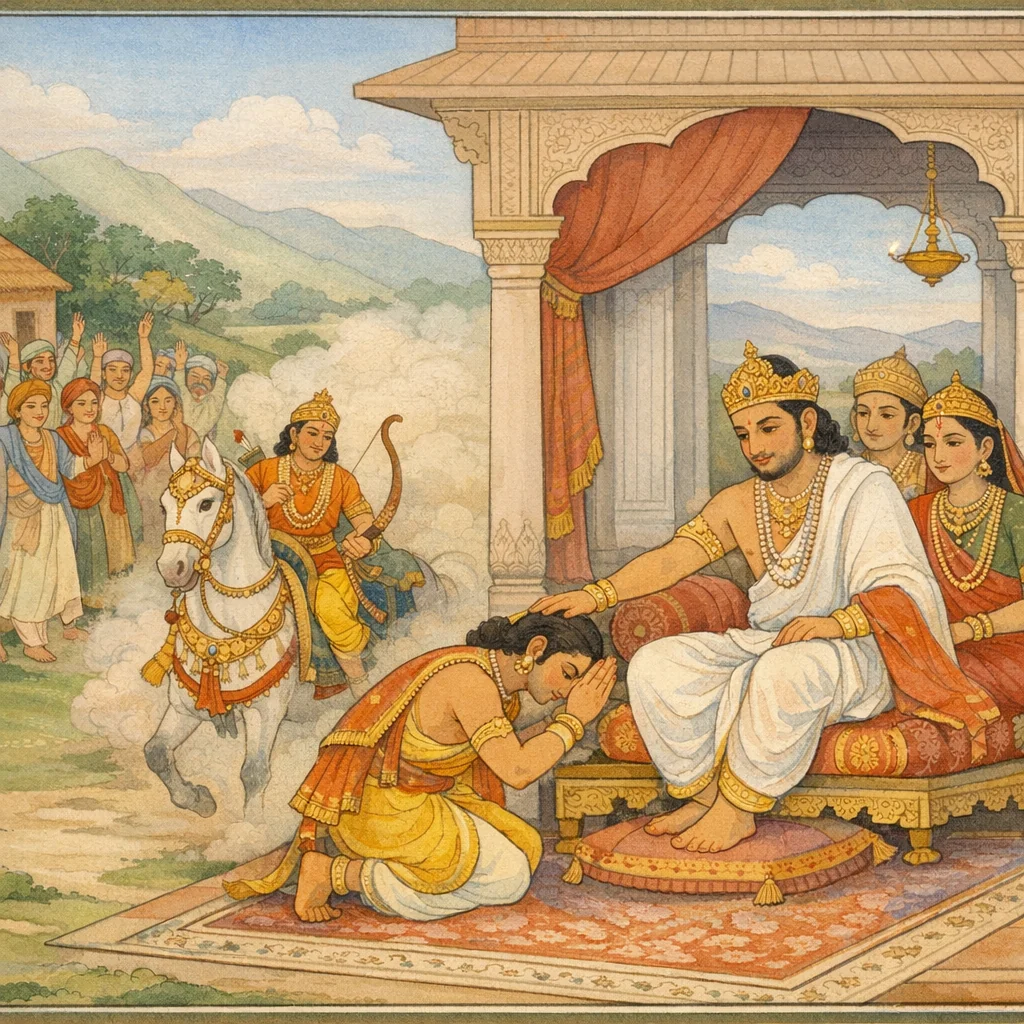
Chapter Arc: अश्वमेध-यज्ञ के आरम्भ के पश्चात् कथा का प्रवाह युद्धोत्तर शान्ति से हटकर एक नई बेचैनी पर टिकता है—हृषीकेश कृष्ण के सामने यह प्रश्न उठता है कि सर्वविजयी अर्जुन भीतर से सुखविवर्जित क्यों रहता है। → कृष्ण के प्रति जिज्ञासा गहराती है: सुना गया है कि अनेक देशों में फिर-फिर युद्ध हुए; अर्जुन जहाँ-जहाँ गया, वहाँ धूल-धूसरित घोड़े के पीछे राजाओं की हलचल, जन-समूह की हर्षध्वनि और विजय-यात्रा का कोलाहल उठा। पर इस बाहरी जय के बीच अर्जुन के मन का भार कथा को कसता जाता है। → अर्जुन की वापसी का दृश्य चरम पर पहुँचता है—रेणु-राशि उठती है, जनों की हर्षकारी वाणी गूँजती है, और अर्जुन धर्मराज युधिष्ठिर के चरणों में प्रणाम कर भीमादि भ्राताओं का पूजन करता हुआ केशव (कृष्ण) के समीप बैठता है; विजय-समाचार के साथ ही युधिष्ठिर की आँखों में आनन्दाश्रु छलकते हैं और दूत/वृत्तान्त-निवेदक को बहुधन दान दिया जाता है। → कुरु-सभा में स्वागत-सत्कार के बाद अर्जुन थके हुए पारगामी की भाँति विश्राम पाता है; विजय-यात्रा का औपचारिक समापन और राजसभा की स्वीकृति से अश्वमेध का अभियान स्थिरता की ओर लौटता है। → बभ्रुवाहन का अपनी दोनों माताओं सहित कुरुदेश में आगमन एक नया प्रसंग खोलता है—यह आगमन केवल शुभ-संदेश है या किसी पुराने बन्धन/प्रतिज्ञा का पुनः स्मरण?
Shlokas
Verse 1
इस प्रकार श्रीमह्याभारत आश्वमेधिकपर्वके अन्तर्गत अनुगीतापर्वमें अश्चमेध-यज्ञका आरम्भविषयक छियासीवाँ अध्याय पूरा हुआ ॥/ ८६ ॥। ऑपन-आक्राा बछ। अर: सप्ताशीतितमोब ध्याय: अर्जुनके विषयमें श्रीकृष्ण और युधिछ्िरकी बातचीत, अर्जुनका हस्तिनापुरमें जाना तथा उलूपी और चित्राज्भदाके साथ बभ्रुवाहनका आगमन युधिष्ठिर उवाच श्रुतं प्रियमिदं कृष्ण यत् त्वमहसि भाषितुम् । तन्मे5मृतरसं पुण्यं मनो ह्लादयति प्रभो,युधिष्ठिर बोले--प्रभो! श्रीकृष्ण! मैंने यह प्रिय संदेश सुना, जिसे आप ही कहने या सुनानेके योग्य हैं। आपका यह अमृतरससे परिपूर्ण पवित्र वचन मेरे मनको आनन्दमग्न किये देता है
Yudhiṣṭhira said: “O Kṛṣṇa, I have heard this dear message—one that you alone are truly fit to speak. O Lord, your sacred words, filled with the nectar of immortality, gladden my heart.”
Verse 2
बहूनि किल युद्धानि विजयस्य नराधिपै: । पुनरासन् हषीकेश तत्र तत्र च मे श्रुतम्,हृषीकेश! मेरे सुननेमें आया है कि भिन्न-भिन्न देशोंमें वहाँके राजाओंके साथ अर्जुनको कई बार युद्ध करने पड़े हैं
Yudhiṣṭhira said: “O Hṛṣīkeśa, I have heard that, in the course of securing victory, Arjuna had to fight many battles again and again with kings in various regions.”
Verse 3
कि निमित्तं स नित्यं हि पार्थ: सुखविवर्जित: । अतीव विजयो धीमन्निति मे दूयते मनः,इसका क्या कारण है? बुद्धिमान् जनार्दन! जब मैं एकान्तमें बैठकर अर्जुनके बारेमें विचार करता हूँ, तब यह जानकर मेरा मन खिन्न हो जाता है कि हमलोगोंमें वे ही सदा सबसे अधिक दु:खके भागी रहे हैं। पाण्डुनन्दन अर्जुन सुखसे वंचित क्यों रहते हैं? यह समझमें नहीं आता
Yudhiṣṭhira said: “For what reason is Pārtha (Arjuna) always, as it seems, deprived of happiness? Though he is exceedingly victorious, O wise Janārdana, my heart is pained by this thought. When I sit alone and reflect on Arjuna, I become sorrowful, realizing that among us he has continually borne the greatest share of suffering. Why is Arjuna, the son of Pāṇḍu, kept away from ease and contentment?”
Verse 4
संचिन्तयामि कौन्तेयं रहो जिष्णुं जनार्दन । अतीव दुःखभागी स सतत पाण्डुनन्दन:,इसका क्या कारण है? बुद्धिमान् जनार्दन! जब मैं एकान्तमें बैठकर अर्जुनके बारेमें विचार करता हूँ, तब यह जानकर मेरा मन खिन्न हो जाता है कि हमलोगोंमें वे ही सदा सबसे अधिक दु:खके भागी रहे हैं। पाण्डुनन्दन अर्जुन सुखसे वंचित क्यों रहते हैं? यह समझमें नहीं आता
Yudhiṣṭhira said: “O Janārdana, when I sit in solitude and reflect upon Arjuna—the son of Kuntī, the unconquered hero—I become deeply distressed. For it seems that among us he, the son of Pāṇḍu, has continually been the greatest sharer of sorrow. Why is Arjuna so often deprived of ease and happiness?”
Verse 5
कि नु तस्य शरीरेडस्ति सर्वलक्षणपूजिते | अनिष्टं लक्षणं कृष्ण येन दुःखान्युपाश्नुते,श्रीकृष्ण! उनका शरीर तो सभी शुभलक्षणोंसे सम्पन्न है। फिर उसमें अशुभ लक्षण कौन-सा है, जिससे उन्हें अधिक दुःख उठाना पड़ता है?
Yudhiṣṭhira said: “O Kṛṣṇa, his body is honored with every auspicious mark. What, then, is the inauspicious sign present in him, because of which he has to endure so many sufferings?”
Verse 6
अतीवासुखभोगी स सततं कुन्तिनन्दन: । न हि पश्यामि बीभत्सोर्निन्द्य गात्रेषु किंचन । श्रोतव्यं चेन्मयैतद् वै तन्मे व्याख्यातुमरहसि,कुन्तीनन्दन अर्जुन सदा अधिक कष्ट भोगते हैं; परंतु उनके अंगोंमें कहीं कोई निन्दनीय दोष नहीं दिखायी देता है। ऐसी दशामें उन्हें कष्ट भोगनेका कारण क्या है? यह मैं सुनना चाहता हूँ। आप मुझे विस्तारपूर्वक यह बात बतावें
Yudhiṣṭhira said: “Arjuna, the son of Kuntī, seems to endure great hardship continually; yet I do not see anything blameworthy in the limbs or person of the terrible warrior Bībhatsu. If this is indeed something I should hear, then explain it to me—what is the cause of his undergoing hardship despite no visible fault?”
Verse 7
इत्युक्त: स हृषीकेशो ध्यात्वा सुमहदुत्तरम् राजानं भोजराजन्यवर्धनो विष्णुरब्रवीत्,युधिष्ठिरके इस प्रकार पूछनेपर भोजवंशी क्षत्रियोंकी वृद्धि करनेवाले भगवान् हृषीकेश विष्णुने बहुत देरतक उत्तम रीतिसे चिन्तन करनेके बाद राजा युधिष्ठिरसे यों कहा --
Thus questioned, Hṛṣīkeśa—Viṣṇu, the increaser of the Bhoja line of kṣatriyas—pondered long and well upon the most fitting reply, and then spoke to King Yudhiṣṭhira as follows—
Verse 8
न हास्य नृपते किंचित् संश्लिष्टमुपलक्षये । ऋते पुरुषसिंहस्य पिण्डिके5स्याधिके यत:,“नरेश्वर! पुरुषसिंह अर्जुनकी पिण्डलियाँ (फिल्लियाँ) औसतसे कुछ अधिक मोटी हैं। इसके सिवा और कोई अशुभ लक्षण उनके शरीरमें मुझे भी नहीं दिखायी देता है”
“O king, I perceive in him no ominous or troubling sign at all—except that the calves of this lion among men, Arjuna, are somewhat thicker than average. Beyond this, I see nothing in his body that should cause fear.”
Verse 9
स ताभ्यां पुरुषव्याप्रो नित्यमध्वसु वर्तते । न चान्यदनुपश्यामि येनासौ दुःखभाजनम्,“उन मोटी फिल्लियोंके कारण ही पुरुषसिंह अर्जुनको सदा रास्ता चलना पड़ता है। और कोई कारण मुझे नहीं दिखायी देता, जिससे उन्हें दुःख झेलना पड़े"
“Because of those two (calves), the lion among men—Arjuna—must constantly be on the road. I see no other cause by which he should become a vessel of suffering.”
Verse 10
इत्युक्त: पुरुषश्रेष्टस्तदा कृष्णेन धीमता । प्रोवाच वृष्णिशार्टूलमेवमेतदिति प्रभो,प्रभो! बुद्धिमान् श्रीकृष्णके ऐसा कहनेपर पुरुषश्रेष्ठ युधिष्ठिरने उन वृष्णिसिंहसे कहा --'भगवन्! आपका कहना ठीक है”
Thus addressed by the wise Kṛṣṇa, Yudhiṣṭhira—the best of men—replied to that tiger among the Vṛṣṇis: “O Lord, O Lord, it is exactly so; your statement is correct.”
Verse 11
कृष्णा तु द्रौपदी कृष्णं तिर्यक् सासूयमैक्षत । प्रतिजग्राह तस्यास्तं प्रणयं चापि केशिहा
But Kṛṣṇā (Draupadī) cast a sidelong glance at Kṛṣṇa, tinged with jealousy and reproach. The slayer of Keśin (Kṛṣṇa), however, accepted her feeling—her unspoken complaint and her affection as well—knowing that in intimacy even sharp emotion may arise without violating dharma.
Verse 12
तत्र भीमादयस्ते तु कुरवो याजकाश्न ये
There, those Kurus—Bhīma and the others—who were engaged in the sacrificial rite and partook of the offerings, were present as participants in the sacred proceedings.
Verse 13
तेषां कथयतामेव पुरुषो<र्जुनसंकथा:
Yudhiṣṭhira said: “Even as they were speaking among themselves, the conversation turned to Arjuna—his deeds and his story becoming the very subject of their discourse.”
Verse 14
सो5भिगम्य कुरुश्रेष्ठ नमस्कृत्य च बुद्धिमान्
The wise one approached the best of the Kurus and, having offered respectful obeisance, spoke—framing his conduct in humility and proper decorum toward a revered elder and exemplar of dharma.
Verse 15
उपायात॑ नरव्याप्र॑ फाल्गुनं प्रत्यवेदयत् । वह बुद्धिमान् दूत कुरुश्रेष्ठ युधिष्ठिके पास जा उन्हें नमस्कार करके बोला --'पुरुषसिंह अर्जुन निकट आ गये हैं' ।। १४ $ ।। तच्छुत्वा नृपतिस्तस्य हर्षबाष्पाकुलेक्षण:
A wise messenger approached and reported to Yudhiṣṭhira, the best of the Kurus, after paying his respects: “O lion among men, Arjuna has come near.” Hearing this, the king’s eyes filled with tears of joy, showing the relief and righteous affection that follow the safe return of a loved one after perilous duties.
Verse 16
ततो द्वितीये दिवसे महान् शब्दो व्यवर्धत
Then, on the second day, a great uproar arose and steadily grew louder—an intensifying public commotion that signals a turning point in the unfolding events and the moral tensions surrounding them.
Verse 17
ततो रेणु: समुद्भूतो विबभौ तस्य वाजिन:
Then a cloud of dust rose up and spread abroad, stirred by that horse—an omen that the Ashvamedha rite was pressing onward, while the king kept vigilant watch over every sign and every detail along its course.
Verse 18
तत्र हर्षकरी वाचो नराणां शुश्रुवे&र्जुन:
There, Arjuna heard among the people words that brought joy—utterances of relief and gladness amid the unfolding events, reflecting the community’s hopeful response to what was taking place.
Verse 19
दिष्ट्यासि पार्थ कुशली धन्यो राजा युधिष्ठिर: । वहाँ अर्जुनने लोगोंके मुँहसे हर्ष बढ़ानेवाली बातें इस प्रकार सुनीं--'पार्थ! यह बड़े सौभाग्यकी बात है कि तुम सकुशल लौट आये। राजा युधिष्ठिर धन्य हैं ।। कोडन्यो हि पृथिवीं कृत्स्नां जित्वा हि युधि पार्थिवान्
There Arjuna heard from the people words that heightened his joy: “Blessed are you, O Pārtha, that you have returned in safety. Fortunate indeed is King Yudhiṣṭhira; for you have conquered the kings in battle and brought the whole earth under sway…”
Verse 20
ये व्यतीता महात्मानो राजान: सगरादय:
Yudhiṣṭhira said: “Those great-souled kings of former times—beginning with Sagara—who have already passed away…”
Verse 21
नैतदन्ये करिष्यन्ति भविष्या वसुधाधिपा:
Yudhiṣṭhira said: “Future rulers of the earth will not do this.”
Verse 22
इत्येवं वदतां तेषां पुंसां कर्णसुखा गिर:
Yudhiṣṭhira said: “Thus, as those men were speaking, their words were pleasing to the ear.”
Verse 23
ततो राजा सहामात्य: कृष्णश्न॒ यदुनन्दन:
Then the king, accompanied by his ministers, and Kṛṣṇa—the delight of the Yadus—proceeded onward.
Verse 24
सो5भिवाद्य पितु: पादौ धर्मराजस्य धीमत:
Having respectfully saluted the feet of his father—the wise Dharmarāja—he then proceeded.
Verse 25
तैः समेत्यार्चितस्तांश्ष प्रत्यर्च्याथ यथाविधि
Having met with them and been duly honored by them, Yudhiṣṭhira in turn honored them again, following the prescribed rites.
Verse 26
एतस्मिन्नेव काले तु स राजा बभ्रुवाहन:
Yudhiṣṭhira said: “At that very time, that king—Babhruvāhana—appeared (was present).”
Verse 27
तत्र वृद्धान् यथावत् स कुरूनन्यांश्व पार्थिवान्,वहाँ पहुँचकर वह महाबाहु नरेश कुरुकुलके वृद्ध पुरुषों तथा अन्य राजाओंको विधिवत् प्रणाम करके स्वयं भी उनके द्वारा सत्कार पाकर बहुत प्रसन्न हुआ। इसके बाद वह अपनी पितामही कुन्तीके सुन्दर महलमें गया
Having arrived there, the mighty-armed king duly bowed in reverence to the elders of the Kuru line and to the other kings. Honoured and received by them, he was greatly pleased. Thereafter he entered the fair mansion of his grandmother Kuntī.
Verse 28
अभिवाद्य महबाहुस्तैश्वापि प्रतिनन्दित: । प्रविवेश पितामहय॒ा: कुन्त्या भवनमुत्तमम्,वहाँ पहुँचकर वह महाबाहु नरेश कुरुकुलके वृद्ध पुरुषों तथा अन्य राजाओंको विधिवत् प्रणाम करके स्वयं भी उनके द्वारा सत्कार पाकर बहुत प्रसन्न हुआ। इसके बाद वह अपनी पितामही कुन्तीके सुन्दर महलमें गया
Having offered his salutations, the mighty-armed king was in turn greeted with acclaim by them. Delighted by the honour shown, he entered the excellent residence of his grandmother Kuntī.
Verse 87
इति श्रीमहाभारते आश्वमेधिके पर्वणि अनुगीतापर्वणि अर्जुनप्रत्यागमने सप्ताशीतितमो<ध्याय:
Thus, in the Śrī Mahābhārata, within the Aśvamedhika Parva—under the Anugītā section—ends the eighty-seventh chapter, concerning Arjuna’s return.
Verse 113
सख्यु: सखा हृषीकेश: साक्षादिव धनंजय: । उस समय द्रुपदकुमारी कृष्णाने भगवान् श्रीकृष्णकी ओर तिरछी चितवनसे ईर्ष्यापूर्वक देखा। केशिहन्ता श्रीकृष्णने द्रौपदीके उस प्रेमपूर्ण उपालम्भको सानन्द ग्रहण किया; क्योंकि उसकी दृष्टिमें सखा अर्जुनके मित्र भगवान् हृषीकेश साक्षात् अर्जुनके ही समान थे
Yudhiṣṭhira said: “Hṛṣīkeśa (Śrī Kṛṣṇa) is truly the friend of one’s friend; to Dhanañjaya (Arjuna) he is as if Arjuna himself.” At that moment Draupadī (Kṛṣṇā), Drupada’s daughter, cast a sidelong, jealous glance toward Bhagavān Śrī Kṛṣṇa. Keśihantā Śrī Kṛṣṇa received her affectionate, love-tinged reproach with delight, for in her eyes the Lord—Arjuna’s intimate companion—was virtually identical with Arjuna.
Verse 126
रेमु: श्रुत्वा विचित्रां तां धनंजयकथां शुभाम् । उस समय भीमसेन आदि कौरव और यज्ञ करानेवाले ब्राह्मणलोग अर्जुनके सम्बन्धमें यह शुभ एवं विचित्र बात सुनकर बहुत प्रसन्न हो रहे थे
Yudhiṣṭhira said: “Hearing that auspicious and wondrous account concerning Dhanañjaya (Arjuna), they rejoiced.” Even then Bhīmasena and the kinsmen, and the Brahmins officiating at the sacrifice, on hearing this blessed and extraordinary matter about Arjuna, were filled with gladness.
Verse 133
उपायाद् वचनाद् दूतो विजयस्य महात्मन: । उन लोगोंमें अर्जुनके सम्बन्धमें इस तरहकी बातें हो ही रही थीं कि महात्मा अर्जुनका भेजा हुआ दूत वहाँ आ पहुँचा
As they were speaking among themselves in this manner about Arjuna, a messenger sent by the great-souled Arjuna—renowned for victory—arrived there.
Verse 163
आगच्छति नरव्याप्रे कौरवाणां धुरंधरे । तदनन्तर दूसरे दिन कौरव-धुरंधर नरव्यात्र अर्जुके आते समय नगरमें महान् कोलाहल बढ़ गया
Yudhiṣṭhira said: “O tiger among men, the foremost bearer of the Kauravas’ burden is approaching.” Thereafter, on the next day as he arrived, a great commotion swelled throughout the city.
Verse 173
अभितो वर्तमानस्य यथोच्चै:श्रवसस्तथा । उच्चै:श्रवाके समान वेगवान् और पास ही विद्यमान उस यज्ञसम्बन्धी घोड़ेकी टापसे उड़ी हुई धूल आकाशमें अद्भुत शोभा पा रही थी
Yudhiṣṭhira said: “As that sacrificial horse moved about nearby, it surged forward with a speed comparable to Uccaiḥśravas. The dust raised by its hooves spread through the sky and took on a wondrous beauty.”
Verse 193
चारयित्वा हयश्रेष्ठमुपागच्छेदृते3$र्जुनात् । 'अर्जुनके सिवा दूसरा कौन ऐसा वीर पुरुष है जो समूची पृथ्वीको जीतकर युद्धमें राजाओंको परास्त करके और अपने श्रेष्ठ अश्वको सर्वत्र घुमाकर उसके साथ सकुशल लौट आ सके
Yudhiṣṭhira said: “Having sent forth the finest horse to wander, who—apart from Arjuna—could return safely after conquering the whole earth, defeating kings in battle, and escorting that noble steed everywhere?”
Verse 206
तेषामपीदृशं कर्म न कदाचन शुश्रुम । “अतीतकालमें जो सगर आदि महामनस्वी राजा हो गये हैं, उनका भी कभी ऐसा पराक्रम हमारे सुननेमें नहीं आया था
Yudhiṣṭhira said: “Even of those kings of former times, we have never heard of a deed like this—such prowess was not known to us even in the accounts of great-minded rulers like Sagara and others.”
Verse 213
यत् त्वं कुरुकुलश्रेष्ठ दुष्करं कृतवानसि । “कुरुकुलश्रेष्ठी आपने जो दुष्कर पराक्रम कर दिखाया है, उसे भविष्यमें होनेवाले दूसरे भूपाल नहीं कर सकेंगे”
Yudhiṣṭhira said: “O best of the Kuru lineage, the arduous feat you have accomplished is so difficult that future kings will not be able to match it.”
Verse 226
शृण्वन् विवेश धर्मात्मा फाल्गुनो यज्ञसंस्तरम् । इस प्रकार कहते हुए लोगोंकी श्रवणसुखद बातें सुनते हुए धर्मात्मा अर्जुनने यज्ञमण्डपमें प्रवेश किया
As he listened to the pleasing words spoken by the people, the righteous-souled Arjuna (Phālguna) entered the sacrificial enclosure—moving forward in a spirit consonant with dharma and the solemn order of the rite.
Verse 236
धृतराष्ट्रं पुरस्कृत्य त॑ प्रत्युद्ययतुस्तदा । उस समय मन्त्रियोंसहित राजा युधिष्ठिर तथा यदुनन्दन श्रीकृष्ण धृतराष्ट्रको आगे करके उनकी अगवानीके लिये आगे बढ़ आये थे
Yudhiṣṭhira, together with his ministers, and Kṛṣṇa, the delight of the Yadus, then went forward to receive him, placing Dhṛtarāṣṭra at the front. The scene underscores royal propriety and dharmic courtesy: even amid the aftermath of conflict, the elders are honored and formal welcome is offered with restraint and respect.
Verse 243
भीमादीं श्वापि सम्पूज्य पर्यष्वजत केशवम् । अर्जुनने पिता धृतराष्ट्र और बुद्धिमान् धर्मराज युधिष्ठिरके चरणोंमें प्रणाम करके भीमसेन आदिका भी पूजन किया और श्रीकृष्णको हृदयसे लगाया
Yudhiṣṭhira said: “Having duly honored Bhīma and the others as well, he embraced Keśava (Kṛṣṇa).” The scene underscores the restoration of harmony after conflict: reverence to elders and affectionate regard for Kṛṣṇa are shown as marks of dharma—humility, gratitude, and the binding power of respectful relationships.
Verse 253
विशश्राम महाबाहुस्तीरं लब्ध्वेव पारग: । उन सबने मिलकर अर्जुनका बड़ा स्वागत-सत्कार किया। महाबाहु अर्जुनने भी उनका विधिपूर्वक आदर-सत्कार करके उसी तरह विश्राम किया, जैसे समुद्रके पार जानेकी इच्छावाला पुरुष किनारेपर पहुँचकर विश्राम करता है
Yudhiṣṭhira said: Having reached the shore, the mighty-armed one rested—like a traveler who, intent on crossing the ocean, finds firm land and pauses in relief. In the same spirit, after all had together offered Arjuna a warm reception and honor, Arjuna too duly returned their respect and then took rest, embodying the ethic of mutual courtesy and proper conduct after arduous endeavor.
Verse 263
मातृभ्यां सहितो धीमान् कुरूनेव जगाम ह | इसी समय बुद्धिमान् राजा बश्रुवाहन अपनी दोनों माताओंके साथ कुरुदेशमें जा पहुँचा
Yudhiṣṭhira said: “Accompanied by both his mothers, the wise one set out and indeed reached the land of the Kurus.” In the tale, this marks Babhruvāhana’s dutiful return to the Kuru realm under his mothers’ guardianship, affirming family responsibility, reconciliation, and the restoration of rightful bonds after strife.
Verse 1536
प्रियाख्याननिमित्तं वै ददौ बहुधनं तदा । यह शुभ समाचार सुनकर राजा युधिष्ठिरकी आँखोंमें आनन्दके आँसू छलक आये और यह प्रिय वृत्तान्त निवेदन करनेके कारण उस दूतको पुरस्काररूपमें उन्होंने बहुत-सा धन दिया
On hearing the pleasing report, Yudhiṣṭhira bestowed abundant wealth as a reward—honouring the messenger who brought auspicious news and showing his gratitude through generous giving.
Frequently Asked Questions
It emphasizes dharmic administration through ritual correctness and public generosity: abundance is presented as structured provisioning governed by śāstric procedure and service to guests and Brahmins.
The enumeration functions as a cosmological register, portraying the sacrifice as symbolically comprehensive—an arena where the social and natural worlds are conceptually gathered under a single ordered rite.
No explicit phalaśruti is stated here; the chapter’s meta-significance lies in demonstrating how post-war sovereignty is ethically narrated through vidhi (procedure), dāna (distribution), and public witness.