Adhyaya 76
Arjuna Confronted by Saindhava Forces during the Aśvamedha Circuit (श्वेतवाहनस्य सैन्धवसंघर्षः)
Upa-parva: Aśvānugamana (Ritual Horse-Guarding) Episode
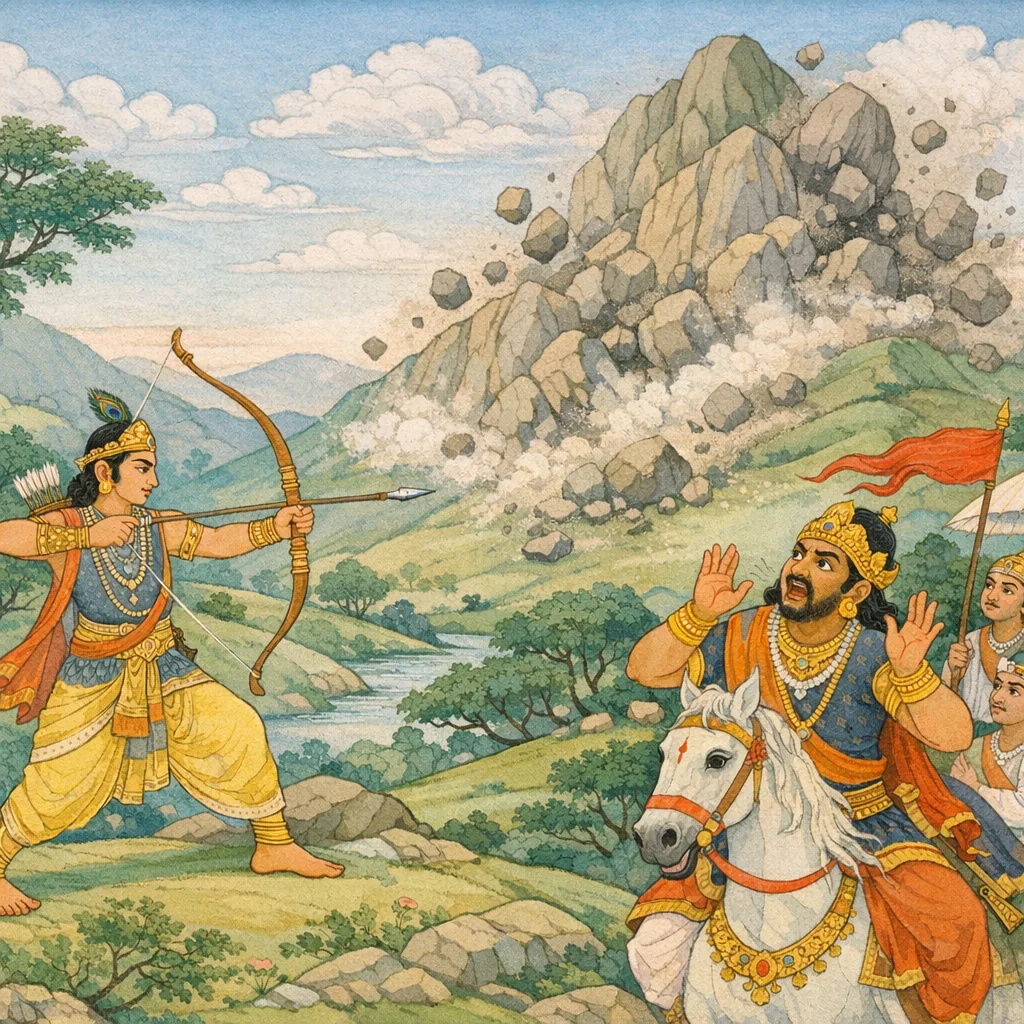
Vaiśaṃpāyana reports that, after the horse enters a Saindhava-controlled region, resentful rulers—identified as remnants and sons of the slain—advance to oppose the Pāṇḍava protector. They surround Arjuna, who is on foot near the consecrated horse, and proclaim their names, lineages, and prior deeds while releasing dense volleys of arrows. The barrage is depicted with cosmic-omen imagery: dust-darkened light, turbulent winds, eclipsing motifs, meteoric signs, trembling mountains, and unnatural rains, emphasizing the perceived gravity of the moment. Under the weight of the arrow-net, Arjuna briefly loses composure; the Gāṇḍīva and his hand-protection slip, and the attackers intensify their fire, assuming advantage. Observing this, celestial seers and sages express alarm, then invoke auspicious victory as Arjuna’s radiance is rekindled. Regaining steadiness, he draws the divine bow with repeated, machine-like resonance and answers with an expansive counter-volley likened to Indra’s rain. The Saindhava host becomes obscured by arrows; fear and disorder spread, and Arjuna, moving in all directions, disperses them with rotating, wheel-like formations of shafts, finally shining through the broken mass like the autumn sun after splitting cloud-banks.
Chapter Arc: तीन रात्रियों तक घोर संग्राम के बाद चौथे दिन प्राग्ज्योतिष का राजा वज्रदत्त रणभूमि में अट्टहास करता हुआ अर्जुन को ललकारता है—“आज तुम्हें जीवित न छोड़ूँगा।” → वज्रदत्त अपने पिता भगदत्त की परंपरा और नाग-बल का गर्व लेकर बार-बार प्रचंड आक्रमण करता है; अर्जुन उसके वेग को रोकता है, पर राजा क्रोध में नागेन्द्र और पर्वत-तुल्य बल वाले गज-प्रहारों को आगे बढ़ाता है। → अर्जुन के तीक्ष्ण नाराच हाथी/नाग-वाहन के मर्मस्थलों को भेद देते हैं; वह वज्राघात-सा घायल होकर सहसा धराशायी हो जाता है और वज्रदत्त का गर्वपूर्ण आक्रमण टूट जाता है। → अर्जुन विजय के बाद भी युधिष्ठिर की आज्ञा स्मरण कर वज्रदत्त का वध नहीं करता—राजाओं को न मारने, उन्हें यज्ञ-अश्वमेध के हेतु समझाकर साथ लेने का उपदेश देता है; पराजित वज्रदत्त ‘तथास्तु’ कहकर स्वीकार करता है। → अश्वमेध-अश्व की आगे की यात्रा में अगले राजाओं/प्रदेशों से होने वाले नए प्रतिरोध का संकेत।
Shlokas
Verse 1
अपन क्रात बछ। 2 षट्सप्ततितमो<ध्याय: अर्जुनके द्वारा वज्दत्तकी पराजय वैशम्पायन उवाच एवं त्रिरात्रमभवत् तद् युद्धे भरतर्षभ । अर्जुनस्य नरेन्द्रेण वृत्रेणेव शतक्रतो:,वैशम्पायनजी कहते हैं--भरतश्रेष्ठ! जैसे इन्द्रका वृत्रासुरके साथ युद्ध हुआ था, उसी प्रकार अर्जुनका राजा वझदत्तके साथ तीन दिन तीन रात युद्ध होता रहा
Vaiśampāyana said: “O bull among the Bharatas, that battle lasted for three nights. Arjuna fought with King Vajradatta just as Śatakratu (Indra) once fought with Vṛtra.”
Verse 2
ततश्षतुर्थे दिवसे वज़दत्तो महाबल: । जहास सस्वनं हासं वाक््य॑ चेदमथाब्रवीत्,तदनन्तर चौथे दिन महाबली वज्रदत्त ठहाका मारकर हँसने लगा और इस प्रकार बोला --[
Then, on the fourth day, the mighty Vajradatta burst into a loud, ringing laugh and thereafter spoke these words.
Verse 3
अर्जुनार्जुन तिष्ठस्व न मे जीवन विमोक्ष्यसे । त्वां निहत्य करिष्यामि पितुस्तोयं यथाविधि,“अर्जुन! अर्जुन! खड़े रहो। आज मैं तुम्हें जीवित नहीं छोड़ूँगा। तुम्हें मारकर पिताका विधिपूर्वक तर्पण करूँगा
“Arjuna, Arjuna—stand your ground! You will not escape with your life from me. After killing you, I shall duly offer the prescribed water-oblations to my father.”
Verse 4
त्वया वृद्धो मम पिता भगदत्त: पितु: सखा । हतो वृद्धो मम पिता शिशुं मामद्य योधय,“मेरे वृद्ध पिता भगदत्त तुम्हारे बापके मित्र थे, तो भी तुमने उनकी हत्या की। मेरे पिता बूढ़े थे, इसलिये तुम्हारे हाथसे मारे गये। आज उनका बालक मैं तुम्हारे सामने उपस्थित हूँ; मेरे साथ युद्ध करो'
“My father Bhagadatta was an aged man and a friend of your father. Yet you killed my old father. Because he was advanced in years, he fell by your hand. Today I, his child, stand before you—fight with me now.”
Verse 5
इत्येवमुक्त्वा संक्रुद्धो वज़दत्तो नराधिप: । प्रेषयामास कौरव्य वारणं पाण्डवं प्रति,कुरुनन्दन! ऐसा कहकर क्रोधमें भरे हुए राजा वज्रदत्तने पुनः पाण्डुपुत्र अर्जुनकी ओर अपने हाथीको हाँक दिया
Vaiśampāyana said: Having spoken thus, King Vajradatta, inflamed with anger, drove his elephant forward again toward the Pāṇḍava (Arjuna).
Verse 6
सम्प्रेष्यमाणो नागेन्द्रो वजदत्तेन धीमता । उत्पतिष्यन्निवाकाशमभिदुद्राव पाण्डवम्,बुद्धिमान् वज्रदत्तके द्वारा हाँके जानेपर वह गजराज पाण्डुपुत्र अर्जुनकी ओर इस प्रकार दौड़ा, मानो आकाशमें उड़ जाना चाहता हो
Vaiśampāyana said: Driven on and urged forward by the wise Vajradatta, the lord of elephants charged straight at the Pāṇḍava (Arjuna), rushing as though it meant to leap into the very sky.
Verse 7
अग्रहस्तसुमुक्तेन शीकरेण स नागराट् | समौक्षत गुडाकेशं शैलं नीलमिवाम्बुद:,उस गजराजने अपनी सूँडसे छोड़े गये जलकणोंद्वारा गुडाकेश अर्जुनको भिगो दिया। मानो मेघने नील पर्वतपर जलके फुहारे डाल दिये हों
Vaiśampāyana said: With the spray of water released from the tip of his trunk, the lordly elephant drenched Guḍākeśa (Arjuna), as though a rain-cloud were showering a dark-blue mountain.
Verse 8
स तेन प्रेषितो राज्ञा मेघवद् विनदन् मुहुः । मुखाडम्बरसंह्वादैरभ्यद्रवत फाल्गुनम्,राजासे प्रेरित होकर बारंबार मेघके समान गम्भीर गर्जना करता हुआ वह हाथी अपने मुखके चीत्कारपूर्ण कोलाहलके साथ अर्जुनपर टूट पड़ा
Vaiśampāyana said: Sent forward by the king, the elephant repeatedly roared like a thundercloud; with the clamorous, trumpet-like din from its mouth, it charged straight at Phālguna (Arjuna).
Verse 9
स नृत्यत्रिव नागेन्द्रो वज्दत्तप्रचोदितः । आससाद द्रुतं राजन् कौरवाणां महारथम्,राजन! वज्रदत्तका हाँका हुआ वह गजराज नृत्य-सा करता हुआ तुरंत कौरव महारथी अर्जुनके पास जा पहुँचा
Vaiśampāyana said: Urged on by Vajradatta, that lord of elephants, moving as though in a dance, swiftly charged forth, O King, and came upon Arjuna, the great chariot-warrior.
Verse 10
तमायान्तमथालक्ष्य वज्रदत्तस्य वारणम् | गाण्डीवमाश्रित्य बली न व्यकम्पत शत्रुहा,वज्रदत्तके उस हाथीको आते देख शत्रुओंका संहार करनेवाले बलवान् अर्जुन गाण्डीवका सहारा लेकर तनिक भी विचलित नहीं हुए
Vaiśampāyana said: Seeing Vajradatta’s elephant advancing toward him, Arjuna—mighty and a destroyer of foes—took refuge in his bow Gāṇḍīva and did not waver in the least.
Verse 11
चुक्रोध बलवच्चापि पाण्डवस्तस्य भूपते: । कार्यविघ्नमनुस्मृत्य पूर्ववैरं च भारत,भरतनन्दन! वज्रदत्तके कारण जो कार्यमें विघ्न पड़ रहा था, उसको तथा पहलेके वैरको याद करके पाण्डुपुत्र अर्जुन उस राजापर अत्यन्त कुपित हो उठे
Vaiśampāyana said: Remembering the obstruction that had been caused to his mission and recalling the former enmity, the Pāṇḍava (Arjuna) became fiercely enraged with that king.
Verse 12
ततस्तं॑ वारणं क्रुद्ध: शरजालेन पाण्डव: । निवारयामास तदा वेलेव मकरालयम्,क्रोधमें भरे हुए पाण्डुकुमार अर्जुनने अपने बाणसमूहोंद्वारा उस हाथीको उसी तरह रोक दिया, जैसे तटकी भूमि उमड़ते हुए समुद्रको रोक देती है
Vaiśampāyana said: Then the Pāṇḍava (Arjuna), filled with anger, checked that elephant with a net of arrows—just as the shoreline holds back the sea, the abode of makaras.
Verse 13
स नागप्रवर: श्रीमानर्जुनेन निवारित: । तस्थौ शरैविंनुन्नाड़: श्वाविच्छललितो यथा,उसके सारे अंगोंमें बाण धँसे हुए थे। अर्जुनके द्वारा रोका गया वह शोभाशाली गजराज काँटोंवाली साहीके समान खड़ा हो गया
Vaiśampāyana said: The illustrious foremost of elephants, checked by Arjuna, stood still—its body pierced through with arrows—like a porcupine bristling with quills.
Verse 14
निवारितं गजं दृष्टवा भगदत्तसुतो नृपः । उत्ससर्ज शितान् बाणानर्जुनं क्रोधमूर्च्छित:,अपने हाथीको रोका गया देख भगदत्तकुमार राजा वद्भरदत्त क्रोधसे व्याकुल हो उठा और अर्जुनपर तीखे बाणोंकी वर्षा करने लगा
Vaiśampāyana said: Seeing that his elephant had been checked, the king—the son of Bhagadatta—was overcome by a swoon of anger and let fly a shower of sharp arrows at Arjuna.
Verse 15
अर्जुनस्तु महाबाहु: शरैररिनिघातिभि: । वारयामास तान् बाणांस्तदद्भुतमिवा भवत्,परंतु महाबाहु अर्जुनने अपने शत्रुधाती सायकोंद्वारा उन सारे बाणोंको पीछे लौटा दिया। वह एक अद्भुत-सी घटना हुई
Vaiśampāyana said: Mighty-armed Arjuna, with arrows that were deadly to his foes, checked and turned back all those incoming shafts. The sight of that was like a wonder.
Verse 16
ततः पुनरभिक्रुद्धों राजा प्राग्ज्योतिषाधिप: । प्रेषयामास नागेन्द्रं बलवत् पर्वतोपमम्,तब प्राग्ज्योतिषपुरके स्वामी राजा वचद्धदत्तने अत्यन्त कुपित हो अपने पर्वताकार गजराजको पुन: बलपूर्वक आगे बढ़ाया
Then, once again inflamed with anger, the king—the lord of Prāgjyotiṣa—forcefully sent forward the lordly elephant, mighty and mountain-like.
Verse 17
तमापतत्तं सम्प्रेक्ष्य बलवत् पाकशासनि: । नाराचमग्निसंकाशं प्राहिणोद् वारणं प्रति,उसे बलपूर्वक आक्रमण करते देख इन्द्रकुमार अर्जुनने उस हाथीके ऊपर एक अग्निके समान तेजस्वी नाराच चलाया
Seeing that mighty elephant charging in full force, Arjuna—the son of Indra, the chastiser of Pāka—shot at it a nārāca arrow, blazing like fire.
Verse 18
स तेन वारणो राजन् मर्मस्वभिहतो भृशम् | पपात सहसा भूमौ वज़रुग्ण इवाचल:,राजन! उस नाराचने हाथीके मर्मस्थानोंमें गहरी चोट पहुँचायी। वह वज्ञके मारे हुए पर्वतकी भाँति सहसा पृथ्वीपर ढह पड़ा
Vaiśampāyana said: O King, struck violently in his vital spots by that weapon, the elephant suddenly collapsed to the ground—like a mountain shattered by Indra’s thunderbolt.
Verse 19
स पतन् शुशुभे नागो धनंजयशराहत: । विशन्निव महाशैलो महीं वज्रप्रपीडित:,अर्जुनके बाणोंसे घायल होकर गिरता हुआ वह हाथी ऐसी शोभा पाने लगा, मानो वज्रके आघातसे अत्यन्त पीड़ित हुआ महान् पर्वत पृथ्वीमें समा जाना चाहता हो
Vaiśampāyana said: Struck by the arrows of Dhanañjaya (Arjuna), the elephant fell, yet even in its collapse it appeared splendid—like a mighty mountain, grievously crushed by a thunderbolt, seeming as though it would sink into the earth.
Verse 20
तस्मिन् निपतिते नागे वज्रदत्तस्य पाण्डव: । तं॑ न भेतव्यमित्याह ततो भूमिगतं नृपम्,वज्रदत्तके उस हाथीके धराशायी होते ही राजा वज्रदत्त स्वयं भी पृथ्वीपर जा पड़ा। उस समय पाण्डुपुत्र अर्जुनने उससे कहा--“राजन्! तुम्हें डरना नहीं चाहिये”
Vaiśampāyana said: When Vajradatta’s elephant had fallen, the king Vajradatta himself was thrown down to the ground. At that moment the Pāṇḍava Arjuna addressed him, saying, “O king, you should not be afraid.”
Verse 21
जब मैं घरसे प्रस्थित हुआ, उस समय महातेजस्वी राजा युधिष्ठिरने मुझसे कहा --'धनंजय! तुम्हें किसी तरह भी राजाओंका वध नहीं करना चाहिये”
Vaiśampāyana said: When I set out from home, the radiant King Yudhiṣṭhira said to me, “Dhanañjaya, under no circumstances should you kill the kings.” Thus the mission was bound by ethics: even amid royal strife, restraint and fidelity to dharma must govern one’s deeds.
Verse 22
सर्वमेतन्नरव्याप्र भवत्येतावता कृतम् । योधाश्षापि न हन्तव्या धनंजय रणे त्वया,“पुरुषसिंह! इतना करनेसे सब कुछ हो जायगा। अर्जुन! तुम्हें युद्ध ठानकर योद्धाओंका वध कदापि नहीं करना चाहिये
Vaiśampāyana said: “O tiger among men, by doing just this, everything will be accomplished. O Dhanañjaya, even in battle you must not set your mind on slaughter; you must not kill the warriors.”
Verse 23
अब्रवीद्धि महातेजा: प्रस्थितं मां युधिष्ठिर: । राजानस्ते न हन्तव्या धनंजय कथंचन,वक्तव्याश्नापि राजान: सर्वे सहसुहृज्जनै: । युधिष्ठिरस्याश्वमेधो भवद्धिरनुभूयताम् “तुम सभी राजाओंसे कह देना कि आप सब लोग अपने सुहृदोंके साथ पधारें और युधिष्ठिरके अश्वमेधयज्ञ-सम्बन्धी उत्सवका आनन्द लें”
Vaiśampāyana said: As I was setting out, the mighty Yudhiṣṭhira spoke to me: “Dhanañjaya, those kings must not be slain—under any circumstance. Instead, tell all the kings, together with their friends and well-wishers, to come and partake in the celebration of Yudhiṣṭhira’s Aśvamedha.” Thus victory was cast not as further conquest, but as restraint, reconciliation, and the public restoration of righteous order through a royal rite.
Verse 24
इति भ्रातृवच: श्रुत्वा न हन्मि त्वां नराधिप । उत्तिष्ठ न भयं ते$स्ति स्वस्तिमान् गच्छ पार्थिव,“नरेश्वर! भाईके इस वचनको सुनकर इसे शिरोधार्य करके मैं तुम्हें मार नहीं रहा हूँ। भूपाल! उठो, तुम्हें कोई भय नहीं है। तुम सकुशल अपने घरको लौट जाओ
Hearing these words spoken by his brother, he said: “O king, I will not kill you. Rise—there is no fear for you. O ruler of the earth, go home in safety.”
Verse 25
आगच्छेथा महाराज परां चैत्रीमुपस्थिताम् । यदाश्वमेधो भविता धर्मराजस्य धीमत:,“महाराज! आगामी चैत्रमासकी उत्तम पूर्णिमा तिथि उपस्थित होनेपर तुम हस्तिनापुरमें आना। उस समय बुद्धिमान् धर्मराजका वह उत्तम यज्ञ होगा”
Vaiśampāyana said: “O great king, come to Hastināpura when the excellent full-moon of the month of Caitra has arrived. At that time the wise Dharmarāja will be performing his Aśvamedha sacrifice.”
Verse 26
एवमुक्त: स राजा तु भगदत्तात्मजस्तदा । तथेत्येवाब्रवीद् वाक््यं पाण्डवेनाभिनिर्जित:,अर्जुनके ऐसा कहनेपर उनसे परास्त हुए भगदत्तकुमार राजा वज्रदत्तने कहा--“बहुत अच्छा, ऐसा ही होगा”
Vaiśampāyana said: Thus addressed, that king—Bhagadatta’s son—then, having been overcome by the Pāṇḍava (Arjuna), replied, “So be it; it shall be exactly so.”
Verse 75
इस प्रकार श्रीमहाभारत आश्वमेधिकपर्वके अन्तर्गत अनुगीतापर्वमें अर्जुनका वज्रदत्तके साथ युद्धविषयक पचहत्तरवाँ अध्याय पूरा हुआ
Thus ends the seventy-fifth chapter, concerning Arjuna’s battle with Vajradatta, within the Anugītā section of the Aśvamedhika Parva of the Śrī Mahābhārata.
Verse 76
इति श्रीमहाभारते आश्वमेधिके पर्वणि अनुगीतापर्वणि वज्रदत्तपराजये षट्सप्ततितमो<ड्ध्याय:
Thus ends the seventy-sixth chapter in the Anugītā section of the Aśvamedhika Parva of the Śrī Mahābhārata, describing the defeat of Vajradatta.
Frequently Asked Questions
The chapter implicitly frames the dilemma of enforcing postwar authority: Arjuna must protect a sacred state-ritual and uphold sovereignty while responding proportionately to challengers motivated by grievance and inherited enmity.
Even elite capacity can be momentarily disrupted (moha), but dharma in action requires recovery—re-centering attention, restoring disciplined skill, and reasserting order without abandoning the governing obligation.
No explicit phalaśruti appears in this unit; the meta-commentary is conveyed through narrative signs—celestial concern, invocation of victory, and the restoration of tejas—positioning the episode as a case study in resilience and rightful protection.