Adhyaya 66
Subhadrā’s Petition to Kṛṣṇa for the Revival of Parīkṣit (अभिमन्युज-प्राणरक्षा-प्रार्थना)
Upa-parva: Āśvamedhika-parva — Kṛṣṇa–Subhadrā–Pāṇḍava Succession Lament (Chapter 66 context unit)
Vaiśaṃpāyana narrates Subhadrā’s grief-stricken address upon seeing the crisis surrounding Abhimanyu’s child. She urges Kṛṣṇa to behold the grandson of Arjuna, described as diminished and near the end of life amid the apparent exhaustion of the Kurus. Subhadrā recalls the lethal strike associated with Droṇa’s son (Aśvatthāman) and describes the anguish as a burning presence in her heart because she cannot see her son’s son alive. Anticipating the Pāṇḍavas’ reaction—Yudhiṣṭhira, Bhīma, Arjuna, and the twins—she frames the event as a renewed dispossession inflicted through Aśvatthāman’s weapon. Subhadrā then explicitly reminds Kṛṣṇa of his earlier statement that he would revive the child, treating the utterance as a vow that must be made true. Her petition intensifies into a conditional claim: if the child is not restored, her own life becomes untenable despite Kṛṣṇa’s continued presence. The chapter’s thematic center is the ethics of protection (rakṣā), the moral force of promised speech (satya), and the post-war imperative to secure continuity through compassionate intervention.
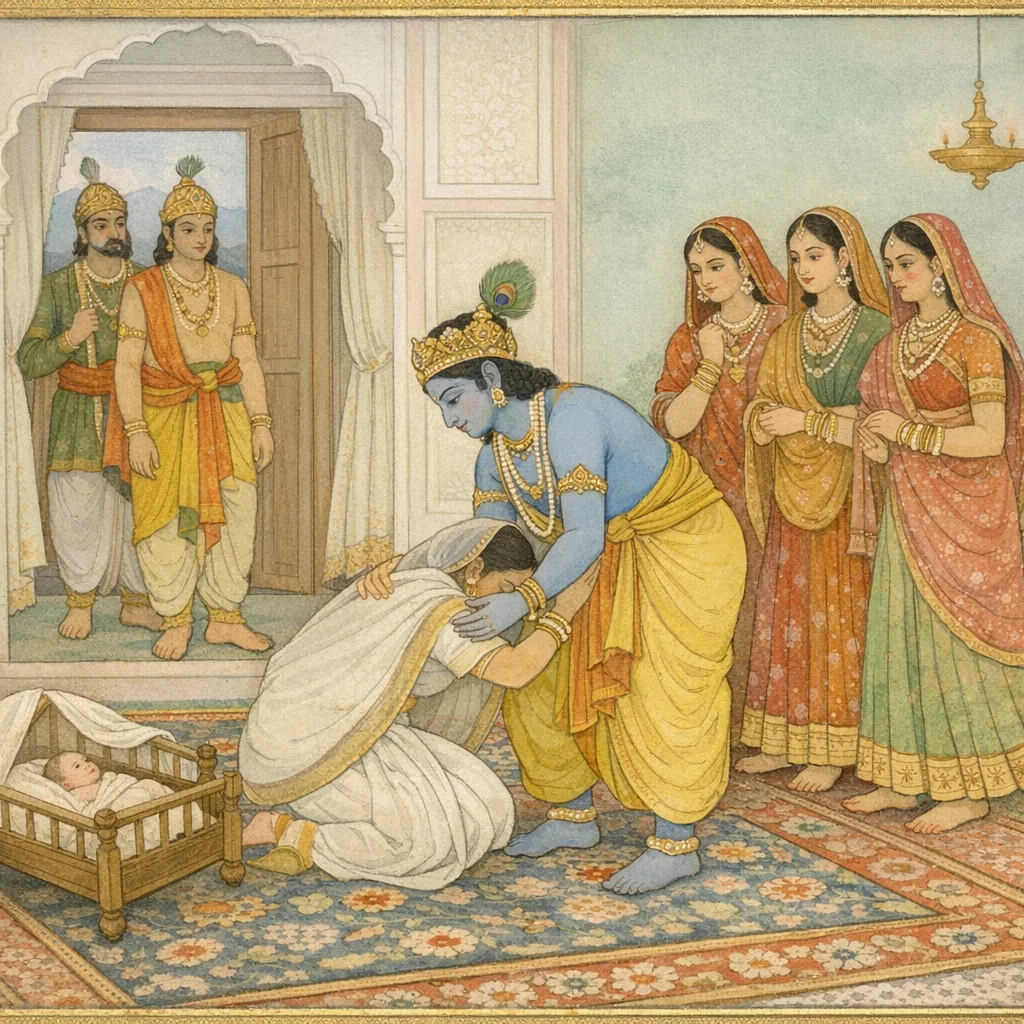
Chapter Arc: अश्वमेध-यज्ञ का समय जानकर श्रीकृष्ण द्वारका लौटने को उद्यत होते हैं, पर हस्तिनापुर में एक करुण पुकार उन्हें रोक लेती है—उत्तरा का नवजात, परीक्षित, ब्रह्मास्त्र-पीड़ा से निष्प्राण पड़ा है। → युधिष्ठिर के कहे अनुसार विदा लेने निकले कृष्ण अपने वृष्णि-वीरों (रौक्मिणेय प्रद्युम्न, सात्यकि, चारुदेष्ण, साम्ब, गद, कृतवर्मा आदि) सहित अंतःपुर में प्रवेश करते हैं। वहाँ शोक और भय का घना वातावरण है; ब्रह्मास्त्र से पीड़ित शिशु ‘शव-सा’ निश्चेष्ट है, और कुल-परंपरा के टूटने का संकट सबके हर्ष-शोक को तीव्र कर देता है। → भूमि पर गिर पड़ी कुन्ती, केशव से विनती करती हैं—अश्वत्थामा द्वारा मारे गए अभिमन्यु-पुत्र को जीवित कर दें। यह क्षण केवल एक बालक का नहीं, पाण्डव-वंश के भविष्य और धर्मराज्य की निरंतरता का निर्णायक मोड़ बन जाता है। → जनार्दन कुन्ती को उठाकर आलिंगन देते हैं और सांत्वना देते हैं—उनके शोक को थामते हुए आश्वस्त करते हैं कि वे इस संकट में साथ हैं और उचित उपाय करेंगे। → कृष्ण के आश्वासन के बाद भी प्रश्न अधर में रहता है—क्या ब्रह्मास्त्र-पीड़ित शिशु में पुनः प्राण-संचार होगा, और किस प्रकार?
Shlokas
Verse 1
/ नीपस्ज्श्लिस्ज यु भिपस््श्श्ज्जण षट्षष्टितमो<5 ध्याय: श्रीकृष्णका हस्तिनापुरमें आगमन और उत्तराके मृत बालकको जिलानेके लिये कुन्तीकी उनसे प्रार्थना वैशम्पायन उवाच एतस्मिन्नेव काले तु वासुदेवो5पि वीर्यवान् | उपायाद् वृष्णिश्रि: सार्धथ पुरं वारणसाह्दयम्,वैशम्पायनजी कहते हैं--जनमेजय! इसी बीचमें परम पराक्रमी भगवान् श्रीकृष्ण भी वृष्णिवंशियोंको साथ लेकर हस्तिनापुर आ गये
Vaiśampāyana said: “O Janamejaya, at that very time the mighty Vāsudeva (Kṛṣṇa) also arrived—the foremost among the Vṛṣṇis—together with his kinsmen, to the city called Vāraṇasāhvaya (Hastināpura).”
Verse 2
समयं वाजिमेधस्य विदित्वा पुरुषर्षभ: । यथोक्तो धर्मपुत्रेण प्रव्रजन् स्वपुरी प्रति,उनके द्वारका जाते समय धर्मपुत्र युधिष्ठिने जैसी बात कही थी, उसके अनुसार अश्वमेध यज्ञका समय निकट जानकर पुरुषोत्तम श्रीकृष्ण पहले ही उपस्थित हो गये
Vaiśampāyana said: Knowing that the time for the Aśvamedha sacrifice had arrived, the best of men set out toward his own city, acting in accordance with what Dharmaputra (Yudhiṣṭhira) had previously instructed.
Verse 3
रौक्मिणेयेन सहितो युयुधानेन चैव ह | चारुदेष्णेन साम्बेन गदेन कृतवर्मणा
Vaiśampāyana said: He was accompanied by Raukmiṇeya, and also by Yuyudhāna; by Cārudeṣṇa, by Sāmba, by Gada, and by Kṛtavarman—thus surrounded by these foremost Yādava heroes.
Verse 4
बलदेवं पुरस्कृत्य सुभद्रासहितस्तदा,वे बलदेवजीको आगे करके सुभद्राके साथ पधारे थे। उनके शुभागमनका उद्देश्य था द्रौपदी, उत्तरा और कुन्तीसे मिलना तथा जिनके पति मारे गये थे, उन सभी क्षत्राणियोंको आश्वासन देना--धीरज बँधाना
Vaiśampāyana said: Then, with Balarāma placed at the forefront, Subhadrā came as well. Their auspicious arrival was meant to meet Draupadī, Uttarā, and Kuntī, and to reassure and steady the hearts of those Kṣatriya women whose husbands had been slain.
Verse 5
द्रौपदीमुत्तरां चैव पृथां चाप्पवलोककः । समाश्चासयितु चापि क्षत्रिया निहतेश्वरा:,वे बलदेवजीको आगे करके सुभद्राके साथ पधारे थे। उनके शुभागमनका उद्देश्य था द्रौपदी, उत्तरा और कुन्तीसे मिलना तथा जिनके पति मारे गये थे, उन सभी क्षत्राणियोंको आश्वासन देना--धीरज बँधाना
Vaiśampāyana said: He came to see Draupadī, Uttarā, and Pṛthā (Kuntī), and also to console the Kṣatriya women whose lords had been slain—offering them reassurance and steadiness of heart in the aftermath of war.
Verse 6
तानागतान् समीक्ष्यैव धृतराष्ट्रो महीपति: । प्रत्यगृह्नाद् यथान्यायं विदुरश्ष महामना:,उनके आगमनका समाचार सुनते ही राजा धृतराष्ट्र और महामना विदुरजी खड़े हो गये और आगे बढ़कर उन्होंने उन सबका विधिवत् स्वागत-सत्कार किया
Vaiśampāyana said: Seeing them arrive, King Dhṛtarāṣṭra, lord of the earth, and the great-souled Vidura stepped forward and, in accordance with proper custom (yathā-nyāya), formally received them with due welcome and honor.
Verse 7
तत्रैव न्न्यवसत् कृष्ण: स्वर्चित: पुरुषोत्तम: । विदुरेण महातेजास्तथैव च युयुत्सुना,विदुर और युयुत्सुसे भलीभाँति पूजित हो महातेजस्वी पुरुषोत्तम भगवान् श्रीकृष्ण वहीं रहने लगे
Vaiśampāyana said: There itself, Kṛṣṇa—the Supreme Person (Puruṣottama)—remained, having been duly honored. The mighty and radiant Lord was likewise respectfully worshipped by Vidura and by Yuyutsu.
Verse 8
वसत्सु वृष्णिवीरेषु तत्राथ जनमेजय । जज्ञे तव पिता राजन् परिक्षित् परवीरहा,जनमेजय! उन वृष्णिवीरोंके वहाँ निवास करते समय ही तुम्हारे पिता शत्रुवीरहन्ता परीक्षित्का जन्म हुआ था
Vaiśampāyana said: “O Janamejaya, while those heroic Vṛṣṇi warriors were residing there, your father—King Parīkṣit, the slayer of enemy champions—was born.”
Verse 9
स तु राजा महाराज ब्रद्यास्त्रेणावपीडित: । शवो बभूव निश्रेष्टो हर्षशोकविवर्धन:,महाराज! वे राजा परीक्षित् ब्रह्मास्त्रसे पीड़ित होनेके कारण चेष्टाहीन मुर्देके रूपमें उत्पन्न हुए, अतः स्वजनोंका हर्ष और शोक बढ़ानेवाले हो गये थे-
Vaiśampāyana said: O great king, that royal child (Parīkṣit), crushed by the force of the Brahmāstra, was born like a lifeless body, utterly without movement—thereby becoming a cause for both joy and grief to swell among his own people.
Verse 10
हृष्टानां सिंहनादेन जनानां तत्र नि:स्वन: | प्रविश्य प्रदिश: सर्वा: पुनरेव व्युपारमत्,पहले पुत्र-जन्मका समाचार सुनकर हर्षमें भरे हुए लोगोंके सिंहनादसे एक महान् कोलाहल सुनायी पड़ा, जो सम्पूर्ण दिशाओंमें प्रविष्ट हो पुनः: शान्त हो गया
Vaiśampāyana said: From the lion-like shouts of the people, filled with joy there, a great uproar arose. It spread into all directions and then, once again, subsided into calm.
Verse 11
ततः सो3तित्वर: कृष्णो विवेशान्त:पुरं तदा । युयुधानद्वितीयो वै व्यथितेन्द्रियमानस:,इससे भगवान् श्रीकृष्णके मन और इन्द्रियोंमें व्यथा-सी उत्पन्न हो गयी। वे सात्यकिको साथ ले बड़ी उतावलीसे अन्तःपुरमें जा पहुँचे
Then Kṛṣṇa, seized by urgent haste, entered the inner palace. With Yuyudhāna (Sātyaki) as his sole companion, his mind and senses were troubled—anxious at what might have occurred within the private quarters, where duty demands swift, protective action.
Verse 12
ततस्त्वरितमायान्तीं ददर्श स्वां पितृष्वसाम् | क्रोशन्तीमभिधावेति वासुदेव॑ पुनः पुन:,वहाँ उन्होंने अपनी बुआ कुन्तीको बड़े वेगसे आती देखा, जो बारंबार उन्हींका नाम लेकर “वासुदेव! दौड़ो-दौड़ो" की पुकार मचा रही थी
Then he saw his paternal aunt rushing toward him in great haste. Crying out again and again, she kept calling, “Vāsudeva! Run—run!”—her urgent appeal signaling sudden danger and the moral weight of immediate protective action.
Verse 13
पृष्ठतो द्रौपदी चैव सुभद्रां च यशस्विनीम् । सविक्रोशं सकरुणं बान्धवानां स्त्रियो नृप,राजन! उनके पीछे द्रौपदी, यशस्विनी सुभद्रा तथा अन्य बन्धु-बान्धवोंकी स्त्रियाँ भी थीं, जो बड़े करुण स्वरसे बिलख-बिलखकर रो रही थीं
Vaiśampāyana said: Behind them followed Draupadī and the illustrious Subhadrā, along with the women of their kinsmen. O king, they moved on crying aloud—voices choked with compassion and grief—lamenting in a manner that made their sorrow unmistakable. The scene underscores how the aftermath of royal duty and conflict is borne not only by warriors but also by families, whose mourning becomes a moral witness to the cost of violence.
Verse 14
ततः: कृष्णं समासाद्य कुन्तिभोजसुता तदा । प्रोवाच राजशार्दूल बाष्पगद्गदया गिरा,नृपश्रेष्ठट उस समय श्रीकृष्णके निकट पहुँचकर कुन्तिभोजकुमारी कुन्ती नेत्रोंसे आँसू बहाती हुई गदगद वाणीमें बोली--
Then Kuntī, the daughter of Kuntibhoja, approached Kṛṣṇa. With tears streaming from her eyes and her voice choked with emotion, she spoke—addressing him as the tiger among kings. The scene frames a morally weighty appeal: after the devastations of war, Kuntī turns to Kṛṣṇa as a trusted guide and protector, her grief and urgency shaping the ethical gravity of what she is about to request or confess.
Verse 15
वासुदेव महाबाहो सुप्रजा देवकी त्वया । त्वं नो गति: प्रतिष्ठा च त्वदायत्तमिदं कुलम्,“महाबाहु वसुदेव-नन्दन! तुम्हें पाकर ही तुम्हारी माता देवकी उत्तम पुत्रवाली मानी जाती हैं। तुम्हीं हमारे अवलम्ब और तुम्हीं हमलोगोंके आधार हो। इस कुलकी रक्षा तुम्हारे ही अधीन है
Vaiśampāyana said: “O Vāsudeva, mighty-armed one! Because of you, Devakī is truly counted as blessed with an excellent son. You are our refuge and our firm support; the safeguarding and continuance of this lineage rests under your protection.”
Verse 16
यदुप्रवीर यो<यं ते स्वस्नीयस्यात्मज: प्रभो । अश्वत्थाम्ना हतो जातस्तमुज्जीवय केशव,“यदुवीर! प्रभो! यह जो तुम्हारे भानजे अभिमन्युका बालक है, अभश्वत्थामाके अस्त्रसे मरा हुआ ही उत्पन्न हुआ है। केशव! इसे जीवन-दान दो
Vaiśampāyana said: “O foremost hero of the Yadus, O Lord—this child, the son of your sister’s son, has been born already slain by Aśvatthāman’s weapon. O Keśava, restore him to life.”
Verse 17
त्वया होतत् प्रतिज्ञातमैषीके यदुनन्दन । अहं संजीवयिष्यामि मृतं जातमिति प्रभो,“यदुनन्दन! प्रभो! अश्वत्थामाने जब सींकके बाणका प्रयोग किया था, उस समय तुमने यह प्रतिज्ञा की थी कि मैं उत्तराके मरे हुए बालकको भी जीवित कर दूँगा
Vaiśampāyana said: “O Yadunandana, O Lord—when Aśvatthāman released the weapon of the aśvattha (brahmāstra), you then made this solemn promise: ‘I shall restore to life the child who has been born dead.’”
Verse 18
सो<यं जातो मृतस्तात पश्यैनं पुरुषर्षभ । उत्तरां च सुभद्रां च द्रौपदी मां च माधव,“तात! वही यह बालक है, जो मरा हुआ ही पैदा हुआ है। पुरुषोत्तम! इसपर अपनी कृपादृष्टि डालो। माधव! इसे जीवित करके ही उत्तरा, सुभद्रा और द्रौपदीसहित मेरी रक्षा करो
Vaiśaṃpāyana said: “Dear one, this is that child—born already dead. O bull among men, look upon him with compassion. O Mādhava, by restoring him to life, protect me as well, together with Uttarā, Subhadrā, and Draupadī.”
Verse 19
धर्मपुत्रं च भीमं च फाल्गुनं नकुलं तथा । सहदेवं च दुर्धर्ष सर्वान् नस्त्रातुमहसि,“दुर्धर्ष वीर! धर्मपुत्र युधिष्ठिर भीमसेन, अर्जुन, नकुल और सहदेवकी भी रक्षा करो। तुम हम सब लोगोंका इस संकटसे उद्धार करनेयोग्य हो
Vaiśampāyana said: “O unconquerable hero, you ought to protect us all—Dharma’s son Yudhiṣṭhira, Bhīma, Phālguna (Arjuna), Nakula, and Sahadeva as well. You are fit to rescue us from this peril.”
Verse 20
अस्मिन् प्राणा:समायत्ता: पाण्डवानां ममैव च । पाण्डोश्व पिण्डो दाशार्ह तथैव श्वशुरस्य मे,“मेरे और पाण्डवोंके प्राण इस बालकके ही अधीन हैं। दशाहकुलनन्दन! मेरे पति पाण्डु तथा श्वशुर विचित्रवीर्यके पिण्डका भी यही सहारा है
“On this child depend the very lives of the Pāṇḍavas and of me as well. O Dāśārha (scion of the Vṛṣṇis), he is likewise the sole support of the ancestral continuity (piṇḍa) of my husband Pāṇḍu and of my father-in-law.”
Verse 21
अभिमन्योश्र भद्रें ते प्रियस्य सदृशस्य च । प्रियमुत्पादयाद्य त्वं प्रेतस्पापि जनार्दन,“जनार्दन! तुम्हारा कल्याण हो। जो तुम्हें अत्यन्त प्रिय और तुम्हारे ही समान परम सुन्दर था, उस परलोकवासी अभिमन्युका भी प्रिय करो--उसके इस बालकको जिला दो
Vaiśampāyana said: “May auspiciousness be yours, Janārdana. Abhimanyu—now departed to the other world—was exceedingly dear to you and like you in excellence. Today, bring about what is dear even for him: restore his child to life.”
Verse 22
उत्तरा हि पुरोक्त वै कथयत्यरिसूदन । अभिमन्योर्वच: कृष्ण प्रियत्वात् तन्न संशय:,'शत्रुसूदन श्रीकृष्ण! मेरी बहूरानी उत्तरा अभिमन्युकी पहलेकी कही हुई एक बात अत्यन्त प्रिय होनेके कारण बार-बार दुहराया करती है। उस बातकी यथार्थतामें तनिक भी संदेह नहीं है
Vaiśampāyana said: “O Ari-sūdana, Uttarā—just as was mentioned—keeps recounting a certain earlier saying of Abhimanyu. Because of affection it is surely dear to Kṛṣṇa; of this there is no doubt.”
Verse 23
अब्रवीत् किल दाशार्ह वैराटीमार्जुनिस्तदा । मातुलस्य कुल भद्रे तव पुत्रो गमिष्यति,“दाशाई! अभिमन्युने उत्तरासे कभी स्नेहवश कहा था--“कल्याणी! तुम्हारा पुत्र मेरे मामाके यहाँ जायगा-वृष्णि एवं अन्धकोंके कुलमें जाकर धनुर्वेद, नाना प्रकारके विचित्र अस्त्र-शस्त्र तथा विशुद्ध नीतिशास्त्रकी शिक्षा प्राप्त करेगा”
Vaiśampāyana said: It is told that at that time Arjuni (Abhimanyu), addressing the princess of Virāṭa, spoke to her with affectionate assurance: “O noble lady of a good family, your son will go to his maternal uncle’s house.”
Verse 24
गत्वा वृष्ण्यन्धककुलं धनुर्वेदं ग्रहीष्यति । अस्त्राणि च विचित्राणि नीतिशास्त्रं च केवलम्,“दाशाई! अभिमन्युने उत्तरासे कभी स्नेहवश कहा था--“कल्याणी! तुम्हारा पुत्र मेरे मामाके यहाँ जायगा-वृष्णि एवं अन्धकोंके कुलमें जाकर धनुर्वेद, नाना प्रकारके विचित्र अस्त्र-शस्त्र तथा विशुद्ध नीतिशास्त्रकी शिक्षा प्राप्त करेगा”
“Having gone to the clan of the Vṛṣṇis and Andhakas, he will learn the science of archery; and he will also acquire diverse and wondrous weapons, along with the pure treatise on nīti—right polity and conduct.”
Verse 25
इत्येतत् प्रणयात् तात सौभद्र: परवीरहा । कथयामास दुर्थर्षस्तथा चैतन्न संशय:,“तात! शत्रुवीरोंका संहार करनेवाले दुर्धर्ष वीर सुभद्राकुमारने जो प्रेमपूर्वक यह बात कही थी, यह निस्संदेह सत्य होनी चाहिये
Vaiśampāyana said: “Dear one, this is what the son of Subhadrā—an unassailable hero and slayer of enemy-champions—said with affection. And indeed, there is no doubt that it is so.”
Verse 26
तास्त्वां वयं प्रणम्यपेह याचामो मधुसूदन । कुलस्यास्य हितार्थ तं कुरु कल्याणमुत्तमम्,“मधुसूदन! इस कुलकी भलाईके लिये हम सब लोग तुम्हारे पैरों पड़कर भीख माँगती हैं, इस बालकको जिलाकर तुम कुरुकुलका सर्वोत्तम कल्याण करो”
Vaiśampāyana said: “O Madhusūdana, we bow to you here and beg you—do the highest good for this lineage. For the welfare of this Kuru family, restore that child to life and secure its supreme well-being.”
Verse 27
एवमुकक्त्वा तु वाष्णेयं पृथा पृुथुललोचना । उच्छित्य बाहू दु:खार्ता ताश्चान्या: प्रापतन् भुवि,श्रीकृष्णसे ऐसा कहकर विशाललोचना कुन्ती दोनों बाँहें ऊपर उठाकर दुःखसे आर्त हो पृथ्वीपर गिर पड़ी। दूसरी स्त्रियोंकी भी यही दशा हुई
Vaiśampāyana said: Having thus spoken to Vārṣṇeya (Śrī Kṛṣṇa), Pṛthā (Kuntī), the wide-eyed lady, lifted up both her arms; overwhelmed by grief, she collapsed upon the earth. The other women too fell in the same manner. The scene underscores how even the most steadfast elders are brought low by sorrow, and how communal mourning becomes an ethical witness to the cost of violence and separation.
Verse 28
अब्र॒ुवंश्ष महाराज सर्वाः सास्राविलेक्षणा: । स्वस्रीयो वासुदेवस्य मृतो जात इति प्रभो,समर्थ महाराज! उन सबकी आँखोंसे आँसुओंकी धारा बह रही थी और वे सभी रो- रोकर कह रही थीं कि “हाय! श्रीकृष्णके भानजेका बालक मरा हुआ पैदा हुआ”
Vaiśampāyana said: O king, all those women, their eyes blurred with tears, wept aloud and cried, “Alas, the child of Vāsudeva’s sister has been born dead, O lord!” The scene underscores the fragility of life even after great victories and frames grief as a shared human response that tests steadiness and compassion in dharma.
Verse 29
एवमुक्ते ततः कुन्तीं पर्यगृह्नाज्जनार्दन: । भूमौ निपतितां चैनां सान्त्वयामास भारत,भरतनन्दन! उन सबके ऐसा कहनेपर जनार्दन श्रीकृष्णने कुन्तीदेवीको सहारा देकर बैठाया और पृथ्वीपर पड़ी हुई अपनी बुआको वे सान्त्वना देने लगे
When those words had been spoken, Janārdana (Kṛṣṇa) took Kuntī into his supportive embrace and helped her up. Seeing her fallen upon the ground, he began to console his paternal aunt, O Bhārata—an act that underscores dharma expressed as compassion and familial duty amid the aftershocks of war.
Verse 36
सारणेन च वीरेण निशठेनोल्मुकेन च । उनके साथ रुक्मिणीनन्दन प्रद्युम्न, सात्यकि, चारुदेष्ण, साम्ब, गद, कृतवर्मा, सारण, वीर निशठ और उल्मुक भी थे
Vaiśampāyana said: Along with the valiant Sāraṇa, and also with Niśaṭha and Ulmuka, there were present Pradyumna (son of Rukmiṇī), Sātyaki, Cārudeṣṇa, Sāmba, Gada, Kṛtavarmā, Sāraṇa, the hero Niśaṭha, and Ulmuka as well—indicating the gathered strength and solidarity of the Vṛṣṇi-Yādava leaders in the unfolding events.
Verse 66
इति श्रीमहाभारते आश्वमेधिके पर्वणि अनुगीतापर्वणि परीक्षिज्जन्मकथने षट्षष्टितमो5ध्याय:
Thus ends the sixty-sixth chapter of the Anugītā sub-section within the Aśvamedhika Parva of the Śrī Mahābhārata, in the narrative concerning the birth of Parīkṣit.
Frequently Asked Questions
Whether promised protection must override the apparent finality of death: Subhadrā frames Kṛṣṇa’s prior declaration as a binding commitment whose fulfillment is necessary to prevent a second, post-war collapse of dharmic order through lineage extinction.
Speech acts carry moral weight: satya is not merely descriptive truth but an ethical force that sustains trust, legitimacy, and social continuity—especially when the vulnerable (an unborn/newborn heir) are at risk.
No explicit phalaśruti appears in the provided passage; the meta-level significance is implicit, positioning the episode as a doctrinal illustration of satya and rakṣā-dharma within the epic’s post-conflict reconstruction arc.