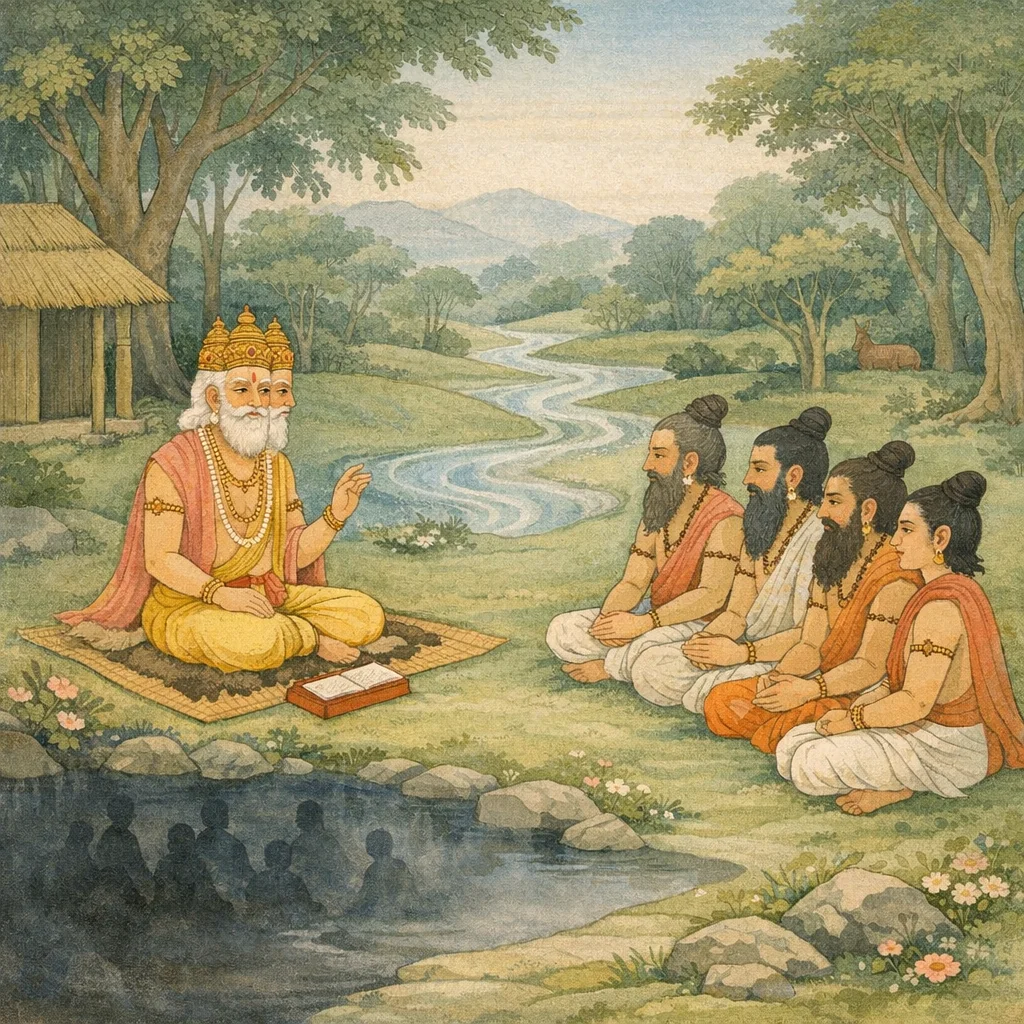
Adhyaya 36
तमोगुण-निरूपण (Analysis of Tamas and its Marks)
Upa-parva: Guṇa-vyākhyāna (Discourse on the Three Guṇas) — Āśvamedhika Parva
Brahmā presents an instructional taxonomy of embodied life and the three guṇas. The body is described as an unmanifest yet stable, all-pervading ‘nine-gated city’ constituted by three guṇas and five elements; mind and intellect are treated as organizing powers within this system. The discourse then explains the interdependence and mutual regulation of tamas, rajas, and sattva, emphasizing how one guṇa becomes prominent when another is restrained. The chapter concentrates on tamas: it is characterized as nocturnal/obscuring (mohasaṃjñita), associated with adharmic tendencies and fixed patterns of harmful action. A detailed catalogue of tamasic traits is supplied—confusion, ignorance, non-renunciation, indecision, fear, greed, grief, disbelief, distorted affect, lack of empathy, moral dullness, heaviness, and downward orientation—followed by behavioral exemplars (e.g., wasteful initiatives, empty giving, reckless consumption, excessive speech, envy). The text links persistent tamasic conduct to lower destinies (immobile beings, various animal forms, and afflicted human conditions), while contrasting it with upward movement through refinement (saṃskāra) and disciplined action. It closes with a meta-instruction: sustained knowledge of the guṇas enables release from tamasic conditioning.
Chapter Arc: ब्रह्मा महर्षियों के प्रश्नों के उत्तर में सृष्टि के सूक्ष्म आधार—गुणों की साम्यावस्था और ‘अव्यक्त’ की स्थिर, सर्वव्यापी सत्ता—का संकेत देकर तमोगुण के रहस्य का द्वार खोलते हैं। → वह बताते हैं कि जब गुणों का संतुलन बिगड़ता है तो मन-बुद्धि-इन्द्रिय-प्रवृत्तियों का जाल फैलता है; चित्त-प्रवाह के ‘तीन स्रोत’ बार-बार उसी गुणात्मिका धारा में बहते हैं, और तमस के लक्षण—अस्मृति, अविपाक, नास्तिक्य, भिन्नवृत्ति, अन्धत्व, जघन्य प्रवृत्ति—जीव को नीचे खींचते जाते हैं। → तमस में डूबे ‘अवाक्स्रोतस’ प्राणी—दुर्वृत्त, स्वकर्म-चिह्नित—का चित्र उभरता है; फिर निर्णायक वाक्य आता है: ‘अतत्त्व में तत्त्व देखने वाला कौन है?’—अर्थात मोह की चरम सीमा, जहाँ विवेक ही उलट जाता है। → ब्रह्मा तमोगुण के बहुविध रूप, उसके कार्य और फल का यथावत निरूपण कर निष्कर्ष देते हैं: जो मनुष्य इन गुणों को सदा जानता है, वह तामस बन्धनों से मुक्त हो सकता है; संस्कार और यत्न से ऊर्ध्वगति का वैदिक आश्वासन भी रखा जाता है। → तमस के ‘नियम’ और नियंत्रण की ओर संकेत (जहाँ-जहाँ ये गुण रोके जाते हैं) आगे के विवेचन का निमंत्रण देता है।
Shlokas
Verse 1
अपन कराता बछ। रस: षटत्रिशो<ध्याय: ब्रह्माजीके द्वारा तमोगुणका, उसके कार्यका और फलका वर्णन ब्रह्मोवाच तदव्यक्तमनुद्रिक्त सर्वव्यापि ध्रुवं स्थिरम् । नदद्वारं पुरं विद्यात् त्रिगुणं पजचधातुकम्,ब्रह्माजीने कहा--महर्षियो! जब तीनों गुणोंकी साम्यावस्था होती है, उस समय उसका नाम अव्यक्त प्रकृति होता है। अव्यक्त समस्त प्राकृत कार्योंमें व्यापक, अविनाशी और स्थिर है। उपर्युक्त तीन गुणोंमें जब विषमता आती है, तब वे पञज्चभूतका रूप धारण करते हैं और उनसे नौ द्वारवाले नगर (शरीर)-का निर्माण होता है, ऐसा जानो। इस पुरमें जीवात्माको विषयोंकी ओर प्रेरित करनेवाली मनसहित ग्यारह इन्द्रियाँ हैं। इनकी अभिव्यक्ति मनके द्वारा हुई है। बुद्धि इस नगरकी स्वामिनी है, ग्यारहवाँ मन दस इन्द्रियोंसे श्रेष्ठ है
Brahmā said: “That unmanifest Prakṛti—unagitated, all-pervading, imperishable, and steadfast—should be understood as the basis. When the three guṇas depart from equilibrium, they transform into the five elemental constituents, and from them arises the ‘city with nine gates’ (the embodied being).”
Verse 2
एकादशपरिक्षेपं मनोव्याकरणात्मकम् । बुद्धिस्वामिकमित्येतत् परमेकादशं भवेत्,ब्रह्माजीने कहा--महर्षियो! जब तीनों गुणोंकी साम्यावस्था होती है, उस समय उसका नाम अव्यक्त प्रकृति होता है। अव्यक्त समस्त प्राकृत कार्योंमें व्यापक, अविनाशी और स्थिर है। उपर्युक्त तीन गुणोंमें जब विषमता आती है, तब वे पञज्चभूतका रूप धारण करते हैं और उनसे नौ द्वारवाले नगर (शरीर)-का निर्माण होता है, ऐसा जानो। इस पुरमें जीवात्माको विषयोंकी ओर प्रेरित करनेवाली मनसहित ग्यारह इन्द्रियाँ हैं। इनकी अभिव्यक्ति मनके द्वारा हुई है। बुद्धि इस नगरकी स्वामिनी है, ग्यारहवाँ मन दस इन्द्रियोंसे श्रेष्ठ है
Vāyu said: “This is the ‘elevenfold projection’—arising through the differentiating activity of the mind—over which Buddhi (intellect) presides as the sovereign. Thus is described the supreme set of eleven.”
Verse 3
त्रीणि स्रोतांसि यान्यस्मिन्नाप्यायन्ते पुन: पुनः । प्रनाड्यस्तिस्र एवैता: प्रवर्तन्ते गुणात्मिका:,इसमें जो तीन स्रोत (चित्तरूपी नदीके प्रवाह) हैं, वे उन तीन गुणमयी नाडियोंके द्वारा बार-बार भरे जाते एवं प्रवाहित होते हैं
Vāyu-deva said: “Within this (inner being), there are three streams that are replenished again and again. These very three channels—formed of the three guṇas—set those streams in motion and keep them flowing.”
Verse 4
तमो रजस्तथा सत्त्वं गुणानेतान् प्रचक्षते । अन्योन्यमि थुना: सर्वे तथान्योन्यानुजीविन:,सत्त्व, रज और तम--इन तीनोंको गुण कहते हैं। ये परस्पर एक-दूसरेके प्रतिद्वन्द्दी, एक-दूसरेके आश्रित, एक-दूसरेके सहारे टिकनेवाले, एक-दूसरेका अनुसरण करनेवाले और परस्पर मिश्रित रहनेवाले हैं। पाँचों महाभूत त्रिगुणात्मक हैं
Vāyu said: “Darkness (tamas), activity (rajas), and clarity (sattva)—these three are called the guṇas. All of them stand in mutual opposition and yet depend upon one another, sustained by one another, following one another, and remaining intermingled.”
Verse 5
अन्योन्यापाश्रयाश्चापि तथान्योन्यानुवर्तिन: । अन्योन्यव्यतिषक्ताश्च त्रिगुणा: पज्चधातव:,सत्त्व, रज और तम--इन तीनोंको गुण कहते हैं। ये परस्पर एक-दूसरेके प्रतिद्वन्द्दी, एक-दूसरेके आश्रित, एक-दूसरेके सहारे टिकनेवाले, एक-दूसरेका अनुसरण करनेवाले और परस्पर मिश्रित रहनेवाले हैं। पाँचों महाभूत त्रिगुणात्मक हैं
Vāyu said: The three guṇas—sattva, rajas, and tamas—stand in mutual dependence. They oppose one another, yet they also support and follow one another, remaining interwoven and mixed. In the same way, the five great elements are constituted by these three guṇas. The teaching points to ethical discernment: what appears as a single stable nature is actually a shifting blend of qualities, and wise conduct requires recognizing this mixture rather than clinging to a one-sided view.
Verse 6
तमसो मिथुन सत्त्वं सत्त्वस्य मिथुनं रज: । रजसश्षापि सत्त्वं स्यात् सत्त्वस्य मिथुनं तम:,तमोगुणका प्रतिद्वन्द्दी है सत््वगुण और सत्त्व-गुणका प्रतिद्वन्द्धी रजोगुण है। इसी प्रकार रजोगुणका प्रतिद्वन्द्दी सत््वगुण है और सत्त्वगुणका प्रतिद्वन्द्ी तमोगुण है
The counterpart of tamas is sattva, and the counterpart of sattva is rajas. Likewise, rajas finds its counterpart in sattva, and sattva finds its counterpart in tamas.
Verse 7
नियम्यते तमो यत्र रजत्तत्र प्रवर्तते । नियम्यते रजो यत्र सत्त्वं तत्र प्रवर्तते,जहाँ तमोगुणको रोका जाता है, वहाँ रजोगुण बढ़ता है और जहाँ रजोगुणको दबाया जाता है, वहाँ सत्त्वगुणकी वृद्धि होती है
Vāyu said: Where the darkness of inertia (tamas) is restrained, the force of activity (rajas) begins to operate. And where restless activity (rajas) is checked, clarity and balance (sattva) comes forward. The teaching points to ethical self-cultivation: progress is made by consciously regulating the lower tendencies so that a higher quality of mind can arise.
Verse 8
नैशात्मकं तमो विद्यात् त्रिगुणं मोहसंज्ञितम् । अधर्मलक्षणं चैव नियतं पापकर्मसु । तामसं रूपमेतत् तु दृश्यते चापि सड्भतम्,तमको अन्धकाररूप और त्रिगुणमय समझना चाहिये। उसका दूसरा नाम मोह है। वह अधर्मको लक्षित करानेवाला और पाप करनेवाले लोगोंमें निश्चित रूपसे विद्यमान रहनेवाला है। तमोगुणका यह स्वरूप दूसरे गुणोंसे मिश्रित भी दिखायी देता है
Vāyu-deva said: ‘Know tamas to be of the nature of night and darkness—one of the three guṇas, also called delusion (moha). It is marked by adharma and is found as a settled tendency among those engaged in sinful acts. This is the form of tamas; and it is also seen to appear in combination, mixed with the other qualities.’
Verse 9
प्रकृत्यात्मकमेवाहू रज: पर्यायकारकम् । प्रवृत्तं सर्वभूतेषु दृश्यमुत्पत्तिलक्षणम्,रजोगुणको प्रकृतिरूप बतलाया गया है, यह सृष्टिकी उत्पत्तिका कारण है। सम्पूर्ण भूतोंमें इसकी प्रवृत्ति देखी जाती है। यह दृश्य जगत् उसीका स्वरूप है, उत्पत्ति या प्रवृत्ति ही उसका लक्षण है
Vāyu said: ‘Rajas is declared to be of the very nature of Prakṛti, functioning as the principle of transformation. It operates within all beings and is seen everywhere; the manifest world bears its mark—its defining sign is arising and ceaseless activity.’
Verse 10
प्रकाशं सर्वभूतेषु लाघवं श्रद्दधधानता । सात्त्विकं रूपमेवं तु लाघवं साधुसम्मितम्,सब भूतोंमें प्रकाश, लघुता (गर्वहीनता) और श्रद्धा--यह सत्तवगुणका रूप है। गर्वहीनताकी श्रेष्ठ पुरुषोंने प्रशंसा की है
Vāyu said: “Illumination among all beings, humility (lightness of ego), and steadfast faith—these constitute the form of sattva. Such humility is affirmed by the virtuous as a true mark of excellence.”
Verse 11
एतेषां गुणतत्त्वानि वक्ष्यन्ते तत्त्वहेतुभि: । समासव्यासयुक्तानि तत्त्वतस्तानि बोधत,अब मैं तात्विक युक्तियोंद्वारा संक्षेप और विस्तारके साथ इन तीनों गुणोंके कार्योंका यथार्थ वर्णन करता हूँ, इन्हें ध्यान देकर सुनो
Vāyu-deva said: “Now I shall set forth, by sound principles that lead to truth, the real nature and workings of these guṇas. I will explain them both briefly and in detail; understand them as they truly are, and listen with attentive discernment.”
Verse 12
सम्मोहोऊज्ञानमत्याग: कर्मणामविनिर्णय: । स्वप्न: स्तम्भो भयं लोभ: स्वत: सुकृतदूषणम्,तत्र तत्र नियम्यन्ते सर्वे ते तामसा गुणा: । मोह, अज्ञान, त्यागका अभाव, कर्मोंका निर्णय न कर सकना, निद्रा, गर्व, भय, लोभ, स्वयं शुभ कर्मोंमें दोष देखना, स्मरणशक्तिका अभाव, परिणाम न सोचना, नास्तिकता, दुश्चरित्रता, निर्विशेषता (अच्छे-बुरेके विवेकका अभाव), इन्द्रियोंकी शिथिलता, हिंसा आदि निन्दनीय दोषोंमें प्रवृत्त होना, अकार्यको कार्य और अज्ञानको ज्ञान समझना, शत्रुता, काममें मन न लगाना, अअश्रद्धा, मूर्खतापूर्ण विचार, कुटिलता, नासमझी, पाप करना, अज्ञान, आलस्य आदिके कारण देहका भारी होना, भाव-भक्तिका न होना, अजितेन्द्रियता और नीच कर्मोमें अनुराग--ये सभी दुर्गुण तमोगुणके कार्य बतलाये गये हैं। इनके सिवा और भी जो-जो बातें इस लोकमें निषिद्ध मानी गयी हैं, वे सब तमोगुणी ही हैं
Vāyu said: “Delusion, ignorance, the refusal to renounce, inability to judge one’s actions, sleep and torpor, paralysis of will, fear, greed, and the habit of finding fault even with one’s own good deeds—these and the like are all governed by the quality of darkness (tamas). In ethical terms, they are the marks by which tamas is recognized: it clouds discernment, weakens resolve, and turns a person away from right conduct.”
Verse 13
अस्मृतिश्नचाविपाकश्च नास्तिकयं भिन्नवृत्तिता | निर्विशेषत्वमन्धत्वं जघन्यगुणवृत्तिता
Vāyu-deva said: “From such a course arise loss of right memory and discernment, an unripe and fruitless outcome of actions, disbelief, and a fractured, inconsistent conduct. One falls into a state of moral indistinction and blindness, living by the lowest qualities and habits.”
Verse 14
अकृते कृतमानित्वमज्ञाने ज्ञानमानिता । अमैत्री विकृताभावो हा श्रद्धा मूढठभावना
Vāyu said: “To take pride in deeds not actually done; to imagine oneself wise while remaining ignorant; the absence of friendliness; a warped and perverted disposition; the loss of faith; and a stubborn, deluded way of thinking—these are marks of inner corruption and ethical downfall.”
Verse 15
अनार्जवमसंज्ञत्वं कर्म पापमचेतना । गुरुत्वं सन्नभावत्वमवशित्वमवाग्गति:
Vāyu said: “Crookedness, lack of awareness, sinful action born of insensibility, heaviness of spirit, the state of clinging to what is taken as ‘truly existent’ and thus becoming bound, helplessness, and a downward course—these are the marks of moral decline that drag a being away from the noble path.”
Verse 16
सर्व एते गुणा वृत्तास्तामसा: सम्प्रकीर्तिता: । ये चान्ये विहिता भावा लोके5स्मिन् भावसंज्ञिता:
Vāyu said: “All these dispositions and traits that have been described are proclaimed to be tāmasic in nature. And whatever other states of mind and modes of conduct are prescribed and recognized in this world as ‘conditions’ or ‘dispositions’—they too are to be understood within this same classification.”
Verse 17
परिवादकथा नित्य देवब्राह्मणवैदिकी,देवता, ब्राह्मण और वेदकी सदा निन्दा करना, दान न देना, अभिमान, मोह, क्रोध, असहनशीलता और प्राणियोंके प्रति मात्सर्य--ये सब तामस बर्ताव हैं
Vāyu said: “To habitually engage in slanderous talk—especially against the gods, Brahmins, and the Vedic tradition—along with refusing to give, pride, delusion, anger, intolerance, and envy toward living beings: all of these are forms of tāmasic conduct.”
Verse 18
अत्यागश्चाभिमानश्चव मोहो मन्युस्तथाक्षमा । मत्सरश्रैव भूतेषु तामसं वृत्तमिष्यते,देवता, ब्राह्मण और वेदकी सदा निन्दा करना, दान न देना, अभिमान, मोह, क्रोध, असहनशीलता और प्राणियोंके प्रति मात्सर्य--ये सब तामस बर्ताव हैं
Vāyu-deva said: “Stinginess (refusal to give), pride, delusion, anger, intolerance, and envy toward living beings—such conduct is regarded as tāmasa (born of darkness and inertia).”
Verse 19
वृथारम्भा हि ये केचिद् वृथा दानानि यानि च । वृथा भक्षणमित्येतत् तामसं वृत्तमिष्यते,(विधि और श्रद्धासे रहित) व्यर्थ कार्योका आरम्भ करना, (देश-काल-पात्रका विचार न करके अश्रद्धा और अवहेलनापूर्वक) व्यर्थ दान देना तथा (देवता और अतिथिको दिये बिना) व्यर्थ भोजन करना भी तामसिक कार्य है
Vāyu said: “Any undertakings begun in vain, any gifts given in vain, and eating done in vain—this kind of conduct is regarded as tāmasa (dark, deluded).” In ethical terms, actions performed without due regard for proper rule and reverence—such as giving without considering time, place, and recipient, or eating without first honoring the divine and guests—are counted as tamasic because they lack mindful purpose and dharmic orientation.
Verse 20
अतिवादो>तितिक्षा च मात्सर्यमभिमानिता | अश्रद्दधानता चैव तामसं वृत्तमिष्यते,अतिवाद, अक्षमा, मत्सरता, अभिमान और अश्रद्धाको भी तमोगुणका बर्ताव माना गया है
Vāyu said: Excessive contentious speech, intolerance (lack of forbearance), envy, self-conceit, and disbelief are all regarded as modes of conduct born of tamas (darkness and inertia). In ethical terms, these traits cloud discernment and pull a person away from disciplined, dharmic behavior.
Verse 21
एवंविधाश्व ये केचिल्लोके5स्मित् पापकर्मिण: । मनुष्या भिन्नमर्यादास्ते सर्वे तामसा: स्मृता:,संसारमें ऐसे बर्ताववाले और धर्मकी मर्यादा भंग करनेवाले जो भी पापी मनुष्य हैं, वे सब तमोगुणी माने गये हैं
Vāyu said: “In this world, whatever sinful people behave in such a manner—men who break the bounds of dharma and transgress accepted moral limits—all of them are to be regarded as dominated by tamas (darkness, inertia).”
Verse 22
तेषां योनी: प्रवक्ष्यामि नियता: पापकर्मिणाम् | अवाड्निरयभावा ये तिर्यडुनिरयगामिन:,ऐसे पापी मनुष्योंके लिये दूसरे जन्ममें जो योनियाँ निश्चित की हुई हैं, उनका परिचय दे रहा हूँ। उनमेंसे कुछ तो नीचे नरकोंमें ढकेले जाते हैं और कुछ तिर्यगयोनियोंमें जन्म ग्रहण करते हैं
I shall declare the yoni (forms of rebirth) that are surely appointed for those who commit sinful deeds. Some are driven down into the lower hells, and some take birth among the tiryak (the animal orders), moving along paths that lead to hellish suffering.
Verse 23
स्थावराणि च भूतानि पशवो वाहनानि च । क्रव्यादा दन््दशूकाश्न कृमिकीटविहंगमा:
Vāyu-deva said: “All beings—those that are immobile, the animals, and even the creatures used as mounts and conveyances—along with flesh-eaters, biting serpents, and the whole range of worms, insects, and birds: all these too are included (in the scope of beings under discussion).”
Verse 24
अण्डजा जन्तवश्वैव सर्वे चापि चतुष्पदा: । उन्मत्ता बधिरा मूका ये चान्ये पापरोगिण:
Vāyu said: “All creatures born from eggs, and indeed all four-footed beings as well—those who are mad, deaf, mute, and others afflicted with grievous diseases.”
Verse 25
मग्नास्तमसि दुर्वत्ता: स्वकर्मकृतलक्षणा: । अवाक्स्रोतस इत्येते मग्नासतमसि तामसा:
Vāyu said: “These people, of corrupt conduct, bear the marks fashioned by their own deeds. Sunk in darkness, they are called ‘those whose current flows downward’ (arvāk-srotas); tamasic by nature, they remain immersed in that gloom.”
Verse 26
स्थावर (वृक्ष-पर्वत आदि) जीव, पशु, वाहन, राक्षस, सर्प, कीड़े-मकोड़े, पक्षी, अण्डज प्राणी, चौपाये, पागल, बहरे, गूँगे तथा अन्य जितने पापमय रोगवाले (कोढ़ी आदि) मनुष्य हैं, वे सब तमोगुणमें डूबे हुए हैं। अपने कर्मोंके अनुसार लक्षणोंवाले ये दुराचारी जीव सदा दुःखमें निमग्न रहते हैं। उनकी चित्तवृत्तियोंका प्रवाह निम्न दशाकी ओर होता है, इसलिये उन्हें अर्वाक् स्रोता कहते हैं। वे तमोगुणमें निमग्न रहनेवाले सभी प्राणी तामसी हैं || २३-- २५ || तेषामुत्कर्षमुद्रेक॑ वक्ष्याम्यहमत: परम् । यथा ते सुकृताललोकॉल्लभन्ते पुण्यकर्मिण:,इसके पश्चात् मैं यह वर्णन करूँगा कि उन तामसी योनियोंमें गये हुए प्राणियोंका उत्थान और समृद्धि किस प्रकार होती है तथा वे पुण्यकर्मा होकर किस प्रकार श्रेष्ठ लोकोंको प्राप्त होते हैं
Vāyu said: All beings such as immobile life-forms (trees, mountains and the like), animals, beasts of burden, rākṣasas, serpents, insects and worms, birds, egg-born creatures, four-footed animals, and also humans who are mad, deaf, mute, or afflicted with sinful diseases (such as leprosy)—all of them are submerged in the quality of darkness (tamas). Marked by the signs produced by their own deeds, these ill-conducted beings remain continually immersed in suffering. Since the current of their mental tendencies flows downward toward a lower condition, they are called ‘those whose stream runs downward’ (arvāk-srotas). All creatures sunk in tamas are thus termed tāmasa. Thereafter I shall explain how those who have fallen into such tamasic wombs can rise and prosper, and how, by becoming doers of merit, they attain higher worlds.
Verse 27
अन्यथा प्रतिपन्नास्तु विवृद्धा ये च कर्मण: । स्वकर्मनिरतानां च ब्राह्मणानां शुभैषिणाम्,जो विपरीत योनियोंको प्राप्त प्राणी हैं, उनके पापकर्मोंका भोग पूरा हो जानेपर) जब पूर्वकृत पुण्य-कर्मोंका उदय होता है, तब वे शुभकर्मोंके संस्कारोंके प्रभावसे स्वकर्मनिष्ठ कल्याणकामी ब्राह्मणोंकी समानताको प्राप्त होते हैं अर्थात् उनके कुलमें उत्पन्न होते हैं और वहाँ पुनः यत्नशील होकर ऊपर उठते हैं एवं देवताओंके स्वर्गलोकमें चले जाते हैं--यह वेदकी श्रुति है
Vāyu said: Those beings who have taken to a contrary course—who have become deeply enmeshed in actions—when the fruition of their sinful deeds is exhausted and the rise of previously performed merit begins, then, by the force of impressions left by auspicious acts, they attain the condition of Brahmins who are devoted to their own prescribed duties and who seek the good. That is, they are born in such families; there they strive again, rise upward, and go to the heavenly world of the gods—this is what Vedic revelation declares.
Verse 28
संस्कारेणोर्ध्वमायान्ति यतमाना: सलोकताम् | स्वर्गे गच्छन्ति देवानामित्येषा वैदिकी श्रुति:,जो विपरीत योनियोंको प्राप्त प्राणी हैं, उनके पापकर्मोंका भोग पूरा हो जानेपर) जब पूर्वकृत पुण्य-कर्मोंका उदय होता है, तब वे शुभकर्मोंके संस्कारोंके प्रभावसे स्वकर्मनिष्ठ कल्याणकामी ब्राह्मणोंकी समानताको प्राप्त होते हैं अर्थात् उनके कुलमें उत्पन्न होते हैं और वहाँ पुनः यत्नशील होकर ऊपर उठते हैं एवं देवताओंके स्वर्गलोकमें चले जाते हैं--यह वेदकी श्रुति है
Vāyu said: “Through the force of wholesome impressions (saṃskāras), striving beings rise upward and attain the same world (as the righteous). They go to the heaven of the gods—this is the Vedic teaching.”
Verse 29
अन्यथा प्रतिपन्नास्ते विबुद्धा: स्वेषु कर्मसु । पुनरावृत्तिधर्माणस्ते भवन्तीह मानुषा:,वे पुनरावृतिशील सकाम धर्मका आचरण करनेवाले मनुष्य देवभावको प्राप्त हो जानेके अनन्तर जब वहाँसे दूसरी योनिमें जाते हैं तब यहाँ (मृत्युलोकमें) मनुष्य होते हैं
But those who have taken to a different course—though discerning in their own ritual and worldly duties—remain subject to return. Therefore, after enjoying higher states, they come back again and here in the mortal world they become human once more.
Verse 30
पापयोनिं समापतन्नाश्वाण्डाला मूकचूचुका: । वर्णान् पर्यायशश्षापि प्राप्रुवन्त्युत्तरोत्तरम्,उनमेंसे कोई-कोई (बचे हुए पापकर्मका फल भोगनेके लिये) पुनः पापयोनिसे युक्त चाण्डाल, गूँगे और अटककर बोलनेवाले होते हैं और प्राय: जन्म-जन्मान्तरमें उत्तरोत्तर उच्च वर्णको प्राप्त होते हैं
Vāyu said: Some, falling again into sinful wombs, are born as chandālas (outcastes), or as mute, or as those who stammer in speech. Yet, in due sequence across births, they may also attain progressively higher social orders, as the remaining fruits of past deeds are exhausted and merit ripens.
Verse 31
शूद्रयोनिमतिक्रम्य ये चान्ये तामसा गुणा: । स्रोतोमध्ये समागम्य वर्तन्ते तामसे गुणे,कोई शूद्रयोनिसे आगे बढ़कर भी तामस गुणोंसे युक्त हो जाते हैं और उसके प्रवाहमें पड़कर तमोगुणमें ही प्रवृत्त रहते हैं
Vāyu said: “Even those who rise beyond a śūdra birth, and others who are dominated by tamas—when they come together in the middle of the current—continue to move and act under the sway of the tamasic quality.”
Verse 32
अभिष्वड्डस्तु कामेषु महामोह इति स्मृत: । ऋषयो मुनयो देवा मुहान्त्यत्र सुखेप्सव:,यह जो भोगोंमें आसक्त हो जाना है, यही महामोह बताया गया है। इस मोहमें पड़कर भोगोंका सुख चाहनेवाले ऋषि, मुनि और देवगण भी मोहित हो जाते हैं (फिर साधारण मनुष्योंकी तो बात ही क्या है?)
Attachment and clinging to sense-pleasures is remembered as “great delusion” (mahāmoha). Under its sway, even seers, sages, and the gods—when they seek the sweetness of enjoyment—can become bewildered; how much more, then, ordinary human beings.
Verse 33
तमो मोहो महामोहस्तामिस््र: क्रोधसंज्ञित: । मरणं त्वन्धतामिस्रस्तामिस्र: क्रोध उच्यते,तम (अविद्या), मोह (अस्मिता), महामोह (राग), क्रोध नामवाला तामिस््र और मृत्युरूप अन्धतामिस्र-यह पाँच प्रकारकी तामसी प्रकृति बतलायी गयी है। क्रोधको ही तामिस्र कहते हैं
Tamas (the darkness of ignorance), moha (bewilderment), mahāmoha (great delusion), tāmisra—known as wrath—and andhatāmisra—whose form is death: these are declared to be the five kinds of tamasic nature. And wrath itself is called tāmisra.
Verse 34
वर्णतो गुणतश्चैव योनितश्वैव तत्त्वतः । सर्वमेतत्तमो विप्रा: कीर्तितं वो यथाविधि,विप्रवरो! वर्ण, गुण, योनि और तत्त्वके अनुसार मैंने आपसे तमोगुणका पूरा-पूरा यथावत् वर्णन किया
Vāyu-deva said: “O brāhmaṇas, I have now set forth for you—duly and in proper order—the full account of tamas, classified by social designation (varṇa), by qualities (guṇa), by birth or source (yoni), and by its underlying reality (tattva).”
Verse 35
कोन्वेतद् बुध्यते साधु कोन्वेतत् साधु पश्यति । अतत्त्वे तत्त्वदर्शी यस्तमसस्तत्त्वलक्षणम्,जो अतत्त्वमें तत्त्व-दृष्टि रखनेवाला है, ऐसा कौन-सा मनुष्य इस विषयको अच्छी तरह देख और समझ सकता है? यह विपरीत दृष्टि ही तमोगुणकी यथार्थ पहचान है
Vāyu said: “Who, indeed, can rightly understand this, and who can rightly perceive it—this condition in which one mistakes the unreal for the real? Such inverted vision, seeing ‘truth’ where there is no truth, is the true mark of tamas (darkness and delusion).”
Verse 36
तमोगुणा बहुविधा: प्रकीर्तिता यथावदुक्त च तम: परावरम् | नरो हि यो वेद गुणानिमान् सदा स तामसै: सर्वगुणै: प्रमुच्यते,इस प्रकार तमोगुणके स्वरूप और उसके कार्यभूत नाना प्रकारके गुणोंका यथावत् वर्णन किया गया तथा तमोगुणसे प्राप्त होनेवाली ऊँची-नीची योनियाँ भी बतला दी गयीं। जो मनुष्य इन गुणोंको ठीक-ठीक जानता है, वह सम्पूर्ण तामसिक गुणोंसे सदा मुक्त रहता है इति श्रीमहाभारते आश्वमेधिके पर्वणि अनुगीतापर्वणि गुरुशिष्यसंवादे षट्त्रिंशो5ध्याय:
“The many forms of the quality of darkness (tamas) have been set forth, and the higher and lower consequences of tamas have been described as they truly are. For the person who clearly understands these qualities remains ever released from all tamasic traits.”
Verse 166
तत्र तत्र नियम्यन्ते सर्वे ते तामसा गुणा: । मोह, अज्ञान, त्यागका अभाव, कर्मोंका निर्णय न कर सकना, निद्रा, गर्व, भय, लोभ, स्वयं शुभ कर्मोंमें दोष देखना, स्मरणशक्तिका अभाव, परिणाम न सोचना, नास्तिकता, दुश्चरित्रता, निर्विशेषता (अच्छे-बुरेके विवेकका अभाव), इन्द्रियोंकी शिथिलता, हिंसा आदि निन्दनीय दोषोंमें प्रवृत्त होना, अकार्यको कार्य और अज्ञानको ज्ञान समझना, शत्रुता, काममें मन न लगाना, अअश्रद्धा, मूर्खतापूर्ण विचार, कुटिलता, नासमझी, पाप करना, अज्ञान, आलस्य आदिके कारण देहका भारी होना, भाव-भक्तिका न होना, अजितेन्द्रियता और नीच कर्मोमें अनुराग--ये सभी दुर्गुण तमोगुणके कार्य बतलाये गये हैं। इनके सिवा और भी जो-जो बातें इस लोकमें निषिद्ध मानी गयी हैं, वे सब तमोगुणी ही हैं
Vāyu said: “In various ways all these qualities born of tamas are restrained and recognized: delusion and ignorance; absence of renunciation; inability to judge what action should be done; sleep; pride; fear; greed; finding faults even in one’s own good deeds; loss of memory; failure to consider consequences; disbelief in higher truth; bad conduct; lack of discernment between right and wrong; slackness of the senses; engagement in blameworthy vices such as violence; mistaking what should not be done for what should be done, and taking ignorance to be knowledge; hostility; lack of interest in one’s proper work; faithlessness; foolish thinking; crookedness; lack of understanding; committing sin; heaviness of body due to ignorance and laziness; absence of heartfelt devotion; uncontrolled senses; and attachment to base actions—these are all declared to be the effects of the tamasic quality. And whatever else in this world is regarded as forbidden is likewise tamasic.”
Frequently Asked Questions
The chapter diagnoses tamasic confusion (moha) as an ethical-psychological condition that drives indecision, harmful action, and social deviation, thereby undermining dharmic agency.
To cultivate discernment of guṇa-operations in oneself—recognizing when tamas dominates and how restraint and disciplined practice can allow rajas or sattva to arise—thereby reorienting conduct toward clarity and responsibility.
Yes. The closing statement frames guṇa-knowledge as emancipatory: one who consistently understands these guṇas is said to become free from tamasic qualities, indicating a soteriological value beyond mere description.