Adhyaya 26
Adhyāya 26 — Ekākṣara-Brahman (“Om”) and the Hṛdayastha Guru (Inner Teacher)
Upa-parva: Āśvamedhika-parva — Adhyāya 26 (Inner Teacher and the One Syllable “Om”)
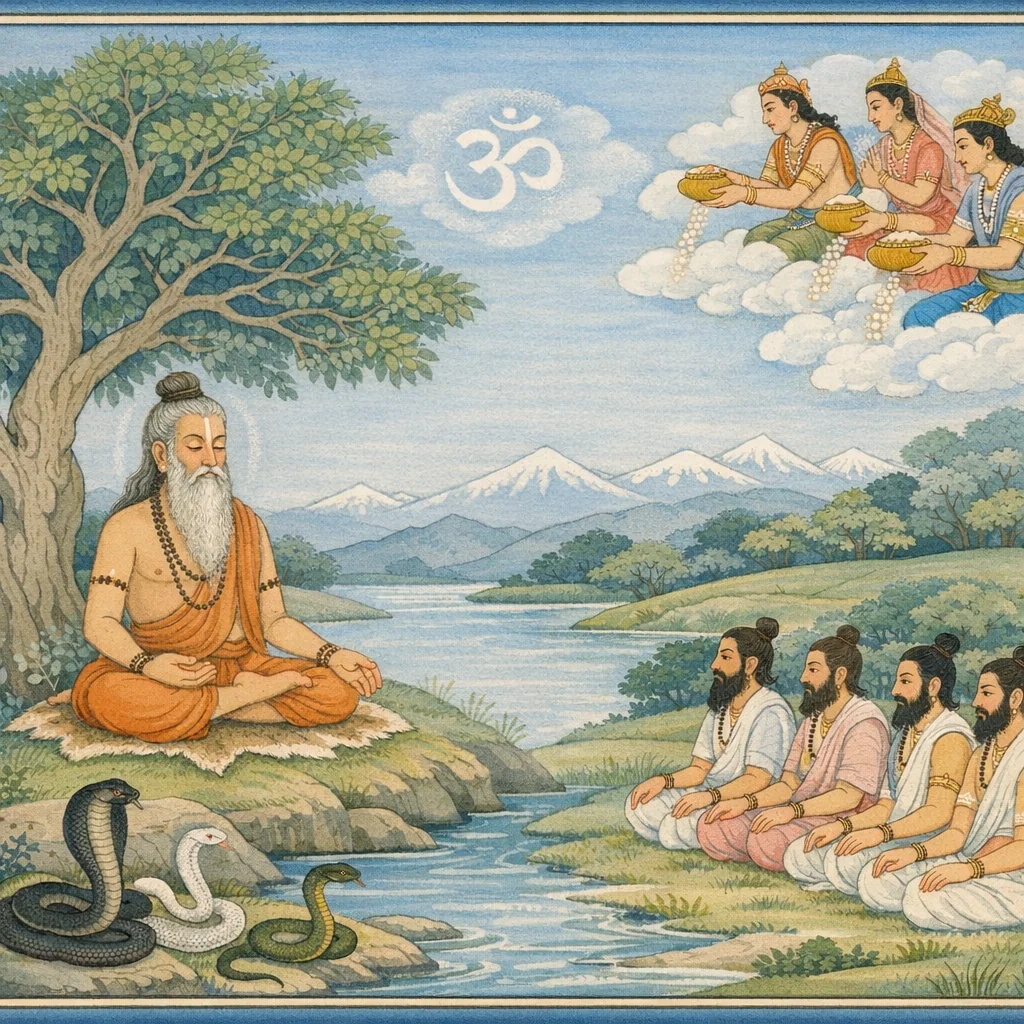
A Brahmin speaker asserts the oneness of the inner governor: there is one ruler (śāstā) and no second; the person stationed in the heart disciplines, and the individual moves as directed, like water flowing along a slope. The same inner principle is described through multiple relational roles—guru, kin (bandhu), listener (śrotā), and even hater/adversarial impulse (dveṣṭā)—all rooted in the heart’s determinations. An ancient narrative is then cited: devas, devarṣis, nāgas, and asuras approach Prajāpati asking for śreyas; he teaches “Om,” the one-syllabled Brahman. Hearing the single utterance, the groups disperse, and their inherent dispositions manifest: serpents incline to biting, asuras to boastful deceit (dambha), devas to giving (dāna), and great seers to restraint (dama). The chapter generalizes the mechanism: one teacher and one instruction can produce diverse commitments; one hears and grasps according to capacity, and subsequent action proceeds with the teacher’s ‘permission’ understood as inner assent. Conduct becomes ethically typed—moving in sin yields sinful conduct; moving in auspiciousness yields auspicious conduct; indulgence produces kāmacāra, while sense-conquest supports disciplined observance. The closing verses define a subtle brahmacarya: resting solely in Brahman, with ritual elements interiorized (fuel, fire, seat, water, and guru as Brahman), culminating in Brahman-centered absorption recognized by the wise.
Chapter Arc: A Brahmana-voice declares a startling unity: there is only one true ruler, one guru, one kinsman—He who dwells in the heart as the inner guide (antar-yamin). → To make the invisible doctrine graspable, an ancient itihasa is invoked: beings—serpents, gods, and seers—approach Prajapati seeking what is truly auspicious. The single-syllabled answer “Om” is given, but each group, turning it over within, bends the teaching toward its own nature. → The revelation sharpens: the same sacred utterance yields divergent impulses—serpents incline to biting, asuras to prideful deceit, gods to giving, and rishis to self-restraint—showing that the inner disposition interprets even the highest instruction; therefore the real guru is the indwelling knower who must be realized, not merely heard. → The discourse culminates in a subtle brahmacharya: an inward sacrificial discipline where Brahman is fuel, fire, and guru, and the self is gathered into Brahman—known by the wise and confirmed by the seer of the field (kṣetrajña).
Shlokas
Verse 1
अपन ह< बक। है २ 2 षड्विशो<5ध्याय: अन्तर्यामीकी प्रधानता ब्राह्मण उवाच एक: शास्ता न द्वितीयो5स्ति शास्ता यो हृच्छयस्तमहमनुब्रवीमि । तेनैव युक्त: प्रवणादिवोदकं यथा नियुक्तोडस्मि तथा वहामि,ब्राह्मणने कहा--प्रिये! जगत्का शासक एक ही है, दूसरा नहीं। जो हृदयके भीतर विराजमान है, उस परमात्माको ही मैं सबका शासक बतला रहा हूँ। जैसे पानी ढालू स्थानसे नीचेकी ओर प्रवाहित होता है, वैसे ही उस--परमात्माकी प्रेरणासे मैं जिस तरहके कार्यमें नियुक्त होता हूँ, उसीका पालन करता रहता हूँ
The Brahmin said: “There is only one ruler; there is no second ruler. The One who abides within the heart—I declare Him alone to be the governor of all. Joined to His will, I move as water moves down a slope: in whatever task I am appointed, in that manner I proceed and carry it out.”
Verse 2
एको गुरुर्नास्ति ततो द्वितीयो यो हृच्छयस्तमहमनुब्रवीमि । तेनानुशिष्टा गुरुणा सदैव पराभूता दानवा: सर्व एव,एक ही गुरु है दूसरा नहीं। जो हृदयमें स्थित है, उस परमात्माको ही मैं गुरु बतला रहा हूँ। उसी गुरुक अनुशासनसे समस्त दानव हार गये हैं
“There is but one Guru—there is no second. The One who abides hidden within the heart, that Supreme Self I declare to be the true teacher. Guided by that Guru’s constant discipline, all the Dānavas were utterly defeated.”
Verse 3
एको बन्धुर्नास्ति ततो द्वितीयो यो हृच्छयस्तमहमनुब्रवीमि । तेनानुशिष्टा बान्धवा बन्धुमन्तः सप्तर्षयश्नैव दिवि प्रभान्ति,एक ही बन्धु है, उससे भिन्न दूसरा कोई बन्धु नहीं है। जो हृदयमें स्थित है, उस परमात्माको ही मैं बन्धु कहता हूँ। उसीके उपदेशसे बान्धवगण बन्धुमान् होते हैं और सप्तर्षि लोग आकाशमें प्रकाशित होते हैं
“There is but one true kinsman; apart from Him there is no second. The One who abides within the heart—Him I acknowledge and proclaim as my kinsman. Instructed by Him, one’s relations become truly ‘endowed with kinship’ (i.e., bound by right understanding), and the Seven Seers shine resplendent in the heavens.”
Verse 4
एक: श्रोता नास्ति ततो द्वितीयो यो हृच्छयस्तमहमनुब्रवीमि । तस्मिन् गुरौ गुरुवासं निरुष्य शक्रो गत: सर्वलोकामरत्वम्,एक ही श्रोता है, दूसरा नहीं। जो हृदयमें स्थित परमात्मा है, उसीको मैं श्रोता कहता हूँ। इन्द्रने उसीको गुरु मानकर गुरुकुलवासका नियम पूरा किया अर्थात् शिष्यभावसे वे उस अन्तर्यामीकी ही शरणमें गये। इससे उन्हें सम्पूर्ण लोकोंका साम्राज्य और अमरत्व प्राप्त हुआ
“There is only one true listener; there is no second. The one who abides within the heart—Him I acknowledge as the listener. Having fulfilled the discipline of dwelling with that Guru, Śakra (Indra) attained sovereignty over all worlds and immortality.”
Verse 5
एको द्वेष्टा नास्ति ततो द्वितीयो यो हृच्छयस्तमहमनुब्रवीमि । तेनानुशिष्टा गुरुणा सदैव लोके द्विष्टा: पन्नगा: सर्व एव,एक ही शत्रु है दूसरा नहीं। जो हृदयमें स्थित है, उस परमात्माको ही मैं गुरु बतला रहा हूँ। उसी गुरुकी प्रेरणासे जगत्के सारे साँप सदा द्वेषभावसे युक्त रहते हैं
There is only one true enemy—no second. It is the One who abides within the heart; that is the supreme Lord whom I declare to be the Guru. Instructed by that inner Teacher, all serpents in the world are ever marked by aversion, living in a constant posture of hostility.
Verse 6
अत्राप्युदाहरन्तीममितिहासं पुरातनम् | प्रजापतौ पन्नगानां देवर्षीणां च संविदम्,पूर्वकालमें सर्पों, देवताओं और ऋषियोंकी प्रजापतिके साथ जो बातचीत हुई थी, उस प्राचीन इतिहासके जानकार लोग उस विषयमें उदाहरण दिया करते हैं
Here too, the learned cite an ancient precedent: the old account of the dialogue that took place long ago, in the presence of Prajāpati, between the serpents (Nāgas) and the divine seers. It is recalled as an instructive example for understanding the matter at hand.
Verse 7
देवर्षयश्न नागाश्चाप्यसुरा श्व प्रजापतिम् । पर्यपृच्छन्नुपासीना: श्रेयो न: प्रोच्यतामिति,एक बार देवता, ऋषि, नाग और असुरोंने प्रजापतिके पास बैठकर पूछा--“भगवन्! हमारे कल्याणका क्या उपाय है? यह बताइये'
Once the gods, seers, Nāgas, and Asuras, having seated themselves near Prajāpati, questioned him: “Blessed Lord, tell us what is truly for our welfare—declare to us the path of the highest good.”
Verse 8
तेषां प्रोवाच भगवान् श्रेय: समनुपृच्छताम् । ओमित्येकाक्षरं ब्रद्य ते श्रुत्वा प्राद्रवन् दिश:,कल्याणकी बात पूछनेवाले उन महानुभावोंका प्रश्न सुनकर भगवान् प्रजापति ब्रह्माजीने एकाक्षर ब्रह्म--32कारका उच्चारण किया। उनका प्रणवनाद सुनकर सब लोग अपनी-अपनी दिशा (अपने-अपने स्थान)-की ओर भाग चले
When those seekers inquired about the highest good, the Blessed Lord declared it to them: he bestowed the one-syllabled Brahman—‘Om’. Hearing that sacred sound of the praṇava, they hastened away, each to his own direction, as if the teaching itself had concluded their quest and sent them onward to their proper paths.
Verse 9
तेषां प्रद्रवमाणानामुपदेशार्थमात्मन: । सर्पाणां दंशने भाव: प्रवृत्त: पूर्वमेव तु,फिर उन्होंने उस उपदेशके अर्थयर जब विचार किया, तब सबसे पहले सर्पोके मनमें दूसरोंके डँसनेका भाव पैदा हुआ, असुरोंमें स्वाभाविक दम्भका आविर्भाव हुआ तथा देवताओंने दानको और महर्षियोंने दमको ही अपनानेका निश्चय किया
As they rushed about in agitation, reflecting on the intent of that instruction for their own good, the serpents—first of all—became inclined to bite. Thus, each class revealed its characteristic impulse when confronted with the same counsel, showing how inner disposition shapes ethical response.
Verse 10
असुराणां प्रवृत्तस्तु दम्भभाव: स्वभावज: । दानं॑ देवा व्यवसिता दममेव महर्षय:,फिर उन्होंने उस उपदेशके अर्थयर जब विचार किया, तब सबसे पहले सर्पोके मनमें दूसरोंके डँसनेका भाव पैदा हुआ, असुरोंमें स्वाभाविक दम्भका आविर्भाव हुआ तथा देवताओंने दानको और महर्षियोंने दमको ही अपनानेका निश्चय किया
The brāhmaṇa said: “Among the Asuras, an inborn disposition toward arrogant pretence arose. The Devas resolved upon generosity as their chosen path, while the great seers adopted self-restraint alone. Thus, from the same instruction, different natures manifested distinct ethical commitments.”
Verse 11
एकं शास्तारमासाद्य शब्देनैकेन संस्कृता: । नाना व्यवसिता:ः सर्वे सर्पदेवर्षिदानवा:,इस प्रकार सर्प, देवता, ऋषि और दानव--ये सब एक ही उपदेशक गुरुके पास गये थे और एक ही शब्दके उपदेशसे उनकी बुद्धिका संस्कार हुआ तो भी उनके मनमें भिन्न-भिन्न प्रकारके भाव उत्पन्न हो गये
All of them—serpents, gods, seers, and demons—approached a single instructor and were refined by the teaching of one and the same word; yet each formed a different inner resolve.
Verse 12
शृणोत्ययं प्रोच्यमानं गृह्लाति च यथातथम् | पृच्छातस्तदतो भूयो गुरुरन्यो न विद्यते,श्रोता गुरुके कहे हुए उपदेशको सुनता है और उसको जैसे-तैसे (भिन्न-भिन्न रूपमें) ग्रहण करता है। अतः प्रश्न पूछनेवाले शिष्यके लिये अपने अन्तर्यामीसे बढ़कर दूसरा कोई गुरु नहीं है
He listens to what is being taught and then grasps it in whatever way he can—sometimes accurately, sometimes imperfectly. Therefore, for a disciple who truly inquires, there is no teacher greater than the inner guide (the indwelling Self); beyond that, no other guru is to be found.
Verse 13
तस्य चानुमते कर्म ततः पश्चात् प्रवर्तते । गुरुर्बोद्धा च श्रोता च द्वेष्ट च हृदि निःसृत:,पहले वह कर्मका अनुमोदन करता है, उसके बाद जीवकी उस कर्ममें प्रवृत्ति होती है। इस प्रकार हृदयमें प्रकट होनेवाला परमात्मा ही गुरु, ज्ञानी, श्रोता और द्वेष्टा है
Only with His assent does an action receive approval; thereafter the embodied being is set in motion toward that very act. Thus, the Supreme Self—manifest from within the heart—functions as the teacher, the knower, the hearer, and even the one who rejects.
Verse 14
पापेन विचरल्लोंके पापचारी भवत्ययम् | शुभेन विचरल्लोंके शुभचारी भवत्युत,संसारमें जो पाप करते हुए विचरता है, वह पापाचारी और जो शुभ कर्मोका आचरण करता है, वह शुभाचारी कहलाता है
The brāhmaṇa said: “One who moves through the world committing sin becomes known as a sinner in conduct; and one who moves through the world practicing what is auspicious becomes known as virtuous in conduct.”
Verse 15
कामचारी तु कामेन य इन्द्रियसुखे रत: । ब्रह्मचारी सदैवैष य इन्द्रियजये रत:,इसी तरह कामनाओंके द्वारा इन्द्रियसुखमें परायण मनुष्य कामचारी और इन्द्रियसंयममें प्रवृत्त रहनेवाला पुरुष सदा ही ब्रह्मचारी है
The brāhmaṇa said: “One who, driven by desire, delights in the pleasures of the senses is called a follower of desire (kāmacārī). But one who is constantly devoted to conquering the senses is, in truth, always a brahmacārin.”
Verse 16
अपेतव्रतकर्मा तु केवल ब्रह्मणि स्थित: । ब्रह्मभूतश्चरल्लॉंके ब्रह्मबचारी भवत्ययम्,जो व्रत और कर्मोंका त्याग करके केवल ब्रह्ममें स्थित है, वह ब्रह्मस्वरूप होकर संसारमें विचरता रहता है, वही मुख्य ब्रह्मचारी है
The brāhmaṇa said: “He who has set aside external vows and ritual actions and abides solely in Brahman—becoming one with Brahman while moving about in the world—he alone is truly the foremost brahmacārin. The essence of celibate discipline is not mere observance, but steady establishment in the highest reality.”
Verse 17
ब्रह्मेव समिधस्तस्य ब्रह्मानिनि्रहद्यसम्भव: । आपो ब्रद्दा गुरुब्रह्य स ब्रह्मणि समाहित:,ब्रह्म ही उसकी समिधा है, ब्रह्म ही अग्नि है, ब्रह्मसे ही वह उत्पन्न हुआ है, ब्रह्म ही उसका जल और ब्रह्म ही गुरु है। उसकी चित्तवृत्तियाँ सदा ब्रह्ममें ही लीन रहती हैं
For him, Brahman itself is the sacrificial kindling (samidh), and Brahman is the fire; from Brahman alone he has arisen. Brahman is his water, and Brahman is his teacher. The movements of his mind are ever absorbed in Brahman.
Verse 18
एतदेवेदृशं सूक्ष्मं ब्रह्मचर्य विदुर्बुधा: । विदित्वा चान्वपद्यन्त क्षेत्रज्ञेनानुदर्शिता:,विद्वानोंने इसीको सूक्ष्म ब्रह्मचर्य बतलाया है। तत्त्वदर्शीका उपदेश पाकर प्रबुद्ध हुए आत्मज्ञानी पुरुष इस ब्रह्मचर्यके स्वरूपको जानकर सदा उसका पालन करते रहते हैं
The wise know precisely this to be the subtle essence of brahmacarya. Having understood it, and having been guided by the Knower of the Field (kṣetrajña), the awakened men of self-knowledge take it up and continue to live by it—steadfastly maintaining that disciplined way of life.
Verse 26
इति श्रीमहाभारते आश्वमेधिके पर्वणि अनुगीतापर्वणि ब्राह्मणगीतासु षड्विंशो5ध्याय:
Thus, in the Śrī Mahābhārata, within the Aśvamedhika Parva—specifically in the Anugītā section—ends the twenty-sixth chapter of the Brahmin’s discourse (Brāhmaṇa-gītā).
Frequently Asked Questions
The dilemma concerns agency and responsibility: if one inner ‘teacher’ directs all, why do beings diverge into harmful or beneficial conduct? The chapter resolves this by locating divergence in ingrained disposition and in how instruction is received and enacted.
A single, concise truth can guide life, but its efficacy depends on cultivated restraint and clarity; therefore, ethical practice requires disciplining tendencies (kāma/dveṣa) and aligning action with the heart’s higher discernment rather than impulsive habit.
No explicit phalaśruti formula is stated in the provided verses; the meta-commentary is implicit—understanding the inner governor and the subtle brahmacarya framework is presented as a basis for Brahman-centered steadiness and ethical transformation.