Adhyaya 26
Nārada’s Exempla of Tapas and Assurance to Dhṛtarāṣṭra (नारदोपदेशः—तपःसिद्ध्युदाहरणम्)
Upa-parva: Ṛṣi-samāgama and Nārada-upadeśa (Visit of Sages and Nārada’s Prophetic Counsel)
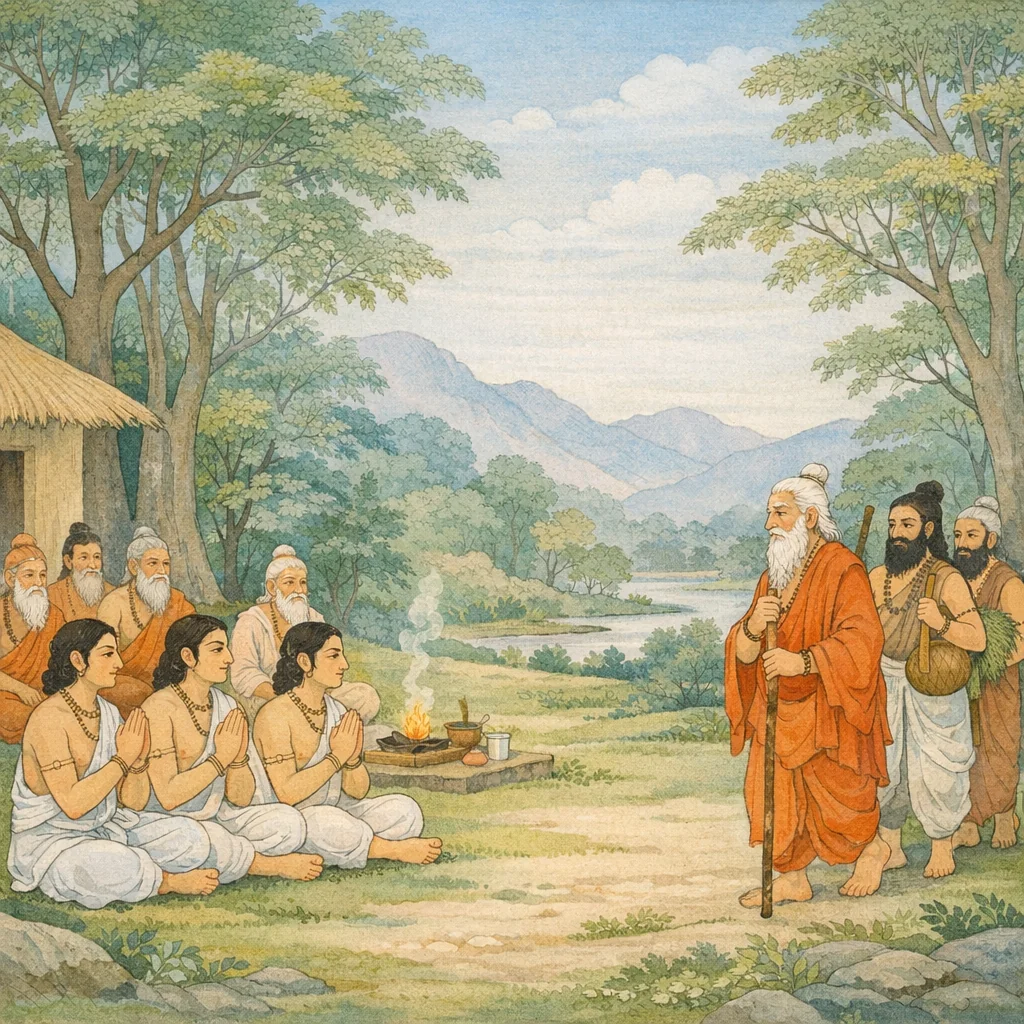
Vaiśaṃpāyana reports that leading sages—Nārada, Parvata, Devala, Dvaipāyana with disciples, and other siddhas—arrive to see Dhṛtarāṣṭra in the forest. Kuntī performs formal hospitality, and the sages engage the former king with dharmic conversation meant to steady and delight him. In the course of discourse, Nārada—presented as a seer with direct vision—recounts precedents of royal ascetics: Sahasracitya (ancestor of Śatayūpa) who renounced after installing his son and attained Indra’s realm; Śailālaya (Bhagadatta’s ancestor) and Pṛṣadhra who likewise reached heavenly states through tapas; and Purukutsa (son of Māndhātṛ), whose consort is identified as the river Narmadā, who attained heaven by austerity in that same forest; Śaśalomā is also cited as a dharmic king who gained heaven through tapas there. Nārada then issues a forward assurance: through Dvaipāyana’s grace, Dhṛtarāṣṭra will attain a difficult, supreme siddhi; Gāndhārī will accompany him to the destination of those great ones; Pāṇḍu is said to remember him and will connect him to welfare; and through service to Gāndhārī, Kuntī will attain her husband’s world. The chapter further sketches destinies for Vidura and Saṃjaya, portraying purification and ascent as outcomes of contemplation and dharmic alignment. Dhṛtarāṣṭra, pleased, honors Nārada; the assembled sages also worship Nārada, rejoicing in the king’s reverent response.
Chapter Arc: वन-आश्रम के शांत मंडल में युधिष्ठिर अपने भाइयों सहित ऋषि-आश्रमों का दर्शन करते हैं—कलश आदि का वितरण, अतिथि-धर्म और तपोवन की मर्यादा के बीच, मन में यह प्रश्न धड़कता है कि राजधर्म से निवृत्त हुए वृद्ध कौरवों का यह नया जीवन किस ओर जाएगा। → रात्रि में धर्म-अर्थ विषयक विचित्र पदों और नाना श्रुतियों से युक्त चर्चाएँ चलती रहती हैं; पाण्डव धरती पर शयन करते हैं। प्रातः नैत्यिक कर्मों के बाद युधिष्ठिर आश्रम-मंडल का अवलोकन करते हैं—जहाँ शांति के भीतर भी अतीत के घावों की अनकही ध्वनि है। → कुरुक्षेत्र-निवासी शतयूप आदि महर्षि सभा में आ पहुँचते हैं और फिर देवर्षियों से सेवित महातेजस्वी भगवान व्यास शिष्यों सहित प्रकट होते हैं—उनका आगमन तपोवन को तीर्थ-सभा में बदल देता है; युधिष्ठिर और पाण्डव विनयपूर्वक प्रणाम कर बैठते हैं। → व्यास के लिए कौशेय वस्त्र, कृष्णाजिन और कुशोत्तर सहित सुंदर विष्टर प्रस्तुत किया जाता है; सभी द्विजश्रेष्ठ अपने-अपने आसनों पर विराजते हैं और आश्रम-सभा विधिवत् स्थिर हो जाती है—राजा धृतराष्ट्र के निकट बैठा युधिष्ठिर ऋषि-संगति में मार्गदर्शन की प्रतीक्षा करता है। → व्यास के आगमन के साथ ही यह संकेत उभरता है कि अब किसी गूढ़ उपदेश/अद्भुत प्रसंग (विशेषतः विदुर-प्रसंग की परिणति) का द्वार खुलने वाला है।
Shlokas
Verse 1
अपन का बा | अकाल सप्तविशो<्ध्याय: युधिष्ठिर आदिका ऋषियोंके आश्रम देखना, कलश आदि बॉटना और धृतराष्ट्रके पास आकर बैठना, उन सबके पास अन्यान्य ऋषियोंसहित महर्षि व्यासका आगमन वैशम्पायन उवाच ततस्तु राजन्नेतेषामाश्रमे पुण्यकर्मणाम् | शिवा नक्षत्रसम्पन्ना सा व्यतीयाय शर्वरी,वैशम्पायनजी कहते हैं--जनमेजय! तदनन्तर उस आश्रमपर निवास करनेवाले इन समस्त पुण्यकर्मा मनुष्योंकी नक्षत्र-मालाओंसे सुशोभित वह मंगलमयी रात्रि सकुशल व्यतीत हुई
Vaiśampāyana said: “Then, O King (Janamejaya), in the hermitage of these people devoted to meritorious deeds, that auspicious night—adorned with a wealth of stars—passed safely.”
Verse 2
ततस्तत्र कथाशक्षासंस्तेषां धर्मार्थलक्षणा: । विचित्रपदसंचारा नानाश्रुतिभिरन्विता:
Then, in that place, there arose among them discussions and instructions marked by dharma and artha—discourses moving through varied and artful turns of expression, enriched with many scriptural citations and traditional teachings.
Verse 3
उस समय उन लोगोंमें विचित्र पदों और नाना श्रुतियोंसे युक्त धर्म और अर्थ-सम्बन्धी चर्चाएँ होती रहीं ।। पाण्डवास्त्वभितो मातुर्धरण्यां सुषुपुस्तदा । उत्सृज्य तु महाहाणि शयनानि नराधिप,नरेश्वर! पाण्डवलोग बहुमूल्य शय्याओंको छोड़कर अपनी माताके चारों ओर धरतीपर ही सोये थे
Vaiśampāyana said: At that time, discussions on dharma and artha—rich with varied expressions and many scriptural citations—continued among them. Yet the Pāṇḍavas, O king, set aside their costly beds and slept on the bare earth all around their mother, embodying restraint and reverent service in the midst of their forest-life austerity.
Verse 4
यदाहारो5भवद् राजा धृतराष्ट्री महामना: । तदाहारा नृवीरास्ते न्यवसंस्तां निशां तदा,महामनस्वी राजा धृतराष्ट्रने जिस वस्तुका आहार किया था, उसी वस्तुका आहार उस रातमें उन नरवीर पाण्डवोंने भी किया था
Vaiśampāyana said: Whatever food the noble-minded King Dhṛtarāṣṭra had taken, the heroic Pāṇḍavas too lived that night on the very same fare—sharing his austere sustenance in solidarity and restraint.
Verse 5
व्यतीतायां तु शर्वर्या कृतपौर्वाल्निकक्रिय: । भ्रातृभि: सहितो राजा ददर्शाश्रममण्डलम्,रात बीत जानेपर पूर्वाह्नकालिक नैत्यिक नियम पूरे करके राजा युधिष्ठिरने धृतराष्ट्रकी आज्ञा ले भाइयों, अन्तःपुरकी स्त्रियों, सेवकों और पुरोहितोंके साथ सुखपूर्वक भिन्न-भिन्न स्थानोंमें घूम-फिरकर मुनियोंके आश्रम देखे
When the night had passed, the king—having completed the customary morning rites—set out together with his brothers and beheld the precincts of the hermitages. The scene underscores disciplined conduct (daily observances) and respectful engagement with ascetic life after the devastations of war, as the ruler turns toward restraint, reverence, and dharmic order.
Verse 6
सानन््तः:पुरपरीवार: सभृत्य: सपुरोहित: । यथासुखं यथोद्देशं धृतराष्ट्रा भ्यनुज्ञया,रात बीत जानेपर पूर्वाह्नकालिक नैत्यिक नियम पूरे करके राजा युधिष्ठिरने धृतराष्ट्रकी आज्ञा ले भाइयों, अन्तःपुरकी स्त्रियों, सेवकों और पुरोहितोंके साथ सुखपूर्वक भिन्न-भिन्न स्थानोंमें घूम-फिरकर मुनियोंके आश्रम देखे
Vaiśampāyana said: With the women of the inner apartments and their attendants, together with his servants and the family priest, and having obtained Dhṛtarāṣṭra’s permission, King Yudhiṣṭhira moved about at ease, going to various places as he wished, and visited the hermitages of the sages—acting with due propriety and deference to the elder’s command.
Verse 7
ददर्श तत्र वेदी श्व॒ संप्रजबलितपावका: । कृताभिषेकैर्मुनिभि्ठताग्निभिरुपस्थिता:,उन्होंने देखा, वहाँ आश्रमोंमें यज्ञकी वेदियाँ बनी हैं, जिनपर अग्निदेव प्रज्वलित हो रहे हैं। मुनिलोग स्नान करके उन वेदियोंके पास बैठे हैं और अग्निमें आहुति दे रहे हैं। वनके फूलों और घृतकी आहुतिसे उठे हुए धूमोंसे भी उन वेदियोंकी शोभा हो रही है। वहाँ निरन्तर वेदध्वनि होनेके कारण मानो वे वेदियाँ वेदमय शरीरसे संयुक्त जान पड़ती थीं। मुनियोंके समुदाय सदा उनसे सम्पर्क बनाये रखते थे
Vaiśampāyana said: There they beheld the sacrificial altars, bright and orderly, with the sacred fires blazing upon them. The sages—having performed their ritual bath and consecration—sat near those fires, tending them and offering oblations. The altars were further adorned by the curling smoke rising from offerings of forest-flowers and clarified butter. And because the sound of Vedic recitation was continuous, those altars seemed as though endowed with bodies made of the Veda itself, ever attended by companies of ascetics who remained in constant service and communion with the rites.
Verse 8
वानेयपुष्पनिकरैराज्यधूमोद्गमैरपि । ब्राह्मेण वपुषा युक्ता युक्तता मुनिगणस्य ता:,उन्होंने देखा, वहाँ आश्रमोंमें यज्ञकी वेदियाँ बनी हैं, जिनपर अग्निदेव प्रज्वलित हो रहे हैं। मुनिलोग स्नान करके उन वेदियोंके पास बैठे हैं और अग्निमें आहुति दे रहे हैं। वनके फूलों और घृतकी आहुतिसे उठे हुए धूमोंसे भी उन वेदियोंकी शोभा हो रही है। वहाँ निरन्तर वेदध्वनि होनेके कारण मानो वे वेदियाँ वेदमय शरीरसे संयुक्त जान पड़ती थीं। मुनियोंके समुदाय सदा उनसे सम्पर्क बनाये रखते थे
Vaiśampāyana said: Those sacrificial altars appeared adorned with heaps of forest-flowers and also with the rising smoke from offerings of ghee. Because the sound of Vedic recitation continually pervaded the place, the altars seemed as though endowed with a ‘brahmanic’ (Veda-formed) body; and the assemblies of sages remained constantly connected with them through their disciplined ritual attendance.
Verse 9
मृगयूथैरनुद्विग्नैस्तत्र तत्र समाश्रितै: । अशड्कितै: पक्षिगणै: प्रगीतैरिव च प्रभो
Vaiśampāyana said: “O lord, in that place herds of deer, untroubled, were resting here and there; and flocks of birds, free from fear, seemed as though they were singing forth—so calm and secure was the scene.”
Verse 10
प्रभो! उन आश्रमोंमें जहाँ-तहाँ मृगोंके झुंड निर्भय एवं शान्तचित्त होकर आरामसे बैठे थे। पक्षियोंके समुदाय नि:शंक होकर उच्च स्वरसे कलरव करते थे ।। केकाभिनीलकण्ठानां दात्यूहानां च कूजितै: । कोकिलानां कुहुरवै: सुखै: श्रुतिमनोहरै:,मोरोंके मधुर केकारव, दात्यूह नामक पक्षियोंके कल-कूजन और कोयलोंकी कुहू-कुहू ध्वनि हो रही थी। उनके शब्द बड़े ही सुखद तथा कानों और मनको हर लेनेवाले थे। कहीं- कहीं स्वाध्यायशील ब्राह्मणोंके वेद-मन्त्रोंका गम्भीर घोष गूँज रहा था और इन सबके कारण उन आश्रमोंकी शोभा बहुत बढ़ गयी थी एवं वह आश्रम फल-मूलका आहार करनेवाले महापुरुषोंसे सुशोभित हो रहा था
Vaiśampāyana said: “O lord, in those hermitages, herds of deer sat here and there—fearless, calm-minded, and at ease. Flocks of birds, unafraid, filled the air with loud calls. The sweet cries of peacocks with dark-blue throats, the gentle cooing of the dātyūha birds, and the cuckoos’ ‘kuhū-kuhū’ sounded everywhere—pleasant, and captivating to ear and mind. In some places the deep resonance of Vedic mantras, recited by brāhmaṇas devoted to daily study, echoed forth. By all these sounds the beauty of the hermitages was greatly enhanced, and the āśramas shone with great souls who lived on fruits and roots.”
Verse 11
प्राधीतद्विजघोषैश्न क्वचित् क्वचिदलंकृतम् । फलमूलसमाहारैर्महद्धिश्वोपशोभितम्,मोरोंके मधुर केकारव, दात्यूह नामक पक्षियोंके कल-कूजन और कोयलोंकी कुहू-कुहू ध्वनि हो रही थी। उनके शब्द बड़े ही सुखद तथा कानों और मनको हर लेनेवाले थे। कहीं- कहीं स्वाध्यायशील ब्राह्मणोंके वेद-मन्त्रोंका गम्भीर घोष गूँज रहा था और इन सबके कारण उन आश्रमोंकी शोभा बहुत बढ़ गयी थी एवं वह आश्रम फल-मूलका आहार करनेवाले महापुरुषोंसे सुशोभित हो रहा था
Vaiśampāyana said: In some places the hermitage-settlements were adorned by the deep, resonant recitation of Vedic study by learned brāhmaṇas. They were further beautified by great ascetics who lived on gathered fruits and roots—so that the very sound of disciplined learning and the sight of restrained living together heightened the sanctity and splendor of those āśramas.
Verse 12
ततः स राजा प्रददौ तापसार्थमुपाहतान् | कलशान् काज्चनान् राजंस्तथैवौदुम्बरानपि,राजन! उस समय राजा युधिष्छिरने तपस्वियोंके लिये लाये हुए सोने और ताँबेके कलश, मृगचर्म, कम्बल, खुक्, खुवा, कमण्डलु, बटलोई, कड़ाही, अन्यान्य लोहेके बने हुए पात्र तथा और भी भाँति-भाँतिके बर्तन बाँटे। जो जितना और जो-जो बर्तन चाहता था, उसको उतना ही और वही बर्तन दिया जाता था। दूसरा भी आवश्यक पात्र दे दिया जाता था
Then the king distributed, for the benefit of the ascetics, the vessels that had been brought—golden pitchers, and likewise copper (udumbara) ones. In the Āśramavāsika Parva, this gift proclaims the king’s dharmic duty: royal wealth is turned into support for austerity and the common good, not private indulgence.
Verse 13
अजिनानि प्रवेणीश्व खुक् खुवं च महीपति: । कमण्डलूंश्व स्थालीश्व पिठराणि च भारत,राजन! उस समय राजा युधिष्छिरने तपस्वियोंके लिये लाये हुए सोने और ताँबेके कलश, मृगचर्म, कम्बल, खुक्, खुवा, कमण्डलु, बटलोई, कड़ाही, अन्यान्य लोहेके बने हुए पात्र तथा और भी भाँति-भाँतिके बर्तन बाँटे। जो जितना और जो-जो बर्तन चाहता था, उसको उतना ही और वही बर्तन दिया जाता था। दूसरा भी आवश्यक पात्र दे दिया जाता था
Vaiśampāyana said: The king distributed to the ascetics deerskins and bundles of sacred grass, as well as the implements called khuk and khuvas; and also water-pots (kamaṇḍalus), cooking vessels, and jars. In this giving, whatever utensil each renunciant desired—and in whatever measure—was provided, and other necessary vessels too were supplied.
Verse 14
भाजनानि च लौहानि पात्रीश्न विविधा नृप । यद् यदिच्छति यावच्च यच्चान्यदपि भाजनम्,राजन! उस समय राजा युधिष्छिरने तपस्वियोंके लिये लाये हुए सोने और ताँबेके कलश, मृगचर्म, कम्बल, खुक्, खुवा, कमण्डलु, बटलोई, कड़ाही, अन्यान्य लोहेके बने हुए पात्र तथा और भी भाँति-भाँतिके बर्तन बाँटे। जो जितना और जो-जो बर्तन चाहता था, उसको उतना ही और वही बर्तन दिया जाता था। दूसरा भी आवश्यक पात्र दे दिया जाता था
Vaiśampāyana said: “O king, he distributed iron vessels and many kinds of utensils. Whatever vessel each ascetic desired—and in whatever quantity—exactly that was given; and any other necessary utensil as well was provided.”
Verse 15
एवं स राजा धर्मात्मा परीत्याश्रममण्डलम् | वसु विश्राण्य तत् सर्व पुनरायान्महीपति:,इस प्रकार धर्मात्मा राजा पृथ्वीपति युधिष्ठिर आश्रमोंमें घूम-घूमकर वह सारा धन बाँटनेके पश्चात् धृतराष्ट्रके आश्रमपर लौट आये
Thus that righteous king, after going around the circle of hermitages and distributing all that wealth, returned again—the lord of the earth—to Dhṛtarāṣṭra’s āśrama. The scene underscores kingship disciplined by dharma: power is shown not by hoarding, but by respectful visitation and generous giving to those who live the ascetic life.
Verse 16
कृताद्विकं च राजानं धृतराष्ट्र महीपतिम् । ददर्शासीनमव्यग्र॑ गान्धारीसहितं तदा,वहाँ आकर उन्होंने देखा कि राजा धृतराष्ट्र नित्य कर्म करके गान्धारीके साथ शान्त भावसे बैठे हुए हैं और उनसे थोड़ी ही दूरपर शिष्टाचारका पालन करनेवाली माता कुन्ती शिष्याकी भाँति विनीत भावसे खड़ी है
Vaiśampāyana said: Then he saw King Dhṛtarāṣṭra, the lord of the earth, seated after completing his daily rites, calm and untroubled, with Gāndhārī beside him.
Verse 17
मातरं चाविदूरस्थां शिष्यवत् प्रणतां स्थिताम् । कुन्तीं ददर्श धर्मात्मा शिष्टाचारसमन्विताम्,वहाँ आकर उन्होंने देखा कि राजा धृतराष्ट्र नित्य कर्म करके गान्धारीके साथ शान्त भावसे बैठे हुए हैं और उनसे थोड़ी ही दूरपर शिष्टाचारका पालन करनेवाली माता कुन्ती शिष्याकी भाँति विनीत भावसे खड़ी है
Then the righteous-souled one saw his mother Kuntī standing not far away—bowed down like a disciple, composed and humble, embodying the discipline of proper conduct. Nearby, Dhṛtarāṣṭra, having completed his daily rites, sat calmly with Gāndhārī.
Verse 18
स तमभ्यर्च्य राजानं नाम संश्राव्य चात्मन: । निषीदेत्यभ्यनुज्ञातो बृस्यामुपविवेश ह,युधिष्ठिरने अपना नाम सुनाकर राजा धूृतराष्ट्रका प्रणामपूर्वक पूजन किया और “बैठो' यह आज्ञा मिलनेपर वे कुशके आसनपर बैठ गये
Having respectfully honored the king and announced his own name, he received permission with the words, “Be seated.” Thereupon he sat down upon a seat of kuśa-grass.
Verse 19
भीमसेनादयश्नैव पाण्डवा भरतर्षभ | अभिवाद्योपसंगृहा निषेदु: पार्थिवाज्ञया
Vaiśampāyana said: Then Bhīmasena and the other Pāṇḍavas, O bull among the Bharatas, having respectfully saluted and duly paid their courtesies, sat down in accordance with the king’s command.
Verse 20
भरतश्रेष्ठ] भीमसेन आदि पाण्डव भी राजाके चरण छूकर प्रणाम करनेके पश्चात् उनकी आज्ञासे बैठ गये ।। स तै: परिवृतो राजा शुशुभे5तीव कौरव: । बिश्रद् बाह्ीं श्रियं दीप्तां देवेरिव बृहस्पति:,उनसे घिरे हुए कुरुवंशी राजा धृतराष्ट्र वैसी ही शोभा पा रहे थे, जैसे उज्ज्वल ब्रह्मतेज धारण करनेवाले बृहस्पति देवताओंसे घिरे हुए सुशोभित होते हैं
Bhīmasena and the other Pāṇḍavas, having touched the king’s feet and offered their reverent salutations, sat down at his command. Surrounded by them, the Kuru king Dhṛtarāṣṭra shone with exceptional dignity—his arms relaxed and his splendor radiant—like Bṛhaspati among the gods.
Verse 21
तथा तेषूपविष्टेषु समाजम्मुर्महर्षय: । शतयूपप्रभूतय: कुरुक्षेत्रनिवासिन:,वे सब लोग इस प्रकार बैठे ही थे कि कुरुक्षेत्रनिवासी शतयूप आदि महर्षि वहाँ आ पहुँचे
While they were thus seated, an assembly of great seers arrived there—foremost among them Śatayūpa and others—sages who dwelt in the region of Kurukṣetra.
Verse 22
व्यासश्व भगवान् विप्रो देवर्षिगणसेवित: । वृतः शिष्यैर्महातेजा दर्शयामास पार्थिवम्
Vaiśampāyana said: The venerable sage Vyāsa—revered as a holy brahmin and attended by hosts of divine seers—surrounded by his disciples and blazing with spiritual power, caused the king to behold that wondrous sight.
Verse 23
देवर्षियोंसे सेवित महातेजस्वी विप्रवर भगवान् व्यासने भी शिष्योंसहित आकर राजाको दर्शन दिया ।। ततः स राजा कौरव्य: कुन्तीपुत्रश्न वीर्यवान् । भीमसेनादयश्वैव प्रत्युत्थाया भ्यवादयन्,उस समय कुरुवंशी राजा धुृतराष्ट्र, पराक्रमी कुन्तीकुमार युधिष्ठिर तथा भीमसेन आदिने उठकर समागत महर्षियोंको प्रणाम किया
Vaiśampāyana said: The blessed sage Vyāsa—supremely radiant, the foremost of brahmins, and attended by divine seers—came there with his disciples and granted the king an audience. Then the Kuru king, the valiant son of Kuntī (Yudhiṣṭhira), and Bhīmasena and the others rose to receive them and offered respectful salutations; thus, at that moment, Dhṛtarāṣṭra of the Kuru line, Yudhiṣṭhira, and Bhīma with the rest stood up and bowed to the arriving great sages.
Verse 24
समागतस्ततो व्यास: शतयूपादिभिर्व॒तः । धृतराष्ट्र महीपालमास्यतामित्यभाषत,तदनन्तर शतयूप आदिसे घिरे हुए नवागत महर्षि व्यास राजा धृतराष्ट्रसे बोले--“बैठ जाओ'
Then the sage Vyāsa arrived, surrounded by Śatayūpa and others. Addressing King Dhṛtarāṣṭra, lord of the earth, he said, “Be seated.”
Verse 25
वरं तु विष्टरं कौश्यं कृष्णाजिनकुशोत्तरम् | प्रतिपेदे तदा व्यासस्तदर्थमुपकल्पितम्,इसके बाद व्यासजी स्वयं एक सुन्दर कुशासनपर, जो काले मृगचर्मसे आच्छादित तथा उन्हींके लिये बिछाया गया था, विराजमान हुए
Vaiśampāyana said: Then Vyāsa accepted a fine seat—made of woven cloth and topped with kuśa grass and a black antelope-skin—prepared specifically for him, and sat upon it in due order.
Verse 26
इस प्रकार श्रीमह्याभारत आश्रमवासिकपर्वके अन्तर्गत आश्रमवासपर्वमें विदुरका देहत्यागविषयक छब्बीसवाँ अध्याय पूरा हुआ,ते च सर्वे द्विजश्रेष्ठा विष्टरेषु समनन््ततः । द्वैपायनाभ्यनुज्ञाता निषेदुर्विपुलौजस: फिर व्यासजीकी आज्ञासे अन्य सब महा-तेजस्वी श्रेष्ठ द्विजणण चारों ओर बिछे हुए कुशासनोंपर बैठ गये
Vaiśampāyana said: Then all those foremost of twice-born sages, endowed with great spiritual energy, sat down on the seats spread all around, having received the permission of Dvaipāyana (Vyāsa). This also marks the completion of the twenty-sixth chapter of the Āśramavāsa section within the Āśramavāsika Parva, concerning Vidura’s relinquishing of the body.
Verse 27
इति श्रीमहाभारते आश्रमवासिके पर्वणि आश्रमवासपर्वणि व्यासागमने सप्तविंशोडध्याय:
Thus, in the Śrī Mahābhārata, within the Āśramavāsika Parva—specifically the section on the forest-dwelling (āśrama) life—ends the twenty-seventh chapter, concerning the arrival of Vyāsa. This closing formula marks the completion of a narrative unit and signals a transition to the next portion of the account.
Frequently Asked Questions
The chapter addresses how a former ruler, burdened by prior political outcomes, can ethically re-situate his life: the tension is resolved by presenting forest-tapas and reverence toward sages as a legitimate, socially recognized path of purification and closure.
Nārada’s exempla teach that disciplined renunciation (tapas) functions as both moral rectification and spiritual ascent; precedent is used to demonstrate continuity between righteous kingship and righteous withdrawal when performed with dharmic intent.
A formal phalaśruti is not stated; its functional equivalent is Nārada’s explicit assurance of siddhi and salokatā (attaining the same world as one’s spouse), which frames attentive acceptance of dharmic counsel and ascetic practice as bearing definite spiritual results.