Adhyaya 95
अलोभोपाख्यानम् — शुनःसख-यातुधानी-संवादः (The Allegory of Non-Greed: Śunaḥsakha and the Yātudhānī)
Upa-parva: Alobha-dharma (Discourse on Non-Greed) — Śunaḥsakha and the Yātudhānī Episode
Bhīṣma narrates that forest-dwelling sages (with Atri prominent) subsist on roots and fruits and notice an unusually well-fed wandering ascetic, Śunaḥsakha. The sages’ conjectures about his prosperity are answered indirectly by their later cooperation with him. They discover a pristine lotus-pond guarded by a distorted kṛtyā/yātudhānī, who blocks access to lotus-stalks unless each seeker states a name. One by one, major sages and companions provide etymological name-definitions; the guardian repeatedly claims the names are mentally “unbearable” and orders them to descend into the pond—an apparent trap. When Śunaḥsakha is pressed, he first hesitates, then asserts that his name was already spoken once; upon the guardian’s insistence, he pronounces a forceful command, striking her with a staff-like, brahmanical authority (brahmadaṇḍa-kalpa), reducing the hostile force to ash. The group collects lotus-stalks and lotus-flowers, but the stalks later disappear, producing mutual suspicion. The sages initiate oath-formulas that assign severe moral consequences to any thief. Śunaḥsakha then confesses he himself concealed the stalks as a test and reveals his identity as Vāsava (Indra), stating he arrived to protect them from the yātudhānī. The episode concludes with a didactic closure: because they did not succumb to greed even under hunger, they attain auspicious worlds; therefore, one should avoid lobha in all conditions, and recitation of this exemplary conduct is presented as beneficial (a phala-style commendation).
Chapter Arc: धर्मनिष्ठ महर्षि नियमपूर्वक निवपन (श्राद्ध-दान) और तीर्थजल-तर्पण करते हैं; पर आश्चर्य यह कि पितर और देवता श्राद्धान्न से अजीर्ण होकर ब्रह्मा के पास सहायता को जाते हैं। → पितर-देवता अपनी व्यथा बताते हैं—चातुर्वर्ण्य द्वारा दिए गए निवाप/पिण्ड-तर्पण का अन्न वे ग्रहण तो करते हैं, पर विधि-भ्रंश और अव्यवस्था से ‘अन्न का पाचन’ बाधित होता है; श्राद्ध-स्थल पर राक्षसी विघ्नों का भी भय उभरता है। → स्वयम्भू ब्रह्मा पितरों की बात सुनकर अग्निदेव (हुताशन) को उपाय के रूप में प्रतिष्ठित करते हैं—अग्नि के उपस्थित रहने से राक्षस दूर भागते हैं और वही श्राद्धान्न के ‘अजीर्ण’ का निवारण कर विधि को स्थिर करता है; फिर पिण्ड-दान का क्रम (पहले पिता, फिर पितामह, फिर प्रपितामह) और प्रत्येक पिण्ड पर सावित्री-जप का विधान घोषित होता है। → ब्रह्मा द्वारा ‘पर’ श्राद्धविधि का निरूपण—अग्नि-स्थापन, पिण्ड-क्रम, मंत्रोच्चार, तथा पितृ-देव-तृप्ति की सुनिश्चितता; साथ ही सात ऋषियों (ब्रह्मा-परम्परा में पुलस्त्य, वसिष्ठ, पुलह, अंगिरा, क्रतु, कश्यप आदि) का स्मरण कर श्राद्ध-परम्परा की प्रामाणिकता स्थापित होती है। → दानधर्म के अगले विस्तार की भूमिका बनती है—‘श्राद्धोत्पत्ति’ और पिण्ड-सम्बन्ध के बाद आगे दान-विधानों का वर्णन (अतः परम् दानं वक्ष्यामि)।
Shlokas
Verse 1
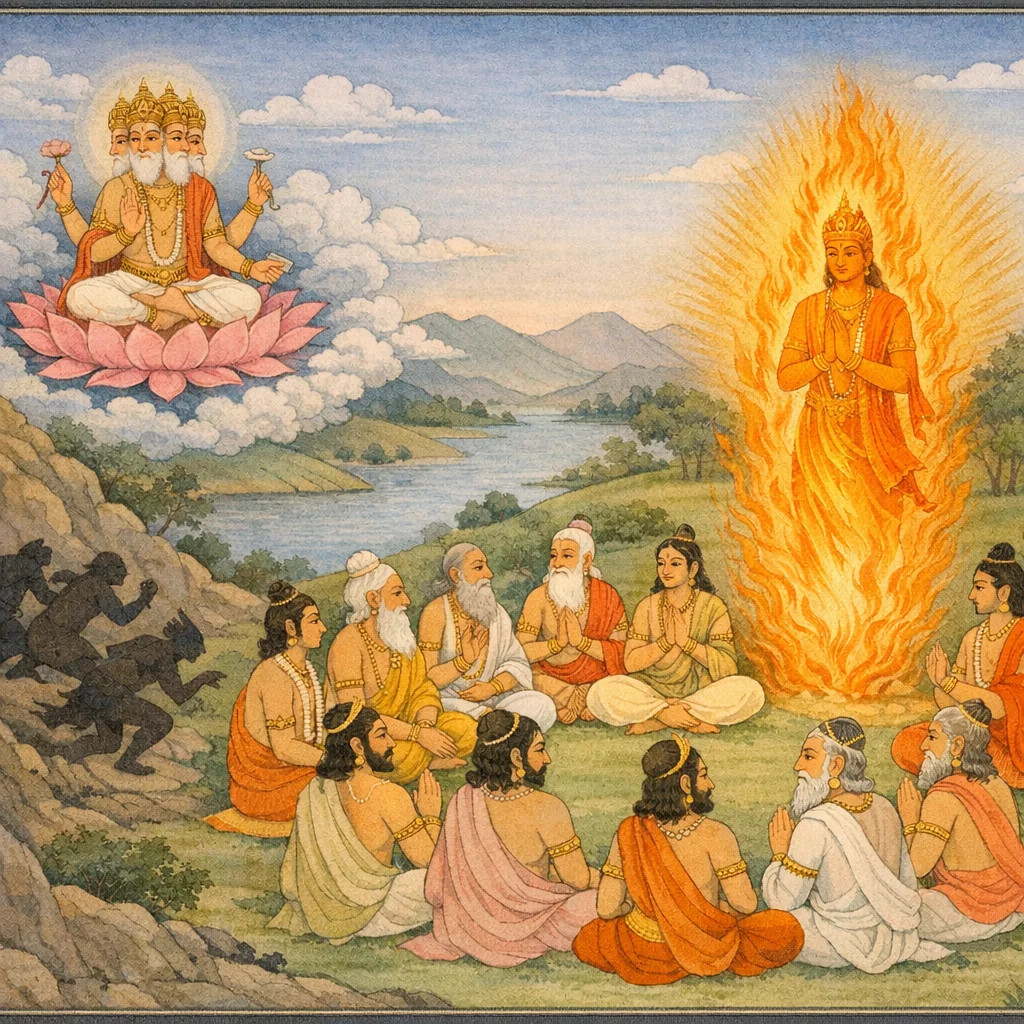
ऑऔपनआक्ाा बछ। अर: द्विनवतितमो< ध्याय: पितर और देवताओंका श्राद्धान्नले अजीर्ण होकर ब्रद्माजीके पास जाना और अग्निके द्वारा अजीर्णका निवारण, श्राद्धसे तृप्त हुए पितरोंका आशीर्वाद भीष्म उवाच तथा निमीौ प्रवृत्ते तु सर्व एव महर्षय: । पितृयज्ञं तु कुर्वन्ति विधिदृष्टेन कर्मणा,भीष्मजी कहते हैं--युधिष्ठटिर! इस प्रकार जब महर्षि निमि पहले-पहल श्राद्धमें प्रवृत्त हुए, उसके बाद सभी महर्षि शास्त्रविधिके अनुसार पितृयज्ञका अनुष्ठान करने लगे
Bhishma said: “O Yudhishthira, when King Nimi had thus first set the practice in motion, all the great sages thereafter began to perform the ancestral offering (pitṛ-yajña) according to the rites as laid down by scripture. In this, the ethical emphasis is on sustaining gratitude and responsibility toward one’s forebears through properly ordered ritual, rather than through arbitrary personal preference.”
Verse 2
ऋषयो धर्मनित्यास्तु कृत्वा निवपनान्युत । तर्पणं चाप्यकुर्वन्त तीर्थाम्भोभिययतव्रता:,सदा धर्ममें तत्पर रहनेवाले और नियमपूर्वक व्रत धारण करनेवाले महर्षि पिण्डदान करनेके पश्चात् तीर्थंके जलसे पितरोंका तर्पण भी करते थे
Bhishma said: The sages, ever steadfast in dharma and observing their vows with disciplined restraint, would first offer the funerary oblations; and thereafter, using the sacred waters of pilgrimage fords, they would also perform libations of satisfaction for the ancestors. Thus, righteous conduct was upheld through careful completion of the rites owed to the departed.
Verse 3
निवापैर्दीयमानैश्न चातुर्वण्येन भारत । तर्पिता: पितरो देवास्तत्रान्नं जरयन्ति वै
Bhīṣma said: “O Bhārata, when the funeral offerings (nivāpas) are duly given by the four social orders, the Pitṛs and the gods are satisfied; and there, indeed, they partake of and ‘digest’ that food.”
Verse 4
अजीलण्णस्त्वभिहन्यन्ते ते देवा: पितृभि: सह । सोममेवाभ्यपद्यन्त तदा हुन्नाभिपीडिता:
Bhishma said: Then those gods, together with the Pitṛs (ancestral beings), were struck down. Oppressed and afflicted, they sought refuge in Soma alone at that time.
Verse 5
भारत! धीरे-धीरे चारों वर्णोंके लोग श्राद्धमें देवताओं और पितरोंको अन्न देने लगे। लगातार श्राद्धमें भोजन करते-करते वे देवता और पितर पूर्ण तृप्त हो गये। अब वे अन्न पचानेके प्रयत्नमें लगे। अजीर्णसे उन्हें विशेष कष्ट होने लगा। तब वे सोम देवताके पास गये ।। तेडब्रुवन् सोममासाद्य पितरोडजीर्णपीडिता: । निवापान्नेन पीड्याम: श्रेयो नो5त्र विधीयताम्,सोमके पास जाकर वे अजीर्णसे पीड़ित पितर इस प्रकार बोले--'देव! हम श्राद्धान्नसे बहुत कष्ट पा रहे हैं। अब आप हमारा कल्याण कीजिये!
Bhishma said: “O Bharata, in time the people of all four social orders began offering food in the śrāddha rites to the gods and to the ancestors. As the gods and the Pitṛs kept eating at these continual śrāddhas, they became completely satiated. Then they turned their efforts to digesting the food; indigestion began to trouble them severely. Therefore they went to Soma. Reaching Soma, the Pitṛs, afflicted by indigestion, said: ‘O Lord, the śrāddha-offerings (nivāpa food) are causing us great distress. Please arrange what is truly beneficial for us in this matter.’”
Verse 6
तान् सोम: प्रत्युवाचाथ श्रेयश्वेवीप्सितं सुरा: । स्वयम्भूसदनं यात स व: श्रेयोडभिधास्यति,तब सोमने उनसे कहा--'देवताओ! यदि आप कल्याण चाहते हैं तो ब्रह्माजीकी शरणमें जाइये, वही आपलोगोंका कल्याण करेंगे”
Soma then replied to them: “O gods, if you seek what is truly beneficial and desired, go to the abode of Svayambhū (Brahmā). He will declare to you the course that leads to your welfare.”
Verse 7
ते सोमवचनादू देवा: पितृभि: सह भारत । मेरुशृंगे समासीनं पितामहमुपागमन्
Bhishma said: At Soma’s word, O Bharata, the gods—together with the Pitṛs—approached Pitāmaha (Brahmā) as he sat upon the peak of Mount Meru.
Verse 8
भरतनन्दन! सोमके कहनेसे वे पितरोंसहित देवता मैरुपर्वतके शिखरपर विराजमान ब्रह्माजीके पास गये ।। पितर ऊचु. निवापान्नेन भगवन् भृशं पीड्यामहे वयम् । प्रसाद कुरु नो देव श्रेयो न: संविधीयताम्,पितरोंने कहा--भगवन्! निरन्तर श्राद्धका अन्न खानेसे हम अजीर्णतावश अत्यन्त वष्ट पा रहे हैं। देव! हमलोगोंपर कृपा कीजिये और हमें कल्याणके भागी बनाइये
Bhishma said: “O descendant of Bharata! At Soma’s request, the gods—together with the Pitṛs—went to Brahmā, who was seated upon the summit of Mount Meru. The Pitṛs said: ‘O Blessed Lord, we are severely afflicted by continually consuming the śrāddha offerings (nivāpa). Show us your favor, O divine one, and arrange what is truly beneficial for us.’”
Verse 9
इति तेषां वच: श्रुत्वा स्वयम्भूरिदमब्रवीत् । एष मे पार्श्चतो वद्लिययुष्मच्छेयो&भिधास्यति,पितरोंकी यह बात सुनकर स्वयम्भू ब्रह्माजीने इस प्रकार कहा--*देवगण! मेरे निकट ये अग्निदेव विराजमान हैं। ये ही तुम्हारे कल्याणकी बात बतायेंगे”
Bhishma said: Hearing the words of the Pitṛs, Svayambhū (Brahmā) spoke thus: “O gods, here beside me stands Agni. He will declare to you what is truly for your welfare.”
Verse 10
अग्निरुवाच सहितास्तात भोक्ष्यामो निवापे समुपस्थिते । जरयिष्यथ चाप्यन्नं मया सार्ध न संशय:,अग्नि बोले--देवताओे और पितरो! अबसे श्राद्धका अवसर उपस्थित होनेपर हमलोग साथ ही भोजन किया करेंगे। मेरे साथ रहनेसे आपलोग उस अन्नको पचा सकेंगे, इसमें संशय नहीं है
Agni said: “Dear ones, when the time for the śrāddha offering arrives, we shall partake together of the food placed as the offering. By remaining in union with me, you will be able to digest that food—of this there is no doubt.”
Verse 11
एतच्छुत्वा तु पितरस्ततस्ते विज्वरा3भवन् । एतस्मात् कारणाच्चाग्ने: प्राक् तावद् दीयते नूप,नरेश्वर! अग्निकी यह बात सुनकर वे पितर निश्चिन्त हो गये; इसीलिये श्राद्धमें पहले अग्निको ही भाग अर्पित किया जाता है
Bhīṣma said: “When the Pitṛs heard this, they became free from anxiety and distress. Therefore, O king, for this very reason, in the śrāddha rite an offering is first given to Agni.”
Verse 12
निवप्ते चाग्निपूर्व वै निवापे पुरुषर्षभ । न ब्रह्ाराक्षसास्तं वै निवापं धर्षयन्त्युत,पुरुषप्रवर! अग्निमें हवन करनेके बाद जो पितरोंके निमित्त पिण्डदान दिया जाता है, उसे ब्रह्मराक्षस दूषित नहीं करते
Bhīṣma said: “O bull among men, O foremost of persons: when the funerary offering (nivāpa) is made after first offering into the sacred fire, that offering dedicated to the Pitṛs is not violated or defiled by brahmarākṣasas. Thus, rites performed in the proper Vedic order—fire first, then the ancestral offering—remain protected and efficacious.”
Verse 13
रक्षांसि चापवर्तन्ते स्थिते देवे हुताशने । पूर्व पिण्डं पितुर्दद्यात् ततो दद्यात् पितामहे,अग्निदेवके विराजमान रहनेपर राक्षस वहाँसे भाग जाते हैं। सबसे पहले पिताको पिण्ड देना चाहिये, फिर पितामहको
Bhīṣma said: When the divine Fire is duly established and blazing, malevolent spirits withdraw and flee. In the rite of offering funeral oblations, one should first present the piṇḍa to one’s father, and only thereafter offer it to the grandfather—thus maintaining the proper order of ancestral duty and ritual propriety.
Verse 14
प्रपितामहाय च तत एपष श्राद्धविधि: स्मृत: । ब्रूयाच्छाद्धे च सावित्रीं पिण्डे पिण्डे समाहित:,तदनन्तर प्रपितामहको पिण्ड देना चाहिये। यह श्राद्धकी विधि बतायी गयी है। श्राद्धमें एकाग्रचित्त हो प्रत्येक पिण्ड देते समय गायत्री-मन्त्रका उच्चारण करना चाहिये
Bhīṣma said: “Thereafter one should offer the piṇḍa to the great-grandfather (prapitāmaha). This is remembered as the proper procedure of the śrāddha rite. And in śrāddha, with a concentrated mind, one should recite the Sāvitrī (Gāyatrī) mantra at the offering of each piṇḍa.”
Verse 15
सोमायेति च वक्तव्यं तथा पितृमतेति च | रजस्वला च या नारी व्यंगिता कर्णयोशक्ष या । निवापे नोपतिषेत संग्राह्मा नान्यवंशजा
Bhīṣma said: “One should utter the prescribed formula ‘somāya’ and likewise ‘according to the ordinance for the Pitṛs’. A woman who is in her menstrual period, and one who is marked by deformity of the ears, should not be approached at the offering-rite; she is not to be accepted (for that ritual purpose), nor should a woman of another lineage be taken.”
Verse 16
पिण्ड-दानके आरम्भमें पहले अग्नि और सोमके लिये जो दो भाग दिये जाते हैं, उनके मन्त्र क्रमश: इस प्रकार हैं--“अग्नये कव्यवाहनाय स्वाहा", “सोमाय पितृमते स्वाहा ।/ जो स्त्री रजस्वला हो अथवा जिसके दोनों कान बहरे हों, उसको श्राद्धमें नहीं ठहरना चाहिये। दूसरे वंशकी स्त्रीको भी श्राद्धकर्ममें नहीं लेना चाहिये ।। जलं प्रतरमाणश्न कीर्तयेत पितामहान् । नदीमासाद्य कुर्वीत पितृणां पिण्डतर्पणम्,जलको तैरते समय पितामहों (के नामों) का कीर्तन करे। किसी नदीके तटपर जानेके बाद वहाँ पितरोंके लिये पिण्डदान और तर्पण करना चाहिये
Bhishma said: At the beginning of offering funeral rice-balls (piṇḍa-dāna), two portions are first assigned to Agni and Soma, with the mantras respectively: “Oblation to Agni, the carrier of offerings to the ancestors—svāhā,” and “Oblation to Soma, who is allied with the Fathers—svāhā.” A woman who is menstruating, or one who is deaf in both ears, should not be made to remain in the śrāddha rite; nor should a woman from another lineage be engaged in the śrāddha procedures. While crossing water one should recite the names of the grandfathers; and upon reaching the bank of a river, one should perform the offering of rice-balls and libations (tarpana) for the ancestors.
Verse 17
पूर्व स्ववंशजानां तु कृत्वाद्धिस्तर्पणं पुन: । सुहृत्सम्बन्धिवर्गाणां ततो दद्याज्जलाञज्जलिम्,पहले अपने वंशमें उत्पन्न पितरोंका जलके द्वारा तर्पण करके तत्पश्चात् सुहृद् और सम्बन्धियोंके समुदायको जलांजलि देनी चाहिये
Bhishma teaches that one should first perform the water-offering (tarpana) for the ancestors born in one’s own lineage; thereafter, one should offer a libation of water (jalāñjali) to one’s well-wishers and to the wider circle of relatives.
Verse 18
कल्माषगोयुगेनाथ युक्तेन तरतो जलम् । पितरो5भिलपषणन्ते वै नावं चाप्यधिरोहिता:
Bhishma said: “When one crosses water using a properly fitted yoke of a mottled ox, the Pitṛs (ancestral spirits) call out in approval—indeed, as though they themselves have boarded the boat.”
Verse 19
जो चितकबरे रंगके बैलोंसे जुती गाड़ीपर बैठकर नदीके जलको पार कर रहा हो, उसके पितर इस समय मानो नावपर बैठकर उससे जलांजलि पानेकी इच्छा रखते हैं ।। सदा नावि जल तऊज्ञा: प्रयच्छन्ति समाहिता: । मासार्थे कृष्णपक्षस्य कुर्यान्निर्वपणानि वै
Bhishma says: When a man crosses a river seated on a cart drawn by variegated, well-adorned bulls, his ancestors at that very time are as though seated in a boat, longing to receive the offering of water from him. Therefore, with a collected mind, one should regularly give water-offerings (jalāñjali) to the Pitṛs; and especially, in the dark fortnight of the month (kṛṣṇa-pakṣa), one should certainly perform the prescribed ancestral offerings (nirvapaṇa/śrāddha-related rites).
Verse 20
पितामह:ः पुलस्त्यश्न वसिष्ठ: पुलहस्तथा
Bhīṣma said: “(Among the revered sages are) Pitāmaha, Pulastya, Vasiṣṭha, and likewise Pulaha.”
Verse 21
अंगिराश्ष क्रतुश्चैव कश्यपश्च महानृषि: । एते कुरुकुलश्रेष्ठ महायोगेश्व॒रा: स्मृता:
Bhīṣma said: “Aṅgiras, Kratu, and the great sage Kaśyapa—these, O best of the Kuru line, are remembered as mighty lords of yoga.”
Verse 22
एते च पितरो राजन्नेष श्राद्धविधि: पर: । कुरुकुलश्रेष्ठ! ब्रह्मा, पुलस्त्य, वसिष्ठ, पुलह, अंगिरा, क्रतु और महर्षि कश्यप--ये सात ऋषि महान् योगेश्वर और पितर माने गये हैं। राजन्! इस प्रकार यह श्राद्धकी उत्तम विधि बतायी गयी || २०-२१ $ ।। प्रेतास्तु पिण्डसम्बन्धान्मुच्यन्ते तेन कर्मणा,प्रेत (मरे हुए पिता आदि) पिण्डके सम्बन्धसे प्रेतत्वके कष्टसे छुटकारा पा जाते हैं। पुरुषश्रेष्ठट यह मैंने शास्त्रके अनुसार तुम्हें पूर्वमें बताये श्राद्धकी उत्पत्तिका प्रसंग विस्तारपूर्वक बताया है। अब दानके विषयमें बताऊँगा
Bhīṣma said: “O King, these are indeed the Fathers (Pitṛs), and this is the supreme procedure of śrāddha. By that rite, the departed who are in the state of ‘preta’ are released from the hardship of that condition through their connection with the piṇḍa-offering. Thus I have explained to you, in accordance with the śāstra, the origin and full context of śrāddha; now I shall speak about the subject of gifting (dāna).”
Verse 23
इत्येषा पुरुषश्रेष्ठ श्राद्धोत्पत्ति्यथागमम् | व्याख्याता पूर्वनिर्दिष्टा दानं वक्ष्याम्यत: परम्,प्रेत (मरे हुए पिता आदि) पिण्डके सम्बन्धसे प्रेतत्वके कष्टसे छुटकारा पा जाते हैं। पुरुषश्रेष्ठट यह मैंने शास्त्रके अनुसार तुम्हें पूर्वमें बताये श्राद्धकी उत्पत्तिका प्रसंग विस्तारपूर्वक बताया है। अब दानके विषयमें बताऊँगा
Bhīṣma said: “O best of men, thus I have explained—according to the traditional scriptural account—the origin and proper procedure of śrāddha, as I had indicated earlier. Now, next, I shall speak about the subject of charitable giving (dāna).”
Verse 92
इति श्रीमहाभारते अनुशासनपर्वणि दानधर्मपर्वणि श्राद्धकल्पे द्विनवतितमो<ध्याय:
Thus, in the Śrī Mahābhārata, within the Anuśāsana Parva—specifically in the section on the dharma of giving, in the rite and procedure concerning śrāddha—ends the ninety-second chapter.
Verse 193
पुष्टिरायुस्तथा वीर्य श्रीक्षैव पितृभक्तित: । अत: जो इस बातको जानते हैं, वे एकाग्रचित्त हो नावपर बैठनेपर सदा ही पितरोंके लिये जल दिया करते हैं। महीनेका आधा समय बीत जानेपर कृष्णपक्षकी अमावास्या तिथिको अवश्य श्राद्ध करना चाहिये। पितरोंकी भक्तिसे मनुष्यको पुष्टि, आयु, वीर्य और लक्ष्मीकी प्राप्ति होती है
Bhīṣma declares that devotion to one’s ancestors (Pitṛs) brings tangible blessings: nourishment and well-being, long life, vigor, and prosperity. Therefore, those who know this should, with a focused mind, continually offer water to the Pitṛs—especially while traveling—and on the new-moon day (amāvāsyā) of the dark fortnight (kṛṣṇa-pakṣa), śrāddha should certainly be performed.
Frequently Asked Questions
The dilemma is whether hunger and deprivation justify taking resources through pressure, deception, or suspicion—versus maintaining non-greed, consent-based conduct, and trust even when survival needs are acute.
Alobha is framed as a “para dharma”: restraint is not weakness but a stabilizing force that preserves social cohesion, prevents escalation into wrongdoing, and aligns personal conduct with protective, auspicious outcomes.
Yes. The closing verses state that avoiding greed in all circumstances is a superior dharma, and that narrating/reciting this exemplary conduct in assemblies brings well-being, pleases ancestral and divine recipients, and helps avert misfortunes.