Adhyaya 9
Adhyāya 9: Pratiśruta-Dāna (The Duty to Fulfill Promised Gifts)
Upa-parva: Dāna-Dharma Anuśāsana (Promise-keeping and the ethics of giving to Brāhmaṇas)
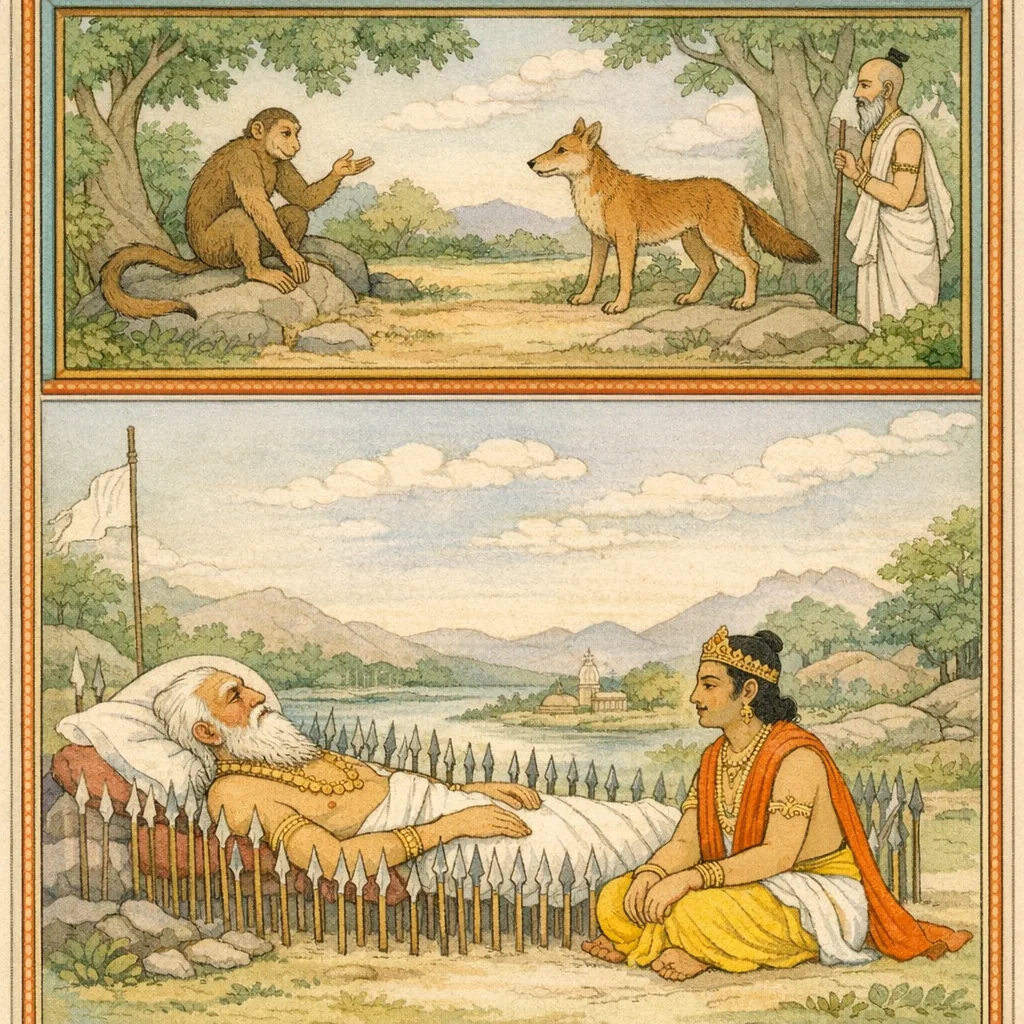
Yudhiṣṭhira asks Bhīṣma about the destiny of those who, having promised gifts to Brāhmaṇas, fail to give out of delusion (1–2). Bhīṣma replies that the pledge-breaker’s hopes are destroyed, employing a sharp analogy to sterility (3), and asserts that merit accrued between one’s birth and death is impaired by such misconduct, including offerings made (4–5). He then introduces an illustrative tradition: an ancient dialogue between a jackal and a monkey (6–9). The monkey, seeing the jackal consuming corpses in a cremation ground, questions what severe prior act led to this degraded condition (9–10). The jackal explains that he once promised a Brāhmaṇa but did not deliver, and thus fell into a sinful birth, now feeding in a repugnant manner due to hunger (11–12). Bhīṣma reinforces that Brāhmaṇas repeatedly instruct him: what is promised must be given; one should not create ‘hope’ in Brāhmaṇas and then negate it (13–15). He describes the Brāhmaṇa’s ‘tejas’ as ignited by expectation: if angered, it can burn like fire; if pleased, it becomes protective and healing for the realm (16–18). The benefits of Brāhmaṇa satisfaction are enumerated—prosperity for family, livestock, allies, city, and countryside (19–20). The chapter closes with a directive: give what has been promised to attain an auspicious state; giving to Brāhmaṇas secures superior heavenly outcomes, sustains devas and ancestors, and recognizes the Brāhmaṇa as a living tīrtha who should not depart unhonored (21–24).
Chapter Arc: युधिष्ठिर पितामह भीष्म से धर्म का सूक्ष्म तत्त्व पूछते हैं—जो मनुष्य ब्राह्मण को दान देने की प्रतिज्ञा करके भी नहीं देता, उसका फल क्या होता है? → भीष्म प्रतिज्ञा-भंग को केवल असत्य नहीं, धर्म-क्षय बताते हैं और उदाहरण-रूप में वानर और शृगाल का संवाद/उपाख्यान रखते हैं, जहाँ ब्राह्मण को वचन देकर वस्तु न पहुँचाने का अपराध उजागर होता है। साथ ही ब्राह्मण-धन की अहरणीयता और ब्राह्मणों के प्रति निरन्तर क्षमा-भाव रखने की कठोर मर्यादा स्थापित होती है। → भीष्म का निर्णायक विधान: जो थोड़ा या बहुत दान ‘प्रतिश्रुत्य’ न दे, उसकी आशाएँ नष्ट होती हैं; ब्राह्मण-धन का हरण अक्षम्य है; और संतुष्ट ब्राह्मण का वाणी-आशीर्वाद राज्य को ‘अगद’ (रोग-रहित) सा बल देता है—यहीं दान-धर्म का तेज अपने चरम पर प्रकट होता है। → दान के फल का विस्तार: दाता के पुत्र-पौत्र, बन्धु, पशु, मन्त्री, नगर-जनपद शान्ति और पोषण पाते हैं; ब्राह्मण को दान से उत्तम स्वर्ग सुनिश्चित होता है; देवता और पितर भी तृप्त होते हैं। ब्राह्मण को ‘महान् तीर्थ’ कहकर उनकी पूजा-अवमानना से बचने का उपदेश देकर अध्याय स्थिर निष्कर्ष पर आता है।
Shlokas
Verse 1
(दाक्षिणात्य अधिक पाठके १६ श्लोक मिलाकर कुल ३०३ श्लोक हैं) भीस्न्म+ज (2) आसजमसना नवमो<्ध्याय: ब्राह्मणको देनेकी प्रतिज्ञा करके न देने तथा उसके धनका अपहरण करनेसे दोषकी प्राप्तिके विषयमें सियार और वानरके संवादका उल्लेख एवं ब्राह्मणोंको दान देनेकी महिमा युधिछिर उवाच ब्राह्मणानां तु ये लोका: प्रतिश्रुत्य पितामह । न प्रयच्छन्ति मोहात् ते के भवन्ति महाद्युते,युधिष्ठिरने पूछा--धर्मात्माओंमें श्रेष्ठ महातेजस्वी पितामह! जो लोग ब्राह्मणोंको कुछ देनेकी प्रतिज्ञा करके फिर मोहवश नहीं देते जो दुरात्मा दानका संकल्प करके भी दान नहीं देते वे क्या होते हैं? यह धर्मका विषय मुझे यथार्थरूपसे बताइये
Yudhiṣṭhira said: “O Grandfather, what becomes of those who, having promised a gift to the Brahmins, do not give it—deluded as they are? O greatly radiant one, tell me truly the consequence for such people who form the resolve to give yet fail to fulfill it.”
Verse 2
एतनमे तत्त्वतो ब्रूहि धर्म धर्मभूतां वर । प्रतिश्रुत्य दुरात्मानो न प्रयच्छन्ति ये नरा:,युधिष्ठिरने पूछा--धर्मात्माओंमें श्रेष्ठ महातेजस्वी पितामह! जो लोग ब्राह्मणोंको कुछ देनेकी प्रतिज्ञा करके फिर मोहवश नहीं देते जो दुरात्मा दानका संकल्प करके भी दान नहीं देते वे क्या होते हैं? यह धर्मका विषय मुझे यथार्थरूपसे बताइये
Yudhiṣṭhira said: “O best of the righteous, tell me this truthfully as a matter of dharma. What becomes of those wicked-minded men who, after making a promise, do not give what they pledged?”
Verse 3
भीष्म उवाच यो न दद्यात् प्रतिश्रुत्य स्वल्पं वा यदि वा बहु आशास्तस्य हता: सर्वा: क्लीबस्येव प्रजाफलम्,भीष्मजीने कहा--युथधिष्ठिर! जो थोड़ा या अधिक देनेकी प्रतिज्ञा करके उसे नहीं देता है, उसकी सभी आशाएँ वैसे ही नष्ट हो जाती हैं जैसे नपुंसककी संतानरूपी फलविषयक आशा
Bhishma said: “Yudhishthira, whoever, having promised to give—whether little or much—does not give it, all his hopes are destroyed, like the hope of an impotent man for the fruit of offspring.”
Verse 4
यां रात्रि जायते जीवो यां रात्रि च विनश्यति । एतस्मिन्नन्तरे यद् यत् सुकृतं तस्य भारत,भरतनन्दन! जीव जिस रातको जन्म लेता है और जिस रातको उसकी मौत होती है-- इन दोनों रात्रियोंके बीचमें जीवनभर वह जो-जो पुण्यकर्म करता है, भरतश्रेष्ठ! उसने आजीवन जो कुछ होम, दान तथा तप किया होता है, उसका वह सब कुछ उस प्रतिज्ञा- भंगके पापसे नष्ट हो जाता है
Bhishma said: “O scion of Bharata, the night on which a living being is born and the night on which he dies—between these two nights, whatever meritorious deeds he performs in life are undone. All that he has accomplished through sacrifice, charity, and austerity is destroyed by the sin of breaking a solemn pledge.”
Verse 5
यच्च तस्य हुतं किंचिद् दत्तं वा भरतर्षभ । तपस्तप्तमथो वापि सर्व तस्योपहन्यते,भरतनन्दन! जीव जिस रातको जन्म लेता है और जिस रातको उसकी मौत होती है-- इन दोनों रात्रियोंके बीचमें जीवनभर वह जो-जो पुण्यकर्म करता है, भरतश्रेष्ठ! उसने आजीवन जो कुछ होम, दान तथा तप किया होता है, उसका वह सब कुछ उस प्रतिज्ञा- भंगके पापसे नष्ट हो जाता है
Bhishma said: O bull among the Bharatas, whatever he has offered in sacrifice, whatever he has given in charity, and whatever austerity he has practiced—everything of his is ruined. The sin of breaking a solemn vow destroys the merit accumulated between birth and death, nullifying lifelong acts of worship, giving, and self-discipline.
Verse 6
अथैतद् वचन प्राहुर्धर्मशास्त्रविदो जना: । निशम्य भरतश्रेष्ठ बुद्ध्या परमयुक्तया,भरतश्रेष्ठ! धर्मशास्त्रके ज्ञाता मनुष्य अपनी परम योगयुक्त बुद्धिसे विचार करके यह उपर्युक्त बात कहते हैं
Bhishma said: “Having heard this, O best of the Bharatas, people who are learned in the treatises on dharma declare this statement after reflecting upon it with a supremely disciplined and well-yoked intellect.”
Verse 7
अपि चोदाहरन्तीमं धर्मशास्त्रविदो जना: । अश्वानां श्यामकर्णानां सहस्रेण स मुच्यते,धर्मशास्त्रोंके विद्वान यह भी कहते हैं कि प्रतिज्ञा-भंगका पाप करनेवाला पुरुष एक हजार श्यामकर्ण घोड़ोंका दान करनेसे उस पापसे मुक्त होता है
Bhishma said: Moreover, those learned in the treatises on dharma cite this example: a man who has incurred the sin of breaking a solemn vow is released from that fault by gifting a thousand horses with dark ears. The teaching underscores that ethical breaches create moral debt, and that prescribed acts of generosity and restitution are held to purify and restore one’s standing in dharma.
Verse 8
इस प्रकार श्रीमह्याभारत अनुशासनपर्वके अन्तर्गत दानधर्मपर्वमें श्रेष्ठ ब्राह्मणोंकी प्रशंशाविषयक आठवाँ अध्याय पूरा हुआ,अन्रैवोदाहरन्तीममितिहासं पुरातनम् | शृगालस्य च संवादं वानरस्य च भारत भारत! इस विषयमें विज्ञ पुरुष सियार और वानरके संवादरूप इस प्राचीन इतिहासका उदाहरण दिया करते हैं
Bhishma said: “In this very connection, the learned cite an ancient illustrative tale—the dialogue between a jackal and a monkey, O Bharata. As an example bearing on this matter, discerning men recount this old story in the form of their conversation.”
Verse 9
तौ सखायोौ पुरा ह्ास्तां मानुषत्वे परंतप । अन्यां योनिं समापन्नौ शार्गालीं वानरीं तथा,शत्रुओंको संताप देनेवाले नरेश! मनुष्य-जन्ममें जो दोनों पहले एक-दूसरेके मित्र थे, वे ही दूसरे जन्ममें सियार और वानरकी योनिमें प्राप्त हो गये इति श्रीमहाभारते अनुशासनपर्वणि दानधर्मपर्वणि शृगालवानरसंवादे नवमो<ध्याय:
Bhishma said: O scorcher of foes, those two who were formerly friends in their human life later entered another birth, attaining the wombs of a jackal and a monkey.
Verse 10
ततः परासून् खादन्तं शृगालं वानरोउब्रवीत् । श्मशानमध्ये सम्प्रेक्ष्य पूर्वजातिमनुस्मरन्,तदनन्तर एक दिन सियारको मरघटमें मुर्दे खाता देख वानरने पूर्व-जन्मका स्मरण करके पूछा--“भैया! तुमने पहले जन्ममें कौन-सा भयंकर पाप किया था, जिससे तुम मरघटमें घृणित एवं दुर्गन्धयुक्त मुर्दे खा रहे हो?”
Bhīṣma said: Then a monkey spoke to a jackal that was eating corpses. Seeing him in the midst of the cremation-ground and recalling his own former birth, the monkey asked: “Brother, what dreadful sin did you commit in a previous life, that you now eat foul, stinking dead bodies in a cemetery?” The passage frames the jackal’s condition as a karmic consequence and introduces an ethical inquiry into the causes of degradation through past wrongdoing.
Verse 11
कि त्वया पापकं पूर्व कृतं कर्म सुदारुणम् । यस्त्वं श्मशाने मृतकान् पूतिकानत्सि कुत्सितान्,तदनन्तर एक दिन सियारको मरघटमें मुर्दे खाता देख वानरने पूर्व-जन्मका स्मरण करके पूछा--“भैया! तुमने पहले जन्ममें कौन-सा भयंकर पाप किया था, जिससे तुम मरघटमें घृणित एवं दुर्गन्धयुक्त मुर्दे खा रहे हो?”
Bhishma said: “What grievous sin did you commit in the past—what terribly cruel deed—because of which you now, in the cremation-ground, eat corpses that are foul and decaying, an act held in utter contempt?”
Verse 12
एवमुक्त: प्रत्युवाच शृगालो वानरं तदा । ब्राह्मणस्य प्रतिश्रुत्य न मया तदुपाहृतम्,वानरके इस प्रकार पूछनेपर सियारने उसे उत्तर दिया--'भाई वानर! मैंने ब्राह्मणको देनेकी प्रतिज्ञा करके वह वस्तु उसे नहीं दी थी। इसीके कारण मैं इस पापयोनिमें आ पड़ा हूँ और उसी पापसे भूखा होनेपर मुझे इस तरहका घृणित भोजन करना पड़ता है!
Thus addressed, the jackal replied to the monkey: “Having promised something to a Brahmin, I did not deliver it to him. Because of that breach of my pledged word, I have fallen into this sinful state of birth; and driven by that very sin, when hunger strikes, I am forced into such loathsome food.”
Verse 13
तत्कृते पापकीं योनिमापन्नो5स्मि प्लवड्भम । तस्मादेवंविध॑ भक्ष्यं भक्षयामि बुभुक्षित:,वानरके इस प्रकार पूछनेपर सियारने उसे उत्तर दिया--'भाई वानर! मैंने ब्राह्मणको देनेकी प्रतिज्ञा करके वह वस्तु उसे नहीं दी थी। इसीके कारण मैं इस पापयोनिमें आ पड़ा हूँ और उसी पापसे भूखा होनेपर मुझे इस तरहका घृणित भोजन करना पड़ता है!
“Because of that (sin), O monkey, I have fallen into a sinful womb (a degraded birth). Therefore, when hunger presses me, I eat food of this vile kind.” The reply frames present suffering as the moral consequence of a broken promise—especially a pledge made to a brāhmaṇa—showing how adharma ripens into degrading circumstances and compulsions.
Verse 14
भीष्म उवाच शृगालो वानरं प्राह पुनरेव नरोत्तम । कि त्वया पातकं कर्म कृतं येनासि वानर:,भीष्मजी कहते हैं--नरश्रेष्ठत इसके बाद सियारने वानरसे पुनः पूछा--“तुमने कौन- सा पाप किया था? जिससे वानर हो गये?”
Bhishma said: O best of men, the jackal again addressed the monkey: “What sinful deed did you commit, by which you have become a monkey?” The question frames the transformation as a moral consequence, inviting reflection on how unethical actions can lead to degradation of one’s condition.
Verse 15
वानर उवाच सदा चाहं फलाहारो ब्राह्मणानां प्लवड्भम: । तस्मान्न ब्राह्मणस्वं तु हर्तव्यं विदुषा सदा । सम॑ विवादो मोक्तव्यो दातव्यं स प्रतिश्रुतम्,वानरने कहा--मैं सदा ब्राह्मणोंका फल चुराकर खाया करता था; इसी पापसे वानर हुआ। अतः विज्ञ पुरुषको कभी ब्राह्मणका धन नहीं चुराना चाहिये। उनके साथ कभी झगड़ा नहीं करना चाहिये और उनके लिये जो वस्तु देनेकी प्रतिज्ञा की गयी हो, वह अवश्य दे देनी चाहिये
The Monkey said: “I once lived by eating fruit that I had stolen from Brahmins. By that sin I became what I am. Therefore a wise person should never steal a Brahmin’s property. One should not enter into quarrels with Brahmins; and whatever has been promised to them should certainly be given.”
Verse 16
भीष्म उवाच इत्येतद् ब्रुवतो राजन् ब्राह्मणस्य मया श्रुतम् । कथां कथयत: पुण्यां धर्मज्ञस्य पुरातनीम्,भीष्मजी कहते हैं--राजन्! यह कथा मैंने एक धर्मज्ञ ब्राह्मणके मुखसे सुनी है; जो प्राचीनकालकी पवित्र कथाएँ सुनाता था
Bhishma said: “O King, I heard this from the mouth of a Brahmin—one who knew dharma—while he was recounting an ancient, sacred tale.”
Verse 17
श्रुतश्चापि मया भूय: कृष्णस्यापि विशाम्पते | कथां कथयत: पूर्व ब्राह्मणं प्रति पाण्डव,प्रजानाथ! पाण्डुनन्दन! फिर मैंने यही बात भगवान् श्रीकृष्णके मुखसे भी सुनी थी; जब कि वे पहले किसी ब्राह्मणसे ऐसी ही कथा कह रहे थे
Bhīṣma said: “O lord of the people, O Pāṇḍava, O son of Pāṇḍu—this very matter I have also heard again from Kṛṣṇa himself, when earlier he was narrating a similar account to a brāhmaṇa. Thus what I relate is not mere hearsay, but a teaching confirmed by authoritative speech.”
Verse 18
न हर्तव्यं विप्रधन क्षन्तव्यं तेषु नित्यश: । बालाश्व नावमन्तव्या दरिद्रा: कृपणा अपि,ब्राह्मणका धन कभी नहीं चुराना चाहिये। वे अपराध करें तो भी सदा उनके प्रति क्षमाभाव ही रखना चाहिये। वे बालक, दरिद्र अथवा दीन हों तो भी उनका अनादर नहीं करना चाहिये
Bhishma teaches that one must never steal the wealth of a brāhmaṇa. Even if brāhmaṇas commit faults, one should consistently maintain an attitude of forgiveness toward them. Even when they are mere children, impoverished, or pitiable, they are not to be treated with contempt—reverence and restraint are required as a matter of dharma.
Verse 19
एवमेव च मां नित्यं ब्राह्मणा: संदिशन्ति वै । प्रतिश्रुत्य भवेद् देयं नाशा कार्या द्विजोत्तमे,ब्राह्मगलोग भी मुझे सदा यही उपदेश दिया करते थे कि प्रतिज्ञा कर लेनेपर वह वस्तु ब्राह्यणको दे ही देनी चाहिये। किसी श्रेष्ठ ब्राह्ोणणी आशा भंग नहीं करनी चाहिये
And the Brahmins would always instruct me thus: “Once a promise has been made, what was promised must surely be given to the Brahmin. One must not shatter the hope of the foremost among the twice-born.”
Verse 20
ब्राह्मणो हवाशया पूर्व कृतया पृथिवीपते । सुसमिद्धो यथा दीप्त: पावकस्तद्विध: स्मृत:
Bhīṣma said: “O lord of the earth, a brāhmaṇa sustained by the sacred fire and established in the ancient, prescribed discipline is regarded as a well-kindled, blazing fire—radiant, powerful, and purifying.”
Verse 21
पृथ्वीनाथ! ब्राह्मणको पहले आशा दे देनेपर वह समिधासे प्रज्वलित हुई अग्निके समान उद्दीप्त हो उठता है ।। य॑ निरीक्षेत संक्रुद्ध आशया पूर्वजातया । प्रदहेच्च हि तं राजन् कक्षमक्षय्यभुग् यथा,राजन! पहलेकी लगी हुई आशा भंग होनेसे अत्यन्त क्रोधमें भरा हुआ ब्राह्मण जिसकी ओर देख लेता है, उसे उसी प्रकार जलाकर भस्म कर डालता है, जैसे अग्नि सूखी लकड़ी अथवा तिनकोंके बोझको जला देती है
Bhīṣma said: “O lord of the earth! When a brāhmaṇa is first given hope, he becomes fiercely kindled—like a fire fed with fuel-sticks. And, O king, when that earlier-born hope is then broken, the brāhmaṇa, inflamed with anger, can burn to ashes whomever he fixes his gaze upon—just as an ever-consuming fire burns up a heap of dry grass or sticks.”
Verse 22
स एव हि यदा तुष्टो वचसा प्रतिनन्दति । भवत्यगदसंकाशो विषये तस्य भारत,भारत! वही ब्राह्मण जब आशापूर्तिसे संतुष्ट होकर वाणीद्वारा राजाका अभिनन्दन करता है--उसे आशीर्वाद देता है, तब उसके राज्यके लिये वह चिकित्सकके तुल्य हो जाता है
Bhīṣma said: “When that very brāhmaṇa, satisfied by the fulfillment of hopes and due honors, responds with words of approval—offering blessings to the king—he becomes, for that king’s realm, like a physician: a healing presence whose goodwill and benediction protect and restore the country’s well-being.”
Verse 23
पुत्रान् पौत्रान् पशुंश्वैव बान्धवान् सचिवांस्तथा । पुरं जनपदं चैव शान्तिरिष्टेन पोषयेत्,तथा उस दाताके पुत्र-पौत्र, बन्धु-बान्धव, पशु, मन्त्री, नगर और जनपदके लिये वह शान्तिदायक बनकर उन्हें कल्याणका भागी बनाता और उन सबका पोषण करता है
Bhīṣma said: “By the merit of the chosen righteous act (iṣṭa), a person becomes a source of peace and well-being, sustaining and benefiting his sons and grandsons, his kinsmen, his livestock, his ministers, and likewise his city and the wider countryside.”
Verse 24
एतद्धि परम॑ तेजो ब्राह्मणस्येह दृश्यते । सहस्रकिरणस्येव सवितुर्धरणीतले,इस पृथ्वीपर ब्राह्मणका उत्कृष्ट तेज सहस्र किरणोंवाले सूर्यदेवके समान दृष्टिगोचर होता है
Bhīṣma said: “Here in this world, the supreme radiance of a brāhmaṇa is clearly seen—like the Sun upon the earth, blazing with a thousand rays.”
Verse 25
तस्माद् दातव्यमेवेह प्रतिश्रुत्य युधिष्ठिर । यदीच्छेच्छो भनां जातिं प्राप्तुं भरतसत्तम,भरतश्रेष्ठ युधिष्ठि!! इसलिये जो उत्तम योनिमें जन्म लेना चाहता हो, उसे ब्राह्मणको देनेकी प्रतिज्ञा की हुई वस्तु अवश्य दे डालनी चाहिये
Bhīṣma said: “Therefore, O Yudhiṣṭhira, once a gift has been promised, it must certainly be given here in this very life. O best of the Bharatas, if one desires to attain a noble birth, one should unfailingly fulfill what has been pledged—especially what has been promised to a brāhmaṇa.”
Verse 26
ब्राह्मणस्य हि दत्तेन ध्रुवं स्वर्गो हानुत्तम: । शक्य: प्राप्तुंविशेषेण दानं हि महती क्रिया,ब्राह्मणको दान देनेसे निश्चय ही परम उत्तम स्वर्गलोकको विशेष रूपसे प्राप्त किया जा सकता है; क्योंकि दान महान् पुण्यकर्म है
Bhīṣma said: By giving (charity) to a brāhmaṇa, one surely attains the unsurpassed heaven. Indeed, heaven can be reached in a special and decisive way through such giving, for dāna (generous donation) is a great and weighty act of merit.
Verse 27
इतो दत्तेन जीवन्ति देवता: पितरस्तथा । तस्माद् दानानि देयानि ब्राह्मणेभ्यो विजानता,इस लोकमें ब्राह्मणको दान देनेसे देवता और पितर तृप्त होते हैं; इसलिये विद्वान् पुरुष ब्राह्मणको अवश्य दान दे
Bhīṣma said: “By what is given here, the gods and likewise the ancestors are sustained and satisfied. Therefore, a discerning person should certainly make gifts—especially to Brāhmaṇas—knowing this to be a righteous support of the cosmic and ancestral order.”
Verse 28
महद्धि भरतश्रेष्ठ ब्राह्मणस्तीर्थमुच्यते । वेलायां न तु कस्यांचिद् गच्छेद् विप्रो हपूजित:,भरतश्रेष्ठ! ब्राह्मण महान् तीर्थ कहे जाते हैं; अतः वे किसी भी समय घरपर आ जायाँ तो बिना सत्कार किये उन्हें नहीं जाने देना चाहिये
Bhīṣma said: “O best of the Bharatas, a Brāhmaṇa is indeed called a great sacred ford (tīrtha). Therefore, at no time should a Brāhmaṇa be allowed to depart without being honored; whenever he arrives, he must not be sent away without due reception.”
Frequently Asked Questions
The dilemma is whether a spoken pledge to give—especially to a Brāhmaṇa—can be ethically abandoned due to later reluctance or delusion; the chapter treats abandonment as a serious breach whose consequences outweigh the convenience of non-payment.
Speech that generates expectation becomes obligation: one should promise only what one can deliver, and once promised, one must give; fulfilling pledges preserves merit, social trust, and the protective goodwill associated with honoring worthy recipients.
Yes: the text links pledge-breaking to destruction of hopes, impairment of accumulated merit and offerings, degraded rebirth (illustrated by the jackal), and contrasts it with the expansive prosperity and auspicious destiny associated with satisfying Brāhmaṇas through fulfilled giving.