Adhyaya 68
गोप्रदान-भूमिदान-विधि (Gopradāna–Bhūmidāna Guidelines and Recipient Eligibility)
Upa-parva: Dāna-Dharma (Gopradāna–Bhūmidāna Upadeśa)
Yudhiṣṭhira asks Bhīṣma to restate the superior method of dāna, with special attention to bhūmidāna (land-gift). Bhīṣma responds by identifying three gifts said to yield equivalent fruit—cows (gāvaḥ), land (pṛthvī), and Sarasvatī (here: sacred knowledge/teaching)—and asserts that instructing a disciple in dharmic Sarasvatī can be equivalent in result to gifting land or cows. He then elevates gāḥ as especially praised, describing them as beneficent and auspicious, recommending circumambulation and constant reverence, and cautioning against disturbing them during pasture or at water. The discourse includes a vrata-like practice of feeding another’s cow over a year, said to generate broad desired outcomes (prosperity, offspring, reputation) and to dispel inauspiciousness and distressing dreams. The chapter then shifts to pātratā (eligibility): Yudhiṣṭhira asks what cows should be given, which should be avoided, and to whom gifts should or should not be made. Bhīṣma prohibits giving cows to recipients characterized by unethical conduct (falsehood, greed, impiety, neglect of ritual obligations), and praises gifting to qualified ascetics/learned householders (e.g., śrotriya, āhitāgni), stating that donors share in the recipient’s meritorious outcomes. The closing verses intensify the norm: virtues that make a recipient suitable for cow-gifts are contrasted with the serious fault of appropriating a Brāhmaṇa’s property, warning avoidance of such wrongdoing and its social consequences.
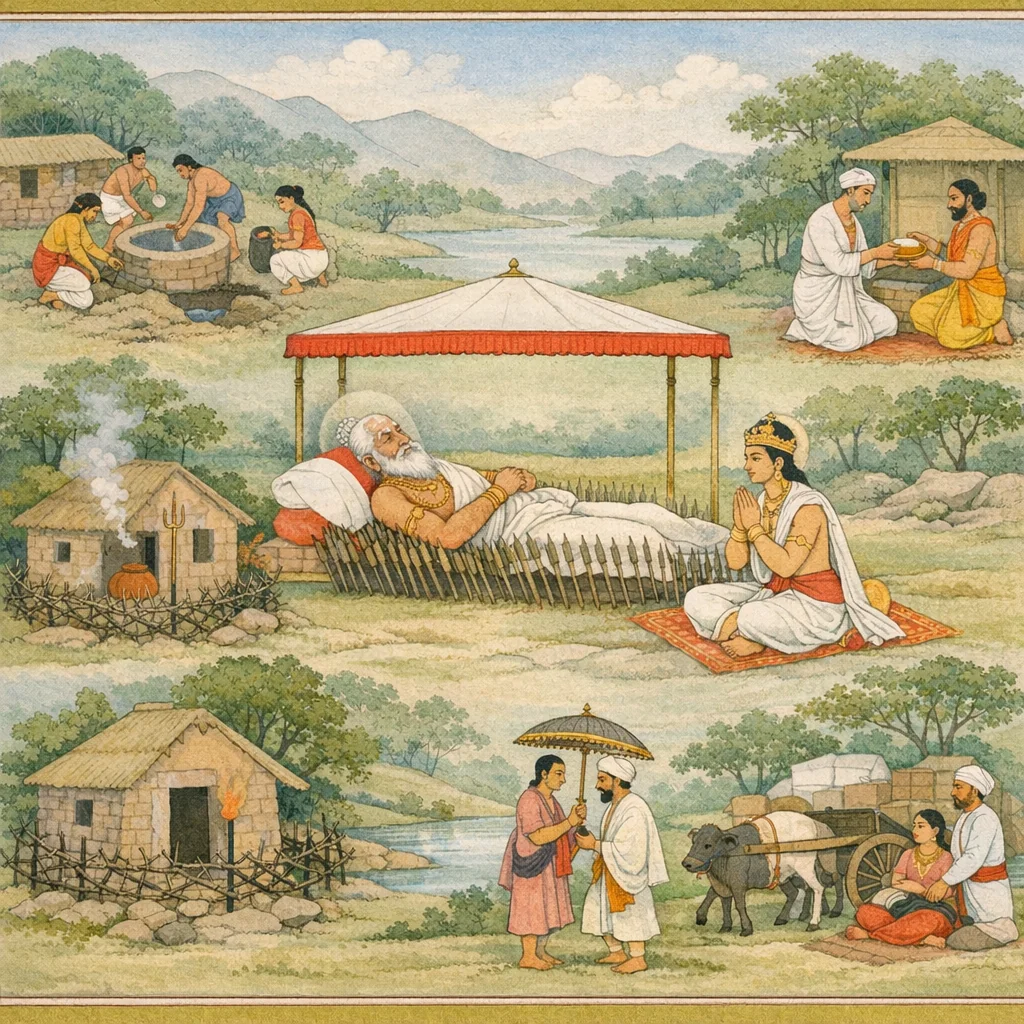
Chapter Arc: शरशय्या पर लेटे भीष्म युधिष्ठिर से कहते हैं—जो काञ्चन (सुवर्ण) देता है, वह मानो मनुष्यों की कामनाओं को मूर्त रूप देकर दान करता है; दान का यह अध्याय ‘वस्तु’ नहीं, ‘फल’ की भाषा में बोलता है। → भीष्म दान-वस्तुओं की एक-एक कर महिमा खोलते हैं—हरिशचन्द्र के वचन से सुवर्ण की पवित्रता, मनु के कथन से जलदान की सर्वोच्चता; फिर घृत, घृतमिश्रित पायस, ब्राह्मण-सत्कार, छत्रदान और शकटदान तक—मानो जीवन की धूप-बरसात, भूख-प्यास, भय-रक्षा, यात्रा-परिश्रम—सबके लिए धर्म का उत्तर दान में रखा गया हो। → मनु-वाक्य के साथ जलदान का उत्कर्ष—‘पानीयं परमं दानम्’—और उसका व्यावहारिक आदेश: कूप, वापी, तडाग खुदवाना; दान अब क्षणिक भेंट नहीं, लोक-कल्याणकारी संरचना बन जाता है। → भीष्म विविध दानों के विशिष्ट फलों को स्थिर करते हैं—घृतदान से देव-प्रसन्नता, पायस-दान से गृह-रक्षा, श्रद्धापूर्वक ब्राह्मण-सम्मान से पुण्य-भाग, छत्रदान से पुत्र-लक्ष्मी व मनोदाह-शमन, और शाण्डिल्य के मत से शकटदान की महत्ता—युधिष्ठिर के लिए ‘दानधर्म’ एक व्यवस्थित मार्ग बन जाता है।
Shlokas
Verse 1
ऑपन- मा छा अप ऋाज पज्चषष्टितमो< ध्याय: सुवर्ण और जल आदि विभिन्न वस्तुओंके दानकी महिमा भीष्म उवाच सर्वान् कामान् प्रयच्छन्ति ये प्रयच्छन्ति काउ्चनम् | इत्येवं भगवानत्रि: पितामहसुतो<ब्रवीत्,भीष्मजी कहते हैं--युधिष्छिर! ब्रह्माजीके पुत्र भगवान् अत्रिका प्राचीन वचन है कि 'जो सुवर्णका दान करते हैं, वे मानो याचककी सम्पूर्ण कामनाएँ पूर्ण कर देते हैं!
Bhishma said: “O king, those who give gold are, as it were, granting all desires. Thus spoke the venerable Atri, the son of the Grandsire (Brahmā).”
Verse 2
पवित्रमथ चायुष्यं पितृणामक्षयं च तत् । सुवर्ण मनुजेन्द्रेण हरिश्वन्द्रेण कीर्तितम्,राजा हरिश्वन्द्रने कहा है कि 'सुवर्ण परम पवित्र, आयु बढ़ानेवाला और पितरोंको अक्षय गति प्रदान करनेवाला है'
Bhishma said: “Gold is declared to be supremely purifying and life-promoting; it also grants an imperishable benefit for the ancestors. This was taught by King Harishchandra, the foremost among men.”
Verse 3
पानीयं परम॑ दान दानानां मनुरबत्रवीत् । तस्मात् कूपांश्न॒ वापीक्ष तडागानि च खानयेत्,मनुजीने कहा है कि 'जलका दान सब दानोंसे बढ़कर है।” इसलिये कुएँ, बावड़ी और पोखरे खोदवाने चाहिये
Bhishma said: “Manu declared that the gift of water is the highest among all gifts. Therefore, one should have wells, stepwells, and ponds excavated.”
Verse 4
अर्ध पापस्य हरति पुरुषस्येह कर्मण: । कृप: प्रवृत्तपानीय: सुप्रवृत्तश्न नित्यश:,जिसके खोदवाये हुए कुएँमें अच्छी तरह पानी निकलकर यहाँ सदा सब लोगोंके उपयोगमें आता है, वह उस मनुष्यके पापकर्मका आधा भाग हर लेता है
Bhishma said: In this world, a well dug with compassion, yielding water abundantly and without cease for people’s daily use, removes half of a man’s sinful karma.
Verse 5
सर्व तारयते वंशं यस्य खाते जलाशये । गाव: पिबन्ति विप्राश्न साधवक्ष नरा: सदा,जिसके खोदवाये हुए जलाशयमें गौ, ब्राह्मण तथा श्रेष्ठ पुरुष सदा जल पीते हैं, वह जलाशय उस मनुष्यके समूचे कुलका उद्धार कर देता है
Bhishma said: The reservoir a man has caused to be dug—where cows, Brahmins, and virtuous people drink regularly—uplifts and carries across his entire lineage to welfare and merit.
Verse 6
निदाघकाले पानीयं यस्य तिष्ठत्यवारितम् । स दुर्ग विषमं कृत्स्नं न कदाचिदवाप्लुते,जिसके बनवाये हुए तालाबमें गरमीके दिनोंमें भी पानी मौजूद रहता है, कभी घटता नहीं है, वह पुरुष कभी अत्यन्त विषम संकटमें नहीं पड़ता
Bhishma said: In the heat of summer, the one whose drinking water remains available without obstruction—whose pond never runs low—never falls into overwhelming calamity.
Verse 7
बृहस्पतेर्भगवतः पूष्णश्लैव भगस्य च । अश्रिनोश्रैव दल्लेश्ष प्रीतिर्भवति सर्पिषा,घी दान करनेसे भगवान् बृहस्पति, पूषा, भग, अश्विनीकुमार और अग्निदेव प्रसन्न होते हैं
Bhīṣma said: By the gift of ghee (clarified butter), the revered Bṛhaspati, Pūṣan, Bhaga, the Aśvin twins, and Agni become pleased.
Verse 8
परम॑ भेषजं होतद् यज्ञानामेतदुत्तमम् रसानामुत्तमं चैतत् फलानां चैतदुत्तमम्,घी सबसे उत्तम औषध और यज्ञ करनेकी सर्वश्रेष्ठ वस्तु है। वह रसोंमें उत्तम रस है और फलोंमें सर्वोत्तम फल है
Bhishma said: Ghee is the supreme medicine. It is the finest offering in sacrifices; among tastes it is the best, and among fruits—results and benefits—it is the highest.
Verse 9
फलकामो यशस्काम: पुष्टिकामश्न नित्यदा । घृतं दद्याद् द्विजातिभ्य: पुरुष: शुचिरात्मवान्,जो सदा फल, यश और पुष्टि चाहता हो वह पुरुष पवित्र हो मनको वशमें करके द्विजातियोंको घृत दान करे
Bhīṣma said: A man who ever longs for tangible fruits, fair fame, and bodily thriving should, pure and self-controlled, give clarified butter (ghee) in charity to the twice-born (dvija).
Verse 10
घृतं मासे आश्वयुजि विप्रेभ्यो यः प्रयच्छति । तस्मै प्रयच्छतो रूप॑ प्रीतौ देवाविहाश्विनौ,जो आश्रिन मासमें ब्राह्मणोंको घृत दान करता है, उसपर देववैद्य अश्विनीकुमार प्रसन्न होकर यहाँ उसे रूप प्रदान करते हैं
Bhīṣma said: Whoever, in the month of Āśvayuja, gives ghee as a gift to brāhmaṇas—upon that giver the divine Aśvin twins, pleased with the offering, bestow beauty and comeliness here in this very world.
Verse 11
पायसं सर्पिषा मिश्रं द्विजेभ्यो यः प्रयच्छति । गृहं तस्य न रक्षांसि धर्षयन्ति कदाचन,जो ब्राह्मणोंको घृतमिश्रित खीर देता है, उसके घरपर कभी राक्षसोंका आक्रमण नहीं होता
Bhīṣma said: Whoever offers to the twice-born (dvija) rice-pudding (pāyasa) mixed with ghee—his household is never assailed by rākṣasas.
Verse 12
पिपासया न ग्रियते सोपच्छन्दश्न॒ जायते । न प्राप्तुयाच्च व्यसनं करकान् यः प्रयच्छति,जो पानीसे भरा हुआ कमण्डलु दान करता है, वह कभी प्याससे नहीं मरता। उसके पास सब प्रकारकी आवश्यक सामग्री मौजूद रहती है और वह संकटमें नहीं पड़ता
Bhīṣma said: “One who gives away a water-filled kamaṇḍalu (ascetic’s water-pot) is never undone by thirst. For him, the means of sustenance and necessary provisions arise of their own accord, and he does not fall into distress.”
Verse 13
प्रयतो ब्राह्मणाग्रे यः श्रद्धया परया युत: । उपस्पर्शनषड्भागं लभते पुरुष: सदा,जो पुरुष सदा एकाग्रचित्त हो ब्राह्मणके आगे बड़ी श्रद्धाके साथ विनययुक्त व्यवहार करता है, वह पुरुष सदा दानके छठे भागका पुण्य प्राप्त कर लेता है
Bhīṣma said: The man who is self-restrained and, with supreme faith, behaves with humility before a brāhmaṇa always gains merit equal to one-sixth of the merit of a gift—through that reverent act.
Verse 14
यः साधनार्थ काष्ठानि ब्राह्मुणे भ्य: प्रयच्छति । प्रतापनार्थ राजेन्द्र वृत्तवद्धयः सदा नर:,राजेन्द्र! जो मनुष्य सदाचारसम्पन्न ब्राह्मणोंको भोजन बनाने और तापनेके लिये सदा लकड़ियाँ देता है, उसकी सभी कामनाएँ तथा नाना प्रकारके कार्य सदा ही सिद्ध होते रहते हैं और वह शत्रुओंके ऊपर-ऊपर रहकर अपने तेजस्वी शरीरसे देदीप्यमान होता है
Bhishma said: O king, the man who continually gives firewood to virtuous Brahmins—both for preparing food and for kindling warmth—finds his undertakings fulfilled. His aims prosper, and he shines with vigor, remaining pre-eminent even among adversaries.
Verse 15
सिद्धयन्त्यर्था: सदा तस्य कार्याणि विविधानि च । उपर्युपरि शत्रूणां वपुषा दीप्यते च सः,राजेन्द्र! जो मनुष्य सदाचारसम्पन्न ब्राह्मणोंको भोजन बनाने और तापनेके लिये सदा लकड़ियाँ देता है, उसकी सभी कामनाएँ तथा नाना प्रकारके कार्य सदा ही सिद्ध होते रहते हैं और वह शत्रुओंके ऊपर-ऊपर रहकर अपने तेजस्वी शरीरसे देदीप्यमान होता है
Bhishma said: For that person, aims and desired results are always fulfilled, and his undertakings of many kinds continually succeed. Remaining above his enemies, he shines with a radiant body, O best of kings.
Verse 16
भगवांश्षापि सम्प्रीतो वल्निर्भवति नित्यश: । नतं त्यजन्ति पशव: संग्रामे च जयत्यपि,इतना ही नहीं, उसके ऊपर सदा भगवान् अग्निदेव प्रसन्न रहते हैं। उसके पशुओंकी हानि नहीं होती तथा वह संग्राममें विजयी होता है
Bhishma said: Moreover, the blessed Fire-god remains ever pleased with him. His cattle do not desert him or come to harm, and even in battle he attains victory.
Verse 17
पुत्राज्छियं च लभते यश्छत्र॑ सम्प्रयच्छति । न चनक्षुव्याधिं लभते यज्ञभागमथाश्षुते,जो पुरुष छाता दान करता है उसे पुत्र और लक्ष्मीकी प्राप्ति होती है। उसके नेत्रमें कोई रोग नहीं होता और उसे सदा यज्ञका भाग मिलता है
Bhīṣma said: “He who gives a parasol in charity gains sons and prosperity. He does not incur diseases of the eyes, and he also partakes continually of a share in sacrificial merit.”
Verse 18
निदाघकाले वर्षे वा यश्छत्र॑ सम्प्रयच्छति । नास्य कश्रचिन्मनोदाह: कदाचिदपि जायते । कृच्छात् स विषमाच्चैव क्षिप्रं मोक्षमवाप्तुते,जो गर्मी और बरसातके महीनोंमें छाता दान करता है, उसके मनमें कभी संताप नहीं होता। वह कठिन-से-कठिन संकटसे शीघ्र ही छुटकारा पा जाता है
Bhīṣma said: Whether in the season of scorching heat or in the rains, one who gives an umbrella in charity never suffers inner burning or mental anguish. Even from severe hardship and perilous distress, he quickly attains release and safety—such is the fruit of this considerate gift.
Verse 19
प्रदानं सर्वदानानां शकटस्य विशाम्पते । एवमाह महाभाग: शाण्डिल्यो भगवानृषि:,प्रजानाथ! महाभाग भगवान् शाण्डिल्य ऋषि ऐसा कहते हैं कि 'शकट (बैलगाड़ी) का दान उपर्युक्त सब दानोंके बराबर है”
Bhishma said: “O lord of the people, O ruler among the common folk: the gift of a cart is declared to be equal to all gifts. Thus spoke the venerable and illustrious sage Shandilya.”
Verse 65
इति श्रीमहा भारते अनुशासनपर्वणि दानधर्मपर्वणि पञ्चषष्टितमो5ध्याय:
Thus ends the sixty-fifth chapter in the Dāna-dharma section of the Anuśāsana Parva of the sacred Mahābhārata.
Frequently Asked Questions
How to perform dāna correctly—especially bhūmidāna—and how to determine legitimate recipients so that gifting remains ethically valid rather than becoming misdirected or harmful.
That cows, land, and Sarasvatī (sacred learning imparted rightly) are presented as comparable in fruit; teaching dharmic knowledge to a student is treated as a gift with outcomes akin to major material donations.
Yes: feeding another’s cow regularly over a year is described as a vrata producing broad desired results (prosperity, reputation, offspring) and as mitigating inauspiciousness and distressing dreams, within the chapter’s merit framework.