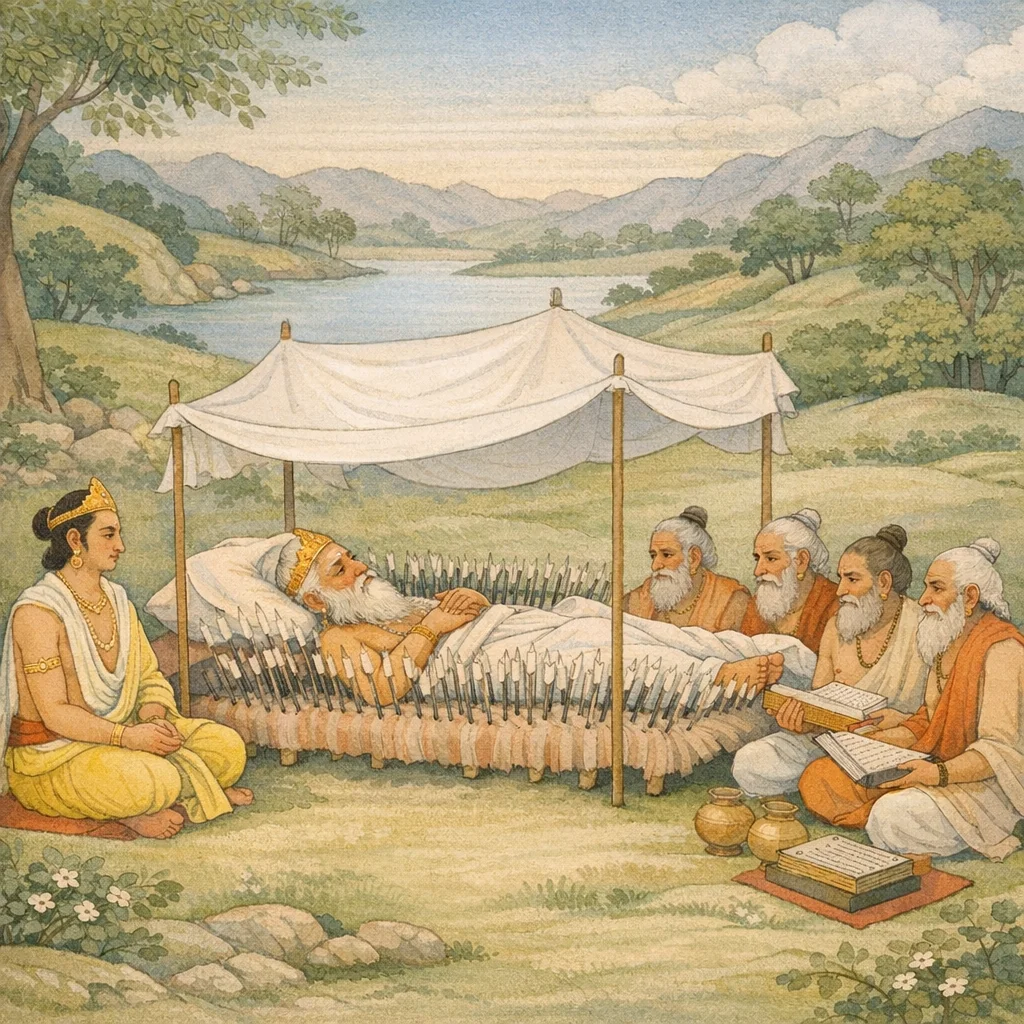
Adhyaya 36
Śakra–Śambara Saṃvāda: Brāhmaṇa-sevā, Anasūyā, and Vāg-bala (शक्रशम्बरसंवादः)
Upa-parva: Dāna-Dharma and Brāhmaṇa-Māhātmya (Exemplum: Śakra–Śambara Saṃvāda)
Bhīṣma presents an ancient exemplum to Yudhiṣṭhira: Śakra (Indra), assuming an unrecognized ascetic form, approaches Śambara and asks by what conduct he excels among his own kind. Śambara answers that he does not envy Brāhmaṇas or Brahmā, honors those who teach śāstra, does not disparage what he hears, avoids offense, performs respectful worship, asks questions appropriately, and takes the feet of the wise—thereby causing teachers to speak freely and continually guide him. He describes constant vigilance (wakefulness among the sleeping; attentiveness among the careless) and depicts teachers “pouring” instruction into him like bees depositing honey. He accepts their speech with intelligence, maintaining steady inner composure. Śambara then claims this learning-based ascendancy resembles the moon presiding over stars, and calls śāstra heard from Brāhmaṇa mouths an ‘amṛta’ and an unsurpassed ‘eye.’ The narrative widens: observing a prior deva–asura conflict, Śambara’s father inquires of Soma about the Brāhmaṇas’ success; Soma attributes it to tapas and vāg-bala, contrasts it with royal arm-strength, and warns against pride, domestic complacency for a Brāhmaṇa, and other degradations. Hearing this, Śambara’s father—and later Śakra—honor Brāhmaṇas; Śakra attains Mahendratva, framing reverence and disciplined learning as causally efficacious within the moral logic of the text.
Chapter Arc: युधिष्ठिर पितामह भीष्म से पूछते हैं—राजा के समस्त कर्तव्यों में सबसे भारी कर्तव्य कौन-सा है, और अभिषिक्त नृपति को किस कर्म में प्रवृत्त होना चाहिए। → भीष्म राजधर्म का केंद्र ब्राह्मण-सेवा और ब्राह्मण-प्रतिष्ठा में रखते हैं: वेदज्ञ, श्रोत्रिय, वृद्ध ब्राह्मणों का नित्य पूजन; उनकी शक्ति का वर्णन—उनका क्रोध दावानल-सा, उनकी गति सर्वदिशा-व्यापी; और यह भी कि निन्दा-प्रशंसा में निपुण द्विज शत्रुओं पर भी प्रभाव डालते हैं। साथ ही चेतावनी आती है कि ब्राह्मण-दर्शन/संग से वंचित होने पर क्षत्रिय जातियाँ पतन को प्राप्त होती हैं। → भीष्म का निर्णायक उपदेश—राजा का ‘सबसे प्रधान’ कर्तव्य ब्राह्मणों का अनुष्ठान/सत्कार है; और ब्राह्मणों को जीतना/वश में करना असंभव-सा है: जैसे वायु को मुट्ठी में पकड़ना, चन्द्र को हाथ से छूना, पृथ्वी को उठा लेना—वैसे ही ब्राह्मणों को ‘दुर्जय’ कहा गया। → आचरण-सूत्र स्पष्ट किया जाता है—ब्राह्मणों की निन्दा किसी भी प्रकार न सुनी जाए; जहाँ निन्दा हो वहाँ मौन होकर उठ जाना/स्थान त्याग देना उचित है। राजा को ब्राह्मण-मान, दान, आदर और संरक्षण के द्वारा राज्य-कल्याण साधना चाहिए।
Shlokas
Verse 1
अपने-आप बछ। आर: त्रयस्त्रिंशो5 ध्याय: ब्राह्मणके महत्त्वका वर्णन युधिछिर उवाच कि राज्ञ: सर्वकृत्यानां गरीय: स्यात् पितामह । कुर्वन् कि कर्म नृपतिरुभी लोकौ समश्लुते,युधिष्ठिरने पूछा--पितामह! राजाके सम्पूर्ण कृत्योंमें किसका महत्त्व सबसे अधिक है? किस कर्मका अनुष्ठान करनेवाला राजा इहलोक और परलोक दोनोंमें सुखी होता है?
Yudhiṣṭhira said: “Grandfather, among all the duties of a king, which is the most weighty and paramount? By performing what kind of action does a ruler secure well-being in both worlds—here and hereafter?”
Verse 2
भीष्म उवाच एतदू राज्ञ: कृत्यतममभिषिक्तस्य भारत । ब्राह्मणानामनुष्ठानमत्यन्तं सुखमिच्छता
Bhishma said: O Bharata, for a king who has been duly consecrated, this indeed is the most essential duty—faithful observance of the obligations owed to Brahmins—by one who seeks the highest welfare and lasting happiness.
Verse 3
श्रोत्रियान् ब्राह्मणान् वृद्धान् नित्यमेवाभिपूजयेत्,राजा वेदज्ञ ब्राह्मणों तथा बड़े-बूढ़ोंका सदा ही आदर करे। नगर और जनपदमें रहनेवाले बहुश्रुत ब्राह्मणोंको मधुर वचन बोलकर, उत्तम भोग प्रदानकर तथा सादर शीश झुकाकर सम्मानित करे
Bhishma said: A king should constantly honor learned Brahmins—those grounded in Vedic study—and also the aged. He should respectfully approach the well-versed Brahmins living in towns and rural districts, address them with gentle speech, provide them with excellent comforts and provisions, and bow his head in reverence, thereby showing due esteem. The ethical thrust is that righteous rule is sustained by humility, generosity, and reverence toward learning and seniority.
Verse 4
पौरजानपदांक्षापि ब्राह्मणांश्न बहुशुतान् । सान्त्वेन भोगदानेन नमस्कारैस्तथार्चयेत्,राजा वेदज्ञ ब्राह्मणों तथा बड़े-बूढ़ोंका सदा ही आदर करे। नगर और जनपदमें रहनेवाले बहुश्रुत ब्राह्मणोंको मधुर वचन बोलकर, उत्तम भोग प्रदानकर तथा सादर शीश झुकाकर सम्मानित करे
A king should ever honor the brāhmaṇas who know the Vedas, and the elders. The learned brāhmaṇas dwelling in town and countryside he should revere with gentle words, with gifts of excellent enjoyments and provisions, and with respectful salutations, bowing his head in homage.
Verse 5
एतत् कृत्यतमं राज्ञो नित्यमेवोपलक्षयेत् । यथा5त्मानं यथा पुत्रांस्तथैतान् प्रतिपालयेत्,राजा जिस प्रकार अपनी तथा अपने पुत्रोंकी रक्षा करता है उसी प्रकार इन ब्राह्मणोंकी भी करे। यही राजाका प्रधान कर्तव्य है; जिसपर उसे सदा ही दृष्टि रखनी चाहिये
This is the king’s foremost duty, and he should keep it ever in view. As he protects himself and his sons, so should he likewise protect these brāhmaṇas.
Verse 6
ये चाप्येषां पूज्यतमास्तान् दृढ़ प्रतिपूजयेत् । तेषु शान्तेषु तद् राष्ट्र सर्वमेव विराजते
And those among them who are most worthy of reverence—one should honor them steadfastly and with special respect. When such revered persons are at peace and content, that kingdom, in its entirety, shines forth in prosperity and good order.
Verse 7
जो इन ब्राह्मणोंके भी पूजनीय हों उन पुरुषोंका भी सुस्थिर चित्तसे पूजन करे; क्योंकि उनके शान्त रहनेपर ही सारा राष्ट्र शान्त एवं सुखी रह सकता है ।। ते पूज्यास्ते नमस्कार्या मान्यास्ते पितरो यथा । तेष्वेव यात्रा लोकानां भूतानामिव वासवे,राजाके लिये ब्राह्मण ही पिताकी भाँति पूजनीय, वन्दनीय और माननीय है। जैसे प्राणियोंका जीवन वर्षा करनेवाले इन्द्रपर निर्भर है उसी प्रकार जगत्की जीवन-यात्रा ब्राह्मणोंपर ही अवलम्बित है
Those whom even these brāhmaṇas deem worthy of worship, the king too should worship with a steady mind; for only when they remain tranquil can the whole realm be tranquil and happy. They are to be worshipped, they are to be saluted, they are to be honored—like one’s own fathers. Indeed, the very continuance of people’s life and social order rests upon them, just as the livelihood of creatures depends upon Vāsava (Indra), the giver of rain.
Verse 8
अभिचारैरुपायैश्न दहेयुरपि चेतसा | निःशेषं कुपिता: कुर्युरुग्रा: सत्यपराक्रमा:,ये सत्य-पराक्रमी ब्राह्मण जब कुपित होकर उमग्ररूप धारण कर लेते हैं उस समय अभिचार या अन्य उपायोंद्वारा संकल्पमात्रसे अपने विरोधियोंको भस्म कर सकते हैं और उनका सर्वनाश कर डालते हैं
When the brāhmaṇas, mighty through the power of truth, grow wrathful and assume a dreadful aspect, then by abhicāra (rites of imprecation) or other means, by mere resolve of mind alone, they can burn their foes to ashes without remainder and bring about their utter destruction.
Verse 9
नान्तमेषां प्रपश्यामि न दिशश्वाप्यपावृता: । कुपिता: समुदीक्षन्ते दावेष्वग्निशिखा इव
Bhīṣma said: “I see no end to them, nor any direction left unobstructed. In their fury they glare all around, like tongues of fire rising in a forest-conflagration.”
Verse 10
मुझे इनका अन्त दिखायी नहीं देता। इनके लिये किसी भी दिशाका द्वार बंद नहीं है। ये जिस समय क्रोधमें भर जाते हैं उस समय दावानलकी लपटोंके समान हो जाते हैं और वैसी ही दाहक दृष्टिसे देखने लगते हैं ।। बिभ्यत्येषां साहसिका गुणास्तेषामतीव हि । कूपा इव तृणच्छन्ना विशुद्धा द्यौरिवापरे,बड़े-बड़े साहसी भी इनसे भय मानते हैं; क्योंकि इनके भीतर गुण ही अधिक होते हैं। इन ब्राह्मणोंमेंसे कुछ तो घास-फ़ूससे ढके हुए कूपकी तरह अपने तेजको छिपाए रखते हैं और कुछ निर्मल आकाशकी भाँति प्रकाशित होते रहते हैं
Bhīṣma said: “I cannot see the limit of these men. No gate in any direction is closed to them. When they are filled with anger, they become like the tongues of a forest-fire, and they look with a burning gaze. Even the bold and daring fear them, for their inner excellence is exceedingly great. Among these brāhmaṇas, some conceal their power like wells covered over with grass, while others shine openly, pure and manifest like the clear sky.”
Verse 11
प्रसह्मकारिण: केचित् कार्पासमृदवो परे । (मान्यास्तेषां साधवो ये न निन्द्याश्षाप्पसाधव: ।) सन्ति चैषामतिशठास्तथैवान्ये तपस्विन:,कुछ हठी होते हैं और कुछ रूईकी तरह कोमल। इनमें जो श्रेष्ठ पुरुष हों, उनका सम्मान करना चाहिये; परंतु जो श्रेष्ठ न हों, उनकी भी निन्दा नहीं करनी चाहिये। इन ब्राह्मणोंमें कुछ तो अत्यन्त शठ होते हैं और दूसरे महान् तपस्वी
Bhishma said: “Among them, some act with force and harshness, while others are as soft as cotton. Those who are truly good among them should be honored; yet even those who are not good should not be reviled. Indeed, among these Brahmins there are some exceedingly deceitful, and likewise others who are great ascetics.”
Verse 12
कृषिगोरक्ष्यमप्येके भैक्ष्यमन्ये5प्यनुछ्िता: । चौराश्नान्येडनृताश्चान्ये तथान्ये नटनर्तका:,कोई-कोई ब्राह्मण खेती और गोरक्षासे जीवन चलाते हैं, कोई भिक्षापर जीवन-निर्वाह करते हैं, कितने ही चोरी करते हैं, कोई झूठ बोलते हैं और दूसरे कितने ही नटोंका तथा नाचनेका कार्य करते हैं
Bhishma said: Some (even among those who should live by higher disciplines) maintain themselves through farming and cattle-tending; others subsist on alms. Some take to theft, others to falsehood, and still others earn their living as actors and dancers. The point is the visible decline and confusion of proper livelihood, showing how people abandon prescribed duties and adopt questionable means of survival.
Verse 13
सर्वकर्मसहा श्षान्ये पार्थिवेष्वितरेषु च । विविधाकारययुक्ताश्न ब्राह्मणा भरतर्षभ,भरतश्रेष्ठट कितने ही ब्राह्मण राजाओं तथा अन्य लोगोंके यहाँ सब प्रकारके कार्य करनेमें समर्थ होते हैं और अनेक ब्राह्मण नाना प्रकारके आकार धारण करते हैं
Bhishma said: “O bull among the Bharatas, Brahmanas are capable of undertaking every kind of work—whether in the service of kings or among other people as well. Endowed with diverse forms and roles, they adapt themselves in many ways.”
Verse 14
नानाकर्मसु रक्तानां बहुकरमोपजीविनाम् । धर्मज्ञानां सतां तेषां नित्यमेवानुकीर्तयेत्,नाना प्रकारके कर्मोंमें संलग्न तथा अनेक कर्मोंसे जीविका चलानेवाले उन धर्मज्ञ एवं सत्पुरुष ब्राह्मणोंका सदा ही गुण गाना चाहिये
Bhishma said: One should always speak in praise of those virtuous, dharma-knowing Brahmins who are engaged in diverse duties and who sustain their livelihood through many kinds of work. Their steadfast commitment to righteous conduct amid varied occupations deserves continual commendation.
Verse 15
पितृणां देवतानां च मनुष्योरगरक्षसाम् । पुराप्येते महाभागा ब्राह्मणा वै जनाधिप,नरेश्वर! प्राचीनकालसे ही ये महाभाग ब्राह्मण-लोग देवता, पितर, मनुष्य, नाग और राक्षसोंके पूजनीय हैं
Bhishma said: “O lord of men, O king! From ancient times these illustrious Brahmins have indeed been worthy of reverence for the Pitṛs and the gods, and also for humans, nāgas, and rākṣasas.”
Verse 16
नैते देवैर्न पितृभिर्न गन्धर्वर्न राक्षसै: । नासुरैर्न पिशाचैश्न शक्या जेतुं द्विजातय:,ये द्विज न तो देवताओं, न पितरों, न गन्धर्वों, न राक्षसों, न असुरों और न पिशाचोंद्वारा ही जीते जा सकते हैं
Bhishma said: These twice-born men cannot be conquered—not by the gods, nor by the ancestors, nor by the Gandharvas, nor by the Rākṣasas, nor by the Asuras, nor even by the Piśācas.
Verse 17
अदैवं दैवतं कुर्युर्दैवतं चाप्पदैवतम् । यमिच्छेयु: स राजा स्याद् ये नेष्ट: स पराभवेत्,ये चाहें तो जो देवता नहीं है उसे देवता बना दें और जो देवता हैं उन्हें भी देवत्वसे गिरा दें। ये जिसे राजा बनाना चाहें वही राजा रह सकता है। जिसे राजाके रूपमें ये न देखना चाहें उसका पराभव हो जाता है
Bhishma said: “They can make what is not divine appear divine, and they can strip even the truly divine of its divinity. Whomever they wish, that person becomes king; and whomever they do not wish to accept as king, that person meets defeat.”
Verse 18
परिवादं च ये कुर्युब्रह्मिणानामचेतस: । सत्यं ब्रवीमि ते राजन् विनश्येयुर्न संशय:,राजन! मैं तुमसे यह सच्ची बात बता रहा हूँ कि जो मूढ़ मानव ब्राह्मणोंकी निन््दा करते हैं वे नष्ट हो जाते हैं--इसमें संशय नहीं है
Bhishma said: O King, I tell you the truth—those senseless men who engage in slander of Brahmins come to ruin; of this there is no doubt.
Verse 19
निन्दाप्रशंसाकुशला: कीर्त्यकीर्तिपरायणा: । परिकुप्यन्ति ते राजन् सतत द्विषतां द्विजा:,निन्दा और प्रशंसामें निपुण तथा लोगोंके यश और अपयशको बढ़ानेमें तत्पर रहनेवाले द्विज अपने प्रति सदा द्वेष रखनेवालोंपर कुपित हो उठते हैं
Bhishma said: “O King, those brahmins who are skilled in dispensing blame and praise, and who are intent on amplifying people’s fame or infamy, become provoked—ever angered—toward those who constantly bear malice against them.”
Verse 20
ब्राह्मणा यं प्रशंसन्ति पुरुष: स प्रवर्धते । ब्राह्मणैर्य: पराकृष्ट: पराभूयात् क्षणाद्धि सः,ब्राह्मण जिसकी प्रशंसा करते हैं; उस पुरुषका अभ्युदय होता है और जिसको वे शाप देते हैं; उसका एक क्षणमें पराभव हो जाता है
Bhishma said: “The man whom the Brahmins praise rises and prospers. But the one whom the Brahmins censure and draw down with their condemnation meets defeat—indeed, in a moment.”
Verse 21
शका यवनकाम्बोजास्तास्ता: क्षत्रियजातय: । वृषलत्वं परिगता ब्राह्मणानामदर्शनात्,शक, यवन और काम्बोज आदि जातियाँ पहले क्षत्रिय ही थीं; किंतु ब्राह्मणोंकी कृपादृष्टिसे वज्चित होनेके कारण उन्हें वृषल (शूद्र एवं म्लेच्छ) होना पड़ा
Bhīṣma said: “The Śakas, Yavanas, Kāmbojas, and other such peoples were originally of kṣatriya stock. But, having lost the guidance and sustaining presence of Brāhmaṇas, they fell into the condition of vṛṣalas—counted as degraded, outside the orthodox social order.”
Verse 22
द्राविडाश्व॒ कलिड्नाश्च पुलिन्दाश्षाप्युशीनरा: । कोलिसर्पा माहिषकास्तास्ता: क्षत्रियजातय:,विजयी वीरोंमें श्रेष्ठ नरेश! द्राविड़, कलिंग, पुलिन्द, उशीनर, कोलिसर्प और माहिषक आदि क्षत्रिय जातियाँ भी ब्राह्मणोंकी कृपादृष्टि न मिलनेसे ही शूद्र हो गयीं। ब्राह्मणोंसे हार मान लेनेमें ही कल्याण है, उन्हें हराना अच्छा नहीं है
Bhishma said: “The Dravidas, the Kalingas, the Pulindas, and also the Uśīnaras; the Kolisarpas and the Māhiṣakas—these and other communities were originally of kṣatriya stock. Yet, deprived of the gracious regard and sustaining favor of the brāhmaṇas, they came to be regarded as śūdras. Therefore, O best of victorious heroes and king, one’s welfare lies in yielding to the brāhmaṇas; it is not good to seek to overcome them.”
Verse 23
वृषलत्वं परिगता ब्राह्मणानामदर्शनात् । श्रेयान् पराजयस्तेभ्यो न जयो जयतां वर,विजयी वीरोंमें श्रेष्ठ नरेश! द्राविड़, कलिंग, पुलिन्द, उशीनर, कोलिसर्प और माहिषक आदि क्षत्रिय जातियाँ भी ब्राह्मणोंकी कृपादृष्टि न मिलनेसे ही शूद्र हो गयीं। ब्राह्मणोंसे हार मान लेनेमें ही कल्याण है, उन्हें हराना अच्छा नहीं है
Bhīṣma said: “Because they lost the sight and guidance of the Brāhmaṇas, they fell into the condition of vṛṣalas. O best among victors, it is better to accept defeat at the hands of Brāhmaṇas; victory over them is not truly good.”
Verse 24
यस्तु सर्वमिदं हन्याद् ब्राह्मणं च न तत्समम् | ब्रह्मवध्या महान् दोष इत्याहु: परमर्षय:,जो इस सम्पूर्ण जगत्को मार डाले तथा जो ब्राह्मणका वध करे, उन दोनोंका पाप समान नहीं है। महर्षियोंका कहना है कि ब्रह्महत्या महान् दोष है
Bhīṣma said: Even if a man were to destroy this entire world, that sin is not equal to the sin of killing a Brāhmaṇa. The highest sages declare that brahmahatyā—Brāhmaṇa-slaying—is a grievous moral fault.
Verse 25
परिवादो द्विजातीनां न श्रोतव्य: कथंचन । आसीताधोमुखलस्तूष्णीं समुत्थाय व्रजेच्च वा,ब्राह्मणोंकी निन्दा किसी तरह नहीं सुननी चाहिये। जहाँ उनकी निन्दा होती हो, वहाँ नीचे मुँह करके चुपचाप बैठे रहना या वहाँसे उठकर चल देना चाहिये
Bhīṣma said: “Slander of the twice-born should never be listened to in any manner. If such disparagement is taking place, one should sit silently with the face lowered, or else rise and leave that place.”
Verse 26
कर्तव्यं पार्थिवेन्द्रेण तथैव भरतर्षभ । भीष्मजीने कहा--भारत! राजसिंहासनपर अभिषिक्त होकर राज्यशासन करनेवाले राजाका सबसे प्रधान कर्तव्य यही है कि वह ब्राह्मणोंकी सेवा-पूजा करे। भरतश्रेष्ठ! अक्षय सुखकी इच्छा रखनेवाले नरेशको ऐसा ही करना चाहिये,न स जातो<जनिष्यद् वा पृथिव्यामिह कश्नन । यो ब्राह्मणविरोधेन सुखं जीवितुमुत्सहेत् इस पृथ्वीपर ऐसा कोई मनुष्य न तो पैदा हुआ है और न आगे पैदा होगा ही जो ब्राह्मणके साथ विरोध करके सुखपूर्वक जीवित रहनेका साहस करे
Bhīṣma said: “O bull among the Bharatas, this indeed is the foremost duty of a king who has been consecrated and sits upon the royal throne: to honor, serve, and revere the Brāhmaṇas. A ruler who seeks enduring well-being should act in this way. For on this earth there has never been, nor will there ever be, any person who could dare to live happily while standing in opposition to the Brāhmaṇas.”
Verse 27
दुर्ग्राह्मो मुष्टिना वायुर्दु:स्पर्श: पाणिना शशी । दुर्धरा पृथिवी राजन दुर्जया ब्राह्मणा भुवि,राजन! हवाको मुट्ठीमें पकड़ना, चन्द्रमाको हाथसे छूना और पृथ्वीको उठा लेना जैसे अत्यन्त कठिन काम है, उसी तरह इस पृथ्वीपर ब्राह्मणोंको जीतना दुष्कर है
Bhīṣma said: “O King, just as it is exceedingly hard to seize the wind in one’s fist, to touch the moon with one’s hand, or to lift up the earth, so too is it difficult to overcome the brāhmaṇas upon this earth.”
Verse 33
इति श्रीमहाभारते अनुशासनपर्वणि दानधर्मपर्वणि ब्राह्मणप्रशंसा नाम त्रयस्त्रिंशो 5ध्याय:
Thus ends the thirty-third chapter, entitled “Praise of the Brāhmaṇas,” in the Dāna-dharma section of the Anuśāsana Parva of the sacred Mahābhārata.
Frequently Asked Questions
Whether status and power should override reverence for knowledge: the episode tests if one can honor and learn from Brāhmaṇas/teachers without envy or defensiveness, even when approached under uncertain identity.
Sustained humility and disciplined receptivity—listening without disparagement, asking fitting questions, avoiding offense, and maintaining vigilance—are presented as the practical mechanism by which instruction is transmitted and character is formed.
Yes: the narrative closes with consequential validation—Śakra, after hearing Śambara’s account, honors the Brāhmaṇas and attains Mahendratva—encoding a causal claim that reverence for śāstra-bearers and ethical learning yields tangible elevation within the text’s moral economy.