Adhyaya 81
ययातेर्वानप्रस्थतपःस्वर्गारोहणम् | Yayāti’s Vānaprastha Austerities and Ascent to Heaven
Upa-parva: Sambhava Parva (Genealogies and Origins)
Vaiśaṃpāyana reports that King Yayāti, son of Nāhuṣa, joyfully installs his desired heir (Pūru) and withdraws to the forest as a vānaprastha, living with Brahmins on fruits and roots with self-control. Through disciplined ritual conduct—tending sacred fires, offerings according to rule, honoring guests with forest oblations, and subsisting in a gleaner-like manner—he undertakes prolonged austerities: extended regulation of speech and mind, periods of water-only subsistence, then air-only subsistence, penance amid five fires, and one-legged standing. He reaches heaven by merit, resides happily, then is said to be cast down by Śakra (Indra), remaining suspended in midair before earth-contact. A tradition is noted that he again attained heaven after meeting other kings (including Vasumat, Aṣṭaka, Pratardana, and Śibi) in an assembly. Janamejaya then asks what specific karma enabled Yayāti’s renewed ascent, prompting Vaiśaṃpāyana to continue with the “later account” that is described as meritorious and sin-destroying to hear.
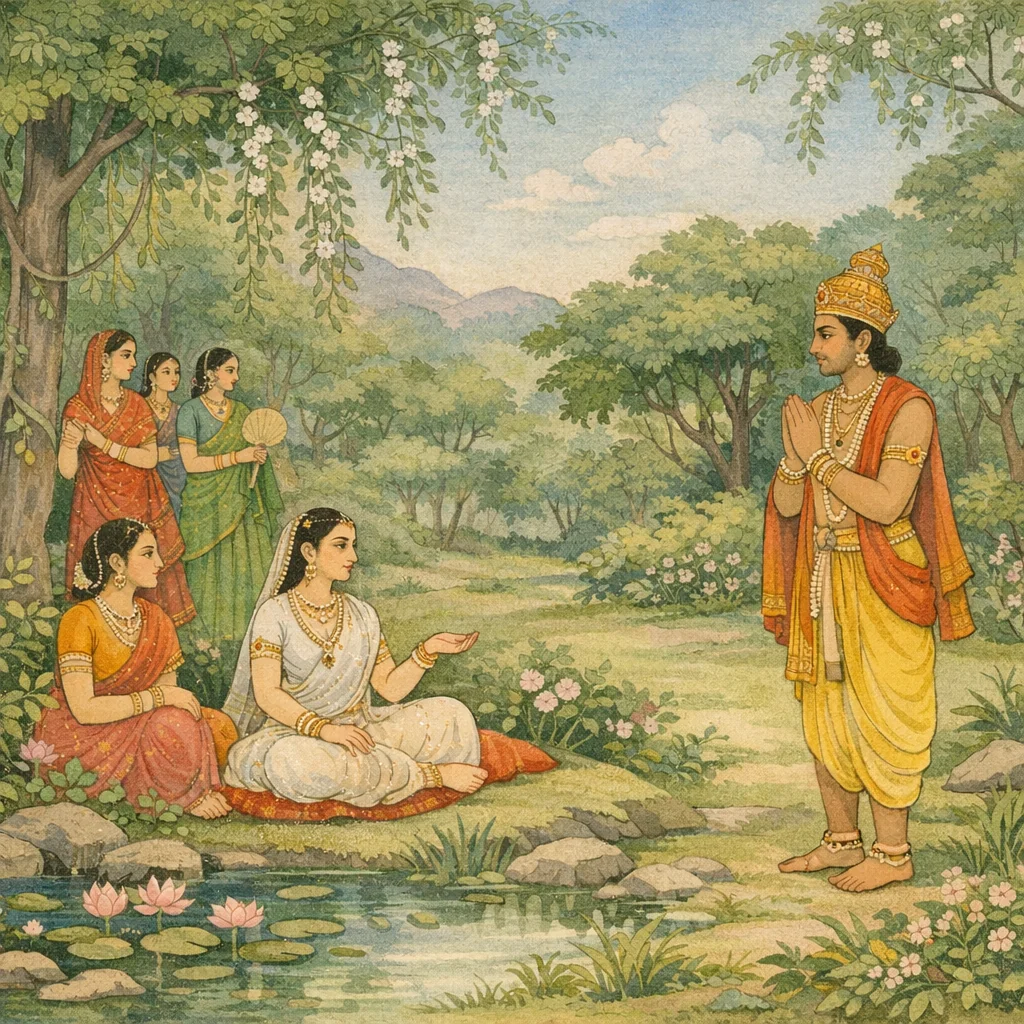
Chapter Arc: वन-प्रदेश में सखियों और दासियों के साथ देवयानी तथा शर्मिष्ठा का विहार—उसी एकांत में राजा ययाति का आगमन, मानो भाग्य स्वयं दो कुलों को आमने-सामने ले आया हो। → देवयानी ‘विधान’ (दैव-नियत) की बात कहकर प्रसंग को ऊँचा उठाती है, फिर ययाति से पूछती है कि वह इस वन में किस प्रयोजन से आया है। संवाद के भीतर ही संकेत उभरता है कि यह भेंट साधारण नहीं—यह विवाह, राजनीति और भविष्य की संतति-रेखा को मोड़ने वाली है। → देवयानी ययाति से स्पष्ट निवेदन करती है कि वह उसकी रक्षा-आश्रय बने—‘सखा, भर्ता’ बने—और साथ ही वह शर्मिष्ठा (वृषपर्वा की पुत्री) को भी ययाति के संरक्षण में सौंपते हुए मर्यादा-सीमा रखती है: उसका सत्कार हो, पर उसे शय्या पर न बुलाया जाए। → शुक्राचार्य की स्वीकृति और सम्मान के साथ ययाति को देवयानी, शर्मिष्ठा तथा दासियों/कन्याओं के साथ विदा किया जाता है; ययाति प्रसन्न होकर अपने नगर लौटता है—विवाह-संबंध स्थापित, पर भीतर एक निषिद्ध-रेखा भी खींच दी गई। → देवयानी की शर्त—‘शर्मिष्ठा को शय्या पर न बुलाना’—भविष्य के संघर्ष का बीज बनकर रह जाती है: क्या राजा वचन निभा पाएगा, या काम-धर्म और राज-धर्म की टकराहट अनिवार्य है?
Shlokas
Verse 1
(दाक्षिणात्य अधिक पाठके ५६ श्लोक मिलाकर कुल ३२३ “लोक हैं) नफमशा (0) अमन न एकाशीतितमो< ध्याय: सखियोंसहित देवयानी और शर्मिष्ठाका वन-विहार, राजा ययातिका आगमन, देवयानीकी उनके साथ बातचीत तथा विवाह वैशम्पायन उवाच अथ दीर्घस्य कालस्य देवयानी नृपोत्तम । वन॑ तदेव निर्याता क्रीडार्थ वरवर्णिनी,वैशम्पायनजी कहते हैं--नृपश्रेष्ठ! तदनन्तर दीर्घकालके पश्चात् उत्तम वर्णवाली देवयानी फिर उसी वनमें विहारके लिये गयी
Vaiśampāyana said: O best of kings, after a long time had passed, Devayānī—radiant in complexion—went out once again to that very forest for recreation. The verse sets a calm scene, hinting that leisure and ordinary movement may become the doorway through which fate and moral consequence enter a royal and familial tale.
Verse 2
तेन दासीसहस््रेण सार्थ शर्मिछ्ठया तदा । तमेव देशं सम्प्राप्ता यथाकामं चचार सा,उस समय उसके साथ एक हजार दासियोंसहित शर्मिष्ठा भी सेवामें उपस्थित थी। वनके उसी प्रदेशमें जाकर वह उन समस्त सखियोंके साथ अत्यन्त प्रसन्नतापूर्वक इच्छानुसार विचरने लगी। वे सभी किशोरियाँ वहाँ भाँति-भाँतिके खेल खेलती हुई आनन्दमें मग्न हो गयीं। वे कभी वासन्तिक पुष्पोंके मकरन्दका पान करतीं, कभी नाना प्रकारके भोज्य पदार्थोंका स्वाद लेतीं और कभी फल खाती थीं। इसी समय नहुषपुत्र राजा ययाति पुनः शिकार खेलनेके लिये दैवेच्छासे उसी स्थानपर आ गये। वे परिश्रम करनेके कारण अधिक थक गये थे और जल पीना चाहते थे। उन्होंने देवयानी, शर्मिष्ठा तथा अन्य युवतियोंकों भी देखा
Vaiśampāyana said: Then Śarmiṣṭhā too, accompanied by that thousand maidservants, arrived at the very same place. There she wandered as she pleased, moving about freely in that woodland region. The scene sets the stage for the ensuing encounter: youthful leisure and unguarded freedom in the forest will soon meet the arrival of King Yayāti, whose presence will turn play into consequence and raise questions of desire, restraint, and responsibility.
Verse 3
ताभि: सखीभि: सहिता सर्वाभिमुदिता भृशम् । क्रीडन्त्योडभिरता: सर्वा: पिबन्त्यो मधुमाधवीम्,उस समय उसके साथ एक हजार दासियोंसहित शर्मिष्ठा भी सेवामें उपस्थित थी। वनके उसी प्रदेशमें जाकर वह उन समस्त सखियोंके साथ अत्यन्त प्रसन्नतापूर्वक इच्छानुसार विचरने लगी। वे सभी किशोरियाँ वहाँ भाँति-भाँतिके खेल खेलती हुई आनन्दमें मग्न हो गयीं। वे कभी वासन्तिक पुष्पोंके मकरन्दका पान करतीं, कभी नाना प्रकारके भोज्य पदार्थोंका स्वाद लेतीं और कभी फल खाती थीं। इसी समय नहुषपुत्र राजा ययाति पुनः शिकार खेलनेके लिये दैवेच्छासे उसी स्थानपर आ गये। वे परिश्रम करनेके कारण अधिक थक गये थे और जल पीना चाहते थे। उन्होंने देवयानी, शर्मिष्ठा तथा अन्य युवतियोंकों भी देखा
Vaiśampāyana said: Accompanied by her friends, all of them exceedingly delighted, the maidens sported about as they pleased. Absorbed in play amid the waters, they drank the sweet, honeyed essence of spring—an image of youthful enjoyment that, in the larger narrative, foreshadows how unguarded pleasure can become the setting for consequential encounters and moral complications.
Verse 4
खादन्त्यो विविधान् भक्ष्यान् विदशन्त्य: फलानि च । पुनश्च नाहुषो राजा मृगलिप्सुर्यदृच्छया,उस समय उसके साथ एक हजार दासियोंसहित शर्मिष्ठा भी सेवामें उपस्थित थी। वनके उसी प्रदेशमें जाकर वह उन समस्त सखियोंके साथ अत्यन्त प्रसन्नतापूर्वक इच्छानुसार विचरने लगी। वे सभी किशोरियाँ वहाँ भाँति-भाँतिके खेल खेलती हुई आनन्दमें मग्न हो गयीं। वे कभी वासन्तिक पुष्पोंके मकरन्दका पान करतीं, कभी नाना प्रकारके भोज्य पदार्थोंका स्वाद लेतीं और कभी फल खाती थीं। इसी समय नहुषपुत्र राजा ययाति पुनः शिकार खेलनेके लिये दैवेच्छासे उसी स्थानपर आ गये। वे परिश्रम करनेके कारण अधिक थक गये थे और जल पीना चाहते थे। उन्होंने देवयानी, शर्मिष्ठा तथा अन्य युवतियोंकों भी देखा
Vaiśampāyana said: The maidens, eating various delicacies and biting into fruits as well, were delighting in their play. Just then, by chance, the king—Nahusha’s descendant—came again to that very place, eager for the hunt. (In the surrounding narrative, this is King Yayāti arriving upon Devayānī, Śarmiṣṭhā, and their companions, setting in motion an encounter with moral consequences for desire, duty, and restraint.)
Verse 5
तमेव देशं सम्प्राप्तो जलार्थी श्रमकर्शित: । ददृशे देवयानीं स शर्मिष्ठां ताश्न॒ योषित:,उस समय उसके साथ एक हजार दासियोंसहित शर्मिष्ठा भी सेवामें उपस्थित थी। वनके उसी प्रदेशमें जाकर वह उन समस्त सखियोंके साथ अत्यन्त प्रसन्नतापूर्वक इच्छानुसार विचरने लगी। वे सभी किशोरियाँ वहाँ भाँति-भाँतिके खेल खेलती हुई आनन्दमें मग्न हो गयीं। वे कभी वासन्तिक पुष्पोंके मकरन्दका पान करतीं, कभी नाना प्रकारके भोज्य पदार्थोंका स्वाद लेतीं और कभी फल खाती थीं। इसी समय नहुषपुत्र राजा ययाति पुनः शिकार खेलनेके लिये दैवेच्छासे उसी स्थानपर आ गये। वे परिश्रम करनेके कारण अधिक थक गये थे और जल पीना चाहते थे। उन्होंने देवयानी, शर्मिष्ठा तथा अन्य युवतियोंकों भी देखा
Vaiśampāyana said: Worn down by exertion and seeking water, he arrived at that very spot. There he saw Devayānī, Śarmiṣṭhā, and the other young women. The scene shows how chance meetings—shaped by circumstance and desire—become turning points that set larger moral consequences in motion.
Verse 6
पिबन्तीर्ललमानाश्व दिव्याभरणभूषिता: । (आसने प्रवरे दिव्ये सर्वाभरण भूषिते ।) उपविष्टां च ददृशे देवयानीं शुचिस्मिताम्,वे सभी दिव्य आभूषणोंसे विभूषित हो पीनेयोग्य रसका पान और भाँति-भाँतिकी क्रीड़ाएँ कर रही थीं। राजाने पवित्र मुसकानवाली देवयानीको वहाँ समस्त आभूषणोंसे विभूषित परम सुन्दर दिव्य आसनपर बैठी हुई देखा
Vaiśampāyana said: Adorned with celestial ornaments, the women were drinking and sporting in various ways. There the king beheld Devayānī—smiling with pure grace—seated upon a supremely beautiful, divine seat, itself richly decked with every ornament. The scene shows how royal attention is drawn to outward splendor and refined conduct, setting the stage for later moral tensions born of desire, status, and pride.
Verse 7
रूपेणाप्रतिमां तासां स्त्रीणां मध्ये वराड़नाम् । शर्मिष्ठया सेव्यमानां पादसंवाहनादिभि:,उसके रूपकी कहीं तुलना नहीं थी। वह सुन्दरी उन स्त्रियोंके मध्यमें बैठी हुई थी और शर्मिष्ठाद्वारा उसकी चरणसेवा की जा रही थी
Vaiśampāyana said: Among those women, she was incomparable in beauty. The lovely maiden sat in their midst, while Śarmiṣṭhā attended upon her—massaging her feet and performing other services—highlighting the social hierarchy and the moral tension implicit in such enforced or customary service.
Verse 8
ययातिरुवाच द्वाभ्यां कन्न्यासहस्राभ्यां द्वे कन््ये परिवारिते । गोत्रे च नामनी चैव द्वयो: पृच्छाम्यहं शुभे,ययातिने पूछा--दो हजार- कुमारी सखियोंसे घिरी हुई कन््याओ! मैं आप दोनोंके गोत्र और नाम पूछ रहा हूँ। शुभे! आप दोनों अपना परिचय दें
Vaiśampāyana said: King Yayāti spoke—“O auspicious maidens, you two are attended by two thousand maiden companions. I ask you both your lineage (gotra) and your names. Tell me your identity.”
Verse 9
देवयान्युवाच आख्यास्याम्यहमादत्स्व वचन मे नराधिप । शुक्रो नामासुरगुरु: सुतां जानीहि तस्य माम्,देवयानी बोली--महाराज! मैं स्वयं परिचय देती हूँ, आप मेरी बात सुनें। असुरोंके जो सुप्रसिद्ध गुरु शुक्राचार्य हैं, मुझे उन्हींकी पुत्री जानिये
Devayānī said: “I shall tell you who I am—accept my words, O king. Know me to be the daughter of Śukra, the renowned preceptor of the Asuras.”
Verse 10
इयं च मे सखी दासी यत्राहं तत्र गामिनी । दुहिता दानवेन्द्रस्य शर्मिष्ठा वृषपर्वण:,यह दानवराज वृषपर्वाकी पुत्री शर्मिष्ठा मेरी सखी और दासी है। मैं विवाह होनेपर जहाँ जाऊँगी, वहाँ यह भी जायगी
“And this one is my companion and attendant; wherever I go, she will go there as well. She is Śarmiṣṭhā, the daughter of Vṛṣaparvan, lord of the Dānavas.”
Verse 11
ययातिरुवाच कथं तु ते सखी दासी कन्येयं वरवर्णिनी । असुरेन्द्रसुता सुभ्रू: परं कौतूहलं हि मे,ययाति बोले--सुन्दरी! यह असुरराजकी रूपवती कन्या सुन्दर भौंहोंवाली शर्मिष्ठा आपकी सखी और दासी किस प्रकार हुई? यह बताइये। इसे सुननेके लिये मेरे मनमें बड़ी उत्कण्ठा है
Yayāti said: “O fair maiden, how did Śarmiṣṭhā—daughter of the Asura king, lovely-browed—become both your friend and your attendant? My curiosity is great; tell me.”
Verse 12
देवयान्युवाच सर्व एव नरश्रेष्ठ विधानमनुवर्तते । विधानविदितं मत्वा मा विचित्रा: कथा: कृथा:,देवयानी बोली--नरश्रेष्ठी सब लोग दैवके विधानका ही अनुसरण करते हैं। इसे भी भाग्यका विधान मानकर संतोष कीजिये। इस विषयकी विचित्र घटनाओंको न पूछिये
Devayānī said: “O best of men, everyone indeed follows the ordinance of fate. Knowing this to be the settled dispensation, do not spin strange conjectures or probing questions about these events; accept them as destiny’s arrangement and be at peace.”
Verse 13
राजवद् रूपवेषौ ते ब्राह्मीं वाच॑ं बिभर्षि च | को नाम त्वं कुतश्चासि कस्य पुत्रश्न शंस मे,आपके रूप और वेष राजाके समान हैं और आप ब्राह्मी वाणी (विशुद्ध संस्कृत भाषा) बोल रहे हैं। मुझे बताइये; आपका क्या नाम है, कहाँसे आये हैं और किसके पुत्र हैं?
Vaiśampāyana said: “Your appearance and attire are like those of a king, and you also speak refined, Vedic Sanskrit. Tell me—what is your name, from where have you come, and whose son are you?”
Verse 14
ययातिरुवाच ब्रह्मचर्येण वेदो मे कृत्स्न: श्रुतिपर्थ गत: । राजाहूं राजपुत्रश्न ययातिरिति विश्रुत:,ययातिने कहा--ैंने ब्रह्मचर्यपालनपूर्वक सम्पूर्ण वेदका अध्ययन किया है। मैं राजा नहुषका पुत्र हूँ और इस समय स्वयं राजा हूँ। मेरा नाम ययाति है
Yayāti said: “By the discipline of brahmacarya I have mastered the whole of the Veda and set it upon the path of sacred learning. I am a king, and a prince by birth as well; I am renowned by the name Yayāti.”
Verse 15
देवयान्युवाच केनास्यर्थेन नृपते इमं देशमुपागत: । जिधघृक्षुर्वारिजं किंचिदथवा मृगलिप्सया,देवयानीने पूछा--महाराज! आप किस कार्यसे वनके इस प्रदेशमें आये हैं? आप जल अथवा कमल लेना चाहते हैं या शिकारकी इच्छासे ही आये हैं?
Devayānī said: “O king, for what purpose have you come to this part of the forest? Have you come to draw water, to pluck a lotus, or driven by the desire to hunt?”
Verse 16
ययातिरुवाच मृगलिप्सुरहं भद्रे पानीयार्थमुपागत: । बहुधाप्यनुयुक्तो5स्मि तदनुज्ञातुमहसि,ययातिने कहा--भटद्रे! मैं एक हिंसक पशुको मारनेके लिये उसका पीछा कर रहा था, इससे बहुत थक गया हूँ और पानी पीनेके लिये यहाँ आया हूँ। अत: अब मुझे आज्ञा दीजिये
Yayāti said: “O noble lady, I have come here seeking water. I was pursuing a wild animal to kill it, and I am exhausted. Though I have been questioned in many ways, you ought now to grant me leave (to drink and proceed).”
Verse 17
देवयान्युवाच द्वाभ्यां कन्न्यासहस्राभ्यां दास्या शर्मिछ्ठया सह । त्वदधीनास्मि भद्रें ते सखा भर्ता च मे भव,देवयानीने कहा--राजन! आपका कल्याण हो। मैं दो हजार कन््याओं तथा अपनी सेविका शर्मिष्ठाके साथ आपके अधीन होती हूँ। आप मेरे सखा और पति हो जायेँ
Devayānī said: “With two thousand maidens, and together with my handmaid Śarmiṣṭhā, I place myself under your protection. O king, may you be blessed—be to me both companion and husband.”
Verse 18
ययातिरु्वाच विद्धयौशनसि भद्र॑ ते न त्वामहोंडस्मि भाविनि । अविवाह्दा हि राजानो देवयानि पितुस्तव,ययाति बोले--शुक्रनन्दिनी देवयानी! आपका भला हो। भाविनि! मैं आपके योग्य नहीं हूँ। क्षत्रियलोग आपके पितासे कन्यादान लेनेके अधिकारी नहीं हैं
Yayāti said: “Know this, O Devayānī, daughter of Uśanas (Śukra)—may good befall you. O noble lady, I am not a suitable match for you. For kings, Devayānī, ought not accept marriage in a manner where your father gives you thus.”
Verse 19
देवयान्युवाच संसृष्टं ब्रह्मणा क्षत्रं क्षत्रेण ब्रह्म संहितम् । ऋषिश्चाप्यृषिपुत्रश्च नाहुषाड़ वहस्व माम्,देवयानीने कहा--नहुषनन्दन! ब्राह्मणसे क्षत्रिय जाति और क्षत्रियसे ब्राह्मण जाति मिली हुई है। आप राजर्षिके पुत्र हैं और स्वयं भी राजर्षि हैं। अतः मुझसे विवाह कीजिये
Devayānī said: “The Brahmin order has become intermingled with the Kṣatriya, and the Kṣatriya with the Brahmin. You are the son of a royal seer, and you yourself are a royal seer. Therefore, O descendant of Nahūṣa, accept me in marriage.”
Verse 20
ययातिरुवाच एकदवेहोद्धवा वर्णश्षृत्वारोडपि वराड़ने । पृथग्धर्मा: पृथक्छौचास्तेषां तु ब्राह्मणो वर:,ययाति बोले--वरांगने! एक ही परमेश्वरके शरीरसे चारों वर्णोंकी उत्पत्ति हुई है; परंतु सबके धर्म और शौचाचार अलग-अलग हैं। ब्राह्मण उन सब वर्णोमें श्रेष्ठ हैं
Yayāti said: “O fair-limbed lady, from the one body of the Supreme Lord the four varṇas were born; yet their dharmas and their rules of purity are distinct. Among all the varṇas, the Brahmin is the highest.”
Verse 21
देवयान्युवाच पाणिधर्मो नाहुषायं न पुम्भि: सेवित: पुरा । त॑ मे त्वमग्रहीरग्रे वृणोमि त्वामहं तत:,देवयानीने कहा--नहुषकुमार! नारीके लिये पाणिग्रहण एक धर्म है। पहले किसी भी पुरुषने मेरा हाथ नहीं पकड़ा था। सबसे पहले आपहीने मेरा हाथ पकड़ा था। इसलिये आपटहीका मैं पतिरूपमें वरण करती हूँ
Devayānī said: “O son of Nahuṣa, the rite of taking a woman’s hand in marriage is a woman’s dharma, and until now no man had ever claimed my hand. You were the first to take hold of my hand; therefore, from this moment, I choose you as my husband.”
Verse 22
कथं नु मे मनस्विन्या: पाणिमन्य: पुमान् स्पृशेत् गृहीतमृषिपुत्रेण स्वयं वाप्यूषिणा त्वया,मैं मनको वशमें रखनेवाली स्त्री हूँ। आप-जैसे राजर्षिकुमार अथवा राजर्षिद्वारा पकड़े गये मेरे हाथका स्पर्श अब दूसरा पुरुष कैसे कर सकता है
How could any other man touch my hand, when I am a self-controlled woman and my hand has already been taken—seized in union—by you, the son of a ṛṣi, by your own act?
Verse 23
ययातिरुवाच क्रुद्धादाशीविषात् सर्पाज्ज्वलनात् सर्वतोमुखात् । दुराधर्षतरो विप्रो ज्ञेयः पुंसा विजानता,ययाति बोले--देवि! विज्ञ पुरुषको चाहिये कि वह ब्राह्मणको क्रोधमें भरे हुए विषधर सर्प तथा सब ओरसे प्रज्वलित अग्निसे भी अधिक दुर्धर्ष एवं भयंकर समझे
Yayāti said: “O goddess, a discerning man should know that a Brahmin in wrath is harder to withstand than an enraged venomous serpent, and more dreadful than a fire blazing on all sides.”
Verse 24
देवयान्युवाच कथमाशीविषात् सर्पाज्ज्वलनात् सर्वतोमुखात् | दुराधर्षतरो विप्र इत्यात्थ पुरुषर्षभ,देवयानीने कहा--पुरुषप्रवर! ब्राह्मण विषधर सर्प और सब ओरसे प्रज्वलित होनेवाली अग्निसे भी दुर्धर्ष एवं भयंकर है, यह बात आपने कैसे कही?
Devayānī said: “O best of men, how did you come to say that a brāhmaṇa is even more formidable—harder to assail—than a venomous serpent and than a blazing fire that flares on every side?”
Verse 25
ययातिरुवाच एकमाशीविषो हन्ति शस्त्रेणैकश्ष वध्यते । हन्ति विप्र: सराष्ट्राणि पुराण्यपि हि कोपित:,ययाति बोले--भटद्रे! सर्प एकको ही मारता है, शस्त्रसे भी एक ही व्यक्तिका वध होता है; परंतु क्रोधमें भरा हुआ ब्राह्मण समस्त राष्ट्र और नगरका भी नाश कर देता है। भीरु! इसलिये मैं ब्राह्मणको अधिक दुर्धर्ष मानता हूँ। अतः जबतक आपके पिता आपको मेरे हवाले न कर दें, तबतक मैं आपसे विवाह नहीं करूँगा
Yayāti said: “A single venomous serpent kills one person, and a weapon too slays only one at a time. But a brahmin, when inflamed with anger, can bring ruin upon entire kingdoms and even cities. Therefore I regard the brahmin as the more formidable. Hence, until your father formally entrusts you to me, I will not marry you.”
Verse 26
दुराधर्षतरो विप्रस्तस्माद् भीरु मतो मम । अतोउतदत्तां च पित्रा त्वां भद्रे न विवहाम्यहम्,ययाति बोले--भटद्रे! सर्प एकको ही मारता है, शस्त्रसे भी एक ही व्यक्तिका वध होता है; परंतु क्रोधमें भरा हुआ ब्राह्मण समस्त राष्ट्र और नगरका भी नाश कर देता है। भीरु! इसलिये मैं ब्राह्मणको अधिक दुर्धर्ष मानता हूँ। अतः जबतक आपके पिता आपको मेरे हवाले न कर दें, तबतक मैं आपसे विवाह नहीं करूँगा
“Therefore, O timid one, I consider a brāhmaṇa the most unassailable. Hence, O noble lady, until your father formally gives you to me, I will not marry you.”
Verse 27
देवयान्युवाच दत्तां वहस्व तन्मा त्वं पित्रा राजन् वृतो मया । अयाचतो भयं नास्ति दत्तां च प्रतिगृह्नतः,(तिष्ठ राजन मुहूर्त तु प्रेषयिष्याम्यहं पितु: । देवयानीने कहा--राजन्! मैंने आपका वरण कर लिया है, अब आप मेरे पिताके देनेपर ही मुझसे विवाह करें। आप स्वयं तो उनसे याचना करते नहीं हैं; उनके देनेपर ही मुझे स्वीकार करेंगे। अतः आपको उनके कोपका भय नहीं है। राजन! दो घड़ी ठहर जाइये। मैं अभी पिताके पास संदेश भेजती हूँ
Devayānī said: “O King, accept me only as one duly given by my father; for I have chosen you, but let the marriage be concluded through my father’s formal gift. Since you are not asking for me as a suitor, and will receive me only when I am given, you need not fear his displeasure. Wait here for a moment, O King; I shall send word to my father at once.”
Verse 28
गच्छ त्वं धात्रिके शीघ्र ब्रह्म कल्पमिहानय ।। स्वयंवरे वृतं शीघ्रं निवेदय च नाहुषम् ।।) धाय! शीघ्र जाओ और मेरे ब्रह्मतुल्य पिताको यहाँ बुला ले आओ। उनसे यह भी कह देना कि देवयानीने स्वयंवरकी विधिसे नहुषनन्दन राजा ययातिका पतिरूपमें वरण किया है। वैशम्पायन उवाच त्वरितं देवयान्याथ संदिष्टं पितुरात्मन: । सर्व निवेदयामास धात्री तस्मै यथातथम्,वैशम्पायनजी कहते हैं--राजन्! इस प्रकार देवयानीने तुरंत धायको भेजकर अपने पिताको संदेश दिया। धायने जाकर शुक्राचार्यसे सब बातें ठीक-ठीक बता दीं
Vaiśampāyana said: “Go quickly, O nurse, and bring here my father, who is like Brahmā in dignity. Also inform Nahūṣa at once that, in the rite of svayaṃvara, Devayānī has chosen King Yayāti, the son of Nahūṣa, as her husband.” Thus Devayānī swiftly sent the nurse with a message to her father, and the nurse reported everything faithfully to Śukrācārya, just as it had occurred.
Verse 29
श्रुत्वैव च स राजानं दर्शयामास भार्गव: | दृष्टवैव चागतं शुक्रे ययाति: पृथिवीपति: । वन्न््दे ब्राह्मणं काव्यं प्राउजलि: प्रणत: स्थित:,सब समाचार सुनते ही शुक्राचार्यने वहाँ आकर राजाको दर्शन दिया। विप्रवर शुक्राचार्यको आया देख राजा ययातिने उन्हें प्रणाम किया और हाथ जोड़कर विनम्रभावसे खड़े हो गये
As soon as he heard the news, the Bhārgava (Śukrācārya) came there and granted the king his audience. Seeing Śukra arrive, King Yayāti, lord of the earth, bowed in reverence to the Brahmin Kāvya; with hands joined, he stood humbly, showing that royal power is to be guided by respect for spiritual authority and learning.
Verse 30
देवयान्युवाच राजायं नाहुषस्तात दुर्गमे पाणिमग्रहीत् । नमस्ते देहि मामस्मै लोके नान्यं पतिं वृणे,देवयानी बोली--तात! ये नहुषपुत्र राजा ययाति हैं। इन्होंने संकटके समय मेरा हाथ पकड़ा था। आपको नमस्कार है। आप मुझे इन्हींकी सेवामें समर्पित कर दें। मैं इस जगतमें इनके सिवा दूसरे किसी पतिका वरण नहीं करूँगी
Devayānī said: “Dear father, this is King Yayāti, the son of Nahuṣa. In my moment of peril he took my hand and rescued me. I bow to you—give me to him in marriage. In this world I choose no husband other than him.”
Verse 31
शुक्र उवाच वृतोडनया पतिर्वीर सुतया त्वं ममेष्टया । गृहाणेमां मया दत्तां महिषीं नहुषात्मज,शुक्राचार्यने कहा--वीर नहुषनन्दन! मेरी इस लाड़ली पुत्रीने तुम्हें पतिरूपमें वरण किया है; अतः मेरी दी हुई इस कन्याको तुम अपनी पटरानीके रूपमें ग्रहण करो
Śukra said: “O hero, my beloved daughter Vṛtodana has chosen you as her husband. Therefore, O son of Nahuṣa, accept this maiden whom I give you, and take her as your chief queen.”
Verse 32
ययातिरुवाच अधर्मो न स्पृशेदेष महान् मामिह भार्गव | वर्णसंकरजो ब्रद्वान्निति त्वां प्रवृणोम्पहम्,ययाति बोले--भार्गव ब्रह्मन! मैं आपसे यह वर माँगता हूँ कि इस विवाहमें यह प्रत्यक्ष दीखनेवाला वर्णसंकरजनित महान् अधर्म मेरा स्पर्श न करे
Yayāti said: “O Bhārgava, O brāhmaṇa! In this matter, may this great adharma—born of the visible danger of varṇa-mixture in this marriage—never touch me. This is the boon I choose from you.”
Verse 33
शुक्र उवाच अधर्मात् त्वां विमुज्चामि वृणु त्वं वरमीप्सितम् | अस्मिन् विवाहे मा म्लासीरहं पापं नुदामि ते,शुक्राचार्यने कहा--राजन! मैं तुम्हें अधर्मसे मुक्त करता हूँ; तुम्हारी जो इच्छा हो वर माँग लो। इस विवाहको लेकर तुम्हारे मनमें ग्लानि नहीं होनी चाहिये। मैं तुम्हारे सारे पापको दूर करता हूँ
Śukra said: “I release you from the taint of adharma. Choose the boon you desire. Let there be no remorse in your mind regarding this marriage; I remove your sin.”
Verse 34
वहस्व भार्या धर्मेण देवयानीं सुमध्यमाम् | अनया सह सम्प्रीतिमतुलां समवाप्लुहि,तुम सुन्दरी देवयानीको धर्मपूर्वक अपनी पत्नी बनाओ और इसके साथ रहकर अतुल सुख एवं प्रसन्नता प्राप्त करो
Śukra said: “Accept Devayānī—slender-waisted and worthy—as your wife in accordance with dharma. Live with her, and through this union attain incomparable joy and mutual contentment.”
Verse 35
इयं चापि कुमारी ते शर्मिष्ठा वार्षपर्वणी । सम्पूज्या सततं राजन् मा चैनां शयने ह्वये:,महाराज! वृषपर्वाकी पुत्री यह कुमारी शर्मिष्ठा भी तुम्हें समर्पित है। इसका सदा आदर करना, किंतु इसे अपनी सेजपर कभी न बुलाना
Śukra said: “This maiden Śarmiṣṭhā, the daughter of Vṛṣaparvan, is also entrusted to you. O king, you must honor her continually; but do not ever summon her to your bed.”
Verse 36
(रहस्थेनां समाहूय न वर्दे्न च संस्पृशे: । वहस्व भार्या भद्रें ते यथाकाममवाप्स्यसि ।।) तुम्हारा कल्याण हो। इस शर्मिष्ठाको एकान्तमें बुलाकर न तो इससे बात करना और न इसके शरीरका स्पर्श ही करना। अब तुम विवाह करके इसे अपनी पत्नी बनाओ। इससे तुम्हें इच्छानुसार फलकी प्राप्ति होगी। वैशम्पायन उवाच एवमुक्तो ययातिस्तु शुक्र कृत्वा प्रदक्षिणम् । शास्त्रोक्तविधिना राजा विवाहमकरोच्छुभम्,वैशम्पायनजी कहते हैं--जनमेजय! शुक्राचार्यके ऐसा कहनेपर राजा ययातिने उनकी परिक्रमा की और शास्त्रोक्त विधिसे मंगलमय विवाह-कार्य सम्पन्न किया
Vaiśampāyana said: “Having summoned her in private, do not converse with her, nor touch her body. Take her as your wife; may you be blessed—through her you shall obtain the fruits you desire.” Thus instructed, King Yayāti circumambulated Śukra in reverence and, following the procedures enjoined by the śāstras, duly performed the auspicious marriage rite.
Verse 37
लब्ध्वा शुक्रान्महद् वित्तं देवयानीं तदोत्तमाम् | द्विसहस्रेण कन्यानां तथा शर्मिष्ठया सह,शुक्राचार्यसे देवयानी-जैसी उत्तम कन्या, शर्मिष्ठा और दो हजार अन्य कन्याओं तथा महान् वैभवको पाकर दैत्यों एवं शुक्राचार्यसे पूजित हो, उन महात्माकी आज्ञा ले नृपश्रेष्ठ ययाति बड़े हर्षके साथ अपनी राजधानीको गये
Vaiśampāyana said: Having obtained from Śukra great wealth, the excellent maiden Devayānī, and—together with Śarmiṣṭhā—two thousand other maidens, King Yayāti, honored among the Daityas and respectfully taking leave of that great-souled preceptor, departed with great joy for his own capital.
Verse 38
सम्पूजितश्न शुक्रेण दैत्यैश्न नृपसत्तम: । जगाम स्वपुरं हृष्टोडनुज्ञातो5थ महात्मना,शुक्राचार्यसे देवयानी-जैसी उत्तम कन्या, शर्मिष्ठा और दो हजार अन्य कन्याओं तथा महान् वैभवको पाकर दैत्यों एवं शुक्राचार्यसे पूजित हो, उन महात्माकी आज्ञा ले नृपश्रेष्ठ ययाति बड़े हर्षके साथ अपनी राजधानीको गये
Honoured by Śukra and by the Daityas, the best of kings, Yayāti—having received the permission of that great-souled preceptor—departed joyfully for his own city.
Verse 81
इति श्रीमहा भारते आदिपर्वणि सम्भवपर्वणि ययात्युपाख्याने एकाशीतितमो<ध्याय:
Thus ends the eighty-first chapter in the Ādi Parva of the Śrī Mahābhārata, within the Sambhava section, in the episode concerning King Yayāti. This closing colophon marks the completion of a narrative unit that places Yayāti’s story within the larger account of origins and lineage, implicitly framing kingship, desire, and responsibility as themes to be weighed against dharma.
Frequently Asked Questions
The chapter implicitly tests how a ruler should transition from sovereignty to renunciation: whether authority is an entitlement to continued enjoyment or a duty that culminates in disciplined withdrawal and accountability to karmic consequence.
Merit is depicted as structured practice rather than status: self-restraint, correct ritual conduct, and hospitality within ascetic life generate results, yet heavenly attainment remains conditional, emphasizing vigilance regarding pride and the stability of earned rewards.
Yes in functional form: Vaiśaṃpāyana characterizes the forthcoming continuation of Yayāti’s account as puṇyārthā (merit-producing) and sarva-pāpa-praṇāśinī (sin-destroying) to hear, marking an embedded listening-benefit claim.