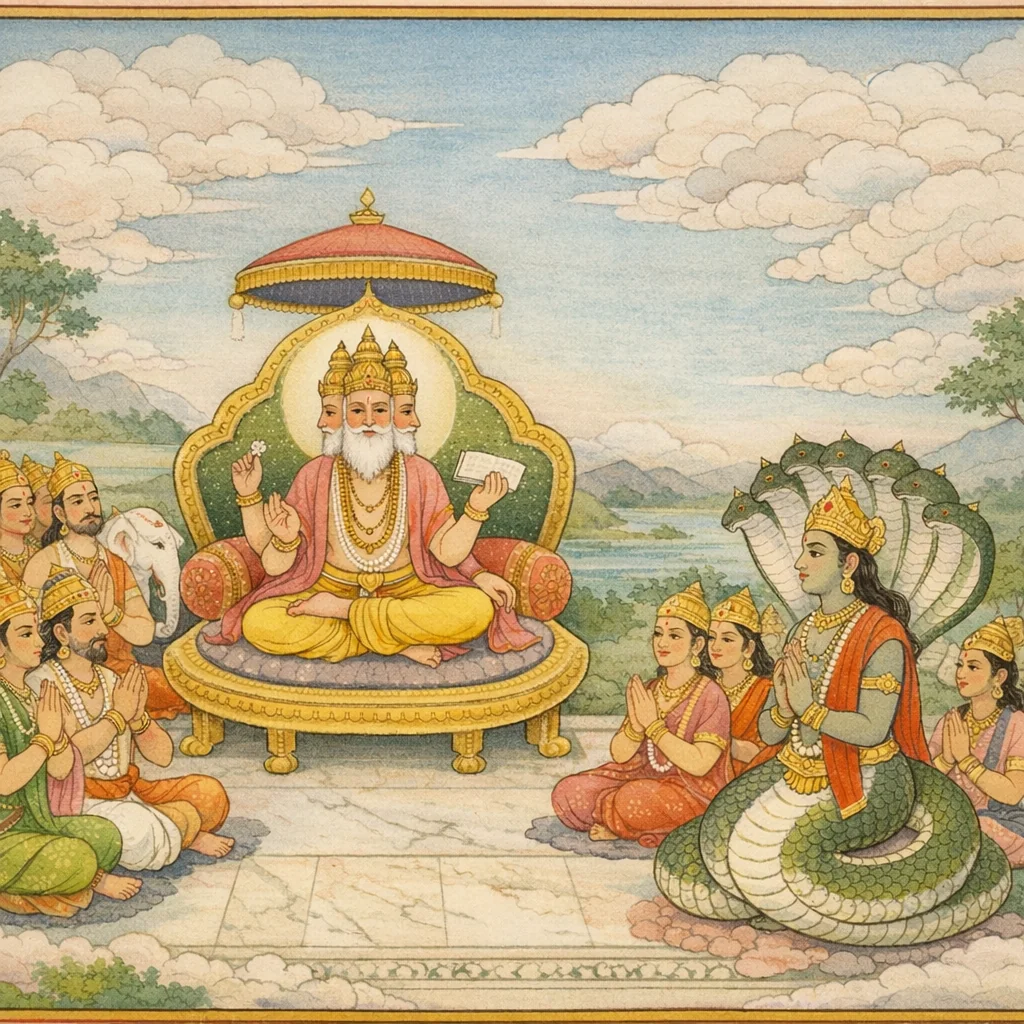
Adhyaya 39
आदि पर्व — अध्याय 39: तक्षक–काश्यप संवादः, न्यग्रोधसंजीवनम्, पारिक्षितोपायः
Upa-parva: Āstīka Parva (Serpent-sacrifice frame and Takṣaka–Parīkṣit episode)
Chapter 39 presents a tightly structured sequence of dialogue and demonstration. Takṣaka challenges the healer Kāśyapa to counteract venom and demands proof of mantra-power; as a test, Takṣaka bites a nyagrodha (banyan), which combusts and becomes ash. Kāśyapa then publicly restores the tree from ash through vidyā, escalating the contest from harm to revival and establishing his technical competence. Takṣaka pivots to motive analysis, asking why Kāśyapa is traveling and offering to supply the desired reward directly, arguing that Parīkṣit is already under a brahminical curse and therefore difficult to save, and that Kāśyapa’s reputation could be imperiled by failure. Kāśyapa admits a financial motive and accepts Takṣaka’s superior payment, then—after divinatory assessment—turns back, having recognized the king’s shortened lifespan. Takṣaka proceeds toward Nāgasāhvaya, learns of protective measures around the king, and devises māyā-based deception: agents in ascetic guise deliver fruit, leaves, and water to Parīkṣit. The king accepts, shares the offerings, and a minute worm-like form is noticed within a fruit—foreshadowing Takṣaka’s concealed entry and the impending fatal outcome.
Chapter Arc: सौतिपुत्र उग्रश्रवा एलापत्र नाग की पुरानी बात उठाते हैं—नागों के उद्धार का उपाय केवल एक ही है: जरत्कारु ऋषि से वासुकि की बहन का विवाह। → वासुकि उस कन्या की रक्षा करता रहता है और उचित समय की प्रतीक्षा करता है; उधर देव-दानव समुद्र-मंथन में वासुकि को नेत्र (रस्सी) बनाते हैं, जिससे उसका महत्व तो बढ़ता है पर शाप-भय और भविष्य की अनिवार्यता भी और तीखी हो जाती है। → ब्रह्मा स्वयं देवताओं के सामने एलापत्र द्वारा कही गई भविष्यवाणी की पुष्टि करते हैं और स्पष्ट आज्ञा देते हैं—उग्र तप में रत ब्राह्मण जरत्कारु उत्पन्न हो चुका है; अवसर देखकर वासुकि अपनी बहन उसे प्रदान करे। → ब्रह्म-वचन सुनकर शाप-भय से मोहित वासुकि तुरंत नागों को आदेश देता है—जरत्कारु का पता लगाओ, और जैसे ही वह पत्नी-वरण की इच्छा करे, तत्काल सूचना दो; साथ ही वह अपनी बहन को लेकर विवाह-प्रयत्न में जुट जाता है। → नाग-गण जरत्कारु की खोज में निकलते हैं—क्या वह विवाह स्वीकार करेगा, और क्या यही उपाय नागों को जनमेजय के सर्पसत्र से बचा पाएगा?
Shlokas
Verse 1
अपना छा | >> ्र>र्ज एकोनचत्वारिशोड ध्याय: ब्रह्माजीकी आज्ञासे वासुकिका जरत्कारु मुनिके साथ अपनी बहिनको ब्याहनेके लिये प्रयत्नशील होना सौतिरुवाच एलापत्रवच: श्रुत्वा ते नागा द्विजसत्तम | सर्वे प्रह्ष्टमनस: साधु साथ्वित्यथाब्रुवन्,उग्रश्रवाजी कहते हैं--द्विजश्रेष्ठती एलापत्रकी बात सुनकर नागोंका चित्त प्रसन्न हो गया। वे सब-के-सब एक साथ बोल उठे--“ठीक है, ठीक है।” वासुकिको भी इस बातसे बड़ी प्रसन्नता हुई। वे उसी दिनसे अपनी बहिन जरत्कारुका बड़े चावसे पालन-पोषण करने लगे
Sauti said: O best of twice-born ones, when the Nāgas heard Elāpatra’s words, their hearts were filled with joy. All of them together exclaimed, “Well said! Well said!” Vāsuki too was greatly delighted by this, and from that very day he began to care for and nurture his sister Jaratkāru with special affection—intent on fulfilling the divine injunction through a righteous marriage arrangement.
Verse 2
ततः प्रभृति तां कन्यां वासुकि: पर्यरक्षत । जरत्कारुं स्वसारं वै परं हर्षमवाप च,उग्रश्रवाजी कहते हैं--द्विजश्रेष्ठती एलापत्रकी बात सुनकर नागोंका चित्त प्रसन्न हो गया। वे सब-के-सब एक साथ बोल उठे--“ठीक है, ठीक है।” वासुकिको भी इस बातसे बड़ी प्रसन्नता हुई। वे उसी दिनसे अपनी बहिन जरत्कारुका बड़े चावसे पालन-पोषण करने लगे
From that time onward, Vāsuki carefully protected the maiden Jaratkāru—his own sister—and he attained great joy. In the narrative context, this marks the Nāgas’ collective approval of the plan just spoken by Elāpatra: safeguarding Jaratkāru becomes a deliberate, duty-bound act aimed at securing the welfare of their lineage and averting looming danger.
Verse 3
ततो नातिमहान् काल: समतीत इवाभवत् | अथ देवासुरा: सर्वे ममन्थुर्वरुणालयम्,तदनन्तर थोड़ा ही समय व्यतीत होनेपर सम्पूर्ण देवताओं तथा असुरोंने समुद्रका मनन््थन किया। उसमें बलवानोंमें श्रेष्ठ वासुकि नाग मन्दराचलरूप मथानीमें लपेटनेके लिये रस्सी बने हुए थे। समुद्र-मन्थनका कार्य पूरा करके देवता वासुकि नागके साथ पितामह ब्रह्माजीके पास गये और उनसे बोले--“भगवन्! ये वासुकि माताके शापसे भयभीत हो बहुत संतप्त होते रहते हैं
Then, as though no great time had passed, all the gods and the asuras together churned the ocean, the abode of Varuṇa. The tale casts this churning as a common enterprise driven by desire for gain, yet shadowed by moral consequence: fear born of a curse—hinting that power and achievement do not free one from the ethical weight of former deeds.
Verse 4
तत्र नेत्रमभून्नागो वासुकिर्बलिनां वर: । समाप्यैव च तत् कर्म पितामहमुपागमन्,तदनन्तर थोड़ा ही समय व्यतीत होनेपर सम्पूर्ण देवताओं तथा असुरोंने समुद्रका मनन््थन किया। उसमें बलवानोंमें श्रेष्ठ वासुकि नाग मन्दराचलरूप मथानीमें लपेटनेके लिये रस्सी बने हुए थे। समुद्र-मन्थनका कार्य पूरा करके देवता वासुकि नागके साथ पितामह ब्रह्माजीके पास गये और उनसे बोले--“भगवन्! ये वासुकि माताके शापसे भयभीत हो बहुत संतप्त होते रहते हैं
Thereupon, the serpent Vāsuki—foremost among the mighty—became, as it were, the very “eye,” the central instrument of that undertaking. When the task was completed, they approached Pitāmaha Brahmā. In the churning of the ocean, Vāsuki serves as the rope for Mount Mandara; and after that perilous, world-shaping act, the gods (with the asuras in the episode’s background) seek Brahmā’s counsel—an ethical turn toward higher wisdom, especially as Vāsuki is distressed by fear of his mother’s curse.
Verse 5
देवा वासुकिना सार्थ पितामहमथाब्रुवन् | भगवउ्छापभीतो<यं वासुकिस्तप्यते भूशम्,तदनन्तर थोड़ा ही समय व्यतीत होनेपर सम्पूर्ण देवताओं तथा असुरोंने समुद्रका मनन््थन किया। उसमें बलवानोंमें श्रेष्ठ वासुकि नाग मन्दराचलरूप मथानीमें लपेटनेके लिये रस्सी बने हुए थे। समुद्र-मन्थनका कार्य पूरा करके देवता वासुकि नागके साथ पितामह ब्रह्माजीके पास गये और उनसे बोले--“भगवन्! ये वासुकि माताके शापसे भयभीत हो बहुत संतप्त होते रहते हैं
The gods, accompanied by Vāsuki, then addressed Pitāmaha Brahmā: “O Blessed Lord, this Vāsuki, terrified by his mother’s curse, is suffering intensely.” The passage frames divine responsibility toward a distressed being: even the mighty seek wise counsel when fear and the consequences of a curse weigh upon someone, and compassion becomes a form of dharma.
Verse 6
अस्यैतन्मानसं शल्यं समुद्धर्तु त्वमरहसि । जनन्या: शापजं देव ज्ञातीनां हितमिच्छत:,“देव! अपने भाई-बन्धुओंका हित चाहनेवाले इन नागराजके हृदयमें माताका शाप काँटा बनकर चुभा हुआ है और कसक पैदा करता है। आप इनके उस काँटेको निकाल दीजिये
Elāpatra said: “O divine one, you are able to draw out this thorn lodged in his heart and mind—born of his mother’s curse. Since this lord of serpents seeks the welfare of his kinsmen, remove that painful barb that torments him.”
Verse 7
हितो हायं सदास्माकं प्रियकारी च नागराट् । प्रसादं कुरु देवेश शमयास्य मनोज्वरम्,'देवेश्वर! नागराज वासुकि हमारे हितैषी हैं और सदा हमलोगोंके प्रिय कार्यमें लगे रहते हैं; अत: आप इनपर कृपा करें और इनके मनमें जो चिन्ताकी आग जल रही है, उसे बुझा दें!
Elāpatra said: “O Lord of the gods, this king of serpents (Vāsuki) is ever our well-wisher and is always engaged in deeds that please us. Therefore, show him your favor and soothe the fever of anxiety burning in his mind.”
Verse 8
ब्रह्मोवाच मयैव तद् वितीर्ण वै वचनं मनसामरा: । एलापत्रेण नागेन यदस्याभिहितं पुरा,ब्रह्माजीने कहा--'देवताओ! एलापत्र नागने वासुकिके समक्ष पहले जो बात कही थी, वह मैंने ही मानसिक संकल्पद्दारा उसे दी थी (मेरी ही प्रेरणासे एलापत्रने वे बातें वासुकि आदि नागोंके सम्मुख कही थीं)
Brahmā said: “O immortals, that very utterance was bestowed by me through a mental resolve. What the serpent Elāpatra had formerly spoken to Vāsuki was, in truth, spoken under my own prompting.”
Verse 9
तत् करोत्वेष नागेन्द्र: प्राप्तकालं वच: स्वयम् । विनशिष्यन्ति ये पापा न तु ये धर्मचारिण:,ये नागराज समय आनेपर स्वयं तदनुसार ही कार्य करें। जनमेजयके यज्ञमें पापी सर्प ही नष्ट होंगे, किंतु जो धर्मात्मा हैं वे नहीं
Therefore, let this lord of serpents act of his own accord in accordance with the word that becomes timely. In Janamejaya’s sacrifice, only the sinful serpents will perish; those who live by dharma will not be destroyed.
Verse 10
उत्पन्न: स जरत्कारुस्तपस्युग्रे रतो द्विज: । तस्यैष भगिनीं काले जरत्कारुं प्रयच्छतु,अब जरत्कारु ब्राह्मण उत्पन्न होकर उग्र तपस्यामें लगे हैं। अवसर देखकर ये वासुकि अपनी बहिन जरत्कारुको उन महर्षिकी सेवामें समर्पित कर दें
Now the twice-born brahmin Jaratkāru has arisen, intent upon fierce austerities. At the proper time, let Vāsuki give his sister, Jaratkāru, to that great sage in marriage.
Verse 11
एलापत्रेण यत् प्रोक्ते वचनं भुजगेन ह | पन्नगानां हितं देवास्तत् तथा न तदन्यथा,देवताओ! एलापत्र नागने जो बात कही है, वही सर्पोके लिये हितकर है। वही बात होनेवाली है। उससे विपरीत कुछ भी नहीं हो सकता
O gods, the words spoken by the serpent Elāpatra are for the welfare of the Nāgas. That will indeed come to pass exactly so; it cannot turn out otherwise.
Verse 12
सौतिरुवाच एतच्छुत्वा तु नागेन्द्र: पितामहवचस्तदा । संदिश्य पन्नगान् सर्वान् वासुकि: शापमोहित:,उग्रश्रवाजी कहते हैं--ब्रह्माजीकी बात सुनकर शापसे मोहित हुए नागराज वासुकिने सब सर्पोंको यह संदेश दे दिया कि मुझे अपनी बहिनका विवाह जरत्कारु मुनिके साथ करना है। फिर उन्होंने जरत्कारु मुनिकी खोजके लिये नित्य आज्ञामें रहनेवाले बहुत-से सर्पोंको नियुक्त कर दिया
Sauti said: Hearing the words of the Grandsire (Brahmā), the lord of the nāgas, Vāsuki—bewildered by the force of the curse—sent instructions to all the serpents. He conveyed that his sister was to be given in marriage to the sage Jaratkāru, and he then appointed many ever-obedient nāgas to search for that sage.
Verse 13
स्वसारमुद्यम्य तदा जरत्कारुमृषिं प्रति । सर्पान् बहूञ्जरत्कारी नित्ययुक्तान् समादधत्,उग्रश्रवाजी कहते हैं--ब्रह्माजीकी बात सुनकर शापसे मोहित हुए नागराज वासुकिने सब सर्पोंको यह संदेश दे दिया कि मुझे अपनी बहिनका विवाह जरत्कारु मुनिके साथ करना है। फिर उन्होंने जरत्कारु मुनिकी खोजके लिये नित्य आज्ञामें रहनेवाले बहुत-से सर्पोंको नियुक्त कर दिया
Elāpatra said: Then, resolved to give his own sister in marriage to the sage Jaratkāru, the king of the nāgas, Vāsuki, appointed many serpents—ever obedient and always at his command—to search for Jaratkāru. The episode reveals a community’s urgent, duty-bound effort to avert a foretold calamity by fulfilling a righteous obligation in time.
Verse 14
जरत्कारुर्यदा भायमभिच्छेद् वरयितु प्रभु: । शीघ्रमेत्य तदाख्येयं तन्न: श्रेयो भविष्यति,और यह कहा--'सामर्थ्यशाली जरत्कारु मुनि जब पत्नीका वरण करना चाहें, उस समय शीघ्र आकर यह बात मुझे सूचित करनी चाहिये। उसीसे हमलोगोंका कल्याण होगा”
Elāpatra said: “When the capable sage Jaratkāru decides to seek a wife and choose her, you must quickly come and inform me. That timely notice will become the means of our welfare.”
Verse 39
इति श्रीमहा भारते आदिपर्वणि आस्तीकपर्वणि जरत्कार्वन्वेषणे एकोनचत्वारिंशो5ध्याय:
Thus ends the thirty-ninth chapter (being “one less than forty”) in the Ādi Parva of the Śrī Mahābhārata, within the Āstīka section, in the episode concerning the search for Jaratkāru. This colophon marks the close of a narrative unit that frames the ethical urgency of lineage, duty, and the consequences of neglecting ancestral obligations.
Frequently Asked Questions
The chapter stages a conflict between professional/ascetic duty to protect life and susceptibility to inducement: Kāśyapa’s capacity to heal is real, yet he chooses withdrawal when offered wealth and when foreseeing low probability of success due to the curse.
Remedial power (vidyā) does not automatically translate into ethical action or successful prevention; outcomes depend on motive, timing, and the binding force of prior speech-acts (śāpa), illustrating layered causality in dharma and karma.
No explicit phalaśruti appears in this chapter segment; its meta-function is explanatory within the sarpasatra frame—documenting how Parīkṣit’s protection was circumvented and why Janamejaya’s later ritual response arises.