Adhyaya 85
Gayā Śrāddha at Preta-śilā: Universal Piṇḍa-dāna for Ancestors and the Unrescued Dead
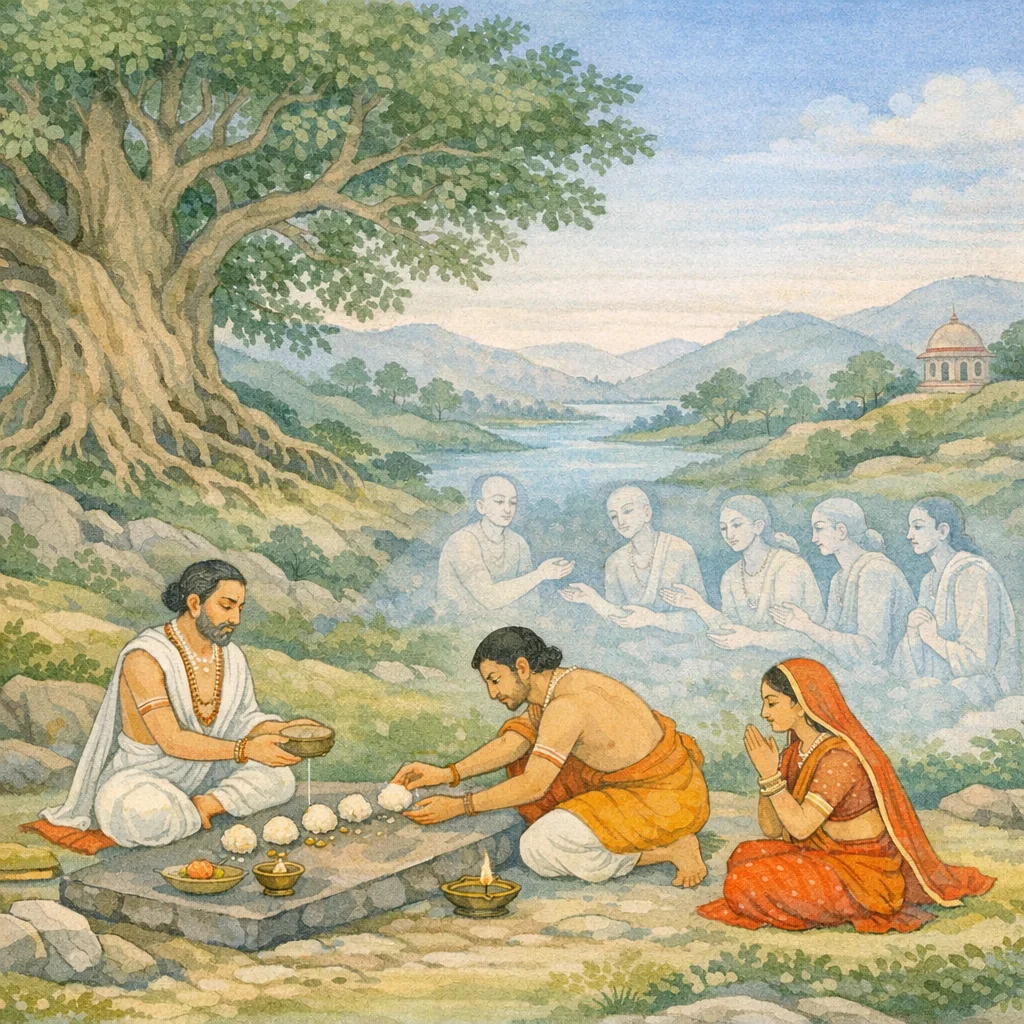
Brahmā prescribes a Gayā-centered śrāddha sequence, beginning with bathing at Preta-śilā and offering piṇḍa with Varuṇa-sanctified water. The mantras broaden the rite’s beneficiaries from one’s paternal and maternal lines to the maternal-grandfather lineage, infants and miscarried beings, the unnamed and lineage-less, and those whose ancestral rites ended through broken family continuity. It also includes those who died by irregular or violent means, extending the offering to pretas and beings suffering under Yama’s ordinances, even those reborn in animal or plant wombs. The performer prays that the piṇḍa become enduring support and that all—relatives, non-relatives, and past-life kin—gain satisfaction. The rite culminates by invoking divine witnesses (Brahmā, Īśāna, etc.) at Gayā, seeking freedom from ṛṇa-traya, and affirming Gayā’s sacred geography (Akṣaya-vaṭa, Brahma-lake, Gayā-śiras and allied tīrthas), leading into further procedural details and the merits (phala) and observances of the tīrtha.
Shlokas
Verse 1
चतुरशीतितमो ऽध्यायः ब्रह्मोवाच / स्नात्वा प्रेतशिलादौ तु वरुणास्थामृतेन च / पिण्डं दद्यादिमैर्मन्त्रैरावाह्य च पितॄन्परान्
Chapter Eighty-Five. Brahmā said: Having bathed at the Preta-śilā, and with water sanctified by Varuṇa like nectar (amṛta), one should offer the piṇḍa, invoking the exalted Pitṛs with these mantras.
Verse 2
अस्मत्कुले मृता ये च गतिर्येषां न विद्यते / आवाहयिष्येतान्सर्वान् दर्भपृष्ठे तिलोदकैः
All who have died in our lineage and for whom no proper gati, no onward passage, is found—one should invoke them all, seating them upon darbha grass and offering sesame-water (tila-udaka).
Verse 3
पितवंशे मृता ये च मातृवंशे च ये मृताः / तषामुद्धरणार्थाये इमं पिण्डे ददाम्यहम्
For all who have died in my father’s line and for all who have died in my mother’s line, for their upliftment and deliverance, I offer this piṇḍa.
Verse 4
मातामहकुले ये च गतिर्येषां न विद्यते / तेषामुद्धरणार्थाय इमं पिण्डं ददाम्यहम्
For those in the maternal grandfather’s line who have no gati, no refuge or onward course, I offer this piṇḍa for the sake of their deliverance.
Verse 5
अजातदन्ता ये केचिद्ये च गर्भे प्रपीडिताः / तेषामुद्धरणार्थाय इम पिण्डं ददाम्यहम्
For those who died before their teeth had erupted, and for those who were afflicted within the womb, I offer this pinda for the purpose of their deliverance.
Verse 6
बन्धुवर्गाश्च ये केचिन्नामगोत्रविवर्जिताः / स्वगोत्रे परगोत्रे वा गतिर्येषां न विद्यते / तेषामुद्धरणार्थाय इम पिण्डं ददाम्यहम्
For whatever groups of relatives there may be who are deprived of name and lineage, and for those—whether of my own clan or another—who have no refuge, I offer this pinda for their deliverance.
Verse 7
उद्बन्धनमृता ये च विषशस्त्रहताश्च ये / आत्मोपघातिनो ये च तेभ्यः पिण्डं ददाम्यहम्
I offer this pinda to those who died by hanging, to those slain by poison or by weapons, and to those who ended their own lives.
Verse 8
अग्निदाहे मृता ये च सिंहव्याघ्रहताश्चये / दंष्ट्रिभिः शृङ्गिभिर्वापि तेषां पिण्डं ददाम्यहम्
For those who have died in a fire, and those who have been killed by lions or tigers, and likewise those slain by fanged or horned creatures—for all of them, I offer this pinda.
Verse 9
अग्निदग्धाश्च ये केचिन्नाग्निदग्धास्तथापरे / विद्युच्चौरहता ये च तेभ्यः पिण्डं ददाम्यहम्
I offer the pinda to those who have been burned by fire, to those who have not been burned, and also to those killed by lightning or slain by thieves.
Verse 10
रौरवे चान्धतामिस्त्रे कालसूत्रे च ये गताः / तेषामुद्धरणार्थाय इमं पिण्डं ददाम्यहम्
For those who have gone to the hells called Raurava, Andhatāmisra, and Kālasūtra, I offer this piṇḍa (funerary rice-ball) for the sake of their deliverance.
Verse 11
असिपत्रवने घोरे कंभीपाके च ये गताः / तेषामुद्धरणार्थाय इं पिण्डं ददाम्यहम्
For those who have gone to the dreadful Asipatravana and to Kambhīpāka, I offer this piṇḍa for their redemption and deliverance.
Verse 12
अन्येषां यातना स्थानां प्रेतलोकनिवासिनाम् / तेषामुद्धरणार्थाय इम पिण्डं ददाम्यहम्
For all other beings who dwell in the world of pretas and are confined to places of torment, I offer this piṇḍa for the sake of their deliverance.
Verse 13
पुशुयोनिं गता ये च पक्षिकीटसरीसृपाः / अथवा वृक्षयोनि स्थास्तेभ्यः पिण्डं ददाम्यहम्
To those who have entered animal wombs—birds, insects, and reptiles—or who abide in the womb of trees, to them I offer this piṇḍa.
Verse 14
असंख्ययातनासंस्था ये नीता यमशासनैः / तेषामुद्धरणार्थाय इमं पिण्डं ददाम्यहम्
For those who have been driven into countless states of torment under Yama’s ordinances, I offer this piṇḍa for their upliftment and deliverance.
Verse 15
जात्यन्तरसहस्रेषु भ्रमन्ति स्वेन कर्मणा / मानुष्यं दुर्लभं येषां तेभ्यः पिण्डं ददाम्यहम्
Driven by the force of their own karma, they wander through thousands of other births; to those for whom human birth is hard to attain, I offer the piṇḍa—funerary rice-balls.
Verse 16
ये बान्धवाबान्धवा वा ये ऽन्यजन्मनि बान्धवाः / ते सर्वेतृप्तिमायान्तु पिण्डदानेन सर्वदा
May all—whether kin or not, and those who were kin in another birth—attain satisfaction always through the offering of piṇḍa.
Verse 17
ये केचित्प्रेतरूपेण वर्तन्ते पितरो मम / ते सर्वे तृप्तिमायान्तु पिण्डदानेन सर्वदा
May all my ancestors—whoever among them may be existing in the state of a preta—attain satisfaction always through the offering of piṇḍas.
Verse 18
ये मे पितृकुले जाताः कुले मातुस्तथैव च / गुरुश्वशुरबन्धूनां ये चान्ये बान्धवा मृताः
May those born in my father’s lineage, and likewise in my mother’s lineage—together with the relatives of my guru and my father-in-law, and any other kinsmen of mine who have died—be included and blessed by this offering.
Verse 19
ये मे कुले लुप्तपिण्डाः पुत्त्रदारविवर्जिताः / क्रियालो पहता ये च जात्यन्धाः पङ्गवस्तथा
Those in my lineage for whom the offering of piṇḍa has lapsed—those bereft of sons and wives; those whose rites have been obstructed; and those born blind, as well as the lame—
Verse 20
विरूपा आमगर्भाश्च ज्ञाताज्ञाताः कुले मम / तेषां पिण्डं मया दत्तमक्षय्यमुपतिष्ठताम्
May the piṇḍa (funeral rice-offering) that I have given stand as an imperishable support for all in my lineage—whether deformed, those who died in the womb or with unformed bodies, and whether known or unknown to me.
Verse 21
साक्षिणः सन्तु मे देवा ब्रह्मेशानादयस्तथा / मय गयां समासाद्य पितॄणां निष्कतिः कृता
May the gods—Brahmā, Īśāna, and the others—be my witnesses: having reached Gayā, I have performed the act of expiation and release for the Pitṛs (ancestors).
Verse 22
आगतो ऽहं गयां देव ! पितृकार्ये गदाधर / तन्मे साक्षी भवत्वद्य अनृणो ऽहमृणत्रयात्
O Lord, I have come to Gayā to perform the rites for my ancestors, O Gadādhara. Be my witness today to this—may I become free from the threefold debt.
Verse 23
महानदी ब्रह्मसरो ऽक्षयो वटः प्रभासमुद्यन्तमहो? गयाशिरः / सरस्वतीधर्मकधेनुपृष्ठा एते कुरुक्षेत्रगता गयायाम्
The Mahānadī, the Brahma-lake, the imperishable Akṣaya-vaṭa, Prabhāsa, the sacred Udyanta—indeed—and Gayā-śiras; also the Sarasvatī and Dharmakadhenu-pṛṣṭha: all these holy places are said to be present at Gayā, which is connected with Kurukṣetra.
Frequently Asked Questions
Because the liturgy aims to remedy exclusion created by lost names, broken genealogies, or absence of descendants. The chapter treats piṇḍa as a universal support (upakāra) that can be extended beyond documented ancestors, thereby addressing those who otherwise lack ritual access and hence ‘no gati’.
Naming narakas such as Raurava, Andhatāmisra, Kālasūtra, Asipatravana, and Kumbhīpāka functions as a targeted prayer: the offering is directed even to those undergoing punitive conditions under Yama’s governance. The intent is deliverance/upliftment (uddhāra) and relief through the merit and ritual agency of śrāddha at Gayā.