Adhyaya 221
Dharma-sāra: Dāna-mahātmyam, Karma-vāda, and the Conquest of Grief and Greed
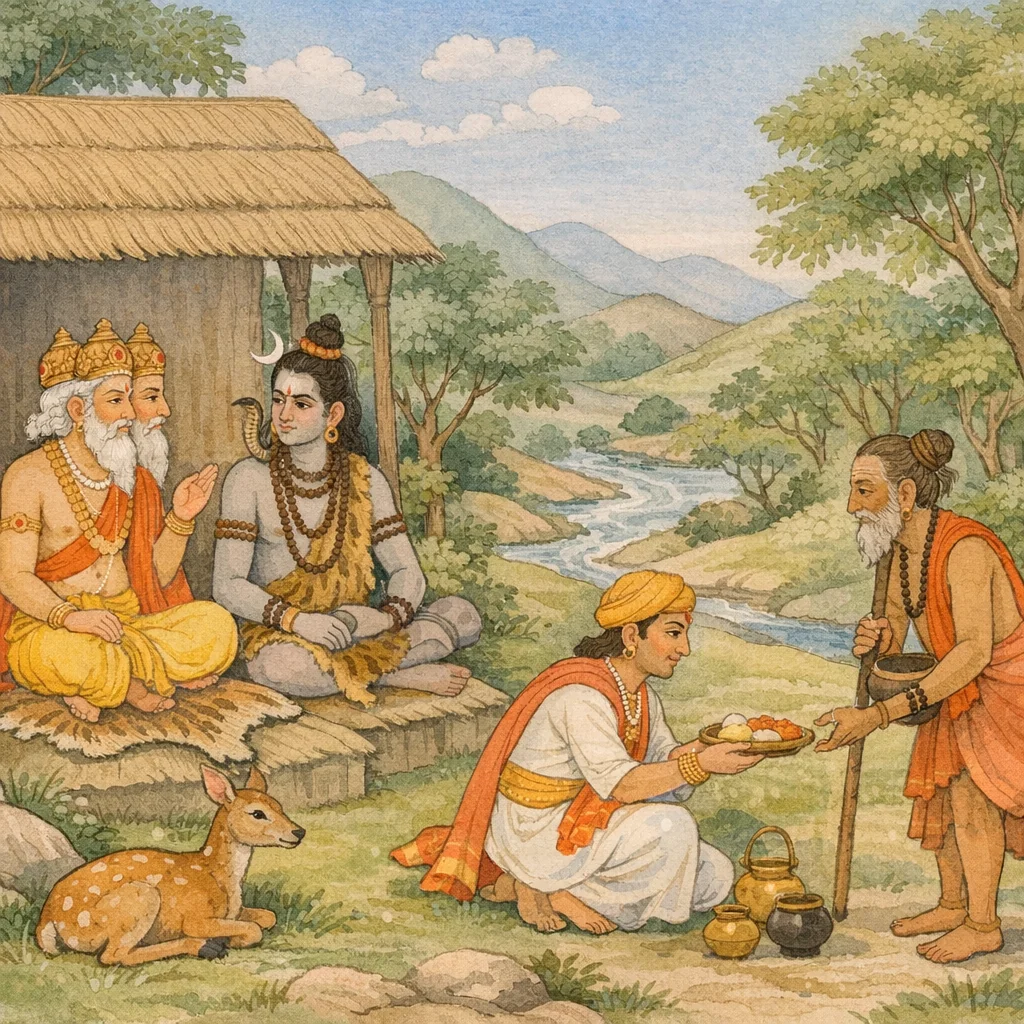
Continuing the Brahmā–Śaṅkara stream of instruction, this chapter compresses dharma into practical principles: grief is rejected as spiritually corrosive, and karma is affirmed as the sole maker of one’s joy and suffering. Charity (dāna) is raised as the highest dharma, paired with the equally weighty merit of saving the life of a terrified being. Austerity, vows, sacrifice, and ritual bathing (tapas, vrata, yajña, snāna) are valid only when aligned with dharma; otherwise they lead to naraka, while truth, forgiveness, and bhakti toward sacred acts lead to svarga. In ethical psychology, greed is shown as the root of anger, malice, delusion, deceit, pride, and envy, and peace arises by abandoning them. The chapter lists meritorious gifts—land, cow, food, kanyādāna in marriage, bull-release, service at tīrthas, hearing śāstra, and public works like wells and gardens—culminating in the claim that satsanga surpasses tīrtha by giving immediate fruit. It closes with a sanātana-dharma list of core virtues, preparing for later, more applied and consequence-focused teaching on dharma.
Shlokas
Verse 1
ऽध्यायः ब्रहामोवाच / धर्मसारमहं वक्ष्ये संक्षेपाच्छुणु शङ्कर / भुक्तिमुक्तिप्रदं सूक्ष्मं सर्वपापविनाशनम्
Brahmā said: I shall declare the essence of Dharma—listen, O Śaṅkara—briefly. It is subtle, bestows both worldly enjoyment and liberation, and destroys all sins.
Verse 2
श्रुतं धर्मं बलं धैर्यं सुखमुत्साहमेव च / शोको हरति वै नॄणां तस्माच्छोकं परित्यजेत्
Grief surely steals from people learning, dharma, strength, steadfastness, happiness, and even zeal; therefore one should abandon grief.
Verse 3
कर्मदाराः कर्मलोकाः कर्मसम्बन्धिबान्धवाः / कर्माणि प्रेरयन्तीह पुरुषं सुखदुः खयोः
One’s deeds become one’s spouse and companions; deeds become one’s world and one’s relatives bound by karma. Here itself, it is karma that impels a person toward happiness and toward suffering.
Verse 4
दानमे परो धर्मो दानात्सर्वमवाप्यते / दानाःत्स्वर्गश्च राज्यञ्च दद्याद्दनं ततो नरः
Charitable giving alone is the highest dharma; through giving, everything is attained. From giving come both heaven and sovereignty—therefore a person should give wealth.
Verse 5
एकतो दानमेवाहुः समग्रवरदक्षिणम् / एकतो भयभीतस्य प्राणिनः प्राणरक्षणम्
On one side, they declare that charity—complete, excellent, and accompanied by due gifts (dakṣiṇā)—is supremely meritorious; on the other side, saving the life of a living being terrified by fear is of equally great worth.
Verse 6
तपसा ब्रह्मचर्येण यज्ञैः स्नानेन वा पुनः / धर्मस्य नाशका ये च ते वै निरयगामिनः
By austerity, brahmacarya, sacrifices (yajña), or even ritual bathing—those who nevertheless destroy dharma are indeed destined to go to Naraka (hell).
Verse 7
ये च होमजपस्नानदेवतार्चनतत्पराः / सत्यक्षमादयायुक्तास्ते नराः स्वर्गगामिनः
Those men who are devoted to homa (fire-offerings), mantra-recitation, ritual bathing, and the worship of the deities—endowed with truthfulness, forgiveness, and kindred virtues—such people go to heaven (svarga).
Verse 8
न दाता सुखदुः खानां न च हर्तास्ति कश्चन / भुञ्जते स्वकृतान्येव दुः खानि च सुखानि च
No one else bestows happiness and sorrow, and no one else takes them away. Beings experience only the fruits of their own deeds—both sufferings and joys.
Verse 9
धर्मार्थं जीवितं येषां दुर्गाण्यतितरन्ति ते / सन्तुष्टः को न शक्नोति फलमूलैश्च वर्तितुम्
Those whose very life is lived for the sake of dharma cross over even the hardest difficulties. For one who is content, who cannot live even on fruits and roots?
Verse 10
सर्व एव हि सौख्येन सङ्कटान्यवगाहते / इदमेव हि लोभस्य कार्यं स्या दतिदुष्करम्
Indeed, everyone passes through hardships with ease; but this alone is the work of greed—an exceedingly difficult and ruinous task.
Verse 11
लोभात्क्रोधः प्रभवति लोभाद्द्रोहः प्रवर्तते / लोभान्मोहश्च माया च मानो मत्सर एव च
From greed arises anger; from greed, malice begins to operate. From greed also come delusion and deceit, as well as pride and envy.
Verse 12
रागद्वेषानृतक्रोधलोममोहमदोज्झितः / यः स शान्तः परं लोकं याति पापविवर्जितः
One who has cast off attachment and aversion, falsehood, anger, greed, delusion, and pride—such a one is truly peaceful and, free from sin, attains the supreme world.
Verse 13
देवता मुनयो नागा गन्धर्वा गुह्यका हर / धार्मिकं पूजयन्तीह न धनाढ्यं न कामिनम्
Here, the gods, sages, nāgas, gandharvas, the guhyakas, and even Hara honor the righteous—never one who is merely wealthy, nor one driven by desire.
Verse 14
अनन्तबलवीर्येण प्रज्ञया पौरुषेण वा / अलभ्यं लभते मर्त्यस्तत्र का परिवेदना
By limitless strength and valor, by intelligence, or by steadfast human effort, a mortal can attain even what seems unattainable—so what room is there for lamentation?
Verse 15
सर्वसत्त्वदयालुत्वं सर्वेन्द्रियविनिग्रहः / सर्वत्रानित्यबुद्धित्वं श्रेयः परमिदं स्मृतम्
Compassion toward all living beings, restraint of all the senses, and the clear understanding of impermanence everywhere—this is remembered as the highest good (śreyas).
Verse 16
पश्यन्निवाग्रतो मृत्युं यो धर्मं नाचरेन्नरः / अजागलस्तनस्येव तस्य जन्म निरर्थकम्
Even while seeing death as though standing right before him, the man who does not practice dharma—his birth is as useless as the teat on a goat’s neck.
Verse 17
भ्रूणहा ब्रह्महा गोघ्नः पितृहा गुरुतल्पगः / भूमिं सर्वगुणोपेतां दत्त्वा पापैः प्रमुच्यते
Even one who has slain an embryo, killed a brāhmaṇa, killed a cow, murdered a parent, or violated the teacher’s bed is freed from sins by gifting land endowed with all good qualities.
Verse 18
न गोदानात्परं दानं किञ्चिदस्तीति मे मतिः / या गौर्न्यायार्जिता दत्ता कृत्स्नं तारयते कुलम्
In my view, there is no gift superior to the gift of a cow. A cow that has been honestly acquired and then donated delivers the entire lineage.
Verse 19
नान्नदानात्परं दानं किञ्चिदस्ति वृषध्वज ! / अन्नेन धार्यते सर्वं चराचरमिदं जगत्
O Bull-bannered Lord, there is no charity superior to the gift of food. By food alone this entire world—moving and unmoving—is sustained.
Verse 20
कन्यादानं वृषोत्सर्गस्तीर्थसेवा श्रुतं तथा / हस्त्यश्वरथदानानि मणिरत्नवसुन्धराः
The gifting of a maiden in marriage, the ceremonial release (donation) of a bull, service at sacred pilgrimage places, and the hearing/recitation of sacred teachings; likewise gifts of elephants, horses, and chariots, as well as jewels, gems, and land—these are all highly meritorious acts.
Verse 21
अन्नदानस्य सर्वाणि कलां नार्हन्ति षोडशीम् / अन्नात्प्राणा बलं तेजश्चान्नाद्वीर्यं धृतिः स्मृतिः
No other gifts equal even a sixteenth part of the merit of giving food. From food arise life-breaths, strength, and vitality; and from food also come vigor, steadfastness, and memory.
Verse 22
कूपवापीतडागादीनारामांश्चैव कारयेत् / त्रिसप्तकुलमुद्धृत्य विष्णुलोके महीयते
One should cause wells, stepwells, ponds, tanks, and public pleasure-groves to be made. Having uplifted and redeemed twenty-one generations of one’s lineage, one is honored in the world of Viṣṇu.
Verse 23
साधूनां दर्शनं पुण्यं तीर्थादपि विशिष्यते / कालेन तीर्थं फलति सद्यः साधुसमागमः
The mere sight of the sādhus is meritorious and surpasses even pilgrimage places. A tīrtha yields its fruit in due time, but the company of the virtuous grants its benefit at once.
Verse 24
सत्यं दमस्तपः शौचं सन्तोषश्च क्षमार्जवम् / ज्ञानं शमो दया दानमेष धर्मः सनातनः
Truthfulness, self-restraint, austerity, purity, contentment, forgiveness, and straightforwardness; knowledge, tranquility, compassion, and charitable giving—this is the eternal (Sanātana) Dharma.
Frequently Asked Questions
The chapter states that austerity, celibacy, sacrifice, and ritual bathing do not protect a person who ‘destroys dharma’; ritual divorced from ethical conduct becomes counterproductive and leads to naraka, while virtues like truth and forgiveness align ritual life with svarga-bound merit.
Because it is presented as the root-cause that generates a chain of inner vices—anger, malice, delusion, deceit, pride, and envy—thereby undermining dharma at its psychological source rather than only at the level of outward behavior.