Adhyaya 18
Mṛtyuñjaya/Amṛteśvara Upāsanā: Three-Syllable Mantra, Kavaca, Japa-Phala, and Pūjā-Aṅgas
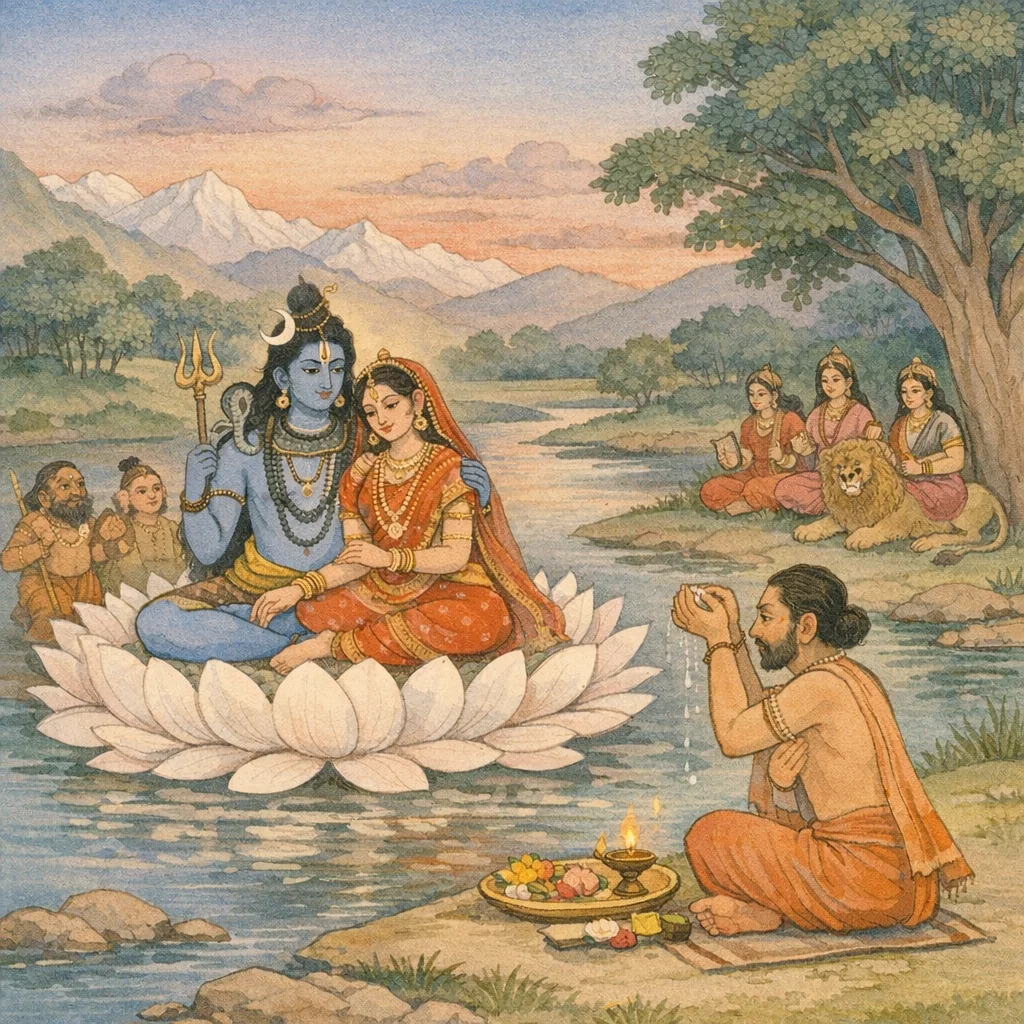
Continuing the ācāra-based mode of instruction, Sūta presents a rite Garuḍa taught to Kaśyapa: the worship of Mṛtyuñjaya/Amṛteśvara as an all-encompassing deliverance-practice (uddhāra-pūrvaka) embodying all deities. The chapter first defines the mantra’s threefold form—praṇava, a bīja-like syllable (huṁ/juṁ), and a third utterance with visarga—said to crush death and poverty. It then gives the kavaca and the “three-syllable great mantra” as effectively equal to full worship, prescribing japa counts (100; 108 at the sandhyās; and 8000 daily for a month) with promised protection from apamṛtyu, disease, enmity, and decline. Meditation iconography is supplied: Amṛteśvara seated on a white lotus, holding an amṛta-kalaśa and granting boons and fearlessness, with the Goddess bearing a water-pot and lotus. Finally, a complete pūjā protocol is mapped—ṣaḍaṅga method, consecration of the arghya vessel, ādhāra-śakti worship, prāṇāyāma, seat purification, deity-identification and nyāsa, invocation and threshold worship, offerings (upacāras), music and dance, circumambulation, prostration, and dismissal—expanded to attendant deities, time-divisions, mātṛkās, gaṇas, Mahākāla, and Yama’s attendants. The chapter closes with sample salutations to Amṛteśvara, Bhairava, Haṁsa, and Sūrya, and honors major deities such as Śiva, Kṛṣṇa, Brahmā, Gaṇeśa, Caṇḍikā, Sarasvatī, and Mahālakṣmī, establishing a ritual template for later protective and merit-producing observances.
Shlokas
Verse 1
सप्तदशो ऽध्यायः सूत उवाच / गरुडोक्तं कश्यपाय वक्ष्ये मृत्युञ्जयार्चनम् / उद्धारपूर्वकं पुण्यं सर्वदेवमयं मतम्
Sūta said: I shall describe the worship of Mṛtyuñjaya, the Conqueror of Death, as Garuḍa taught it to Kaśyapa—an auspicious rite preceded by acts of deliverance (uddhāra), held to be supremely meritorious and understood to embody all the gods.
Verse 2
ओङ्कारं पूर्वमुद्धृत्य जु(हु)ङ्कांरं तदनन्तरम् / सविसर्गं तृतीयं स्यान्मृत्युदारिद्रयमर्दनम्
First utter Oṁ; next pronounce the sound huṁ (or juṁ, as some manuscripts read). The third should be uttered with the visarga (ḥ). This triad is said to crush death and poverty.
Verse 3
ईशविष्णवर्कदेव्यादिकवचं सर्वसाधकम् / अमृतेशं महामन्त्रन्त्र्यक्षरं पूजनं समम् / जपनान्मृत्युहीनाः स्युः सर्वपापविवर्जिताः
The protective kavaca beginning with Īśa, Viṣṇu, and the Deities is efficacious for accomplishing all aims. Worship of Amṛteśa—the great three-syllabled mantra—is equal to a full pūjā. By its repetition (japa), one is freed from untimely death and becomes devoid of all sins.
Verse 4
शतजप्याद्वेदफलं यज्ञतीर्थफलं लभेत् / अष्टोत्तरशताज्जाप्यात्रिसन्ध्यं मृत्यु शत्रुजित
By a hundred recitations (japa), one gains the merit of studying the Vedas and also the fruit of sacrifices and pilgrimages to sacred tīrthas. By one hundred and eight recitations at the three sandhyās—dawn, noon, and dusk—one becomes a conqueror of death and of enemies.
Verse 5
ध्यायेच्च सितपद्मस्थं वरदं चाभयं करे / द्वाभ्यां चामृतकुम्भं तु चिन्तयेदमृतेश्वरम्
One should meditate on Amṛteśvara seated upon a white lotus—one hand granting boons, one bestowing fearlessness—and with the other two hands holding the pot of amṛta, the nectar of immortality.
Verse 6
तस्यैवाङ्गगतां देवीममृतामृतभाषिणी(विनि) म् / कलशं दक्षिणे हस्ते वामहस्ते सरोरुहम्
Upon his very body was the Goddess, speaking words like amṛta; in her right hand she held the kalaśa, the sacred water-pot, and in her left hand a lotus.
Verse 7
जपेदष्टसहस्रं वै त्रिसन्ध्यं मासमेकतः / जरामृत्युमहाव्याधिशत्रुच्छिवशान्तिदम्
Let one perform japa eight thousand times at the three daily sandhyās, continuously for one month; it bestows auspicious pacification—warding off old age, death, great diseases, and hostile enemies, and granting blessed peace.
Verse 8
आह्वानं स्थापनं रोधं सन्निधानं निवेशनम् / पाद्यमा चमनं स्नानमर्घ्यं स्रगनुलेपनम्
The rite consists of: invocation (āhvāna), installation (sthāpana), securing the rite (rodha), drawing the deity’s presence near (sannidhāna), and seating the deity (niveśana); then offering water for the feet, ācaman water for sipping, bathing, the arghya offering, garlands, and anointing with fragrant unguents.
Verse 9
दीपांबरं भूषणं च नैवद्यं पानवीजनम् / मात्रामुद्राजपध्यानं दक्षिणा चाहुतिः स्तुतिः
Offer lamps, garments, ornaments, naivedya (food-offerings), drink and fanning; also the measured mudrās, mantra-japa and meditation; together with dakṣiṇā, āhuti oblations, and stuti hymns of praise—these are the constituent acts of the worship.
Verse 10
वाद्यं गतिं च नृत्यं च न्यासयोगं प्रदक्षिणम् / प्रणतिर्मन्त्रशय्या च वन्दनं च विसर्जनम्
Instrumental music, ritual movement and dance; nyāsa (sacred placement) applied in yogic discipline; pradakṣiṇa (reverent circumambulation); prostration; the mantra-śayyā (a seat or couch consecrated by mantra); devotional salutation; and visarjana (the formal concluding dismissal)—all these are limbs of worship.
Verse 11
षडङ्गादिप्रकारेण पूजनं तु क्रमोदितम् / परमेशमुखोद्रीतं यो जानाति स पूजकः
Worship, set forth in proper sequence, is to be performed by the method that begins with the six auxiliaries (ṣaḍaṅga) and the like. One who knows this—uttered from the mouth of the Supreme Lord—is truly a worshipper.
Verse 12
अर्घ्यपात्रार्चनं चादावस्त्रेणैव तु ताडनम् / शोधनं कवचेनैव अमृतीकरणं ततः
First one worships the arghya-vessel; then it is ritually struck and empowered with the weapon-mantra; it is purified with the armour-mantra (kavaca); and thereafter it is made amṛta—fit for divine use.
Verse 13
पूजा चाधारशक्त्यादेः प्राणायामं तथासने / पीठसुद्धिं ततः कुर्याच्छोषणाद्यैस्ततः स्मरेत्
One should perform worship beginning with the Ādhāra-Śakti; then, seated in the proper āsana, practice prāṇāyāma. Thereafter one should purify the pīṭha—the seat or ritual ground—by rites such as choṣaṇa (“drying”) and the like, and then proceed to remembrance and contemplation.
Verse 14
आत्मानं देवरूपं च कराङ्गन्यासकं चरेत् / आत्मानं पूजयेत्पश्चाज्यो तीरूपं हृदब्जतः
One should meditate on oneself as bearing the form of the Deity and perform kara-aṅga-nyāsa—the nyāsa of hands and limbs. Thereafter one should worship the Ātman, bringing forth the radiant form of light from the lotus of the heart.
Verse 15
मूर्तौ वा स्थण्डिले वापि क्षिपेत्पुष्पं तु भास्वरम् / आह्वानद्वारपूजार्थं पूजा चाधारशक्तितः
Whether upon an idol-form or upon a consecrated ground-altar, one should place a radiant flower—so that the deity may be invoked and the threshold (gateway) worship may be performed; and the worship proceeds according to the power of the supporting base (ādhāra-śakti).
Verse 16
सान्निध्यकरणं देवे परिवारस्य पूजनम् / अङ्गषट्कस्य पूजा वै कर्तव्या च विपश्चितैः
The wise should perform the rite of invoking the Lord’s presence, worship His attendant retinue, and indeed offer worship to the sixfold limbs (aṅga-ṣaṭka) as well.
Verse 17
धर्मादयश्च शक्राद्याः सायुधाः परिवारकाः / युगवेदमुहूर्ताश्च पूजेयं भुक्तिमुक्तिकृत्
Dharma and the other attendant principles, Indra and the other gods with their weapons, and also the Yugas, the Vedas, and the Muhūrtas (sacred time-divisions)—all these should be worshipped, for such worship bestows both worldly enjoyment and liberation.
Verse 18
मातृकाश्च गणांश्चादौ नन्दिगङ्गे च पूजयेत् / महाकालं च यमनां देहल्यां पूजयेत्पुरा
First, one should worship the Mothers (Mātṛkās) and the Gaṇas at Nandigaṅgā; and before proceeding further, one should worship Mahākāla and the attendants of Yama at Dehalī.
Verse 19
ॐ अमृतेश्वर ॐ भैरवाय नमः / एवं ॐ जुं हंसः सूर्याय नमः
“Oṁ—salutations to Amṛteśvara; Oṁ—salutations to Bhairava. Likewise: Oṁ ‘juṁ’—Haṁsa; salutations to Sūrya (the Sun).”
Verse 20
एवं शिवाय कृष्णाय ब्रह्मणे च गणाय च / चण्डिकायै सरस्वत्यै महालक्ष्मादि पूजयेत्
Thus one should worship Śiva, Kṛṣṇa, Brahmā, and Gaṇa (Gaṇeśa), and also Caṇḍikā, Sarasvatī, Mahālakṣmī, and the other deities.
Frequently Asked Questions
The chapter prescribes first Oṁ (praṇava), then huṁ (or juṁ in some readings), and a third utterance with visarga (ḥ). This triad is explicitly said to crush mṛtyu (death) and daridratā (poverty), functioning as a protective mantra-structure.
It prescribes japa of eight thousand repetitions at the three daily sandhyās, continuously for one month, with the stated result of śānti (pacification): warding off old age, death, major diseases, and hostile enemies.
The chapter lists sequential acts including invocation, installation, restraint/securing, making the deity’s presence near, seating, pādya, ācamanīya, bathing, arghya, garlands, unguents, lamps, garments, ornaments, food and drink offerings, fanning, mudrās, japa and dhyāna, dakṣiṇā, oblations, stotras, music/dance, nyāsa with yogic application, circumambulation, prostration, mantra-couch, salutations, and formal dismissal.
The text presents the rite as cosmically integrated: worship of these attendant principles and time-divisions is said to bestow both bhoga (worldly enjoyment) and mokṣa (liberation), implying that protection and liberation arise from harmonizing personal practice with the wider sacred order.