Adhyaya 178
Vashikarana–Stambhana Prayogas and Garbha-Sambhava Yogas
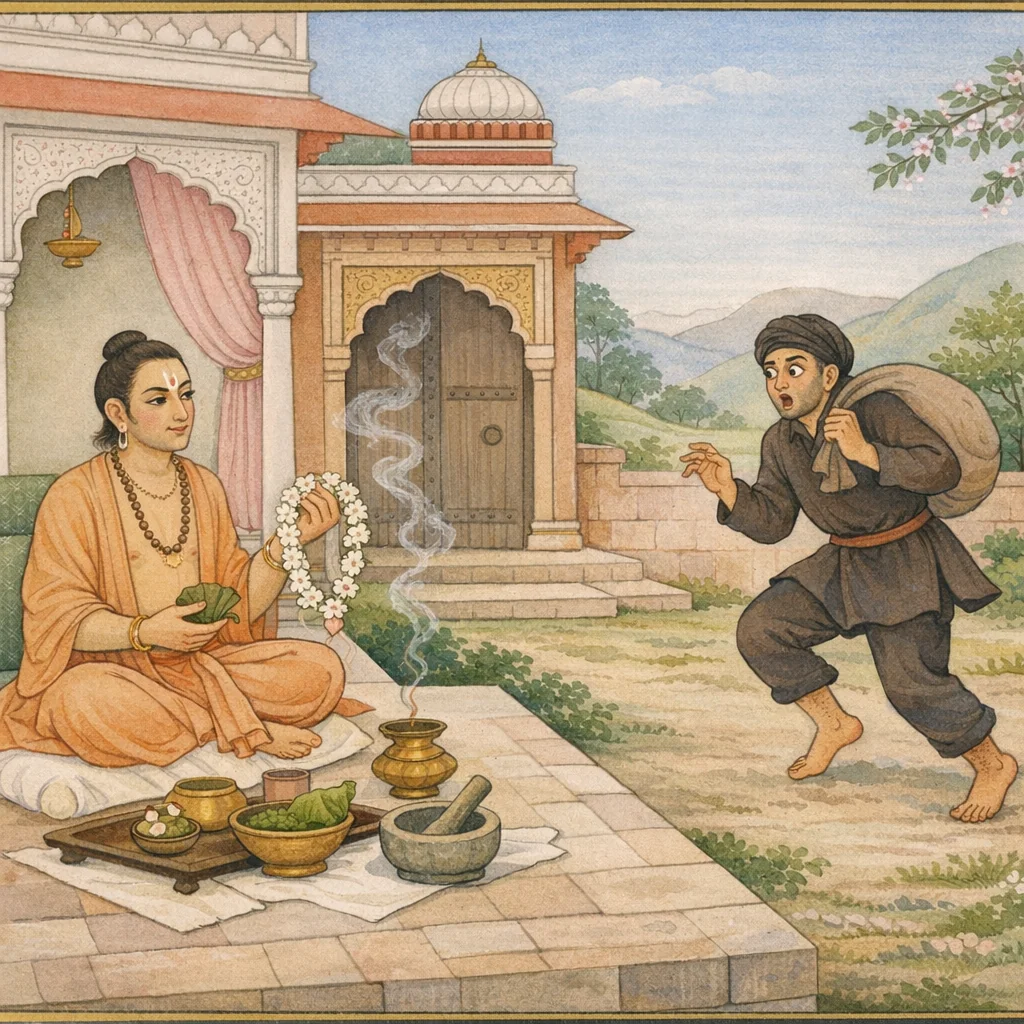
In the Purāṇic compendium manner, Hari lists practical rites employing mantras, herbs, fumigation, tilaka, collyrium, and enchanted offerings. The opening emphasizes vaśīkaraṇa through tāmbūla mixtures and brief mantras, then extends to coercive or disruptive uses—inducing submissiveness, stirring household discord—and to specific aims such as gaining entry at the king’s gate. A notable section teaches a protective, repelling vidyā, the “Thief-Repeller,” with a fixed recitation count and a restraining effect, followed by swift influence rites using mantra-charged flowers. The chapter also maps body-points and lunar phases, placing fascination techniques within the wider Kāmaśāstra discourse on arts and allure. It concludes by turning from attraction rites to reproductive formulas—drinks and pastes for conception, male progeny, and prevention of abnormal conception—thus linking erotic and domestic goals with medicinal preparation as one continuum of applied ritual knowledge.
Shlokas
Verse 1
नाम सप्तसप्तत्युत्तरशततमो ऽध्यायः हरिरुवाच / ब्रह्मदण्डीवचाकुष्ठं प्रियङ्गर्नागकेशरम् / दद्यात्ताम्बूलसंयुक्तं स्त्रीणां मन्त्रेण तद्वशम् / ॐ नारायण्यै स्वाहा
Hari said: “This is called the 178th chapter. One should give a preparation of brahmadaṇḍī, vacā, kuṣṭha, priyaṅgu, and nāgakeśara mixed with tāmbūla (betel). By reciting the mantra, it brings women under one’s influence: ‘Om, to Nārāyaṇī, svāhā.’”
Verse 2
ताम्बूलं यस्य दीयेत स वशी स्यात्सुमन्त्रतः / ॐ हरिः हरिः स्वाहा
He to whom tāmbūla (betel) is offered becomes compliant and amenable through the power of this auspicious mantra: “Om, Hariḥ, Hariḥ, svāhā.”
Verse 3
गोदन्तं हरितालञ्च संयुक्तं काकजिह्वया / चूर्णोकृत्य यस्य शिरे दीयते स वशी भवेत् / श्वेतसर्षपनिर्माल्यं यद्गृहे तद्विनाशकृत्
If the substance called “cow-tooth,” along with haritāla (orpiment) and the herb known as kākajihvā, are combined, ground to powder, and applied upon a person’s head, that person becomes submissive, brought under control. A garland or residue made of white mustard—wherever it is kept within a house—brings destruction there.
Verse 4
वैभी तकं शाखोटकं मूलं पत्रेण संयुतम् / स्थाप्यते यद्गृहद्वारे तत्र वै कलहो भवेत्
If the vaibhī-taka, together with the root of the śākhoṭaka tree and its leaves, is placed at a house’s doorway, then quarrel and discord surely arise there.
Verse 5
खञ्जरीटस्य मांसं तु मधुना सह पेषयेत् / ऋतुकालेयोनिलेपात्पुरुषो दासतामियात्
If one grinds the flesh of the small bird called khañjarīṭa together with honey and applies it as a vaginal unguent during the fertile period, the man falls into bondage, becoming as a slave.
Verse 6
अगुरुं गुग्गुलुं चैव नीलोत्पलसमन्वितम् / गुडेन धूपयित्वा तु राजद्वारे प्रियो भवेत्
Having fumigated with incense of agaru (agarwood) and guggulu, combined with blue lotus (nīlotpala) and sweetened with jaggery, one becomes favoured at the king’s gate, gaining royal goodwill and access.
Verse 7
श्वेताप राजितामूलं पिष्टं रोचनया युतम् / यं पश्येत्तिलकेनैव वशी कर्यान्नृपालये
The root of śvetāpa-rājitā, ground into a paste and mixed with rocanā, when applied as a tilaka—whomever one looks upon thereby is said to become submissive, even in a royal court.
Verse 8
काकजङ्घा वचा कुष्ठं निम्बपत्रं सुकुङ्कुमम् / आत्मरक्तसमायुक्तं वशी भवति मानवः
With kākajaṅghā, vacā, kuṣṭha, neem leaves, and fine saffron—combined with one’s own blood—a person becomes able to bring others under control.
Verse 9
आरण्यस्य बिडालस्य गृहित्वा रुधिरं शुभम् / करञ्जतैले तद्भाव्यं रुद्राग्नौ कज्जलं ततः / पातयेत्पद्मपत्रेण हादृश्यः स्यात्तदञ्जनात्
Taking the auspicious blood of a wild cat, one should mix it into karañja oil and, in the so-called Rudra-fire, prepare lampblack (kohl) from it. Applying that collyrium with a lotus leaf, a person becomes invisible by means of that ointment.
Verse 10
ॐ नमः खड्गवज्रपाणये महायक्षसेनापतये स्वाहा / ॐ रुद्रं ह्रां ह्रीं वरशक्ता त्वरिताविद्या / ॐ मातरः स्तम्भयस्वाहा / सहस्रं परिजप्यात्तु विद्येयं चौरवारिणी / महासुगन्धिकामूलं शुक्रं स्तम्भेत्कटौ स्थितम्
“Om, homage to the great commander of the Yakṣa hosts, who bears a sword and thunderbolt—svāhā. Om—Rudra; hrāṃ, hrīṃ—supreme Power, the swift-acting Vidyā. Om—O Mothers, paralyze—svāhā.” This Vidyā, the ‘Thief-Repeller’, should be recited a thousand times. By it the seminal power situated at the waist is checked, and the root of the great fragrant herb is employed for the act of restraint.
Verse 11
ॐ नमः सर्वसत्त्वेभ्यो नमः सिद्धिं कुरु कुरु स्वाहा / सप्ताभिमन्त्रितं कृत्वा करवीरस्य पुष्पकम् / स्त्रीणामग्रे भ्रामयच्च क्षणाद्वै सा वशे भवेत्
“Om, salutations to all beings; salutations—grant success, grant success—svāhā.” Having enchanted a karavīra flower with seven recitations and whirled it before a woman, she is said to come under one’s influence in an instant.
Verse 12
ब्रह्मदण्डीं वचां पत्रं मधुना सह पेषयेत् / अङ्गलेपाच्च वनिता नान्यं भर्तारमिच्छति
One should grind brahmadaṇḍī and the leaf of vacā together with honey and apply it as a body-unguent; by such an anointing, a woman will not desire any husband other than her own.
Verse 13
ब्रह्मदण्डीशिखा वक्त्रे क्षिप्ता शुक्रस्य स्तम्भनम् / मूलं जयन्त्या वक्त्रस्थं व्यवहारे जयप्रदम्
If the crest-flower called Brahmadaṇḍī is placed in the mouth, it brings about the stoppage of semen. If the root of the herb Jayantī is kept in the mouth, it bestows victory in disputes and in all dealings.
Verse 14
भृङ्गराजस्य मूलं तु पिष्टं शुक्रेण संयुतम् / अक्षिणी चाञ्जयित्वा तु वशी कर्यान्नरं किल
The root of the bhṛṅgarāja plant, ground into a paste and mixed with semen, is said to bring a man under one’s control when applied to the eyes as a collyrium.
Verse 15
अपराजिताशिखान्तु नीलोत्पलसमन्विताम् / ताम्बूलेन प्र (दाना) दद्याच्च वशीकरणमुत्तमम्
One should give or offer the Aparājitā flower with its crest-like tip, together with a blue lotus, along with betel-leaf; this is said to be an excellent rite of vaśīkaraṇa, bringing attraction and sway.
Verse 16
अङ्गुष्ठे च पदे गुल्फे जानौ च जघने तथा / नाभौ वक्षसि कुक्षौ च कक्षे कण्ठे कपोलके
In the big toe, in the foot, in the ankle, in the knee, and likewise in the thigh; in the navel, in the chest, in the belly, in the armpit, in the throat, and in the cheek—(there are specific points where the effects are experienced).
Verse 17
ओष्ठे नेत्रे ललाटे च मूर्ध्नि चन्द्रकलाः स्थिताः / स्त्रीणां पक्षे सिते कृष्णे ऊर्ध्वाधः संस्थिता नृणाम्
The lunar phases are said to be stationed upon the lip, the eyes, the forehead, and the crown of the head. In women they are arranged through the bright and dark fortnights in one order, while in men they are arranged in the reverse—above and below.
Verse 18
वामाङ्गे दक्षिणाङ्गे च क्रमाद्रुद्र द्रवादिकृत् / चतुः षष्टि कलाः प्रोक्ताः कामशास्त्रे वशीकराः / आलिङ्गनाद्या नारीणां कमारीणां वशीकराः
On the left side and on the right side—performed in proper sequence—there are acts such as “rudra-drava” and the like. In the Kāmaśāstra, sixty-four arts are taught as means of fascination and control; beginning with embracing and similar practices, they are said to be ways of captivating women and those engaged in amorous pursuits.
Verse 19
रोचनागन्धुपुष्पाणि निम्बपुष्पं प्रियङ्गवः / कुङ्कमं चन्दनञ्चैव तिलकेन जगद्वशेत्
With fragrant blossoms—such as rocanā, neem-flowers, and priyaṅgu—together with saffron and sandalwood, one should apply a tilaka; by that tilaka one brings the world under one’s influence.
Verse 20
ॐ ह्रीं गौरि देवि सौभाग्यं पुत्रवशादि देहि मे / ॐ ह्रीं लक्ष्मि ! देवि सौभाग्यं सर्वं त्रैलोक्यमोहनम्
Om Hrīm—O Goddess Gaurī, grant me good fortune, including the blessing of influence over my children and the like. Om Hrīm—O Goddess Lakṣmī, grant me that complete good fortune which enchants and wins over the three worlds.
Verse 21
सगन्धस्य हरिद्रायाः कुङ्कमानां च लेपतः / वशयेद्रुद्र धूपश्च तथापुष्पसुगन्धयोः
By applying fragrant turmeric and saffron paste—and likewise by using Rudra-incense and the sweet fragrances of flowers—one can bring others under one’s influence.
Verse 22
दुरालभा वचा कुष्ठं कुङ्कुमञ्च शतावरी / तिलतैलेन संयुक्तं योनिलेपाद्वशी नरः
A man becomes capable of bringing another under his influence by applying to the genital region a paste made from durālabhā, vacā, kuṣṭha, saffron, and śatāvarī, blended with sesame oil.
Verse 23
निम्बकाष्ठस्य धूमेन धूपयित्वा भगं वधूः / सुभगास्यात्साति रुद्र पतिर्दासो भविष्यति
If a bride fumigates her yoni with the smoke of neem wood, she is said to become blessed with good fortune; yet her husband becomes exceedingly fierce in temper, as though made subservient like a servant.
Verse 24
माहिषं नवनीतञ्च कष्टञ्च मधुयष्टिका / सौभाग्यं भगलेपात्स्यात् पतिर्दासो भवेत्तथा
Buffalo-milk products—fresh butter—together with costus and licorice: by applying a paste of these to the vulva, a woman is said to gain good fortune, and her husband likewise becomes submissive like a servant.
Verse 25
मधुयष्टिश्च गोक्षीरं तथा च कण्टकारिका / एतानि समभागानि पिबेदुष्णेन वारिणा / चतुर्भागावशेषेण गर्भसम्भवमुत्तमम्
Licorice, cow’s milk, and kaṇṭakārikā should be taken in equal parts and drunk with warm water; when the preparation is reduced to one-quarter, it is said to promote excellent conception, the arising of pregnancy.
Verse 26
मातुलुङ्गस्य बीजानि क्षीरेण सह भावयेत् / तत्पीत्वा लभते गर्भं नात्र कार्या विचारणा
One should soak the seeds of the citron (mātuluṅga) together with milk; by drinking that preparation, one obtains conception—of this there is no need for doubt or further deliberation.
Verse 27
मातुलुङ्गस्य बीजानि मूलान्येरण्डकस्य च / घृतेन सह संयोज्य पाययेत्पुत्रकाक्षिणी
Mix the seeds of the citron (mātuluṅga) and the roots of the castor plant (eraṇḍa) with ghee, and administer it as a drink to a woman who longs for a son.
Verse 28
पश्वगन्धा मृत दुग्ध क्वथितं मुत्रकारकम् / पलाशस्य तु बीजानि क्षौद्रेण सह पेषयेत् / रजस्वला तु पीत्वा स्यात्मुष्पगर्भविवर्जिता
One should employ a preparation of paśvagandhā with boiled curdled milk, acting as a diuretic; and the seeds of the palāśa tree should be ground together with honey. A woman in her monthly course, having drunk it, becomes free from an undesirable or abnormal conception (muṣpa-garbha).
Frequently Asked Questions
It is a named vidyā presented with invocations to a Yakṣa commander and to the Mothers (Mātṛkās), prescribed for repetition (japa) a thousand times. The text associates it with protective/repelling power and a restraint effect described as checking seminal power, indicating a stambhana-like function within a protective frame.
Tilaka (forehead mark) and dhūpa (fumigation) act as delivery methods for consecrated substances and as visible/olfactory markers of ritual intention. The chapter links specific ingredient combinations (e.g., rocanā, saffron, sandalwood; agarwood and guggulu incense) with targeted social outcomes such as influence, favor, or access.
The chapter includes multiple ingestion-based preparations: equal-part mixtures (e.g., licorice, cow’s milk, kaṇṭakārikā reduced by boiling), soaked citron (mātuluṅga) seeds with milk, and combinations involving castor root and ghee for a woman desiring a son. It also mentions a remedy intended to avert abnormal conception using paśvagandhā with boiled curdled milk and palāśa seeds with honey.