Adhyaya 157
Atīsāra (Diarrhoea) and Grahaṇī-doṣa: Causes, Prodromal Signs, Doṣa-wise Symptoms, and Major-Disease Status
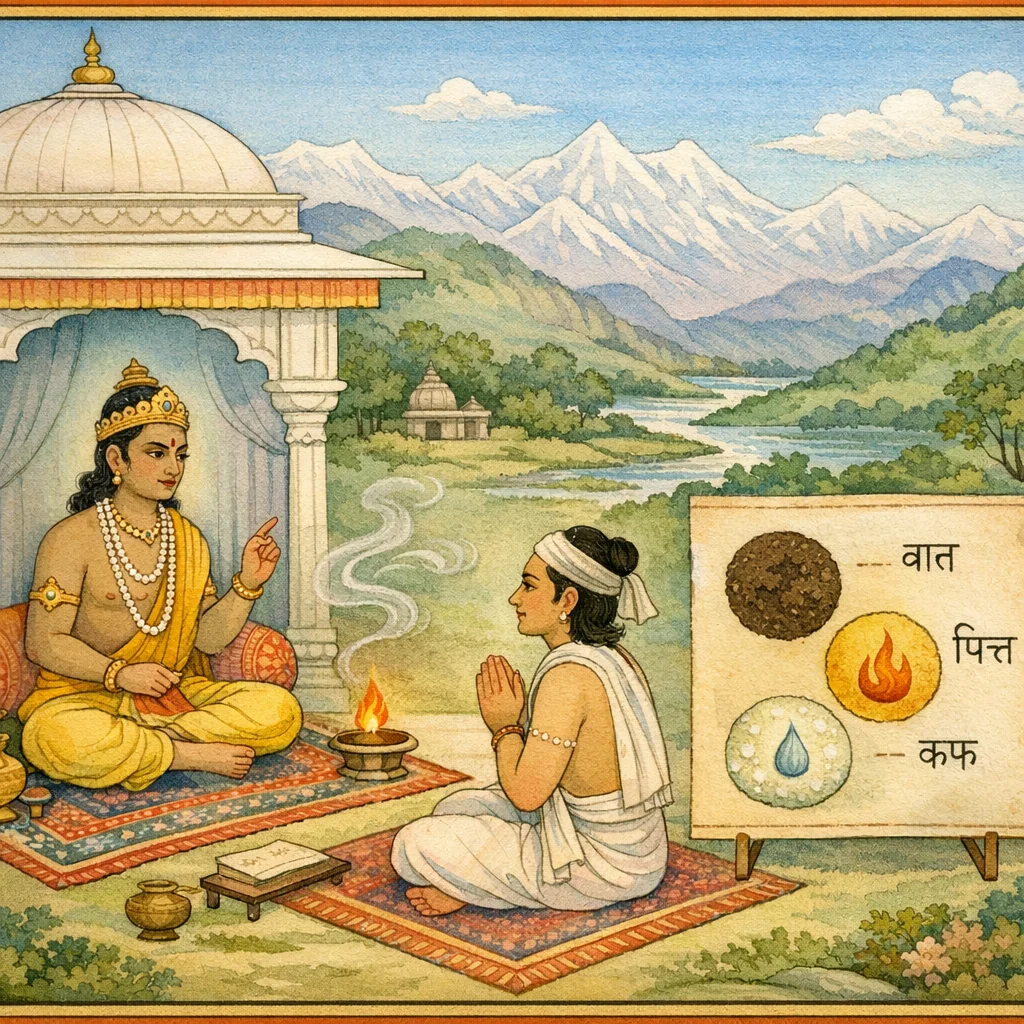
Continuing the Brahma Khanda’s practical health teaching, Dhanvantari presents Suśruta with a structured nidāna of atīsāra (diarrhoea) and grahaṇī-doṣa. He lists six causes of diarrhoea—doṣa-wise, combined, and also fear and grief—and explains how faulty diet and conduct aggravate vāta, disturb apāna, weaken agni, and produce mixed digestive disorders. After stating pūrvarūpa (premonitory signs), he describes doṣa-specific pictures: obstructed painful passage; bile-tinged, burning, fetid stools; and kapha-dominant heaviness with slimy, sticky evacuations. Atīsāra is classified as sāma or nirāma, with blood involvement making it more severe. The teaching then turns from acute diarrhoea to chronic grahaṇī: lack of restraint during diarrhoeal episodes leads to lasting grahaṇī dysfunction with emaciation, thirst, anorexia, dizziness, abdominal distension, and systemic complications. Finally, grahaṇī is placed among the eight mahāroga, signaling a shift toward broader disease taxonomy and long-term regimen vigilance.
Shlokas
Verse 1
ऽध्यायः धन्वन्तरिरुवाच / अतीसारग्रहण्योश्च निदानं वच्मि सुश्रुत / दोषैर्व्यस्तैः समस्तैश्च भयाच्छोकाच्च षड्विधः
Dhanvantari said: “O Suśruta, I shall explain the causes of atīsāra (diarrhoea) and of grahaṇī-disorder. It is of six kinds—arising from the doṣas separately or together, and also from fear and from grief.”
Verse 2
अतीसारः स सुतरां जायते ऽत्यम्बुपानतः / विशुष्कान्नवसास्नेहतिलपिष्टविरूढकैः
Atīsāra (diarrhoea) arises especially from excessive drinking of water, and also from consuming overly dry food, fatty substances and oils, sesame, flour-based preparations, and sprouts.
Verse 3
मद्यरूक्षातिमात्रादिरसातिस्नेहविभ्रमात् / कृमिघोषविरोधाच्च तद्विधेः कुपितानिलः
Through excessive intake of intoxicants, through an overly dry diet or way of living, through disturbance from excess or improper taste and unctuousness, and also through obstruction or opposition due to worms and abnormal internal sounds, the regulating wind—Vāta/Anila—becomes aggravated according to its specific mode.
Verse 4
विस्त्रंसयत्यधोवातं हत्वा तेनैव चानलम् / व्यापार्यान्नशकृत्कोष्ठपुरीषद्रवतादयः
It drives the downward-moving vital wind out of balance and, by that very disturbance, extinguishes the digestive fire; as a result arise disorders such as indigestion, constipation, and intestinal blockage.
Verse 5
प्रकल्पते ऽतीसारस्य लक्षणं तस्य भाविनः / भेदो हृद्गुदकोष्ठेषु गात्रस्वेदो मलग्रहः
The signs foretelling impending diarrhoea are described as follows: piercing pain in the region of the heart, anus, and abdomen, sweating of the limbs, and obstruction or retention of stool.
Verse 6
आध्मानमविपाकश्च तत्र वातेन विज्वरम् / अल्पाल्पं शब्दशून्याढ्यं विरु (ब)द्धमुपवेश्यते
There arise bloating and indigestion; and there, due to deranged vāyu, one becomes feverless yet afflicted. The person passes stool only in small amounts, with little sound, and with difficulty.
Verse 7
रूक्षं सफेनमच्छं च गृहीतं व मुहुर्मुहुः / तथादग्धगदाभासं पिच्छिलं परिकर्तयन्
Again and again he is seized—his body becoming rough, foaming, and pallid; and as though scorched and appearing sticky, he is cut and mangled by pain.
Verse 8
सशुष्कभ्रष्टपायुश्च हृष्टरोमा विनिश्वसन् / पित्तेन पीतमशितं हारिद्रं शाद्वलप्रभम्
With the anus dried and displaced, his hairs standing on end, and breathing in distressed gasps, he has what he eats turned yellow by bile—taking on a turmeric-like hue with a greenish sheen.
Verse 9
सरक्तमतिदुर्गन्धं तृण्मूर्छास्वेददाहवान् / सशूलपायुसन्तापपाकवाञ्छ्लेष्मणा घनम्
It becomes stained with blood and exceedingly foul-smelling, attended by thirst, fainting, sweating, and burning heat. It is accompanied by pain, torment in the anus, and suppuration; and it grows thick and heavy with phlegm.
Verse 10
पिच्छिलं तत्रानुसारमल्पाल्पं सप्रवाहिकम् / सरोमहर्पः सेक्लेशो गुरुबस्तिगुदोदरः
There one suffers a slimy discharge from the bowels, passing stool little by little with a diarrhoeic flow; the hairs stand on end, distress and affliction arise, and a heavy pain burdens the bladder, rectum, and abdomen.
Verse 11
कृते ऽप्यकृतसङ्गश्च सर्वात्मा सर्वलक्षणः / भयेन क्षुभिते चित्ते शायिते द्रावयेत्स (च्छ) कृत्
Even while acting, one should remain unattached—seeing the Self (Ātman) in all and bearing every noble sign. When the mind is shaken by fear, one should lie down and rest, calming and melting that agitation, as a person of purity and right conduct.
Verse 12
वायुस्ततो निवार्येत क्षिप्रमुष्णं द्रवं प्लवम् / वातपित्ते समं लिङ्गमाहुस्तद्वच्च शोकतः
Therefore the wind (vāyu) should be restrained; quickly there arises a hot, thin, flowing discharge. The authorities say these are the signs of a balanced or concurrent condition of vāta and pitta; likewise, a similar manifestation is said to occur due to grief (śoka) as well.
Verse 13
अतीसारः समासेन द्वेधा सामो निरामकः / सासृग्जातं रसद्रोगो गौरवादप्सु मुञ्चति? / शकृद्दुर्गन्धमाटोपविष्टम्भार्तिप्रसेकिनः
Diarrhoea (atīsāra), in brief, is of two kinds: (1) the sāma type, associated with āma (undigested toxic matter), and (2) the nirāmaka type, free from āma. When accompanied by blood it becomes a severe disorder; from heaviness in the abdomen one repeatedly passes stools mixed with water. It is marked by foul-smelling faeces, flatulence, obstructive blockage like constipation, pain, and constant spitting or nausea.
Verse 14
विपरीतो निरामस्तु कफात्को ऽपि न मज्जति / अतीसारेषु यो नाति यत्नवान् ग्रहणीगदः
Even if one’s regimen is reversed or irregular, a healthy person does not sink into illness from kapha alone. But one who fails to restrain oneself during bouts of diarrhoea—even if otherwise diligent—comes to suffer from grahaṇī, a chronic disorder of digestion and absorption.
Verse 15
तस्य स्यादग्निनिर्वाणकार्यैरत्यर्थसञ्चितैः / सामं शकृन्निरामं वा जीर्णं येनातिसार्यते
For that person, because of factors that extinguish agni—the digestive fire—and because of excessive accumulation of morbid matter, diarrhoea arises, passing stool that is either ‘with āma’ (undigested, toxic) or ‘without āma’, according to what has been digested and what has not.
Verse 16
सो ऽतिसारो ऽतिसरणा दाशुकारीः स्वभावतः / सामंशीर्णमजीर्णेन जीर्णे पक्वं तु नैव च
That condition is called atisāra because it causes excessive evacuation, and by its nature it quickly weakens the person. It expels what is ‘with āma’ and partly broken down along with what is undigested; but when digestion is complete, it does not expel fully ‘cooked’ (well-formed) matter.
Verse 17
चिरकृद् ग्रहणीदोषः सञ्चयांश्चोपवेशयेत् / अकस्माद्वारसुर्वेधमकस्मात्सन्धिनीमुहुः? / स चतुर्धा पृथग्दोषैः सन्निपाताच्च जायते
Grahaṇī-doṣa becomes chronic and produces accumulations, and it can also cause repeated bouts of sudden obstruction and frequent gripping, colicky binding. It is of four kinds—arising from the individual doṣas separately and also from their combined derangement (sannipāta).
Verse 18
प्राग्रूपाङ्गस्य सदनं चिरात्पवन अल्पकः / प्रसेको वक्त्रवैरस्यमरुचिस्तृट्श्रमोभ्रमः
For one whose body has become emaciated and misshapen, the dwelling in that condition lasts long; the pavana, the vital air, becomes scant. There arise drooling, a foul or bitter taste in the mouth, loss of appetite, thirst, exhaustion, and dizziness.
Verse 19
आब (न) द्धोदरता छर्दिः कर्णके ऽप्यनुकूजकम् / सामान्यलक्षणं कार्श्यं वमक स्तमको ज्वरः
Swelling or distension of the abdomen, vomiting, and a humming ringing even in the ears are spoken of; the common signs are emaciation, nausea, stupor or fainting, and fever.
Verse 20
मूर्छा शिरोरुविष्टम्भः श्वयथुः करपादयोः / तन्द्रानिलात्तालुशोषस्तिमिरं कर्णयोः स्वनः
Fainting, stiffness and obstruction in the head and chest, swelling of the hands and feet, drowsiness from deranged vāta (wind), dryness of the palate, darkness before the eyes, and ringing sounds in the ears—these are the symptoms that arise.
Verse 21
पार्श्वोरुवङ्क्षणग्रीवारुजा तीक्ष्णविषूचिका / रुग्णेषु वृद्धिः सर्वषु क्षुत्तृष्णापरिहर्त्रिका
Pain arises in the sides, thighs, groins, and neck, along with an acute visūcikā-like affliction (cholera-like distress). In those already ill the disease intensifies, and for all there is unrelenting hunger and thirst that cannot be warded off.
Verse 22
जीर्णेजीर्यति चाध्मानं भुक्ते स्वास्थ्यं समश्नुते / वाताद्धृद्रोगगुल्मार्शःप्लीहपाण्डुरशङ्किताः
When the previous meal has been digested, the bloating too subsides; and when one eats at the proper time, one attains well-being. Otherwise, from deranged vāta arise heart-disease, abdominal tumors (gulma), hemorrhoids, disorders of the spleen, and the risk of pallor and weakness (anemia-like).
Verse 23
चिराद्दुः खं द्रवं शुष्कं तुन्दारं शब्दफेनवत् / पुनः पुनः सृजेद्वर्चं पायुरुच्छ्वासकासवान्
After a long time, with painful straining, he passes stool—sometimes watery and sometimes dry—accompanied by abdominal swelling and a frothy, gurgling sound; again and again he discharges feces, and is afflicted with rectal distress, labored breathing, and coughing.
Verse 24
पीतेन पीतनीलाभं पीताभं सृजति द्रवम् / पूत्यम्लोद्गारहृत्कण्ठदाहारुचितृडर्दितः
When yellow bile (pitta) predominates, the body brings forth a yellow fluid with a yellow-blue tinge. Then one is afflicted with foul, sour belching, burning in the chest and throat, loss of appetite, and tormenting thirst.
Verse 25
श्लेष्मणा पच्यते दुःखे मनश्छर्दिररोचकः / आस्योपदाहनिष्ठीवकासहृल्लासपीनसाः
When bodily phlegm (kapha) becomes aggravated, one is tormented by suffering: the mind grows distressed, vomiting and loss of appetite arise, and there occur burning in the mouth, excessive spittle, cough, nausea (retching), and catarrh with nasal congestion.
Verse 26
हृदयं मन्यते स्त्यानमुदरं स्तिमितं गुरु / उद्गारो दुष्टमधुरः सदनं सप्रहर्षणम्
The heart feels as though it has become inert; the belly seems motionless and heavy. The belching turns unpleasantly sweet, and the dwelling or surroundings appear strangely exhilarating—these are noted as signs.
Verse 27
सम्भिन्नश्लेष्मसंश्लिष्टगुरुचाम्लैः (वर्चः) प्रवर्तचम् / अकृशस्यापि दौर्बल्यं सर्वजे सर्वदर्शनम्
When the stool is passed mixed with broken-up phlegm—sticky, heavy, and sour—and there is weakness even without emaciation, these are signs to be recognized in all persons, as generally observable indicators of the disorder.
Verse 28
विभागे ऽङ्गस्य ये प्रोक्ता पिपासाद्यास्त्रयो मलाः / ते ऽप्यस्य ग्रहणीदोषाः समन्तेष्वस्ति कारणम्
Those three impurities (symptoms) such as excessive thirst and the rest, which are said to arise when the body is in a deranged state, are also counted as disorders of grahaṇī; and they serve as causes that operate all around, in many associated conditions.
Verse 29
वातव्याध्यश्मरीकुष्ठमेहोदरभगन्दरम् / अर्शांसि ग्रहणीत्यष्टौ महारोगाः सुदुस्तराः
Vāta disorders, urinary stones, kuṣṭha (leprosy/skin disease), prameha (urinary–metabolic disorder), abdominal enlargement/dropsy, bhagandara (fistula-in-ano), hemorrhoids, and grahaṇī—these eight are the great diseases, exceedingly difficult to overcome.
Frequently Asked Questions
Piercing pain in the heart-region, anus, and abdomen; sweating of the limbs; and obstruction/retention of stool are given as forewarnings preceding diarrhoeal manifestation.
Vāta features include obstruction/straining, roughness, froth, pallor, dryness and displacement at the anus, and gurgling; pitta features include yellow/greenish discoloration, burning, thirst, fainting, foul odor and possible blood staining; kapha features include heaviness, slimy/sticky thick stools with phlegm, nausea/vomiting tendencies, excessive salivation, cough/catarrh, and sweetish unpleasant belching.
Because repeated disturbance and disregard for restraint further diminishes agni and promotes accumulation of morbid matter; this chronic impairment of the grahaṇī mechanism yields persistent irregular evacuation patterns, systemic depletion (emaciation, thirst, exhaustion), and recurring digestive instability.