Adhyaya 8
अगम्यागमन-निष्कृति-निर्णयः (Expiations for Forbidden Sexual Relations)
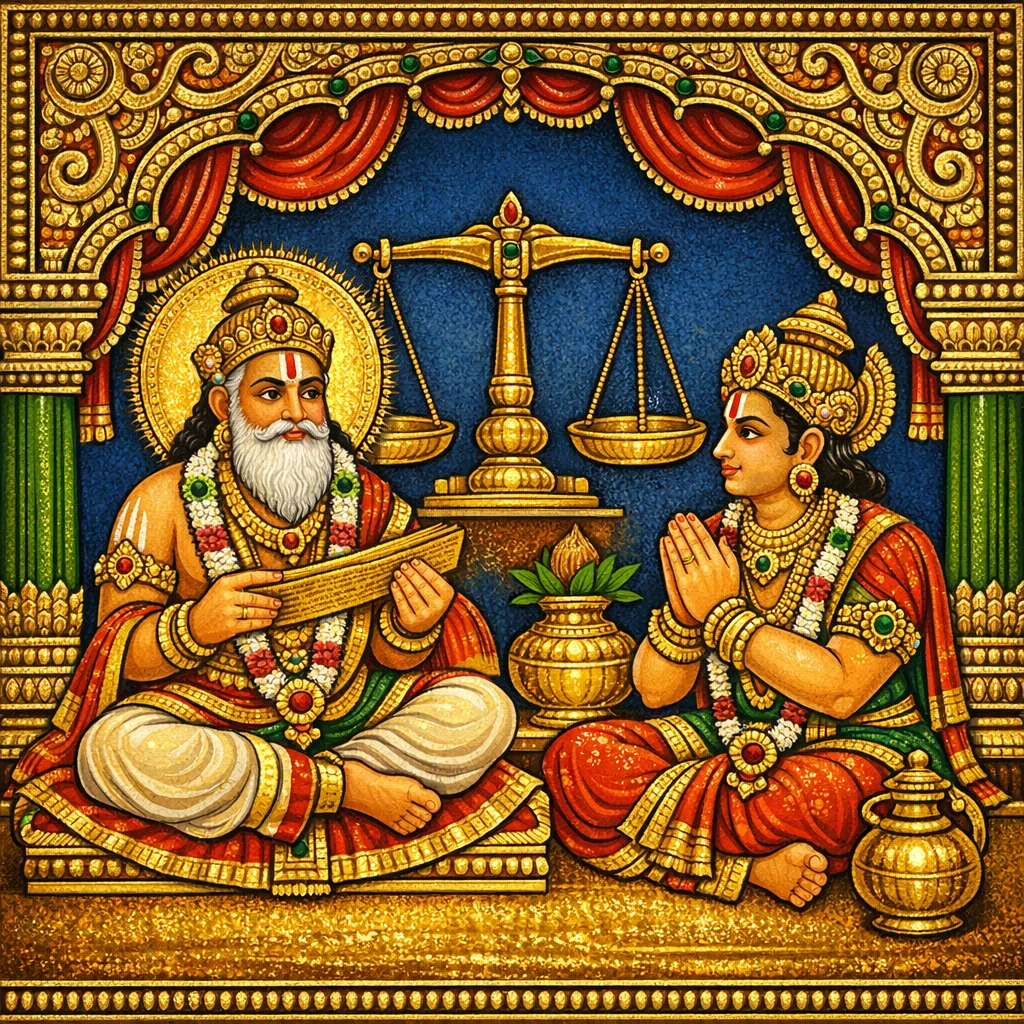
This Adhyāya is framed as a dharma consultation in question and response. Indra asks for a precise definition of “agamya-āgamana” (approaching forbidden women), the nature of the fault (doṣa), and the proper expiation (niṣkṛti). Bṛhaspati answers by classifying prohibited relations—mother, sister and close maternal kin, the guru’s wife, and the maternal uncle’s wife—and by expanding the meaning of “guru,” from the giver of brahma-upadeśa to the teacher of Vedānta, to gauge the transgression’s gravity. The chapter then functions as a prāyaścitta rulebook: graded terms of kṛcchra-vrata, fasts and prāṇāyāma counts, and differing purification periods according to social category and circumstance. It also presents a fourfold typology of dāsī (devadāsī, brahmadāsī, an independent śūdra-servant, etc.) and addresses cases such as relations with a menstruating wife, prescribing corrective rites (bathing, changing garments, and stated observances). Overall, it emphasizes restoring ritual order through carefully calibrated expiation within the Purāṇic narrative frame.
Shlokas
Verse 1
इति ब्रह्माण्डमहापुराणे उत्तरभागे हयग्रीवागस्त्यसंवादे ललितोपाख्याने स्तेयपानकथनं नाम सप्तमो ऽध्यायः इन्द्र उवाच अगम्यागमनं किं वा को दोषः का च निष्कृतिः / एतन्मे मुनिशार्दूल विस्तराद्वक्तुमर्हसि
Thus, in the Brahmāṇḍa Mahāpurāṇa, in the latter section, within the dialogue of Hayagrīva and Agastya in the Lalitā-upākhyāna, is the seventh chapter called “The Account of Stolen Drink.” Indra said: What is called agamyāgamana, what is its fault, and what is its expiation? O tiger among sages, you should tell me this in detail.
Verse 2
बृहस्पतिरुवाच अगम्यागमनं नाम मातृस्वसृगुरुस्त्रियः / मातुलस्य प्रिया चेति गत्वेमा नास्ति निष्कृतिः
Bṛhaspati said: Agamyāgamana is going to one’s mother, one’s maternal aunt, the wife of one’s guru, and the beloved of one’s maternal uncle. Having gone to these, there is no expiation (niṣkṛti).
Verse 3
मातृसङ्गे तु यदघं तदेव स्वसृसङ्गमे / गुरुस्त्रीसंगमे तद्वद्गुरवो बहवः स्मृताः
The sin incurred in union with one’s mother is the same as that incurred in union with one’s sister. Likewise it is so in union with the wife of one’s guru; and the scriptures remember many kinds of “guru”.
Verse 4
ब्रह्मोपदेशमारभ्य यावद्वेदान्तदर्शनम् / एकेन वक्ष्यते येन स महागुरुरुच्यते
From the first instruction on Brahman up to the vision of Vedānta—he by whom all this is taught by a single person is called the Mahāguru.
Verse 5
ब्रह्मोपदेशमेकत्र वेदशास्त्राण्यथैकतः / आचार्यः स तु विज्ञेयस्तदेकैकास्तु देशिकाः
The instruction on Brahman is one thing, and the Vedas and śāstras are another; he who teaches both together as one should be known as an Ācārya, while those who teach only one of these are Deśikas.
Verse 6
गुरोरात्मान्तमेव स्यादायार्यस्य प्रियागमे / द्वादशाब्दं चरेत्कृच्छ३मेकैकं तु षडब्दतः
If one goes to the beloved wife of one’s guru, it is indeed a fall of the soul; therefore let him observe the ‘kṛcchra’ penance for twelve years, and for each offence, six years are ordained.
Verse 7
मातुलस्य प्रियां गत्वा षडब्दं कृच्छ्रमाचरेत् / ब्राह्मणस्तु सजातीयां प्रमदां यदि गच्छति
Having gone to the beloved wife of one’s maternal uncle, one should observe the ‘kṛcchra’ penance for six years. And if a brāhmaṇa goes (unrighteously) to a woman of his own caste—
Verse 8
उपोषितस्त्रिरात्रं तु प्राणायामशतं चरेत् / कुलटां तु सजातीयां त्रिरात्रेण विशुध्यति
Having fasted for three nights, let one perform a hundred prāṇāyāmas. And a ‘kulaṭā’ woman of the same caste is purified within three nights.
Verse 9
पञ्चाहात्क्षत्रियाङ्गत्वा सप्ताहा द्वैश्यजामपि / चक्रीकिरातकैवर्तकर्मकारादियोषितः
In the case of a kṣatriya woman, purification is attained in five days; in the case of a vaiśya woman, in seven days; and likewise for women of groups such as cakrī, kirāta, kaivarta, karmakāra, and others.
Verse 10
शुद्धिः स्याद्द्वादशाहेन धराशक्त्यर्चनेन च / अनन्त्यजां ब्राह्मणो गत्वा प्रमादादब्दतः शुचिः
Purification is attained in twelve days, and also by worship of Dharāśakti, the Goddess of Earth. But if a brāhmaṇa, through heedlessness, goes to an antyajā woman, he becomes pure only after a year.
Verse 11
देवदासी ब्रह्मदासी स्वतन्त्राशूद्रदासिका / दासी चतुर्विधा प्रोक्ता द्वे चाद्ये क्षत्रियासमे
Devadāsī, Brahmadāsī, and the independent śūdra-dāsikā—thus the dāsī is declared to be of four kinds; the first two are regarded as equal to kṣatriyas.
Verse 12
अन्यावेश्याङ्गनातुल्या तदन्या हीनजातिवत् / आत्मदासीं द्विजो मोहादुक्तार्थे दोषमाप्नुयात्
One kind is deemed akin to a courtesan, another as of low birth; and a dvija who, through delusion, acts in the stated manner regarding an ātmadāsī incurs fault.
Verse 13
स्वस्त्रीमृतुमतीं गत्वा प्राजापत्यं चरेद्व्रतम् / द्विगुणेन परां नारीं चतुर्भिः क्षत्रियाङ्गनाम्
When one’s own wife has died, one should observe the Prājāpatya vow; for another woman it is doubled, and for a kṣatriya woman it is fourfold (as expiation).
Verse 14
अष्टभिर्वैश्यनारीं च शूद्रां षौडशभिस्तथा / द्वात्रिंशता संकरजां वेश्यां शूद्रामिवाचरेत्
For a vaiśya woman it is eightfold, for a śūdra woman sixteenfold; for a veśyā of mixed birth it is thirty-twofold (as expiation), and a veśyā is to be treated as a śūdra.
Verse 15
रजस्वलां तु यो भार्यां मोहतो गन्तुमिच्छति / स्नात्वान्यवस्त्रसंयुक्तमुक्तार्थेनैव शुध्यति
Whoever, through delusion, wishes to approach his wife while she is menstruating—having bathed and put on other garments—becomes purified by that very expiation described above.
Verse 16
उपोष्य तच्छेषदिनं स्नात्वा कर्म समाचरेत् / तथैवान्याङ्गनां गत्वा तदुक्तार्थं समाचरेत्
Fasting for the remainder of that day, having bathed, one should perform the prescribed rite. Likewise, even when going to another woman, one should act in accordance with the meaning taught in the śāstra.
Verse 17
पित्रोरनुज्ञया कन्यां यो गच्छेद्विधिना विना / त्रिरात्रोपोषणाच्छुद्धिस्तामेवोद्वाहयेत्तदा
If a man, with the parents’ consent yet without the proper rite, goes to a maiden, he is purified by fasting for three nights; then he should marry that very maiden.
Verse 18
कन्यां दत्त्वा तु यो ऽन्यस्मै दत्ता यश्चानुयच्छति / पित्रोरनुज्ञया पाददिनार्धेन विशुध्यति
He who gives a maiden to another and then pursues or takes back the one already given, with the parents’ consent is purified by an expiation lasting half of a quarter-day (an eighth of a day).
Verse 19
ज्ञातः पितृभ्यां यो मासं कन्याभावे तु गच्छति / वृषलः स तु विज्ञेयः सर्वकर्मबहिष्कृतः
One who is known to the parents yet continues for a month to go to a maiden while she remains in ‘kanyā-bhāva’ is to be regarded as a vṛṣala, excluded from all sacred rites.
Verse 20
ज्ञातः पितृभ्यां यो गत्वा परोढां तद्विनाशने / विधवा जायते नेयं पूर्वगन्तारमाप्नुयात्
If a man, known to the parents, goes to a paroḍhā (another man’s wife) and consorts with her, then upon his destruction she becomes a widow; she does not attain the former goer (pūrvagantā).
Verse 21
अनुग्रहाद्द्विजातीनामुद्वाहविधिना तथा / त्यागकर्माणि कुर्वीत श्रौतस्मार्तादिकानि च
By grace toward the twice-born, and in accordance with the rite of marriage, one should also perform the acts of relinquishment and the Śrauta and Smārta duties and the like.
Verse 22
आदावुद्वाहिता वापि तद्विनाशे ऽन्यदः पिता / भोगेच्छोः साधनं सा तु न येग्याखिलकर्मसु
At first there should be the duly wedded wife; if she is lost, the father gives another. She is a means for one who seeks enjoyment, yet she is not deemed fit to be joined to every rite.
Verse 23
ब्रह्मादिपिपीलकान्तं जगत्स्थावरजङ्गमम् / पञ्चभूतात्मकं प्रोक्तं चतुर्वासनयान्वितम्
From Brahmā down to the ant, the whole world—both the unmoving and the moving—is declared to be made of the five great elements and endowed with four vāsanās (latent tendencies).
Verse 24
जन्माद्याहारमथननिद्राभीत्यश्च सर्वदा / आहारेण विना जन्तुर्नाहारो मदनात्स्मृतः
From birth onward there are ever food, union, sleep, and fear. Without food a creature cannot endure; and even appetite is remembered as stirred by Madana (Kāma).
Verse 25
दुस्तरो मदनस्तस्मात्सर्वेषां प्राणिनामपि / पुन्नारीरूपवत्कृत्वा मदननेनैव विश्वसृक्
Therefore Madana (Kāma) is hard to overcome for all living beings. The Creator of the world fashioned the forms of man and woman, and by this very arrow of Madana set the universe in motion.
Verse 26
प्रवृत्तिमकरोदादौ सृष्टिस्थितिलयात्मिकाम् / तत्प्रवृत्त्या प्रवर्तन्ते तन्निवृत्त्याक्षयां गतिम्
In the beginning He set forth pravṛtti, whose nature is creation, preservation, and dissolution. By that pravṛtti beings engage in action; by its nivṛtti they attain the imperishable path (moksha).
Verse 27
प्रवृत्त्यैव यथा मुक्तिं प्राप्नुयुर्ये न धीयुताः / तद्रहस्यं तदोपायं शृणु वक्ष्यामि सांप्रतम्
How even those lacking discernment may attain liberation through pravṛtti alone—hear that secret and that means; I shall speak of it now.
Verse 28
सर्वात्मको वासुदेवः पुरुषस्तु पुरातनः / इयं हि मूलप्रकृतिर्लक्ष्मीः सर्वजगत्प्रसूः
Vāsudeva is the ancient Purusha, the Self of all. And this Lakṣmī is the root Prakṛti, the mother who brings forth the entire world.
Verse 29
पञ्चापञ्चात्मतृप्त्यर्थं मथनं क्रियतेतराम् / एवं मन्त्रानुभावात्स्यान्मथनं क्रियते यदि
For the satisfaction of the panca and apanca principles, the churning (mathana) is performed with great intensity. Likewise, if the churning is done through the power of mantra, the same effect arises.
Verse 30
तावुभौ मन्त्रकर्माणौ न दोषो विद्यते तयोः
Both are mantra-based rites; in either of them there is no fault.
Verse 31
तपोबलवतामेतत्केवलानामधोगतिः / स्वस्त्रीविषय एवेदं तयोरपि विधेर्बलात्
Even those endowed with the power of austerity, devoted to a single observance, meet this downward course: their concern becomes fixed only upon their own wife; and over those two as well, the force of destiny prevails.
Verse 32
परस्परात्म्यैक्यहृदोर्देव्या भक्त्यार्द्रचेतसोः / तयोरपि मनाक्चेन्न निषिद्धदिवसेष्वघम्
Though their hearts are one through mutual unity of self, and their minds are softened by devotion to the Goddess—yet even for those two, if there is the slightest lack of restraint, there is sin on forbidden days.
Verse 33
इयमंबा जगद्धात्री पुरुषो ऽयं सदाशिवः / पञ्चविंशतितत्त्वानां प्रीतये मथ्यते ऽधुना
This is Ambā, the Mother who upholds the world, and this is the Puruṣa, Sadāśiva; for the delight of the twenty-five tattvas, this churning is now performed.
Verse 34
एतन्मन्त्रानुभावाच्च मथनं क्रियते यदि / तावुभौ पुण्यकर्माणौ न दोषो विद्यते तयोः
If this churning is performed through the potency of this mantra, then both are doers of merit; no fault is found in them.
Verse 35
इदं च शृणु देवेन्द्र रहस्यं परमं महत् / सर्वेषामेव पापानां यौगपद्येन नाशनम्
O Devendra, hear also this supreme and mighty secret: the simultaneous destruction of all sins.
Verse 36
भक्तिश्रद्धासमायुक्तः स्नात्वान्तर्जलसंस्थितः / अष्टोत्तरसहस्रं तु जपेत्पञ्चदशाक्षरीम्
Endowed with devotion and faith, having bathed and standing within the water, one should repeat the fifteen-syllabled mantra one thousand and eight times.
Verse 37
आराध्य च परां शक्तिं मुच्यते सर्वकिल्बिषैः / तेन नश्यन्ति पापानि कल्पकोटिकृतान्यपि / सर्वापद्भ्यो विमुच्येत सर्वाभीष्टं च विन्दति
By worshipping the Supreme Śakti, one is freed from every stain of sin; thereby even sins committed through crores of kalpas are destroyed. One is released from all calamities and attains every cherished desire.
Verse 38
इन्द्र उवाच भगवन्सर्वधर्मज्ञ सर्वभूतहिते रत / संयोगजस्य पापस्य विशेषं वक्तुमर्हसि
Indra said: “O Bhagavan, knower of all dharmas and devoted to the welfare of all beings, you are worthy to explain the distinctions of sin that arises from association (saṃyoga).”
Verse 39
बृहस्पतिरुवाच संयोगजं तु यत्पापं तच्चतुर्धा निगद्यते / कर्ता प्रधानः सहकृन्निमित्तो ऽनुमतः क्रमात्
Bṛhaspati said: “The sin that arises from association (saṃyoga) is declared to be fourfold: the principal doer, the co-doer, the instigator as cause, and the one who consents—respectively.”
Verse 40
क्रमाद्दशांशतो ऽघं स्याच्छुद्धिः पूर्वोक्तमार्गतः
In due order, each one’s share of sin is a tenth; and purification is attained by the path described earlier.
Verse 41
मद्यं कलञ्जं निर्यासं छत्राकं गृञ्जनं तथा / लशुनं च कलिङ्गं च महाकोशातकीं तथा
Intoxicating liquor, kalañja, resinous extract, mushrooms, gṛñjana, garlic, kaliṅga, and mahākośātakī—these too are enumerated.
Verse 42
बिंबीं च कवकं चैव हस्तिनीं शिशुलंबिकाम् / औदुंबरं च वार्ताकं कतकं बिल्वमल्लिका
Bimbī, kavaka, hastinī, śiśulambikā, audumbara, vārtāka (eggplant), kataka, and bilvamallikā—these too are listed.
Verse 43
क्रमाद्दशगुणं न्यूनमघमेषां विनिर्दिशेत् / पुरग्रामाङ्गवैश्याङ्गवेश्योपायनविक्रयी
Their sin is declared, in due order, to be tenfold less: the town‑and‑village retainer, one connected with vaiśyas, one connected with courtesans, and the seller of gifts and offerings.
Verse 44
सेवकः पुरसंस्थश्च कुग्रामस्थो ऽभिशस्तकः / वैद्यो वैखानसः शैवो नारीजीवो ऽन्नविक्रयी
A servant, a city-dweller, one living in a wretched village, one censured (abhiśasta), a physician, a vaikhānasa, a devotee of Śiva, one who lives by a woman, and a seller of food-grain.
Verse 45
शस्त्रजीवी परिव्राट् च वैदिकाचारनिन्दकः / क्रमाद्दशगुणान्न्यूनमेषामन्नादने भवेत्
One who lives by weapons, the wandering mendicant (parivrāt), and the reviler of Vedic conduct—when one eats their food, the fault becomes, in due order, tenfold less.
Verse 46
स्वतन्त्रं तैलकॢप्तं तु ह्युक्तार्थं पापमादिशेत् / तैरेव दृष्टं तद्भुक्तमुक्तपापं विनिर्दिशेत्
Food prepared independently in oil is, in the śāstric sense, declared to entail sin; but if that very food has been seen by them and then eaten, it is prescribed as free from sin.
Verse 47
ब्रह्मक्षत्रविशां चैव सशूद्राणां यथौदनम् / तैलपक्वमदृष्टं च भुञ्जन्पादमघं भवेत्
For brahmins, kṣatriyas, vaiśyas, and also śūdras, as in the case of cooked rice: if one eats food cooked in oil that has not been seen, one incurs a quarter-share (one pāda) of sin.
Verse 48
द्विजात्मदासीकॢप्तं च तया दृष्टे तदर्धके / वेश्यायास्तु त्रिपादं स्यात्तथा दृष्टे तदोदने
Food prepared by a dvija’s maidservant, if it has been seen by her, entails half the sin; but a veśyā’s food, even when seen in the same way, entails three pādas of sin (three quarters).
Verse 49
शूद्रावत्स्यात्तु गोपान्नं विना गव्यचतुष्टयम् / तैलाज्यगुडसंयुक्तं पक्वं वैश्यान्न दुष्यति
A gopa’s food is to be regarded like a śūdra’s if it lacks the four cow-derived items (gavyacatuṣṭaya); but a vaiśya’s food, cooked with oil, ghee, and jaggery, is not defiled.
Verse 50
वैश्यावद्ब्राह्मणी भ्रष्टा तया दृष्टेन किञ्चन
A fallen (bhraṣṭā) brāhmaṇī is to be regarded like a vaiśya; and whatever food has been seen by her is to be assessed by that same rule.
Verse 51
ब्रुवस्यान्नं द्विजो भुक्त्वा प्राणायामशतं चरेत् / अथवान्तर्जले जप्त्वाद्रुपदां वा त्रिवारकम्
Having eaten Bruvā’s food, the twice-born should perform a hundred prāṇāyāmas; or, while within water, he should recite the Drupadā mantra three times.
Verse 52
इदं विष्णुस्त्र्यंबकं वा त्थैवान्तर्जले जपेत् / उपोष्य रजनीमेकां ततः पापाद्विशुध्यति
Likewise, he should recite in water the Viṣṇu mantra or the Tryambaka mantra; fasting for a single night, he is purified from sin.
Verse 53
अथवा प्रोक्षयेदन्नमब्लिङ्गैः पावमानिकैः / अन्नसूक्तं जपित्वा तु भृगुर्वै वारुणीति च
Or he may sprinkle the food with the liṅga-less Pāvamāna mantras; then, having recited the Anna-sūkta, he should also recite “Bhṛgur vai Vāruṇī”.
Verse 54
ब्रह्मार्पणमिति श्लोकं जप्त्वा नियममाश्रितः / उपोष्य रजनीमेकां ततः शुद्धो भविष्यति
Reciting the verse “Brahmārpaṇam”, abiding in sacred discipline, and fasting for one night, he will thereafter become pure.
Verse 55
स्त्री भुक्त्वा तु ब्रुवाद्यन्नमेकाद्यान्भोजये द्द्विजान् / आपदि ब्राह्मणो ह्येषामन्नं भुक्त्वा न दोषभाक्
If a woman has eaten Bruvā’s food, then after observing a one-day discipline she should feed the twice-born; in times of distress, a brāhmaṇa who eats their food incurs no fault.
Verse 56
इदं विष्णुरिति मन्त्रेण सप्तवाराभिमन्त्रितम् / सो ऽहंभावेन तद्ध्यात्वा भुक्त्वा दोषैर्न लिप्यते
Food consecrated seven times with the mantra “idaṃ viṣṇur iti”—meditated upon in the spirit of “so’ham” and then eaten—does not stain one with faults.
Verse 57
अथवा शङ्करं ध्यायञ्जप्त्वा त्रैय्यंबकं मनुम् / सो ऽहंभावेन तज्ज्ञानान्न दोषैः प्रविलिप्यते
Or, meditating on Śaṅkara and reciting the Tryambaka mantra, through that knowledge held in the “so’ham” spirit, one is not smeared by faults.
Verse 58
इदं रहस्यं देवेन्द्र शृणुष्व वचनं मम / ध्यात्वा देवीं परां शक्तिं जप्त्वा पञ्चदशाक्षरीम्
O Devendra, hear my secret teaching: meditate on the Goddess, the Supreme Śakti, and recite the fifteen-syllabled Pañcadaśākṣarī mantra.
Verse 59
तन्निवेदितबुद्ध्यादौ यो ऽश्नाति प्रत्यहं द्विजः / नास्यान्नदोषजं किञ्चिन्न दारिद्रयभयं तथा
The twice-born who eats each day after first offering his mind and understanding to Him incurs no fault arising from food, nor does he fear poverty.
Verse 60
न व्याधिजं भयं तस्य न च शत्रुभयं तथा / जपतो मुक्तिरेवास्य सदा सर्वत्र मङ्गलम्
He has no fear of illness, nor fear of enemies; for the one who performs japa, liberation alone is assured, and ever and everywhere there is auspiciousness.
Verse 61
एष ते कथितः शक्र पापानामपि विस्तरः / प्रायश्चित्तं तथा तेषां किमन्यच्छ्रोतुमिच्छसि
O Śakra, I have told you the full extent of sins and also their prāyaścitta, the rites of expiation; what else do you wish to hear?
Frequently Asked Questions
It is defined as sexual approach toward prohibited women such as one’s mother, sister/close maternal relations, the guru’s wife, and the maternal uncle’s wife—categories treated as especially grave, with emphasis on the near-impossibility or extreme rigor of expiation in certain cases.
It distinguishes instructional scope: one who leads from brahma-upadeśa through vedānta is termed mahāguru; an ācārya is identified as consolidating brahma-upadeśa and veda-śāstra instruction, while narrower instructors are treated as deśikas. The classification calibrates the doṣa severity and the prāyaścitta scale.
The text foregrounds graded kṛcchra observances measured in years or days, tri-rātra fasting with specified prāṇāyāma counts, and situational purification (e.g., bathing and changing garments), with durations varying by relationship category and social context.