Adhyaya 21
Śūnyaka-nagara Utpāta-varṇanam (Portents in the City of Śūnyaka) — Lalitāyāḥ Yātrā-śravaṇāt Bhaṇḍāsura-purālaye Kṣobhaḥ
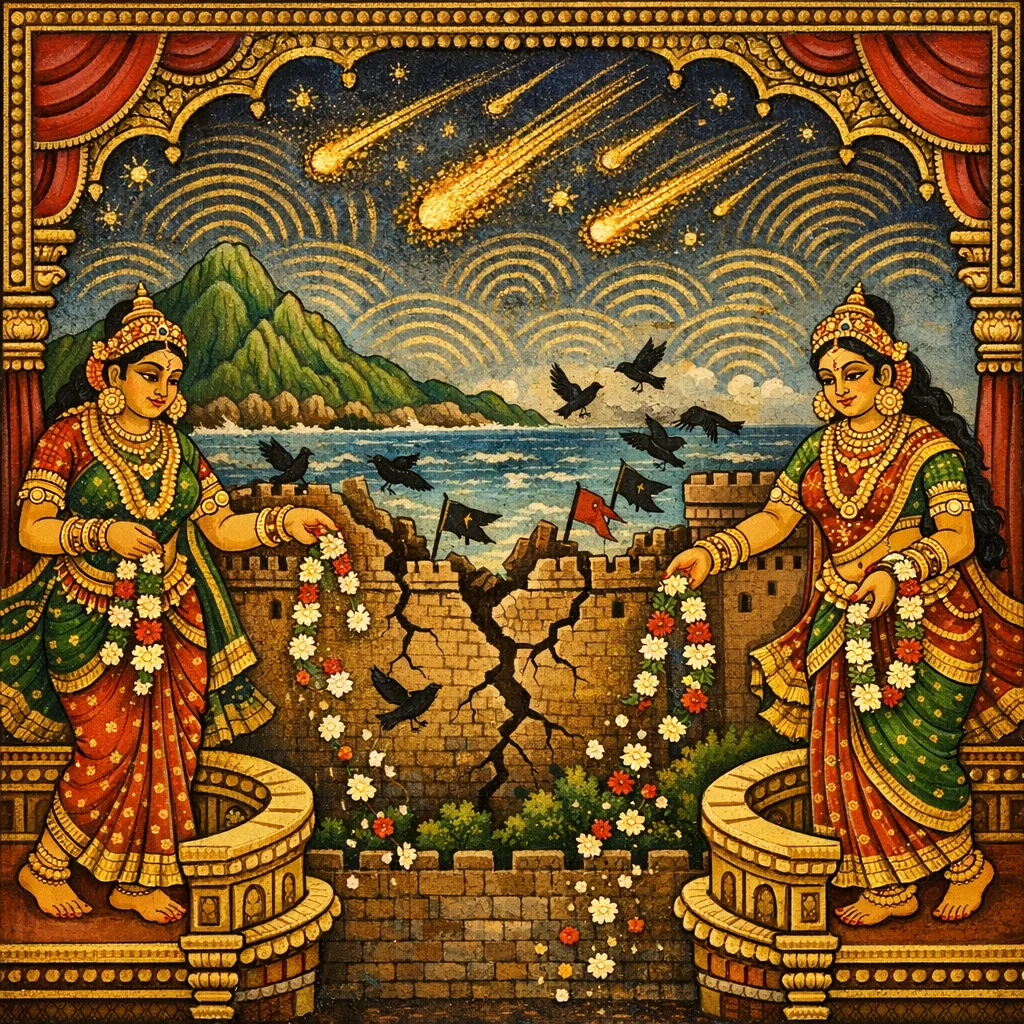
Within the Hayagrīva–Agastya dialogue of the Lalitopākhyāna (Uttarabhāga), this chapter turns from the gods’ mobilization to the enemy’s seat and its ominous signs. When the resounding noises that herald Lalitā Devī’s yātrā (processional advance/war-march) are heard, the settlements in Bhaṇḍāsura’s realm are thrown into agitation. The daitya stronghold is placed near Mahendra mountain and the shore of the great ocean, and a famed city called Śūnyaka is named, linked to the residence of a leading demon (connected with Viṣaṅga’s elder). The narrative then catalogs utpātas (inauspicious portents) with near-cosmographic detail: walls split out of season, meteors fall, earthquakes arise as the first omen, ill-omened birds gather on banners, fearful cries and harsh “sky-voices” are heard, comets appear in every direction, smoke and grime spread, and the ornaments and garlands of daitya women slip away. As an interpretive hinge, these portents externalize the destabilization of adharmic order as Śakti approaches, reshaping the moral-cosmic landscape and preparing both the battlefield setting and the psychological collapse of the asuric city.
Shlokas
Verse 1
इति श्रीब्रह्माण्डमहापुराणे उत्तरभागे हयग्रीवागस्त्यसंवादे ललितोपाख्याने किरिचक्ररथदेवताप्रकाशनं नाम विंशो ऽध्यायः आकर्ण्य ललितादेव्या यात्रानिगमनिस्वनम् / महान्तं क्षोभमायाता भण्डासुरपुरालयाः
Thus, in the Śrī Brahmāṇḍa Mahāpurāṇa, in the latter section, in the dialogue of Hayagrīva and Agastya, within the Lalitā narrative, is the twentieth chapter called “The Revelation of the Deities of the Kiri-cakra Chariot.” Hearing the resounding signal that marked the close of Lalitā Devī’s march, the dwellers of Bhaṇḍāsura’s city were seized by great agitation.
Verse 2
यत्र चास्ति दुराशस्य भण्डदैत्यस्य दुर्धियः / महेन्द्रपर्वतोपान्ते महार्णवतटे पुरम्
There stands the city of the daitya Bhaṇḍa, of wicked longing and perverse mind—near Mount Mahendra, upon the shore of the great ocean.
Verse 3
तत्तु शून्यकनाम्नैव विख्यातं भुवनत्रये / विषङ्गाग्रजदैत्यस्य सदावासः किलाभवत्
That city was famed throughout the three worlds by the name Śūnyaka; and it is said to have been the perpetual abode of the daitya, elder brother of Viṣaṅga.
Verse 4
तस्मिन्नेव पुरे तस्य शतयोजनविस्तरे / वित्रेसुर सुराः सर्वे श्रीदेव्यागमसंभ्रमात्
In that very city, spread across a hundred yojanas, all the Devas were thrown into agitation at the stirring advent of Śrī Devī.
Verse 5
शतयोजनविस्तीर्णं तत्सर्वं पुरमासुरम् / धूमैरिवावृतमभूदुत्पातजनितैर्मुहुः
That entire Asura city, spread across a hundred yojanas, was again and again shrouded as if by smoke born of ominous portents.
Verse 6
अकाल एव निर्भिन्ना भित्तयो दैत्यपत्तने / धूर्णमाना पतन्ति स्म महोल्का गगनस्थलात्
At an untimely hour the walls of the Daitya stronghold split apart, and from the vault of heaven great meteors, whirling, began to fall.
Verse 7
उत्पातानां प्राथमिको भूकंपः पर्यवर्तत / मही जज्वाल सकला तत्र शून्यकपत्तने
Of the portents, the first to unfold was an earthquake; in that desolate city the whole earth seemed to blaze.
Verse 8
अकाल एव हृत्कंपं भेजुर्दैत्यपुरौकसः / ध्वजाग्रवर्तिनः कङ्कगृध्राश्चैव बकाः खगाः
At that untimely moment the dwellers of the Daitya city were seized by trembling of heart; upon the banner-tops perched birds—kites, vultures, and herons.
Verse 9
आदित्यमण्डले दृष्ट्वादृष्ट्वा चक्रन्दुरुच्चकैः / क्रव्यादा बहवस्तत्र लोचनैर्नावलोकिताः
Gazing again and again upon the solar orb, they wailed aloud. There were many flesh-devourers there, not to be seen even with the eyes.
Verse 10
मुहुराकाशवाणीभिः परुषाभिर्बभाषिरे / सर्वतो दिक्षुदृश्यन्ते केतवस्तु मलीमसाः
Again and again harsh voices from the sky resounded. In every quarter, grim and sullied comets were seen.
Verse 11
धूमायमानाः प्रक्षोभजनका दैत्यरक्षसाम् / दैत्यस्त्रीणां च विभ्रष्टा अकाले भूषणस्रजः
Smoke-laden portents arose, stirring dread among Daityas and Rākṣasas. And the ornament-garlands of Daitya women slipped away untimely.
Verse 12
हाहेति दूरं क्रन्दन्त्यः पर्यश्रु समरोदिषुः / दपणानां वर्मणां च ध्वजानां खड्गसंपदाम्
Crying “hā-hā!” far and wide, they wept, drenched in tears and lamentation. Mirrors, armor, banners, and the wealth of swords too began to fail.
Verse 13
मणीनामंबराणां च मालिन्यमभवन्मुहुः / सौधेषु चन्द्रशालासु केलिवेश्मसु सर्वतः
Gems and garments again and again grew stained and dull. In palaces, moonlit galleries, and pleasure-halls, this was so everywhere.
Verse 14
अट्टालकेषु गोष्ठेषु विपणेषु सभासु च / चतुष्किकास्वलिङ्गेषु प्रग्रीवेषु वलेषु च
In the watchtowers, in the cattle-stalls, in the markets and in the halls of assembly; at the four-way crossings, by the sacred liṅgas, at lofty entrances, and along the winding ways.
Verse 15
सर्वतोभद्रवासेषु नन्द्यावर्तेषु वेश्मसु / विच्छन्दकेषु संक्षुब्धेष्ववरोधनपालिषु / स्वस्तिकेषु च सर्वेषु गर्भागारपुटेषु च
In the Sarvatobhadra dwellings and in houses of the Nandyāvarta design; in open pavilions and in places of tumult; along the lines of enclosing walls; in every Svastika-shaped structure, and within the chambers of the inner sanctum (garbhagṛha) as well.
Verse 16
गोपुरेषु कपाटेषु वलभीनां च सीमसु / वातायनेषु कक्ष्यासु धिष्ण्येषु च खलेषु च
At the gopuras (towering gateways) and upon the door-leaves; along the edges of the valabhīs (upper stories and eaves); at the air-windows and within the chambers; in the appointed places and even in the granaries.
Verse 17
सर्वत्र दैत्य नगरवासिभिर्जनमण्डलैः / अश्रूयन्त महाघोषाः परुषा भूतभाषिताः
Everywhere, the throngs of Daitya city-dwellers heard mighty outcries—harsh and rough, as though they were the speech of bhūtas (spirits).
Verse 18
शिथिली सवतो जाता घोरपर्णा भयानका / करटैः कटुकालापैर्वलोकि दिवाकरः / आराविषु करोटीनां कोटयश्चापतन्भुवि
On every side all things seemed to slacken and grow faint; dreadful foliage darkened, fearsome to behold. The Sun was glimpsed amid elephants uttering bitter, piercing cries. And on the battlefield, skulls by koṭis upon koṭis fell upon the earth.
Verse 19
अपतन्वेदिमध्येषु बिन्दवः शोणितांभसाम् / केशौघकाश्च निष्पेतुः सर्वतो धूमधूसराः
In the midst of the altar fell drops of water mingled with blood, and tufts of hair, smoke-grey, flew out on every side.
Verse 20
भौमान्तरिक्षदिव्यानामुत्पातानामिति व्रजम् / अवलोक्य भृशं त्रस्ताः सर्वे नगरवासिनः / निवेदयामासुरमी भण्डाय प्रथितौजसे
Beholding that host of portents on earth, in the mid-air, and in the heavenly realms, all the city-dwellers were greatly terrified and reported it to Bhaṇḍa, famed for his might.
Verse 21
स च भण्डः प्रचण्डोत्थैस्तैरुत्पातकदंबकैः / असंजातधृतिभ्रंशो मन्त्र स्थानमुपागमत्
Yet Bhaṇḍa, his resolve unshaken by that fierce cluster of portents, went to the place of mantras.
Verse 22
मेरोरिव वपुर्भेदं बहुरत्नविचित्रितम् / अध्यासामास दैत्येन्द्रः सिंहासनमनुत्तमम्
The lord of the Daityas mounted that peerless lion-throne, radiant like Mount Meru and wondrous with many jewels.
Verse 23
स्फुरन्मुकुटलग्नानां रत्नानां किरणैर्घनैः / दीपयन्नखिलाशान्तानद्युतद्दानवेश्वरः
With the dense beams from the jewels set in his crown, the lord of the Dānavas shone forth, lighting up all the quarters with his radiance.
Verse 24
एकयोजनविस्तारे महत्यास्थानमण्डपे / तुङ्गसिंहासनस्थं तं सिषेवाते तदानुजै
In the great audience-hall, a yojana in breadth, he sat upon a lofty lion-throne; and his younger brothers attended upon him in service.
Verse 25
विशुक्रश्च विषङ्गश्च महाबलपराक्रमौ / त्रैलोक्यकण्टकीभूतभुजदण्डभयङ्करौ
Viśukra and Viṣaṅga, mighty in strength and valor, became thorns to the three worlds, fearsome with arms like clubs.
Verse 26
अग्रजस्य सदैवाज्ञामविलङ्घ्य मुहुर्मुहुः / त्रैलोक्यविजये लब्धं वर्धयन्तौ महद्यशः
Never transgressing their elder brother’s command, again and again they increased the great renown won by the conquest of the three worlds.
Verse 27
न तेन शिरसा तस्य मृदूनन्तौ पादपीठिकाम् / कृतां जरिप्रणामौ च समुपाविशता भुवि
They did not touch his soft footstool with their heads; having bowed in reverence like elders, they sat down upon the ground nearby.
Verse 28
अथास्थाने स्थिते तस्मिन्नमरद्वेषिणां वरे / सर्वे सामन्तदैत्येन्द्रास्तं द्रष्टुं समुपागताः
Then, as he—the foremost among the haters of the gods—stood in his place, all the vassal Daitya kings came to behold him.
Verse 29
तेषामे कैकसैन्यानां गणना न हि विद्यते / स्वंस्वं नाम समुच्चार्य प्रणेमुर्भण्डकेश्वरम्
Of those Kaikasa hosts there was no counting. Each, uttering his own name, bowed in reverence to Bhāṇḍakeśvara.
Verse 30
म च तानसुरान्सर्वानतिधीरकनीनकैः / संभावयन्समालोकैः कियन्तं चित्क्षणं स्थितः
He stood for a few moments, surveying all those asuras with eyes of unwavering composure, as though weighing them well.
Verse 31
अवोचत विशुक्रस्तमग्रजं दानवेश्वरम् / मथ्यमानमहासिंधुसमानार्गलनिस्वनः
With a roar like the mighty ocean being churned, he spoke to Viśukrasta, the elder brother and lord of the Dānavas.
Verse 32
देवत्वदीयदोर्द्दण्डविध्वस्तबलविक्रमाः / पापिनः पामराचारा दुरात्मानः सुराधमाः
O Deva! By the blow of your mighty arm their strength and valor are shattered—sinful, base in conduct, evil-souled, the lowest among the Suras.
Verse 33
शरण्यमन्यतः क्वापि नाप्नुवन्तो विषादिनः / ज्वलज्ज्वालाकुले वह्नौ पतित्वा नाशमागताः
Sunk in despair and finding refuge nowhere else, they fell into the fire crowded with blazing flames and met their end.
Verse 34
तस्माद्देवात्समुत्पन्ना काचित्स्त्री बलगर्विता / स्वयमेव किलास्राक्षुस्तां देवा वासवादयः
From that deity there arose a woman, proud of her strength. The gods, led by Vāsava (Indra), beheld her with their own eyes.
Verse 35
तैः पुनः प्रबलोत्साहैः प्रोत्साहितपराक्रमाः / बहुस्त्रीपरिवाराश्च विविधायुधमण्डिताः
Again, stirred by those of mighty zeal, their prowess was roused; they were surrounded by many women and adorned with weapons of many kinds.
Verse 36
अस्माञ्जेतुं किलायान्ति हा कष्टं विधिवैशसम् / अबलानां समूहस्छेद्बलिनो ऽस्मान्विजेष्यते
They say they are coming to conquer us—alas, what a harsh stroke of fate! If a host of the weak should become mighty and defeat us.
Verse 37
तर्हि पल्लवभङ्गेन पाषाणस्य विदारणम् / ऊह्यमानमिदं हन्तुं परिहासाय कल्प्यते
Then it would be like splitting a stone by snapping a tender shoot; this notion of slaying us is fit only for mockery.
Verse 38
विडंबना न किमसौ लज्जाकरमिदं न किम् / अस्मत्सैनिकनासीरभटेभ्यो ऽपि भवेद्भयम्
Is this not mockery, is this not shameful? Even our soldiers and vanguard warriors may be seized by fear.
Verse 39
कातरत्वं समापन्नाः शक्राद्यास्त्रिदिवौकसः / ब्रह्मादयश्च निर्विण्णविग्रहा मद्बलायुधैः
Śakra and the other gods who dwell in the three heavens fell into dread; Brahmā and the rest, struck by my mighty weapons, became dispirited.
Verse 40
विष्णोश्च का कथैवास्ते वित्रस्तः स महेश्वरः / अन्येषामिह का वार्ता दिक्पालास्ते पलायिताः
What need to speak of Viṣṇu—Maheśvara himself was terrified; what then of the others? Even the guardians of the directions fled.
Verse 41
अस्माकमिषुभिस्तीक्ष्णैरदृश्यैरङ्गपातिभिः / सर्वत्र विद्धवर्माणो दुर्मदा विबुधाः कृताः
By our sharp, unseen arrows that strike the limbs, they were pierced everywhere; their armor was riddled through, and the gods’ arrogance was brought low.
Verse 42
तादृशानामपि महापराक्रमभुजोष्मणाम् / अस्माकंविजयायाद्य स्त्री काचिदभिधावति
Even with such mighty heroes, blazing with the strength of their arms, today a woman comes rushing forth to secure our victory.
Verse 43
यद्यपि स्त्री तथाप्येषा नावमान्या कदाचन / अल्पो ऽपि रिपुरात्मज्ञैर्नावमान्यो जिगीषुभिः
Though she is a woman, she must never be scorned; the self-knowing and those who seek victory do not belittle even a small foe.
Verse 44
तस्मात्तदुत्सारणार्थं प्रेषणीयास्तु किङ्कराः / सकचग्रहमाकृष्य सानेतव्या मदोद्धता
Therefore, to drive her out, let the attendants be dispatched; seize her by hair and head, drag her forth, and bring here that woman intoxicated with pride.
Verse 45
देव त्वदीय शुद्धान्तर्वर्तिनीनां मृगीदृशाम् / चिरेण चेटिकाभावं सा दुष्टा संश्रयिष्यति
O Deva, among the doe-eyed women who dwell within your pure inner palace, that wicked one will, in time, come to accept the lot of a handmaid.
Verse 46
एकैकस्माद्भटादस्मात्सैन्येषु परिपन्थिनः / शङ्कते खलु वित्रस्तं त्रैलोक्यं सचराचरम्
From each and every soldier in this host, marauding foes seem to arise; and in fear the whole Three Worlds—moving and unmoving—tremble in anxious suspicion.
Verse 47
अन्यद्देवस्य चित्तं तु प्रमाणमिति दानव / निवेद्य भण्डदैत्यस्य क्रोधं तस्य व्यवीवृधत्
O Dānava, saying, “The Deva’s intent is the true measure,” and reporting it to Bhaṇḍa Daitya, his wrath swelled all the more.
Verse 48
विषङ्गस्तु महासत्त्वो विचारज्ञो विचक्षणः / इदमाह महादैत्यमग्रजन्मानमुद्धतम्
Viṣaṅga, a great-souled one, discerning and keen of insight, spoke these words to the arrogant Mahā Daitya Agrajanmā.
Verse 49
देव त्वमेव जानासि सर्वं कार्यमरिन्दम / न तु ते क्वापि वक्तव्यं नीतिवर्त्मनि वर्तते
O Deva, subduer of foes, you alone know every task to be done. What does not abide on the path of righteous policy should not be spoken anywhere.
Verse 50
सर्वं विचार्य कर्तव्यं विचारः परमा गतिः / अविचारेण चेत्कर्म समूलमवकृन्तति
Do everything after due deliberation; deliberation is the highest course. Action done without thought cuts down and destroys at the very root.
Verse 51
परस्य कटके चाराः प्रेषणीयाः प्रयत्नतः / तेषां बलाबलं ज्ञेयं जयसंसिद्धिमिच्छता
With great care, spies should be sent into the enemy’s camp. One who seeks the sure attainment of victory must know their strength and weakness.
Verse 52
चारचक्षुर्दृढप्रज्ञः सदाशङ्कितमानसः / अशङ्किताकारवांश्च गुप्तमन्त्रः स्वमन्त्रिषु
Let spies be his eyes; let him be steadfast in wisdom and ever watchful at heart. Yet outwardly appear untroubled, and keep counsel secret even among his own ministers.
Verse 53
षडुपायान्प्रयुञ्जानः सर्वत्रा भ्यर्हिते पदे / विजयं लभते राजा जाल्मो मक्षु विनश्यति
The king who employs the six measures (ṣaḍupāya) everywhere in their proper place attains victory; but the wicked one swiftly perishes.
Verse 54
अविमृश्यैव यः कश्चिदारम्भः स विनाशकृत् / विमृश्य तु कृतं कर्म विशेषाज्जयदायकम्
Any undertaking begun without reflection brings ruin; but work done after due deliberation bestows victory in a special way.
Verse 55
तिर्यगित्यपि नारीति क्षुद्रा चेत्यपि राजभिः / नावज्ञा वैरिणां कार्या शक्तेः सर्वत्र सम्भवः
Even if one says, “It is a beast,” “It is a woman,” or “It is insignificant,” kings should not slight their foes; for power may arise anywhere.
Verse 56
स्तंभोत्पन्नेन केनापि नरतिर्यग्वपुर्भृता / भूतेन सर्वभूतानां हिरण्यकशिपुर्हतः
From a pillar arose a being bearing a form both human and beast; by that one Hiranyakashipu, foe of all creatures, was slain.
Verse 57
पुरा हि चण्डिका नाम नारी मयाविजृंभिणी / निशुम्भशुंभौ महिषं व्यापादितवती रणे
In ancient times the Goddess Candika, mighty through the unfolding of māyā, slew in battle Nisumbha, Sumbha, and the demon Mahisha.
Verse 58
तत्प्रसंगेन बहवस्तया दैत्या विनाशिताः / अतो वदामिनावज्ञा स्त्रीमात्रे क्रियतां क्वचित्
In that very episode many daityas were destroyed by her; therefore I say: never, anywhere, show contempt merely because one is a woman.
Verse 59
शक्तिरेव हि सर्वत्र कारणं विजयश्रियः / शक्तेराधारतां प्रप्तैः स्त्रीपुंलिङ्गैर्न नो भयम्
Truly, Śakti alone is everywhere the cause of the splendor of victory. For us who have gained refuge in Śakti—whether female or male—there is no fear.
Verse 60
शक्तिस्तु सर्वतो भाति संसारस्य स्वभावतः / तर्हि तस्या दुराशायाः प्रवृत्तिर्ज्ञायतां त्वया
Śakti shines forth on every side, by the very nature of samsāra. Therefore, let the course of that ill desire be understood by you.
Verse 61
केयं कस्मात्समुत्पन्ना किमाचारा किमाश्रया / किंबला किंसहाया वा देव तत्प्रविचार्यताम्
Who is she, from what has she arisen, what is her conduct, and on what does she rely? What is her strength, and who are her allies? O Deva, let this be well considered.
Verse 62
इत्युक्तः स विषङ्गेण को विचारो महौजसाम् / अस्मद्बले महासत्त्वा अक्षौहिण्यधिपाः शतम्
Thus addressed, he replied with misgiving: “What need is there for deliberation among the greatly mighty?” On our side stand a hundred great champions, commanders of akṣauhiṇī armies.
Verse 63
पातुं क्षमास्ते जलधीनलं दग्धुं त्रिविष्टपम् / अरे पापसमाचार किंवृथा शङ्कसे स्त्रियः
You are able to drink up the oceans and to burn Triviṣṭapa (the heavenly realm) with fire. O you of sinful conduct, why do you vainly suspect women?
Verse 64
तत्सर्वं हि मया पूर्वं चारद्वारावलोकितम् / अग्रे समुदिता काचिल्ललितानामधारिणी
All that I had already seen before, as though beheld through the four gates. Then, in front, there arose a certain woman, bearing grace and gentle beauty.
Verse 65
यथार्थनामवत्येषा पुष्पवत्पेशलाकृतिः / न स्त्त्वं न च वीर्यं वा न संग्रामेषु वा गतिः
Her name accords with her true nature, and her form is tender like a flower; yet she has no steadfastness, no valor, and no advance in the battles.
Verse 66
सा चाविचारनिवहा किन्तु मायापरायणा / तत्सत्त्वेनाविद्यमानं स्त्रीकदम्बकमात्मनः
She is a mass of unreflecting impulse, yet devoted to Māyā; and by that very nature, within herself no host of women truly exists.
Verse 67
उत्पादितवती किं ते न चैवं तु विचेष्टते / अथ वा भव दुक्तेन न्यायेनास्तु महद्बलम्
What has she brought forth for you, if she does not act in this manner? Or else—according to the spoken word and the rule of justice, let there be mighty strength.
Verse 68
त्रैलोक्योल्लङ्घिमहिमा भण्डः केन विजीयते
Bhaṇḍa, whose majesty overleaps the three worlds—by whom can he be conquered?
Verse 69
इदानीमपि मद्बाहुबलसंमर्दमूर्च्छिताः / श्वसितुं चापि पटवो न कदाचन नाकिनः
Even now the gods, stunned into swoon by the crushing force of my arms, are never able even to draw their breath.
Verse 70
केचित्पातालगर्भेषु केचिदम्बुधिवारिषु / केचिद्दिगन्तकोणेषु केचित्कुञ्जेषुभूभृताम्
Some hid in the womb of Pātāla, some in the waters of the ocean; some in the farthest corners of the horizons, and some in the groves of the mountains.
Verse 71
विलीना भृशवित्रस्तास्त्यक्तदारसुतश्रियः / भ्रष्टाधिकाराः पशवश्छन्नवेषाश्चरन्ति ते
They have vanished, terrified beyond measure; abandoning wife, son, and splendor, stripped of authority, they roam like beasts in hidden disguises.
Verse 72
एतादृशं न जानाति मम बाहुपराक्रमम् / अबला न चिरोत्पन्ना तेनैषा दर्पमश्नुते
She does not know the true might of my arm; weak and newly arisen, she therefore indulges in pride.
Verse 73
न जानन्ति स्त्रियो मूढा वृथा कल्पितसाहसाः / विनाशमनुधावन्ति कार्याकार्यविमोहिताः
Foolish women imagine vain boldness; deluded about what should and should not be done, they run headlong after ruin.
Verse 74
अथ वा तां पुरस्कृत्य यद्यागच्छन्ति नाकिनः / यथा महोरगाः सिद्धाः साध्या वा युद्धदुर्मदाः
Or if the gods advance with her set in the fore, it is as when the mighty Serpent-beings, the Siddhas, or the Sādhyas come, intoxicated with the fury of war.
Verse 75
ब्रह्मा वा पद्मनाभो वा रुद्रो वापि सुराधिपः / अन्ये वा हरितां नाथास्तान्संपेष्टुमहं पटुः
Be it Brahmā, Padmanābha (Viṣṇu), Rudra, or the lord of the gods; or any other guardians of the quarters—I am skilled to crush them all.
Verse 76
अथ वा मम सेनासु सेनान्यो रणदुर्मदाः / पक्वकर्करिकापेषमवपेक्ष्यति वैरिणः
Or else, within my armies, the battle-maddened commanders will regard the foes as no more than the powder of a ripe gourd, crushed to dust.
Verse 77
कुटिलाक्षः कुरण्डश्च करङ्कः कालवाशितः / वज्रदन्तो वज्रमुखो वज्रलोमा बलाहकः
Kutilākṣa and Kuraṇḍa; Karaṅka and Kālavāśita; Vajradanta, Vajramukha, Vajralomā, and Balāhaka.
Verse 78
सूचीमुखः फलमुखो विकटो विकटाननः / करालाक्षः कर्कटको मदनो दीर्घजिह्वकः
Sūcīmukha, Phalamukha, Vikaṭa, and Vikaṭānana; Karālākṣa, Karkaṭaka, Madana, and Dīrghajihvaka.
Verse 79
हुंबको हलमुल्लुञ्चः कर्कशः कल्किवाहनः / पुल्कसः पुण्ड३केतुश्च चण्डबाहुश्च कुक्कुरः
Humbaka, Halamulluñca, Karkaśa, and Kalkivāhana; Pulkasa, Puṇḍaketu, Caṇḍabāhu, and Kukkura—these are the names recited.
Verse 80
जंबुकाक्षो जृंभणश्च तीक्ष्मशृङ्गस्त्रिकण्टक / चतुर्गुप्तश्चतुर्बाहुश्चकाराक्षश्चतुःशिराः
Jambukākṣa, Jṛṃbhaṇa, Tīkṣmaśṛṅga, and Trikaṇṭaka; Caturgupta, Caturbāhu, Cakārākṣa, and Catuḥśirā—these are the sacred names.
Verse 81
वज्रघोषश्चोर्ध्वकेशो महामायामहाहनुः / मखशत्रुर्मखास्कन्दी सिंहघोषः शिरालकः
Vajraghoṣa, Ūrdhvakeśa, Mahāmāyā, and Mahāhanu; Makhaśatru, Makhāskandī, Siṃhaghoṣa, and Śirālaka—these are the revered names.
Verse 82
अन्धकः सिंधुनेत्रश्च कूपकः कूपलोचनः / गुहाक्षो गण्डगल्लश्च चण्डधर्मो यमान्तकः
Andhaka, Siṃdhunetra, Kūpaka, and Kūpalocana; Guhākṣa, Gaṇḍagalla, Caṇḍadharma, and Yamāntaka—these are the names declared.
Verse 83
लडुनः पट्टसेनश्च पुरजित्पूर्वमारकः / स्वर्गशत्रुः स्वर्गबलो दुर्गाख्यः स्वर्गकण्टकः
Laḍuna, Paṭṭasena, Purajit, and Pūrvamāraka; Svargaśatru, Svargabala, Durgākhya, and Svargakaṇṭaka—these are the names proclaimed.
Verse 84
अतिमायो बृहन्माय उपमाय उलूकजित् / पुरुषेणो विषेणश्च कुन्तिषेणः परूषकः
Atimāya, Bṛhanmāya, Upamāya, and Ulūkajit; Puruṣeṇa, Viṣeṇa, Kuntiṣeṇa, and Parūṣaka—these are the names.
Verse 85
मलकश्च कशूरश्च मङ्गलो द्रघणस्तथा / कोल्लाटः कुजिलाश्वश्च दासेरो बभ्रुवाहनः
Malaka and Kaśūra, Maṅgala and Draghaṇa; Kollāṭa, Kujilāśva, Dāsero, and Babhruvāhana—these are the names.
Verse 86
दृष्टहासो दृष्टकेतुः परिक्षेप्तापकञ्चुकः / महामहो महादंष्ट्रो दुर्गतिः स्वर्गमेजयः
Dṛṣṭahāsa, Dṛṣṭaketu, and Parikṣeptāpakañcuka; Mahāmaha, Mahādaṃṣṭra, Durgati, and Svargamejaya—these are the names.
Verse 87
षट्केतुः षड्वसुश्चैव षड्दन्त षट्प्रियस्तथा / दुःशठो दुर्विनीतश्च छिन्नकर्णश्च मूषकः
Ṣaṭketu, Ṣaḍvasu, Ṣaḍdanta, and Ṣaṭpriya; Duḥśaṭha, Durvinīta, Chinnakarṇa, and Mūṣaka—these are the names.
Verse 88
अदृहासी महाशी च महाशीर्षो मदोत्कटः / कुम्भोत्कचः कुम्भनासः कुम्भग्रीवो घटोदरः
Adṛhāsī, Mahāśī, Mahāśīrṣa, and Madotkaṭa; Kumbhotkaca, Kumbhanāsa, Kumbhagrīva, and Ghaṭodara—these are the names.
Verse 89
अश्वमेढ्रो महाण्डश्च कुम्भाण्डः पूतिनासिकः / पूतिदन्तः पूतिचक्षुः पूत्यास्यः पूतिमेहनः
Aśvameḍhra, Mahāṇḍa, and Kumbhāṇḍa—foul-nosed; foul-toothed, foul-eyed, foul-mouthed, and foul in their organ of urination.
Verse 90
इत्येवमादयः शूरा हिरण्यकशिपोः समाः / हिरण्याक्ष समाश्चैव मम पुत्रा महाबलाः
Thus these heroes and others like them are equal to Hiraṇyakaśipu, and equal as well to Hiraṇyākṣa—my sons, endowed with mighty strength.
Verse 91
एकैकस्य सुतास्तेषु जाताः शुराः परःशतम् / सेनान्यो मे मदोदुवृत्ता मम पुत्रैरनुद्रुताः
Among them, to each one were born sons—heroes—more than a hundred apiece; and my commanders, drunk with arrogant frenzy, followed in the wake of my sons.
Verse 92
नाशयिष्यन्ति समरे प्रोद्धतानमराधमान् / ये केचित्कुपिता युद्धे सहस्राक्षौहिणी वराः / भस्मशेषा भवेयुस्तै हा हन्त किमुताबला
In battle they will destroy the most contemptible of the Devas, swollen with arrogance. Whoever, enraged in war, should rise up—even with a thousand choice akṣauhiṇī armies—would be left as mere ashes by them; how much more the powerless!
Verse 93
मायाविलासाः सर्वे ऽपि तस्याः समरसीमनि / महामायाविनोदाश्च कुप्युस्ते भस्मसाद्बलम्
All her sportive displays of Māyā unfold upon the very edge of the battlefield; and the diversions of the Great Māyā enrage them, until that host is brought down to ashes.
Verse 94
तद्वृथा शङ्कया खिन्नं मा ते भवतु मानसम् / इत्यक्त्वा भण्डदैत्येन्द्रः समुत्थाय नृपासनात्
Bhaṇḍa, lord of the Daityas, said: “Let not your mind be distressed by vain suspicion.” Having spoken thus, he rose from the royal seat.
Verse 95
उवाच निजसेनान्यं कुटिलाक्षं महाबलम् / उत्तिष्ठ रे बलं सर्वं संनाहय समन्ततः
He spoke to his own commander, Kuṭilākṣa, of crooked gaze and mighty strength: “Rise! Muster the entire host and arm it on every side.”
Verse 96
शून्यकस्य समन्ताच्च द्वारेषु बलमर्पय / दुर्गाणि संगृहाण त्वं कुरुक्षेपणिकाशतम्
“All around Śūnyaka, station troops at the gates. Gather the fortresses and prepare a hundred engines for hurling missiles.”
Verse 97
दुष्टाभिचाराः कर्तव्या मेत्रिभिश्च पुरोहितैः / सज्जीकुरु त्वं शस्त्राणि युद्धमेतदुपस्थितम्
“Let the ministers and the purohitas perform the fierce rites of abhichāra; and you, make the weapons ready—this battle is now at hand.”
Verse 98
सेनापतिषु यं केचिदग्रे प्रस्थापयाधुना / अनेकबलसंघातसहितं घोरदर्शनम्
“Among the commanders, send forth at once the one deemed fit to lead the vanguard—terrible to behold, accompanied by many massed battalions of strength.”
Verse 99
तेन संग्रामसमये सन्निपत्य विनिर्जितम् / केशेष्वाकृष्य तां मूढां देवसत्त्वे न दर्पिताम्
At the time of battle, they closed in together and won a complete victory. Seizing her by the hair, they dragged away that deluded woman, who took no pride in her divine nature.
Verse 100
इत्याभाष्य चमूनाथं सहस्रत्रितयाधिपम् / कुटिलाक्षं महासत्त्वं स्वयं चान्तः पुरं ययौ
So speaking, she addressed the lord of the host, commander over three thousand—crooked-eyed, yet of great prowess—and then she herself went into the inner palace.
Verse 101
अथापतन्त्याः श्रीदेव्या यात्रानिः साणनिःस्वनाः / अश्रूयन्त च दैत्येन्द्रैरतिकर्णज्वरावहाः
Then, as the blessed Śrī Devī set forth, the sounds of her departure—the ringing ‘sāṇa’ reverberations—were heard; even the Daitya lords heard them, as though bringing fever to the ears.
Frequently Asked Questions
The chapter centers on the asuric city Śūnyaka, placed near Mahendra-parvata and on the shore of the Mahārṇava (great ocean), using mountain–ocean coordinates typical of Purāṇic place-coding.
Earthquake as a primary omen, rupturing walls, falling meteors/comets (ketus), harsh ākāśavāṇīs, smoke/grime, and uncanny bird behavior are highlighted; together they signal the imminent destabilization of Bhaṇḍāsura’s adharmic order as Lalitā’s power approaches.
By externalizing metaphysics as environment: the cosmos and city respond to Śakti’s advance through measurable disturbances, making divine sovereignty legible via omens rather than through direct instruction in vidyā/yantra practice in this specific passage.