Adhyaya 1
शल्यपर्वणि प्रथमाध्यायः — Karṇa-vadha-anantaraṃ Śalya-niyogaḥ, Saṃjayasya Dhṛtarāṣṭra-nivedanam
Upa-parva: Śalya-senāpatitva and Saṃjaya-nivedana (Leadership Transition and Court Report)
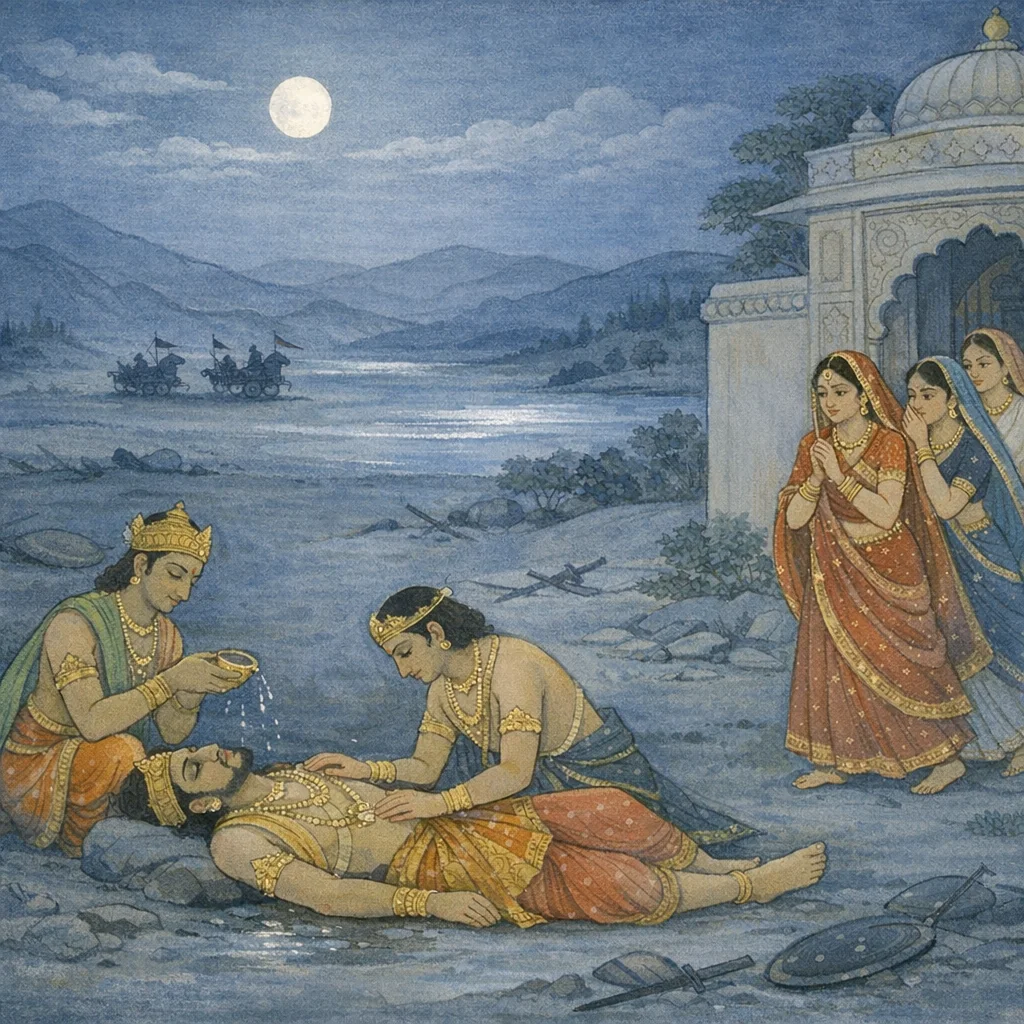
Janamejaya queries Vaiśaṃpāyana about the Kauravas’ actions after Karṇa’s fall. The narration outlines Duryodhana’s grief and temporary collapse, followed by a renewed decision to continue engagement, culminating in the appointment of Śalya as commander. The chapter then summarizes a rapid chain of outcomes: intense conflict between the armies; Śalya’s fall at the hands of Dharmarāja; Duryodhana’s retreat to a fearsome lake and subsequent defeat by Bhīmasena after being called out; and the night violence by the remaining three chariot-warriors against the Pāñcāla forces. The scene shifts to the capital: Saṃjaya arrives in distress, enters the royal residence, and reports extensive losses across regions and ranks, including the fall of Śalya and the defeat of Duryodhana. Dhṛtarāṣṭra, Vidura, and Gāndhārī with the Kuru women collapse in grief; attendants attempt revival with water and fanning; Dhṛtarāṣṭra regains partial composure, dismisses the women and friends, and is consoled verbally by Vidura and Saṃjaya as the chapter closes.
Chapter Arc: धृतराष्ट्र के दरबार में संजय का वचन फिर उठता है—पाण्डवों का बल उदीर्यमाण है, और सुयोधन के सामने ‘प्राप्तकाल’ आ खड़ा हुआ है; शेष बचे योद्धाओं की गिनती स्वयं युद्ध का शोकगीत बन जाती है। → दुर्योधन पाण्डव-बल को बढ़ता देख कर कौरव-पक्ष के लिए उपाय पूछता-तौलता है; उधर कथावाचक-परम्परा में जिज्ञासा भी तीव्र होती है—‘पूर्वजों के महत् चरित’ को सुनने की तृष्णा (श्रोता की) कथा को आगे धकेलती है। युद्धभूमि पर दिशाओं-दिशाओं के वीरों के नाश का वर्णन फैलता है—पूर्व, दक्षिण, उत्तर, पश्चिम सब ओर क्षय। → महाधनुर्धर दुर्योधन के हत होने पर (उसके बाद) शेष बचे रथी रात के उन्माद में पांचाल-सोमकों पर टूट पड़ते हैं; और फिर ‘पतित’ को देख बान्धवों का जल-छिड़काव, उपचार, और स्त्रियों का बाहर निकलना—विजय नहीं, केवल पतन का दृश्य शिखर बनता है। → विदुर काँपते हुए स्त्रियों को धीरे-धीरे विदा करते हैं; संजय धृतराष्ट्र को दीन, रोदन-आतुर अवस्था में देखता है—दरबार का केंद्र अब नीति या रण नहीं, शोक और शेष-गणना है: दोनों पक्षों की अक्षौहिणियों में से बहुत थोड़े रथी ही बचे। → रात के संहार के बाद शेष बचे योद्धाओं और शोकाकुल हस्तिनापुर के आगे अगला प्रश्न लटकता है—अब नेतृत्व किसके हाथ, और यह शेष-युद्ध किस दिशा में मुड़ेगा?
Shlokas
Verse 1
-- दक्षिण भारतीय पाठसे लिये गये. १२७५॥ . (२८ ) ३८॥ १६४ कर्णपर्व की कुल श्लोक-संख्या ७५५०४।-- शीफका+ (0 आज आस - 'सर्वलोकानुचर:' का यह अर्थ भी हो सकता है कि सब लोग उसके अनुचर हो जाते हैं। ॥ ७० श्रीपरमात्मने नम: ।।
Janamejaya said: “O Brahmin, when Karṇa had thus been struck down in battle by Savyasācin (Arjuna), what did the Kurus who remained in only small number do then?”
Verse 2
उदीर्यमाणं च बलं॑ दृष्टवा राजा सुयोधन: । पाण्डवै: प्राप्तकालं च किं प्रापद्यत कौरव:,पाण्डवोंका बल बढ़ता देखकर कुरुवंशी राजा दुर्योधनने उनके साथ कौन-सा समयोचित बर्ताव करनेका निश्चय किया?
Janamejaya asked: Seeing the Pāṇḍavas’ strength rising, what timely course of action did King Suyodhana (Duryodhana), the Kaurava, decide upon?
Verse 3
एतदिच्छाम्यहं श्रोतुं तदाचक्ष्व द्विजोत्तम । न हि तृप्यामि पूर्वेषां शृण्वानश्वरितं महत्
Janamejaya said: “This is what I wish to hear—tell it to me, O best of Brahmins. For I do not grow satisfied while listening to the great and wondrous deeds of my forefathers; therefore, describe it in full.”
Verse 4
वैशम्पायन उवाच ततः कर्णे हते राजन् धार्तराष्ट्र: सुयोधन: । भृशं शोकार्णवे मग्नो निराश: सर्वतो5भवत्
Vaiśampāyana said: Then, O King, when Karṇa had been slain, Suyodhana (Duryodhana), the son of Dhṛtarāṣṭra, sank deeply into an ocean of grief and became hopeless on every side.
Verse 5
हा कर्ण हा कर्ण इति शोचमान: पुनः पुनः । कृच्छात् स्वशिबिरं प्राप्तो हतशेषै्न॑पैः सह,हा कर्ण! हा कर्ण!” ऐसा कहकर बारंबार शोक ग्रस्त हो मरनेसे बचे हुए नरेशोंके साथ वह बड़ी कठिनाईसे अपने शिबिरमें आया
Vaiśampāyana said: Crying again and again, “Alas, Karṇa! Alas, Karṇa!”, and overwhelmed with grief, he reached his own camp only with great difficulty, accompanied by those kings who had survived the slaughter.
Verse 6
स समाथ्वास्यमानो5पि हेतुभि: शास्त्रनिश्चितै: । राजभिननलभरच्छर्म सूतपुत्रवर्धं स््मरन्
Vaiśampāyana said: Though the kings tried to console him with reasons firmly grounded in the teachings of the śāstras, he could not find peace; for, remembering the slaying of the charioteer’s son, his mind would not settle.
Verse 7
स दैवं बलवन्मत्वा भवितव्यं च पार्थिव: । संग्रामे निश्चयं कृत्वा पुनर्युद्धाय निर्यया
Considering fate (daiva) and what must inevitably occur (bhavitavya) to be overpowering, the king made a firm resolve in the midst of battle and set out once again to fight—choosing to continue the war despite the grim moral and human cost implied by such fatalism.
Verse 8
शल्यं सेनापतिं कृत्वा विधिवद् राजपुड़व: । रणाय निर्ययौ राजा हतशेषैनपै: सह
Vaiśaṃpāyana said: Having duly appointed Śalya as commander-in-chief, the Pāṇḍava king set out for battle, accompanied by the surviving kings—those who remained after the great slaughter.
Verse 9
नृपश्रेष्ठ राजा दुर्योधन शल्यको विधिपूर्वक सेनापति बनाकर मरनेसे बचे हुए राजाओंके साथ युद्धके लिये निकला ।।
Vaiśaṃpāyana said: Then a fiercely tumultuous battle erupted between the armies of the Kurus and the Pāṇḍavas—O best of the Bharatas—terrible like the legendary war between gods and demons.
Verse 10
ततः शल्यो महाराज कृत्वा कदनमाहवे । ससैन्यो5थ स मध्याल्ले धर्मराजेन घातित:,महाराज! तत्पश्चात् सेनासहित शल्य युद्धमें बड़ा भारी संहार मचाकर मध्याह्नकालमें धर्मराज युधिष्ठिरके हाथसे मारे गये
Vaiśampāyana said: Then, O great king, Śalya—after causing a dreadful slaughter in the battle—was, together with his forces, slain at midday by Dharmarāja (Yudhiṣṭhira).
Verse 11
ततो दुर्योधनो राजा हतबन्धू रणाजिरात् । अपसृत्य हृदं घोरं विवेश रिपुजाद भयात्,तदनन्तर राजा दुर्योधन अपने भाइयोंके मारे जानेपर समरांगणसे दूर जाकर शत्रुके भयसे भयंकर तालाबमें घुस गया
Then King Duryodhana, his kinsmen and brothers slain upon the field, withdrew from the battle. Overcome by fear of the enemy, he entered a dreadful lake—no deed of valor, but a desperate retreat as his cause collapsed in both dharma and war.
Verse 12
अथापराल्नि तस्याह्वः परिवार्य सुयोधन: । हृदादाहूय युद्धाय भीमसेनेन पातितः,इसके बाद उसी दिन अपराहक्लकालमें दुर्योधनपर घेरा डालकर उसे युद्धके लिये तालाबसे बुलाकर भीमसेनने मार गिराया
Vaiśampāyana said: Later that same day, Suyodhana (Duryodhana) was surrounded on every side. Summoned out from the lake to fight, he was struck down by Bhīmasena—bringing the long-brewing conflict to a grim culmination through a decisive, yet ethically fraught, act of war.
Verse 13
तस्मिन् हते महेष्वासे हतशिष्टास्त्रयो रथा: । संरम्भान्निशि राजेन्द्र जघ्नु: पांचालसोमकान्
Vaiśampāyana said: When that great archer had been slain, the three surviving chariot-warriors—Kripācārya, Kṛtavarmā, and Aśvatthāmā—driven by furious rage, struck down the Pāñcālas and the Somakas in the night while they lay asleep. The verse shows how grief and wrath, unrestrained by dharma, turn both victory and defeat into moral collapse, as violence spills beyond the battlefield and breaches warrior ethics.
Verse 14
ततः पूर्वाह्नसमये शिबिरादेत्य संजय: । प्रविवेश पुरीं दीनो दु:खशोकसमन्वित:,तत्पश्चात् पूर्वाह्लकालमें दुःख और शोकमें डूबे हुए संजयने शिबिरसे आकर दीनभावसे हस्तिनापुरमें प्रवेश किया
Then, in the forenoon, Sañjaya came from the military camp and entered the city, dejected and weighed down by grief and sorrow—his very bearing proclaiming the heavy tidings he carried. The verse shows how inner anguish appears outwardly, foreshadowing the moral and emotional aftermath of war.
Verse 15
स प्रविश्य पुरी सूतो भुजावुच्छित्य दु:खित: । वेपमानस्ततो राज्ञ: प्रविवेश निकेतनम्,पुरीमें प्रवेश करके दोनों बाँहें ऊपर उठाकर दुःखमग्न हो काँपते हुए संजय राजभवनके भीतर गये
Having entered the city, the charioteer Sañjaya, overwhelmed with grief, raised both his arms aloft; then, trembling, he went into the king’s residence. The gesture and his shaking body signal the moral weight of the calamity he is about to report, as war’s devastation bears down on ruler and messenger alike.
Verse 16
रुरोद च नरव्याप्र हा राजन्निति दुःखित: । अहो बत विनष्टा: सम निधनेन महात्मन:
Overcome with grief, he wept and cried, “O tiger among men, O King!” Then he lamented, “Alas! With the death of that great-souled one, we are as good as destroyed.”
Verse 17
विधिश्व बलवानत्र पौरुषं तु निरर्थकम् | शक्रतुल्यबला: सर्वे यथावध्यन्त पापडवै:
Vaiśampāyana said: “In this world it is fate—the ordained course—that proves strongest; mere human effort, by itself, is futile. For although all your sons were as mighty as Indra, they were nonetheless slain by the Pāṇḍavas.”
Verse 18
दृष्टवैव च पुरे राजज्जन: सर्व: स संजयम् । क्लेशेन महता युक्त सर्वतो राजसत्तम
Vaiśampāyana said: “O King, as soon as all the people in the city saw Sañjaya, they were struck on every side by great distress—so grievous was the burden he bore, and so ominous his arrival in the wake of war.”
Verse 19
रुरोद च भृशोद्धिग्नो हा राजन्निति विस्वरम् | आकुमारं नरव्याप्र तत्र तत्र समन््ततः
Vaiśampāyana said: Overwhelmed with intense distress, he wept loudly, crying, “Alas, O king!” O tiger among men, he lamented thus again and again, all around.
Verse 20
आर्तनादं ततश्षक्रे श्रुव्वा विनिहतं नूपम् राजन! नृपश्रेष्ठ! हस्तिनापुरके सभी लोग संजयको सर्वथा महान् क्लेशसे युक्त देखकर अत्यन्त उद्विग्न हो “हा राजन्!' ऐसा कहते हुए फ़ूट-फ़ूटकर रोने लगे। नरव्याप्र! वहाँ चारों ओर बच्चोंसे लेकर बूढ़ोंतक सब लोग राजाको मारा गया सुन आर्तनाद करने लगे || १८-१९ $ || धावतश्चाप्यपश्यामस्तत्र तान् पुरुषर्षभान्
Vaiśampāyana said: Hearing the anguished outcry that the king had been slain, O Indra among kings, O best of rulers, all the people in Hastināpura—seeing Sañjaya utterly overwhelmed by great distress—became deeply shaken and, crying “Alas, O King!”, broke down in bitter weeping. O tiger among men, throughout the city, from children up to the aged, everyone, on hearing that the king had been killed, raised a wail of lamentation. And as they ran about, we also saw there those bull-like heroes.
Verse 21
तथा स विदह्वल: सूत: प्रविश्य नृपतिक्षयम्
Vaiśampāyana said: Thus the charioteer, shaken and distraught, entered the king’s residence—bearing the weight of grim tidings and the moral strain that war lays upon those who must report its consequences.
Verse 22
तथा चासीनमनघं समनन््तात् परिवारितम्
And he beheld that blameless one seated, surrounded on every side—an image of unimpeached conduct held in the midst of attendants and onlookers, as the war’s grim duties pressed upon all.
Verse 23
स््नुषाभिर्भरतश्रेष्ठ गान्धार्या विदुरेण च । तथान्यैश्न सुहृद्धिश्न ज्ञातिभिश्व हितैषिभि:
Vaiśampāyana said: O best of the Bharatas, (Dhṛtarāṣṭra was accompanied) by his daughters-in-law, by Gāndhārī, and by Vidura as well; and likewise by other well-wishing friends and kinsmen devoted to his good—those who stood by him in counsel and care amid the ruin brought by war.
Verse 24
तमेव चार्थ ध्यायन्तं कर्णस्य निधन प्रति । भरतश्रेष्ठ! वे निष्पाप नरेश अपनी पुत्रवधुओं, गान्धारी, विदुर तथा अन्य हितैषी सुहृदों एवं बन्धु-बान्धवोंद्वारा सब ओरसे घिरे हुए बैठे थे और कर्णके मारे जानेसे होनेवाले परिणामका चिन्तन कर रहे थे | २२-२३ $ ।।
Vaiśampāyana said: O best of the Bharatas! The blameless kings sat surrounded on every side by their daughters-in-law, by Gāndhārī, by Vidura, and by other well-wishing friends and kinsmen, reflecting on the consequences that would follow from Karṇa’s death. Then Sañjaya, his mind weighed down with grief, spoke to King Janamejaya as though weeping, in a voice unsteady with doubt: “O tiger among men, O best of the Bharatas! I am Sañjaya. Salutations to you.”
Verse 25
नातिद्ृष्टमना: सूतो वाक्यसंदिग्धया गिरा | संजयो<हं नरव्यात्र नमस्ते भरतर्षभ
Vaiśampāyana said: The charioteer Sañjaya, his mind downcast, spoke through tears in words that faltered with uncertainty: “O tiger among men, O bull among the Bharatas—O Janamejaya— I am Sañjaya. I bow to you.”
Verse 26
मद्राधिपो हत: शल्य: शकुनि: सौबलस्तथा । उलूक: पुरुषव्याप्र कैतव्यो दृढविक्रम:,'पुरुषसिंह! मद्रराज शल्य, सुबलपुत्र शकुनि तथा जुआरीका पुत्र सुदृढ़पराक्रमी उलूक --ये सब-के-सब मारे गये
Vaiśampāyana said: “O tiger among men, the lord of Madra—Śalya—has been slain; so too Śakuni, the son of Subala. Ulūka as well, the strong and valiant son of the gambler (Śakuni), has also fallen.”
Verse 27
संशप्तका हता: सर्वे काम्बोजाश्व॒ शकैः सह । म्लेच्छाक्ष पर्वतीयाक्ष यवना विनिपातिता:,“समस्त संशप्तक वीर, काम्बोज, शक, म्लेच्छ, पर्वतीय योद्धा और यवनसैनिक मार गिराये गये
Vaiśampāyana said: “All the Saṁśaptakas were slain—along with the Kāmbojas and the Śakas. The Mlecchas, the mountain-dwellers, and the Yavanas too were struck down and fell in battle.”
Verse 28
प्राच्या हता महाराज दाक्षिणात्याश्व सर्वश:ः । उदीच्याश्न हता:ः सर्वे प्रतीच्याक्ष नरोत्तमा:
Vaiśampāyana said: “O King, the warriors of the eastern region have been slain; the southerners have been utterly destroyed; and all the men of the north, as well as the best among the westerners, have been killed.”
Verse 29
राजानो राजपुत्राश्न सर्वे ते निहता नूप । दुर्योधनो हतो राजा यथोक्तं पाण्डवेन ह
Vaiśampāyana said: “O king, all those rulers and royal princes have been slain. King Duryodhana too has been killed—just as the Pāṇḍava had declared.”
Verse 30
धृष्टद्युम्नो महाराज शिखण्डी चापराजित:,“महाराज! नरव्याप्र नरेश! धृष्टद्युम्न, अपराजित वीर शिखण्डी, उत्तमौजा, युधामन्यु, प्रभद्रकगण, पांचाल और चेदिदेशीय योद्धाओंका भी संहार हो गया”
Vaiśampāyana said: “O great king, the warrior Dhṛṣṭadyumna and the unconquered hero Śikhaṇḍī—along with Uttamaujā, Yudhāmanyu, the band of the Prabhadrakas, and the fighters of the Pāñcālas and the Cedi land—have all been slain.”
Verse 31
उत्तमौजा युधामन्युस्तथा राजनू् प्रभद्रका: । पज्चालाश्च नरव्याप्र चेदयश्न निषूदिता:
Vaiśampāyana said: “O king, the valiant Uttamaujā and Yudhāmanyu, and likewise the Prabhadrakas—along with the Pāñcālas and the Cedi warriors, O tiger among men—have been slain.”
Verse 32
तव पुत्रा हता: सर्वे द्रौपदेयाश्व भारत । कर्णपुत्रो हत: शूरो वृषसेन: प्रतापवान्,“भारत! आपके तथा द्रौपदीके भी सभी पुत्र मारे गये। कर्णका प्रतापी एवं शूरवीर पुत्र वृषसेन भी नष्ट हो गया
Vaiśampāyana said: “O Bhārata (Dhṛtarāṣṭra), all your sons have been slain, and the sons of Draupadī as well. Karṇa’s heroic son Vṛṣasena, renowned for his prowess, has also fallen.”
Verse 33
नरा विनिहता: सर्वे गजाश्न विनिपातिता: । रथिनश्न नरव्याप्र हयाश्व निहता युधि,“नरव्याप्र! युद्धस्थलमें समस्त पैदल मनुष्य, हाथीसवार, रथी और घुड़सवार भी मार गिराये गये
Vaiśampāyana said: “O tiger among men, all the foot-soldiers were slain; the elephant-warriors too were brought down. The chariot-fighters and the horsemen likewise were killed in the battle.”
Verse 34
किज्चिच्छेषं च शिबिरं तावकानां कृतं प्रभो । पाण्डवानां कुरूणां च समासाद्य परस्परम्,'प्रभो! पाण्डवों तथा कौरवोंमें परस्पर संघर्ष होकर आपके पुत्रों तथा पाण्डवोंके शिबिरमें किंचिन्मात्र ही शेष रह गया है
Vaiśampāyana said: “O lord, after the Pandavas and the Kurus closed with one another in mutual combat, only a small remnant of the encampments remained—both of your sons’ host and of the Pandavas.”
Verse 35
प्राय: स्त्रीशेषम भवज्जगत् कालेन मोहितम् । सप्त पाण्डवत: शेषा धार्तराष्ट्रास्त्रयो रथा:
Vaiśampāyana said: “In truth, as Time’s delusion spread, the world has been left mostly with women as survivors. On the Pāṇḍavas’ side, seven remain; among the Dhṛtarāṣṭras, only three chariot-warriors have been spared.”
Verse 36
ते चैव भ्रातर: पञ्च वासुदेवो5थ सात्यकि: । कृपश्च कृतवर्मा च द्रौणिश्व जयतां वर:
Vaiśaṃpāyana said: “On that side, the five brothers—the Pāṇḍavas—along with Vāsudeva (Śrī Kṛṣṇa) and Sātyaki remained. On this side, Kṛpa, Kṛtavarmā, and Aśvatthāmā, Droṇa’s son—foremost among victorious warriors—were still alive.”
Verse 37
तथाप्येते महाराज रथिनो नृपसत्तम । अक्षौहिणीनां सर्वासां समेतानां जनेश्वर
Vaiśampāyana said: “Even so, O great king—best of rulers, lord of men—these chariot-warriors stood assembled together, as though embodying the whole of the akṣauhiṇī armies.”
Verse 38
कालेन निहतं सर्व जगद् वै भरतर्षभ
Vaiśaṃpāyana said: “O bull among the Bharatas, in the course of time the entire world is struck down—time brings all things to their end.”
Verse 39
वैशम्पायन उवाच एतच्छुत्वा वच: क्रूरं धृतराष्ट्रो जनेश्वर:
Vaiśaṃpāyana said: “Hearing these harsh words, Dhṛtarāṣṭra—the lord of men—was deeply shaken.”
Verse 40
तस्मिन् निपतिते भूमौ विदुरोडपि महायशा:
Vaiśaṃpāyana said: “When he had fallen upon the earth, Vidura too—renowned for his great fame and integrity—was overcome by grief.”
Verse 41
निपपात महाराज शोकव्यसनकर्षित: । महाराज! उनके गिरते ही महायशस्वी विदुरजी भी शोकसंतापसे दुर्बल हो धड़ामसे गिर पड़े || ४० $ ।।
Vaiśampāyana said: O king, overcome and worn down by grief and calamity, he fell to the ground. As soon as he fell, the illustrious Vidura too—his strength broken by sorrow and burning anguish—collapsed heavily. Gandhārī, and all the women of the Kuru house, hearing the cruel words, suddenly sank upon the earth; the members of the royal family, their awareness overwhelmed, fell down and began to wail. They appeared like figures painted upon a vast canvas—motionless, struck into helplessness by grief.
Verse 42
पतिता: सहसा भूमौ श्रुत्वा क्रूरं वचस्तदा । निःसंज्ञं पतितं भूमी तदासीदू राजमण्डलम्
Hearing those harsh words, they suddenly fell to the ground. At that moment the royal circle lay collapsed and senseless upon the earth—overwhelmed, as if life and resolve had been struck down together.
Verse 43
कृच्छेण तु ततो राजा धृतराष्ट्री महीपति:
Then, with great difficulty, the king—Dhṛtarāṣṭra, lord of the earth—managed to proceed and to speak, showing how heavily the war and its consequences weighed upon him.
Verse 44
शनैरलभत प्राणान् पुत्रव्यसनकर्शित: । तत्पश्चात् पुत्रशोकसे पीड़ित हुए पृथ्वीपति राजा धृतराष्ट्रमें बड़ी कठिनाईसे धीरे-धीरे प्राणोंका संचार हुआ ।।
Vaiśampāyana said: Worn down by the calamity that had befallen his sons, Dhṛtarāṣṭra slowly regained his breath with great difficulty. Then, tormented by grief for his children, the lord of the earth gradually returned to consciousness. But as soon as he came to his senses, he trembled in extreme anguish; looking around in every direction, he addressed Vidura: “Learned one—wise Vidura, ornament of the Bhāratas—now you alone are the complete refuge of me, bereft of sons and left without support.” Having said this, he again lost consciousness and fell to the ground.
Verse 45
उदीक्ष्य च दिश: सर्वा: क्षत्तारं वाक्यमब्रवीत् विद्वत क्षत्तर्महाप्राज्ञ त्वं गतिर्भरतर्षभ
Vaiśampāyana said: Having looked in every direction, Dhṛtarāṣṭra addressed Vidura (the Kṣattṛ): “O learned one, O Kṣattṛ, O greatly wise man, O bull among the Bhāratas—now you alone are the refuge and support for me, bereft of sons and left without protection.” Having spoken thus, the king, overwhelmed by grief, again lost consciousness and fell to the earth.
Verse 46
ममानाथस्य सुभशं पुत्रैहीनस्य सर्वश: । एवमुक्क्त्वा ततो भूयो विसंज्ञो निषपषात ह
Vaiśampāyana said: “Now, bereft of my sons and utterly without protection, you are wholly my refuge.” Having spoken thus, the king again lost consciousness and collapsed to the ground. The scene underscores the moral and emotional ruin that follows adharma: when kin are destroyed by one’s own choices and attachments, even royal power cannot prevent helplessness, and the wise (Vidura) becomes the last shelter.
Verse 47
तं तथा पतितं दृष्टवा बान्धवा ये5स्य केचन । शीतैस्ते सिषिचुस्तोयैर्विव्यजुर्व्पयजनैरपि
Vaiśampāyana said: Seeing him fallen in that condition, whatever kinsmen of his were present there sprinkled him with cool water and also fanned him with hand-fans—an urgent, compassionate attempt to revive and comfort a stricken warrior amid the harshness of war.
Verse 48
स तु दीर्घेण कालेन प्रत्याश्वस्तो नराधिप: । तूष्णीं दथ्यौ महीपाल: पुत्रव्यसनकर्शित:
After a long time, the king at last regained some composure. Yet the ruler of the earth, worn down by the calamity that had befallen his son, sat in silence, absorbed in heavy thought—his grief still pressing upon his mind.
Verse 49
फिर बहुत देरके बाद जब राजा धुृतराष्ट्रको होश हुआ, तब वे पुत्रशोकसे पीड़ित हो चिन्तामग्न हो गये ।।
After a long while, when King Dhṛtarāṣṭra regained consciousness, he became overwhelmed by grief for his sons and sank into anxious brooding. Sighing like a serpent shut inside a jar, O lord of the people, he drew long, labored breaths. Seeing the king in such distress, Sañjaya too wept there.
Verse 50
तथा सर्वा: स्त्रियश्वैव गान्धारी च यशस्विनी । ततो दीर्घेण कालेन विदुरं वाक्यमब्रवीत्
So too did all the women, and the illustrious Gandhārī as well. Then, after a long while, she spoke these words to Vidura—marking a grave pause in which sorrow, restraint, and moral reflection gathered before counsel was finally given.
Verse 51
धृतराष्ट्रो नरश्रेष्ठ मुहामानो मुहुर्मुहुः । गच्छन्तु योषित: सर्वा गान्धारी च यशस्विनी
Vaiśampāyana said: Dhṛtarāṣṭra, best of men, again and again falling into bewilderment, commanded: “Let all the women depart, and let the illustrious Gāndhārī also go.”
Verse 52
तथेमे सुद्दद: सर्वे भ्राम्पते मे मनो भूशम् । फिर सारी स्त्रियाँ और यशस्विनी गान्धारी देवी भी फूट-फ़ूटकर रोने लगीं। नरश्रेष्ठ! तत्पश्चात् बहुत देरके बाद बारंबार मोहित होते हुए धृतराष्ट्रने विदुरसे कहा--“ये सारी स्त्रियाँ और यशस्विनी गान्धारी देवी भी यहाँसे चली जायूँ। ये समस्त सुहृद् भी अब यहाँसे पधारें; क्योंकि मेरा चित्त अत्यन्त भ्रान्त हो रहा है' ।। एवमुक्तस्तत: क्षत्ता ता: स्त्रियो भरतर्षभ
Vaiśampāyana said: “So too, all these well-wishing friends—my mind is whirling violently.” Then, after a long while, Dhṛtarāṣṭra, repeatedly sinking into bewilderment, said to Vidura: “Let all these women, and the illustrious queen Gāndhārī as well, depart from here. Let all these friends also now go away, for my mind has become utterly confused.”
Verse 53
निश्चक्रमुस्तत: सर्वा: स्त्रियो भरतसत्तम
Vaiśampāyana said: Then all the women came out, O best of the Bharatas.
Verse 54
सुहृदश्न तथा सर्वे दृष्टवा राजानमातुरम् | भरतभूषण! फिर वे सारी स्त्रियाँ और समस्त सुहृद्गण राजाको आतुर देखकर वहाँसे चले गये || ५३ $ ।। ततो नरपतिं तत्र लब्धसंज्ञं परंतप
Seeing the king in distress, all his well-wishers likewise—O ornament of the Bharatas—those women and the entire circle of friends, perceiving his agitation, withdrew from that place.
Verse 55
प्राउ्जलिनि:श्वसन्तं च त॑ नरेन्द्र मुहुर्मुहु: । समाश्वासयत क्षत्ता वचसा मधुरेण च,उस समय बारंबार लंबी साँस खींचते हुए राजा धृतराष्ट्रको विदुरजीने हाथ जोड़कर अपनी मधुर वाणीद्वारा आश्वासन दिया
Vaiśampāyana said: Seeing the king again and again draw deep, troubled breaths, Vidura—the kṣattṛa, an officer of the court—folded his hands and repeatedly reassured him, soothing him with gentle and sweet words.
Verse 203
नष्टचित्तानिवोन्मत्तानू शोकेन भृशपीडितान् । हमलोगोंने देखा कि वे नगरके श्रेष्ठ पुरुष अचेत और उन्मत्त-से होकर शोकसे अत्यन्त पीड़ित हो वहाँ दौड़ रहे हैं
Vaiśampāyana said: We saw the foremost men of the city, their minds as if lost and their conduct like the delirious, grievously tormented by sorrow, rushing about there. The scene shows how collective grief can unseat reason and dignity, revealing the human cost that follows the devastation of war.
Verse 216
ददर्श नृपतिमश्रेष्ठं प्रज्ञाचक्षुषमी श्वरम् । इस प्रकार व्याकुल हुए संजयने राजभवनमें प्रवेश करके अपने स्वामी प्रज्ञाचक्षु नृपश्रेष्ठ धृतराष्ट्रका दर्शन किया
Vaiśampāyana said: Sanjaya, shaken with anxiety, entered the royal palace and beheld his lord Dhṛtarāṣṭra—the foremost of kings, blind yet endowed with inner discernment—standing as sovereign authority amid the moral and political crisis brought on by the war.
Verse 293
भग्नसक्थो महाराज शेते पांसुषु रूषित: । “नरेश्वरर समस्त राजा और राजकुमार कालके गालमें चले गये। महाराज! जैसा पाण्डुपुत्र भीमसेनने कहा था
Vaiśampāyana said: “O great king, with his thigh shattered, he lies there upon the dust, angered and humiliated.” The line underscores the moral consequence of adharma in war: pride and wrongdoing culminate not in glory but in a fallen, dust-covered end.
Verse 386
दुर्योधन वै पुरत: कृत्वा वैरं च भारत । “भरतश्रेष्ठ) भरतनन्दन! कालने दुर्योधन और उसके वैरको आगे करके सम्पूर्ण जगत््को नष्ट कर दिया'
Vaiśampāyana said: “O Bhārata, by placing Duryodhana in the forefront—and with him the spirit of enmity—(the forces of time and fate) brought about the ruin of the whole world.” The line underscores how elevating a single leader’s hostility into a guiding principle can turn a conflict into a catastrophe that consumes all.
Verse 396
निपपात स राजेन्द्रो गतसत्त्वो महीतले । वैशम्पायनजी कहते हैं--जनमेजय! यह क्रूर वचन सुनकर राजाधिराज जनेश्वर धृतराष्ट्र प्राणहीन-से होकर पृथ्वीपर गिर पड़े
Vaiśampāyana said: O Janamejaya, on hearing those harsh words, the lord of kings Dhṛtarāṣṭra collapsed upon the earth, his vital strength seemingly gone—overwhelmed by grief and shock.
Verse 426
प्रलापयुक्त महति चित्रन्यस्तं पटे यथा । नृपश्रेष्ठ॒ उस समय वह क्रूरतापूर्ण वचन सुनकर कुरुकुलकी समस्त स्त्रियाँ और गान्धारी देवी सहसा पृथ्वीपर गिर गयीं
Vaiśampāyana said: O best of kings, on hearing those cruel words, all the women of the Kuru house—together with Queen Gāndhārī—suddenly fell to the ground. The entire royal family, losing sense and self-control, collapsed upon the earth and began to wail. They appeared like figures painted on a vast canvas—motionless, stunned by grief—showing how harsh speech in the wake of war deepens suffering and shatters restraint.
Verse 526
विसर्जयामास शनैर्वेपमान: पुन: पुन: । भरतश्रेष्ठ। उनके ऐसा कहनेपर बारंबार काँपते हुए विदुरजीने उन सब स्त्रियोंको धीरे- धीरे बिदा कर दिया
Vaiśampāyana said: “Trembling again and again, he gradually dismissed them.” In the narrative, Vidura—grief-stricken yet restrained—gently sends the women away, embodying dignified conduct amid collective sorrow.
Verse 543
अवैक्षत् संजयो दीनं रोदमानं भृशातुरम् | शत्रुओंको संताप देनेवाले नरेश! तदनन्तर होशमें आकर अत्यन्त आतुर हो दीनभावसे विलाप करते हुए राजा धृतराष्ट्रकी ओर संजयने देखा
Vaiśampāyana said: Sañjaya looked upon King Dhṛtarāṣṭra, who had regained awareness and now, overwhelmed by anguish, was weeping and lamenting in deep distress. The scene underscores the moral weight of war’s consequences: even a king, bound by attachment and past choices, is brought to helpless sorrow when the fruits of conflict ripen.
Verse 3736
एते शेषा महाराज सर्वेडन्ये निधनं गता: । “नृपश्रेष्ठ! जनेश्वर! महाराज! उभय पक्षमें जो समस्त अक्षौहिणी सेनाएँ एकत्र हुई थीं, उनमेंसे ये ही रथी शेष रह गये हैं, अन्य सब लोग कालके गालमें चले गये
Vaiśampāyana said: “O great king, these alone are the survivors; all the others have gone to their death.” In the wake of the war’s total ruin, the statement underscores the moral weight of mass violence: even vast hosts and celebrated warriors are finally reduced to a scant remainder, as time and fate consume the rest.
Frequently Asked Questions
The chapter frames a ruler’s dilemma: whether to persist in duty-bound command and engagement after catastrophic loss, balancing personal grief with the institutional obligation to maintain order and make lawful appointments.
It emphasizes disciplined governance under trauma: truthful intelligence transmission, recognition of impermanence and contingency, and the need for counsel (Vidura) to stabilize decision-making when emotions threaten collapse.
No explicit phalaśruti is presented here; the chapter functions as historiographic linkage—summarizing battlefield outcomes and documenting the ethical and psychological consequences at court within the epic’s broader moral inquiry.
Read Mahabharata in the Vedapath app
Scan the QR code to open this directly in the app, with audio, word-by-word meanings, and more.