Prapathaka 9
Pavamana
Flowing processional Pavamāna-style chant designed to mirror Soma’s streaming movement—phrases often feel ‘carried forward’ with sustained notes and cadential settling at daśati boundaries.
Indra Agni Soma (Pavamāna) Āpaḥ (Waters)
To secure the efficacy of Soma through purification (Pavamāna) then to obtain Indra’s strength and victory for the pressing/offering while Agni stabilizes the rite as protector and conduit; the Waters complete the purificatory auspice.
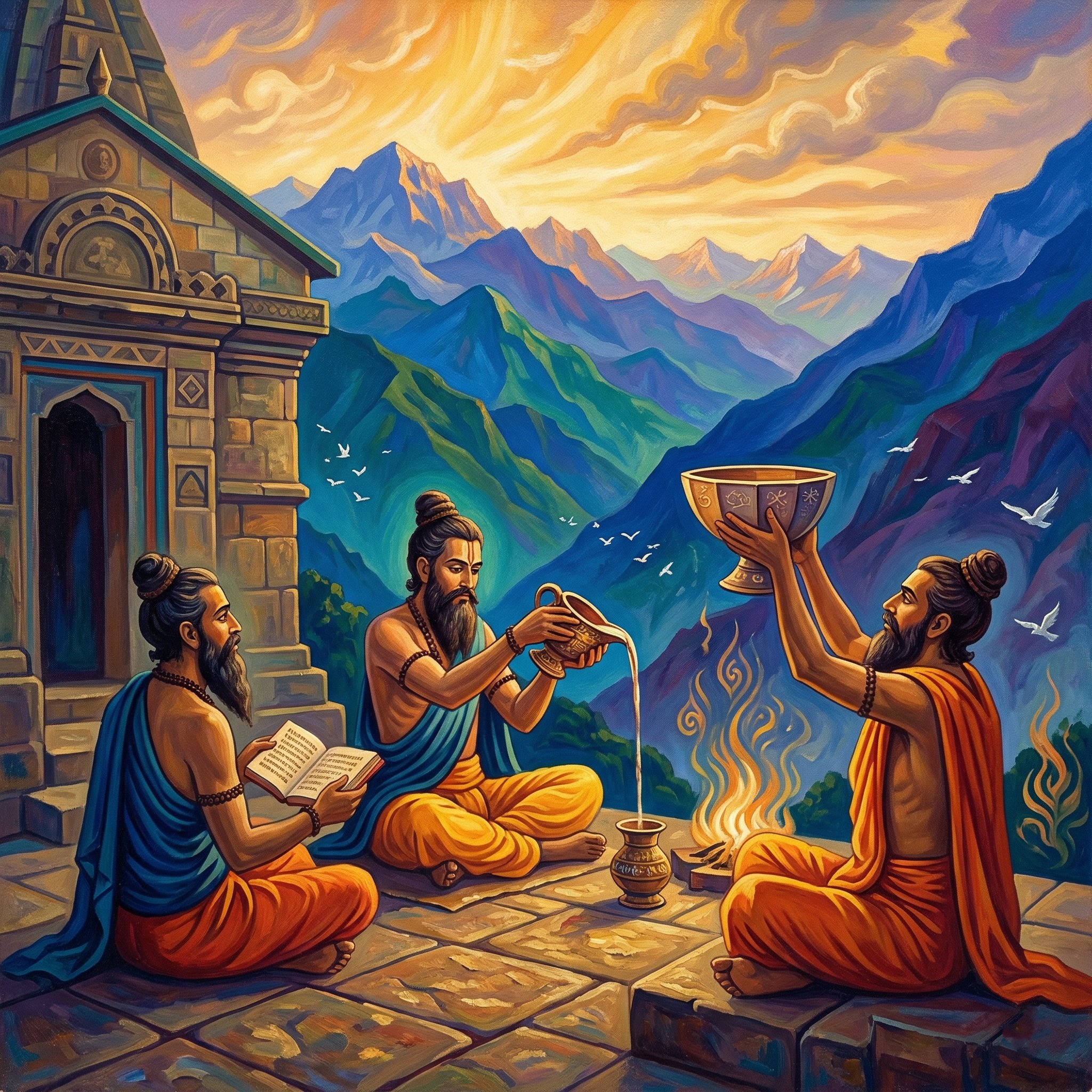
പവമാന വിഭാഗത്തിലെ ആർചികാ 4, പ്രപാഠക 9-ൽ, പിഴിഞ്ഞെടുത്ത സോമം ജീവന്തമായ ശുദ്ധീകരണധാരയായി പവിത്രം (ഫിൽറ്റർ) വഴി ഒഴുകി യജ്ഞത്തെ ശക്തിപ്പെടുത്തുന്നതിനെ ചിത്രീകരിക്കുന്ന സോമ-പവമാന ഋക്കുകളുടെ ദീർഘമായ അനുക്രമം സമാഹരിച്ചിരിക്കുന്നു. സ്തുതികൾ ആവർത്തിച്ച് സോമത്തിന്റെ ശുദ്ധീകരണത്തെ ഇന്ദ്രന്റെ വിജയം-രക്ഷ എന്നിവയ്ക്കുള്ള ബലവൽക്കരണവുമായി ബന്ധിപ്പിക്കുന്നു; കൂടാതെ കർമ്മം എല്ലാ ദിക്കുകളിലും സുരക്ഷിതമാകുന്നതിനായി അഗ്നിയുടെ ദീപ്തമായ കാവൽശക്തിയെയും ആഹ്വാനം ചെയ്യുന്നു. 18 ദശതികളിലുടനീളം, അധ്യായം കർമ്മത്തിന്റെ ആന്തര-ബാഹ്യ ശുദ്ധീകരണത്തെ—വാക്ക്, ഹവിസ്, യജമാനൻ എന്നിവയെ പവിത്രമാക്കുന്ന സോമത്തെ—ഉന്നയിച്ച്, അവസാനം ദൃഢമായ സംരക്ഷണം, വിഘ്നജയം, കിരണമയമായ കാവൽ എന്നീ വിഷയങ്ങളിലേക്കാണ് എത്തുന്നത്.
Dashatis in Prapathaka 9
Dashati 1
Pavamāna Soma’s flowing power that energizes and perfects the sacrifice
പവമാന സോമൻ പീഡനത്തിനു ശേഷം ശുദ്ധിയായി ഒഴുകി, യജ്ഞത്തിന്റെ കേന്ദ്രാർപ്പണമായി അതിനെ ശക്തിപ്പെടുത്തിയും പരിപൂർണമാക്കിയും നിലകൊള്ളുന്നു. അവന്റെ ധാരകൾ ദേവന്മാരെ അലങ്കരിക്കുകയും, സോമപാനിയായ ഇന്ദ്രനെ അവന്റെ ഗണ/മരുത്ഗണത്തോടൊപ്പം വിജയം-രക്ഷയ്ക്കായി ഉജ്ജ്വലമായി ബലപ്പെടുത്തുകയും ചെയ്യുന്നു. അഗ്നി തന്റെ വ്യാപകമായ പ്രകാശത്തോടെ ക്രതുവിനെ സമാപിപ്പിച്ച് യജ്ഞത്തെ ഫലപ്രദമാക്കുന്നു; ഓജസ്, ദർശനീയത, യജ്ഞക്രമത്തിന്റെ വിജയകരമായ ക്രമീകരണം എന്നിവയാണ് മുഖ്യധ്യാനം.
Dashati 2
Aindra praise: Indra as the pre-eminent ritual power and victorious protector invoked for strength and success
ഐന്ദ്ര സ്തുതി: യജ്ഞശക്തിയുടെ പരമാധികാരിയും വിജയകരമായ രക്ഷകനുമായ ഇന്ദ്രനെ ബലത്തിനും വിജയത്തിനുമായി വിളിക്കുന്നു. ഇന്ദ്രൻ ബ്രഹ്മൻ/ഋത്വിജൻ (യജ്ഞാധിപൻ, പവിത്ര തേജസ്) ആയി പ്രതിഷ്ഠിക്കപ്പെടുന്നു; ഗോത്രഭിദ്—ഗോവിമോചനം, ജയം, കൂട്ടാളികളുടെ ഏകീകരണം എന്നീ വിജയമുദ്രകൾ ഉയർത്തപ്പെടുന്നു. ഋതുക്രമം അനുസരിച്ച് ജ്വലിപ്പിച്ച അഗ്നി ഹവ്യം വഹിച്ച് യജ്ഞത്തെ സഫലമാക്കുന്ന ശക്തിയായി ആഹ്വാനിക്കപ്പെടുന്നു; ഉഷസ് പുതുക്കലിന്റെയും മംഗളത്തിന്റെയും കോസ്മിക് സൂചകമായി പിന്തുണയായി പ്രത്യക്ഷപ്പെടുന്നു. ശരിയായി ക്രമപ്പെടുത്തിയ യജ്ഞത്തിലൂടെ ഇന്ദ്രന്റെ ഓജസ്സും ആധിപത്യവും ഫലപ്രദമായ ‘ബ്രഹ്മൻ’ ആയി ജയം, സമൃദ്ധി, സംരക്ഷണം എന്നിവ നൽകുന്നു; യജമാനപക്ഷത്തിലെ സജാതർ/സഖായർ ഒരുമിച്ച് ധൈര്യത്തോടെ മുന്നേറാൻ പ്രേരിപ്പിക്കപ്പെടുന്നു.
Dashati 3
Aindra victory-invocation: summoning Indra’s power to remove obstacles and secure success for the rite
ഐന്ദ്ര വിജയാഹ്വാനം: സ്തോത്ര/സാമഗാനത്തിന്റെ ശബ്ദബലത്തോടെ ഇന്ദ്രന്റെ രഥശക്തിയെ വിളിച്ചു വരുത്തി, അവനെ വീരനായ സത്പതിയും മൃതീഷഹനും ആയി സ്തുതിച്ച് യാഗത്തിന് സഹായം–അനുഗ്രഹം–വിജയം നേടുക. സ്തുതിയേ തന്നെ ക്ഷണമാക്കി ദൈവരഥത്തെ ‘തിരിച്ചു കൊണ്ടുവരിക’, അന്തരായങ്ങളെ നശിപ്പിച്ച് യാഗത്തെ സംരക്ഷിക്കുക. സസ്യങ്ങളിലും ജലങ്ങളിലും ഗൂഢമായി നിത്യജനിക്കുന്ന യാഗാഗ്നിയായ അഗ്നിയെ സ്മരിച്ചു, കര്മ്മത്തിന് കോസ്മിക പിന്തുണ സ്ഥാപിക്കുക. അവസാനം മരുത്, വരുണ, ആദിത്യര്, സമസ്ത ദേവഗണം എന്നിവരുടെ ‘ഘോഷ’ത്തോടെ ജയഘോഷം ഉയർത്തി, യാഗത്തെ ചുറ്റിയുള്ള രക്ഷാ–വിജയശക്തി വർധിപ്പിക്കുക.
Dashati 4
Agni’s radiant ignition and protective power within the sacrifice
യാഗത്തിൽ അഗ്നിയുടെ ദീപ്തമായ ജ്വലനവും രക്ഷാശക്തിയും—കവിയായി (യാഗജ്ഞൻ) ഹവ്യം വേഗത്തിൽ വഹിക്കുന്നവൻ; പവതേ, ശുക്ര, വി രാജതി എന്നീ ശുദ്ധീകരണ–പ്രകാശീകരണ പ്രതീകങ്ങളിൽ തിളങ്ങുന്നവൻ. അവന്റെ ഊർജം ഇന്ദ്രന്റെ യാഗഭാഗത്തോടു ചേർത്ത്, അഗ്നി–ഇന്ദ്ര സംയുക്ത പങ്ക് സ്ഥാപിച്ച് ഹവിർഭാഗം അർപ്പിക്കുന്നു. അവസാനം മരുതുകളുടെ സഹായത്തോടെ വൈരശക്തികളെ തമസ്സാൽ (മോഹം/കുഴപ്പം) മറച്ച് നിർവീര്യമാക്കി, ഋതത്തെ കാക്കുന്ന ദിവ്യബുദ്ധിയായി അഗ്നിയെ സിംഹാസനാരൂഢനാക്കുകയാണ് ലക്ഷ്യം.
Dashati 5
Agni as the heart-delighting, ever-wakeful power who impels and protects the sacrifice
അഗ്നിയെ ഹൃദയം ആനന്ദിപ്പിക്കുന്ന, എപ്പോഴും ജാഗരൂകനായ ശക്തിയായി സ്തുതിച്ച്—സ്തോമം കൊണ്ട് കുതിരയെ ഉത്തേജിപ്പിക്കുന്നതുപോലെ അവന്റെ ക്രതു (യജ്ഞബുദ്ധി)യെ പ്രേരിപ്പിച്ച് യാഗത്തെ ഫലപ്രദമാക്കി സമൃദ്ധി വരുത്തുക. ‘ജാഗര’ എന്ന ദൈവഗുണം ഋക്കും സാമനും തേടി ചേർന്നുവരുന്നതായി, സോമൻ ജാഗരൂക ദൈവസന്നിധിയോട് സ്വമേധയാ അർപ്പണവും സൗഹൃദബന്ധവും പുലർത്തുന്നതായി പ്രഖ്യാപിക്കുന്നു. അവസാനം അപ്വയെ അപോത്രോപായിക സംരക്ഷണത്തിന് നിയോഗിച്ച്—ഇരുട്ടിലൂടെ ശത്രുക്കളെ പിന്തിരിപ്പിക്കുകയും കത്തുന്ന ദുഃഖം/വൈരം ദഹിപ്പിച്ച് ശമിപ്പിക്കുകയും ചെയ്യാൻ ആജ്ഞാരൂപത്തിൽ അപേക്ഷിക്കുന്നു.
Dashati 6
Agni as dawn-invoker and protector, turning ritual fire into safe passage through danger
ഈ ദശതിയിൽ പ്രഭാതത്തിൽ (ഉഷർബുധ) അഗ്നിയെ ആഹ്വാനിച്ച്, ഹവ്യവാഹനനായി ദേവന്മാരെ യജ്ഞത്തിലേക്ക് കൊണ്ടുവരുന്നവനായി, അപകടങ്ങളിൽ സുരക്ഷിതമായ വഴി നൽകുന്ന രക്ഷകനായി സ്തുതിക്കുന്നു. ഇന്ദ്രനെ ശത്രുക്കളെ നിർവീര്യമാക്കി ദോഷവും അഘവും അകറ്റി കൊണ്ടുപോകാൻ വിളിക്കുന്നു; ബ്രഹ്മണസ്പതി (ബൃഹസ്പതി)യും അദിതിയും ദിനംപ്രതി ശർമം—അടരാത്ത സുരക്ഷയും അഭയവും—നൽകണമെന്നു പ്രാർത്ഥിക്കുന്നു. ഋതക്രമത്തിൽ അഗ്നിയെ ശരിയായി ജ്വലിപ്പിച്ച് വിളിക്കുമ്പോൾ ഭീഷണി ക്ഷേമമായി മാറുന്നു; അമ്പും പിന്തുടർച്ചയും പോലുള്ള യുദ്ധചിത്രങ്ങൾ യാഗപരമായ സംരക്ഷണത്തിന്റെ രൂപമായി പുനർവ്യാഖ്യാനിക്കപ്പെടുന്നു.
Dashati 7
Aindra praise: awakening and yoking Indra’s power through expertly metered chant for victory and effective sacrifice
ഇന്ദ്രനെ ഉണർത്തി യാഗസഭയിൽ വിജയംയും നിർണായക ബലവും ലഭിക്കാനായി അവന്റെ ശക്തിയെ ‘യോജിപ്പിക്കുന്ന’ ഐന്ദ്രസ്തുതി. ശരിയായി ബന്ധിപ്പിച്ച വാചും ഛന്ദസ്സുകളും—ഗായത്രി, ത്രിഷ്ടുഭ്, ജഗതി—സ്തോത്രത്തിന് ശുദ്ധരൂപവും ഫലപ്രാപ്തിയും നൽകുന്ന പവിത്രശക്തിയായി പ്രവർത്തിക്കുന്നു. കാവ്യരൂപത്തിലുള്ള അത്ഭുതസ്തുതി ഇന്ദ്രന്റെ അപ്രതിരോധ്യമായ ഭുജബലത്തെ ഉന്മേഷിപ്പിച്ച് അസുരീയ പ്രതിബന്ധങ്ങളെ കീഴടക്കി, ‘ഇന്നും പഴയപോലെ’ ക്രമസ്ഥാപകമായ ജയത്തെ യാഗത്തിൽ സാക്ഷാത്കരിക്കുന്നു.
Dashati 8
Aindra protection and victory: divine light as inner armor and the defeat of hostile forces
ഐന്ദ്ര സംരക്ഷണവും ജയവും: ദിവ്യജ്യോതി അന്തർകവചമായി നിലകൊണ്ട് വൈരശക്തികളെ പരാജയപ്പെടുത്തുന്നു. അഗ്നി–ഇന്ദ്ര–സൂര്യൻ ഒരേ ജ്യോതിയെന്ന മന്ത്ര-ഐക്യത്തിൽ ആരംഭിച്ച്, ഉള്ളിലും പുറത്തുമായി വരുന്ന ആക്രമകരെതിരെയുള്ള അപോത്രോപായിക പ്രാർത്ഥന ശക്തമാകുന്നു. അഗ്നി ശുദ്ധീകരിച്ച് വൈരത്വം പുറത്താക്കട്ടെ; ഇന്ദ്രൻ ശത്രുക്കളെ സംഹരിച്ചു വിജയം നൽകട്ടെ; സൂര്യൻ പ്രത്യക്ഷപ്രകാശമായി സ്ഥാപിതനാകട്ടെ; വിശ്വേദേവാഃ വധകരായി വരുന്നവരെ ആശയക്കുഴപ്പത്തിലാക്കട്ടെ. മന്ത്രം തന്നെ ബ്രഹ്മ-വർമൻ (കവചം)യും ശർമൻ (ആശ്രയം)യും ആണെന്ന ഉറച്ച ആശ്വാസത്തോടെ സമാപിക്കുന്നു.
Dashati 9
Aindra victory-invocation: Indra summoned as the fierce, far-ranging protector who smites foes and grants Soma-born prosperity
ഐന്ദ്ര വിജയം-ആഹ്വാനം: ദൂരത്തുനിന്നും വേഗത്തിൽ എത്തുന്ന, ഉഗ്രരക്ഷകനായ ഇന്ദ്രനെ യജ്ഞത്തിലേക്ക് വിളിക്കുന്നു. അവന്റെ വജ്ര/പവി എന്ന മൂർച്ചയുള്ള ആയുധം ശത്രുക്കളെയും ആക്രമകരെയും പിളർത്തി നശിപ്പിച്ച് യജ്ഞത്തെയും യജമാനനെയും കാക്കട്ടെ; സോമം പിഴിയുന്നവന് ഗോ-അശ്വാദി സമൃദ്ധിയും ലാഭങ്ങളും ‘പാൽ കറക്കുന്നതുപോലെ’ നൽകട്ടെ. ഇടയിൽ സൂര്യൻ/ആദിത്യൻ രാജാധിരാജനായി—വ്യാപകവും അജേയവുമായ പ്രകാശമായി—സ്തുതിക്കപ്പെടുന്നു; യാഗത്തിന്റെ ചുറ്റും ഋത/ക്രമവും മംഗളവും സ്ഥിരപ്പെടുത്തുന്നവനായി. സ്തോത്രം (സൂനൃതാ)യും സോമപീഡനവും ദൈവശക്തിയെ യാഗത്തിലേക്ക് ആകർഷിച്ച് തടസ്സങ്ങൾ നീക്കി, രക്ഷയും സമ്പത്തും ഫലമായി നൽകുന്നു എന്നതാണ് മുഖ്യധ്വനി.
Dashati 10
Aindra invitation to Indra for Soma, paired with the auspicious power of the Waters for purification and well-being
ഹരികളോടുകൂടെ ഇന്ദ്രനെ അടിയന്തിരമായി ആഹ്വാനിച്ച്, പിഴിഞ്ഞ സോമം ‘മദങ്ങളുടെ അധിപൻ’ ആയി പാനം ചെയ്യാൻ വരുത്തുന്ന ഐന്ദ്ര ക്ഷണം; തുടർന്ന് ആപഃ (ജലങ്ങൾ) മയോഭുവഃ ആയി ശുദ്ധീകരണം, പോഷണം (ഊർജ്), ആനന്ദം, ദൃഷ്ടി/ആരോഗ്യത്തിന്റെ സുസ്ഥിതി, ഗൃഹസ്ഥ ക്ഷയ-സമൃദ്ധിയുടെ സ്ഥിരത എന്നിവ നല്കുന്ന മംഗളാശീർവാദം.
Dashati 11
Aindra praise seeking Indra’s favor and communal advance, with allied Vāta petitions for healing and life-breath
ഇന്ദ്രനെ മഹാവർധകനും രക്ഷകനുമായി സ്തുതിച്ച്, ഹവിസ് സ്വീകരിച്ച് ജനസമൂഹങ്ങൾക്ക് സുമതി (അനുഗ്രഹമുള്ള മനസ്), ബലം, സാമൂഹിക സ്ഥിരത എന്നിവ നൽകണമെന്നു അപേക്ഷിക്കുന്നു. കൂടാതെ വാതനെ ചികിത്സകവും പ്രാണധാരകവുമായ ശക്തിയായി ആഹ്വാനിച്ച്, അപകടങ്ങൾ അതിജീവിക്കാൻ പ്രാണനെ സംരക്ഷിക്കുകയും, തുടർജീവിതത്തിനാവശ്യമായ മറഞ്ഞിരിക്കുന്ന ‘അമൃത’/പോഷകസാരം നൽകുകയും ചെയ്യണമെന്നു പ്രാർത്ഥിക്കുന്നു.
Dashati 12
Aindra stuti: Indra’s empowerment of the singer and the yajña’s solar splendor as the vehicle of prosperity and ṛta
ഇത് ഐന്ദ്രസ്തുതിയുടെ ദശതി: സ്തോത്രം ചൊല്ലാനുള്ള ശേഷി ഇന്ദ്രൻ തന്നെയാണ് നിയോഗിച്ച് ശക്തിപ്പെടുത്തുന്നത്; അവൻ രദാവസു—ധനം ദാനം ചെയ്യുന്നവൻ. പാപം നിരസിച്ച് ശുദ്ധിയോടെ, ഋതു/ഋതത്തിന് അനുസൃതമായി ചെയ്ത സ്തോത്രം മാത്രമേ ഫലപ്രദമാകൂ എന്നതാണ് പ്രമേയം. നടുവിൽ സൂര്യ–സുപർണ (ഭാനു, ഹിരണ്യാത്ക) എന്ന ദീപ്തമായ പ്രതീകങ്ങളിലൂടെ യജ്ഞത്തിന്റെ പ്രകാശവും ഋതത്തെ ധരിക്കുന്ന ശക്തിയും വരച്ചുകാട്ടുന്നു. അവസാനം യജ്ഞനെ വ്യക്തീകരിച്ച് ധർത്രി, വിശ്പതി എന്നായി പ്രഖ്യാപിച്ച്, ആ ദീപ്തിയിൽ നിന്ന് മേധാ (യജ്ഞസിദ്ധി വരുത്തുന്ന ബുദ്ധി)യും സമൃദ്ധിയും ലഭിക്കുന്നു എന്ന് പറയുന്നു.
Dashati 13
Aindra stotra as a plea to Indra to hear the Soma-pressing call and unite with perfected praise, framed by cosmic messenger imagery (suparṇa/drapsa) that upholds ṛta.
ഇത് ഐന്ദ്ര സ്തോത്രം: സോമപീഡനത്തിന്റെ (അദ്രി/ഗ്രാവൻ) വിളി കേട്ട് ഇന്ദ്രൻ യാഗത്തിലേക്ക് വരികയും, പാകപ്പെട്ട സ്തുതി–മനീഷയും ആരാധനാക്രിയകളും അത്യുത്തമമാക്കുകയും ചെയ്യണമെന്ന അടിയന്തര ആഹ്വാനം. തുടർന്ന് സുവർണ/ദ്രപ്സ എന്ന പ്രകാശദൂത–പക്ഷിയുടെ ദൃശ്യങ്ങളിലൂടെ ഋതം (കോസ്മികക്രമം) വരുണന്റെ നിയമവും യമന്റെ ലോകവും തമ്മിൽ സഞ്ചരിച്ച് നിലനിറുത്തപ്പെടുന്നതായി വരച്ചുകാട്ടി, സൂര്യ–സോമ ദീപ്തി വിശ്വചക്രങ്ങളിൽ പ്രചരിച്ച് യജമാനന് ഇഷ്ടവസ്തുക്കൾ (പ്രിയാണി)യും ശരിയായ ക്രമവും ലഭിക്കട്ടെ എന്ന് പ്രാർത്ഥിക്കുന്നു.
Dashati 14
Indra as liberator and battle-protector who secures wealth and disables hostile forces
ഇവിടെ ഇന്ദ്രനെ ജലധാരകളെ മോചിപ്പിച്ച വൃത്ര/അഹി-വധകനായും യുദ്ധത്തിൽ അജേയനായ രക്ഷകനായും സ്തുതിക്കുന്നു. യജമാനനെയും യാഗകർമ്മത്തെയും (ധിയഃ/പ്രാർത്ഥനകളെ) തടസ്സങ്ങളിൽ നിന്ന് കാത്തു, സമ്പത്ത്–ദാനം–യാഗഫലം നൽകണമെന്നു അപേക്ഷിക്കുന്നു. ഹാനി ചെയ്യുകയോ തടസ്സപ്പെടുത്തുകയോ ചെയ്യുന്ന ശത്രുക്കളെയും എതിരാളികളെയും നിർജ്ജീവമാക്കി—‘മറ്റുള്ളവരുടെ വില്ലിന്റെ ഞാണുകൾ തളരട്ടെ/പൊട്ടട്ടെ’ എന്ന ശാപപ്രാർത്ഥനയോടെ—അപായത്തെ വിജയമായി മാറ്റുന്ന ഇന്ദ്രന്റെ പരമാധികാരം പ്രഖ്യാപിക്കുന്നു.
Dashati 15
Indra’s reciprocity: faultless praise and song draw wealth, protection, and aid at the Soma
ഈ ദശതിയിൽ പിഴിഞ്ഞ സോമയാഗത്തിലേക്ക് ഹരിവാഹനായ ഇന്ദ്രനെ ആഹ്വാനിക്കുന്നു. ദോഷരഹിതമായ സ്തുതി–ഗാനം ദേവനും ഗായകനും പരസ്പരം സമൃദ്ധരാകുന്ന വിധത്തിൽ പ്രവർത്തിക്കുന്നു; അതിലൂടെ യജമാന–ഗായകനു ധനം, ക്ഷേമം, ഇന്ദ്രസഹായം ലഭിക്കുന്നു. പീഡനവും ദുരിതവും ശത്രുസമൂഹങ്ങളും നിന്ന് സംരക്ഷണം, കൂടാതെ ഇന്ദ്രന്റെ ശചീ (ഫലപ്രദമായ ശക്തി) പ്രായോഗിക സഹായവും ഉപദേശവും നൽകണമെന്നുള്ള അന്തിമ പ്രാർത്ഥനയോടെ ഇത് സമാപിക്കുന്നു.
Dashati 16
Āvāhana and rapid approach of Indra to the Kaṇva-stotra, culminating in the boon of svarga (heaven) for the duly directing worshipper
ഇത് ഇന്ദ്രനെ കണ്വസ്തോത്രത്തിലേക്കും സോമപീഡനത്തിലേക്കും അതിവേഗം ആഹ്വാനിക്കുന്ന ദശതി. ഹരികൾ (ബേ കുതിരകൾ) വലിക്കുന്ന രഥത്തിന്റെ വേഗവും യുദ്ധോത്സാഹവും മുഖ്യചിത്രങ്ങളായി വരുന്നു; ഗ്രാവാ (പീഡനക്കല്ല്)യുടെ ഘോഷം തന്നെ ആഹ്വാനധ്വനിയായി പ്രവർത്തിക്കുന്നു. ശാസതഃ—വിധിപൂർവ്വം യജ്ഞം നടത്തുന്ന യജമാനന്റെ അർപ്പണം ഇന്ദ്രൻ സ്വീകരിച്ച് കർമത്തെ ശക്തിപ്പെടുത്തുകയും, പ്രതിഫലമായി ‘ദിവം’—സ്വർഗ്ഗലോകം ദാനമായി നൽകുകയും ചെയ്യണമെന്നതാണ് പ്രമേയം.
Dashati 17
Pavamāna Soma’s purified flow as the energizing offering that draws the gods to the rite
പവമാന സോമൻ പവിത്രം (ശോധകം) വഴി ശുദ്ധീകരിക്കപ്പെട്ട് പ്രകാശമുള്ള (ശുക്ര) രസമായി ഒഴുകി, ഏറ്റവും മധുരവും ഉന്മേഷകരവും (മന്ദിൻ) ആയ ഹവിസായി യജ്ഞത്തെ ഉജ്ജ്വലമാക്കുന്നു. ക്രമാനുസൃതമായ യാഗവിധിയിൽ ഇന്ദ്രനും വായുവിനും നിശ്ചിത ഭാഗങ്ങൾ സമർപ്പിക്കപ്പെടുന്നു; ദേവവീതി/അഗ്നി ചട്ടക്കൂടിലെ ആഹ്വാനം ദേവന്മാരെ യാഗത്തിലേക്ക് ആകർഷിച്ച് വരുത്തുന്നു. ഇങ്ങനെ ശുദ്ധീകരണവും ശരിയായ സമർപ്പണവും മൂലം ദേവന്മാർ പ്രസന്നരായി യജമാനന് വാജ (ബലം/പുരസ്കാരം) ലഭിക്കുന്നു.
Dashati 18
Agni as Hotṛ and guardian of the sacrifice
അഗ്നിയെ യജ്ഞത്തിന്റെ ഹോതൃയായി സ്ഥാപിച്ച് സ്തുതിക്കുന്നു—ജാതവേദസ്, ഋതുജ്ഞാനിയായ വിപ്രൻ, നെയ്യാഹുതികൾ സ്വീകരിച്ച് ജ്വാലയെ മേലോട്ടുയർത്തുന്നവൻ. അവൻ അങ്ഗിരസന്മാരിൽ അഗ്രഗണ്യനായി ജനങ്ങളുടെ ഹോതൃയായി യാഗമൊട്ടാകെ വ്യാപിച്ച്, വൈരികളുടെ തടസ്സങ്ങളെ വെട്ടിനശിപ്പിച്ച്, യജ്ഞത്തിന് സംരക്ഷണവും സഹായവും വിജയവും നൽകുന്നു.
Frequently Asked Questions
Because its verses center on Soma as pavamāna—“the self-purifying one”—describing the pressed juice flowing through the filter and sanctifying the sacrifice through cleansing and empowerment.
Soma’s purified essence is repeatedly presented as the power that strengthens Indra for victory and protection, while Agni appears as the luminous guardian who secures the rite and wards off harm or ritual defect.
That purity is not merely external: Soma’s purification symbolizes and effects an inner and ritual cleansing that yields strength, clarity, protection, and successful completion of the yajña.