Dashati 2
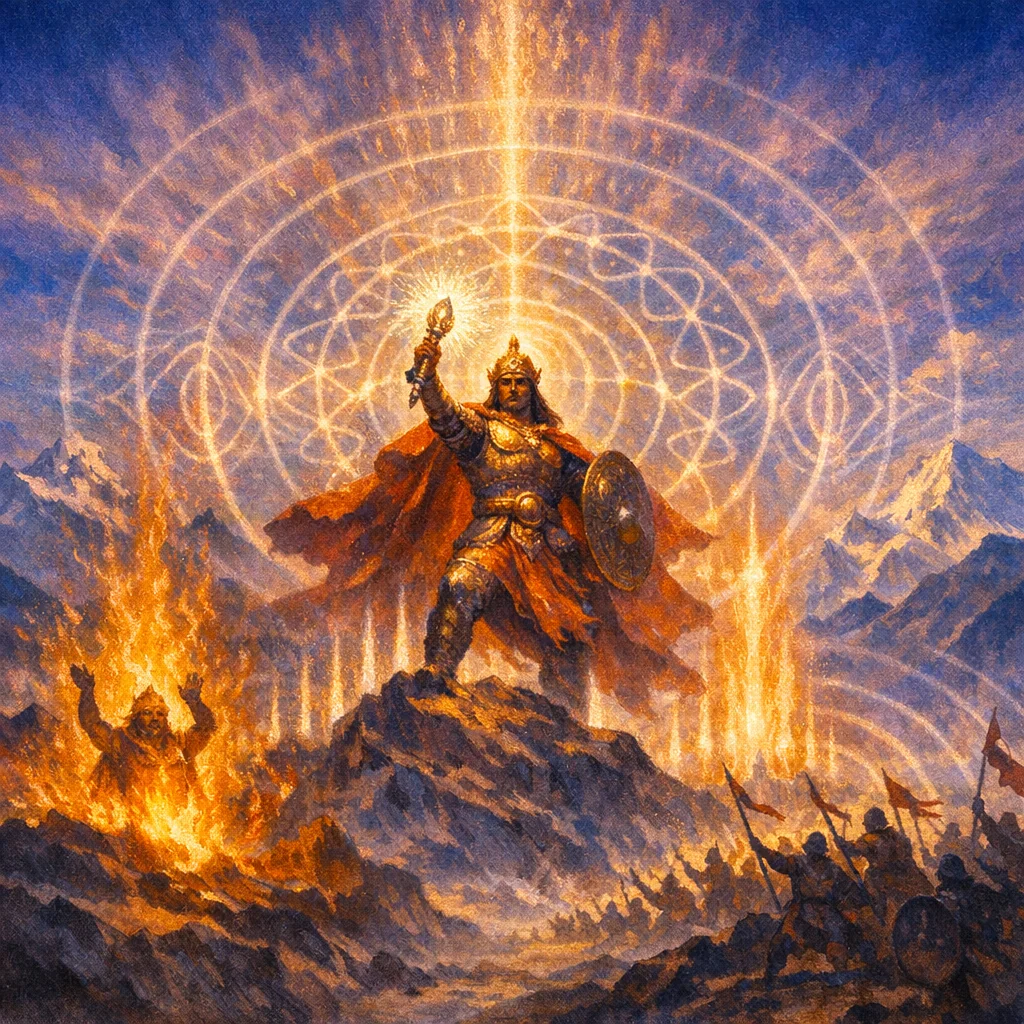
Aindra praise: Indra as the pre-eminent ritual power and victorious protector invoked for strength and success
Indra
Heroic and energizing (vīra-rasa) suited to invocation of power and rallying
R̥ṣi attribution is not supplied here; these verses likely derive from multiple RV sources typical of Sāmavedic selection so a single family attribution cannot be asserted without concordance.
ഐന്ദ്ര സ്തുതി: യജ്ഞശക്തിയുടെ പരമാധികാരിയും വിജയകരമായ രക്ഷകനുമായ ഇന്ദ്രനെ ബലത്തിനും വിജയത്തിനുമായി വിളിക്കുന്നു. ഇന്ദ്രൻ ബ്രഹ്മൻ/ഋത്വിജൻ (യജ്ഞാധിപൻ, പവിത്ര തേജസ്) ആയി പ്രതിഷ്ഠിക്കപ്പെടുന്നു; ഗോത്രഭിദ്—ഗോവിമോചനം, ജയം, കൂട്ടാളികളുടെ ഏകീകരണം എന്നീ വിജയമുദ്രകൾ ഉയർത്തപ്പെടുന്നു. ഋതുക്രമം അനുസരിച്ച് ജ്വലിപ്പിച്ച അഗ്നി ഹവ്യം വഹിച്ച് യജ്ഞത്തെ സഫലമാക്കുന്ന ശക്തിയായി ആഹ്വാനിക്കപ്പെടുന്നു; ഉഷസ് പുതുക്കലിന്റെയും മംഗളത്തിന്റെയും കോസ്മിക് സൂചകമായി പിന്തുണയായി പ്രത്യക്ഷപ്പെടുന്നു. ശരിയായി ക്രമപ്പെടുത്തിയ യജ്ഞത്തിലൂടെ ഇന്ദ്രന്റെ ഓജസ്സും ആധിപത്യവും ഫലപ്രദമായ ‘ബ്രഹ്മൻ’ ആയി ജയം, സമൃദ്ധി, സംരക്ഷണം എന്നിവ നൽകുന്നു; യജമാനപക്ഷത്തിലെ സജാതർ/സഖായർ ഒരുമിച്ച് ധൈര്യത്തോടെ മുന്നേറാൻ പ്രേരിപ്പിക്കപ്പെടുന്നു.
Mantras
Mantra 1
बृहस्पते परि दीया रथेन रक्षोहामित्रां अपबाधमानः प्रभञ्जन्सेनाः प्रमृणो युधा जयन्नस्माकमेध्यविता रथानाम्
ഹേ ബൃഹസ്പതേ, നിന്റെ രഥംകൊണ്ട് ഞങ്ങളെ ചുറ്റിപ്പറ്റി—രാക്ഷസഹന്താ, ശത്രുക്കളെ അകറ്റുന്നവനേ—അവരുടെ സേനകളെ തകർത്തു, യുദ്ധത്തിൽ അവരെ നശിപ്പിച്ച്, ജയിച്ചു, ഞങ്ങളുടെ രഥങ്ങളുടെ രക്ഷകനാകുക.
Mantra 2
बलविज्ञायः स्थविरः प्रवीरः सहस्वान्वाजी सहमान उग्रः अभिवीरो अभिसत्वा सहोजा जैत्रमिन्द्र रथमा तिष्ठ गोवित्
ഹേ ഇന്ദ്രാ! ബലം തിരിച്ചറിയുന്നവനേ, അചഞ്ചലനേ, അഗ്രവീരനേ, സഹസ്രബലവാനേ, ജയാശ്വവാനേ, നേരിട്ട് ഏറ്റുമുട്ടി ജയിക്കുന്നവനേ, ഉഗ്രനേ; എല്ലാ വീരന്മാരിലും അതിവീരനേ, ശക്തിയോടെ ആക്രമിക്കുന്നവനേ, സഹജശക്തിയിൽ ജനിച്ചവനേ, ജയദായകനേ—ഹേ ഇന്ദ്രാ, ജയരഥത്തിൽ आरोഹണം ചെയ്ക; ഗോവിത (ഗോ-വിജയം) ദയചെയ്ക.
Mantra 3
गोत्रभिदं गोविदं वज्रबाहुं जयन्तमज्म प्रमृणन्तमोजसा इमं सजाता अनु वीरयध्वमिन्द्रं सखायो अनु सं रभध्वम्
ഗോത്രഭിദ്, ഗോവിദ്, വജ്രബാഹു, ജയശാലി—യുദ്ധപഥത്തിൽ ഓജസ്സാൽ ശത്രുവിനെ തകർക്കുന്ന അവനെ; ഹേ സജാതാക്കളേ, ഈ ഇന്ദ്രനെ അനുഗമിച്ച് നിങ്ങളുടെ വീര്യം ഉണർത്തുവിൻ; ഹേ സഖാക്കളേ, ഇന്ദ്രനെ അനുഗമിച്ച് ഒന്നിച്ചു ചേരുവിൻ, ദൃഢമായി പിടിച്ചുനില്ക്കുവിൻ.
Frequently Asked Questions
Here “brahmā” points to sacred power (and can also echo the brahman-priest’s supervisory role). “ṛtviya” links Indra to the properly timed rite (ṛtu), presenting him as the ritual’s effective lord whose power makes the sacrifice succeed.
It recalls Indra’s mythic act of breaking obstructions to release the ‘cows’—a symbol of wealth, nourishment, and even light. In ritual praise it becomes a prayer for removing constraints and securing prosperity and victory.
Sāmavedic decads often weave supporting deities into the main praise. Agni is the kindled force that carries offerings and establishes the rite’s order; Uṣas marks auspicious renewal. Together they frame Indra’s power as operating within a well-kindled, well-timed sacrifice.