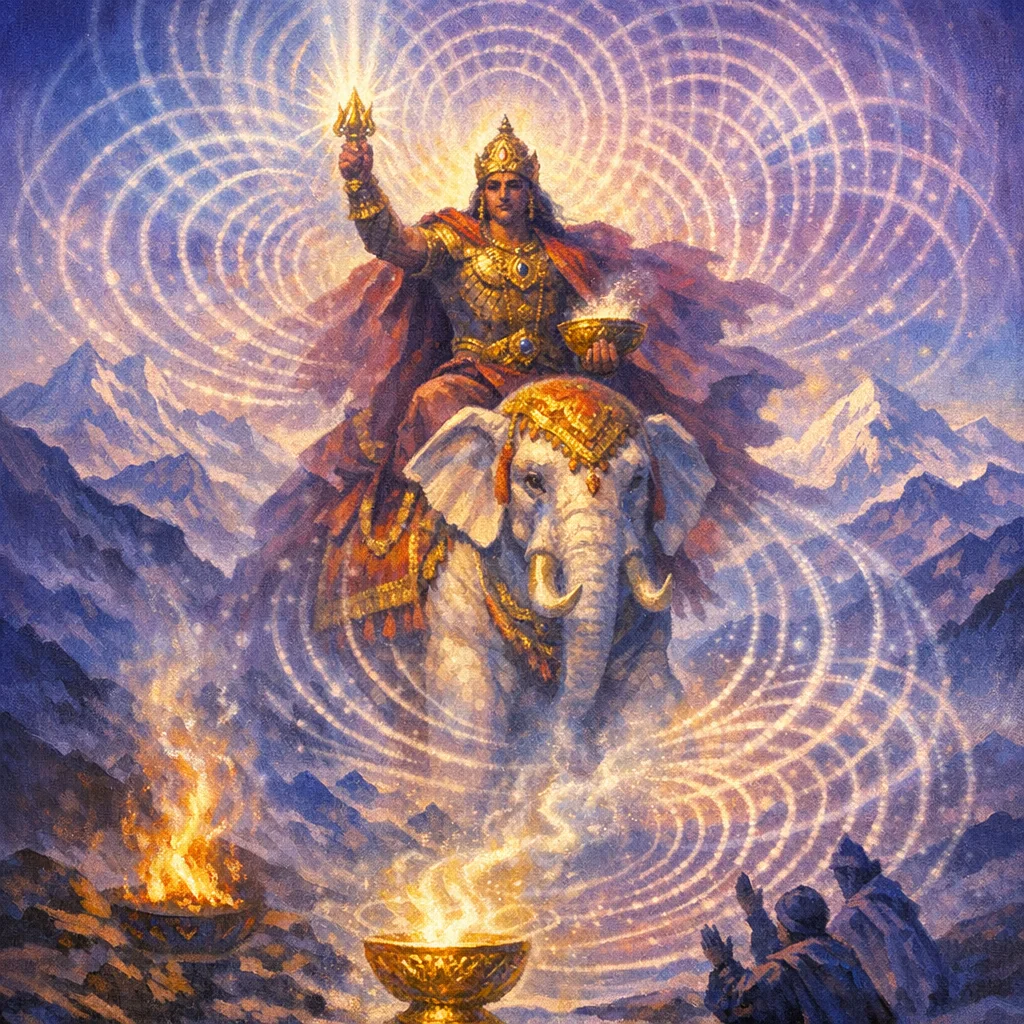
Dashati 15
Indra’s reciprocity: faultless praise and song draw wealth, protection, and aid at the Soma
Indra
Invocatory and protective—bright forward-moving with a concluding supplicatory intensity
Kāṇva
ഈ ദശതിയിൽ പിഴിഞ്ഞ സോമയാഗത്തിലേക്ക് ഹരിവാഹനായ ഇന്ദ്രനെ ആഹ്വാനിക്കുന്നു. ദോഷരഹിതമായ സ്തുതി–ഗാനം ദേവനും ഗായകനും പരസ്പരം സമൃദ്ധരാകുന്ന വിധത്തിൽ പ്രവർത്തിക്കുന്നു; അതിലൂടെ യജമാന–ഗായകനു ധനം, ക്ഷേമം, ഇന്ദ്രസഹായം ലഭിക്കുന്നു. പീഡനവും ദുരിതവും ശത്രുസമൂഹങ്ങളും നിന്ന് സംരക്ഷണം, കൂടാതെ ഇന്ദ്രന്റെ ശചീ (ഫലപ്രദമായ ശക്തി) പ്രായോഗിക സഹായവും ഉപദേശവും നൽകണമെന്നുള്ള അന്തിമ പ്രാർത്ഥനയോടെ ഇത് സമാപിക്കുന്നു.
Mantras
Mantra 1
रेवां इद्रेवत स्तोता स्यात्त्वावतो मघोनः प्रेदु हरिवः सुतस्य
ധനവാനായ ദേവന്റെ സ്തോതാവ് ധനവാനാകട്ടെ; ഹേ മഘവൻ ഇന്ദ്രാ! നീ സഹായിയായിരിക്കുമ്പോൾ. ഹേ ഹരിവഃ (കപില അശ്വങ്ങളുള്ളവനേ)! സുത സോമയിലേക്കു പുറപ്പെട്ടു വരിക.
Mantra 2
उक्थं च न शस्यमानं नागो रयिरा चिकेत न गायत्रं गीयमानम्
ഞങ്ങളുടെ ഉക്തം (സ്തുതി-ഹിമ്നം) ശസ്യമാനം—പാരായണം ചെയ്യപ്പെടുമ്പോൾ—അതിൽ യാതൊരു ദോഷവും പതിയരുതേ; റയി (ധന-സമൃദ്ധി) ഞങ്ങളെ ശ്രദ്ധിച്ചു അറിയട്ടെ; ഗായത്രം (ഗായത്രി-ഛന്ദസ്/സാമഗാനം) ഗീയമാനം—പാടപ്പെടുമ്പോൾ—അതിലും ദോഷം പതിയരുതേ.
Mantra 3
मा न इन्द्र पीयत्नवे मा शर्धते परा दाः शिक्षा शचीवः शचीभिः
ഹേ ഇന്ദ്രാ, ഞങ്ങളെ ദുരിതത്തിലേക്ക് ഏല്പിക്കരുതേ; ആക്രമിക്കുന്ന ശത്രുസൈന്യത്തിനും ഞങ്ങളെ ഏല്പിക്കരുതേ. ഹേ ശചീവ (ശക്തിമാൻ), നിന്റെ ശചികൾ (ശക്തികൾ) കൊണ്ടു ഞങ്ങളെ ശിക്ഷിച്ചു സഹായിക്കണമേ.
Frequently Asked Questions
It calls Indra to the pressed Soma and teaches that when the hymn and Gāyatra chant are performed without ritual fault, Indra grants wealth, protection, and effective help (śacī).
Because a blemish in recitation or singing was believed to weaken the rite’s result; the verse asks that no such defect attach, so prosperity (rayi) will “take notice” and come to the sacrificer.
“Harivaḥ” marks Indra as the swift one with bay steeds who comes quickly to Soma, while “śacī” points to his effective powers—his ability to actively protect, instruct, and make the prayer succeed.