Dashati 3
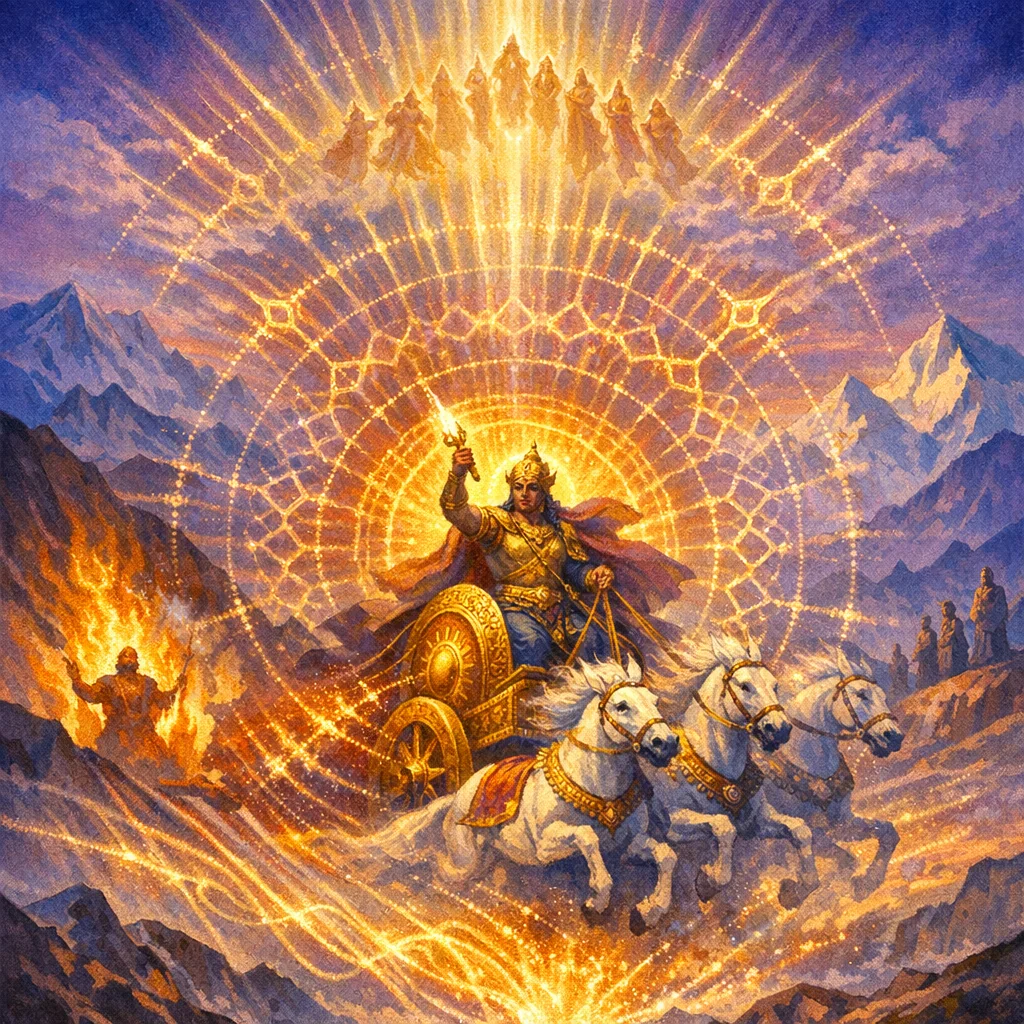
Aindra victory-invocation: summoning Indra’s power to remove obstacles and secure success for the rite
Indra
Uplifting martial-triumphal and propulsive (victory-shout energy)
R̥ṣi attributions are not supplied; the verses reflect mainstream RV Indra/Agni hymn traditions rather than a clearly marked single family in the given data.
ഐന്ദ്ര വിജയാഹ്വാനം: സ്തോത്ര/സാമഗാനത്തിന്റെ ശബ്ദബലത്തോടെ ഇന്ദ്രന്റെ രഥശക്തിയെ വിളിച്ചു വരുത്തി, അവനെ വീരനായ സത്പതിയും മൃതീഷഹനും ആയി സ്തുതിച്ച് യാഗത്തിന് സഹായം–അനുഗ്രഹം–വിജയം നേടുക. സ്തുതിയേ തന്നെ ക്ഷണമാക്കി ദൈവരഥത്തെ ‘തിരിച്ചു കൊണ്ടുവരിക’, അന്തരായങ്ങളെ നശിപ്പിച്ച് യാഗത്തെ സംരക്ഷിക്കുക. സസ്യങ്ങളിലും ജലങ്ങളിലും ഗൂഢമായി നിത്യജനിക്കുന്ന യാഗാഗ്നിയായ അഗ്നിയെ സ്മരിച്ചു, കര്മ്മത്തിന് കോസ്മിക പിന്തുണ സ്ഥാപിക്കുക. അവസാനം മരുത്, വരുണ, ആദിത്യര്, സമസ്ത ദേവഗണം എന്നിവരുടെ ‘ഘോഷ’ത്തോടെ ജയഘോഷം ഉയർത്തി, യാഗത്തെ ചുറ്റിയുള്ള രക്ഷാ–വിജയശക്തി വർധിപ്പിക്കുക.
Mantras
Mantra 1
अभि गोत्राणि सहसा गाहमानो ऽदयो वीरः शतमन्युरिन्द्रः दुश्च्यवनः पृतनाषाडयुध्यो3 ऽस्माकं सेना अवतु प्र युत्सु
ഗോത്രങ്ങളെ ശക്തിയോടെ ആക്രമിച്ച് അവയിൽ ആഴത്തിൽ കുതിച്ചുകയറുന്ന, അജേയനായ, ശതമന്യു വീര ഇന്ദ്രൻ—കുലുക്കാനാകാത്തവൻ, യുദ്ധങ്ങളിൽ ജയശാലി, അപരാജിതൻ; യുദ്ധങ്ങളുടെ മുൻനിരയിൽ നമ്മുടെ സേനയെ അവൻ കാക്കട്ടെ.
Mantra 2
इन्द्र आसां नेता बृहस्पतिर्दक्षिणा यज्ञः पुर एतु सोमः देवसेनानामभिभञ्जतीनां जयन्तीनां मरुतो यन्त्वग्रम्
ഇന്ദ്രൻ ഇവരുടെ നേതാവാകുന്നു; ബൃഹസ്പതി മാർഗ്ഗദർശകനാകുന്നു; ദക്ഷിണാ, യജ്ഞം, സോമം എന്നിവ മുൻപോട്ടു പോകട്ടെ—ശത്രുവിനെ ഭേദിച്ചു തകർക്കുന്ന, ജയശാലിയായ ദേവസേനകളിൽ മരുത്തുകൾ അഗ്രത്തിൽ മുന്നേറട്ടെ.
Mantra 3
इन्द्रस्य वृष्णो वरुणस्य राज्ञ आदित्यानां मरुतां शर्ध उग्रम् महामनसां भुवनच्यवानां घोषो देवानां जयतामुदस्थात्
ദേവന്മാരുടെ ജയഘോഷം ഉയർന്നു—വൃഷണനായ ഇന്ദ്രന്റെ, രാജാവായ വരുണന്റെ, ആദിത്യരുടെ, മരുത്തുകളുടെ ഉഗ്രശർധത്തിന്റെ; മഹാമനസ്സുള്ള, ഭുവനച്യവന, ജയശാലിയായ ദേവന്മാരുടെ.
Frequently Asked Questions
It is a victory-oriented invocation: the chant ‘turns’ or brings Indra’s chariot through praise, asking him to remove obstacles and secure aid and favour for the sacrifice.
Because Soma-ritual success depends on Agni as the ever-present ritual fire; recalling Agni’s latent, continual birth in nature reinforces that the rite is cosmically supported and continuously sustained.
It signifies triumphant, conquering resonance—both the mythic victory-cry of the deities and, liturgically, the heightened sonic power of the chant reaching its climactic point.