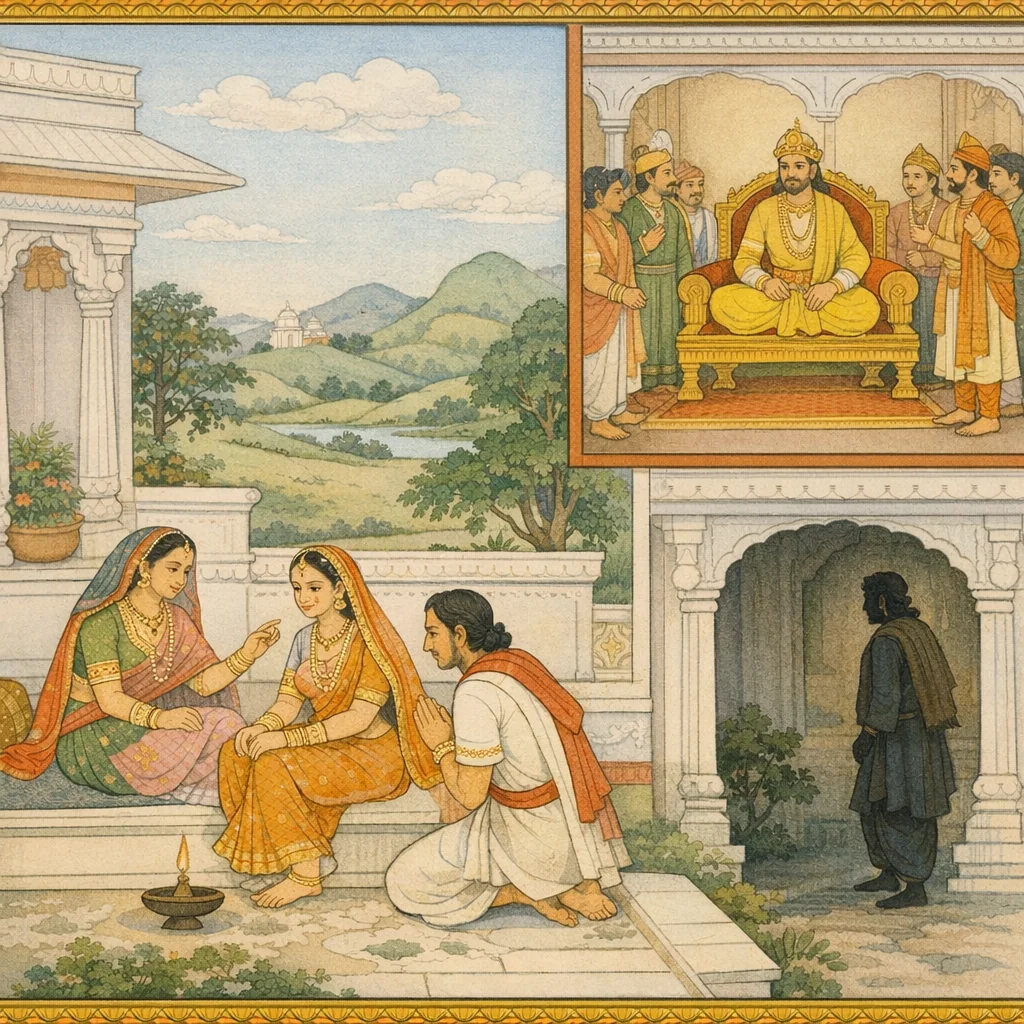
Adhyaya 70
अक्षहृदय-विद्या-प्रदानम् (Transmission of Akṣa-hṛdaya; Kali’s Exit and the Bibhītaka Refuge)
Upa-parva: Nala-Upākhyāna (Tale of Nala) — Kali-nigraha and Akṣa-hṛdaya Transmission Episode
Bṛhadaśva describes Nala (as Bāhuka) driving Ṛtuparṇa’s chariot at extraordinary speed across rivers, mountains, forests, and lakes. When Ṛtuparṇa’s upper garment falls, he urges retrieval; Nala notes it has already gone too far to recover. They stop near a fruit-bearing bibhītaka tree where Ṛtuparṇa claims superior saṃkhyāna (enumerative calculation), asserting exact counts of fallen leaves and fruits and totals across branches. Nala challenges the claim as unverifiable, and Ṛtuparṇa proposes direct demonstration. Despite urgency to reach Vidarbha before sunset, Nala requests a brief pause and physically tests the claim by striking the tree so fruits fall; the counted quantities match Ṛtuparṇa’s statement. Astonished, Nala requests the underlying vidyā. Ṛtuparṇa identifies himself as expert in Akṣa-hṛdaya (the ‘heart’ of dice/number-knowledge) and agrees to teach it, receiving in return Nala’s aśva-hṛdaya (horse-lore). Upon receiving Akṣa-hṛdaya, the personified Kali—long afflicting Nala—emerges from Nala’s body, still emitting the residual poison of Karkoṭaka’s bite. Nala, now freed, intends to curse Kali, but Kali pleads fearfully and offers a boon: those who remember and recite Nala’s story will not be troubled by Kali-born fear. Nala restrains his anger; Kali rapidly enters the bibhītaka tree and becomes unseen. Nala, relieved and restored in mind (though still outwardly altered), resumes the journey toward Vidarbha with renewed vigor, while Kali departs to his own abode after Nala passes beyond.
Chapter Arc: दमयन्ती के हृदय में आशा और शंका एक साथ उठती है—अयोध्या में ऋतुपर्ण के यहाँ ‘बाहुक’ नामक पुरुष का समाचार आता है, और वह नाम उसके भीतर छिपे नल को जगा देता है। → सुदेव ब्राह्मण दमयन्ती का संदेश लेकर अयोध्या पहुँचता है और जनसमूह के बीच ऋतुपर्ण को दमयन्ती के वचन सुनाता है। वहीं से संकेत मिलता है कि ऋतुपर्ण के पास बाहुक नाम का एक रहस्यमय सेवक है। दमयन्ती के लिए यह सूचना निर्णायक बन जाती है—क्या वही बाहुक नल है, या केवल भ्रम? → दमयन्ती, युधिष्ठिर के प्रसंग में, सुदेव को अत्यन्त शीघ्रता से अयोध्या लौटकर ऋतुपर्ण को स्पष्ट संदेश देने का आदेश देती है—मानो समय ही परीक्षा बन गया हो। बाहुक के अस्तित्व का उल्लेख कथा को चरम पर ले आता है: नल का सुराग अब अनुमान नहीं, लगभग साक्ष्य है। → पर्णाद (ऋतुपर्ण) दमयन्ती को मंगलमय आश्वासन देकर विदा करता है। दमयन्ती अपनी माता के समीप शोक-संतप्त होकर भी कार्य-निश्चय में दृढ़ रहती है और सुदेव को दूत बनाकर अयोध्या भेजती है; सुदेव जाकर ऋतुपर्ण को दमयन्ती का संदेश यथावत् सुनाता है। → अब प्रश्न केवल यह रह जाता है—ऋतुपर्ण दमयन्ती के संदेश पर क्या निर्णय करेगा, और ‘बाहुक’ क्या स्वयं को प्रकट करेगा या और गहरे छिपेगा?
Shlokas
Verse 1
हम (_) ऑणआ 5 सप्ततितमो< ध्याय: पर्णादका दमयन्तीसे बाहुकरूपधारी नलका समाचार बताना और दमयन्तीका ऋतुपर्णके यहाँ सुदेव नामक ब्राह्णको स्वयंवरका संदेश देकर भेजना बृहदश्च उवाच अथ दीर्घस्य कालस्य पर्णादो नाम वै द्विज: । प्रत्येत्य नगरं भैमीमिदं वचनमत्रवीत्,बृहदश्च मुनि कहते हैं--राजन्! तदनन्तर दीर्घ-कालके पश्चात् पर्णाद नामक ब्राह्मण विदर्भदेशकी राजधानीमें लौटकर आये और दमयन्तीसे इस प्रकार बोले--
Bṛhadaśva said: After a long time had passed, a Brahmin named Parṇāda returned to the city of the princess of Vidarbha (Damayantī) and spoke these words to Bhīmī (Damayantī). The verse marks the resumption of contact and communication in the Nala–Damayantī narrative, where messengers and truthful speech become instruments for restoring order and right conduct after prolonged separation and suffering.
Verse 2
नैषधं मृगयानेन दमयन्ति मया नलम् | अयोध्यां नगरीं गत्वा भाड़ासुरिमुपस्थित:,“दमयन्ती! मैं निषधनरेश नलको दूँढ़ता हुआ अयोध्या नगरीमें गया और वहाँ राजा ऋतुपर्णके दरबारमें उपस्थित हुआ
Bṛhadaśva said: “Seeking Nala, the king of Niṣadha, on Damayantī’s behalf, I went to the city of Ayodhyā and presented myself at the court of King Ṛtuparṇa.”
Verse 3
श्रावितश्न मया वाक्य त्वदीयं स महाजने । ऋतुपर्णो महाभागो यथोक्तं वरवर्णिनि,“वहाँ बहुत लोगोंकी भीड़में मैंने तुम्हारा वाक्य महाभाग ऋतुपर्णको सुनाया। वरवर्णिनि! उस बातको सुनकर राजा ऋतुपर्ण कुछ न बोले। मेरे बार-बार कहनेपर भी उनका कोई सभासद् भी इसका उत्तर न दे सका
Verse 4
तच्छुत्वा नाब्रवीत् किंचिदृतुपर्णो नराधिप: । न च पारिषद: कश्चिद् भाष्यमाणो मयासकृत्,“वहाँ बहुत लोगोंकी भीड़में मैंने तुम्हारा वाक्य महाभाग ऋतुपर्णको सुनाया। वरवर्णिनि! उस बातको सुनकर राजा ऋतुपर्ण कुछ न बोले। मेरे बार-बार कहनेपर भी उनका कोई सभासद् भी इसका उत्तर न दे सका
Hearing those words, King Ṛtuparṇa, lord of men, said nothing at all. And though I spoke again and again, not a single courtier present could offer any reply—so the matter remained unanswered amid the assembly.
Verse 5
अनुज्ञातं तु मां राज्ञा विजने कश्चिदब्रवीत् । ऋतुपर्णस्य पुरुषो बाहुको नाम नामत:,'परंतु ऋतुपर्णके यहाँ बाहुक नामधारी एक पुरुष है, उसने जब मैं राजासे विदा लेकर लौटने लगा, तब मुझसे एकान्तमें आकर तुम्हारी बातोंका उत्तर दिया
Bṛhadaśva said: “After I had been granted leave by the king, someone spoke to me in private: ‘There is a man in Ṛtuparṇa’s service, known by the name Bāhuka.’”
Verse 6
सूतस्तस्य नरेन्द्रस्य विरूपो हस्वबाहुक: । शीघ्रयानेषु कुशलो मृष्टकर्ता च भोजने,“वह महाराज ऋतुपर्णका सारथि है। उसकी भुजाएँ छोटी हैं तथा वह देखनेमें कुरूप भी है। वह घोड़ोंको शीघ्र हाँकनेमें कुशल है और अपने बनाये हुए भोजनमें बड़ा मिठास उत्पन्न कर देता है
Bṛhadaśva said: “That man is the charioteer of the king. He is ill-favoured to look upon and has short arms; yet he is highly skilled in driving swift horses, and he can make food exceptionally savoury.”
Verse 7
स विनि:श्वस्य बहुशो रुदित्वा च पुनः पुनः । कुशल चैव मां पृष्टवा पश्चादिदमभाषत,“बाहुकने बार-बार लंबी साँसें खींचकर अनेक बार रोदन किया और मुझसे कुशल- समाचार पूछकर फिर वह इस प्रकार कहने लगा--
He heaved deep sighs again and again, and wept repeatedly. After inquiring of me about my well-being, he then spoke these words—showing how grief can still coexist with courtesy and proper conduct.
Verse 8
वैषम्यमपि सम्प्राप्ता गोपायन्ति कुलस्त्रिय: । आत्मानमात्मना सत्यो जित: स्वर्गों न संशय:,“उत्तम कुलकी स्त्रियाँ बड़े भारी संकटमें पड़कर भी स्वयं अपनी रक्षा करती हैं। ऐसा करके वे सत्य और स्वर्ग दोनोंपर विजय पा लेती हैं, इसमें संशय नहीं है
Bṛhadaśva said: “Even when overtaken by grave adversity, women of noble lineage protect themselves. By such self-guarding, truthfulness is upheld and heaven is won—of this there is no doubt.”
Verse 9
रहिता भर्तभिश्चैव न कुप्यन्ति कदाचन । प्राणांश्वारित्रकवचान् धारयन्ति वरस्त्रिय:,'श्रेष्ठ नारियाँ अपने पतियोंसे परित्यक्त होनेपर भी कभी क्रोध नहीं करतीं। वे सदाचाररूपी कवचसे आवृत प्राणोंको धारण करती हैं
Bṛhadaśva said: “Even when abandoned by their husbands, noble women do not become angry. Guarded by the armor of good conduct, they preserve their very lives—holding fast to inner restraint and virtue.”
Verse 10
विषमस्थेन मूढेन परिगभ्रष्टसुखेन च । यत् सा तेन परित्यक्ता तत्र न क्रोद्धुमहति,“वह पुरुष बड़े संकटमें था, सुखके साधनोंसे वंचित होकर किंकर्तव्यविमूढ हो गया था। ऐसी दशामें यदि उसने अपनी पत्नीका परित्याग किया है तो इसके लिये पत्नीको उसपर क्रोध नहीं करना चाहिये
Verse 11
प्राणयात्रां परिप्रेप्सो: शकुनै््तवासस: । आधिभिर्दह्यमानस्य श्यामा न क्रोद्धुमहति,“जीविका पानेके लिये चेष्टा करते समय पक्षियोंने जिसके वस्त्रका अपहरण कर लिया था और जो अनेक प्रकारकी मानसिक चिन्ताओंसे दग्ध हो रहा था, उस पुरुषपर श्यामाको क्रोध नहीं करना चाहिये
Verse 12
सत्कृतासत्कृता वापि पतिं दृष्टवा तथागतम् | भ्रष्टराज्यं श्रिया हीन॑ क्षुधितं व्यसनाप्लुतम्,“पतिने उसका सत्कार किया हो या असत्कार--उसे चाहिये कि पतिको वैसे संकटमें पड़ा देखकर उसे क्षमा कर दे; क्योंकि वह राज्य और लक्ष्मीसे वंचित हो भूखसे पीड़ित एवं विपत्तिके अथाह सागरमें डूबा हुआ था”
Whether she had previously honored him or slighted him, on seeing her husband returned in such a condition—fallen from his kingdom, bereft of prosperity, tormented by hunger, and overwhelmed by calamity—she ought to forgive him. The ethical point is that compassion and forbearance are especially due when a person is crushed by misfortune and has lost the supports of power and wealth.
Verse 13
तस्य तद् वचन श्रुत्वा त्वरितो5हमिहागत: । श्रुत्वा प्रमाणं भवती राज्ञश्चनैव निवेदय,“बाहुककी वह बात सुनकर मैं तुरंत यहाँ चला आया। यह सब सुनकर अब कर्तव्याकर्तव्यके निर्णयमें तुम्हीं प्रमाण हो। (तुम्हारी इच्छा हो तो) महाराजको भी ये बातें सूचित कर दो”
Bṛhadaśva said: “Having heard his words, I hurried here at once. Now that you have heard everything, you alone are the authority for deciding what ought to be done and what ought not to be done. And if you wish, convey these matters to the king as well.”
Verse 14
एतच्छुत्वाश्रुपूर्णाक्षी पर्णादस्य विशाम्पते । दमयन्ती रहो<भ्येत्य मातरं प्रत्यभाषत,युधिष्ठिर! पर्णादका यह कथन सुनकर दमयन्तीके नेत्रोंमें आँसू भर आया। उसने एकान्तमें जाकर अपनी मातासे कहा--
Hearing this, O lord of the people, Damayantī’s eyes filled with tears. Then, withdrawing to a private place, she approached her mother and spoke—O Yudhiṣṭhira.
Verse 15
अयमर्थो न संवेद्यो भीमे मात: कदाचन । त्वत्संनिधौ नियोक्ष्ये5हं सुदेव॑ द्विजसत्तमम्,“माँ! पिताजीको यह बात कदापि मालूम न होनी चाहिये। मैं तुम्हारे ही सामने विप्रवर सुदेवको इस कार्यमें लगाऊँगी। तुम ऐसी चेष्टा करो, जिससे पिताजीको मेरा विचार ज्ञात न हो। यदि तुम मेरा प्रिय करना चाहती हो तो तुम्हें इसके लिये सचेष्ट रहना होगा
Verse 16
यथा न नृपतिर्भीम: प्रतिपद्येत मे मतम् तथा त्वया प्रकर्तव्यं मम चेत् प्रियमिच्छसि,“माँ! पिताजीको यह बात कदापि मालूम न होनी चाहिये। मैं तुम्हारे ही सामने विप्रवर सुदेवको इस कार्यमें लगाऊँगी। तुम ऐसी चेष्टा करो, जिससे पिताजीको मेरा विचार ज्ञात न हो। यदि तुम मेरा प्रिय करना चाहती हो तो तुम्हें इसके लिये सचेष्ट रहना होगा
Verse 17
यथा चाहं समानीता सुदेवेनाशु बान्धवान् । तेनैव मड़लेनाशु सुदेवो यातु मा चिरम्
Bṛhadaśva said: “Just as I was swiftly brought by Sudeva to my kinsmen, so too—by that very same means—let Sudeva quickly go, without delay.”
Verse 18
विश्रान्तं तु ततः पश्चात् पर्णादं द्विजसत्तमम्,इतनेहीमें विप्रवर पर्णाद जब विश्राम कर चुके, तब विदर्भराजकुमारी दमयन्तीने बहुत धन देकर उनका सत्कार किया और यह भी कहा--“महाराज नलके यहाँ पधारनेपर मैं आपको और भी धन दूँगी
Bṛhadaśva said: After that, when the excellent brāhmaṇa Parṇāda had rested, the princess of Vidarbha, Damayantī, honoured him with abundant gifts. She also declared, “When you arrive in King Nala’s presence, I shall give you even more wealth.” The passage highlights courteous hospitality and the ethical duty of honouring worthy guests, especially learned brāhmaṇas, through respectful service and generous giving.
Verse 19
अर्चयामास वैदर्भी धनेनातीव भाविनी । नले चेहागते तत्र भूयो दास्यामि ते वसु,इतनेहीमें विप्रवर पर्णाद जब विश्राम कर चुके, तब विदर्भराजकुमारी दमयन्तीने बहुत धन देकर उनका सत्कार किया और यह भी कहा--“महाराज नलके यहाँ पधारनेपर मैं आपको और भी धन दूँगी
Bṛhadaśva said: The noble princess of Vidarbha, Damayantī, honored the brāhmaṇa generously with wealth. She also declared, “If King Nala comes here, then I will give you even more riches.” The episode highlights her gratitude and steadfast loyalty: she rewards service and keeps her promise, holding fast to her chosen husband even in adversity.
Verse 20
त्वया हि मे बहु कृतं यदन्यो न करिष्यति । यद् भर्त्राहं समेष्यामि शीघ्रमेव द्विजोत्तम,“विप्रवर! आपने मेरा बहुत बड़ा उपकार किया, जो दूसरा नहीं कर सकता; क्योंकि अब मैं अपने स्वामीसे शीघ्र ही मिल सकूँगी”
You have indeed done me a great service—one that no other could have done. For now I shall soon be reunited with my husband, O best of Brahmins. (The speaker expresses gratitude and underscores the dharmic value of timely aid that restores rightful bonds and protection.)
Verse 21
[० + 22 गृहानुपययौ चापि कृतार्थ: सुमहामना:,दमयन्तीके ऐसा कहनेपर अत्यन्त उदार हृदयवाले पर्णाद अपने परम मंगलमय आशीर्वादोंद्वारा उसे आश्वासन दे कृतार्थ हो अपने घर चले गये
Bṛhadaśva said: When this was spoken to Damayantī, the noble-hearted Parṇāda consoled her with his supremely auspicious blessings. Having thus fulfilled his purpose, he departed and returned to his home. The episode underscores the dharmic role of a wise elder: to steady the distressed with benediction and reassurance, and then withdraw without seeking gain.
Verse 22
ततः सुदेवमाभाष्य दमयन्ती युधिष्िर । अब्रवीत् संनिधौ मातुर्दु:ः:खशोकसमन्विता,युधिष्ठिर! तदनन्तर दमयन्तीने सुदेव ब्राह्मणको बुलाकर अपनी माताके समीप दुःख- शोकसे पीड़ित होकर कहा--
Then Damayantī, having addressed the brāhmaṇa Sudeva, spoke—O Yudhiṣṭhira—while seated near her mother, overwhelmed by sorrow and grief. The scene underscores how, in distress, one turns to trusted messengers and elders, seeking counsel and support while remaining within the bounds of propriety and family duty.
Verse 23
गत्वा सुदेव नगरीमयोध्यावासिनं नृपम् । ऋतुपर्ण वचो ब्रूहि सम्पतन्निव कामग:,'सुदेवजी! आप इच्छानुसार चलनेवाले द्रुतगामी पक्षीकी भाँति शीघ्रतापूर्वक अयोध्या नगरीमें जाकर वहाँके निवासी राजा ऋतुपर्णसे कहिये--
Bṛhadaśva said: “Go swiftly to the city of Ayodhyā and deliver my message to King Ṛtuparṇa, who dwells there—hasten like a fast-flying bird that moves wherever it wills.”
Verse 24
आस्थास्यति पुनर्भमी दमयन्ती स्वयंवरम् । तत्र गच्छन्ति राजानो राजपुत्राश्ष सर्वश:,'भीमकुमारी दमयन्ती पुनः स्वयंवर करेगी। वहाँ बहुत-से राजा और राजकुमार सब ओरसे जा रहे हैं
Bṛhadaśva said: “Damayantī will once again hold a svayaṃvara. To that gathering kings and princes from every direction are going.” In the narrative, this announcement signals a renewed public choice of marriage—an event that tests reputation, intention, and dharma, as rulers converge not merely for desire but for legitimacy and honor in a royal assembly.
Verse 25
तथा च गणित: काल: श्वोभूते स भविष्यति । यदि सम्भावनीयं ते गच्छ शीघ्रमरिंदम,“उसके लिये समय नियत हो चुका है। कल ही स्वयंवर होगा। शत्रुदमन! यदि आपका वहाँ पहुँचना सम्भव हो तो शीघ्र जाइये
Bṛhadaśva said: “And so the time has been calculated and fixed; tomorrow the event will take place. O subduer of foes, if it is feasible for you to reach there, then go at once.”
Verse 26
सूर्योदये द्वितीयं सा भर्तारें वरयिष्यति । न हि स ज्ञायते वीरो नलो जीवति वा न वा,“कल सूर्योदय होनेके बाद वह दूसरे पतिका वरण कर लेगी; क्योंकि वीरवर नल जीवित हैं या नहीं, इसका कुछ पता नहीं लगता है”
Bṛhadaśva said: “At sunrise she will choose a second husband. For it is not known whether the heroic Nala is alive or not.”
Verse 27
एवं तया यथोक्तो वै गत्वा राजानमब्रवीत् | ऋतुपर्ण महाराज सुदेवो ब्राह्मणस्तदा,महाराज! दमयन्तीके इस प्रकार बतानेपर सुदेव ब्राह्मणने राजा ऋतुपर्णके पास जाकर वही बात कही
Thus instructed exactly as she had said, the brāhmaṇa Sudeva went and reported the matter to the king. Addressing him respectfully as “Mahārāja Ṛtuparṇa,” he conveyed Damayantī’s message as given—showing faithful speech and dutiful mediation in service of a righteous purpose.
Verse 70
इति श्रीमहाभारते वनपर्वणि नलोपाख्यानपर्वणि दमयन्तीपुन:स्वयंवरकथने सप्ततितमो<5ध्याय:
Thus, in the Śrī Mahābhārata, within the Vana Parva—specifically in the Nalopākhyāna section—ends the seventieth chapter, which narrates the account of Damayantī’s second svayaṃvara. This is a colophon marking the close of the chapter and situating the episode within its larger ethical frame: steadfastness in adversity, the testing of virtue, and the restoration of rightful union after trials.
Verse 173
समानेतुं नल॑ मातरयोध्यां नगरीमित: । 'जैसे सुदेवने मुझे यहाँ लाकर बन्धु-बान्धवोंसे शीघ्र मिला दिया, उसी मंगलमय उद्देश्यकी सिद्धिके लिये सुदेव ब्राह्मण फिर शीघ्र ही यहाँसे अयोध्या जायँ, देर न करें। माँ! वहाँ जानेका उद्देश्य है, महाराज नलको यहाँ ले आना”
Bṛhadaśva said: “Let Sudeva quickly go from here to the city of Ayodhyā to bring Nala’s mother. Just as Sudeva brought me here and swiftly reunited me with my kinsmen, so too—so that the same auspicious purpose may be fulfilled—let the brāhmaṇa Sudeva promptly depart from here for Ayodhyā and not delay. Mother, the purpose of going there is this: to bring King Nala here.”
Frequently Asked Questions
Nala must balance urgent travel obligations with the demand for verification and learning, and later must choose between justified retribution (cursing Kali) and disciplined restraint after Kali petitions for mercy.
Specialized knowledge can be ethically negotiated and transferred, while inner freedom is shown through regulating anger; the chapter frames liberation from corrosive influence as compatible with measured, non-escalatory conduct.
Yes: Kali asserts that those who remember and speak of Nala’s story will not experience fear generated by Kali, functioning as a narrative-protective claim about recollection and recitation.