Adhyaya 67
दमयन्तीवाक्य-प्रेषणम् (Damayantī’s Message and the Dispatch of Brahmin Envoys)
Upa-parva: Nalopākhyāna (The Tale of Nala and Damayantī)
Damayantī addresses her mother with an urgent truth-claim, prompting visible grief in the inner apartments and a courtly escalation of concern. The queen-consort informs King Bhīma that Damayantī mourns her husband and has overcome personal shame to request action. Bhīma, urged by Damayantī’s resolve, dispatches Brahmin emissaries in all directions with the instruction to search for Nala. Damayantī then provides a standardized proclamation to be repeated in assemblies across kingdoms: it recalls Nala’s abandonment of her in the forest, describes her continued waiting in distress, and frames a dharmic appeal for compassion and response. She further establishes an identification protocol—if any man replies with a specific counter-speech to the proclamation, his identity and location must be ascertained and reported quickly—while directing the envoys to conceal their royal authorization and manage their return discreetly. The chapter closes with the Brahmins traversing towns, settlements, and hermitages, repeatedly broadcasting Damayantī’s words as part of a systematic search operation.
Chapter Arc: वन के अंधकार-सा एकांत लिये नल ‘बाहुक’ बनकर ऋतुपर्ण के नगर में प्रवेश करता है—राजा के अश्वाध्यक्ष-पद पर नियुक्त होकर भी भीतर-ही-भीतर दमयन्ती की चिन्ता में जलता रहता है। → बाहुक के अद्भुत कौशल (अश्व-वाहन, अन्नसंस्कार, विविध निपुणताएँ) उसे दरबार में प्रतिष्ठा दिलाते हैं, पर उसी प्रतिष्ठा के बीच उसका मन बार-बार दमयन्ती की दशा पर लौटता है—भूख-प्यास, वन का भय, श्वापदों का आतंक, और अपने ही त्याग का अपराधबोध। → नल का ‘विलाप’—दमयन्ती को स्मरण कर वह अपने को ‘अल्पभाग्य, मन्दप्रज्ञ’ कहकर धिक्कारता है; कल्पना में दमयन्ती को दारुण वन में भटकता देख उसका अंतःकरण टूटता है और शोक-गीत/श्लोक के रूप में पीड़ा फूट पड़ती है। → वह अज्ञातवास में ही टिकता है—ऋतुपर्ण के यहाँ सेवा करता हुआ, रातों में दमयन्ती का स्मरण कर विलाप-श्लोक गाता, और अपने भीतर पश्चात्ताप को साधना-सा धारण करता है। → दमयन्ती तक नल के जीवित होने/उसके ठिकाने का कोई स्पष्ट संकेत अभी नहीं पहुँचता—बाहुक का रहस्य और पुनर्मिलन की दिशा अगले प्रसंगों के लिए अधर में रहती है।
Shlokas
Verse 1
हि >> आय >> (0) हि 2 7 सप्तषष्टितमो< ध्याय: राजा नलका ऋतुपर्णके यहाँ अश्वाध्यक्षके पदपर नियुक्त होना और वहाँ दमयन्तीके लिये निरन्तर चिन्तित रहना तथा उनकी जीवलसे बातचीत ब॒हदश्च उवाच तस्मिन्नन्तर्हिते नागे प्रययौ नैषधो नल: । ऋतुपर्णस्य नगरं प्राविशद् दशमे5हनि,बृहदश्व मुनि कहते हैं--कर्कोटक नागके अन्तर्धान हो जानेपर निषधनरेश नलने दसवें दिन राजा ऋतुपर्णके नगरमें प्रवेश किया
Bṛhadaśva said: When the serpent had vanished from sight, Nala, king of Niṣadha, set out and on the tenth day entered the city of King Ṛtupārṇa. The episode underscores Nala’s endurance and disciplined resolve as he continues his journey under altered circumstances, carrying forward his duty and his inward fidelity to Damayantī despite hardship.
Verse 2
स राजानमुपातिष्ठद् बाहुको5हमिति ब्रुवन् । अश्वानां वाहने युक्त: पृथिव्यां नास्ति मत्सम:,वे बाहुक नामसे अपना परिचय देते हुए राजा ऋतुपर्णके यहाँ उपस्थित हुए और बोले --'धोड़ोंको हाँकनेकी कलामें इस पृथ्वीपर मेरे समान दूसरा कोई नहीं है
Bṛhadaśva said: He approached King Ṛtupārṇa and, introducing himself as Bāhuka, declared, “In the art of driving horses there is no one on this earth equal to me.” The episode underscores how skill, when joined with humility and a strategic purpose, can become a means of protection and right action in adversity.
Verse 3
अर्थकृच्छरेषु चैवाहं प्रष्टव्यो नैपुणेषु च । अन्नसंस्कारमपि च जानाम्यन्यैर्विशेषत:,“मैं इन दिनों अर्थसंकटमें हूँ। आपको किसी भी कलाकी निपुणताके विषयमें सलाह लेनी हो तो मुझसे पूछ सकते हैं। अन्न-संस्कार (भाँतिं-भाँतिकी रसोई बनानेका कार्य) भी मैं दूसरोंकी अपेक्षा विशेष जानता हूँ
Bṛhadaśva said: “In times of financial distress, and also in matters requiring skill, I am one to be consulted. I understand, better than others, even the refined preparation and processing of food.”
Verse 4
यानि शिल्पानि लोके5स्मिन् यच्चैवान्यत् सुदुष्करम् | सर्व यतिष्ये तत् कर्तुमृतुपर्ण भरस्व माम्,“इस जगत्में जितनी भी शिल्पकलाएँ हैं तथा दूसरे भी जो अत्यन्त कठिन कार्य हैं, मैं उन सबको अच्छी तरह करनेका प्रयत्न कर सकता हूँ। महाराज ऋतुपर्ण! आप मेरा भरण- पोषण कीजिये'
Bṛhadaśva said: “Whatever crafts are found in this world, and whatever other tasks are exceedingly difficult, I will strive to accomplish them all. O King Ṛtuparṇa, maintain me (provide for my livelihood).”
Verse 5
ऋचतुपर्ण उवाच वस बाहुक भद्रं ते सर्वमेतत् करिष्यसि । शीघ्रयाने सदा बुद्धिर्ध्रियते मे विशेषत:,ऋतुपर्णने कहा--बाहुक! तुम्हारा भला हो। तुम मेरे यहाँ निवास करो। ये सब कार्य तुम्हें करने होंगे। मेरे मनमें सदा यही विचार विशेषतः रहता है कि मैं शीघ्रतापूर्वक कहीं भी पहुँच सकूँ
R̥tupārṇa said: “Stay here, Bāhuka; may good be yours. You will carry out all these tasks. For my mind is always, and especially, fixed on swift travel—on reaching any place quickly.”
Verse 6
स त्वमातिष्ठ योगं त॑ येन शीघ्रा हया मम । भवेयुरश्वाध्यक्षोडसि वेतनं ते शतं शतम्,अतः तुम ऐसा उपाय करो, जिससे मेरे घोड़े शीघ्रगामी हो जायँ। आजसे तुम हमारे अश्वाध्यक्ष हो। दस हजार मुद्राएँ तुम्हारा वार्षिक वेतन है
R̥tupārṇa said: “Therefore, take up that skill and method by which my horses may become swift. From today you are my superintendent of horses; your wage shall be a hundred upon a hundred.” In context, the king offers formal appointment and generous pay in exchange for practical expertise, framing service as a reciprocal duty: competence and loyalty on one side, protection and remuneration on the other.
Verse 7
त्वामुपस्थास्यतश्रैव नित्यं वाष्णेयजीवलौ । एताभ्यां रंस्यसे सार्ध वस वै मयि बाहुक,वार्ष्ण्य और जीवल--ये दोनों सारथि तुम्हारी सेवामें रहेंगे। बाहुक! इन दोनोंके साथ तुम बड़े सुखसे रहोगे। तुम मेरे यहाँ रहो
Ṛtupārṇa said: “Vārṣṇeya and Jīvāla will constantly attend upon you. In their company you will find ease and enjoyment. Therefore, Bāhuka, stay here with me.”
Verse 8
बृहृदश्च उवाच एवमुक्तो नलस्तेन न््यवसत् तत्र पूजित: । ऋतुपर्णस्य नगरे सहवाष्णेयजीवल:,बृहदश्च मुनि कहते हैं--राजन्! राजाके ऐसा कहनेपर नल वार्ष्णेय और जीवलके साथ सम्मानपूर्वक ऋतुपर्णके नगरमें निवास करने लगे
Bṛhadaśva said: When King Ṛtuparṇa had spoken thus, Nala—honoured and treated with respect—took up residence there in Ṛtuparṇa’s city, together with Vārṣṇeya and Jīvala. The episode underscores how, even in adversity and concealment, one should accept rightful hospitality with humility and maintain loyal companionship.
Verse 9
स वै तत्रावसद् राजा वैदर्भीमनुचिन्तयन् । सायं सायं सदा चेम॑ शलोकमेकं॑ जगाद ह,वे दमयन्तीका निरन्तर चिन्तन करते हुए वहाँ रहने लगे। वे प्रतेदिन सायंकाल इस एक श्लोकको पढ़ा करते थे--
There the king stayed on, continually thinking of the princess of Vidarbha (Damayantī). And every evening, unfailingly, he would recite this single verse—revealing how remembrance and longing can become a daily discipline, and how a mind fixed on one’s rightful beloved sustains a person through exile and distress.
Verse 10
क्व नु सा क्षुत्पिपासार्ता श्रान्ता शेते तपस्विनी । स्मरन्ती तस्य मन्दस्य कं वा साद्योपतिष्ठति,'भूख-प्याससे पीड़ित और थकी-माँदी वह तपस्विनी उस मन्दबुद्धि पुरुषका स्मरण करती हुई कहाँ सोती होगी तथा अब वह किसके समीप रहती होगी?”
Bṛhadaśva said: 'Where indeed does that ascetic woman lie down now—tormented by hunger and thirst, worn out with fatigue—remembering that dull-witted man? And with whom does she now take refuge or stay close?'
Verse 11
एवं ब्रुवन्तं राजानं निशायां जीवलोड<ब्रवीत् । कामेनां शोचसे नित्यं श्रोतुमिच्छामि बाहुक,एक दिन रात्रिके समय जब राजा इस प्रकार बोल रहे थे 'जीवलने पूछा--बाहुक! तुम प्रतिदिन किस स्त्रीके लिये शोक करते हो, मैं सुनना चाहता हूँ
As the king was speaking thus in the night, Jīvala said: “Bāhuka, for which woman do you grieve every day? I wish to hear.”
Verse 12
आयुष्मन् कस्य वा नारी यामेवमनुशोचसि । तमुवाच नलो राजा मन्दप्रज्ञस्य कस्यचित्,'आयुष्मन्! वह किसकी पत्नी है, जिसके लिये तुम इस प्रकार निरन्तर शोकमग्न रहते हो।' तब राजा नलने उससे कहा--'किसी अल्पबुद्धि पुरुषके एक स्त्री थी, जो उसके अत्यन्त आदरकी पात्र थी। किंतु उस पुरुषकी बात अत्यन्त दृढ़ नहीं थी। वह अपनी प्रतिज्ञास फिसल गया। किसी विशेष प्रयोजनसे विवश होकर वह भाग्यहीन पुरुष अपनी पत्नीसे बिछुड़ गया
Bṛhadaśva said, “O long-lived one, whose wife is she for whom you grieve so continually?” King Nala replied, “She was the wife of a certain man of little discernment—dear to him and worthy of his deepest respect. Yet his resolve did not remain firm; he slipped from his vow. Driven by a particular necessity, that unfortunate man became separated from his wife.”
Verse 13
आसीदू बहुमता नारी तस्यादृढतरं वच: । स वै केनचिदर्थन तया मन्दो व्ययुज्यत,'आयुष्मन्! वह किसकी पत्नी है, जिसके लिये तुम इस प्रकार निरन्तर शोकमग्न रहते हो।' तब राजा नलने उससे कहा--'किसी अल्पबुद्धि पुरुषके एक स्त्री थी, जो उसके अत्यन्त आदरकी पात्र थी। किंतु उस पुरुषकी बात अत्यन्त दृढ़ नहीं थी। वह अपनी प्रतिज्ञास फिसल गया। किसी विशेष प्रयोजनसे विवश होकर वह भाग्यहीन पुरुष अपनी पत्नीसे बिछुड़ गया
Bṛhadaśva said: There was a woman greatly cherished by him; yet his word proved not firm. Through some particular necessity, that foolish, ill-fated man became separated from her. (The passage frames the sorrow as born from a lapse in steadfastness and the harsh consequences that follow when one’s resolve and duty falter.)
Verse 14
विप्रयुक्त: स मन्दात्मा भ्रमत्यसुखपीडित: । दहा[मान: स शोकेन दिवारात्रमतन्द्रित:,'पत्नीसे विलग होकर वह मन्दबुद्धि मानव दिन-रात शोकाग्निसे दग्ध एवं दुःखसे पीड़ित होकर आलस्यसे रहित हो इधर-उधर भटकता रहता है
Bṛhadaśva said: Separated from his wife, that dull-witted man wanders about, tormented by misery—burning in the fire of grief day and night, and finding no rest. The verse underscores how attachment and loss, when not met with steadiness of mind, can consume a person and drive him into restless suffering.
Verse 15
निशाकाले स्मरंस्तस्या: शलोकमेकं सम गायति । स विश्रमन् महीं सर्वा क्वचिदासाद्य किंचन
At night, remembering her, he would softly sing a single verse about her. Resting as he wandered over the whole land, he would at times come upon some place to pause—his mind still fixed on her in longing and recollection.
Verse 16
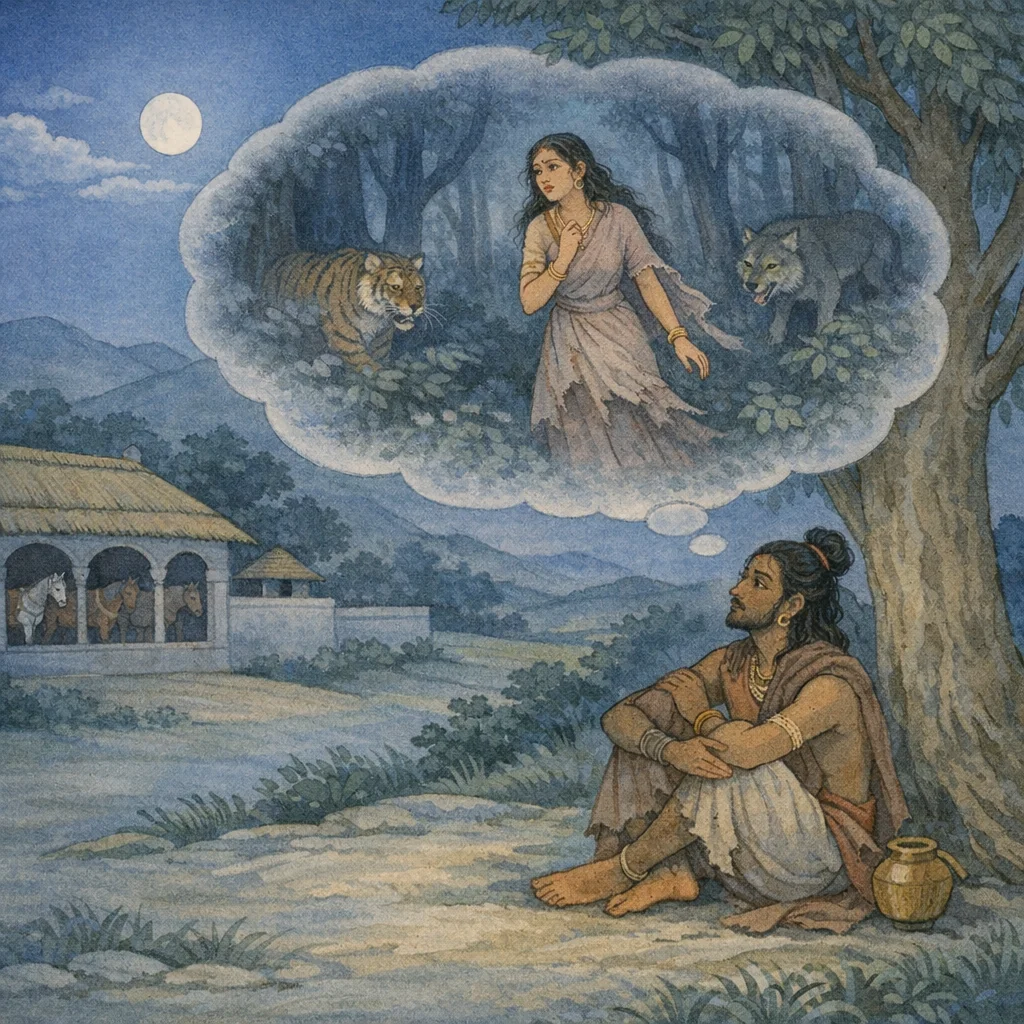
सातुतं पुरुषं नारी कृच्छेडप्पनुगता वने,“वह नारी इतनी पतिव्रता थी कि संकटकालमें भी उस पुरुषके पीछे-पीछे वनमें चली गयी; किंतु उस अल्प पुण्यवाले पुरुषने उसे वनमें ही त्याग दिया। अब तो यदि वह जीवित होगी तो बड़े कष्टसे उसके दिन बीतते होंगे। वह स्त्री अकेली थी। उसे मार्गका ज्ञान नहीं था। जिस संकटमें वह पड़ी थी, उसके योग्य वह कदापि नहीं थी
Bṛhadaśva said: That woman, though in dire distress, followed the man into the forest. She was so devoted to her husband that even in a time of calamity she went after him into the wilderness; yet that man, of scant merit, abandoned her there. If she is still alive, her days must be passing in great suffering. She was alone, without knowledge of the way, and the peril into which she had fallen was never something she was fit to endure.
Verse 17
त्यक्ता तेनाल्पपुण्येन दुष्करं यदि जीवति । एका बालानभिशज्ञा च मार्गाणामतथोचिता,“वह नारी इतनी पतिव्रता थी कि संकटकालमें भी उस पुरुषके पीछे-पीछे वनमें चली गयी; किंतु उस अल्प पुण्यवाले पुरुषने उसे वनमें ही त्याग दिया। अब तो यदि वह जीवित होगी तो बड़े कष्टसे उसके दिन बीतते होंगे। वह स्त्री अकेली थी। उसे मार्गका ज्ञान नहीं था। जिस संकटमें वह पड़ी थी, उसके योग्य वह कदापि नहीं थी
Bṛhadaśva said: “Abandoned by that man of scant merit, if she is still alive, her life must be passing with great hardship. She was a young woman, left all alone—unacquainted with the ways and routes, and wholly unfit for the peril into which she had fallen.”
Verse 18
क्षुत्पिपासापरीताजी दुष्करं यदि जीवति । श्वापदाचरिते नित्यं वने महति दारुणे,“भूख और प्याससे उसके अंग व्याप्त हो रहे थे। उस दशामें परित्यक्त होकर वह यदि जीवित भी हो तो भी उसका जीवित रहना बहुत कठिन है। आर्य जीवल! अत्यन्त भयंकर विशाल वनमें जहाँ नित्य-निरन्तर हिंसक जन्तु विचरते रहते हैं, उस मन्दबुद्धि एवं मन्दभाग्य पुरुषने उसका त्याग कर दिया था।” इस प्रकार निषधनरेश राजा नल दमयन्तीका निरन्तर स्मरण करते हुए राजा ऋतुपर्णके यहाँ अज्ञातवास कर रहे थे
Bṛhadaśva said: “With hunger and thirst overwhelming her limbs, even if she still lives, her survival would be exceedingly difficult—abandoned as she is in that vast and dreadful forest where beasts of prey roam continually.”
Verse 19
त्यक्ता तेनाल्पभाग्येन मन्दप्रज्ञेन मारिष । इत्येवं नैषधो राजा दमयन्तीमनुस्मरन् ।। अज्ञातवासं न्यवसदू राज्ञस्तस्य निवेशने,“भूख और प्याससे उसके अंग व्याप्त हो रहे थे। उस दशामें परित्यक्त होकर वह यदि जीवित भी हो तो भी उसका जीवित रहना बहुत कठिन है। आर्य जीवल! अत्यन्त भयंकर विशाल वनमें जहाँ नित्य-निरन्तर हिंसक जन्तु विचरते रहते हैं, उस मन्दबुद्धि एवं मन्दभाग्य पुरुषने उसका त्याग कर दिया था।” इस प्रकार निषधनरेश राजा नल दमयन्तीका निरन्तर स्मरण करते हुए राजा ऋतुपर्णके यहाँ अज्ञातवास कर रहे थे
Bṛhadaśva said: “O noble one, she was abandoned by that man of scant fortune and dull understanding.” Thus, the king of Niṣadha, Nala, continually remembering Damayantī, lived in concealment, staying unrecognized in the residence of that king (Ṛtupārṇa).
Verse 66
इस प्रकार श्रीमहाभारत वनपर्वके अन्तर्गत नलोपाख्यानपर्वमें नलककॉटिकसंवादविषयक छाछठवाँ अध्याय पूरा हुआ
Thus, in the Śrī Mahābhārata’s Vana Parva, within the Nalopākhyāna section, the sixty-sixth chapter—concerning the dialogue between Nala and Karkoṭaka—comes to its conclusion. The colophon signals a completed unit of teaching and narrative, marking the end of a focused episode within the larger ethical and experiential arc of exile.
Verse 67
इति श्रीमहाभारते वनपर्वणि नलोपाख्यानपर्वणि नलविलापे सप्तषष्टितमो< ध्याय:,इस प्रकार श्रीमहाभारत वनपर्वके अन्तर्गत नलोपाख्यानपर्वमें नलविलापविषयक सड़सठवाँ अध्याय पूरा हुआ
Thus, in the Śrī Mahābhārata, within the Vana Parva, in the sub-episode known as the Nala-upākhyāna, the sixty-seventh chapter—centered on Nala’s lament—comes to an end. (This is a colophon marking the close of the chapter rather than a narrative verse.)
Verse 156
वसत्यनर्हस्तद् दुःखं भूय एवानुसंस्मरन् । “रातमें उसीका स्मरण करके वह एक श्लोकको गाया करता है। सारी पृथ्वीका चक्कर लगाकर वह कभी किसी स्थानमें पहुँचा और वहीं निरन्तर उस प्रियतमाका स्मरण करके दुःख भोगता रहता है। यद्यपि वह उस दुःखको भोगनेके योग्य है नहीं
Frequently Asked Questions
The dilemma is how to respond to abandonment and suffering without collapsing into private despair: Damayantī balances personal modesty (lajjā) against the ethical necessity of public action to restore marital and royal order.
Ethical agency in crisis can be operationalized through truthful speech, compassionate appeal, and institutionally trusted channels; dharma is shown as actionable coordination rather than passive endurance.
No explicit phalaśruti appears here; the meta-function is procedural—establishing the narrative mechanism by which recognition, reply, and eventual reunion become possible within a dharma-governed framework.