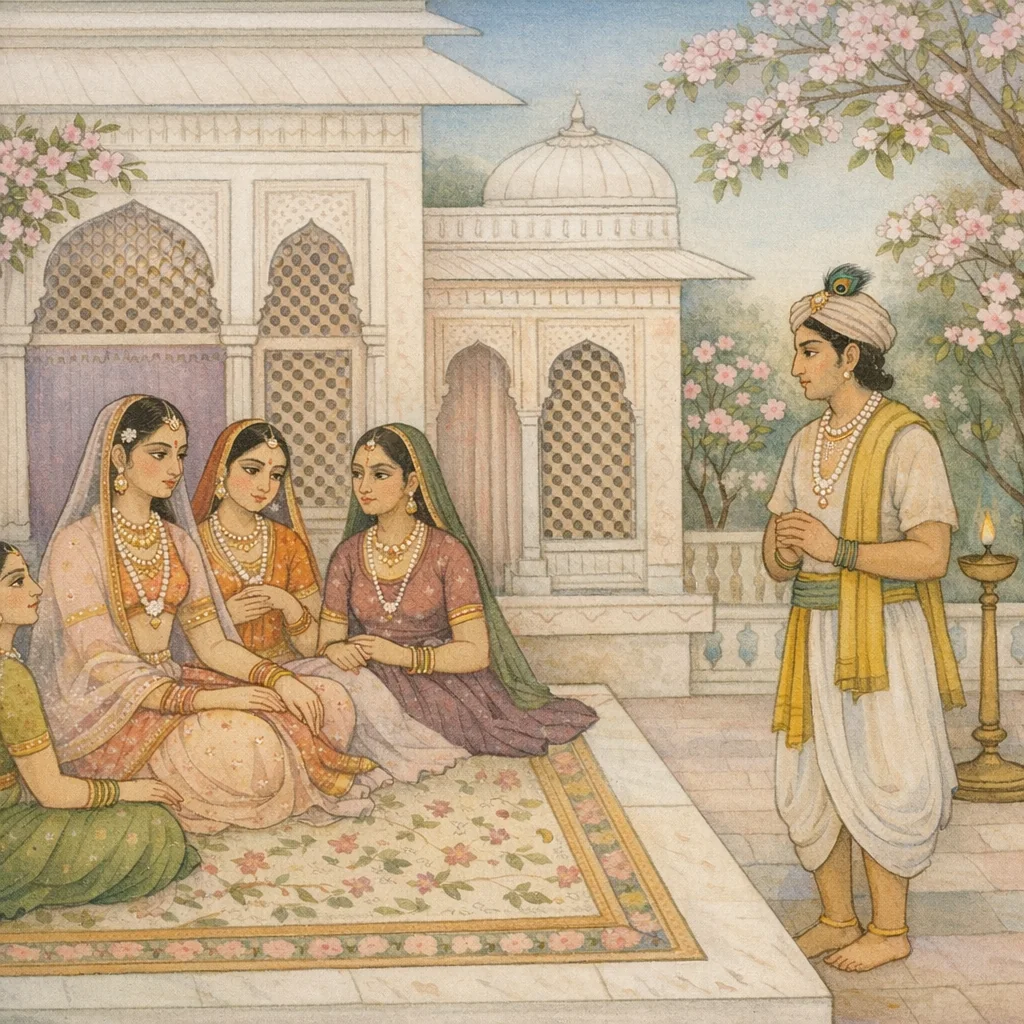
Adhyaya 55
कलेर्द्वापरस्य च नले प्रति कोपः (Kali and Dvāpara’s Resolve Against Nala)
Upa-parva: Nala–Damayantī Upākhyāna (Episode of Nala and Damayantī)
Bṛhadaśva narrates that after Damayantī chooses Nala in her svayaṃvara, the lokapālas observe Kali approaching with Dvāpara. Śakra (Indra) questions Kali’s destination; Kali declares his desire to seek Damayantī’s hand. Indra replies that the svayaṃvara has concluded and Damayantī has chosen Nala, who is present among the gods. Kali, angered, argues that Damayantī’s selection of a human among gods warrants punishment. The gods respond that Nala’s selection was approved by them and praise Nala’s comprehensive virtues—knowledge of dharma, truthful conduct, firmness, generosity, austerity, purity, self-control, and equanimity—likening him to a lokapāla. They condemn any attempt to curse such a ruler as self-destructive and leading to severe negative consequence. After the gods depart to heaven, Kali confides to Dvāpara his inability to contain anger and resolves to dwell in Nala, to cause his fall from kingship and obstruct his happiness with Damayantī; he requests Dvāpara’s assistance by entering the dice (akṣa), thereby establishing the narrative mechanism for impending misfortune.
Chapter Arc: देवताओं को सहायता का वचन देकर निषधराज नल दूत-रूप धारण करते हैं और राजमहल की ओर बढ़ते हैं—जहाँ स्वयं उनका हृदय पहले ही दमयन्ती में बँध चुका है। → नल देवताओं से पूछते हैं—आप कौन हैं, मैं किसका दूत बनूँ, और क्या संदेश दूँ? तब इन्द्र स्वयं परिचय देते हैं: इन्द्र, अग्नि, वरुण और यम—चारों दमयन्ती के लिए आए हैं। नल के भीतर प्रेम और कर्तव्य का द्वन्द्व तीव्र होता जाता है, फिर भी वे प्रतिज्ञा निभाने को दमयन्ती के अन्तःपुर में प्रवेश करते हैं। → सखियों से घिरी, तेज और श्री से दीप्त वैदर्भी दमयन्ती के सामने नल अपना परिचय देते हैं—‘मुझे नल जानो; मैं देवताओं का दूत बनकर आया हूँ’—और चार देवों का प्रस्ताव सुनाते हैं: ‘उनमें से किसी एक को पति रूप में वरो।’ → नल दूत-धर्म का निर्वाह करते हुए देवताओं की इच्छा स्पष्ट शब्दों में दमयन्ती तक पहुँचा देते हैं, अपने निजी भावों को संदेश के पीछे दबाने का प्रयत्न करते हैं। → दमयन्ती के उत्तर की घड़ी निकट है—क्या वह देवों को चुनेगी, या दूत बने नल के प्रति अपने हृदय की सच्चाई प्रकट करेगी?
Shlokas
Verse 1
/ ऑ2आ छटर () अऑसन अप पञ्चपञज्चाशत्तमो< ध्याय: नलका दूत बनकर राजमहलमें जाना और दमयन्तीको देवताओंका संदेश सुनाना बृहृदश्च उवाच तेभ्य: प्रतिज्ञाय नलः करिष्य इति भारत । अथैतान् परिपप्रच्छ कृताञज्जलिरुपस्थित:,बृहदश्व मुनि कहते हैं--भारत! देवताओंसे उनकी सहायता करनेकी प्रतिज्ञा करके राजा नलने हाथ जोड़ पास जाकर उनसे पूछा--“आपलोग कौन हैं? और वह कौन व्यक्ति है, जिसके पास जानेके लिये आपने मुझे दूत बनानेकी इच्छा की है तथा आपलोगोंका वह कौन-सा कार्य है, जो मेरे द्वारा सम्पन्न होनेयोग्य है, यह ठीक-ठीक बताइये"
Bṛhadaśva said: “O Bhārata, having pledged to those gods, ‘I will do it,’ King Nala then approached them with joined palms and questioned them closely: ‘Who are you? Who is the person to whom you wish to send me as your messenger? And what, precisely, is the task that can be accomplished by me? Tell me clearly.’”
Verse 2
के वै भवन्त: कश्चासौ यस्याहं दूत ईप्सित: । किं च तद् वो मया कार्य कथयध्वं यथातथम्,बृहदश्व मुनि कहते हैं--भारत! देवताओंसे उनकी सहायता करनेकी प्रतिज्ञा करके राजा नलने हाथ जोड़ पास जाकर उनसे पूछा--“आपलोग कौन हैं? और वह कौन व्यक्ति है, जिसके पास जानेके लिये आपने मुझे दूत बनानेकी इच्छा की है तथा आपलोगोंका वह कौन-सा कार्य है, जो मेरे द्वारा सम्पन्न होनेयोग्य है, यह ठीक-ठीक बताइये"
Bṛhadaśva said: “O Bhārata! Having pledged his assistance to the gods, King Nala approached them with joined palms and asked: ‘Who indeed are you? And who is that person to whom you wish to send me as a messenger? What task is it that you want accomplished through me? Tell me the matter exactly as it is.’”
Verse 3
एवमुक्तो नैषधेन मघवानभ्यभाषत । अमरान् वै निबोधास्मान् दमयन्त्यर्थमागतान्,निषधराज नलके इस प्रकार पूछनेपर इन्द्रने कहा--“भूपाल! तुम हमें देवता समझो, हम दमयन्तीको प्राप्त करनेके लिये यहाँ आये हैं!
Thus addressed by the king of Niṣadha, Maghavan (Indra) replied: “O king, understand us to be the immortals (gods). We have come here for the sake of Damayantī, O ruler of Niṣadha, Nala.” The moment frames a moral tension: divine desire enters a human sphere, testing Nala’s discernment, restraint, and adherence to dharma amid competing claims.
Verse 4
अहमिन्द्रोड्यमग्निश्व तथैवायमपां पति: । शरीरान्तकरो नृणां यमो5यमपि पार्थिव,“मैं इन्द्र हूँ, ये अग्निदेव हैं, ये जलके स्वामी वरुण और ये प्राणियोंके शरीरका नाश करनेवाले साक्षात् यमराज हैं। आप दमयन्तीके पास जाकर उसे हमारे आगमनकी सूचना दे दीजिये और कहिये--महेन्द्र आदि लोकपाल तुम्हें देखनेके लिये आ रहे हैं
Bṛhadaśva said: “I am Indra; this is Agni; this one is Varuṇa, lord of the waters; and this is Yama, the very ender of embodied life for mortals. O king, go to Damayantī and inform her of our arrival, saying: ‘The world-guardians beginning with Mahendra are coming to see you.’”
Verse 5
त्वं वै समागतानस्मान् दमयन्त्यै निवेदय । लोकपाला महेन्द्राद्या: समायान्ति दिदृक्षव:,“मैं इन्द्र हूँ, ये अग्निदेव हैं, ये जलके स्वामी वरुण और ये प्राणियोंके शरीरका नाश करनेवाले साक्षात् यमराज हैं। आप दमयन्तीके पास जाकर उसे हमारे आगमनकी सूचना दे दीजिये और कहिये--महेन्द्र आदि लोकपाल तुम्हें देखनेके लिये आ रहे हैं
Bṛhadaśva said: “Go and announce our arrival to Damayantī. The guardians of the worlds—beginning with great Indra—are coming, eager to see her.” The moment underscores the extraordinary moral and personal stature attributed to Damayantī: even the highest divine rulers seek an audience, and proper protocol—formal notification and respectful approach—is observed.
Verse 6
प्राप्तुमिच्छन्ति देवास्त्वां शक्रोग्निर्वरुणो यम: । तेषामन्यतमं देवं पतित्वे वरयस्व ह,“इन्द्र, अग्नि, वरुण और यम--ये देवतालोग तुम्हें प्राप्त करना चाहते हैं। तुम उनमेंसे किसी एक देवताको पतिरूपमें चुन लो'
Bṛhadaśva said: “The gods desire to win you—Śakra (Indra), Agni, Varuṇa, and Yama. Choose, then, whichever one of these deities you wish to have as your husband.”
Verse 7
एवमुक्त: स शक्रेण नल: प्राउ्जलिरब्रवीत् | एकार्थ समुपेतं मां न प्रेषयितुमहथ,इन्द्रके ऐसा कहनेपर नल हाथ जोड़कर बोले--'देवताओ! मेरा भी एकमात्र यही प्रयोजन है, जो आपलोगोंका है; अत: एक ही प्रयोजनके लिये आये हुए मुझे दूत बनाकर न भेजिये'
Thus addressed by Śakra (Indra), Nala, with palms joined in reverence, replied: “Do not deem it right to send me as a messenger. I have come with the very same single purpose that you gods have; since our aim is one, it is not fitting to dispatch me as an envoy.”
Verse 8
कथं तु जातसंकल्प: स्त्रियमुत्सूजते पुमान् । परार्थमीदृशं वक्तुं तत् क्षमन्तु महेश्वरा:,'देवेश्वरो! जिसके मनमें किसी स्त्रीको प्राप्त करनेका संकल्प हो गया है, वह पुरुष उसी स्त्रीको दूसरेके लिये कैसे छोड़ सकता है? अतः आपलोग ऐसी बात कहनेके लिये मुझे क्षमा करें"
Verse 9
देवा ऊचु करिष्य इति संभश्रुत्य पूर्वमस्मासु नैषध । न करिष्यसि कस्मात् त्वं त्रज नैषध मा चिरम्,देवताओंने कहा--निषधनरेश! तुम पहले हमलोगोंसे हमारा कार्य सिद्ध करनेके लिये प्रतिज्ञा कर चुके हो, फिर तुम उस प्रतिज्ञाका पालन कैसे नहीं करोगे? इसलिये निषधराज! तुम शीघ्र जाओ; देर न करो
The gods said: “O king of Niṣadha, you previously gave us your solemn word—‘I will do it’—undertaking to accomplish our purpose. How, then, can you now refuse to carry out that pledge? Therefore, O Naiṣadha, go at once; do not delay.”
Verse 10
बृहृदश्च उवाच एवमुक्त: स देवैस्तैनैषथ: पुनरब्रवीत् | सुरक्षितानि वेश्मानि प्रवेष्टं कथमुत्सहे,बृहदश्व मुनि कहते हैं--राजन! उन देवताओंके ऐसा कहनेपर निषधनरेशने पुनः उनसे पूछा--“विदर्भराजके सभी भवन (पहरेदारोंसे) सुरक्षित हैं। मैं उनमें कैसे प्रवेश कर सकता हूँ?”
Verse 11
प्रवेक्ष्यसीति तं शक्र: पुनरेवाभ्यभाषत । जगाम स ततथेत्युक्त्वा दमयन्त्या निवेशनम्,तब इन्द्रने पुनः उत्तर दिया--'तुम वहाँ प्रवेश कर सकोगे।” तत्पश्चात् राजा नल 'तथास्तु” कहकर दमयन्तीके महलमें गये
Bṛhadaśva said: Indra (Śakra) addressed him once again, saying, “You will be able to enter.” Thereupon King Nala, replying “So be it,” went to Damayantī’s residence. The moment underscores divine assurance enabling a righteous course of action and the hero’s prompt, disciplined compliance.
Verse 12
ददर्श तत्र वैदर्भी सखीगणसमावृताम् | देदीप्यमानां वपुषा श्रिया च वरवर्णिनीम्,वहाँ उन्होंने देखा, सखियोंसे घिरी हुई परम सुन्दरी विदर्भराजकुमारी दमयन्ती अपने सुन्दर शरीर और दिव्य कान्तिसे अत्यन्त उद्धासित हो रही है
There he beheld the princess of Vidarbha, Damayantī—surrounded by her circle of companions—radiant in form and resplendent with auspicious beauty, her excellent complexion shining forth. The scene underscores how true nobility is recognized not merely by birth, but by the manifest signs of inner excellence and fortune that inspire reverence in others.
Verse 13
अतीवसुकुमाराड्ीं तनुमध्यां सुलोचनाम् । आशक्षिपन्तीमिव प्रभां शशिन: स्वेन तेजसा,उसके अंग परम सुकुमार हैं, कटिके ऊपरका भाग अत्यन्त पतला है और नेत्र बड़े सुन्दर हैं एवं वह अपने तेजसे चन्द्रमाकी प्रभाको भी तिरस्कृत-सी कर रही है
Bṛhadaśva said: “She is exceedingly delicate-limbed, slender-waisted, and possessed of beautiful eyes; by her own radiance she seems, as it were, to eclipse even the moon’s glow.”
Verse 14
तस्य दृष्टवैव ववृधे कामस्तां चारुहासिनीम् । सत्यं चिकीर्षमाणस्तु धारयामास हृच्छयम्,उस मनोहर मुसकानवाली राजकुमारीको देखते ही नलके हृदयमें कामाग्नि प्रज्वलित हो उठी; तथापि अपनी प्रतिज्ञाको सत्य करनेकी इच्छासे उन्होंने उस कामवेदनाको मनमें ही रोक लिया
Verse 15
ततस्ता नैषध॑ दृष्टवा सम्भ्रान्ता: परमाड्ना: । आसनेभ्य: समुत्पेतुस्तेजसा तस्य धर्षिता:,निषधराजको वहाँ आये देख अन्तःपुरकी सारी सुन्दरी स्त्रियाँ चकित हो गयीं और उनके तेजसे तिरस्कृत हो अपने आसनोंसे उठकर खड़ी हो गयीं
Then, on seeing the king of Niṣadha, the ladies of the inner apartments—startled and greatly agitated—rose up from their seats. Overawed and put to shame by the radiance of that man, they stood up, their composure broken by his splendor.
Verse 16
प्रशशंसुश्न सुप्रीता नल॑ ता विस्मयान्विता: । न चैनमभ्यभाषन्त मनोभिस्त्वभ्यपूजयन्,अत्यन्त प्रसन्न और आश्वर्यचकित होकर उन सबने राजा नलके सौन्दर्यकी प्रशंसा की। उन्होंने उनसे वार्तालाप नहीं किया; परंतु मन-ही-मन उनका बड़ा आदर किया
Delighted and filled with wonder, they praised King Nala’s beauty. Yet they did not address him in conversation; instead, they honoured him inwardly, paying him reverence in their hearts—an etiquette of restrained speech joined to sincere respect.
Verse 17
अहो रूपमहो कान्तिरहो धैर्य महात्मन: । को<यं देवो5थवा यक्षो गन्धर्वो वा भविष्यति,वे सोचने लगीं--“अहो! इनका रूप अद्भुत है, कान्ति बड़ी मनोहर है तथा इन महात्माका धैर्य भी अनूठा है। न जाने ये हैं कौन? सम्भव है, देवता, यक्ष अथवा गन्धर्व हों!
Bṛhadaśva said: “Ah, what beauty! Ah, what radiance! And what extraordinary steadfastness in this great-souled one! Who can he be—perhaps a god, or a Yakṣa, or a Gandharva?”
Verse 18
न तास्तं शवनुवन्ति सम व्याहर्तुमपि किंचन । तेजसा धर्षितास्तस्य लज्जावत्यो वराड़ना,नलके तेजसे प्रतिहत हुई वे लजीली सुन्दरियाँ उनसे कुछ बोल भी न सकी
Bṛhadaśva said: Those modest, beautiful women, overawed and intimidated by his radiance, were unable to speak to him evenly—indeed, they could not utter anything at all. The passage highlights how sheer personal splendor and authority can silence others, raising an ethical contrast between outward power and the inner freedom to speak without fear.
Verse 19
अथीैनं स्मयमान तु स्मितपूर्वांभिभाषिणी । दमयन्ती नलं॑ वीरमभ्यभाषत विस्मिता,तब मुसकराकर बातचीत करनेवाली दमयन्तीने विस्मित होकर मुसकराते हुए वीर नलसे इस प्रकार पूछा--
Then Damayantī—smiling, and speaking with a gentle smile already on her lips—addressed the heroic Nala with astonishment. In this moment, her wonder and restrained joy shape her words as she begins to question him directly.
Verse 20
कर्त्वं सर्वानवद्याड़ मम हच्छयवर्धन । प्राप्तोडस्पमरवद् वीर ज्ञातुमिच्छामि तेडनघ,एवमुक्तस्तु वैदर्भ्या नलस्तां प्रत्युवाच ह । “आप कौन हैं? आपके सम्पूर्ण अंग निर्दोष एवं परम सुन्दर हैं। आप मेरे हृदयकी कामाग्निको बढ़ा रहे हैं। निष्पाप वीर! आप देवताओंके समान यहाँ आ पहुँचे हैं। मैं आपका परिचय पाना चाहती हूँ। आपका इस रनिवासमें आना कैसे सम्भव हुआ? आपको किसीने देखा कैसे नहीं? मेरा यह महल अत्यन्त सुरक्षित है और यहाँके राजाका शासन बड़ा कठोर है--वे अपराधियोंको बड़ा कठोर दण्ड देते हैं।” विदर्भराजकुमारीके ऐसा पूछनेपर नलने इस प्रकार उत्तर दिया
Bṛhadaśva said: “O flawless-limbed one, increaser of my heart’s longing! Like a hero equal to the gods you have arrived here. O sinless one, I wish to know who you are. How could you have entered this inner palace? How did no one see you? This mansion is exceedingly well-guarded, and the king’s rule here is strict—wrongdoers are punished severely.” Thus questioned by the princess of Vidarbha, Nala replied in this manner.
Verse 21
कथमागमनं चेह कथं चासि न लक्षित: । सुरक्षितं हि मे वेश्म राजा चैवोग्रशासन:
Bṛhadaśva said: “How did you manage to come here, and how have you not been noticed? My residence is well-guarded, and the king too enforces stern discipline.”
Verse 22
नल उवाच नल॑ मां विद्धि कल्याणि देवदूतमिहागतम्,नलने कहा--कल्याणि! तुम मुझे नल समझो। मैं देवताओंका दूत बनकर यहाँ आया हूँ। इन्द्र, अग्नि, वरुण और यम देवता तुम्हें प्राप्त करना चाहते हैं। शोभने! तुम उनमेंसे किसी एकको अपना पति चुन लो
Nala said: “O auspicious lady, know me to be Nala, who has come here as a messenger of the gods. Indra, Agni, Varuṇa, and Yama desire to win you. O radiant one, choose one of them as your husband.”
Verse 23
देवास्त्वां प्राप्तुमिच्छन्ति शक्रोडग्निर्वरुणो यम: । तेषामन्यतमं देवं पतिं वरय शोभने,नलने कहा--कल्याणि! तुम मुझे नल समझो। मैं देवताओंका दूत बनकर यहाँ आया हूँ। इन्द्र, अग्नि, वरुण और यम देवता तुम्हें प्राप्त करना चाहते हैं। शोभने! तुम उनमेंसे किसी एकको अपना पति चुन लो
Nala said: “The gods desire to win you—Śakra (Indra), Agni, Varuṇa, and Yama. O fair one, choose as your husband whichever one of these deities you prefer.”
Verse 24
तेषामेव प्रभावेण प्रविष्टोड5हमलक्षित: । प्रविशन्तं न मां कश्चिदपश्यन्नाप्पवारयत्,उन्हीं देवताओंके प्रभावसे मैं इस महलके भीतर आया हूँ और मुझे कोई देख न सका है। भीतर प्रवेश करते समय न तो किसीने मुझे देखा है और न रोका ही है
Nala said: “By the very power of those divine beings, I entered this palace unseen. As I was coming in, no one noticed me, and no one tried to stop me.”
Verse 25
एतदर्थमहं भटद्रे प्रेषित: सुरसत्तमै: । एतच्छुत्वा शुभे बुद्धि प्रकुरुष्व यथेच्छसि,भद्रे! इसीलिये श्रेष्ठ देवताओंने मुझे यहाँ भेजा है। शुभे! इसे सुनकर तुम्हारी जैसी इच्छा हो, वैसा निश्चय करो
For this very purpose, O gentle lady, I have been sent here by the foremost among the gods. Having heard this, O auspicious one, make up your mind and decide as you wish, O noble lady.
Verse 54
इस प्रकार श्रीमहाभारत वनपर्वके अन्तर्गत नलोपाख्यानपर्वमें इन्द्रनारदरसंवादविषयक चौवनवाँ अध्याय पूरा हुआ
Thus ends the fifty-fourth chapter of the Nala episode within the Vana Parva of the Śrī Mahābhārata, dealing with the dialogue between Indra and Nārada. This closing colophon marks the completion of that section and signals a transition in the narrative, emphasizing orderly transmission and preservation of the text.
Verse 55
इति श्रीमहाभारते वनपर्वणि नलोपाख्यानपर्वणि नलस्य देवदौत्ये पञ्चपज्चाशत्तमो<ध्याय:
Thus ends the fifty-fifth chapter in the Vana Parva of the Śrī Mahābhārata, within the section known as the Nala episode, specifically the chapter concerning Nala’s mission as a divine messenger. This colophon marks the close of a narrative unit, reminding the listener that Nala’s actions are framed as service to a higher purpose and as a test of conduct amid personal trial.
Verse 216
एवमुक्तस्तु वैदर्भ्या नलस्तां प्रत्युवाच ह । “आप कौन हैं? आपके सम्पूर्ण अंग निर्दोष एवं परम सुन्दर हैं। आप मेरे हृदयकी कामाग्निको बढ़ा रहे हैं। निष्पाप वीर! आप देवताओंके समान यहाँ आ पहुँचे हैं। मैं आपका परिचय पाना चाहती हूँ। आपका इस रनिवासमें आना कैसे सम्भव हुआ? आपको किसीने देखा कैसे नहीं? मेरा यह महल अत्यन्त सुरक्षित है और यहाँके राजाका शासन बड़ा कठोर है--वे अपराधियोंको बड़ा कठोर दण्ड देते हैं।” विदर्भराजकुमारीके ऐसा पूछनेपर नलने इस प्रकार उत्तर दिया
Thus addressed by the princess of Vidarbha, Nala replied to her. She said: “Who are you? Every limb of yours is flawless and exceedingly beautiful. You are fanning the fire of desire within my heart. O blameless hero, you have arrived here like a god. I wish to know who you are. How could you enter this inner palace? How has no one seen you? This mansion is extremely well-guarded, and the king’s rule here is very strict—he inflicts severe punishment on offenders.” When the princess of Vidarbha questioned him in this way, Nala answered accordingly.
Frequently Asked Questions
The dilemma concerns legitimacy and resentment: Kali frames Damayantī’s human choice as punishable, while the gods counter that ethical merit and approved procedure validate Nala, making vindictive retaliation unjust.
The chapter instructs that stable kingship depends on anchored virtues—truth, discipline, generosity, purity, and composure—and that hostility toward such virtue rebounds upon the aggressor.
A warning is embedded as a consequence statement: attempting to curse or destroy a ruler characterized by dharmic virtues is portrayed as self-harm leading to grave negative outcomes, functioning as a moralized meta-comment on intent.