Adhyaya 48
Dhṛtarāṣṭra’s Anxiety and Sañjaya’s Report on the Pandavas’ Coalition (Kāmyaka Context)
Upa-parva: Kāmyaka-vana Saṃvāda (Dhṛtarāṣṭra–Sañjaya on the Pandavas’ allies and vows)
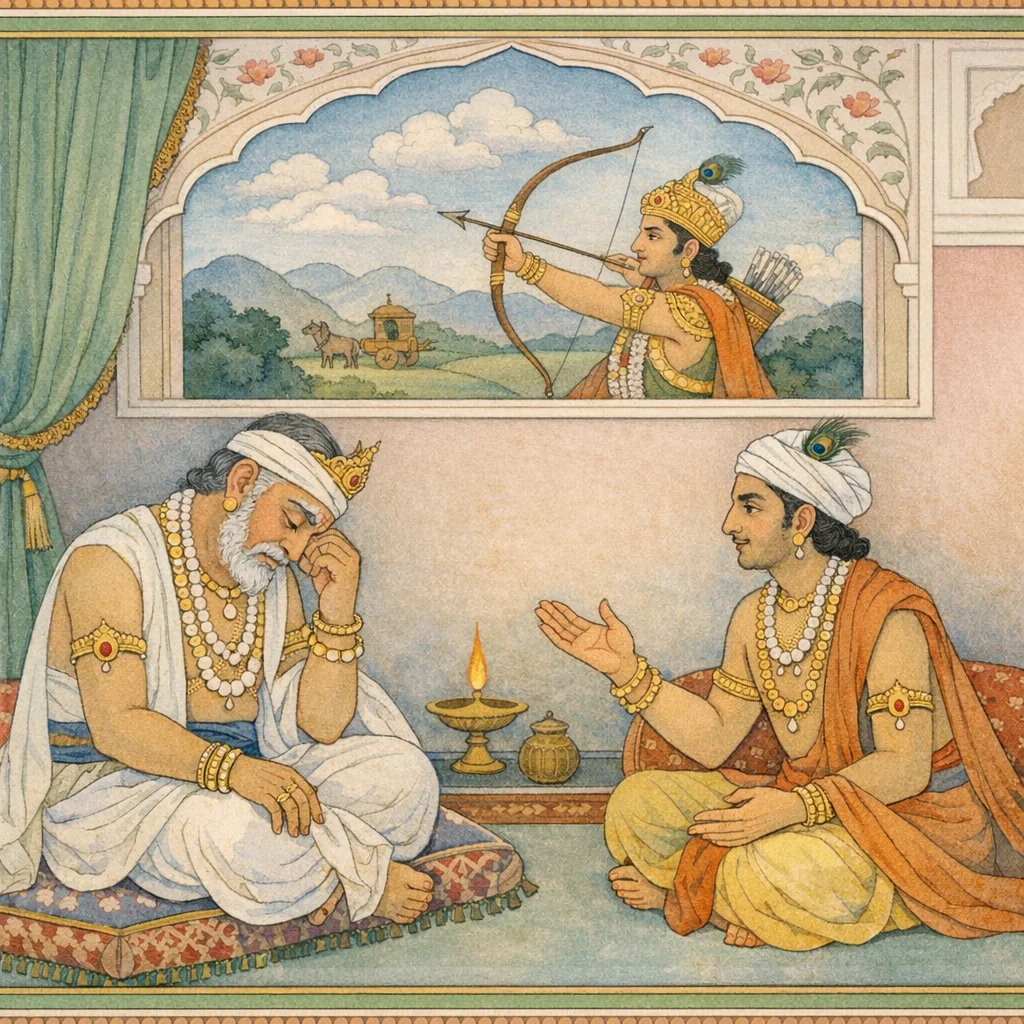
Vaiśaṃpāyana presents a court-facing dialogue in which Dhṛtarāṣṭra, after a long heated sigh, addresses Sañjaya with apprehension about the Pandavas—especially Nakula and Sahadeva—described as resolute, swift, and formidable in battle when aligned behind Bhīma and Arjuna. Dhṛtarāṣṭra projects that, protected by Vāsudeva and supported by the Vṛṣṇis and Pāñcālas, the Pandavas could overwhelm the Kaurava forces; the imagery stresses the irresistible momentum of Bhīma’s mace and Arjuna’s Gāṇḍīva. He turns to retrospective self-critique, noting neglected counsel due to subordination to Duryodhana’s will. Sañjaya responds by identifying the magnitude of Dhṛtarāṣṭra’s earlier omission—failing to restrain his son despite capacity—and recalls Kṛṣṇa’s swift solidarity with the defeated Pandavas at Kāmyaka, the gathering of allied heroes, and assurances to Draupadī regarding future retribution. The chapter closes with Dhṛtarāṣṭra acknowledging Vidura’s prior warning at the dice-game: that victory over the Pandavas would culminate in catastrophic bloodshed, now seen as near-certain in due time.
Chapter Arc: जनमेजय के प्रश्न-स्वर के बीच, वैशम्पायन धृतराष्ट्र के अंतःपुर में ले जाते हैं—जहाँ संजय के मुख से अर्जुन के इन्द्रलोक-गमन और दिव्य-प्राप्ति का वृत्तान्त सुनकर अन्धे राजा का हृदय भय और पश्चात्ताप से काँप उठता है। → धृतराष्ट्र संजय से बार-बार ‘यथातथ्य’ पूछते हैं—क्या अर्जुन सचमुच वैसा ही है जैसा कहा गया? फिर वे अपने ही पुत्र दुर्योधन को ‘प्रमत्त, ग्राम्य-विषयों में फँसा, पापनिश्चयी, सुदुर्बुद्धि’ कहकर स्वीकारते हैं कि वही पृथ्वी का घात करेगा; अर्जुन की सत्यवाणी, महात्म्य और अजेयता का स्मरण उनके भय को तीव्र करता जाता है। → धृतराष्ट्र की वाणी विलाप में फूट पड़ती है—जिसके पास धनंजय जैसा योद्धा हो, उसके लिए त्रैलोक्य भी साध्य है; और जब किरीटी समर में बाण-वृष्टि करता है तो वह विधाता द्वारा छोड़े गए ‘अन्तक’ के समान सर्वहर प्रतीत होता है—ऐसे में मेरे पुत्रों की ‘सर्वेश्वरत्व’ की लालसा ही उनके वध का कारण बनेगी। → राजा निष्कर्ष पर पहुँचते हैं कि फाल्गुन (अर्जुन) के रहते कौरवों के लिए शान्ति केवल ‘वध’ के बाद ही सम्भव दिखती है—अर्थात् दुर्योधन की नीति उन्हें विनाश की ओर ले जा रही है; संजय के सामने यह आत्मस्वीकृति अध्याय का शोक-समापन बनती है। → धृतराष्ट्र का भय भविष्यवाणी बनकर ठहर जाता है—अब प्रश्न यह रह जाता है कि क्या वे दुर्योधन को रोक पाएँगे, या यह विलाप भी नियति के प्रवाह में व्यर्थ सिद्ध होगा?
Shlokas
Verse 1
/ 73:87 #:23::7 (0) हि २ 7 अष्टचत्वारिशो<् ध्याय: दुःखित धृतराष्ट्रका संजयके सम्मुख अपने पुत्रोंके लिये चिन्ता करना जनमेजय उवाच अत्यद्भुतमिदं कर्म पार्थस्यामिततेजस: । धृतराष्ट्रो महाप्राज्ञ: श्रुत्वा विप्र किमब्रवीत्,जनमेजयने पूछा--ब्रह्मन! अमित तेजस्वी कुन्तीकुमार अर्जुनका यह कर्म तो अत्यन्त अद्भुत है। परम बुद्धिमान् राजा धृतराष्ट्रने भी यह सब अवश्य सुना होगा। उसे सुनकर उन्होंने क्या कहा था? यह बतलाइये
Janamejaya said: “O Brahmin, this deed of Pārtha (Arjuna), whose splendor is immeasurable, is truly astonishing. The highly wise King Dhṛtarāṣṭra must have heard of it as well. After hearing it, what did he say? Please tell me.”
Verse 2
वैशम्पायन उवाच शक्रलोकगतं पार्थ श्रुत्वा राजाम्बिकासुत: । द्वैपायनादृषिश्रेष्ठात् संजयं वाक्यमत्रवीत्,वैशम्पायनजीने कहा--जनमेजय! अम्बिकानन्दन राजा धूृतराष्ट्रने ऋषि द्वैपायन व्यासके मुखसे अर्जुनके इन्द्रलोकगमनका समाचार सुनकर संजयसे यह बात कही
Verse 3
धृतराष्ट्र रवाच श्रुतं मे सूत कार्त्स्न्येन कर्म पार्थस्य धीमतः । कच्चित् तवापि विदितं याथातथ्येन सारथे,धृतराष्ट्र बोले--सूत! मैंने परम बुद्धिमान् कुन्तीकुमार अर्जुनका सारा वृत्तान्त सुना है। सारथे! क्या तुम्हें भी इस विषयमें यथार्थ बातें ज्ञात हुई हैं?
Verse 4
प्रमत्तो ग्राम्यर्मेषु मन्दात्मा पापनिश्चय: । मम पुत्र: सुददुर्बुद्धि: पृथिवीं घातयिष्यति,मेरा मूढ़बुद्धि पुत्र तो विषयभोगोंमें फँसा हुआ है। उसका विचार सदा पापपूर्ण ही बना रहता है। प्रमादमें पड़ा हुआ वह अत्यन्त दुर्बुद्धि दुर्योधन एक दिन सारे भूमण्डलका नाश करा देगा
Vaiśampāyana said: “My son, sunk in heedlessness and entangled in coarse worldly pleasures, is small-minded and fixed in sinful resolve. That utterly perverse fool will one day bring ruin upon the earth.”
Verse 5
//////८6 ॥/2 &// यस्य नित्यमृता वाच: स्वैरेष्वपि महात्मन: । त्रैलोक्यमपि तस्य स्याद् योद्धा यस्य धनंजय:,जिन महात्माके मुखसे हँसीमें भी सदा सत्य ही बातें निकलती हैं और जिनकी ओरसे लड़नेवाले धनंजय-जैसे योद्धा हैं, उन धर्मराज युधिष्ठिरके लिये इस कौरव-राज्यको जीतनेकी तो बात ही क्या है, वे तीनों लोकोंपर अधिकार प्राप्त कर सकते हैं
Vaiśampāyana said: Even in casual moments, the words of that great-souled man are unfailingly true. With Dhanañjaya (Arjuna) as his champion in battle, such a one could win not merely this Kaurava kingdom—he could command even the three worlds. The verse underscores that steadfast truthfulness, joined with righteous strength and loyal support, makes rightful sovereignty inevitable.
Verse 6
अस्यतः कर्णिनाराचांस्तीक्षणाग्रांश्र शिलाशितान् । कोडर्जुनस्थाग्रतस्तिषछ्ेदपि मृत्युर्जरातिग:,जो पत्थरपर रगड़कर तेज किये गये हैं, जिनके अग्रभाग बड़े तीखे हैं, उन कर्णि नामक नाराचोंका प्रहार करनेवाले अर्जुनके आगे कौन योद्धा ठहर सकता है? जराविजयी मृत्यु भी उनका सामना नहीं कर सकती
Vaiśampāyana said: “When Arjuna lets fly those karṇin arrows—stone-honed and razor-pointed—what warrior could stand before him? Even Death itself, though it overcomes old age, cannot face him.”
Verse 7
मम पुत्रा दुरात्मान: सर्वे मृत्युवशानुगा: । येषां युद्ध दुराधर्षै: पाण्डवै: प्रत्युपस्थितम्,मेरे सभी दुरात्मा पुत्र मृत्युके वशमें हो गये हैं; क्योंकि उनके सामने दुर्धर्ष वीर पाण्डवोंके साथ युद्ध करनेका अवसर उपस्थित हुआ है
Vaiśampāyana said: “All my sons, wicked at heart, have come under the dominion of Death, for a battle has now presented itself to them against the formidable Pāṇḍavas—warriors not easily overcome.”
Verse 8
तथैव च न पश्यामि युधि गाण्डीवधन्वन: । अनिशं चिन्तयानो5पि य एनमुदियाद् रथी,मैं दिन-रात विचार करनेपर भी यह नहीं समझ पाता कि युद्धमें “गाण्डीवधन्वा' अर्जुनका सामना कौन रथी कर सकता है?
Vaiśampāyana said: “Even so, I cannot see—though I ponder without cease—what chariot-warrior could rise up in battle to face Arjuna, the wielder of the Gāṇḍīva.”
Verse 9
द्रोणकर्णो प्रतीयातां यदि भीष्मो5पि वा रणे | महान् स्यात् संशयो लोके तत्र पश्यामि नो जयम्,द्रोण और कर्ण उस अर्जुनका सामना कर सकते हैं। भीष्म भी युद्धमें उनसे लोहा ले सकते हैं; परंतु तो भी मेरे मनमें महान् संशय ही बना हुआ है। मुझे इस लोकमें अपने पक्षकी जीत नहीं दिखायी देती
Vaiśampāyana said: “Even if Droṇa and Karṇa were to confront him, and even Bhīṣma too in battle, a great doubt would still remain in the world. In that situation I do not see victory for our side.”
Verse 10
घृणी कर्ण: प्रमादी च आचार्य: स्थविरो गुरु: । अमर्षी बलवान् पार्थ: संरम्भी दृढविक्रम:,कर्ण दयालु और प्रमादी है। आचार्य द्रोण वृद्ध एवं गुरु हैं। उधर कुन्तीकुमार अर्जुन अत्यन्त अमर्षमें भरे हुए और बलवान हैं। उद्योगी और दृढ़ पराक्रमी हैं। सब ओरसे घमासान युद्ध छिड़नेकी सम्भावना हो गयी है। युद्धमें पाण्डवोंकी पराजय नहीं हो सकती; क्योंकि उनकी ओर सभी अस्त्रविद्याके विद्वान् शूरवीर और महान् यशस्वी हैं
Vaiśaṃpāyana said: “Karna is compassionate, yet prone to heedlessness; the preceptor (Droṇa) is aged and revered as a guru. On the other side, Pārtha (Arjuna), Kuntī’s son, is filled with fierce indignation and is mighty—impetuous in onset and unwavering in valor.” The verse frames the ethical tension of impending battle by contrasting personal traits—mercy, negligence, age, authority, righteous anger, and steadfast heroism—suggesting how character shapes the course of war and responsibility.
Verse 11
सम्भवेत् तुमुलं युद्ध सर्वशो5प्यपराजितम् । सर्वे हस्त्रविद: शूरा: सर्वे प्राप्ता महद् यश:,कर्ण दयालु और प्रमादी है। आचार्य द्रोण वृद्ध एवं गुरु हैं। उधर कुन्तीकुमार अर्जुन अत्यन्त अमर्षमें भरे हुए और बलवान हैं। उद्योगी और दृढ़ पराक्रमी हैं। सब ओरसे घमासान युद्ध छिड़नेकी सम्भावना हो गयी है। युद्धमें पाण्डवोंकी पराजय नहीं हो सकती; क्योंकि उनकी ओर सभी अस्त्रविद्याके विद्वान् शूरवीर और महान् यशस्वी हैं
Vaiśampāyana said: “A tumultuous battle may well break out on every side—yet it would not end in defeat. For on that side all are heroic masters of weapons, and all have attained great renown.”
Verse 12
अपि सर्वेश्वरत्वं हि ते वाउछन्त्यपराजिता: । वधे नूनं भवेच्छान्तिरेतेषां फाल्गुनस्थ वा,और वे पराजित न होकर सर्वेश्वर सम्राट् बननेकी इच्छा रखते हैं। इन कर्ण आदि योद्धाओंका वध हो जाय अथवा अर्जुन ही मारे जायूँ तो इस विवादकी शान्ति हो सकती है
Vaiśampāyana said: “Indeed, those unconquered men desire even universal sovereignty. Peace in this dispute will arise only through death—either when these warriors (such as Karṇa and the rest) are slain, or when Phālguna (Arjuna) himself is killed.”
Verse 13
नतु हन्तार्जुनस्यास्ति जेता वास्य न विद्यते। मन्युस्तस्य कथं शाम्येन्मन्दान् प्रति समुत्थित:,परंतु अर्जुनको मारनेवाला या जीतनेवाला कोई नहीं है। मेरे मन्दबुद्धि पुत्रोंके प्रति उनका बढ़ा हुआ क्रोध कैसे शान्त हो सकता है?
Vaiśampāyana said: “There is, in truth, no one who can slay Arjuna, nor is there anyone who can conquer him. How, then, could his wrath—once roused against my dull-witted sons—ever be appeased?”
Verse 14
त्रिदशेशसमो वीर: खाण्डवेडग्निमतर्पयत् | जिगाय पार्थिवान् सर्वान् राजसूये महाक्रतौ,अर्जुन इन्द्रके समान वीर हैं। उन्होंने खाण्डववनमें अग्निको तृप्त किया तथा राजसूय महायज्ञमें समस्त राजाओंपर विजय पायी
Vaiśampāyana said: The heroic Arjuna, equal to Indra, satisfied Agni in the Khāṇḍava forest; and in the great sacrificial rite of the Rājasūya he subdued all the kings. The verse highlights prowess placed in the service of a royal duty—victory and ritual sovereignty—while implying the ethical tension of power exercised through sanctioned acts.
Verse 15
शेषं कुर्याद् गिरेवज्रो निपतन् मूर्थ्नि संजय । नतु कुर्यु: शरा: शेषं क्षिप्तास्तात किरीटिना,संजय! पर्वतके शिखरपर गिरनेवाला वज्र भले ही कुछ बाकी छोड़ दे; किंतु तात! किरीटधारी अर्जुनके चलाये हुए बाण कुछ भी शेष नहीं छोड़ेंगे
Vaiśaṃpāyana said: “O Saṃjaya, even a thunderbolt crashing upon a mountain peak might leave something remaining; but the arrows loosed by the diadem-wearing Arjuna, dear one, leave no remainder at all.”
Verse 16
यथा हि किरणा भानोस्तपन्तीह चराचरम् । तथा पार्थभुजोत्सृष्टा: शरास्तप्यन्ति मत्सुतान्,जैसे सूर्यकी किरणें चराचर जगतको संतप्त करती हैं, उसी प्रकार अर्जुनकी भुजाओंद्वारा चलाये गये बाण मेरे पुत्रोंको संतप्त कर देंगे
Vaiśampāyana said: “Just as the sun’s rays scorch all that moves and all that is still in this world, so too will the arrows released from Pārtha’s arms burn and torment my sons.”
Verse 17
अपि तद्रथघोषेण भयार्ता सव्यसाचिन: । प्रतिभाति विदीर्णेव सर्वतो भारती चमू:,मुझे तो आज भी सव्यसाची अर्जुनके रथकी घरघराहटसे सारी कौरव-सेना भयातुर हो छिन्न-भिन्न-सी होती प्रतीत हो रही है
Vaiśampāyana said: Even now, it seems to me that, struck with fear at the thunderous rumble of Savyasācin Arjuna’s chariot, the Bhārata host appears as though shattered—broken apart on every side. The line evokes the moral atmosphere of the war: when prowess is joined to righteous resolve, it can unnerve an unrighteous army even before weapons are exchanged.
Verse 18
यदोद्वहन् प्रवपंश्नैव बाणान् स्थाता55ततायी समरे किरीटी । सृष्टोडन्तक: सर्वहरो विधात्रा भवेद् यथा तद्धदपारणीय:,जब किरीटथारी अर्जुन हाथोंमें अस्त्र-शस्त्र लिये (तृणीरसे) बाण निकालते और चलाते हुए समरभूमिमें खड़े होंगे, उस समय उनसे पार पाना असम्भव हो जायगा। वे ऐसे जान पड़ेंगे, मानो विधाताने किसी दूसरे सर्वसंहारकारी यमराजकी सृष्टि कर दी हो
Vaiśampāyana said: “When the diademed Arjuna stands on the battlefield, drawing forth and releasing his arrows, he becomes an unstoppable assailant. Overcoming him then is impossible—he appears as though the Creator had fashioned another all-destroying Death, a taker of all.”
Verse 47
इस प्रकार श्रीमहाभारत वनपरव्वके अन्तर्गत इन्रलोकाभिगमनपर्वमें लोमशगमनविषयक सैंतालीसवाँ अध्याय पूरा हुआ
Thus ends the forty-seventh chapter, concerning the journey with the sage Lomaśa, within the Indralokābhigamana section of the Vana Parva of the Śrī Mahābhārata. The narrator marks the close of this unit, indicating a transition in the pilgrimage narrative and reaffirming the text’s orderly transmission.
Verse 48
इति श्रीमहाभारते वनपर्वणि इन्द्रलोकाभिगमनपर्वणि धृतराष्ट्रविलापेडष्टचत्वारिंशो 5ध्याय:
Thus ends the forty-eighth chapter of the Vana Parva of the Śrī Mahābhārata, within the section on the journey to Indra’s world, in the episode known as Dhṛtarāṣṭra’s lament. The colophon marks the close of a narrative unit, underscoring how grief and attachment—especially a ruler’s sorrow for his lineage—frame the moral atmosphere of the ensuing events.
Frequently Asked Questions
The dilemma is retrospective yet binding: a ruler who could have restrained an unjust successor failed to do so, and must now confront the ethical and strategic fallout—whether acknowledgment and counsel can mitigate consequences already set in motion.
Legitimate authority entails timely restraint of wrongdoing; ignoring wise counsel out of attachment or fear converts private bias into public catastrophe. The text links ethical negligence to predictable systemic instability.
No formal phalaśruti appears here; the meta-commentary operates through Dhṛtarāṣṭra’s explicit recollection of Vidura’s earlier warning, functioning as an internal validation of moral causality within the epic’s larger teleology.