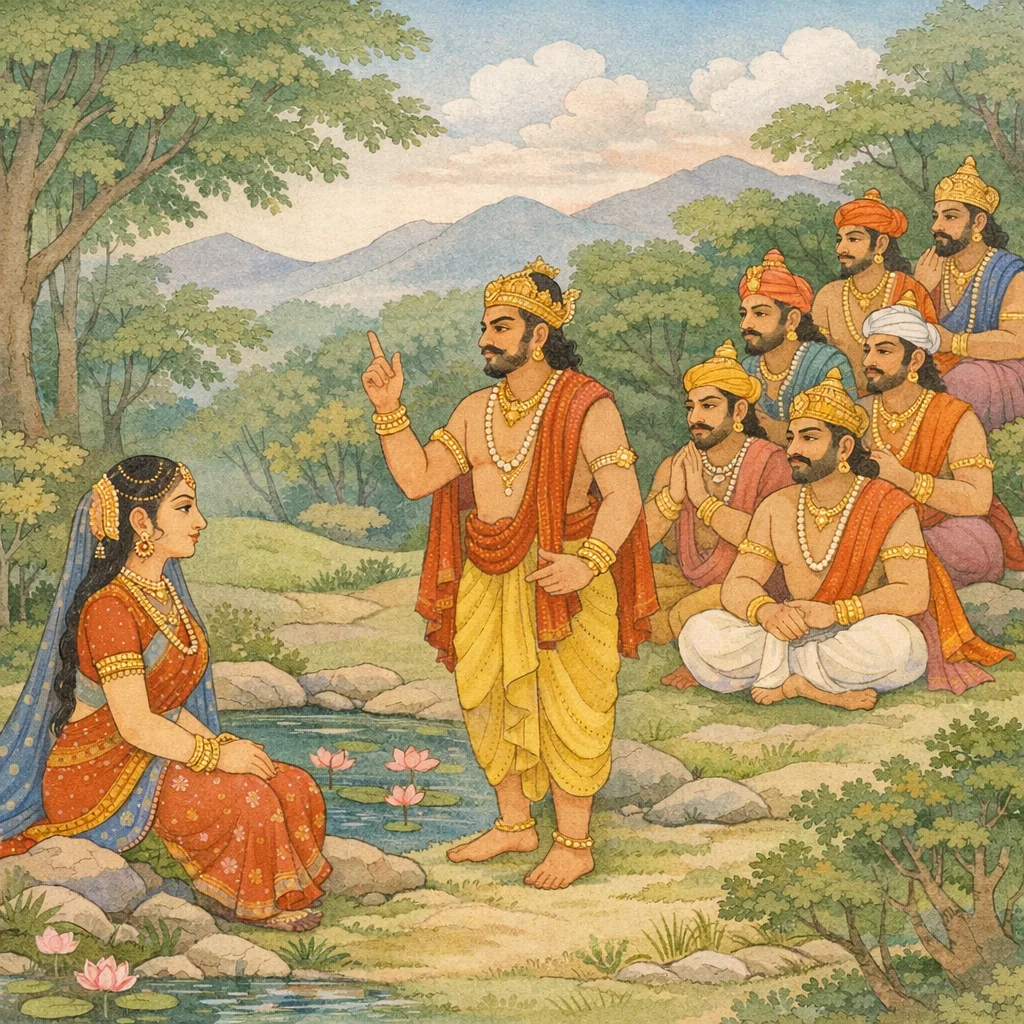
Adhyaya 266
रामस्य सुग्रीवप्रति रोषः — हनूमता सीतादर्शनवृत्तान्तः (Rāma’s Reproach of Sugrīva; Hanūmān’s Report of Seeing Sītā)
Upa-parva: Rāmopākhyāna (Markandeya’s Rāma Narrative Episode)
Mārkaṇḍeya narrates a sequence beginning with Rāma observing the clear night-sky and waking into renewed sorrow, triggered by cool winds carrying lotus fragrances. At dawn, he addresses Lakṣmaṇa with agitation, recalling Sītā’s confinement and accusing Sugrīva of negligence and ingratitude despite Vāli’s defeat having secured Sugrīva’s kingship. Lakṣmaṇa proceeds to Kiṣkindhā, armed and resolute; Sugrīva anticipates anger, receives him with formal honor, and listens as Lakṣmaṇa conveys Rāma’s message. Sugrīva denies moral failure and details the operational plan: vānaras have been dispatched in all directions with a fixed return deadline; the month is nearly complete, and results are expected imminently. Lakṣmaṇa’s anger subsides; Sugrīva reports progress to Rāma. Search parties return from three directions without locating Sītā; hope remains for the southern team. After extended time, reports indicate activity by Hanūmān and Aṅgada’s group; Rāma infers success from Hanūmān’s demeanor. Hanūmān then formally announces that he has seen Sītā in Rāvaṇa’s inner precinct, recounting the southward search, the encounter with Sampāti (Jatāyu’s elder brother) who identifies Laṅkā beyond the ocean, the ocean-crossing, the sighting of Sītā in ascetic distress, the delivery of Rāma’s message, and the receipt of Sītā’s jewel as authentication along with a recognition-episode for proof. The chapter closes with Rāma honoring Hanūmān’s truthful, reassuring speech and the mission’s successful intelligence return.
Chapter Arc: वन के एकांत में कोटिकास्य (जयद्रथ-पक्ष का एक सहचर) द्रौपदी को देखकर चकित होता है और उसके दिव्य-रूप पर प्रश्न करता है—‘कौन हो तुम?’ → वह द्रौपदी की असाधारण शोभा देखकर उसे देवी/यक्षी/दानवी/अप्सरा आदि मानने की संभावना उठाता है और साथ ही अपने दल के प्रमुख वीरों का परिचय क्रमशः देने लगता है, जिससे स्पष्ट होता है कि सामने साधारण यात्री नहीं, राजाओं-योद्धाओं का समूह है। → कोटिकास्य अंततः मुख्य व्यक्ति का नाम और वैभव उद्घाटित करता है—‘यदि तुमने सुना हो, यह सौवीरराज जयद्रथ है’—और उसके साथियों की वीरता/वंश-प्रतिष्ठा का बखान कर द्रौपदी के सामने शक्ति-प्रदर्शन का चरम रचता है। → अध्याय का निष्कर्ष द्रौपदी के प्रति जिज्ञासा और जयद्रथ-पक्ष की पहचान-स्थापना में होता है—यह ‘परिचय-प्रकरण’ अगले टकराव की भूमि तैयार करता है। → जयद्रथ का दल द्रौपदी को लक्ष्य बनाकर आगे क्या करेगा—यह प्रश्न तीव्र होकर अगले अध्याय में खिंचता है।
Shlokas
Verse 1
हि आय न [हुक है पज्चषष्टर्याधिकद्विशततमो< ध्याय: कोटिकास्यथका द्रौपदीसे जयद्रथ और उसके साथियोंका परिचय देते हुए उसका भी परिचय पूछना कोटिक उवाच का त्वं कदम्बस्थ विनाम्य शाखा- मेका55श्रमे तिषतसि शोभमाना । देदीप्यमानाग्निशिखेव नक्तं व्याधूयमाना पवनेन सुभ्रू:,कोटिक बोला--सुन्दर भौंहोंवाली सुन्दरी! तुम कौन हो? जो कदम्बकी डाली झुकाकर उसके सहारे इस आश्रममें अकेली खड़ी हो, यहाँ तुम्हारी बड़ी शोभा हो रही है। जैसे रातमें वायुसे आन्दोलित अग्निकी ज्वाला देदीप्यमान दिखायी देती है, उसी प्रकार तुम भी इस आश्रममें अपनी प्रभा बिखेर रही हो
Koṭika said: “O fair-browed lady, who are you? Bending down a branch of the kadamba tree, you stand alone in this hermitage, radiant in beauty. Like a flame of fire shining at night, wavering in the wind, you too seem to cast your brilliance upon this quiet āśrama.”
Verse 2
अतीव रूपेण समन्विता त्वं न चाप्यरण्येषु बिभेषि कि नु । देवी नु यक्षी यदि दानवी वा वराप्सरा दैत्यवराड़ना वा,तुम बड़ी रूपवती हो। क्या इन जंगलोंमें भी तुम्हें डर नहीं लगता है? तुम किसी देवता, यक्ष, दानव अथवा दैत्यकी स्त्री तो नहीं हो या कोई श्रेष्ठ अप्सरा हो?
Kotik said: “You are endowed with extraordinary beauty—do you truly feel no fear even in these forests? Are you a goddess, a yakṣī, a dānavī, the finest of apsarases, or perhaps the noble woman of some daitya?”
Verse 3
वपुष्मती वोरगराजकन्या वनेचरी वा क्षणदाचरस्त्री यद्येव राज्ञो वरुणस्य पत्नी यमस्य सोमस्य धनेश्वरस्य,क्या तुम दिव्यरूप धारण करनेवाली नागराजकुमारी हो अथवा वनमें विचरनेवाली किसी राक्षसकी पत्नी हो अथवा राजा वरुण, यमराज, चन्द्रमा एवं धनाध्यक्ष कुबेर-- इनमेंसे किसीकी पत्नी हो?
Koṭika said: “Are you a radiant maiden, a princess of the serpent-king? Or are you a woman who roams the forest, the wife of some night-ranging rākṣasa? Or are you the consort of one among the great rulers—Varuṇa, Yama, Soma, or Kubera, lord of wealth?”
Verse 4
धातुर्विधातु: सवितुर्वि भोरवा शक्रस्य वा त्वं सदनात् प्रपन्ना । न होव नः पृच्छसि ये वयं सम न चापि जानीम तवेह नाथम्
“Have you come here from the abode of Dhātṛ or Vidhātṛ, or from the mighty Savitṛ, or perhaps from Śakra’s own dwelling? Yet you do not ask who we are; and we too do not know who your lord and protector is here.”
Verse 5
अथवा तुम धाता, विधाता, सविता, विभु या इन्द्रके भवनसे यहाँ आयी हो? न तो तुम्हीं हमारा परिचय पूछती हो और न हम ही यहाँ तुम्हारे पतिके विषयमें जानते हैं ।। वयं हि मान॑ तव वर्धयन्त: पृच्छाम भद्रे प्रभवं प्रभुं च । आचक्ष्व बन्धूंक्ष पतिं कुलं च तत्त्वेन यच्चेह करोषि कार्यम्
Verse 6
भद्रे! हम तुम्हारा सम्मान बढ़ाते हुए तुम्हारे पिता और पतिका परिचय पूछ रहे हैं। तुम अपने बन्धु-बान्धव, पति और कुलका यथार्थ परिचय दो और यह भी बताओ कि तुम यहाँ कौन-सा कार्य करती हो? ।। अहं तु राज्ञ: सुरथस्य पुत्रो यं कोटिकास्येति विदुर्मनुष्या: । असौ तु यस्तिष्ठति काञ्चनाड़्रे रथे हुतोडग्निश्चयने यथैव
“Lady, with due respect we ask about your lineage: tell us truly who your father and husband are, who your kinsmen are, and what family you belong to. Also tell us what task you are performing here. As for me, I am the son of King Suratha; people know me by the name Koṭikāsya. And that one who stands there on the golden mountain—he is like the fire-god seated upon his chariot, blazing in his own radiant seat.”
Verse 7
अस्मात् परस्त्वेष महाधनुष्मान् पुत्र: कुलिन्दाधिपतेव॑रिष्ठ:
Beyond this point stands a mighty archer—the excellent son of the lord of the Kulindas—distinguished among his lineage. The speaker draws attention to his prowess and noble birth, implying both the ethical weight of lineage and the practical significance of martial capability in the unfolding encounter.
Verse 8
असौ तु यः पुष्करिणीसमीपे श्यामो युवा तिष्ठति दर्शनीय:
But that one—who stands near the lotus-pond—is a dark-hued, handsome young man, striking to behold. The speaker draws attention to him as a noteworthy presence in the scene, inviting the listener to judge by direct observation rather than rumor.
Verse 9
यस्यानुचक्रं ध्वजिन: प्रयान्ति सौवीरका द्वादश राजपुत्रा:,जयद्रथो नाम यदि श्रुतस्ते सौवीरराज: सुभगे स एष: । लाल रंगके घोड़ोंसे जुते हुए रथोंपर बैठकर यज्ञोंमें प्रजज्लित अग्निके समान सुशोभित होनेवाले अंगारक, कुज्जर, गुप्तक, शत्रुउ्जय, संजय, सुप्रवृद्ध, भयंकर, भ्रमर, रवि, शूर, प्रताप तथा कुहन--सौवीरदेशके ये बारह राजकुमार जिनके रथके पीछे हाथमें ध्वजा लिये चलते हैं तथा छः हजार रथी, हाथी, घोड़े और पैदल जिनका अनुगमन करते हैं, उन सौवीरराज जयद्रथका नाम तुमने सुना होगा। सौभाग्यशालिनि! ये वे ही राजा जयद्रथ दिखायी दे रहे हैं
“Behind whose chariot march twelve princes of the Sauvīra land, bearing banners in their hands—if you have heard the name Jayadratha, the king of Sauvīra—O fortunate lady, this is that very Jayadratha.” In context, the speaker points out Jayadratha’s royal power and entourage as a sign of worldly prestige. The verse implicitly contrasts such external splendor—followers, standards, and renown—with the moral scrutiny that the epic repeatedly applies to kings: true worth is tested not by display but by conduct and adherence to dharma.
Verse 10
शोणाश्चयुक्तेषु रथेषु सर्वे मखेषु दीप्ता इव हव्यवाहा: । अड्भरारक: कुण्जरो गुप्तकश्न शत्रुज्जय: संजयसुप्रवृद्धौं
Koṭika said: “All of them stood upon their harnessed chariots, blazing like sacrificial fires at a rite. (Among them were) Aḍbharāraka, Kuñjara, Guptakaśna, Śatruñjaya, and the two—Sañjaya and Supravṛddha—renowned for their strength.”
Verse 11
भयंकरो<थ भ्रमरो रविश्व शूर: प्रताप: कुहनश्न नाम । यं घट सहस्रा रथिनो<नुयान्ति नागा हयाश्षैव पदातिनक्ष
“Then there is the fearsome warrior named Bhramara—also called Raviśvaśūra—mighty in prowess, and known as Kuhanaśna. He is followed by thousands of chariot-fighters, along with elephants, horses, and foot-soldiers.”
Verse 12
तस्यापरे भ्रातरो5दीनसत्त्वा बलाहकानीकविदारणाद्या:,उनके दूसरे उदार हृदयवाले भाई बलाहक और अनीक--विदारण आदि भी उनके साथ हैं
He also has other brothers of undaunted spirit—Balāhaka, Anīka, Vidāraṇa, and others—who stand with him as companions and supporters. The line underscores the strength that comes from steadfast kinship and collective resolve in the face of adversity.
Verse 13
सौवीरवीरा: प्रवरा युवानो राजानमेते बलिनो<नुयान्ति । एतै: सहायैरुपयाति राजा मरुद्गणैरिन्द्र इवाभिगुप्त:,सौवीरदेशके ये प्रमुख बलवान् नवयुवक वीर सदा राजा जयद्रथके साथ चलते हैं। राजा जयद्रथ इन सहायकोंसे सुरक्षित हो मरुदगणोंसे घिरे हुए देवराज इन्द्रकी भाँति यात्रा करते हैं
The foremost young warriors of Sauvīra—strong and capable—follow their king. With such attendants the king proceeds well-guarded, like Indra surrounded and protected by the Marut hosts. The verse underscores how royal power is sustained not merely by personal might but by loyal, disciplined support that creates security and confidence in action.
Verse 14
अजानतां ख्यापय न: सुकेशि कस्यासि भार्या दुहिता च कस्य,सुकेशि! हम तुमसे सर्वथा अनजान हैं, अतः हमें भी अपना परिचय दो; तुम किसकी पत्नी और किसकी पुत्री हो?
Koṭika said: “O fair-haired lady, we do not know you at all. Therefore, tell us clearly who you are—whose wife you are, and whose daughter.”
Verse 63
त्रिगर्तराज: कमलायताक्षि क्षेमडुकरो नाम स एष वीर: । कमलके समान विशाल नेत्रोंवाली द्रौपदी! मैं राजा सुरथका पुत्र हूँ, जिसे साधारण जनता कोटिकास्यके नामसे जानती है और वे जो सुवर्णमय रथमें बैठे हैं तथा वेदीपर स्थापित एवं घीकी आहुति पड़नेसे प्रज्वलित हुए अग्निके समान प्रकाशित हो रहे हैं, त्रिगर्तदेशके राजा हैं। ये वीर क्षेमंकरके नामसे प्रसिद्ध हैं
Koṭika said: “O Draupadī of lotus-like, wide eyes! This hero is the king of Trigarta, famed by the name Kṣemāṅkara. As for me, I am the son of King Suratha, known among ordinary people by the name Koṭikāsya. And those who sit in a golden chariot, shining like a sacrificial fire set upon the altar and blazing with offerings of ghee—those are the kings of the Trigarta land.”
Verse 73
निरीक्षते त्वां विपुलायताक्ष: सुपुष्पित: पर्वतवासनित्य: । इनके बाद जो ये महान् धनुष धारण किये सुन्दर फूलोंकी मालाएँ पहने विशाल नेत्रोंवाले वीर तुम्हें निहार रहे हैं, कुलिन्दराजके ज्येष्ठ पुत्र हैं। वे सदा पर्वतपर ही निवास करते हैं
He is watching you—wide-eyed, ever dwelling in the mountains, adorned with splendid blossoms. That great hero, bearing a mighty bow and wearing beautiful garlands of flowers, stands gazing at you. He is the eldest son of the king of the Kulindas, and he lives always upon the mountain.
Verse 86
इक्ष्वाकुराज्ञ: सुबलस्य पुत्र: स एव हन्ता द्विषतां सुगात्रि । सुन्दराद्धि! और वे जो पुष्करिणीके समीप श्यामवर्णके दर्शनीय नवयुवक खड़े हैं, इक्ष्वाकुवंशी राजा सुबलके पुत्र हैं। ये अकेले ही अपने शत्रुओंका संहार करनेमें समर्थ हैं
Koṭika said: “O fair-limbed lady, that handsome dark-complexioned young man standing near the lotus-pond is the son of Subala, a king of the Ikṣvāku line. He alone is capable of destroying his enemies.” The statement highlights the ideal of kṣatriya prowess—strength directed toward the protection of one’s side and the defeat of hostile forces—while also framing the scene through recognition of lineage and personal merit.
Verse 113
जयद्रथो नाम यदि श्रुतस्ते सौवीरराज: सुभगे स एष: । लाल रंगके घोड़ोंसे जुते हुए रथोंपर बैठकर यज्ञोंमें प्रजज्लित अग्निके समान सुशोभित होनेवाले अंगारक, कुज्जर, गुप्तक, शत्रुउ्जय, संजय, सुप्रवृद्ध, भयंकर, भ्रमर, रवि, शूर, प्रताप तथा कुहन--सौवीरदेशके ये बारह राजकुमार जिनके रथके पीछे हाथमें ध्वजा लिये चलते हैं तथा छः हजार रथी, हाथी, घोड़े और पैदल जिनका अनुगमन करते हैं, उन सौवीरराज जयद्रथका नाम तुमने सुना होगा। सौभाग्यशालिनि! ये वे ही राजा जयद्रथ दिखायी दे रहे हैं
“If you have heard the name Jayadratha, O fortunate lady—this is he, the king of the Sauvīras. Mounted on chariots yoked with red-hued horses, he shines like the sacrificial fire blazing in a rite. Behind his chariot walk twelve princes of the Sauvīra land—Aṅgāraka, Kuñjara, Guptaka, Śatruñjaya, Sañjaya, Supravṛddha, Bhayaṅkara, Bhramara, Ravi, Śūra, Pratāpa, and Kuhana—each bearing a banner in hand. Following him come six thousand warriors—charioteers, elephant-riders, horsemen, and foot-soldiers. You must have heard of that Sauvīra king Jayadratha; and now, O auspicious one, that very King Jayadratha is seen here.”
Verse 264
इस प्रकार श्रीमहाभारत वनपर्वके अन्तर्गत द्रौपदीहरणपर्वमें जय्रथका आगमनविषयक दो सौ चौसठवाँ अध्याय पूरा हुआ
Thus ends the two hundred and sixty-fourth chapter of the Vana Parva of the Śrī Mahābhārata, within the section concerning the abduction of Draupadī, dealing with the arrival of Jayadratha. This closing colophon marks the completion of the narrative unit and signals a transition in the ethical arc: the wrongful act of abduction and the approach of its consequences within the larger framework of dharma and accountability.
Verse 265
इति श्रीमहाभारते वनपर्वणि ट्रौपदीहरणपर्वणि कोटिकास्यप्रश्ने पज्चषष्ट्यधिकद्धिशततमो< ध्याय:,इस प्रकार श्रीमहाभारत वनपर्वके अन्तर्गत द्रौपदीहरणपर्वमें कोटिकास्यका प्रश्नविषयक दो सौ पैसठवाँ अध्याय पूरा हुआ
Thus ends, in the Śrī Mahābhārata, within the Vana Parva—specifically in the section concerning the abduction of Draupadī—the two-hundred-and-sixty-fifth chapter, dealing with Koṭikāsya’s question. (This is a colophon marking the close of the chapter rather than a spoken narrative verse.)
Frequently Asked Questions
Rāma must balance justified urgency and grief with fairness toward an ally: whether to coerce action through threat or to evaluate Sugrīva’s obligations through evidence of ongoing effort and agreed timelines.
Emotional pressure does not replace due process: alliances remain stable when commitments are framed as measurable tasks (missions, deadlines) and when communication is verified through reliable proofs.
Rather than a formal phalaśruti, the chapter uses epistemic validation (pratyaya): Sītā’s jewel and a shared recognition-story establish trustworthy testimony, functioning as an internal standard of proof within the narrative.