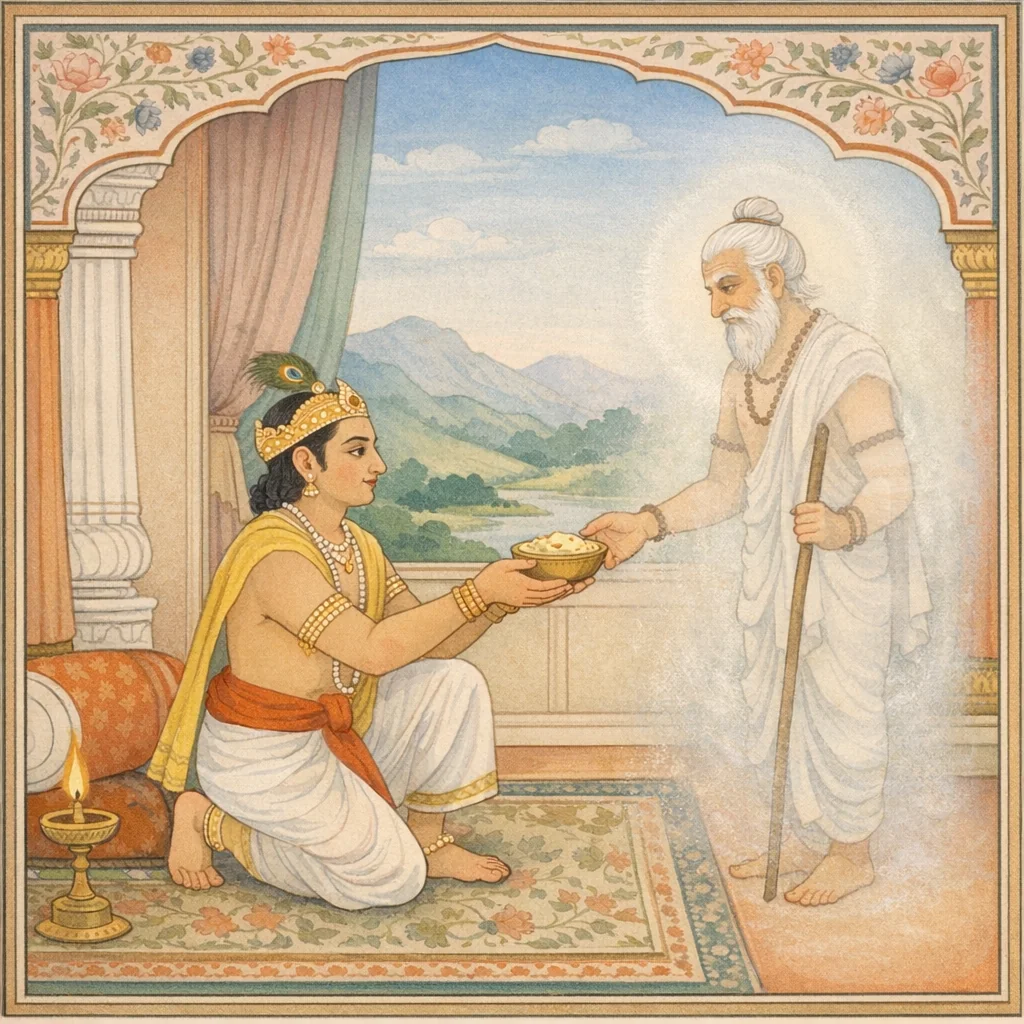
Adhyaya 199
Āraṇyaka-parva Adhyāya 199: Dharmavyādha on Svakarma, Vidhi, and the Limits of Ahiṃsā
Upa-parva: Dharmavyādha-Upākhyāna (The Discourse of the Righteous Hunter/Butcher)
Mārkaṇḍeya reports a discourse in which the dharmavyādha addresses Yudhiṣṭhira on the ethical complexity of ‘cruel’ livelihoods and the force of prior karma. He argues that vidhi (prescriptive order) is powerful and that the residue of past actions (purākṛta) conditions present work; individuals may function as instruments (nimitta) within a larger causal structure. He then defends meat-related practices by appealing to ritual frameworks: offerings to deities, guests, dependents, and ancestors, and by citing exempla such as Śibi’s self-sacrifice and Rantideva’s famed hospitality. The speaker broadens the inquiry by asserting that harm is pervasive in embodied existence—agriculture, walking, eating, and even ascetic life entail injury to living beings—thereby challenging simplistic claims of absolute non-harm. The chapter concludes with a pragmatic-ethical thesis: since the world is interdependent and often inverted in appearances of dharma/adharma, one should remain steadfast in one’s proper work (svakarmanirata), while cultivating restraint, truth, giving, and reverence, thereby reducing wrongdoing and accruing lasting repute.
Chapter Arc: यज्ञ-समाप्ति के बाद उशीनर-नरेश शिबि अपने भ्राताओं (प्रतर्दन, वसुमना आदि) के साथ रथ पर निकलते हैं—उसी क्षण देवर्षि नारद का आगमन कथा को दिव्य कसौटी की ओर मोड़ देता है। → भ्राता आदरपूर्वक नारद को रथ पर बैठाते हैं। नारद एक प्रश्न/अनुग्रह की भूमिका बनाते हैं और प्रतर्दन के घर से जुड़ा संकेत देकर शिबि के सामने दान-धर्म की वास्तविक परीक्षा का द्वार खोलते हैं। शीघ्र ही एक ब्राह्मण उपस्थित होकर शिबि के पुत्र ‘बृहद्गर्भ’ के विषय में मांग/आज्ञा रखता है—राजा को अपने ही घर के सबसे प्रिय बंधन पर निर्णय करना पड़ता है। → शिबि ब्राह्मण को भोजन का आग्रह करते हैं; ब्राह्मण क्षण भर बाद दृष्टि उठाकर संकेत देता है—राजा देखता है कि पुत्र देवकुमार-सा, सुगंधित, अलंकृत सामने खड़ा है और उसी क्षण ब्राह्मण अंतर्धान हो जाता है। यह प्रकट करता है कि यह साधारण याचना नहीं, धर्म की दिव्य परीक्षा थी; शिबि अपने दान को यश, अर्थ या भोग-तृष्णा से रहित घोषित करते हैं। → शिबि स्पष्ट करते हैं कि उनका मार्ग पाप-सेवन से रहित, सत्पुरुषों द्वारा आचरित और प्रशस्त है; इसलिए वे ‘सकल’—अर्थात् जो भी धर्म-संगत है—करने को तत्पर हैं। कथा शिबि के दान-धर्म की निष्कामता और सत्यनिष्ठा को प्रतिष्ठित करती है। → नारद/दिव्य-शक्ति की परीक्षा का संकेत बना रहता है—क्या शिबि को आगे और कठोर त्याग (पुत्र-दान/प्राण-दान) की सीमा तक जाना पड़ेगा?
Shlokas
Verse 1
इस प्रकार श्रीमहाभारत वनपर्वके अन्तर्गत मार्कण्डेययमास्यापर्वमें शिविचरित्रविषयक एक सौ सत्तानबेवाँ अध्याय पूरा हुआ ॥/ १९७ ॥। हि मय न (0) हि २ 7 - राजाका यह कठोर नियम था कि वे सोना-चाँदीके सिवा और कुछ ब्राह्मणको नहीं देते थे, जो उनसे ये ही वस्तुएँ माँगता, उसे प्रसन्नतापूर्वक देते थे। जो दूसरी कोई चीज माँगता, उसे यह समझकर कि यह मेरा नियम भंग करना चाहता है, दण्ड देते थे। ब्राह्मण देवता दूसरेके भेजनेसे आये थे, इसलिये राजाने एक हजार अश्वोंके मूल्यसे अधिक सोना-चाँदी उन्हें दिया। अष्टनवर्त्याधेकशततमो< ध्याय: देवर्षि नारदद्वारा शिबिकी महत्ताका प्रतिपादन वैशम्पायन उवाच भूय एव महाभाग्यं कथ्यतामित्यब्रवीत् पाण्डवो मार्कण्डेयम् । अथाचष्ट मार्कण्डेय: । अष्टकस्य वैश्वामित्रेरश्चमेधे सर्वे राजान: प्रागच्छन्,वैशम्पायनजी कहते हैं--जनमेजय! पाण्डुनन्दन युधिष्ठिरने मार्कण्डेयजीसे पुनः प्रार्थना की--'मुने! क्षत्रिय नरेशोंके माहात्म्यका पुनः वर्णन कीजिये।” तब मार्कण्डेयजीने कहा--:धर्मराज! विश्वामित्रके पुत्र अष्टकके अश्वमेधयज्ञमें सब राजा पधारे थे
Vaiśampāyana said: Yudhiṣṭhira, the son of Pāṇḍu, again requested the sage Mārkaṇḍeya, “O greatly fortunate one, please recount once more the greatness of righteous kṣatriya kings.” Thereupon Mārkaṇḍeya began to speak: “O Dharmarāja, at the Aśvamedha sacrifice of Aṣṭaka, the son of Viśvāmitra, all the kings came and assembled.”
Verse 2
भ्रातरश्नास्य प्रतर्दनी वसुमना: शिवबिरौशीनर इति । स च समाप्तयज्ञो भ्रातृभि: सह रथेन प्रायातू । ते च नारदमागच्छन्तमभिवाद्यारोहतु भवान् रथमित्यब्रुवन्,'अष्टकके तीन भाई प्रतर्दन, वसुमना तथा उशीनर-पुत्र शिबि भी उस यज्ञमें आये थे। यज्ञ समाप्त होनेपर एक दिन अष्टक अपने भाइयोंके साथ रथपर आरूढ़ हो (स्वर्गकी ओर) जा रहे थे। इसी समय रास्तेमें देवर्षि नारदजी आते दिखायी दिये। तब उन तीनोंने उन्हें प्रणाम करके कहा--“भगवन् आप भी रथपर आ जाइये'
Vaiśampāyana said: “His brothers—Pratardana, Vasumanas, and Śibi the son of Uśīnara—had also come to that sacrifice. When the rite was completed, Aṣṭaka set out together with his brothers in a chariot, proceeding toward heaven. Just then they saw the divine seer Nārada approaching on the road. Bowing to him, the three said, ‘Revered sir, please mount the chariot as well.’”
Verse 3
तांस्तथेत्युक्त्वा रथमारुरोह । अथ तेषामेक: सुरर्षि नारदमब्रवीत् । प्रसाद्य भगवन्तं किज्चिदिच्छेयं प्रष्टमिति,“तब नारदजी “तथास्तु” कहकर उस रथपर बैठ गये। तदनन्तर उनमेंसे एकने देवर्षि नारदसे कहा--“भगवन्! मैं आपको प्रसन्न करके कुछ पूछना चाहता हूँ
Vaiśampāyana said: Having replied, “So be it,” he mounted the chariot. Then one among them addressed the divine seer Nārada: “Revered Lord, after pleasing you, I wish to ask you something.” The scene underscores the ethic of approaching a sage with humility and seeking permission before inquiry.
Verse 4
पृच्छेत्यब्रवीदृषि: । सोडब्रवीदायुष्मन्त: सर्वगुणप्रमुदिता: । अथायुष्मन्तं स्वर्गस्थानं चतुर्भि-र्यातव्यं स्थात् कोडवतरेत् । अयमष्टको5वतरे-दित्यब्रवीदृषि: ।। ४ || *देवर्षिने कहा--'पूछो” तब उसने इस प्रकार कहा--“भगवन्! हम सब लोग दीर्घायु तथा सर्वगुणसम्पन्न होनेके कारण सदा प्रसन्न रहते हैं। हम चारोंको दीर्घकालतक उपभोगमें आनेवाले स्वर्ग-लोकमें जाना है, किंतु वहाँसे सर्वप्रथम कौन इस भूतलपर उतर आयेगा? देवर्षिने कहा--'सबसे पहले अष्टक उतरेगा”
Vaiśampāyana said: The sage said, “Ask.” Then he replied, “Revered sir, we are all long-lived and, being endowed with every excellence, remain ever joyful. The heaven that is our destined abode is to be reached by the four of us; but from there, who will be the first to descend again to the earth?” The divine sage answered, “Aṣṭaka will be the first to descend.”
Verse 5
कि कारणमित्यपृच्छतू । अथाचष्टापष्टकस्य गृहे मया उषितं स मां रथेनानुप्रावहदथापश्यमनेकानि गोसहस्राणि वर्णशो विविक्तानि तमहमपृच्छं कस्येमा गाव इति सोअ<ब्रवीत् । मया निसृष्टा इत्येतास्तेनैव स्वयं श्लाघति कथितेन । एषोडवतरेदथ त्रिभियतिव्यं साम्प्रतं कोडवतरेत्,'फिर उसने पूछा--'क्या कारण है कि अष्टक ही उतरेगा?” तब नारदजीने कहा--एक दिन मैं अष्टकके घर ही ठहरा था। उस दिन अष्टक मुझे रथपर बिठाकर भ्रमणके लिये ले जा रहे थे। मैंने रास्तेमें देखा, भिन्न-भिन्न रंगकी कई हजार गौएँ पृथक्-पृथक् चर रही हैं। उन्हें देखकर मैंने अष्टकसे पूछा--'ये किसकी गौएँ हैं।” इन्होंने उत्तर दिया--“ये मेरी दान की हुई गौएँ हैं।” इस प्रकार ये स्वयं अपने किये हुए दानका बखान करके आत्मश्लाघा करते हैं। इसीलिये इन्हें स्वर्गसे पहले उतरना पड़ेगा।” तत्पश्चात् उन लोगोंने पुनः प्रश्न किया --“यदि हम शेष तीनों भाई स्वर्गमें जाये, तो सबसे पहले किसको उतरना पड़ेगा?”
They asked, “What is the reason that Aṣṭaka alone will fall first?” Nārada replied: “Once I stayed in Aṣṭaka’s house. That day Aṣṭaka took me riding in his chariot for a tour. On the way I saw many thousands of cows, separated out according to their different colors, grazing apart. Seeing them, I asked Aṣṭaka, ‘Whose cows are these?’ He answered, ‘These are the cows I have given away in charity.’ By thus proclaiming his own gift, he praises himself. Therefore he must descend from heaven first.” Then they asked again, “If we three remaining brothers go to heaven, who among us will have to descend first?”
Verse 6
प्रतर्दन इत्यब्रवीदृषि: । तत्र कि कारणं प्रतर्दनस्यापि गृहे मयोषितं स मां रथेनानुप्रावहत्,'देवर्षिने उत्तर दिया--'प्रतर्दनको।” “इसमें क्या कारण है?' ऐसा प्रश्न होनेपर देवर्षिने उत्तर दिया--'एक दिन मैं प्रतर्दनके घर भी ठहरा था। ये मुझे रथसे ले जा रहे थे। उस समय एक ब्राह्मणने आकर इनसे याचना की--“आप मुझे एक अश्व दे दीजिये।” तब उन्होंने ब्राह्मणको उत्तर दिया--'लौटनेपर दे दूँगा।” ब्राह्मणने कहा--“नहीं, तुरंत दे दीजिये।” “अच्छा तो तुरंत ही लीजिये” यों कहकर इन्होंने रथके दाहिने पार्श्वका घोड़ा खोलकर उसे दे दिया”
The sage replied, “(It was) Pratardana.” When asked, “What was the reason—how did you come to stay even in Pratardana’s house?”, the divine seer explained: “Once I lodged at Pratardana’s home as well. He was conveying me onward in his chariot.” The episode is introduced to highlight Pratardana’s readiness to give immediately to a supplicant, even at personal inconvenience—an ethical model of prompt generosity and honoring a request without delay.
Verse 7
अथीनं ब्राह्मणोअभिक्षेताश्वं मे ददातु भवान् निवृत्तों दास्यामीत्यब्रवीद् ब्राह्मणं त्वरितमेव दीयता-मित्यब्रवीद् ब्राह्मणस्त्वरितमेव स ब्राह्मुणस्यैवमुक्त्वा दक्षिणं पार्श्वनददत्,'देवर्षिने उत्तर दिया--'प्रतर्दनको।” “इसमें क्या कारण है?' ऐसा प्रश्न होनेपर देवर्षिने उत्तर दिया--'एक दिन मैं प्रतर्दनके घर भी ठहरा था। ये मुझे रथसे ले जा रहे थे। उस समय एक ब्राह्मणने आकर इनसे याचना की--“आप मुझे एक अश्व दे दीजिये।” तब उन्होंने ब्राह्मणको उत्तर दिया--'लौटनेपर दे दूँगा।” ब्राह्मणने कहा--“नहीं, तुरंत दे दीजिये।” “अच्छा तो तुरंत ही लीजिये” यों कहकर इन्होंने रथके दाहिने पार्श्वका घोड़ा खोलकर उसे दे दिया”
Vaiśaṃpāyana said: Then a brāhmaṇa approached him as a supplicant and said, “Sir, please give me a horse.” He replied, “When I return, I will give it.” But the brāhmaṇa insisted, “It must be given immediately.” “So be it—take it at once,” he said; and, speaking thus to the brāhmaṇa, he unyoked and gave away the horse on the right side (of his chariot). The episode highlights the ethic of prompt generosity: a gift promised for later is made complete by giving without delay when a worthy petitioner presses the need.
Verse 8
अथान्यो्प्यश्वार्थी ब्राह्मण आगच्छत् । तथैव चैनमुक्त्वा वामपार्ष्णिमभ्यदादथ प्रायात् पुनरपि चान्यो>प्यश्वार्थी ब्राह्मण आगच्छत् त्वरितो5थ तस्मै अपनहा वाम॑ धुर्यमददत्,“इतनेहीमें एक-दूसरा ब्राह्मण आया। उसे भी घोड़ेकी ही आवश्यकता थी। जब उसने याचना की, तब राजाने पूर्ववत् उससे भी यही कहा--“लौटनेपर दूँगा।” परंतु उसके आग्रह करनेपर उन्होंने रथके वाम पार्श्वका एक घोड़ा दिया। फिर वे आगे बढ़ गये। तदनन्तर एक घोड़ा माँगनेवाला दूसरा ब्राह्मण आया। उसने भी जल्दी ही माँगा। तब राजाने उसे बायें धुरेका बोझ ढोनेवाला अश्व खोल करके दे दिया
Then another brahmin came, also seeking a horse. The king spoke to him in the same way as before—promising to give it upon his return—but when the brahmin pressed his request, the king handed over the left-side horse of the chariot and moved on. After that, yet another brahmin arrived, urgently asking for a horse; then the king unyoked and gave him the left yoke-horse—the one bearing the load on the left side. The episode highlights a ruler’s willingness to diminish his own means of travel and comfort in order to honor the claims of supplicants and uphold the duty of giving.
Verse 9
अथ प्रायात् पुनरन््य आगच्छदश्वार्थी ब्राह्मणस्तमब्रवीदतियातो दास्यामि त्वरितमेव मे दीयतामित्यब्रवीद् ब्राह्मणस्तस्मै दत्त्वाश्चं रथधुरं गृह्नता व्याहतं ब्राह्मणानां साम्प्रतं नास्ति किंचिदिति,“तत्पश्चात् जब वे आगे बढ़े, तब फिर एक अश्वका इच्छुक ब्राह्मण आ पहुँचा। उसके माँगनेपर राजाने कहा--'मैं शीघ्र ही अपने लक्ष्यतक पहुँचकर घोड़ा दे दूँगा।” ब्राह्मण बोला --'मुझे तुरंत दीजिये।” तब उन्होंने ब्राह्मणको अश्व देकर स्वयं रथका धुरा पकड़ लिया और कहा--'ब्राह्मणोंके लिये ऐसा करना सर्वथा उचित नहीं है”
Vaiśampāyana said: As he proceeded onward, another Brahmin arrived, desiring a horse, and addressed him. The king replied, “When I have gone a little farther, I will give it—quickly.” But the Brahmin insisted, “Give it to me at once.” Then the king gave him the horse and himself took hold of the chariot’s pole. Yet he remarked that such a state of affairs—where Brahmins must press for immediate gifts and the giver is reduced to taking up the yoke—signals a grievous disorder, for at present there is nothing left for Brahmins as is proper.
Verse 10
य एष ददाति चासूयति च तेन व्याह्ृतेन तथावतरेत् । अथ द्वाभ्यां यातव्यमिति को<डवतरेत्,'ये प्रतर्दन दान देते हैं और ब्राह्मणकी निन््दा भी करते हैं, अतः वह निन्दायुक्त वचन बोलनेके कारण पहले इन्हींको स्वर्गसे उतरना पड़ेगा। तब पुनः प्रश्न किया गया, “हम शेष दो भाई जा रहे हैं, उनमेंसे कौन पहले स्वर्गसे नीचे उतरेगा?”
Vaiśampāyana said: “He who gives gifts yet also speaks with malice and disparagement—because of such uttered words, tainted by censure, must be the first to descend from heaven. Then the question was asked again: ‘Now the remaining two brothers are to go; which of them will descend first from heaven?’”
Verse 11
वसुमना अवतरेदित्यब्रवीदृषि:
Vaiśampāyana said: The sage declared, “Let him descend (be born) endowed with wealth and prosperity,” indicating a deliberate, auspicious incarnation meant to uphold order and well-being.
Verse 12
“देवर्षिने उत्तर दिया--“वसुमना पहले उतरेंगे” ।। कि कारणमित्यपृच्छदथाचष्ट नारद: । अहं परिभ्रमन् वसुमनसो गृहमुपस्थित: ।। १२ || “तब उन्होंने पूछा--“इसका क्या कारण है?” नारदजी बोले--'एक दिन मैं घूमता- घामता वसुमनाके घरपर जा पहुँचा
They then asked, “What is the reason for this?” Nārada replied: “Once, as I was wandering about, I arrived at the house of Vasumanas.”
Verse 13
स्वस्तिवचनमासीत् पुष्परथस्य प्रयोजनेन तमहमन्वगच्छं॑ स्वस्तिवाचितेषु ब्राह्मणेषु रथो ब्राह्मणानां दर्शित:,“उस दिन उनके यहाँ स्वस्तिवाचन हो रहा था। राजाके यहाँ एक ऐसा रथ था, जो पर्वत, आकाश और समुद्र आदि दुर्गम स्थानोंपर भी सुगमतासे आ-जा सकता था। उसका नाम था :पुष्परथ'। मैं उसीके प्रयोजनसे राजाके यहाँ गया था। जब ब्राह्मणलोग स्वस्तिवाचन कर चुके, तब राजाने ब्राह्मणोंको अपना वह रथ दिखाया
Vaiśaṃpāyana said: “On that day a rite of auspicious benediction (svasti-vācana) was being performed. For the purpose of the chariot named Puṣparatha, I went to that king. When the brāhmaṇas had completed the auspicious recitations, the king showed that chariot to the brāhmaṇas.”
Verse 14
तमहं रथं प्राशंसमथ राजाब्रवीद् भगवता रथ: प्रशस्तः । एब भगवतो रथ इति,“उस समय मैंने उस रथकी बड़ी प्रशंसा की।” राजा बोले--'भगवन्! आपने इस रथकी प्रशंसा की है। अतः यह रथ आपहीका है”
I praised that chariot highly. Then the king said, “Revered sir, since you have commended this chariot, this chariot belongs to you.” In this exchange, the king treats sincere appreciation as a worthy basis for gifting, reflecting a courtly ethic of honoring merit and the words of the venerable.
Verse 15
अथ कदाचित् पुनरप्यहमुपस्थित: पुनरेव च रथप्रयोजनमासीत् । सम्यगयमेष भगवत इत्येवं राजाब्रवीदिति पुनरेव तृतीयं स्वस्तिवाचनं समभावयमथ राजा ब्राह्मणानां दर्शयन् मामभिप्रेक्ष्याब्रवीत् । अथो भगवता पुष्परथस्य स्वस्तिवाचनानि सुष्ठु सम्भावितानि एतेन द्रोहवचने नावतरेत्,“तदनन्तर एक दिन और मैं राजाके यहाँ उपस्थित हुआ। पुनः मेरे जानेका उद्देश्य पुष्परथको प्राप्त करना ही था। उस दिन भी राजाने बड़ी आवभगतके साथ कहा --'भगवन्! यह रथ आपका ही है।' फिर तीसरी बार मैंने उनके यहाँ जाकर स्वस्तिवाचनका कार्य सम्पन्न किया। राजाने ब्राह्मणोंको उस रथका दर्शन कराते हुए मेरी ओर देखकर कहा--“भगवन्! आपने पुष्परथके लिये अच्छे स्वस्तिवाचन किये।” (ऐसा कहकर भी उन्होंने रथ नहीं दिया।) इस (छलयुक्त) वचनसे वसुमना ही पहले स्वर्गसे पृथ्वीपर उतरेंगे”
Vaiśaṃpāyana said: “Then, on another occasion, I again came before the king; once more my purpose was to obtain the chariot. The king, with due courtesy, said, ‘Revered sir, this chariot truly belongs to you.’ Thus, for a third time I performed the auspicious benedictions. While showing the chariot to the Brahmins, the king looked at me and said, ‘Revered sir, you have performed the auspicious rites for the flower-chariot very well.’ Yet he still did not give the chariot. By such deceitful speech, Vasumanā will be the first to fall from heaven down to the earth.”
Verse 16
अथैकेन यातव्यं स्यात् कोडवतरेत् पुनर्नारद आह शिबिर्यायादहमवतरेयमत्र कि कारणमित्यब्रवीतू । असावहं शिबिना समो नास्मि यतो ब्राह्मण: कश्चिदेनमब्रवीत्,“यदि आपके साथ हममेंसे एकमात्र शिबिको ही स्वर्गलोकमें जाना हो तो वहाँसे पहले कौन उतरेगा?' ऐसा प्रश्न होनेपर नारदजीने फिर कहा--'शिबि जायँगे और मैं उतरूँगा। “इसमें क्या कारण है?” यह पूछे जानेपर देवर्षि नारदने कहा--“मैं राजा शिबिके समान नहीं हूँ, क्योंकि एक दिन एक ब्राह्मणने शिबिसे कहा--'शिबे! मैं भोजन करना चाहता हूँ।' राजाने पूछा--“आपके लिये क्या रसोई बनायी जाय, आज्ञा कीजिये”
Then it was proposed: “Only one should go on; who will come down again?” Nārada replied, “Let Śibi go, and I will descend here.” When asked, “For what reason?”, he said, “I am not equal to King Śibi.” For once a certain brāhmaṇa said to Śibi, “O Śibi, I am hungry.” The king responded, “What food shall I have prepared for you? Command me.”
Verse 17
शिबे अन्नार्थ्यस्मीति तमब्रवीच्छिबि: कि क्रियतामाज्ञापयतु भवानिति,“यदि आपके साथ हममेंसे एकमात्र शिबिको ही स्वर्गलोकमें जाना हो तो वहाँसे पहले कौन उतरेगा?' ऐसा प्रश्न होनेपर नारदजीने फिर कहा--'शिबि जायँगे और मैं उतरूँगा। “इसमें क्या कारण है?” यह पूछे जानेपर देवर्षि नारदने कहा--“मैं राजा शिबिके समान नहीं हूँ, क्योंकि एक दिन एक ब्राह्मणने शिबिसे कहा--'शिबे! मैं भोजन करना चाहता हूँ।' राजाने पूछा--“आपके लिये क्या रसोई बनायी जाय, आज्ञा कीजिये”
Vaiśampāyana said: King Śibi addressed him, “I am in need of food—tell me what should be done; please command me.” Then, when the question was raised—“If only one among us, namely Śibi, is to go to heaven, who will descend first from there?”—Nārada replied again, “Śibi will go, and I will descend.” When asked, “What is the reason for this?” the divine sage Nārada said, “I am not equal to King Śibi. For once a brāhmaṇa said to Śibi, ‘O Śibi, I wish to eat.’ The king asked, ‘What kind of meal shall be prepared for you? Please give your instruction.’”
Verse 18
अथैनं ब्राह्मणो5ब्रवीद् य एष ते पुत्रो बृहद्गर्भो नाम एष प्रमातव्य इति तमेनं संस्कुरु अन्न चोपपादय ततोऊहं प्रतीक्ष्य इति । ततः पुत्र प्रमाथ्य संस्कृत्य विधिना साथयित्वा पात्र्यामर्पयित्वा शिरसा प्रतिगृहा ब्राह्मणममृगयत्,“तब इनसे ब्राह्मणने कहा--“यह जो तुम्हारा पुत्र बृहदगर्भ है, इसे मार डालो।” फिर उसका दाह-संस्कार करो। तत्पश्चात् अन्न तैयार करो और मेरी प्रतीक्षा करो।” तब राजाने पुत्रको मारकर उसका दाह-संस्कार कर दिया और फिर विधिपूर्वक अन्न तैयार करके उसे बटलोईमें डालकर (और ढक्कनसे ढककर) अपने सिरपर रख लिया, फिर वे उस ब्राह्यगकी खोज करने लगे
Vaiśaṃpāyana said: Then the brāhmaṇa spoke to him, “This son of yours, named Bṛhadgarbha—he must be put to death. Do the funerary rites for him, and also prepare food; then I will wait.” Thereupon the king killed his son, performed the prescribed rites according to rule, prepared the meal and placed it in a covered vessel, lifted it upon his head in reverence, and went in search of that brāhmaṇa.
Verse 19
अथास्य मृगयमाणस्य कक्षिदाचष्ट एष ते ब्राह्मणो नगरं प्रविश्य दहति ते गृहं कोशागारमायुधागारं स्त्रयगारमश्वशालां हस्तिशालां च क्रुद्ध इति,“खोज करते समय किसी मनुष्यने उनके पास आकर कहा--राजन्! आपका ब्राह्मण इधर है। यह नगरमें प्रवेश करके आपके भवन, कोषागार, शस्त्रागार, अन्तःपुर, अश्वशाला और गजशाला सबमें कुपित होकर आग लगा रहा है”
While he was out hunting, someone came and reported: “O King, your Brahmin is here. Having entered the city in anger, he is setting fire to your residence, your treasury, your armoury, the women’s quarters, the stables for horses, and the elephant-house.” The episode underscores how a ruler’s negligence or provocation toward a Brahmin can erupt into public calamity, turning private wrongdoing into collective harm and testing the king’s responsibility to restrain violence and restore order through dharma rather than retaliation.
Verse 20
अथ शिबिस्तथैवाविकृतमुखवर्णो नगरं प्रविश्य ब्राह्मणं तमब्रवीत् सिद्ध भगवन्नन्नमिति ब्राह्मणो न किंचिद् व्याजहार विस्मयादधोमुखश्चासीत्,“यह सब सुनकर भी राजा शिबिके मुखकी कान्ति पूर्ववत् बनी रही। उसमें तनिक भी विकार न आया। वे नगरमें घुसकर ब्राह्मणसे बोले--'भगवन्! आपका भोजन तैयार है।' ब्राह्मण कुछ न बोला। वह आश्चर्यसे मुँह नीचा किये देखता रहा
Vaiśampāyana said: Then King Śibi, with the color and composure of his face wholly unchanged, entered the city and addressed that brāhmaṇa: “Revered sir, the meal is ready.” The brāhmaṇa, struck with astonishment, said nothing at all and remained with his face lowered. The scene underscores Śibi’s steadiness and self-mastery in dharma—his outward calm reflecting inner resolve—while the brāhmaṇa’s silence signals awe at the king’s unshaken ethical commitment.
Verse 21
ततः प्रासादयद् ब्राह्मणं भगवन् भुज्यतामिति । मुहूर्तादुद्वीक्ष्य शिबिमब्रवीत् ।। २१ || “तब राजाने ब्राह्मणको मनाते हुए कहा--'भगवन्! भोजन कर लीजिये।/' ब्राह्मणने दो घड़ीतक ऊपरकी ओर देखनेके पश्चात् शिबिसे कहा--
Then the king, seeking to conciliate the brāhmaṇa, said, “Revered sir, please partake of food.” After gazing upward for a short while, the brāhmaṇa addressed Śibi. The scene underscores the ethic of honoring guests and the tension between royal hospitality and the deeper test that is about to unfold.
Verse 22
त्वमेवैतदशानेति तत्राह तथेति शिबिस्तथैवाविमना महित्वा कपालमभ्थयुद्धार्य भोक्तुमैच्छत्,“तुम्हीं यह सब खा जाओ।' शिबिने उसी प्रकार मनको प्रसन्न रखते हुए “बहुत अच्छा' कहकर ब्राह्मणकी आज्ञा स्वीकार की और उनका पूजन करके (सिरपर रखे हुए) ढककनको उघाड़कर वह सब खानेकी इच्छा की
Vaiśampāyana said: “You alone should eat all this,” said the Brahmin. Śibi, untroubled in mind, replied, “So be it.” Honoring the Brahmin’s command, he accepted it as ‘very well,’ paid him due reverence, and then, lifting the lid from the vessel set upon his head, he resolved to eat what had been placed there—showing steadfast obedience, self-control, and the kingly virtue of keeping one’s word even under severe trial.
Verse 23
अथास्य ब्राह्मणो हस्तमगृह्नात्ू । अब्रवीच्चैनं जितक्रोधोडसि न ते किज्चिदपरित्याज्यं ब्राह्मुणार्थे ब्राह्मणोडपि त॑ महाभागं सभाजयत्,“तब ब्राह्मणने उनका हाथ पकड़ लिया और कहा--'राजन्! तुमने क्रोधको जीत लिया है। तुम्हारे पास कोई ऐसी वस्तु नहीं है, जिसे तुम ब्राह्मणके लिये न दे सको।' ऐसा कहकर ब्राह्मणने भी उन महाभाग नरेशका समादर किया
Then the brāhmaṇa took his hand and said to him, “O king, you have conquered anger. There is nothing you possess that you would be unable to give for the sake of a brāhmaṇa.” Having spoken thus, the brāhmaṇa too honored that noble-minded ruler with due respect.
Verse 24
स हाद्वीक्षमाण: पुत्रमपश्यदग्रे तिष्ठन्तं देवकुमारमिव पुण्यगन्धान्वितमलड्कृतं सर्व॑ च तमर्थ विधाय ब्राह्मणो5न्तरधीयत,“राजाने जब आँख उठाकर देखा, तब उनका पुत्र आगे खड़ा था। वह देवकुमारकी भाँति दिव्य वस्त्राभूषणोंसे विभूषित था। उसके शरीरसे पवित्र सुगन्ध निकल रही थी। ब्राह्मण-देवता सब वस्तुओंको पूर्ववत् ठीक करके अन्तर्धान हो गये
Vaiśampāyana said: When the king raised his eyes and looked, he saw his son standing before him—adorned like a celestial prince, clothed and ornamented with divine splendor, and surrounded by a pure, auspicious fragrance. Having set everything in proper order as intended, the brahmin—revered like a deity—then vanished from sight. The scene underscores the moral force of righteous agency: when a sacred purpose is fulfilled and order is restored, the divine helper withdraws, leaving the human realm to proceed in dharma.
Verse 25
तस्य राजर्षेविधाता तेनैव वेषेण परीक्षार्थभागत इति तस्मिन्नन्तर्हिते अमात्या राजानमूचु: । किं प्रेप्सुना भवता इदमेवं जानता कृतमिति,साक्षात् विधाता ब्राह्मणके वेशमें राजर्षि शिबिकी परीक्षा लेने आये थे। उनके अन्तर्धान हो जानेपर राजाके मन्त्रियोंने उनसे पूछा--“महाराज! आप क्या चाहते हैं? जिसके लिये सब कुछ जानते हुए भी ऐसा दुःसाहसपूर्ण कार्य किया है?”
Vaiśampāyana said: The Creator (Vidhātā), having come in that very disguise in order to test the royal sage, then vanished from sight. After he disappeared, the king’s ministers addressed the king: “O Majesty, what was it that you sought to attain? For what purpose did you, though fully aware, undertake such a daring deed?”
Verse 26
शिबिरुवाच नैवाहमेतद् यशसे ददानि न चार्थहेतोर्न च भोगतृष्णया । पापैरनासेवित एष मार्ग इत्येवमेतत् सकल॑ करोमि,शिबि बोले--मैं यशके लिये यह दान नहीं देता। धनके लिये अथवा भोगकी लिप्सासे भी दान नहीं करता। यह धर्मात्माओंका मार्ग है। पापी मनुष्य इसपर नहीं चल सकते। ऐसा समझकर ही मैं यह सब कुछ करता रहता हूँ
Śibi said: “I do not give this gift for the sake of fame, nor for wealth, nor out of craving for enjoyment. This path is not followed by the sinful; it is the way of the righteous. Knowing this, I continue to do all this.”
Verse 27
सद्धिः सदाध्यासितं तु प्रशस्तं तस्मात् प्रशस्तं श्रयते मतिर्मे एतन्महाभाग्यवरं शिबेस्तु तस्मादहं वेद यथावदेतत्,श्रेष्ठ पुरुष सदा जिस मार्गसे चले हैं, वही उत्तम मार्ग है। इसीलिये मेरी बुद्धि सदा उस उत्तम पथका ही आश्रय लेती है। यह है राजा शिबिकी सर्वश्रेष्ठ महिमा, जिसे मैं (अच्छी तरह) जानता हूँ। इसीलिये इन सब बातोंका यथावत् वर्णन किया है
Vaiśampāyana said: “The path followed always by the good is itself the praiseworthy path; therefore my mind continually takes refuge in that excellent way. This is the supreme and most auspicious glory of King Śibi, which I know well; hence I have described these matters exactly as they are.”
Verse 198
इति श्रीमहा भारते वनपर्वणि मार्कण्डेयसमास्यापर्वणि राजन्यमहाभाग्ये शिबिचरिते अष्टनवत्यधिकशततमो< ध्याय:,इस प्रकार श्रीमहाभारत वनपर्वके अन्तर्गत मार्कण्डेययमास्यापर्वमें क्षत्रियमाहात्म्यके प्रकरणमें शिविचरित्रविषयक एक सौ अद्दानबेवाँ अध्याय पूरा हुआ
Frequently Asked Questions
The dilemma is how to evaluate a livelihood associated with harm (e.g., killing/selling meat) when dharma also demands sustaining dependents, honoring guests and ancestors, and following vidhi—especially under the pressure of prior karma.
The chapter teaches that ethical life is not reducible to external purity alone: because harm is structurally pervasive, one should minimize injury, act with restraint and truth, and remain steady in rightful duty (svakarma) while fulfilling ritual and social obligations.
No explicit phalaśruti is stated here; the implied meta-point is interpretive—understanding dharma requires contextual reasoning about karma, necessity, and prescribed order, rather than absolutist claims about non-harm.