Adhyaya 167
निवातकवचैः सह अर्जुनस्य रथयुद्धम् (Arjuna’s chariot engagement with the Nivātakavacas)
Upa-parva: Nivātakavaca-yuddha Parva (Episode of Arjuna’s engagement with the Nivātakavacas)
Arjuna reports that the Nivātakavacas surge forward in coordinated formation, blocking chariot lanes and saturating the space with dense missile and spear-like projectiles. He counters with rapid, straight-flying arrows released from the Gāṇḍīva, striking attackers in disciplined sets and forcing repeated withdrawals. Mātali accelerates and maneuvers the horses with exceptional control, turning the chariot’s mobility into a force-multiplier that disrupts enemy lines; many adversaries fall from the combined effects of chariot pressure, wheel-sound panic, and Arjuna’s arrow-fall. As resistance hardens, Arjuna escalates to mantra-empowered missiles, including the particularly intense Mādhava astra described as favored by the lord of the gods. He then severs incoming weapons mid-flight, breaks enemy armaments, and continues precision volleys likened to swarms of bees. Despite heavy counter-fire, Arjuna’s higher astras create rapid attrition—dismemberment imagery signals overwhelming tactical advantage—until the Nivātakavacas, weakened in conventional means, shift to māyā-based fighting, marking a transition to the next tactical phase.
Chapter Arc: काम्यक वन के आश्रम-जीवन में अचानक अन्तरिक्ष से दिव्य वाद्यों का तुमुल निनाद उठता है—मानो स्वर्ग स्वयं धरती पर उतर रहा हो। → रथनेमियों की घर्घराहट, घण्टानाद, पक्षी-मृग-व्यालों का कोलाहल और मरुद्गणों सहित इन्द्र का आकाशमार्ग से अवतरण—पाण्डवों के मन में विस्मय, आशंका और आशा एक साथ जागते हैं कि यह आगमन किस हेतु है। → हरित अश्वों से युक्त, जाम्बूनद-परिष्कृत रथ पर देवराज पुरंदर का साक्षात् आगमन; युधिष्ठिर का विधिवत् पूजन और इन्द्र का आश्वासन-वचन—‘हे पाण्डव, तुम पृथ्वी का शासन करोगे; कल्याण हो; काम्यक आश्रम को पुनः प्राप्त हो।’ → इन्द्र के वचन से युधिष्ठिर का शोक-भार हल्का होता है; वनवास की पीड़ा के बीच राज्य-प्राप्ति का ध्रुव संकेत मिलता है और पाण्डवों का धैर्य पुनः स्थिर होता है। → देववाणी से आश्वस्ति तो मिलती है, पर आगे यह प्रतिज्ञात राज्य किस मार्ग से, किन परीक्षाओं के बाद मिलेगा—यह प्रश्न वन-जीवन के अगले प्रसंगों की ओर ले जाता है।
Shlokas
Verse 1
(दाक्षिणात्य अधिक पाठका ६ “लोक मिलाकर १४३ लोक हैं) _<- #<ज ()) अपन हा षट्षष्ट्यधिकशततमोड ध्याय: इन्द्रका पाण्डवोंके पास आना और युधिष्ठिरको सान्त्वना देकर स्वर्गको लौटना वैशम्पायन उवाच ततो रजन्यां व्युष्टायां धर्मराजं युधिष्ठिरम् । भ्रातृभि: सहित: सर्वैरवन्द्त धनंजय:,वैशम्पायनजी कहते हैं--जनमेजय! तदनन्तर रात बीतनेपर प्रात:काल उठकर समस्त भाइयोंसहित अर्जुनने धर्मराज युधिष्ठिरको प्रणाम किया
Vaiśampāyana said: When the night had passed and morning had come, Dhanañjaya (Arjuna), accompanied by all his brothers, bowed in reverence to Dharmarāja Yudhiṣṭhira. The scene underscores the ethic of deference to rightful authority and the sustaining power of fraternal solidarity in exile.
Verse 2
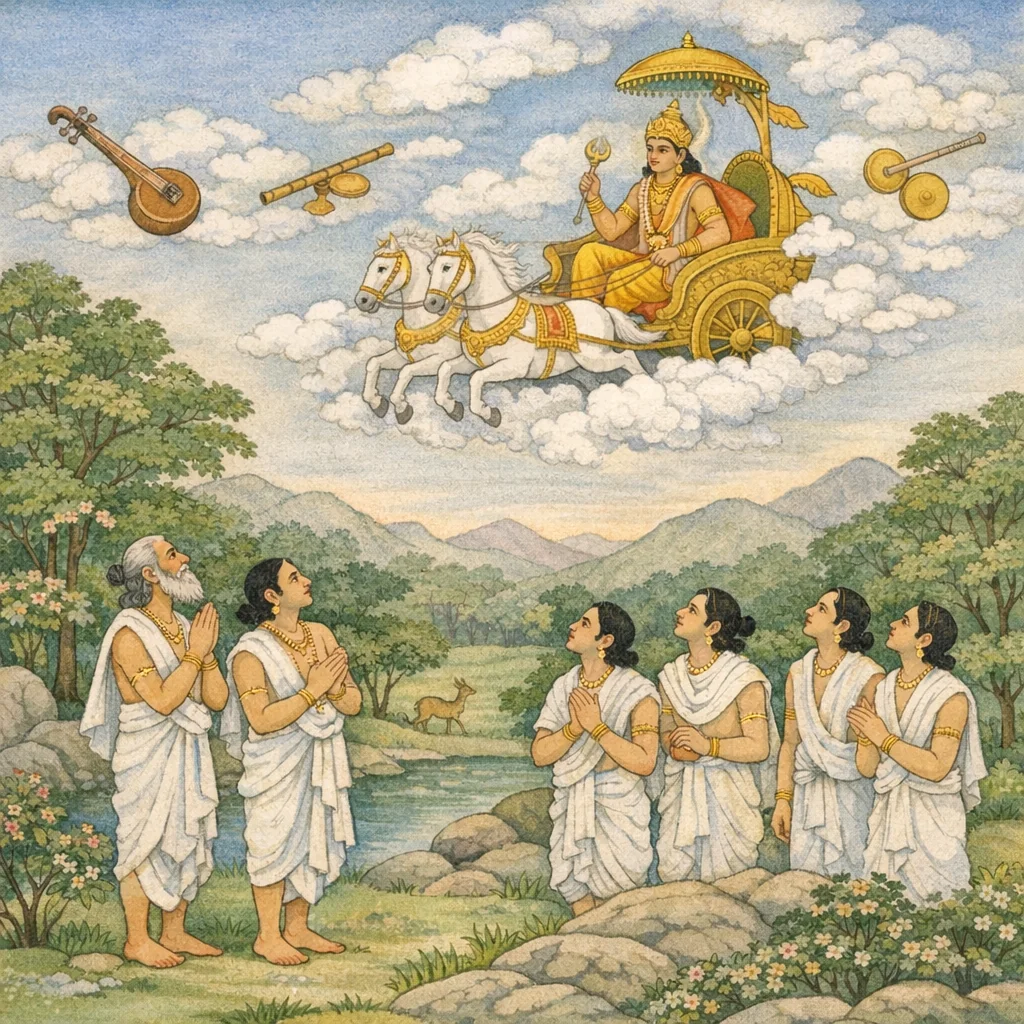
एतस्मिन्नेव काले तु सर्ववादित्रनि:स्वन: । बभूव तुमुल:ः शब्दस्त्वन्तरिक्षे दिवौकसाम्,इसी समय अन्तरिक्षमें देवताओंके सम्पूर्ण वाद्योंकी तुमुल ध्वनि गूँज उठी
Vaiśaṃpāyana said: At that very moment, a mighty, tumultuous roar arose in the sky—the resounding clangor of all the gods’ musical instruments—signaling a divine presence and an auspicious turning in the unfolding events.
Verse 3
रथनेमिस्वनश्वैव घण्टाशब्दक्ष भारत । पृथग् व्यालमृगाणां च पक्षिणामिव सर्वश:,भारत! रथके पहियोंकी घर्घराहट, घंटानाद तथा सर्प, मृग एवं पक्षियोंक कोलाहल सब ओर पृथक्-पृथक् सुनायी दे रहे थे
Vaiśampāyana said: “O Bhārata, from every side there were distinct sounds— the rumbling of chariot-wheels and the ringing of bells, and separately the cries and rustlings of serpents, wild beasts, and birds. The scene is painted through sound, conveying a world alive with movement and alertness, where each being follows its own nature (svabhāva) amid a tense, watchful atmosphere.”
Verse 4
(रवोन्मुखास्ते ददृशु: प्रीयमाणा: कुरूद्गवहा: । मरुद्धिरन्वितं शक्रमापतन्तं विहायसा ।।) ते समन्तादनुययुर्गन्धर्वाप्सरसां गणा: । विमानै: सूर्यसंकाशैदेंवराजमरिंदमम्,पाण्डवोंने प्रसन्नतापूर्वक उस ध्वनिकी ओर आँख उठाकर देखा, तो उन्हें देवराज इन्द्र दृष्टिगोचर हुए जो सम्पूर्ण मर्द्गण आदि देवताओंके साथ आकाशमार्गसे आ रहे थे। गन्धर्वों और अप्सराओंके समूह सूर्यके समान तेजस्वी विमानोंद्वारा शत्रुदमन देवराजको चारों ओरसे घेरकर उन्हींके पथका अनुसरण कर रहे थे
Vaiśampāyana said: The foremost of the Kurus, delighted, lifted their eyes toward the sound and beheld Śakra (Indra) approaching through the sky, accompanied by the Maruts. All around him, companies of Gandharvas and Apsarases followed his path, surrounding the enemy-subduing king of the gods in radiant aerial chariots shining like the sun.
Verse 5
ततः स हरिभिर्युक्ते जाम्बूनदपरिष्कृतम् मेघनादिनमारुहा[ श्रिया परमया ज्वलन्
Then he mounted the chariot named Meghanāda, yoked with swift horses and adorned with refined Jāmbūnada gold; blazing with supreme splendor, he set forth—an image of royal power and worldly prosperity that often precedes decisive action in the forest narrative.
Verse 6
आगत्य च सहस्राक्षो रथादवरुरोह वै,निकट आनेपर सहसख्नलोचन इन्द्र रथसे उतर गये। उन महामना देवराजको देखते ही भाइयोंसहित श्रीमान् धर्मराज युधिष्ठिर उनके पास गये
Vaiśampāyana said: Indra, the thousand-eyed lord of the gods, arrived and indeed descended from his chariot. When that great-souled king of the devas came near, the illustrious Dharmarāja Yudhiṣṭhira, together with his brothers, went up to him in reverent approach—an act reflecting humility and proper conduct toward a worthy superior.
Verse 7
त॑ दृष्टवैव महात्मानं धर्मराजो युधिष्ठिर: । भ्रातृभि: सहित: श्रीमान् देवराजमुपागमत्,निकट आनेपर सहसख्नलोचन इन्द्र रथसे उतर गये। उन महामना देवराजको देखते ही भाइयोंसहित श्रीमान् धर्मराज युधिष्ठिर उनके पास गये
As soon as he beheld that great-souled one, King Yudhiṣṭhira—renowned for dharma—approached the lord of the gods, Indra, accompanied by his brothers. The scene underscores reverence toward divine authority and the ethical impulse to seek guidance and protection through humility rather than pride.
Verse 8
पूजयामास चैवाथ विधिवद् भूरिदक्षिण: । यथार्हममितात्मानं विधिदृष्टेन कर्मणा,यज्ञोंमें प्रचुर दक्षिणा देनेवाले युधिष्ठिर शास्त्रवर्णित पद्धतिसे अमितवबुद्धि इन्द्रका विधिवत् स्वागत-सत्कार किया
Then Yudhiṣṭhira—renowned for granting abundant sacrificial gifts—honoured him in due form. With a disciplined and generous mind, he offered a fitting welcome and reverential hospitality to Indra, performing the rites exactly as prescribed by sacred rule and established practice.
Verse 9
धनंजयश्च तेजस्वी प्रणिपत्य पुरंदरम् । भृत्यवत् प्रणतस्तस्थौ देवराजसमीपत:,तेजस्वी अर्जुन भी इन्द्रको प्रणाम करके उनके समीप सेवककी भाँति विनीतभावसे खड़े हो गये
Vaiśampāyana said: The radiant Dhanañjaya (Arjuna), having bowed down to Purandara (Indra), stood near the king of the gods with the humility of a servant—his posture expressing disciplined reverence and rightful conduct before a superior.
Verse 10
आप्यायत महातेजा: कुन्तीपुत्रो युधिष्ठिर: । धनंजयमभिप्रेक्ष्य विनीतं स्थितमन्तिके,महातेजस्वी कुन्तीपुत्र युधिष्ठिर अर्जुनको देवराजके समीप विनीतभावसे स्थित देख बड़े प्रसन्न हुए। अर्जुनके सिरपर जटा बाँध गयी थी। वे देवराजके आदेशके अनुसार तपस्यामें लगे रहते थे; अतः सर्वथा निष्पाप हो गये थे। अर्जुनको देखनेसे उन्हें महान् हर्ष हुआ था
Vaiśaṃpāyana said: Seeing Dhanañjaya (Arjuna) standing nearby in humble discipline, the mighty Yudhiṣṭhira, son of Kuntī, was filled with joy and renewed strength. The sight of a brother who had embraced restraint and austerity becomes, in this moment, a moral reassurance: humility and self-control are portrayed as signs of inner purification and readiness for righteous action.
Verse 11
जटिल देवराजस्य तपोयुक्तमकल्मषम् | हर्षेण महता<5<विष्ट: फाल्गुनस्याथ दर्शनात्,महातेजस्वी कुन्तीपुत्र युधिष्ठिर अर्जुनको देवराजके समीप विनीतभावसे स्थित देख बड़े प्रसन्न हुए। अर्जुनके सिरपर जटा बाँध गयी थी। वे देवराजके आदेशके अनुसार तपस्यामें लगे रहते थे; अतः सर्वथा निष्पाप हो गये थे। अर्जुनको देखनेसे उन्हें महान् हर्ष हुआ था
Vaiśampāyana said: Seeing Phālguna (Arjuna), whose hair was matted in ascetic locks, engaged in austerity by the command of the Lord of the gods and therefore free from moral taint, the radiant son of Kuntī—King Yudhiṣṭhira—was overwhelmed with great joy. The sight of Arjuna, purified through disciplined tapas, becomes a moment of ethical reassurance: steadfast obedience, self-control, and spiritual effort are shown as sources of inner purity and rightful strength.
Verse 12
वभूव परमप्रीतो देवराजं च पूजयन् | त॑ं तथादीनमनसं राजानं हर्षसम्प्लुतम्,अतः देवराजका पूजन करके वे बड़े प्रसन्न हुए। उदारचित्त राजा युधिष्ठिरको इस प्रकार हर्षमें मगन देखकर परम बुद्धिमान् देवराज इन्द्रने कहा--पाण्डुनन्दन! तुम इस पृथ्वीका शासन करोगे। कुन्तीकुमार! अब तुम पुन: काम्यक वनके कल्याणकारी आश्रममें चले जाओ
Vaiśampāyana said: Worshipping the king of the gods, he became exceedingly pleased. Seeing King Yudhiṣṭhira—whose mind had been weighed down—now flooded with joy, the supremely wise Indra, lord of the gods, spoke: “O son of Pāṇḍu, you shall rule this earth. O son of Kuntī, now return again to the auspicious hermitage in the Kāmyaka forest.”
Verse 13
उवाच वचन धीमान् देवराज: पुरंदर: । त्वमिमां पृथिवीं राजन् प्रशासिष्यसि पाण्डव । स्वस्ति प्राप्रुहि कौन्तेय काम्यकं पुनराश्रमम्,अतः देवराजका पूजन करके वे बड़े प्रसन्न हुए। उदारचित्त राजा युधिष्ठिरको इस प्रकार हर्षमें मगन देखकर परम बुद्धिमान् देवराज इन्द्रने कहा--पाण्डुनन्दन! तुम इस पृथ्वीका शासन करोगे। कुन्तीकुमार! अब तुम पुन: काम्यक वनके कल्याणकारी आश्रममें चले जाओ
Vaiśaṃpāyana said: Then the wise lord of the gods, Purandara (Indra), spoke these words: “O king, O Pāṇḍava, you shall rule this earth. O son of Kuntī, go now in safety once more to the auspicious hermitage in the Kāmyaka forest.” The passage affirms righteous kingship as destiny grounded in merit, and counsels calm return to disciplined life after receiving divine reassurance.
Verse 14
अस्त्राणि लब्धानि च पाण्डवेन सर्वाणि मत्त: प्रयतेन राजन् । कृतप्रियश्चलास्मि धनंजयेन जेतुं न शक््यस्त्रिभिरेष लोकै:,“राजन! पाण्डुनन्दन अर्जुनने एकाग्रचित्त होकर मुझसे सम्पूर्ण दिव्यास्त्र प्राप्त कर लिये हैं। साथ ही इन्होंने मेरा बड़ा प्रिय कार्य सम्पन्न किया है। तीनों लोकोंके समस्त प्राणी इन्हें युद्धमें परास्त नहीं कर सकते”
Vaiśampāyana said: “O king, the Pāṇḍava (Arjuna) has, with focused effort, obtained from me all the divine weapons. Moreover, Dhanaṃjaya has fulfilled a task that was dear to me. Therefore, across the three worlds, no being can defeat him in battle.”
Verse 15
एकमुक्त्वा सहस्राक्ष: कुन्तीपुत्र युधिष्ठिरम् । जगाम त्रिदिवं हृष्ट: स्तूयमानो महर्षिभि:,कुन्तीनन्दन युधिष्ठिससे ऐसा कहकर इन्द्र महर्षियोंक मुखसे अपनी स्तुति सुनते हुए सानन्द स्वर्गलोकको चले गये
Vaiśampāyana said: Having spoken this one statement to Yudhiṣṭhira, the son of Kuntī, Sahasrākṣa (Indra) departed joyfully for the heavenly world, while the great seers praised him. The scene underscores the authority of divine counsel and the reverent, dharma-centered atmosphere in which it is delivered and received.
Verse 16
धनेश्वरगृहस्थानां पाण्डवानां समागमम् | शक्रेण य इदं विद्वानधीयीत समाहित:
Vaiśampāyana said: He who, with a collected mind and true understanding, recites this account of the Pāṇḍavas’ meeting at the dwelling of the Lord of Wealth—told in connection with Śakra—approaches the narrative as a sacred remembrance, strengthening reverence for divine order and the disciplined pursuit of dharma amid hardship.
Verse 17
संवत्सरं ब्रह्मचारी नियत: संशितव्रत: । स जीवेद्धि निराबाध: स सुखी शरदां शतम्
Vaiśampāyana said: “If one lives for a full year as a disciplined brahmacārin—self-restrained and firm in vowed conduct—he indeed lives free from affliction, and he remains happy for a hundred autumns (i.e., for a full, long life).”
Verse 53
पार्थानभ्याजगामाथ देवराज: पुरंदर: । थोड़ी ही देरमें हरे रंगके घोड़ोंसे जुते हुए, मेघ-गर्जनाके समान गम्भीर घोष करनेवाले, जाम्बूनद नामक सुवर्णसे अलंकृत रथपर आरूढ़ देवराज इन्द्र पाण्डवोंके पास आ पहुँचे। उस समय वे अपनी उत्कृष्ट प्रभासे अत्यन्त उद्धासित हो रहे थे
Verse 165
इस प्रकार श्रीमह्याभारत वनपर्वके अन्तर्गत निवातकक्चयुद्धपर्वमें अर्जुनसमागमविषयक एक सौ पैंसठवाँ अध्याय पूरा हुआ
Thus ends the one hundred and sixty-fifth chapter of the Mahābhārata’s Vana Parva, within the section concerning the battle with the Nivātakavacas, dealing with the theme of Arjuna’s meeting. The narrator marks the completion of this unit, framing the episode as part of the larger moral and narrative arc of exile, divine aid, and the disciplined pursuit of righteous victory.
Verse 166
धनाध्यक्ष कुबेरके घरमें टिके हुए पाण्डवोंका जो इन्द्रके साथ समागम हुआ था, उस प्रसंगको जो विद्वान एकाग्रचित्त होकर प्रतिदिन पढ़ता है और संयम-नियमसे रहकर कठोर व्रतका आश्रय ले एक वर्षतक ब्रह्मचर्यका पालन करता है, वह सब प्रकारकी बाधाओंसे रहित हो सौ वर्षोतक सुखपूर्वक जीवन धारण करता है ।। इति श्रीमहाभारते वनपर्वणि निवातकचवयुद्धपर्वणि इन्द्रागमने षट्षष्टयधिकशततमो< ध्याय:,इस प्रकार श्रीमह्या भारत वनपर्वके अन्तर्गत निवातकवचयुद्धपर्वमें इन्द्रागयमनविषयक एक सौ छाछठवाँ अध्याय पूरा हुआ
Vaiśampāyana said: Whoever, being learned and single-minded, recites each day the account of the Pāṇḍavas’ meeting with Indra while they were staying in the house of Kubera, and who—living with self-restraint and observances—undertakes a rigorous vow and maintains celibacy for a full year, becomes free from every kind of obstruction and lives happily for a hundred years. Thus ends, in the Mahābhārata’s Vana Parva, within the section on the battle with the Nivātakavacas, the chapter concerning Indra’s arrival, the one hundred and sixty-sixth.
Frequently Asked Questions
The tension is proportionality and restraint: when surrounded by massed attackers and heavy volleys, Arjuna must decide when conventional defense is sufficient and when regulated astras are ethically and tactically justified.
Competence is collaborative and disciplined: precise archery, controlled escalation, and expert chariot-handling together produce stability under pressure, illustrating that mastery is procedural rather than impulsive.
No explicit phalaśruti appears in these verses; the meta-significance is structural—this chapter functions as a capability-and-escalation marker leading into the problem of māyā, which requires further tactical and ethical adaptation.