Adhyaya 44
अभिमन्योर् विक्रमः — Abhimanyu’s Disruptive Advance and the Gāndharva-astra Counter
Upa-parva: Abhimanyu-Vikrama (Battlefield Episode within Droṇa-parva)
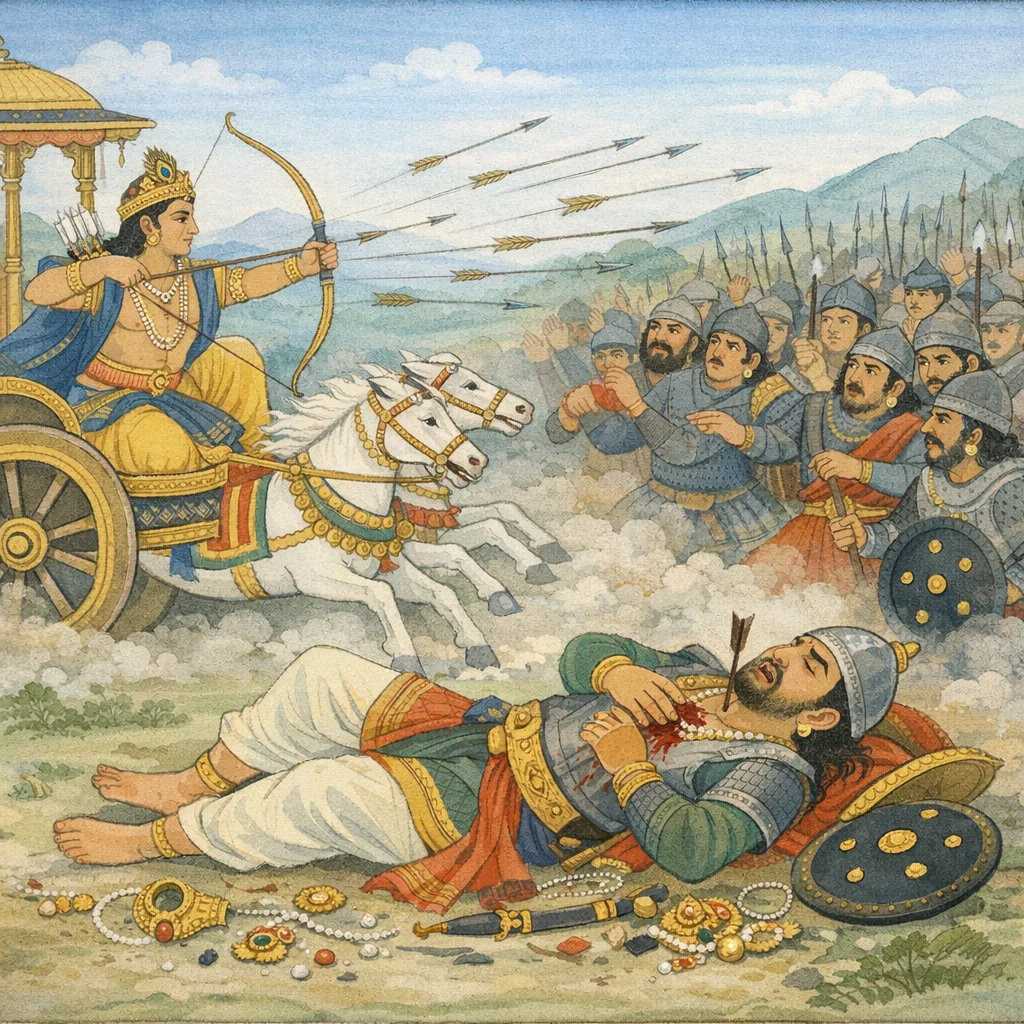
Sañjaya reports that Abhimanyu, likened to Kāla (time/death) for his battlefield impact, drives into the opposing host with Indra-like vigor. He seizes Satyaśravas in the press of combat, prompting multiple mahārathas to surge forward competitively, each seeking the first strike. The army’s movement is described through oceanic and storm metaphors—units are drawn in and do not return, and the host trembles as if a ship in rough waters—signaling morale destabilization. Rukmaratha, son of the Madra ruler, attempts to rally the frightened troops and vows to capture Abhimanyu alive; he attacks with volleys but is swiftly disabled in a counter, his weapon and body struck down. Shalya’s associates then surround Abhimanyu with dense arrow-rain, briefly rendering him ‘invisible’ under missiles; Duryodhana interprets this as near-fatal overwhelm. Abhimanyu, heavily pierced and angered, employs the Gāndharva-astra (acquired by Arjuna from Gandharvas) and illusionary rathacaryā techniques, appearing manifold, confusing opponents, and inflicting severe losses—cutting weapons, standards, drivers, limbs, and heads—until Duryodhana advances, and the engagement transitions into a direct clash under sustained arrow-wounds.
Chapter Arc: संजय धृतराष्ट्र को बताते हैं कि जयद्रथ द्वारा रोके जाने पर भी पाण्डव-पक्ष की विजय-लालसा थमती नहीं; उसी क्षण सत्यसंध, दुर्धर्ष, तेजस्वी अभिमन्यु अकेला ही कौरव-सेना के भीतर मकर की भाँति समुद्र में प्रवेश करता है। → अभिमन्यु बाण-वर्षा से कौरव-सेना में क्षोभ मचा देता है; रथसत्तम योद्धा उसे चारों ओर से घेरते हैं, रथ-रथ की टक्कर, शस्त्रों की झंकार और निरन्तर शर-वृष्टि से रणभूमि उबल उठती है। → विघ्न डालने के लिए वृषसेन का सारथि अभिमन्यु के रथ-प्रवाह में बाधा पहुँचाता है, पर अभिमन्यु क्षण भर में ही लोहमय कवचधारी वसातीय को दूरपाती बाण से हृदय में बेधकर धराशायी कर देता है; उसके क्रोध-प्रहार से शत्रुओं के धनुष, बाण, अंग-प्रत्यंग और शिर कटते दिखते हैं, और स्वर्णाभरणों की चमक ही दूर से दीखती रह जाती है। → कौरव-पंक्तियाँ क्षणिक रूप से टूटती हैं; अभिमन्यु का पराक्रम रणभूमि पर भय और विस्मय दोनों फैलाता है, और उसके चारों ओर पड़े कटे अस्त्र-शस्त्र व स्वर्णाभरण उसकी विजय-लहर का प्रमाण बनते हैं। → अभिमन्यु के इस उन्मत्त वेग को रोकने हेतु कौरव-पक्ष और अधिक कठोर घेरा कसने को उद्यत होता है—अगला प्रहार किस ओर से आएगा, यह अनिश्चित रह जाता है।
Shlokas
Verse 1
ऑपन-मा_ज बछ। ऑफर चतुश्नत्वारिशो< ध्याय: अभिमन्युका पराक्रम और उसके द्वारा वसातीय आदि अनेक योद्धाओंका वध संजय उवाच सैन्धवेन निरुद्धेषु जयगृद्धिषु पाण्डुषु । सुघोरमभवदसयुद्ध॑ त्वदीयानां परै: सह,संजय कहते हैं--राजन्! विजयकी अभिलाषा रखनेवाले पाण्डवोंको जब सिंधुराज जयद्रथने रोक दिया, उस समय आपके सैनिकोंका शत्रुओंके साथ बड़ा भयंकर युद्ध हुआ
Sanjaya said: O King, when Jayadratha, lord of Sindhu, checked the Pandavas who were intent on victory, a most dreadful and unrighteous battle erupted between your troops and their foes. The scene turned grim, as the restraint imposed on the Pandavas intensified the ferocity and moral disorder of the fighting.
Verse 2
प्रविश्याथार्जुनि: सेनां सत्यसंधो दुरासद: । व्यक्षो भयत तेजस्वी मकर: सागरं यथा,तदनन्तर सत्यप्रतिज्ञ दुर्धष और तेजस्वी वीर अभिमन्युने आपकी सेनाके भीतर घुसकर इस प्रकार तहलका मचा दिया, जैसे बड़ा भारी मगर समुद्रमें हलचल पैदा कर देता है
Sañjaya said: Then Arjuni—true to his vow and hard to withstand—entered your army and threw it into turmoil, just as a mighty makara churns the ocean into agitation. The verse underscores the ethical force of steadfast resolve (satya-saṅkalpa) expressed through fearless action in the chaos of war.
Verse 3
त॑ तथा शरवर्षेण क्षोभयन्तमरिन्दमम् । यथा प्रधाना: सौभद्रमभ्ययू रथसत्तमा:,इस प्रकार बाणोंकी वर्षासे कौरवसेनामें हलचल मचाते हुए शत्रुदमन सुभद्राकुमारपर आपकी सेनाके प्रधान-प्रधान महारथियोंने एक साथ आक्रमण किया
Sañjaya said: As he, the foe-subduer, kept the Kaurava host in turmoil with a rain of arrows, so did the foremost of your army—the best of chariot-warriors—advance together to assail Saubhadra (Abhimanyu). The scene underscores the harsh ethic of battlefield necessity: many elite fighters converging upon a single, exceptionally disruptive hero to contain him, even as the imbalance of force raises a moral tension within the larger dharma-war narrative.
Verse 4
तेषां तस्य च सम्मर्दो दारुग: समपद्यत | सृजतां शरवर्षाणि प्रसक्तममितौजसाम्,उस समय अति तेजस्वी कौरव योद्धा परस्पर सटे हुए बाणोंकी वर्षा कर रहे थे। उनके साथ अभिमन्युका भयंकर युद्ध होने लगा
Sañjaya said: Then a dreadful melee arose between them and him, as those warriors of immeasurable prowess, locked in close combat, kept unleashing continuous showers of arrows. The scene underscores how, in the press of war, valor and skill intensify into relentless violence, where duty to one’s side is pursued through uncompromising martial force.
Verse 5
रथव्रजेन संरुद्धस्तैरमित्रैस्तथा5<र्जुनि: । वृषसेनस्य यन्तारं हत्वा चिच्छेद कार्मुकम्,यद्यपि शत्रुओंने अपने रथसमूहके द्वारा अर्जुनकुमार अभिमन्युको सब ओरसे घेर लिया था, तो भी उसने वृषसेनके सारथिको घायल करके उसके धनुषको भी काट डाला
Sañjaya said: Though Abhimanyu, the son of Arjuna, was hemmed in on all sides by a mass of chariots and hostile warriors, he struck down (disabled) Vṛṣasena’s charioteer and then cut Vṛṣasena’s bow. The episode highlights steadfast courage and tactical restraint amid overwhelming odds—neutralizing the enemy’s means of attack rather than indulging in needless slaughter.
Verse 6
तस्य विव्याध बलवान् शरैरश्वानजिद्दागै: । वातायमानैरथ तैरश्वैरपह्तो रणात्,तब बलवान वृषसेन अपने सीधे जानेवाले बाणोंद्वारा अभिमन्युके घोड़ोंको बींधने लगा। इससे उसके घोड़े हवाके समान वेगसे भाग चले। इस प्रकार उन अअश्रोंद्वारा वह रणभूमिसे दूर पहुँचा दिया गया
Verse 7
तेनान्तरेणाभिमन्योर्यन्तापासारयद् रथम् । रथव्रजास्ततो हृष्टा: साधु साथ्विति चुक्कुशु:,अभिमन्युके कार्यमें इस प्रकार विघ्न आ जानेसे वृषसेनका सारथि अपने रथको वहाँसे दूर हटा ले गया। इससे वहाँ जुटे हुए रथियोंके समुदाय हर्षमें भरकर “बहुत अच्छा, बहुत अच्छा” कहते हुए कोलाहल करने लगे
Meanwhile, as an obstruction arose in Abhimanyu’s undertaking, Vṛṣasena’s charioteer drew his chariot away from that spot. Seeing this, the gathered body of chariot-warriors, elated, raised a loud cry of approval—“Well done! Well done!”—rejoicing at the hindrance to Abhimanyu’s advance.
Verse 8
तं॑ सिंहमिव संक्रुद्धं प्रमथ्नन्तं शरैररीन् । आरादायान्तमभ्येत्य वसातीयो< भ्ययाद् द्रुतम्,तदनन्तर सिंहके समान अत्यन्त क्रोधमें भरकर अपने बाणोंद्वारा शत्रुओंको मथते हुए अभिमन्युको समीप आते देख वसातीय तुरंत वहाँ उपस्थित हो उसका सामना करनेके लिये गया
Sañjaya said: Seeing Abhimanyu—like an enraged lion—crushing the enemy ranks with his arrows and advancing close at hand, Vasātīya quickly came forward to confront him.
Verse 9
सो5भिमन्युं शरै:षष्ट्या रुक्मपुड्खैरवाकिरत् । अब्रवीच्च न मे जीवज्जीवतो युधि मोक्ष्यसे,उसने अभिमन्युपर सुवर्णमय पंखवाले साठ बाण बरसाये और कहा--“अब तू मेरे जीते-जी इस युद्धमें जीवित नहीं छूट सकेगा,
Sañjaya said: He showered Abhimanyu with sixty arrows, their feathers gleaming like gold, and declared, “So long as I live, you will not escape this battle alive.” The verse heightens the moral tension of war: prowess and resolve are displayed through weapons and vows, yet the threat underscores how combat can harden into personal annihilation rather than restrained, dharma-guided engagement.
Verse 10
तमयस्मयवर्माणमिषुणा दूरपातिना । विव्याध हृदि सौभद्र: स पपात व्यसु: क्षितौ,तब अभिमन्युने लोहमय कवच धारण करनेवाले वसातीयको दूरतकके लक्ष्यको मार गिरानेवाले बाणद्वारा उसकी छातीमें चोट पहुँचायी, जिससे वह प्राणहीन होकर पृथ्वीपर गिर पड़ा
Sañjaya said: Abhimanyu, the son of Subhadrā, struck in the heart with a far-flying arrow the warrior clad in iron armor; and he fell lifeless upon the earth. The scene underscores the grim inevitability of battle, where prowess and protection alike are overturned by a single well-aimed act, and where the ethical weight of violence remains inseparable from the demands of duty on the battlefield.
Verse 11
वसातीयं हत॑ दृष्टवा क्रुद्धा: क्षत्रियपुड़वा: । परिवत्रुस्तदा राजंस्तव पौत्रं जिघांसव:,राजन! वसातीयको मारा गया देख क्रोधमें भरे हुए क्षत्रियशिरोमणि वीरोंने आपके पौजत्र अभिमन्युको मार डालनेकी इच्छासे उस समय चारों ओरसे घेर लिया
Sañjaya said: Seeing Vāsātīya slain, the foremost of warriors, inflamed with wrath, then surrounded your grandson on every side, O King, intent on killing him. The scene underscores how grief and anger in war quickly harden into collective resolve, eclipsing restraint and driving many against one.
Verse 12
विस्फारयन्तक्षापानि नानारूपाण्यनेकश: । तद् युद्धमभवद् रौद्रं सौभद्रस्यारिभि: सह,वे अपने नाना प्रकारके धनुषोंकी बारंबार टंकार करने लगे। सुभद्राकुमारका शत्रुओंके साथ वह बड़ा भयंकर युद्ध हुआ
Sañjaya said: As they repeatedly discharged arrows of many kinds and forms, a fierce and terrifying battle arose between Saubhadra (Abhimanyu) and his enemies—an encounter marked by relentless martial fury and the grim momentum of war.
Verse 13
तेषां शरान् सेष्वसनान् शरीराणि शिरांसि च | सकुण्डलानि ख्ग्वीणि क्रुद्धश्चिच्छेद फाल्गुनि:,उस समय अर्जुनकुमारने कुपित होकर उनके धनुष, बाण, शरीर तथा हार और कुण्डलोंसे युक्त मस्तकोंके टुकड़े-टुकड़े कर दिये
Sañjaya said: Then Phālguna (Arjuna), inflamed with wrath, cut to pieces their arrows and bows, their bodies, and even their heads—adorned with earrings and garlands—striking them down with relentless precision amid the fury of battle.
Verse 14
सखडूगा: साड््गुलित्राणा: सपट्टिशपरश्व धा: । अदृश्यन्त भुजाश्छिन्ना हेमाभरणभूषिता:,सोनेके आभूषणोंसे विभूषित उनकी भुजाएँ खड्ग, दस्ताने, पट्टिश और फरसोंसहित कटी दिखायी देने लगीं
Sañjaya said: Arms, severed in the fighting, were seen lying about—still adorned with golden ornaments, and still bearing their weapons: swords, protective hand-guards, paṭṭiśa-blades, and axes. The scene underscores the terrible cost of war, where the signs of rank and valor become mere remnants amid indiscriminate destruction.
Verse 15
स्रग्भिरा भरणैर्वस्त्रै: पातितैश्न महाभुजै: । वर्मभिश्नर्मभिहरिर्मुकुटैश्छत्रचामरै:,काटकर गिराये हुए हार, आभूषण, वस्त्र, विशाल भुजा, कवच, ढाल, मनोहर मुकुट, छत्र, चँवर, आवश्यक सामग्री, रथकी बैठक, ईषादण्ड, बन्धुर, चूर-चूर हुई धुरी, टूटे हुए पहिये, टूक-टूक हुए जूए, अनुकर्ष, पताका, सारथि, अश्व, टूटे हुए रथ और मरे हुए हाथियोंसे वहाँकी सारी पृथ्वी आच्छादित हो गयी थी
Sañjaya said: The earth there was covered over with fallen garlands, ornaments, and garments; with the severed mighty arms of warriors; and with fine coats of mail and shields—along with splendid crowns, parasols, and yak-tail fans. The scene conveys the terrible cost of battle: even the emblems of royal dignity and honor lie scattered, reduced to debris amid death and ruin.
Verse 16
उपस्करैरधिष्ठानैरीषादण्डकबन्धुरै: । अक्षेविमिथितैश्वक्रैर्भग्नैश्व बहुधा युगैः,काटकर गिराये हुए हार, आभूषण, वस्त्र, विशाल भुजा, कवच, ढाल, मनोहर मुकुट, छत्र, चँवर, आवश्यक सामग्री, रथकी बैठक, ईषादण्ड, बन्धुर, चूर-चूर हुई धुरी, टूटे हुए पहिये, टूक-टूक हुए जूए, अनुकर्ष, पताका, सारथि, अश्व, टूटे हुए रथ और मरे हुए हाथियोंसे वहाँकी सारी पृथ्वी आच्छादित हो गयी थी
Sanjaya said: The earth there was strewn and covered with the wreckage of war—equipment and supplies, the chariot-platforms, poles and shafts, yokes and harness-parts, axles shattered to pieces, wheels smashed, and many yokes broken in various ways. The scene conveys the moral weight of battle: not glory, but the vast, impersonal ruin that warfare spreads across the ground, swallowing both the instruments of power and the lives that depended on them.
Verse 17
अनुकर्ष: पताकाभिस्तथा सारथिवाजिभि: । रथैश्न भग्नैनगिश्ष हतै: की्णाभवन्मही,काटकर गिराये हुए हार, आभूषण, वस्त्र, विशाल भुजा, कवच, ढाल, मनोहर मुकुट, छत्र, चँवर, आवश्यक सामग्री, रथकी बैठक, ईषादण्ड, बन्धुर, चूर-चूर हुई धुरी, टूटे हुए पहिये, टूक-टूक हुए जूए, अनुकर्ष, पताका, सारथि, अश्व, टूटे हुए रथ और मरे हुए हाथियोंसे वहाँकी सारी पृथ्वी आच्छादित हो गयी थी
Sañjaya said: The earth there became completely strewn and covered with the wreckage of war—drag-ropes and standards, charioteers and horses, shattered chariots, and slain elephants. The scene proclaims the moral cost of battle: glory and power collapse into debris, and the field itself bears witness to the ruin that violence spreads over all.
Verse 18
निहतै: क्षत्रिय: श्रै्नानाजनपदेश्वरै: । जयगृद्धैर्व॒ता भूमिर्दारुणा समपद्यत,विजयकी अभिलाषा रखनेवाले विभिन्न जनपदोंके स्वामी क्षत्रियवीर उस युद्धमें मारे गये। उनकी लाशोंसे पटी हुई पृथ्वी बड़ी भयानक जान पड़ती थी
Sañjaya said: The earth became dreadful to behold, covered all around with the slain—kṣatriya heroes who were rulers of many realms, men consumed by the hunger for victory. The scene exposes the grim moral cost of ambition in war: the very desire to win turns the battlefield into a terrifying field of death.
Verse 19
दिशो विचरतस्तस्य सर्वाश्च प्रदिशस्तथा । रणे5भिमन्यो: क्रुद्धस्य रूपमन्तरधीयत,उस रफणक्षेत्रमें कुृपित होकर सम्पूर्ण दिशा-विदिशाओंमें विचरते हुए अभिमन्युका रूप अदृश्य हो गया था
Sañjaya said: As the enraged Abhimanyu ranged through the battlefield in every direction and sub-direction, his form vanished from sight—lost amid the tumult of war, where anger and confusion obscure even what is directly before one’s eyes.
Verse 20
काज्चनं यद्यदस्यासीद् वर्म चाभरणानि च । धनुषश्च शराणां च तदपश्याम केवलम्
Sañjaya said: “All that I could see of him was only what was golden—his armor and ornaments, and his bow and arrows.”
Verse 21
उसके कवच, आभूषण, धनुष और बाणके जो-जो अवयव सुवर्णमय थे, केवल उन्हींको हम दूरसे देख पाते थे ।। त॑ तदा नाशकत् वक्रिच्चक्षुभ्यामभिवीक्षितुम् । आददानं शरैरयोधान् मध्ये सूर्यमिव स्थितम्,अभिमन्यु जिस समय बाणोंद्वारा योद्धाओंके प्राण ले रहा था और व्यूहके मध्यभागमें सूर्यके समान खड़ा था, उस समय कोई वीर उसकी ओर आँख उठाकर देखनेका साहस नहीं कर पाता था
Sañjaya said: At that time no warrior could even raise his eyes to look upon him. As Abhimanyu, standing in the very heart of the battle-array like the sun in mid-heaven, was taking the lives of fighters with his arrows, his splendor and prowess overwhelmed all who faced him—an image of heroic duty carried to its fearsome extreme amid the moral strain of war.
Verse 44
इति श्रीमहा भारते द्रोणपर्वणि अभिमन्युवधपर्वणि अभिमन्युपराक्रमे चतुश्नत्वारिंशो5ध्याय:
Thus ends the forty-fourth chapter in the Droṇa Parva of the Śrī Mahābhārata, within the section on the slaying of Abhimanyu, describing Abhimanyu’s valor. The colophon marks the close of a narrative unit that frames heroic effort and tragic consequence within the moral tensions of war.
Frequently Asked Questions
The episode juxtaposes individual valor with collective containment: whether coordinated mass attack and attempted live-capture are ethically compatible with ideals of fair combat, especially when morale collapse incentivizes extreme measures.
The narrative frames battlefield outcomes as a convergence of agency and kāla: excellence can reverse tactical disadvantage (through skill and astra-vidyā), yet the wider field remains governed by volatility, fear, and time’s impersonal pressure.
No explicit phalaśruti is presented in the provided verses; the meta-commentary functions indirectly through Sañjaya’s similes (ocean, storm, Kāla), guiding the listener to interpret events as morally and psychologically consequential within the war’s larger arc.