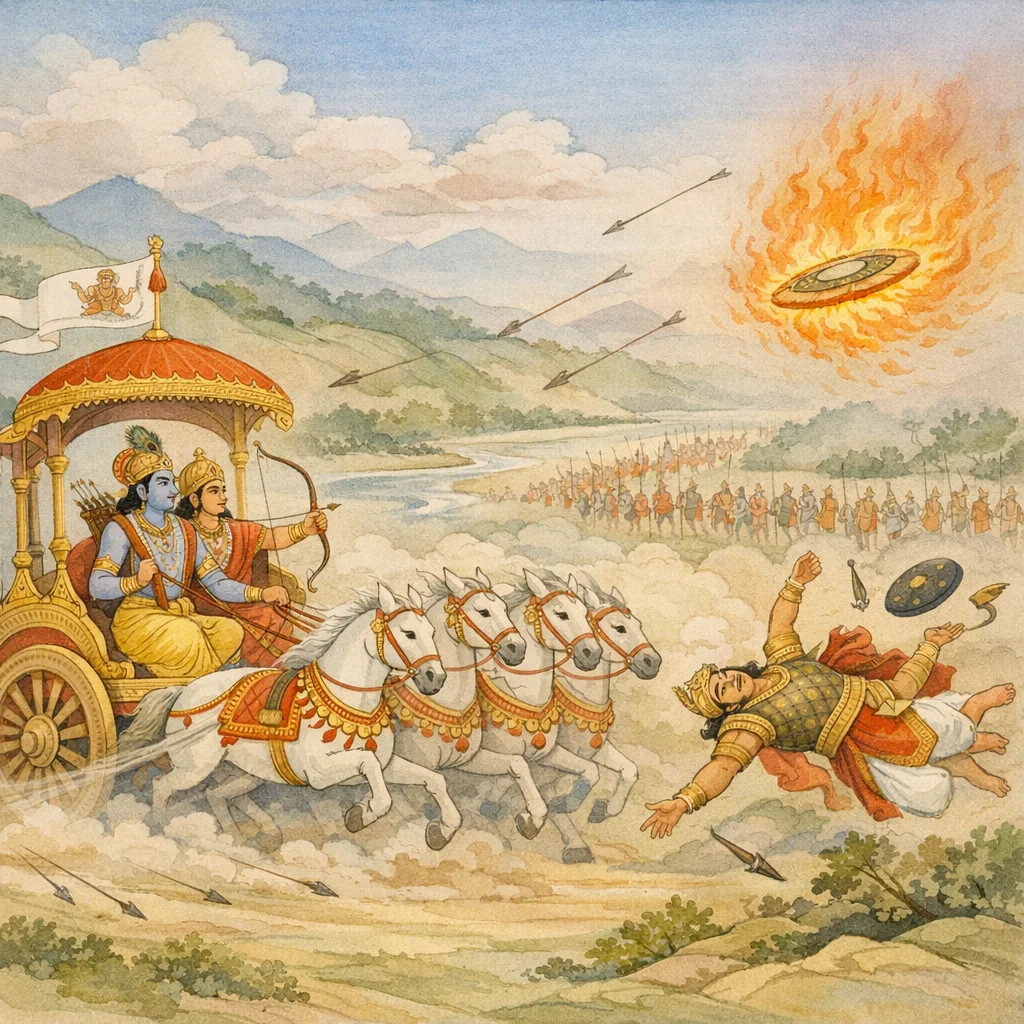
Adhyaya 120
अर्जुनस्य जयद्रथाभिमुखप्रयाणं तथा कर्णेन प्रतिरोधः (Arjuna’s renewed advance toward Jayadratha and Karṇa’s resistance)
Upa-parva: Jayadratha-rakṣaṇa (Protection of Jayadratha) Episode
Dhṛtarāṣṭra asks how the battle resumes after Bhūriśravas’ death. Saṃjaya reports that Arjuna urges Kṛṣṇa to drive swiftly toward Jayadratha as the sun hastens to set, stressing the vow’s truth-condition. Kṛṣṇa urges the horses forward; Kaurava leaders—Duryodhana, Karṇa, Vṛṣasena, Śalya (Madrarāja), Aśvatthāman, Kṛpa, and Jayadratha—coordinate to screen Jayadratha and delay Arjuna. Duryodhana instructs Karṇa to display full strength so Jayadratha will not be slain before sunset, repeatedly invoking the consequence of Arjuna’s vow-failure. Karṇa, constrained by pressure from Bhīma’s archery, nevertheless commits to holding Arjuna back and engages in an intense exchange. Arjuna demonstrates overwhelming archery, cutting down weapons, limbs, and formations, then reaches the defended zone; multiple mahārathas encircle him in a ratha-maṇḍala. A high-intensity duel develops: Karṇa and Arjuna trade dense volleys; Arjuna disables Karṇa’s horses and charioteer, after which Aśvatthāman retrieves Karṇa onto his own chariot. The chapter closes with renewed multi-front pressure on Arjuna and his countermeasure—deploying a wide-area (sarvatodhāra) weapon-action to disperse and terrify the opposing force, sustaining the pursuit under sunset urgency.
Chapter Arc: रणभूमि में रथों की चमक—द्रोण के रथ का वैभव (सोना-चाँदी) और अस्त्रों की झंकार—के बीच अर्जुन का सारथि से वह वाक्य उठता है जो युद्ध को भाग्य और निमित्त के प्रश्न पर ला खड़ा करता है: ‘हम तो केवल निमित्त हैं; दग्धारय केशव-फाल्गुन ही हैं।’ → कृष्ण-सारथि को संबोधित कर अर्जुन अपने पराक्रम को ईश्वरीय योजना का उपकरण मानते हुए बाण-वर्षा करता है। उसी प्रवाह में यदुवंशी वीर (कृष्ण-पक्ष) के सामने सोमक-सम्बद्ध प्रतिद्वन्द्वी खड़े होते हैं; दोनों ओर के योद्धा उस द्वन्द्व को ‘वृत्र-इन्द्र’ समान देवासुर-संघर्ष की तरह देखते हैं। → सुदर्शन (राजपुत्र/पार्थिव-पुत्रपौत्र) अपने रजत-प्रकाश बाणों से आक्रमण करता है, पर यदूनामृषभ (कृष्ण-पक्ष का महावीर) उसे निर्णायक प्रहार से गिरा देता है—कुण्डल सहित पूर्णचन्द्र-प्रकाश मुख का देह से विच्छेद, इन्द्र के वज्र-प्रहार की उपमा के साथ। → सुदर्शन के वध से यदुवंशी महात्मा उल्लासित होकर देव-राज तुल्य शोभित होता है। उधर अर्जुन अपने रथ को आगे बढ़ाता है, मार्ग में शत्रु-सेना को उच्च वेग बाणों से रोकता और अपने आश्चर्यजनक पराक्रम से दोनों पक्षों के योद्धाओं को विस्मित करता है। → अर्जुन का रथ आगे बढ़ चुका है—विजय-मार्ग खुलता दिखता है, पर अगले क्षण किस महावीर से उसका सामना होगा और जयद्रथ-वध की घड़ी कितनी निकट है, यह अनिश्चितता बनी रहती है।
Shlokas
Verse 1
अत-४#-रकात जा - अद्वाईसवें श्लोकमें द्रोणके रथको सोनेका बताया है और इसमें चाँदीका बताया है। इससे यह समझना चाहिये कि उस रथमें सोना और चाँदी दोनों ही धातुएँ लगी हुई थीं। अष्टादरशाधिकशततमो< ध्याय: सात्यकिद्वारा सुदर्शनका वध संजय उवाच द्रोणं स जित्वा पुरुषप्रवीर- स्तथैव हार्दिक्यमुखांस्त्वदीयान् | प्रहस्य सूतं॑ वचनं बभाषे शिनिप्रवीर: कुरुपुड्भवाग्रय,संजय कहते हैं--कुरुवंशशिरोमणे! द्रोणाचार्य तथा कृतवर्मा आदि आपके प्रमुख महारथियोंको जीतकर नरवीर सात्यकिने अपने सारथिसे हँसते हुए कहा--
Sanjaya said: O foremost of the Kuru line, the heroic Satyaki, having overcome Drona and likewise your leading warriors headed by Kritavarman, smiled and spoke words to his charioteer.
Verse 2
निमित्तमात्रं वयमद्य सूत दग्धारय: केशवफाल्गुनाभ्याम् । हतान् निहन्मेह नरर्षभेण वयं सुरेशात्मसमुद्धवेन,'सारथे! इस विजयमें आज हमलोग तो निमित्त-मात्र हो रहे हैं। वास्तवमें श्रीकृष्ण और अर्जुनने ही हमारे इन शत्रुओंको दग्ध कर दिया है। देवराजके पुत्र नरश्रेष्ठ अर्जुनके मारे हुए सैनिकोंको ही हमलोग यहाँ मार रहे हैं!
Sañjaya said: “O charioteer, today we are only the occasion, the mere instrument in this victory. In truth, Keśava and Phālguna have already scorched these enemies. Here we are only striking down those who have been slain by that bull among men—Arjuna, the son of the lord of the gods, raised up in might.”
Verse 3
तमेवमुक््त्वा शिनिपुज्गवस्तदा महामृधे सो5ग्रयधनुर्धरो 5रिहा । किरन् समन्तात् सहसा शरान् बली समापतच्छयेन इवामिषं यथा,उस महासमरमें सारथिसे ऐसा कहकर धनुर्धर-शिरोमणि शत्रुसूदन शिनिप्रवर बलवान् सात्यकिने सहसा सब ओर बाणोंकी वर्षा करते हुए शत्रुओंपर उसी प्रकार आक्रमण किया, जैसे बाज मांसके टुकड़ेपर झपटता है
Sañjaya said: Having spoken thus, that foremost of the Śini line—an unrivalled archer and a slayer of foes—Sātyaki, in the midst of the great battle, suddenly showered arrows in every direction and charged upon the enemies, just as a hawk swoops down upon a piece of flesh. The verse underscores the relentless momentum of combat: once a warrior has declared his intent, he must act with unwavering resolve, even amid the moral weight of war.
Verse 4
त॑ यान्तमश्वैः शशिशड्खवर्ण- विंगाहा सैन्यं पुरुषप्रवीरम् । नाशवनुवन् वारयितुं समन्ता- दादित्यरश्मिप्रतिमं रथाग्रयम्,सूर्यकी किरणोंके समान प्रकाशमान रथियोंमें श्रेष्ठ नरवीर सात्यकि आपकी सेनामें घुसकर चन्द्रमा और शंखके समान श्वेतवर्णवाले घोड़ोंद्वारा आगे बढ़ते चले जा रहे थे। उस समय किसी ओरसे कोई योद्धा उन्हें रोक न सके
Sañjaya said: Sātyaki, the foremost among chariot-warriors, radiant like the sun’s rays, drove forward into your army with horses white as the moon and conch. From any side, no fighter was able to check or turn him back as he pressed on through the host.
Verse 5
असहाविक्रान्तमदीनसत्त्व॑ सर्वे गणा भारत ये त्वदीया: । सहसनेत्रप्रतिमप्रभावं दिवीव सूर्य जलदव्यपाये,भारत! सात्यकिका पराक्रम असहा था। उनका धैर्य और बल महान् था। वे इन्द्रके समान प्रभावशाली तथा आकाशमें प्रकाशित होनेवाले शरत्कालके सूर्यके समान प्रचण्ड तेजस्वी थे। आपके समस्त सैनिक मिलकर भी उन्हें रोक न सके
Sañjaya said: O Bhārata, all those troops of yours could not withstand him—so irresistible was his advance, so unbroken his courage. He shone with a splendor like the Thousand-eyed Indra, and like the sun blazing in the autumn sky when the clouds have dispersed. Even united, your forces were unable to check his onrush.
Verse 6
अमर्षपूर्णस्त्वतिचित्रयो धी शरासनी काज्चनवर्मधारी । सुदर्शन: सात्यकिमापततन्तं न्यवारयद् राजवर: प्रसहा[,उस समय अत्यन्त विचित्र युद्ध करनेवाले, सुवर्ण-कवचधारी धनुर्धर नृपश्रेष्ठ सुदर्शनने अपनी ओर आते हुए सात्यकिको अमर्षमें भरकर बलपूर्वक रोका
Sañjaya said: Filled with indignation, the king Sudarśana—an archer clad in golden armor and famed for fighting in wondrous, varied ways—forcefully checked Sātyaki as he charged toward him. The scene underscores how, amid the chaos of battle, personal wrath and royal valor drive warriors to obstruct even the most formidable opponents, tightening the moral tension between duty in war and the passions that inflame it.
Verse 7
तयोरभूद् भारत सम्प्रहार: सुदारुणस्तं समतिप्रशंसन् । योधास्त्वदीयाक्ष हि सोमकाश्र वृत्रेन्द्रयोर्युद्धमिवामरौघा:,भारत! उन दोनों वीरोंमें बड़ा भयंकर संग्राम हुआ। जैसे देवगण वृत्रासुर और इन्द्रके युद्धकी गाथा गाते हैं, उसी प्रकार आपके योद्धाओं तथा सोमकोंने भी उन दोनोंके उस युद्धकी भूरि-भूरि प्रशंसा की
Sañjaya said: O Bhārata, between those two heroes there arose a most dreadful clash. Your warriors and the Somakas alike extolled that combat again and again—just as the hosts of gods celebrate in song the battle between Indra and Vṛtra. The verse frames their duel as a cosmic-scale contest, admired for martial prowess even amid the grim ethics of fratricidal war.
Verse 8
शरै: सुतीक्ष्णपै: शतशो< भ्यविध्यत् सुदर्शन: सात्वतमुख्यमाजौ । अनागतानेव तु तान् पृषत्कां- श्रिच्छेद राजन् शिनिपुड्रवोडपि,राजन! सुदर्शनने समरांगणमें सात्वतशिरोमणि सात्यकिपर सैकड़ों सुतीक्ष्ण बाणोंद्वारा प्रहार किया; परंतु शिनिप्रवर सात्यकिने उन बाणोंको अपने पास आनेसे पहले ही काट डाला
Sañjaya said: In the thick of battle, Sudarśana struck the foremost of the Sātvatas—Sātyaki—with hundreds of razor-sharp arrows. Yet, O king, that best of the Śinis cut those shafts down even before they could reach him, displaying disciplined mastery amid the violence of war.
Verse 9
तथैव शक्रप्रतिमो5पि सात्यकि: सुदर्शने यान् क्षिपति सम सायकान् । द्विधा त्रिधा तानकरोत् सुदर्शन: शरोत्तमै: स्यन्दनवर्यमास्थित:,इसी प्रकार इन्द्रके समान पराक्रमी सात्यकि भी सुदर्शनपर जिन-जिन बाणोंका प्रहार करते थे, श्रेष्ठ रथपर बैठे हुए सुदर्शन भी अपने उत्तम बाणोंद्वारा उन सबके दो-दो तीन-तीन टुकड़े कर देते थे
Sañjaya said: Just so, Sātyaki—valiant like Śakra (Indra)—kept hurling arrows at Sudarśana. Yet Sudarśana, seated upon an excellent chariot, met each shaft with superior missiles and split them apart—into two and even three pieces—showing the grim discipline of war where prowess and alertness decide life and death in an instant.
Verse 10
तान् वीक्ष्य बाणान् निहतांस्तदानीं सुदर्शन: सात्यकिबाणवेगै: । क्रोधाद् दिधक्षन्निव तिग्मतेजा: शरानमुज्चत् तपनीयचित्रान्,उस समय सात्यकिके वेगशाली बाणोंद्वारा अपने चलाये हुए बाणोंको नष्ट हुआ देख प्रचण्ड तेजस्वी राजा सुदर्शनने क्रोधसे उन्हें जला डालनेकी इच्छा रखते हुए-से सुवर्णजटित विचित्र बाणोंका उनपर प्रहार आरम्भ किया
Sañjaya said: Seeing at that very moment his own arrows shattered by the swift, forceful shafts of Sātyaki, King Sudarśana—fierce in brilliance—released a volley of wondrous, gold-adorned arrows, as though in wrath he meant to burn his opponent down. The scene shows how, in the press of battle, wounded pride and anger can drive a warrior from measured resolve into destructive escalation.
Verse 11
पुनः स बाणैस्त्रिभिरग्निकल्पै- राकर्णपूर्णनिशितै: सुपुड्खै: । विव्याध देहावरणं विभिद्य ते सात्यकेराविविशु: शरीरम्,फिर उन्होंने अग्निके समान तेजस्वी तथा कानतक खींचकर छोड़े हुए सुन्दर पंखवाले तीन तीखे बाणोंसे सात्यकिको बींध दिया। वे बाण सात्यकिका कवच विदीर्ण करके उनके शरीरमें समा गये
Sañjaya said: Once again he struck Sātyaki with three arrows, blazing like fire—sharp, well-feathered shafts released with the bow drawn to the ear. Splitting open Sātyaki’s body-armor, those arrows penetrated and lodged in his body. The scene underscores the relentless escalation of violence in war, where martial skill pierces even protective defenses and the cost is borne directly in the warrior’s flesh.
Verse 12
तथैव तस्यावनिपालपुत्र: संधाय बाणैरपरैज्वलडद्धि: | आजण्निवांस्तान् रजतप्रकाशां- श्वतुर्भिरश्वां श्वतुरः प्रसहा,तत्पश्चात् उन राजकुमार सुदर्शनने अन्य चार तेजस्वी बाणोंका संधान करके उनके द्वारा चाँदीके समान चमकनेवाले सात्यकिके उन चारों घोड़ोंको भी बलपूर्वक घायल कर दिया
Sañjaya said: In the same manner, the prince—son of the king—fitted other blazing arrows and, with four shafts, forcibly struck down Sātyaki’s four horses, which shone like silver. The scene underscores the ruthless momentum of battle, where disabling an opponent’s mobility becomes a decisive tactic, even as it intensifies the moral weight of violence on the field.
Verse 13
तथा तु तेनाभिहतस्तरस्वी नप्ता शिनेरिन्द्रसमानवीर्य: । सुदर्शनस्येषुगणै: सुतीक्ष्णै- हयान् निहत्याशु ननाद नादम्,सुदर्शनके द्वारा इस प्रकार घायल होनेपर इन्द्रके समान बलवान् और वेगशाली शिनिपौत्र सात्यकिने अपने सुतीक्षण बाणसमूहोंसे सुदर्शनके अश्वोंका शीघ्र ही संहार करके उच्च स्वरसे सिंहनाद किया
Sañjaya said: Though struck by him, the swift Sātyaki—grandson of Śini, a warrior of Indra-like prowess—quickly slew Sudarśana’s horses with volleys of razor-sharp arrows, and then roared aloud a lion-like cry, asserting fearless resolve amid the chaos of battle.
Verse 14
अथास्य सूतस्य शिरो निकृत्य भल्लेन शक्राशनिसंनि भेन । सुदर्शनस्यापि शिनिप्रवीर: क्षुरेण कालानलसंनिभेन,राजन! तत्पश्चात् इन्द्रके वज़तुल्य भल्लसे उनके सारथिका सिर काटकर शिनिवंशके प्रमुख वीर सात्यकिने कालाग्निके समान तेजस्वी छुरेसे सुदर्शनके पूर्ण चन्द्रमाके समान प्रकाशमान शोभाशाली कुण्डलमण्डित मस्तकको भी धड़से काट गिराया। ठीक उसी प्रकार, जैसे पूर्वकालमें वज्रधारी इन्द्रने समरांगणमें अत्यन्त बलवान् बलासुरका सिर बलपूर्वक काट लिया था
Sañjaya said: Then, O King, the foremost hero of the Śini line (Sātyaki) severed the head of his opponent’s charioteer with a broad-headed arrow, like Indra’s thunderbolt. Thereafter, with a razor-like weapon blazing like the fire of Time, he also struck down Sudarśana’s head—adorned with shining earrings and radiant like the full moon—so that it fell from the body. It was as when, in former days, Indra the wielder of the vajra cut off the mighty Bala’s head on the battlefield. The passage underscores the grim ethics of war: prowess is praised, yet the narration also highlights how violence escalates to the killing of supporting combatants, revealing the tragic momentum of adharma within battle.
Verse 15
सकुण्डलं पूर्णशशिप्रकाशं भ्राजिष्णु वक्त्रं विचकर्त देहात् । यथा पुरा वज्रधर: प्रसहा बलस्य संख्येडतिबलस्य राजन,राजन! तत्पश्चात् इन्द्रके वज़तुल्य भल्लसे उनके सारथिका सिर काटकर शिनिवंशके प्रमुख वीर सात्यकिने कालाग्निके समान तेजस्वी छुरेसे सुदर्शनके पूर्ण चन्द्रमाके समान प्रकाशमान शोभाशाली कुण्डलमण्डित मस्तकको भी धड़से काट गिराया। ठीक उसी प्रकार, जैसे पूर्वकालमें वज्रधारी इन्द्रने समरांगणमें अत्यन्त बलवान् बलासुरका सिर बलपूर्वक काट लिया था
Sañjaya said: With a single stroke he severed from the body that radiant face—adorned with earrings and shining like the full moon. It was as, in ancient times, Vajra-bearing Indra, O King, forcibly cut down in battle the head of the exceedingly mighty Bala. The simile underscores the terrible momentum of war: prowess is praised, yet the scene also exposes the grim cost of violence that dharma must continually reckon with.
Verse 16
निहत्य त॑ पार्थिवपुत्रपौत्र रणे यदूनामृषभस्तरस्वी । मुदा समेत: परया महात्मा रराज राजन् सुरराजकल्प:,नरेश्वर! राजाके पुत्र एवं पौत्र सुदर्शनका रणभूमिमें वध करके यदुकुलतिलक देवेन्द्रसदूश पराक्रमी वेगशाली महामनस्वी सात्यकि अत्यन्त प्रसन्न होकर विजयश्रीसे सुशोभित होने लगे
Sañjaya said: Having slain in battle the king’s sons and grandsons, the mighty Sātyaki—bull among the Yadus—was filled with supreme joy. Great-souled and swift in prowess, he shone on the field, O King, like the lord of the gods. The verse underscores the grim ethic of war: victory and exultation arise only after the costly destruction of royal lineages, revealing both the hero’s martial excellence and the tragedy inherent in righteous conflict.
Verse 17
ततो ययावर्जुन एव येन निवार्य सैन्यं तव मार्गणौचै: । सदश्वयुक्तेन रथेन राज- ल्लाॉँक॑ विसिस्मापयिषुर्नुवीर:,राजन! तदनन्तर लोगोंको आश्वर्यवयकित करनेकी इच्छावाले नरवीर सात्यकि अपने सुन्दर अश्वोंसे जुते हुए रथके द्वारा बाणसमूहोंसे आपकी सेनाको हटाते हुए उसी मार्गसे चल दिये, जिससे अर्जुन गये थे
Sañjaya said: Then the hero Sātyaki set out along the very route by which Arjuna had gone. O King, driving a chariot yoked with excellent horses, and wishing to astonish the people, he forced back your army with volleys of arrows and advanced on that same path. The scene underscores the warrior’s resolve and loyalty in battle—using disciplined force to clear a way, not for plunder, but to pursue a strategic and dutiful objective amid the moral pressure of fratricidal war.
Verse 18
तत् तस्य विस्मापयनीयम ग्रय- मपूजयन् योधवरा: समेता: । प्रवर्तमानानिषुगोचरेडरीन् ददाह बाणै्तभुग् यथैव,उनके उस आश्चर्यजनक उत्तम पराक्रमकी वहाँ एकत्र हुए समस्त योद्धाओंने बड़ी प्रशंसा की। सात्यकि अपने बाणोंके पथमें आये हुए शत्रुओंको उन बाणोंद्वारा अग्निदेवके समान दग्ध कर रहे थे
Sañjaya said: All the foremost warriors gathered there acclaimed that astonishing, supreme display of valor. Sātyaki, with his arrows, burned down the foes who came within the range and path of his shafts—like Fire itself consuming whatever lies before it.
Verse 118
इति श्रीमहाभारते द्रोणपर्वणि जयद्रथवधपर्वणि सुदर्शनवधे अष्टादशाधिकशततमो< ध्याय:,इस प्रकार श्रीमहाभारत द्रोणपर्वके अन्तर्गत जयद्रथवधपर्वमें सुदर्शनवधविषयक एक सौ अठारहवाँ अध्याय पूरा हुआ
Sañjaya said: Thus, in the Śrī Mahābhārata, within the Droṇa Parva, in the section concerning the slaying of Jayadratha, the chapter dealing with the killing of Sudarśana—being the one hundred and eighteenth chapter—comes to an end. (This is the colophon marking the close of the chapter.)
Frequently Asked Questions
A public vow tied to sunset creates a truth-condition: Arjuna must reach and kill Jayadratha before day’s end, while opponents attempt to enforce vow-failure through defensive delay—turning time itself into an ethical instrument.
Commitments publicly undertaken reshape both personal conduct and collective strategy; the narrative illustrates how truth-claims (satya) and duty (dharma) become operational constraints that leaders exploit or uphold under extreme pressure.
No explicit phalaśruti is presented in the provided passage; the meta-level significance is implicit—this chapter functions as a structural hinge showing how vow-logic and coordinated protection determine tactical sequencing within the larger war narrative.