Adhyaya 74
प्राग्ज्योतिषे वज्रदत्त-धनंजय-समागमः (Vajradatta Confronts Dhanaṃjaya at Prāgjyotiṣa)
Upa-parva: Aśvamedha-anugamana (Horse-Tracking Campaign Episodes)
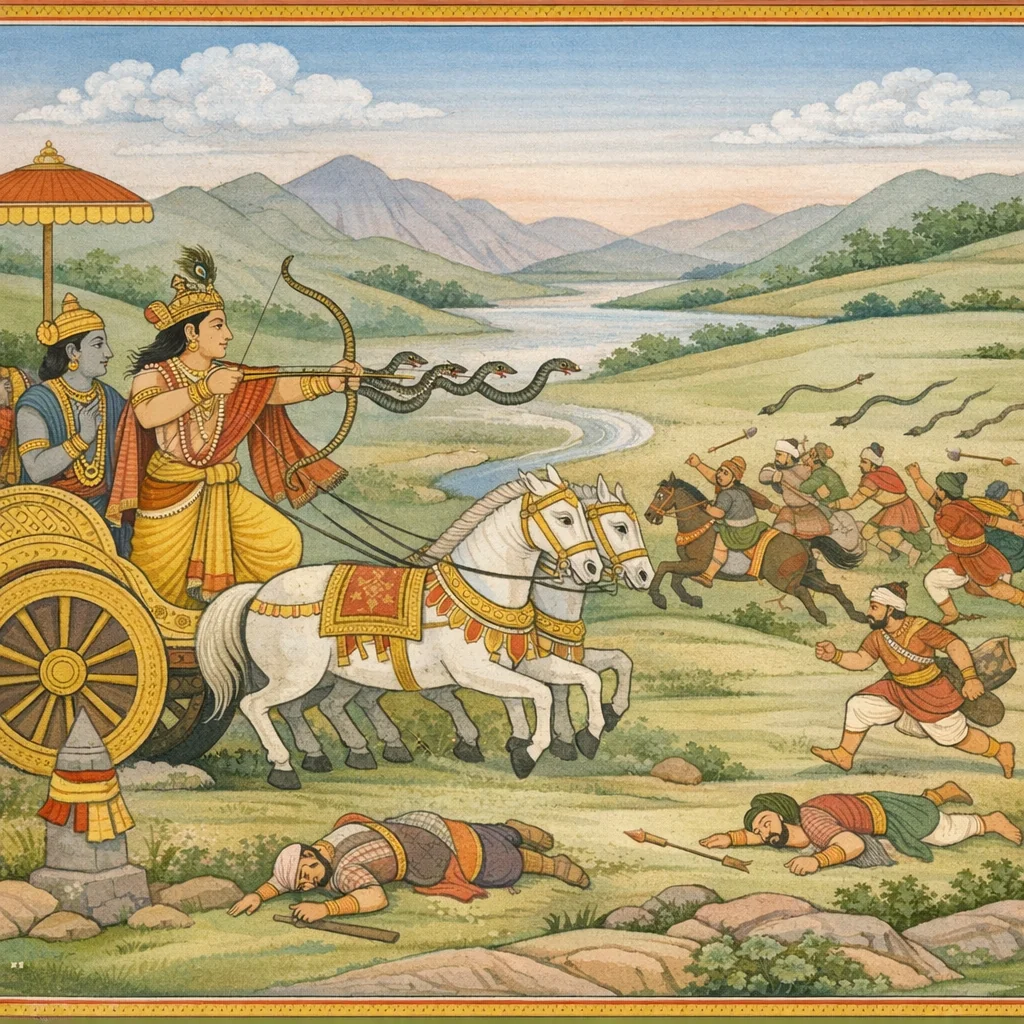
Vaiśaṃpāyana reports that the consecrated horse enters Prāgjyotiṣa territory, prompting Vajradatta—Bhagadatta’s son and a battle-hardened ruler—to emerge and contest the intrusion (1–3). Arjuna (Dhanaṃjaya), recognizing the challenge, advances rapidly with Gāṇḍīva prepared, treating the encounter as a regulated engagement tied to the horse’s protection (4). Vajradatta is temporarily disoriented by Arjuna’s arrow-work, releases the horse, and charges Arjuna directly (5). He then re-enters the city to re-arm and returns mounted on a foremost elephant, accompanied by royal insignia (parasol and white fly-whisk), and issues a challenge shaped by youthful pride and confusion in combat (6–8). Vajradatta drives the massive elephant toward Arjuna’s white horse; the elephant is described as disciplined for warfare and violently energetic (9–11). Arjuna fights the elephant-mounted adversary from the ground, meeting the charge with controlled archery (12). Vajradatta hurls blazing tomara-spears; Arjuna intercepts and fragments them mid-air with Gāṇḍīva arrows (13–14). Vajradatta counters with arrow volleys; Arjuna replies with faster, gold-feathered shafts, wounding Vajradatta, who falls but retains composure (15–17). Remounting, Vajradatta renews the contest; Arjuna sends serpent-like arrows, severely wounding the elephant, which bleeds profusely and is likened to a mountain with many streams (18–20). The chapter emphasizes ritualized sovereignty-testing through calibrated martial display rather than annihilative warfare.
Chapter Arc: यज्ञ का पवित्र अश्व पाण्डव-सीमा पर आता है, और सीमा-रक्षक वीर उसे घेरकर पकड़ने को उद्यत हो उठते हैं—यज्ञ की शान्ति के भीतर युद्ध का बीज फूट पड़ता है। → त्रिगर्त-वीर रथों पर, बद्ध-तूणीरा और सुसज्जित अश्वों सहित, यज्ञाश्व को घेरते हैं। किरीटी अर्जुन उनके अभिप्राय को भाँपकर पहले सान्त्व-नीति से रोकना चाहता है, परन्तु प्रतिरोध बढ़ता जाता है और वाणी का पुल टूटने लगता है। → सूर्यवर्मा अर्जुन पर तीव्र, लघु-अस्त्र-प्रदर्शन सहित शर-वर्षा करता है; अर्जुन रक्त पोंछकर दिव्य धनुष उठाता है और विष-सदृश तीक्ष्ण बाणों से प्रतिघात कर त्रिगर्तों की पंक्तियाँ तोड़ देता है—यज्ञाश्व की रक्षा हेतु उसका क्रोध निर्णायक बन जाता है। → त्रिगर्त-सेना भगदड़ में टूटती है। पराजित राजागण विनीत होकर आज्ञा माँगते हैं; अर्जुन उन्हें जीवन-रक्षा का उपदेश देता है—‘प्राण बचाओ, शासन स्वीकार करो’—और यज्ञाश्व का मार्ग सुरक्षित कर देता है। → पराजितों का समर्पण तो हो गया, पर अश्व की आगे की यात्रा में कौन-सा नया राज्य चुनौती देगा—यह अनकहा रह जाता है।
Shlokas
Verse 1
इस प्रकार श्रीमह्याभारत आश्वमेधिकपर्वके अन्तर्गत अनुगीतापर्वरमें अ्जुनिके द्वारा अश्वका अनुसरणविषयक तिह्तत्तववाँ अध्याय पूरा हुआ ॥/ ७३ ॥। अपने-आप बछ। आर: 2 चतु:सप्ततितमो< ध्याय: अर्जुनके द्वारा त्रिगर्तोंकी पराजय वैशम्पायन उवाच त्रिगर्तैरभवद् युद्ध कुतवैरै: किरीटिन: । महारथसमज्ञातैहतानां पुत्रनप्तृभि:,वैशम्पायनजी कहते हैं--राजन! कुरुक्षेत्रके युद्धमें जो त्रिगर्त वीर मारे गये थे, उनके महारथी पुत्रों और पौत्रोंने किरीटधारी अर्जुनके साथ वैर बाँध लिया था। त्रिगर्तदेशमें जानेपर अर्जुनका उन त्रिगर्तोंक साथ घोर युद्ध हुआ था
Vaiśampāyana said: O King, the Trigartas—whose warriors had been slain in the Kurukṣetra war—nurtured a settled enmity toward Arjuna, the diadem-wearing hero. Their sons and grandsons, renowned as great chariot-fighters, took up that inherited feud, and when Arjuna came into the Trigarta country, a fierce battle arose between him and those Trigartas. The passage frames how unresolved grief and vengeance perpetuate violence across generations, even after a great war has ended.
Verse 2
ते समाज्ञाय सम्प्राप्तं यज्ञियं तुरगोत्तमम् । विषयान्तं ततो वीरा दंशिता: पर्यवारयन्,'पाण्डवोंका यज्ञसम्बन्धी उत्तम अश्व हमारे राज्यकी सीमामें आ पहुँचा है” यह जानकर त्रिगर्तीीर कवच आदिसे सुसज्जित हो पीठपर तरकस बाँधे सजे-सजाये अच्छे घोड़ोंसे जुते हुए रथपर बैठकर निकले और उस अश्वको उन्होंने चारों ओरसे घेर लिया। राजन! घोड़ेको घेरकर वे उसे पकड़नेका उद्योग करने लगे
Vaiśampāyana said: Learning that the sacrificial, excellent horse had reached the boundary of their territory, the warriors—armoured and fully equipped—surrounded it on all sides. Having encircled the horse, they set about the task of seizing it, thereby challenging the rite and the authority it proclaimed.
Verse 3
रथिनो बद्धतूणीरा: सदश्वैः समलंकृतै: । परिवार्य हयं राजन ग्रहीतुं सम्प्रचक्रमु:,'पाण्डवोंका यज्ञसम्बन्धी उत्तम अश्व हमारे राज्यकी सीमामें आ पहुँचा है” यह जानकर त्रिगर्तीीर कवच आदिसे सुसज्जित हो पीठपर तरकस बाँधे सजे-सजाये अच्छे घोड़ोंसे जुते हुए रथपर बैठकर निकले और उस अश्वको उन्होंने चारों ओरसे घेर लिया। राजन! घोड़ेको घेरकर वे उसे पकड़नेका उद्योग करने लगे
Vaiśampāyana said: The chariot-warriors, with quivers fastened on their backs and with well-adorned chariots yoked to excellent horses, surrounded the sacrificial horse. O king, having encircled the horse, they set about the effort to seize it—an act that signals a challenge to the Pāṇḍavas’ Aśvamedha and tests the boundaries of royal right and duty.
Verse 4
ततः किरीटी संचिन्त्य तेषां तत्र चिकीर्षितम् । वारयामास तान् वीरान् सान्त्वपूर्वमरिंदम:,शत्रुओंका दमन करनेवाले अर्जुन यह जान गये कि वे क्या करना चाहते हैं। उनके मनोभावका विचार करके वे उन्हें शान्तिपूर्वक समझाते हुए युद्धसे रोकने लगे
Then Arjuna, the diademed hero, reflected on what those warriors intended to do there. Understanding their inner purpose, the foe-subduer began to restrain them from fighting, calming and persuading them with gentle, conciliatory words first—choosing peace-making over immediate violence.
Verse 5
तदनादृत्य ते सर्वे शरैरभ्यहनंस्तदा । तमोरजोभ्यां संछन्नांस्तान् किरीटी न्यवारयत्,किंतु वे सब उनकी बातकी अवहेलना करके उन्हें बाणोंद्वारा चोट पहुँचाने लगे। तमोगुण और रजोगुणके वशीभूत हुए उन त्रिगर्तोंको किरीटीने युद्धसे रोकनेकी पूरी चेष्टा की
Ignoring his counsel, all of them then struck with volleys of arrows. Those Trigartas, their minds clouded by darkness and passion (tamas and rajas), were restrained by Kirīṭī (Arjuna), who strove to hold them back from the fight—seeking to curb their reckless aggression rather than merely answer it in kind.
Verse 6
तानब्रवीत् ततो जिष्णु: प्रहसन्निव भारत । निवर्तध्वमधर्मज्ञा: श्रेयो जीवितमेव च,भारत! तदनन्तर विजयशील अर्जुन हँसते हुए-से बोले--'धर्मको न जाननेवाले पापात्माओ! लौट जाओ। जीवनकी रक्षामें ही तुम्हारा कल्याण है”
Then Jiṣṇu (Arjuna) spoke to them, as if with a faint smile: “O Bhārata, turn back. You who do not understand dharma—your true good lies in preserving your life.”
Verse 7
स हि वीर: प्रयास्यन् वै धर्मराजेन वारितः । हतबान्धवा न ते पार्थ हन्तव्या: पार्थिवा इति,वीर अर्जुनने ऐसा इसलिये कहा कि चलते समय धर्मराज युधिष्ठिरने यह कहकर मना कर दिया था कि “कुन्तीनन्दन! जिन राजाओंके भाई-बन्धु कुरुक्षेत्रके युद्धमें मारे गये हैं, उनका तुम्हें वध नहीं करना चाहिये”
Vaiśampāyana said: As that hero Arjuna was setting out, Dharmarāja Yudhiṣṭhira restrained him, saying, “O Pārtha, you must not slay those kings whose kinsmen and brothers were killed in the war.” The counsel underscores a post-war ethic of restraint—avoiding further bloodshed against rulers already bereaved by Kurukṣetra.
Verse 8
स तदा तद् वच: श्रुत्वा धर्मराजस्य धीमतः । तान् निवर्तध्वमित्याह न न्यवर्तन्त चापि ते,बुद्धिमान् धर्मरमाजके इस आदेशको सुनकर उसका पालन करते हुए ही अर्जुनने त्रिगर्तोंकी लौट जानेकी आज्ञा दी तथापि वे नहीं लौटे
Hearing at that time the words of the wise Dharmarāja, he said to them, “Turn back.” Yet they did not turn back. The passage underscores the ethical weight of a righteous command and the moral disorder that appears when it is refused.
Verse 9
ततल्त्रिगर्तराजानं सूर्यवर्माणमाहवे । विचित्य शरजालेन प्रजहास धनंजय:,तब उस युद्धस्थलमें त्रिगर्तराज सूर्यव्माके सारे अंगोंमें बाण धँसाकर अर्जुन हँसने लगे
There, on the battlefield, Dhanañjaya (Arjuna), having singled out the Trigarta king Sūryavarman and covering him with a net of arrows, laughed—signaling his clear superiority in the encounter and the swift turning of fortune in war.
Verse 10
ततस्ते रथघोषेण रथनेमिस्वनेन च । पूरयन्तो दिश: सर्वा धनंजयमुपाद्रवन्,यह देख त्रिगर्तदेशीय वीर रथकी घरघराहट और पहियोंकी आवाजसे सारी दिशाओंको गुँजाते हुए वहाँ अर्जुनपर टूट पड़े
Vaiśampāyana said: Then those warriors, with the thunder of their chariots and the whirring roar of their wheels, made all the quarters resound and rushed upon Dhanañjaya (Arjuna). The scene underscores how martial pride and collective momentum can drive men into sudden aggression, setting the stage for Arjuna’s steadfast response amid escalating conflict.
Verse 11
सूर्यवर्मा ततः पार्थे शराणां नतपर्वणाम् | शतान्यमुज्चद् राजेन्द्र लघ्वस्त्रमभिदर्शयन्,राजेन्द्र! तदनन्तर सूर्यवर्माने अपने हाथोंकी फुर्ती दिखाते हुए अर्जुनपर झुकी हुई गाँठवाले एक सौ बाणोंका प्रहार किया
Vaiśampāyana said: Then Sūryavarmā, O king, displaying the quickness of his weapon-skill, released volleys of a hundred arrows with bent joints against Pārtha (Arjuna). The scene underscores the warrior’s duty to demonstrate prowess in battle, while also reminding the listener that martial excellence must remain governed by kṣatriya-dharma—skill exercised with discipline rather than mere cruelty.
Verse 12
तथैवान्ये महेष्वासा ये च तस्यानुयायिन: । मुमुचु: शरवर्षाणि धनंजयवधैषिण:,इसी प्रकार उसके अनुयायी वीरोंमें भी जो दूसरे-दूसरे महान् धनुर्धर थे, वे भी अर्जुनको मार डालनेकी इच्छासे उनपर बाणोंकी वर्षा करने लगे
Vaiśampāyana said: In the same way, other mighty archers as well—those who were his followers—poured down showers of arrows, driven by the desire to slay Dhanaṃjaya (Arjuna). The scene underscores how, in the heat of battle, loyalty to a leader and the pursuit of victory can harden into a single-minded intent to kill, intensifying the moral gravity of the conflict.
Verse 13
स तान् ज्यामुखनिर्मुक्तिबहुभि: सुबहून् शरान् । चिच्छेद पाण्डवो राजंस्ते भूमौ न्न्यपतंस्तदा,राजन! पाण्डुपुत्र अर्जुनने अपने धनुषकी प्रत्यंचासे छूटे हुए बहुसंख्यक बाणोंद्वारा शत्रुओंके बहुत-से बाणोंको काट डाला। वे कटे हुए बाण टुकड़े-टुकड़े होकर पृथ्वीपर गिर पड़े
Vaiśampāyana said: O King, the Pāṇḍava (Arjuna), with a great many arrows released from the bowstring, cut down very many of the enemy’s arrows. Those severed shafts then fell to the earth, broken into pieces—showing the disciplined mastery by which force is restrained and danger is neutralized in battle.
Verse 14
केतुवर्मा तु तेजस्वी तस्यैवावरजो युवा । युयुधे भ्रातुरर्थाय पाण्डवेन यशस्विना,(सूर्यवर्माके परास्त होनेपर) उसका छोटा भाई केतुवर्मा जो एक तेजस्वी नवयुवक था, अपने भाईका बदला लेनेके लिये यशस्वी वीर पाण्डुपुत्र अर्जुनके साथ युद्ध करने लगा
Vaiśampāyana said: Ketuvarmā, a radiant young warrior and the younger brother of that very man, engaged in battle with the illustrious Pāṇḍava (Arjuna), fighting to uphold his brother’s cause—seeking retribution after his brother’s defeat.
Verse 15
तमापततन्तं सम्प्रेक्ष्य केतुवर्माणमाहवे । अभ्यष्नन्निशितैर्बाणैर्बीभत्सु: परवीरहा,केतुवर्माको युद्धस्थलमें धावा करते देख शत्रुवीरोंका संहार करनेवाले अर्जुनने अपने तीखे बाणोंसे उसे मार डाला
Vaiśampāyana said: Seeing Ketuvarmā charging headlong on the battlefield, Arjuna—Bībhatsu, the slayer of enemy champions—swiftly struck him with razor-sharp arrows, cutting down the onrushing warrior. The episode underscores the grim ethic of kṣatriya warfare: decisive force is employed to stop an aggressor in open combat, where valor and duty override personal hesitation.
Verse 16
केतुवर्मण्यभिहते धृतवर्मा महारथ: । रथेनाशु समुत्पत्य शरैर्जिष्णुमवाकिरत्,केतुवर्माके मारे जानेपर महारथी धृतवर्मा रथके द्वारा शीघ्र ही वहाँ आ धमका और अर्जुनपर बाणोंकी वर्षा करने लगा
Vaiśampāyana said: When Ketuvarman had been struck down, the great chariot-warrior Dhṛtavarman swiftly sprang forward in his chariot and showered Jiṣṇu (Arjuna) with volleys of arrows—pressing the fight on in the wake of his fallen ally, as the battle’s momentum demanded.
Verse 17
तस्य तां शीघ्रतामीक्ष्य तुतोषातीव वीर्यवान् । गुडाकेशो महातेजा बालस्य धृतवर्मण:
Seeing his swift action, the mighty Arjuna—Guḍākeśa, radiant with great splendor—was exceedingly pleased with the boy Dhṛtavarman. The verse highlights the warrior’s appreciation of promptness and capability, suggesting that merit and readiness, even in the young, deserve recognition and encouragement.
Verse 18
धृतवर्मा अभी बालक था तो भी उसकी उस फुर्तीको देखकर महातेजस्वी पराक्रमी अर्जुन बड़े प्रसन्न हुए ।। न संदधानं ददृशे नाददानं च तं तदा । किरन्तमेव स शरान् ददृशे पाकशासनि:,वह कब बाण हाथमें लेता है और कब उसे धनुषपर चढ़ाता है, उसको इन्द्रकुमार अर्जुन भी नहीं देख पाते थे। उन्हें केवल इतना ही दिखायी देता था कि वह बाणोंकी वर्षा कर रहा है
Vaiśampāyana said: At that time, even Arjuna—Indra’s son, the chastiser of Pāka—could not perceive when Dhṛtavarmā took up an arrow or when he set it upon the bow. Arjuna saw only this: that the youth was simply pouring forth a continuous shower of arrows. The passage highlights how extraordinary skill, even in one so young, can evoke admiration in the great, and how disciplined mastery makes action appear effortless and instantaneous.
Verse 19
स तु त॑ पूजयामास धृतवर्माणमाहवे । मनसा तु मुहूर्त वै रणे समभिहर्षयन्,उन्होंने रणभूमिमें थोड़ी देरतक मन-ही-मन धृतवर्माकी प्रशंसा की और युद्धमें उसका हर्ष एवं उत्साह बढ़ाते रहे
Vaiśaṃpāyana said: He honored Dhṛtavarmā on the field of battle, and for a short while, within his own mind, he praised him—thereby sustaining and heightening his joy and fighting spirit amid the clash. The passage underscores a warrior-ethic in which recognition and encouragement are offered even in violence, to steady resolve and uphold one’s role in the conflict.
Verse 20
त॑ं पन्नगमिव क्रुद्धं कुरुवीर: स्मयन्निव । प्रीतिपूर्व महाबाहु: प्राणैर्न व्यपरोपयत्,यद्यपि धृतवर्मा सर्पके समान क्रोधमें भरा हुआ था तो भी कुरुवीर महाबाहु अर्जुन प्रेमपूर्वक मुसकराते हुए युद्ध करते थे। उन्होंने उसके प्राण नहीं लिये
Vaiśampāyana said: Though Dhṛtavarmā was inflamed with anger like a serpent, the Kuru hero Arjuna—mighty-armed—fought on with a faint smile, moved by goodwill. Even in battle he did not take away his opponent’s life, showing restraint and a deliberate choice of mercy amid violence.
Verse 21
स तथा रक्ष्यमाणो वै पार्थनामिततेजसा । धृतवर्मा शरं दीप्त॑ मुमोच विजये तदा,इस प्रकार अमित तेजस्वी अर्जुनके द्वारा जानबूझकर छोड़ दिये जानेपर धृतवर्माने उनके ऊपर एक अत्यन्त प्रज्वलित बाण चलाया
Vaiśampāyana said: Though thus being protected—indeed, deliberately spared—by Pārtha Arjuna of immeasurable splendor, Dhṛtavarmā at that moment, in the heat of the contest, released a blazing arrow at him. The episode underscores how Arjuna’s restraint and guardianship are met by Dhṛtavarmā’s aggressive resolve, intensifying the ethical contrast between forbearance and retaliatory violence in battle.
Verse 22
स तेन विजयस्तूर्णमासीद् विद्धा: करे भृशम् । मुमोच गाण्डिवं मोहात् तत् पपाताथ भूतले,उस बाणने तुरन्त आकर अर्जुनके हाथमें गहरी चोट पहुँचायी। उन्हें मूर्च्छा आ गयी और उनका गाण्डीव धनुष हाथसे छूटकर पृथ्वीपर जा पड़ा
Vaiśampāyana said: Struck by that (arrow), Arjuna was at once overcome; his hand was grievously wounded. Bewildered and faint, he let go of the Gāṇḍīva, and the bow fell to the ground. The scene underscores how even the mightiest warrior can be shaken when fate turns and strength is eclipsed by sudden delusion.
Verse 23
धनुष: पततस्तस्य सव्यसाचिकराद् विभो | बभूव सदृशं रूप॑ं शक्रचापस्य भारत,प्रभो! भरतनन्दन! अर्जुनके हाथसे गिरते हुए उस धनुषका रूप इन्द्रधनुषके समान प्रतीत होता था
Vaiśampāyana said: “O mighty one—O Bhārata, lord, delight of the Bharatas—when that bow slipped and fell from the hand of Savyasācin (Arjuna), its appearance seemed like Śakra’s bow, the rainbow.”
Verse 24
तस्मिन् निपतिते दिव्ये महाधनुषि पार्थिव: । जहास सस्वनं हासं धृतवर्मा महाहवे,उस दिव्य महाधनुषके गिर जानेपर महासमरमें खड़ा हुआ धृतवर्मा ठहाका मारकर जोर-जोरसे हँसने लगा
When that celestial, mighty bow fell to the ground, Dhṛtavarmā—standing amid the great battle—burst into loud, ringing laughter. The moment underscores the hardening of hearts in war: even a sacred weapon’s fall becomes an occasion for derision, revealing how pride and cruelty can eclipse reverence and restraint.
Verse 25
ततो रोषार्दितो जिष्णु: प्रमृज्य रुधिरं करात् । धनुरादत्त तद् दिव्यं शरवर्षैववर्ष च,इससे अर्जुनका रोष बढ़ गया। उन्होंने हाथसे रक्त पोंछकर उस दिव्य धनुषको पुनः उठा लिया और धृतवर्मापर बाणोंकी वर्षा आरम्भ कर दी
Then Jishnu (Arjuna), driven by anger, wiped the blood from his hand. Taking up again that divine bow, he began to shower Dhṛtavarman with volleys of arrows—an escalation born of wounded pride and the warrior’s code, where injury is answered not with retreat but with renewed martial resolve.
Verse 26
ततो हलहलाशब्दो दिवस्पृणभवत् तदा । नानाविधानां भूतानां तत्कर्माणि प्रशंसताम्,फिर तो अर्जुनके उस पराक्रमकी प्रशंसा करते हुए नाना प्रकारके प्राणियोंका कोलाहल समूचे आकाशकमें व्याप्त हो गया
Then, at that moment, a great clamour—cries of “halahalā”—rose up and seemed to fill the very heavens, as beings of many kinds praised that deed (of valour). The scene underscores how righteous prowess, when directed to a worthy end, draws public acclaim and becomes a celebrated act rather than mere violence.
Verse 27
ततः सम्प्रेक्ष्य संक्रुद्धें कालान्तकयमोपमम् । जिष्णु त्रैगर्तका योधा: परीता: पर्यवारयन्,अर्जुनको काल, अन्तक और यमराजके समान कुपित हुआ देख त्रिगर्तदेशीय योद्धाओंने चारों ओरसे आकर उन्हें घेर लिया
Then, seeing Arjuna—wrathful and resembling Kāla, the Ender of Time, and Yama, the Lord of Death—the warriors of Trigarta closed in from all sides and surrounded him. The scene underscores how, in the heat of battle, fear and hostility can drive many to unite against a single formidable champion, even as that champion’s righteous resolve hardens into a terrible, death-dealing intensity.
Verse 28
अभिसृत्य परीप्सार्थ ततस्ते धृतवर्मण: । परिवत्रुर्गुडाकेशं तत्राक्रुद्धादू धनंजय:,धृतवर्माकी रक्षाके लिये सहसा आक्रमण करके त्रिगर्तोने गुडाकेश अर्जुनको जब सब ओरसे घेर लिया, तब उन्हें बड़ा क्रोध हुआ
Vaiśaṃpāyana said: Then, rushing forward with the aim of seizing him, the warriors of Dhṛtavarman surrounded Guḍākeśa (Arjuna). Seeing himself hemmed in on all sides, Dhanañjaya was inflamed with anger—an anger born of the need to protect his charge and uphold his duty in the midst of battle.
Verse 29
ततो योधान् जघानाशु तेषां स दश चाष्ट च । महेन्द्रवज़प्रतिमैरायसैर्बहुभि: शरै:,फिर तो उन्होंने इन्द्रके वजकी भाँति दुस्सह लौहनिर्मित बहुसंख्यक बाणोंद्वारा बात- की-बातमें उनके अठारह प्रमुख योद्धाओंको यमलोक पहुँचा दिया
Vaiśampāyana said: Then, in an instant, he struck down their warriors—ten and eight besides—dispatching eighteen leading fighters with countless iron arrows, unbearable like Indra’s thunderbolt. The scene underscores the swift, decisive force of martial prowess, while also reminding the listener of war’s grim moral weight: victory is purchased through the irreversible taking of lives.
Verse 30
तान् सम्प्रभग्नान् सम्प्रेक्ष्य त्वरमाणो धनंजय: । शरैराशीविषाकारैर्जघान स्वनवद्धसन्,तब तो त्रिगर्तोंमें भगदड़ मच गयी। उन्हें भागते देख अर्जुनने जोर-जोरसे हँसते हुए बड़ी उतावलीके साथ सर्पाकार बाणोंद्वारा उन सबको मारना आरम्भ किया
Vaiśampāyana said: Seeing them routed and in full flight, Dhanañjaya (Arjuna), acting with swift urgency, struck them down with arrows shaped like venomous serpents, laughing loudly as he fought. The scene underscores the relentless momentum of battle: once a force breaks, the victor presses the advantage, and the defeated pay the harsh price of panic and disorder.
Verse 31
ते भग्नमनस: सर्वे त्रैगर्तकमहारथा: । दिशोभिदुद्रुवू राजन् धनंजयशरार्दिता:,राजन! धनंजयके बाणोंसे पीड़ित हुए समस्त त्रिगर्तदेशीय महारथियोंका युद्धविषयक उत्साह नष्ट हो गया; अतः वे चारों दिशाओंमें भाग चले
Vaiśampāyana said: O King, all those great chariot-warriors of the Trigarta country, their courage broken and tormented by Dhanañjaya’s arrows, fled headlong in all directions. The scene underscores how, in war, prowess joined with disciplined aim can shatter an army’s morale, turning pride into panic.
Verse 32
तमूचु: पुरुषव्याप्रं संशप्तकनिषूदनम् । तवास्म किंकरा: सर्वे सर्वे वै वशगास्तव,उनमेंसे कितने ही संशप्तकसूदन पुरुषसिंह अर्जुनसे इस प्रकार कहने लगे --'कुन्तीनन्दन! हम सब आपके आज्ञाकारी सेवक हैं और सभी सदा आपके अधीन रहेंगे
Vaiśampāyana said: Then they addressed Arjuna—the tiger among men, the slayer of the Saṃśaptakas—saying, “We are all your servants; indeed, every one of us is under your command and will remain obedient to you.” The scene underscores the moral force of rightful leadership: valor joined with restraint inspires willing allegiance rather than coerced submission.
Verse 33
आज्ञापयस्व न: पार्थ प्रद्दान् प्रेष्यानवस्थितान् । करिष्याम: प्रियं सर्व तव कौरवनन्दन,'पार्थ!! हम सभी सेवक विनीत भावसे आपके सामने खड़े हैं। आप हमें आज्ञा दें। कौरवनन्दन! हम सब लोग आपके समस्त प्रिय कार्य सदा करते रहेंगे”
Vaiśampāyana said: “Command us, O Pārtha. We stand here as your appointed attendants, ready to be sent wherever you direct. O delight of the Kuru line, we shall carry out everything that is dear to you.”
Verse 34
एतदाज्ञाय वचन सर्वास्तानब्रवीत् तदा । जीवितं रक्षत नृपा: शासन प्रतिगृह्यताम्,उनकी ये बातें सुनकर अर्जुनने उनसे कहा--'राजाओ! अपने प्राणोंकी रक्षा करो। इसका एक ही उपाय है, हमारा शासन स्वीकार कर लो”
Having understood this situation and its import, he then addressed all those kings: “Protect your lives, O rulers. There is one course for you—accept our authority.” The statement frames submission not merely as political compliance but as the ethical alternative to needless destruction, offering preservation of life in place of further conflict.
Verse 74
इति श्रीमहाभारते आश्वमेधिके पर्वणि अनुगीतापर्वणि त्रिगर्तपरा भवे चतुःसप्ततितमो<ध्याय:
Thus, in the Śrī Mahābhārata, within the Āśvamedhika Parvan—specifically in the Anugītā section—ends the seventy-fourth chapter, concerning the Trigartas and their subsequent course. This is a formal colophon marking the close of the chapter and situating it within the larger ethical and narrative frame of the post-war instruction and reflection.
Frequently Asked Questions
Whether Prāgjyotiṣa will acknowledge the Aśvamedha’s implied suzerainty or contest it; the engagement functions as a public mechanism for validating political hierarchy under ritual law.
Power is to be exercised instrumentally and proportionately: Arjuna’s role is protection and stabilization of the ritual mandate, while the challenger’s response tests legitimacy within recognized norms of kṣatriya conduct.
No explicit phalaśruti appears in the provided verses; the meta-significance is implicit—this episode exemplifies how post-war order is reconstituted through ritualized diplomacy backed by controlled force.