Sukta 35
Rishi: Gautama (as implied by the closing verse of the set; RV-family attribution carried into AV 20)
Devata: Indra (Vṛtrahan, releaser of waters)
Chandas: Triṣṭubh (RV-style)
Mantras
Mantra 1
अस्मा इदु प्र तवसे तुराय प्रयो न हर्मि स्तोमं माहिनाय ।
To him, yea, to the strong, the vehement, I set forth, as ’twere refreshment, a hymn of praise—to the great one.
Mantra 2
अस्मा इदु प्रय इव प्र यंसि भराम्याङ्गूषं बाधे सुवृक्ति। इन्द्राय हृदा मनसा मनीषा प्रत्नाय पत्ये धियो मर्जयन्त
To him, yea verily, as (men bring) refreshment which thou bestowest, I bring a laud of praise, a well-wrought utterance for repelling (harm). For Indra—by heart, by mind, by inspired thought—unto the ancient Lord, the Master, the devotions cleanse themselves for power.
Mantra 3
अस्मा इदु त्यमुपमं स्वर्षां भराम्याङ्गूषमास्येऽन । मंहिष्ठमच्छोक्तिभिर्मतीनां सुवृक्तिभिः सूरिं वावृधध्यै
To him, yea verily—to that most excellent, heaven-winning one—I bring the hymn upon my lips. The most bounteous patron I would strengthen with the clear-spoken praises of our thoughts, with well-wrought utterances.
Mantra 4
अस्मा इदु स्तोमं सं हिनोमि रथं न तष्टेव तत्सिनाय । गिरश्च गिर्वाहसे सुवृक्तीन्द्राय विश्वमिन्वं मेधिराय
To him, yea verily, I set the praise in ordered motion—like a craftsman a chariot—this for winning. And songs, and well-wrought utterances, for Indra the Song-borne, the all-impelling, the wise.
Mantra 5
अस्मा इदु सप्तिमिव श्रवस्येन्द्रायार्कं जुह्वा३समञ्जे । वीरं दानौकसं वन्दध्यै पुरां गूर्तश्रवसं दर्माणम्
To him, yea verily—like a swift team for glory—I duly prepare, with the ladle, a shining hymn for Indra: to do reverence to the hero whose home is giving, the breaker of forts, of fame made sure, the steadfast upholder.
Mantra 6
अस्मा इदु त्वष्टा तक्षद् वज्रं स्वपस्तमं स्वर्यं१ रणाय । वृत्रस्य चिद् विदद् येन मर्म तुजन्नीशानस्तुजता कियेधाः
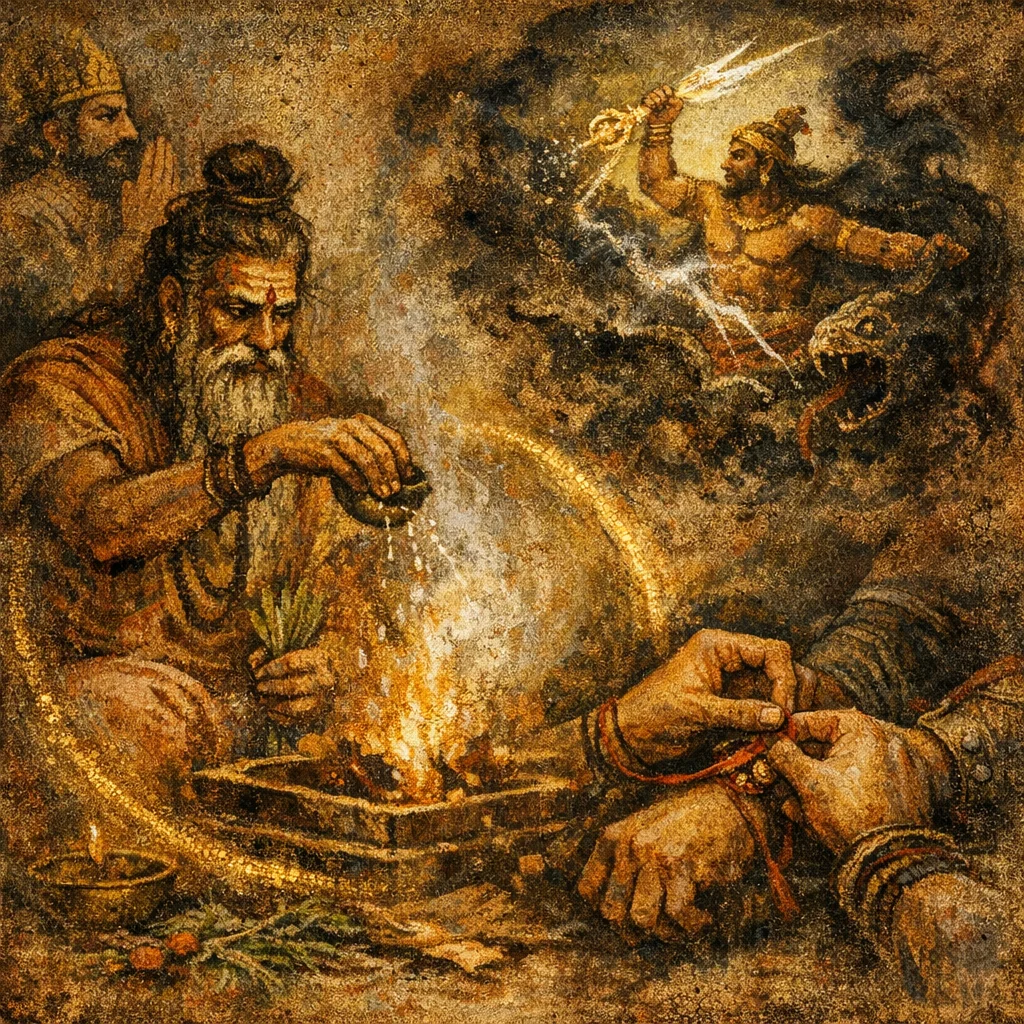
To him, yea verily, Tvaṣṭṛ fashioned the thunderbolt—most excellent in work, heaven-winning—for the battle; whereby he found, even of Vṛtra, the vital spot: thrusting, the sovereign, urged on to smite—how resistless in his onset!
Mantra 7
अस्येदु मातुः सवनेषु सद्यो महः पितुं पपिवां चार्वन्ना । मुषायद् विष्णुः पचतं सहीयान् विध्यद् वराहं तिरो अद्रिमस्ता
Of him, yea, at his Mother’s pressings, straightway was the great draught drunken; and, O swift one, not in vain. Vishnu, the stronger, filched (the prize); he smote the Boar, and cast the rock away.
Mantra 8
अस्मा इदु ग्नाश्चिद् देवपत्नीरिन्द्रायार्कमहिहत्य ऊवुः । परि द्यावापृथिवी जभ्र उर्वी नास्य ते महिमानं परि ष्टः
To him, yea, even the Goddesses, the Gods’ own Consorts, have uttered praise for Indra in the Serpent-slaying. Broad Heaven and Earth have compassed him about: yet round thy greatness is no boundary set.
Mantra 9
अस्ये देव प्र रिरिचे महित्वं दिवस्पृथिव्याः पर्यन्तरिक्षात्। स्वरालिन्द्रो दम आ विश्वगूर्तः स्वरिरमत्रो ववक्षे रणाय
Here, O God, his greatness hath flowed forth, beyond the Heaven, beyond the Earth, beyond the Mid-air. Self-ruling Indra, in the house installed, all-lauded, radiant, unconquered, hath waxed for battle.
Mantra 10
अस्येदेव शवसा शुषन्तं वि वृश्चद् वज्रेण वृत्रमिन्द्रः । गा न व्राणा अवनीरमुञ्चदभि श्रवो दावने सचेताः
Yea, by his very might Indra with thunderbolt clave Vṛtra, the parcher, sheer asunder. Like wounded kine he loosed the downward streams, intent to give, for glory, bounteous fame.
Mantra 11
अस्येदु त्वेषसा रन्त सिन्धवः परि यद् वज्रेण सीमयच्छत्। ईशानकृद् दाशुषे दशस्यन् तुर्वीतये गाधं तुर्वणिः कः
Yea, by his vehement might the Rivers yielded, when with the bolt he held them fast and mastered them. Maker of lordship, favouring the giver, the swift o’ercomer—who hath granted a ford for conquest?
Mantra 12
अस्मा इदु प्र भरा तूतुजानो वृत्राय वज्रमीशानः कियेधाः । गोर्न पर्व वि रदा तिरश्चेष्यन्नर्णांस्यपां चरध्यै
Bring thou forth for him—yea, for him—thy bolt, impetuous, lordly, the restrainer, against Vṛtra. Cleave thou apart, as one cleaveth a cow’s joint, the floods of waters, moving athwart, that they may course onward.
Mantra 13
अस्येदु प्र ब्रूहि पूर्व्याणि तुरस्य कर्माणि नव्य उक्थैः । युधे यदिष्णान आयुधान्यृघायमाणो निरिणाति शत्रून्
Proclaim thou forth—yea, of him—his ancient deeds, the swift one’s acts, with hymns of praise renewed. When, battle-eager, he graspeth weapons and rusheth on, he driveth forth and routeth enemies.
Mantra 14
अस्येदु भिया गिरयश्च दृल्हा द्यावा च भूमा जनुषस्तुजेते । उपो वेनस्य जोगुवान ओणिं सद्यो भुवद् वीर्याय नोधाः
Yea, through fear of him the mountains, firm-set, and Heaven and Earth by nature are made to quake. Nodhā, pressing near to Vena, straightway won him for heroic might a covering as of armour.
Mantra 15
अस्मा इदु त्यदनु दाय्येषामेको यद् वव्ने भूरेरीशानः । प्रैतशं सूर्ये पस्पृधानं सौवश्व्ये सुष्विमावदिन्द्रः
To him, yea, to him, that deed accords beyond the rest: alone, the lord, he won him abundant store. Indra gave aid to Etaśa, striving with the Sun, in the fair-horse contest, with the well-pressed draught.
Mantra 16
एवा ते हारियोजना सुवृक्तीन्द्र ब्रह्माणि गोतमासो अक्रन्। ऐषु विश्वपेशसं धियं धाः प्रातर्मक्षू धियावसुर्जगम्यात्
Thus for thee, O Indra, yoker of the tawny steeds, the Gotamas have wrought their well-spoken praises, their sacred spells. In these set thou thy thought, all-adorned; and early, swiftly, may he who is rich in inspiration come.
Frequently Asked Questions
It is the Vṛtra-myth applied to life: anything that blocks flow—rain, wealth, health, opportunities, movement—is treated as Vṛtra-like. Indra’s act of splitting the obstruction becomes a ritual model for restoring circulation and prosperity.
Primarily it is abhicaric in tone (martial repulsion and victory), but its practical use is often protective: installing Indra’s sovereignty in the home and pushing back hostile pressure, rivalry, or stagnation.
The hymn is largely self-sufficient as praise-power; simple water-sprinkling and a small protective token (thread/stone/metal) can align the ritual with its imagery of vajra and released waters. Formal śrauta-style offerings are not required for the basic apotropaic use.